Re: Segue

I’m glad it’s not considered cultural appropriation if you use a word from another language when you are talking or writing. To give credit where credit is due then I must say thanks to the Italians for inventing the word segue, which translates into English as ‘to follow’. Segue is a beautiful word I tend to use often in conversation when I want to steer the dialogue in a different direction.

The first time this word came to my attention I was an adult at a youth symphony orchestra performance in my community. During the introduction to the second piece of music in the programme, the conductor said that he wanted to lighten the mood by inviting us to segue our thoughts to our favourite natural environment as we listened. He was making a joke that I didn’t figure out until I learned that segue is also a musical term directing instrumentalists to follow on with the music and turn the page without a pause in the beat. So there I sat in the auditorium, lost in my thoughts of languages intersecting while the music flowed about me like a lazy river.

Words flow, rivers flow, and segue sounds poetic, romantic, and utilitarian all at once. If I think about it, almost every essay I’ve ever written could be described as a segue to the next one. I like it when I am in a lateral thinking mode. My son once gave the comment that he thought a single blog posting of mine was as far ranging as the plot of an episode of The Simpsons on television. At the keyboard, as I type the letters collect into words, and I find a zone of clarity (at least to me) when converging and diverging thoughts seem part of the same stream of consciousness. I am a communicator! have segued, therefore I am.

Come to think of it, Segue would be a great name for a human. Or at least a pet––Segue the cat! How about that? Some folk might like its nickname; Seggy. Which really isn’t a short form since it has the same number of letters. But while I’m segueing let me tell you about one of my best birthday surprises ever! When I turned 65, my bride advised me to get in the car as she was taking me to lunch. That’s fun, I thought to myself, thinking that was going to be my birthday gift. Well I had to guess again as we took off, after our meal, down some roads I had not travelled before. We eventually pulled into a driveway beside this truck that had an adventuring type word on the side. Still puzzled, and with my wife leading me to the door of a suburban house, she knocked.

A lady came out with helmets, opened a side door on the truck and pulled out two Segways. I had seen one in operation months ago and my loving partner had remembered how I had exclaimed in excitement. I learned a new skill that happy day. A new way to be in the now, and go with the flow.

Re: Half

I pondered the ‘Glass half full/half empty’ idiom as I woke yesterday. I usually awake feeling optimistic and this day was no exception. I scanned my memory for all the things that fill my spirit. My thoughts warmed my heart. And ‘warmed’ was key here: The situation was neither hot nor cold. My feeling was neither elation nor dreary. I concluded that I like my proverbial glass always at the halfway mark. Most of the time, I find satisfaction living without the stress of extremes.

Come to think of it, when I’m in my car, if the gas tank needle indicates HALF, I’m good with that too. Running on empty is stressful and being full-up means the vehicle is carrying more weight than it needs to carry. Besides I’m never more than half a world away from the important people or places in my life. In my memory I recall my mom advising me before going on a teenage adventure in my used Volkswagen Beetle, “Don’t go off half-cocked” which made me shudder over the sexual implications. I didn’t help if she added as I was backing out of the driveway, “And what ever you do, don’t do it half-assed.”

Contrarily, half of an idea can suggest a conflict. I could be jealous of someone and have the thought, “I’m not half the man he is.” Or I can have a debate in my head over what I might say, thinking, “I’ve got half a mind to tell her she’s wrong.” The halfway point of anything is betwixt and between, and that can be confusing. When my sons were smaller treats were portioned so that each of us felt satisfied with their share. To avoid squabbles, the son showing the greatest desire was given the job of cutting the cake/pie/chocolate bar into equal pieces. It became a math lesson of fractions requiring a good eye and a steady hand on the knife. When something is split in half, we say it’s been halved. I find the verb form hard to pronounce since I want to put too much emphasis on the letter L. Try saying, “You may have a half portion but you must have halved the cookie accurately.” This could be a fun kid’s party phrase in the manner of the tongue twister, ‘She sells sea shells…’

My 96 year old special mom is hard of sight so she appreciates being handed a cup half full of her favourite coffee. Less spillage that way. I’m learning about other things related to eldercare as I tend to her needs. She’s not shy about sharing her preferences; Half and half cream is best in her hot chocolate for example. Perhaps more than me, she enjoys routine because it helps her ‘keep on top of things’. But I can relate to her desire to avoid the hills and valleys that can occur unexpectedly. Keeping things half-way there, means you can still look back when you want, while keeping an eye on what might be just up ahead.

Re: Tale

A tale can be like a story, but perhaps it will contain deeper sentiment, as in the great work of Charles Dickins, A Tale of Two Cities. A tale can be as old as time or it can be something you tattle. In the spectrum of fiction, a tale can sit safely beside a yarn, which is something a sailor may spin about an adventure at sea. Fable, legend, and myth will also be found on this imaginary language spectral line.

The telling of a tale requires picturesque language allowing us to suspend any disbelief we may have with the narrator. Unlike non-fiction stories that must rely on facts to communicate an account, fans of tales want to be convinced that what happened, actually could have happened. This manufacturing, to me, is not lying but colouring by using what we know with what-might-be. I like revisiting the Sarah Conner story in the Terminator film series. She’s like a princess, but a princess with purpose: a tale of, and for, future times.

I loved reading fairy tales to my kids as I once loved being read Grimm-like fables when I was a child. Cinderella popped into my head recently as an example of the possibility of time travel. It was a Back to the Future mind spin where I rationalized the need for the glass slipper lady to return home by the time the clock struck twelve. H.G. Wells’s classic futuristic novel Time Machine is an early attempt to suggest that travelling through time could be achieved, with the appropriate clockwork technology. I wondered if perhaps Cinderella was a time warp artist, riding in that magical pumpkin-ish looking coach. Her only fault might have been she didn’t coordinate the return-time better with her fairy godmother/timekeeper.

In my version of Cinderella, she discovers a way to end her despair entirely by leaving her old world behind. I picture my Cinderella being trapped in long days at Walmart, greeting others who have interesting lives, while she is mired in the drudgery of retail. As I see it, time travel only gets messy when we actually come in contact with our own lineage. Maybe you could come and go through the ages as long as we kept it out of the path of your own timeline. For example you could see the court of Cleopatra but not visit your grannie when she was three. Perhaps my Cinderella wouldn’t lose a shoe but a watch, and this is why she forgot the time paradox: you can’t be in two places at once. Marty McFly discovered that timing was everything or else the future would not exist as only he alone could tell it.

Dreaming, like what I’ve been writing here, is tale-telling. There must never be punishment for it, unless it’s intended to deceive or hurt another. We can believe in old-wive’s tales to the point where their value continues to inspire new discoveries in STEM research. The truth must always remain the goal, but I see no harm in embellishing the facts, for story’s sake.

Re: Sanity

I took a break from media for three days and found that I could translate the world news with a bit more detachment. I wanted to find out how to be sane in an insane world. Making sense of things for me is mathematical. I take my experience, add the ideas of trusted experts, blend in what feels like intuitive common sense, and I might end up with some clarity. Actually that reads more like a recipe, so go ahead and take a bite out of ‘Clarity’, and let me know how it tastes.

Freud comes to mind when I think of the search for sanity. Most people attach his genius to sexual things, especially motivations. He certainly has been maligned by that one aspect of his research. I consult Freud, in my imagination (WWFD?), when I’ve had a dream. In that subconscious state I am more relaxed and that is often key to embracing sanity. I can’t think well when I’m in an emotion state of craziness. During the softness of a dream, in day or night, I can fit puzzle pieces together in a more caretaking way. It’s no mystery to me that I can do better at a New York Times crossword when I am just a little tired. Performance anxiety is not a good partner when I can’t get that darn three letter answer to the clue.

Insanity has long been an excuse for bad behaviour. Sometimes an aggressor can get off in court for a ‘crime of passion’. We want to explain away a mass murderer because he couldn’t possibly be in his right mind. Wars are justified because the other side is mad, or worse still, not-human. In my book, any act of violence is an act of insanity because in moments of anger we have truly lost connection with ourselves. Insanity is a sign that we must check to see if we are still plugged in to our psyche. As far as punishment goes then maybe, in computer terms, we need a re-boot (not a boot in the butt, as violence begets more of the same).

I’ve been insanely in love. During those almost panic moments I have been of such singular mind that I’ve been a danger to myself. I once manically peddled my bike along unlit country roads, to deliver a rose, dark rain splashing around my clinging clothes. I was in a mental fever. Losing one’s sanity is not funny, but it does contribute to artistic expression. We have all had moments where we have snapped. Hopefully there has been someone around to safely guide us back to finding reason where we thought there was none to be found.

Admittance to an insane asylum used to be an answer to the fear that folks had of letting lost souls run amok in society. Visions of torture-like treatments, padded rooms, and straight jackets can still be found as reality in some parts of the world. Compassionate care remains a hallmark of a healthy society’s approach to times when citizens lose their way.

Re: Encounter

I enjoy the encounters I have when I am out and about in my community. A simple stroll to my village to renew my prescriptions, a stop for an ice cream cone, or finding a sale in a grocery store will bring a smile to my face especially when I have a moment with a real person.

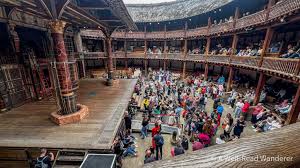
Abraham is his name. We met at an afterparty at a local theatre. He acted in the play that night, and I was an audience member. I started the conversation as he was choosing some cheese and paté, from a tray on a pedestal. I gushed with enthusiasm over the dynamic representation of a fight scene involving athletic coordination that was the climax of the plot. On stage, Abraham and his acting partner had just parried in a violent dance, each thrusting a blade with death being the intended outcome. All this action happened in remarkable slo-motion choreography, while I watched a mere three metres from the stage apron. Now I was standing near Abraham, at the meet and greet, trying to speak without crackers spilling out of my mouth.

Encounters can be exhilarating, sometimes messy, and rarely planned. A chance encounter can stay with us for a long time, if not forever. I remember as a teen being brave enough to ask if I could have an old lobster pot that seemed discarded by a house near where I was camping with my parents. I was with a friend at the time, and as he waited a few yards back at the top of the driveway, I negotiated with the owner. I said I had long wanted a suitable keepsake for my many years as a child coming to this beachside campground in Maine. I was going off to university and imagined the rectangular lobster trap would make an excellent coffee table. The owner handed his artifact to me as a gift, the look on his face was one of pure benevolence. I still remember my friend appearing equally stunned by the exchange saying, “You got it just by talking to him!”

I’m still feeling the isolating effects of Covid19. Back then we were encouraged not to have encounters due to risk of exposure to the virus. Even though I tend to introversion on the social spectrum I missed those times when I regularly attended mass cultural events. During those covid years I got used to encountering others over social media where exchanges didn’t involve the risk of a stray sneeze. In the longer term, Covid19 made us all a bit insecure about approaching others.

Now that I’m back attending the arts events that I love, engaging other humans will return in fits and starts. My social muscle memory emboldens me to initiate confidently. The actor Abraham seemed pleased that I had dared to approach that night at the theatre. He said, “And what about you?” Which raised my praise to dialogue level. Oh my, what to say next!

I’m going to need more practise at this conversation game.

Re: Manage

Once I was responsible for the care of my dying partner. Over the course of nine months, from diagnosis to death, I attended to her medical, emotional, psychological, physical, and incidental needs. Folks who have had similar trials will tell you how hard it is, yet somehow we all manage, because we have to.

Manage is a brother to Cope; yet coping has a big sigh attached to it. Related words like supervise, oversee, or control can sound overly dramatic. The act of managing is not just a technical thing requiring lists, deadlines, deliverables, outcomes, and client satisfaction. A good management scheme recognizes the elements of emotion found in doing the task.

To manage our own life might be best if we could just rely on logical thinking. But thinking only of the reasons why you want to keep your life on a positive track precludes the examination of your emotional response.

My bride and I were once Resident Managers at a newly built downtown condo tower. We were at the beck-and-call of almost one hundred owners in this modern structure of 15 stories. And boy were there stories! Each owner had his/her/their unique reasons for buying into the property. Each had personalities that required personal attention or group instruction. My wife and I tried to build community, while managing the demands of the job. We had to respond to residents who had decided their problem had become unmanageable. Consequential incidents such as; robberies, fire, flooding, vehicle accidents, equipment failures, births, or escaped animals were a few of the managerial complications that were part of our five year commitment to this post-retirement, self-directed, and amusing vocation.

Then came eldercare, which is a whole different can of worms. Management stresses here centre around ensuring the elder is feeling valued, even while declining in their faculties. I find the hardest part of this responsibility is managing my own feelings around caring for another. As an elder loses ability to manage themselves it’s easy for the caregiver to feel resentment, fatigue, frustration, and isolation. I find responding to another’s dependency is a challenge. Respect is hard to maintain when a relationship loses its two-way-street understanding. Ideally, I would like to only manage myself. But that’s not a reality since I impact others, just as they have influence over my life.

All three of my grown sons are in career management positions. They also manage themselves and their relationships quite well. Like me, they have a strong desire to be independent. My employers sometimes told me that I was ‘management material’. I believe that to manage one’s life is, by itself, a measure of success. I have felt blessed by the times when governments, agencies, neighbours, friends, family, co-workers, and lovers have helped me to manage my affairs.

Back when I provided end-of-life care to my first great love, there were many times I felt overwhelmed. Near the end of my ordeal a friend named Jaakko visited the depressing scene and said, “I don’t know how you manage.” I gasped at the comfort these acknowledging words provided. Then and now, I carry on.

Re: Tender

When my mind is in a whirl over things domestic or international, I try a little tenderness. Which is not just a classic Otis Redding song but a way to shift my attitude. Music helps me set the course for a new perspective that is more harmonious because of its positivity.

Tender is a word that can be viewed from many perspectives. For instance, I like to think of myself in this word’s noun form; as in, One Who Tends. I like to tend to my tiny garden occasionally. I like to take care of business by tending to the bills and other finances of our household. I love tending to my lover. I think every work-er is also a tend-er since he or she cares for the final product of their labour. When I was a teacher of small kids I loved attending to the instructional needs of the members of my classroom. In that situation I also tried to be tender in the performance of my duty towards the little rascals.

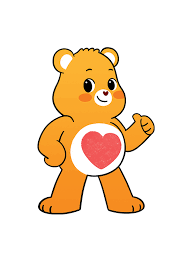
Many of my wee students once had a liking for the Care Bears, a heavily advertised multi-media marketing bonanza that started with a delightful series of paintings by Elena Kucharik in 1981. The collection was an inspiration for expansive commercialization (cards, dolls, clothes, toys, records, books, television, etc.) but the central theme of friendship, community, and caring was touching for many folks, young or old. One of the ten original Care Bear characters was Tender Heart. The stuffed toy version was a favourite of my youngest son for so long he wore the fabric heart off of his plush chest. After so much hugging and squeezing you might say that this comfort-toy became tenderized.

I find the use of the restaurant item Chicken Tenders rather disturbing even though they are delicious. Recently our BC Ferries ‘put out a tender’ inviting bids for construction of a new line of coastal ships, which had me thinking about their intent. Perhaps the management team was hoping only ship builders promising tender-loving-care would apply. Maybe the winning bidder would have proven to employ the tenderest engineers when it came to their craft. Hard to say.

Showing tenderness towards an object like a kitchen appliance is one thing, but having tender thoughts towards another human being isn’t always easy. If we are a caregiver, for example, we may still be tender from wounds inflicted by the very person we currently look after. Treating ourselves with tenderness may be even more difficult if we suffer guilt from past performance. When my emotional scars ache I surprise myself by finding stable ground in a musical phrase. A key word like tender can lead me to songs containing that word or sentiment. I can move from Grumpy Care Bear to Tenderheart by searching Youtube for musical references. The Beegees asked for tenderness from Fanny. Elvis Presley pleaded, Love Me Tender. The group General Public wondered where it was and Paul Simon couldn’t find any. Otis Redding had tenderness right when he crooned, “It makes it easier, easier to bear.”

Re: Diversity

Diversity is our strength, uniformity leaves us open to disease. The backtracking currently underway in the USA regarding diversity support is creating a poisonous environment for all but the 1%. DEI is frowned upon by those who already have everything they want and need. Diversity/Equity/Inclusion policies are designed as an acknowledgement of differences within our work environment, and in our communities.

In university I learned how monocultures are unnatural in the environment. Agricultural mega companies like Monsanto bring the message that uni-crops create more yield, thereby increasing profits for farmers. This artificial system requires massive amounts of round-up chemicals and GMO seeds to produce sustainable results. This isn’t the way of Nature. In natural systems, diversity rules because every species has value, a place, and a function. Insisting on a uniform culture is damaging to a society and to global progress. I dream of world Nations being United in the common cause of Humanity. That requires all of us to foster a belief that inclusion matters. Every human has value, a place, and a function.

Social media flows by opinion and algorithms. The AI process prefers to look for commonalities. Artificial intelligence loves similarity, like a young child trying to make connections and learn what it’s like to be an adult, the child wants to see who is like who. The tricky part is that most folks don’t like being labelled. Yes there is safety in numbers, yes birds of a feather like to flock together, yes a herd can survive better when they travel as one unit, but a herd can be decimated by a single viral infection. Conformity can be dangerous.

Recent Pride parades offer up an observable example of a society’s diversity. These events encourage everyone to respect differences, while promoting the things we have in common. We have to get over our innate, natural fear of difference. We can belong to a clan without making war on the other clans. I have been happy to live in places where diversity is encouraged because options are important to me. The greater the diversification within a city or nation, the healthier the population. Citizens can decide to march to the tune of a different drummer, even decide to play their own drum, when they feel safe to do so.

Tyranny is supported by unified, singularly focussed individuals. MAGA policies are designed to exclude any outliers. Followers of trumpism have confused the need for consistency with a desire for uniformity. Communities can be consistent in their approach to any issue without being coerced into wearing a uniform that identifies intolerance towards non-believers. During these times of WWIII proportions, I am grateful for those who stand up for the values of equity and fairer treatment for the 99%. Folks like Bernie Sanders, Charlie Angus, Alexandria Ocasio-Cortez, Beto O’Rourke, and Naomi Klein have a national and global impact. These folks speak for me.

If Humanity is to survive it will be because diversity shows the way. In Nature and in Politics variety of perspective offers a balance to the challenges of reality.

Re: Phonebook

My 96 year old blind mother-in-law asked if I was whispering something. We were sitting together in the living room and I was channel surfing on the smart TV using a remote control that I could direct with by voice. When I told her what I was doing she asked for more information. I thought to myself afterwards that my discussion with her about this new-fangled technology must have made her amazed. The fact that I can talk to my television awes me too.

If I were to describe a phonebook to my grandkids they would call me a silly old grandpa. I don’t know how I could convey to them that it was an old form of data filing, sorting, and acquisition; just for phone numbers! I think you got a new volume every year. It came in the mail. In large centres like Toronto, where I used to live, you’d get two books, one for phone numbers and one, called the Yellow Pages, for all the stores and services. These were thick soft-cover books listing thousands of names of people who you could talk to, just by dialling their number. Some homes had a special piece of furniture called a telephone table, that would have a seat attached and a special drawer or shelf for the phonebook. For some reason this curio-table would go right by the front door, where the phone guy would hook up your rotary phone to sit all stylish-like on the table’s top. As a teenager I got no privacy sitting on that telephone table in the front hallway of my parent’s duplex.

If I wanted privacy I would go to our strip mall down the street where folks could make their phone calls from a phone booth. These booths were on most street corners back in the day. They typically measured 32X32X90 inches with a funny folding door. Believe it or not, inside those closet-like compartments you would find a well-used phonebook. Smart-ass folks would sometimes tear pages from the phonebooks for all manner of reasons, leaving you puzzled when you were almost at last names starting with Y, only to find the Ys were missing.

Thinking about technology, systems, and industries of the past can get you time tripping. Inventions propel the human animal in directions only limited by our imagination. The Dr. Who television phone booth is called a Tardis, where you can time travel. And, believe it or not, magicians and guys with large biceps once made money proving that they could rip a phonebook in half. Today you can get pointers on how to do that on Youtube.

Smartphones carry far more data than a single phonebook ever did. Imagine being able to scroll to find your contact person. Gee Whiz! The other day while walking in a local park my wife made a phone call, and using that same device she took pictures of flowers that were then identified for her instantaneously. She then looked up a restaurant where we dined later following the route provided by her phone! Dial phones used to receive random wrong numbers. That hasn’t changed.

Re: Finite

Some things end. Some things are irreplaceable. Some things are lost forever. Our planet is finite: It has an expiry date. We mere humans do not know when the world will end but it-will-end. Memento mori needs to be part of a school board’s curricula.

In art class I used to enjoy inspiring my students with the thought that their ideas could create infinite possibilities. I never had the heart to tell them to get on with it because their life, in the grand scheme of things, is very short. Procrastination might be something to avoid but it’s easy to get a manyana attitude. A recent film titled The Life of Chuck points out that reality. Here we are shown how preciously fragile humans are, compared to natural processes of more cosmic proportions.

I believe death is absolute; it is final. You may leave pieces of you in your will, your legacy, or in the hearts of others, but otherwise you will vanish. You can only exist for so long: That is what finite means. I had a German-born childhood friend who used to announce the end of things by using a Spanish sounding word: Finito. My mom used to be amused by his casual dismissiveness. Once as we were enjoying P&J sandwiches in my childhood kitchen, and as we came close to the end of the jam Mom said, “When it’s gone, it’s gone!” I like the simplicity of the French word Fin to indicate the end of things. At the end of an artsy film with subtitles, I’ll get a certain comfort when the credits scroll to a completion and FIN is displayed in bold letters telling us it’s over now, time to go home.

Many natural resources can be renewable with the right degree of stewardship. In our nonchalant attitude to climate change we forget that many things are non-renewable. Species themselves are finite. When a certain type of living thing becomes extinct that is a clear end-of-the-line. Despite tales of harvesting DNA to clone bygone beasts as in Jurassic Park filmology, the likelihood that our declining planet can even support another T-Rex is improbable.

My best friend advises me to not squander my time. I know I’m finite. In art, science or politics there is room for your work to live on after you have ceased to be, but we are not immortal in the sense of the roman or greek gods. Historically some cultures have theorized an afterlife. Some had tombs built and their bodies carefully preserved, like the ancient Egyptians, to enable transport to the great beyond. Viking folk believed Valhalla would let them live eternally. I wonder if there are still cryogenic chambers available for 21st century billionaires who imagine a flight to infinity and beyond.

We can’t predict when we’ll expire. Sadly some of us will go before our time, leaving others in shock while they commiserate and consider what the rest of their lives might hold for them. We have a shelf-life. Hopefully we won’t just sit there wondering what comes next.