Re: Matter

The study of physics tells us that Matter is what makes the universe and all things in it, including us. The atomic particles that were first born of the Big Bang are part of our being.

We are made of matter yet how do we decide what matters to us? That comes from an examination of our values. What we care about and who we care for is fundamental to our existence. I have a need to understand what matters in the present context and then I set about prioritizing things accordingly.

What matters to you is totally up to you. It may relate to what you decide to eat, to wear, to read, to say, to own, to binge watch, or to march for. You can hand over this task to governments, to churches, to teachers or to neighbours but until you make your values matter to you personally you might find your self adrift in uncertainty. Determining what matters is what creates the uniqueness that is you.

My late wife took several courses on Philosophy and each time she came back from a lecture at the university where we met, she swore she was going to live the way she had just been taught. She had seen the light. She was raised in a church going family. Her religious convictions sometimes coincided and sometimes conflicted with her intellectual nature. We had some great discussions. From the content of her classes and these debates we drew closer to a philosophy of life that was consistent with our unity as a couple. We made plans using these discovered values to embark on the adventures of life.

Matter’s opposite is anti-matter. Does that fact suggest that, philosophically, everything matters and nothing matters concurrently? I’ve enjoyed examining the yin/yang nature of life. There are a lot of isms to ponder. Existentialism, we exist but why? Nihilism is too pessimistic for me. I have spent way too much time in my life trying to answer the why questions. I prefer now to seek out the how of living. That puts me leaning more towards a Zen way of thinking, if I am correct in that interpretation. I want to be more presently focussed so that I can understand what matters now.

The song Bohemian Rhapsody by poet Freddy Mercury, has meant different things to me since I first heard it. I often hum the ‘nothing really matters’ part to myself when I have no control over a situation. It helps me to detach from any outcome. Head banging aside, I find peace.

I wish to resist labels for myself and others. If you build your self concept by picking and choosing from the philosophical tree, so be it! That doesn’t make you wishy washy. More likely you will feel well rounded, not boxed in by a particular way. I don’t believe anyone has found THE WAY.

Being devoted to the creation that is you is not selfishness. You are showing respect for what matters.


Re: War

I had a conversation with my dad yesterday. In my day dream, we were both in our sixties and reflecting on our youth. Chewing the fat, as two old codgers are want to do. My dad was in his prime during the war years. By comparison I had privilege in my youth, my hay day, my halcyon years. From the age of 19-23, I was in university.

University! That time when many lucky ones are allowed to think of nothing more than sex and study. We expanded our mind and body in glorious ways in a cloistered environment. I recalled a walk back from the nearby city centre, measurably drunk and talking with a friend about how the university campus is so different from the real world. Indeed! It was engineered that way so we could concern ourselves with the importance of learning and not be caught up in the machinations of the ‘outside’.

Then I heard my dad’s story. Born in 1920, he entered his glorious early twenties ducking bullets instead of making discoveries in the lab or reading the classics of literature. From my current vantage point I could see my university days with gratitude, as part of my growing up. My dad must have mused over his emergence into adulthood as a trial by fire. I saw much to love in my life’s remembrance while he was talking stoically about soldiering on, in the face of it all. When he paused, I recalled this scene in ‘The War’ and I felt affection for all that he had meant to me.

In 1961,U.S. President Eisenhower, a former General in WWII, warned of a threat to governments. He named it the “Military-Industrial Complex.” A film, ‘Wag The Dog’ showed how easy this warped, corporate idea can take root. We have seen since then, that the business of war makes some people very rich while many, many more die.
https://www.youtube.com/watch?v=gNDmDZi05dY .

What word would you pick as the opposite of war? Peace? Ghandi was a model for passive resistance and he was a creative thinker. War suggests aggressive action so I believe an active word is required to counter it. War is destructive so its opposite must be creation. Others have written about the power that creativity has to reduce the risk of war. I am starting to think that art can be taken as an antidote to war.

In Boy Scouts I learned about fire safety. To start a fire you need three things: heat, fuel and oxygen. To have war you must have fear, social division and lies. Like a fire, war cannot exist without its three elements. Remove fear and you breed peace, create an atmosphere of social tolerance and you have no oxygen for hatred. Without lies there is no reason to doubt.

War, what is it good for? https://www.youtube.com/watch?v=01-2pNCZiNk

War is over. If you want it.

Re: Assurance

There is great satisfaction in figuring something out and then taking the time and energy to make it all work. Artists rehearse and rehearse. Editing has a purpose: to try to remove doubt, to seek assurance that the work will be the best it can be.

I think of the word assurance in a forward way. By planning ahead I feel I can cover whatever eventualities might occur and then “come hell or high water” I have some assurance that my plan will reach a preferred outcome. I’m not one for leaving things to chance. I don’t want to gamble my life with a ‘wait and see’ attitude.

Assurance is different from insurance in my mind. Insurance is a bet you make that something is going to go wrong and then you will be compensated. I don’t want compensation. I want confirmation that I have taken steps to reduce the inevitable risks of life. Shit will happen. Assurance is what I provide for myself by checking. I look to see if I am on the right track. I refer to my self designed map to assuage doubt.

I can be slothful, but only after my plans have been made. My plans often come in the form of forecast. I like to see the future as I would like it to be, then take the steps to arrive there. It’s logical to me. Sometimes I will plan down to the smallest detail, laying out various scenarios in my head. The downside of this is that I will often be disappointed.

Being a planner has its benefits and its baggage. When you wish to be in control you must commit time to planning. Truth is, I am not a ‘random’ person. That philosophy appeals to me on a Zen level; live for today and all that. But randomness is too close to chaos for my liking. My planning is my security blanket that I wrap around me when chaos reigns. I feel I have developed a set of strategies for when I have to surrender control. I’m getting better at going with the flow when others are making the decisions yet my patience is still tested until I have some assurance of the outcome.

Some have said that plans are for fools because there is always the unknown eventuality. Robbie Burns in his Ode to a Mouse captured this in the oft repeated line; “the best laid schemes o’ mice and men”. By seeking assurance I am not so naive as to believe that I can eliminate all random acts. I know that you can’t plan for everything. There are some things that we just can’t imagine might happen, these are the unpredictables or the “unknown unknowns” as Dick Cheney once said. He also spoke of known unknowns, which I believe, with planning, you can ameliorate to some extent.

I want adventure in my life. I want to explore even the deepest forest. Assurance to me is about feeling confident that, even if I do get lost, I can find my way back home.

Re: Disruption

Most people can handle being interrupted. Perhaps you’re a shift worker trying to sleep and a neighbour starts mowing the lawn. You’re on the freeway and your progress is interrupted by some construction. Disruption, however, is another matter. It means your world is turned upside down and will never be the same. We have been faced with this disorientation for several decades as the world of politics, communication, finance, transportation and commerce appear to be working to a different beat, perhaps even a different standard.

Trump was voted in because he promised to “drain the swamp”. As a disruptive force he has few peers. In my lifetime I have no one to compare to his total disrespect for convention. His campaign slogan ‘Make America Great Again’ can be ironic in this context. Comfort can be found in old ways of doing things, even when it’s not healthy. I don’t think of myself as an old fogey, prone to complaining about the way things used to be. I can embrace change and enjoy looking towards the future with hope not trepidation. I think most people can handle change well, especially if they are invited to be part of the change process.

Change makers were once referred to as innovators. Existing technology or infrastructure was modified, not razed. A societal advancement or some new product became brighter, faster, stronger, longer lasting but not foreign to our senses. Now change can be so dramatic it startles. No human cashiers at the 24hr store, what are you talking about? A phone that can take a picture, are you nuts? A transport truck without a driver, are you kidding me? Paying to sleep in someone’s house, you’re joking right? I text for transport to the airport and my neighbour arrives, for a fee, it’s Uber easy! Yet, when the motivation behind disruption appears to be all about the money, cynicism grows while the potential enthusiasm for something new diminishes.

Disruption is like exponential change, like having a baby, like a forest fire that clears acreage making way for fresh growth. Disruption can be beneficial. It can be revolutionary! Yet too much fire can seem apocalyptic, immobilizing and devastating. With manufactured change, those born before this new millennium knew another way, so some of us may feel out of touch.

Power comes from feeling part of the revolution. Hope is knowing in our hearts and minds that things will work out eventually. Humour allows us to all catch a breath from the stress of it all. Poetry has always been a people’s choice and voice when times get messy. I like to be silly with my poems so I’m going to be disruptive and suggest a whole new literary genre: Non-Fiction Poetry. In our present push to challenge existing structures, we must not lose sight of facts. So my poems will be purely factual; not opinions, neither musings nor reflections. Joe Friday used to say: https://www.youtube.com/watch?v=v4LPkmGO5Cc

Here’s my first, titled, “100%”.

A slice of pie
Is 100%
Pie.

Re: Culture

Can we have a personal culture? That was a question that recently spawned a dinner table conversation. As you would expect, there were views ranging from no to yes. Thankfully no borders were established as with countries espousing and protecting their unique cultures. The grey areas within the bounds were deliciously dissected and analyzed.

Since clubs, teams, societies, all have their own particular culture why can’t a person have a culture of one? Since culture is often defined as something that is shared that might rule out a personal method of doing things, and yet, can’t we say that each day we choose to go about our business in a certain preferred way? My behaviours may intersect from time to time with others and conversely there are times when others join me in my particular pursuits.

I wouldn’t like living in a country that insists its immigrants distance themselves from their original culture. I like to believe I’m comfortable with pluralism, multiculturalism or cultural diversity: a rose by any other name. I like walking around spotting various clothing styles, ethnic garments, headdresses or coverings on people of various hues.

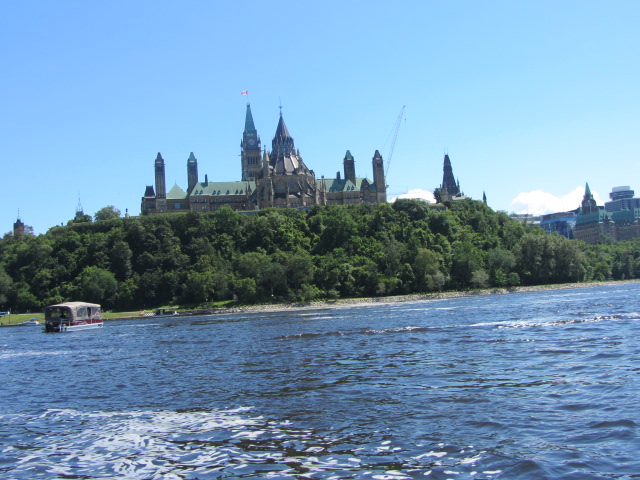
Recently I enjoyed a light picnic at Parliament Hill in Ottawa. Others assembled in small groups looking for shelter from the sun. The benches that lined the walkway held a mixed community of Canadians: near our Caucasian circle sat a family of East Indian decent, across the path a First Nations group chatted with another in a wheelchair. For an idealist like me, it was a harmonious sight in a beautiful setting. As the mother of my grandson was breastfeeding her new baby, two women from the Asian camp, came over to offer support and words of advice. We were marginally startled by the invasion of our space. Three white police officers on bicycle patrol stopped the Aboriginal group from publicly drinking beer from cans. The fluid was discarded and the patrol continued. I wondered if that group had been racially profiled. A mild clash of cultures was evident to me as I chomped my bread on the very grounds of Canadian democracy.

And I am aware I am revealing a sense of ownership with that last statement.
When I say ‘I am Canadian’
have I wrapped my culture in my country’s flag like some commercial promotion as this famous Molson advertisement? Does this mean my definition of my culture excludes others from having their unique take on it?

Questions like this circled about me as Victoria City Council announced the removal of a statue of Canada’s first Prime Minister from its municipal centre. Just as my personal culture has changed as I have grown older, here was an example of a local culture adapting to a new understanding of the times within which we live: A new day. A new idea. A new view. Must we risk throwing the proverbial baby out with the bathwater when we redefine who we are as a people?

I need my culture to be inclusive enough to allow me to fit in as much as the next person.

Re: Relief

“Plop Plop Fizz Fizz Oh what a relief it is.”

If only other forms of relief came this easily. Tummy troubles are one thing yet I have an atmospheric feeling that there are currently so many troubled people in this world that relief may be hard to find and a long way off.

My daughter-in-law recently gave birth to a premature baby, my second grandchild. After they both returned from hospital, safe and healthy, I asked her what her first thought was as she held her child. She said, “Relief.” Her head had been spinning with tension of the event and the wave of relief, that her babe was now well, filled her consciousness. I was relieved that I could be nearby.

In my youth the idea of being a relief worker had certain attraction. Red Cross, CUSO, OXFAM, CARE were all possibilities back then to anyone who had wishes to provide humanitarian support to the globe’s needy. As a teen I only thought of relief in terms of the dramatic: helicopters, food drops and maybe the blue berets of the United Nations mobilizing to save lives in crisis.

Our games recognize the need for relief. For example, wrestling has its tag teams. Football has defensive and offensive lines. Baseball coaches send in a relief pitcher when the starter underperforms. Religion respects the need for relieving our worries. When we are feeling guilty about something it is helpful to be told that we have not been responsible or that someone has taken that sin from us. With the burden removed we walk taller and with more assurance.

Most times relief is easy to find; a cool shower, some shade, a friend who listens, a drink of water, aspirin, an answer to a question, sleep, a good book, music, a meal. Often, however, life is so layered with complications that it is hard to figure out what might bring us relief, so instead we numb the pain. Or we try to take it away all together by attempting suicide.

I’m not very patient with pain. My medicine cabinet is stocked with whatever I can acquire to be there for me when a part of my body protests over the normal stresses of life. I try to keep my complaints to myself because they are minor. I feel fortunate everyday that I don’t have a chronic condition. I have visited a psychiatrist who admits his specialty is more related to pain management than a specific DSM-5 condition. He understands that there is pain in anxiety as our body responds to the stress of living.

Drug use is at crisis levels in North America, as people turn to physicians, or failing that, the street, to cope with the pain of life. Reasonable people, denied access to medication that once brought relief are seeking other ways to chemically address their symptoms. Many die taking these problems to the underground economy, where relevant controlled dose measures are not part of the deal.

Buyer Beware!

Re: Shop

“Shop til ya drop” is an overused phrase that makes me cringe.
I’m not a companion to take shopping, as my patience limit is under thirty minutes. The Beer Store in Ontario used to have large signs in the parking lot that encapsulated the way I have always tackled going to any store: IN and OUT.

In high school I enjoyed going to shop class where I would learn how to make things with my own hands. Going FOR a shop was not something I considered, unless it was a mad dash to get presents for my parents the day before Christmas. My first experience with the word Shop was likely read as a noun from an English child’s picture book. The accompanying colourful drawing of a quaint British store looked nothing like today’s corporate, commercial, ‘delivered right to your door’ enterprise.

I went to IKEA for the first time recently. I was happy I had a guide. Previous to this spontaneous visit my only notions of this highly successful business were through highway sightings of giant blue&yellow buildings or frantic ads like “Start the Car” https://www.youtube.com/watch?v=NlWCLw75XnE .

With my close friend nearby and the lighted arrows up ahead providing some reassurance, I entered the chosen monolithic structure. I relaxed a tad, knowing I wouldn’t get lost or swallowed up by thoughts of someone forcing me to buy something. Everyone, it quickly appeared to me, knew the deal. They calmly measured items, tested paint swatches, lounged in carefully configured rooms. I saw some children running around in small packs. Other kids played video games on phones while their elders pushed them in giant carts. Some young adults held hands and giggled over some of the merchandise. Other pairs were more serious as they appeared to weigh options for their home or apartment. Several women were so close to giving birth I wondered if there were medical staff on site, for just such an eventuality. To my eyes it was a herding community of hunter/gatherers, on the move for bargains for sure, but also, looking for a sense of belonging.

Several signs, large and small, supported shoppers with these dual quests: Near the Bistro, “Why we ask you to clear the table.” Near the cash out, “Sometimes you just want to pick it up.” I only saw a few employees but I expected there were hundreds busy working in what amounted to a small city. My loudly muttered comment that the restaurant line-up was too long, was overheard by a cashier who called to me reassuringly, “No it isn’t sir.”
There was order, uniformity and connectivity in this place. If you had the correct product code you could find your item, eventually, predictably and feel the satisfaction of having done it yourself. Out in the parking lot, cars, SUVs and small trucks were loaded for the trip home. All shoppers had a look of fulfillment, not exhaustion, on their faces.

I thought to myself, what would Darwin think of this place: IKEA, the idea.

Re: Place

I think that education (formal or otherwise) has a primary purpose: To help us discover our Place in the world. This is vital to the creation of a fulfilling life.

There are examples in history where this idea of finding one’s Place can be manipulated by leaders of companies or governments who need classes of people in order to bring about their own vision. Japan once went to extremes by using training regimes with children in order to build a warrior class. Every country has educational training methods that indoctrinate individuals with the intention of building valuable citizens. Companies often require employees to loyally take certain tests so they can be placed in a productive position within the corporation. I personally find these methods of manufactured placement rather creepy. For example the hand placed over the heart while standing for the U.S. national anthem symbolizes loyalty to a national vision while reminding me of the raised hand of Hitler’s Nazi salute.

Finding our own place in society is an extension of familial roles. For example, we can start out being a son or aunt; a rigid place holder dictated by birth. Geography can be a factor in your place view almost by definition and time/space also has an impact. For example, at some points in my life I have identified with another time period, figuring I might have enjoyed a place beside Charles Darwin on the Beagle. Whenever I travel in the present, the time zone can make me lose my place as much as the country’s subway map or its language.

My place in my family was structured by my mother. My functions were clearly defined under the headings: son, brother, student, society member. She had role expectations. I rarely challenged my place in her world. I sought other places where I could experience change: First by going to university, marriage, moving for a job and a taking a chance to build my own family.

I ponder the nature of Place using a simple question, “Where do I fit in?” The talents I developed in my life have provided a sense of place and redefined how I interact with my family or the community. I have wondered, “Once I find where I am in this place how can I best enjoy life?” Most people don’t like to have this question come up too often. There are people who have never moved from their home town, always voted the same political party, never changed their job, or always bought the same products. There is satisfaction in knowing one’s place, so rarely is there a need to question your choices. In fact, to question your choices can be unsettling. While the risk may be worth it.

The search for one’s Place starts with an understanding of one’s self. It’s knowing how it feels when you ‘fit in’. It’s learning to recognize when you are ‘out of place’. Sometimes life is like being in a play. You wonder what your role is. Without a script your world tips. Suddenly you recognize your part.
All is well and the show goes on.

Re: Spectrum

In high school physics class I learned that light comes in a spectrum based on wavelength. Red has a longer wavelength than violet. Red is like soft, gentle swells while violet waves are the choppy ones. On a sunny day these visible electromagnetic waves come through the cut glass in my front door and spread the familiar colours red, orange, yellow, green, blue and violet in that order, over my entrance wall.

Spectrums can be found or made in our imagination. I find thinking of spectrums useful when I’m searching to understand the range of possibilities in my world. It’s fun to play the game: ’Where are You on the Spectrum?’ For example, with Point of View: Are you more a tree or a forest person? Socially: Are you Introvert or Extrovert? Risk: Averse or Bold? Energy: Mellow or High Strung? Most personality tests are based on determining the answers to questions like these, then sorted to find your ‘type’.

I suspect fewer people are at the edges of any spectrum you can dream up in this game of finding out. Most of us will have personal qualities or preferences that put us somewhere to the left or right of the mid point. That doesn’t necessarily make us dull, just balanced. But strangely, most of us get nervous when it comes to diversity within the spectrum of humanity. We like to have things all the same and we often attempt to keep the outliers in boxes of our creation.

I belong to some online survey groups. The opening questions are intended to sort me into categories. I find myself unable to answer some of these questions because, like most people, I don’t easily fit into a binary world. In the modern marketplace, companies would love to find out who we are on a spectrum. If corporations can determine your likes and dislikes then they can create an algorithm that can match you to one of their products. To me this is another example of profiling. Police departments have been accused of racial profiling as a way to narrow their arrest protocols and Big Business regularly tries to get a handle on their customers, so that they can get easier access to their wallets.

Recent Gay Pride events highlighted the spectral nature of sexuality. The rainbow is a fitting symbol as it suggests that humans, collectively and individually are varietal. On the sex spectrum I feel more masculine than feminine and I appreciate members of the gay community stepping up and out to remind me that we are all a blend of hormones and attitudes. We all need to feel free to express ourselves in ways trivial or universal. I like yelling at ball games as much as I do crying while watching musicals. I try to vote responsibly and I have marched in solidarity for causes that acknowledge diversity. I am grateful that I live in a society that recognizes the value of inclusion.

Many colours make up the light that streams through my window. That light animates all life.

Re: Retarded

There are some words that you are not supposed to say. Some are mildly frowned upon, while others are clearly restricted to just their first initial. These culturally unsanctioned words are found offensive for several reasons, the most powerful being that they can be used as a slur directed to intentionally hurt another human being.

I’ve used the word Retarded regularly. As a youngster it just flew from my mouth without thought, as an emotional indicator. Those were days when it seemed permissible to put down minorities, although recent events in the United States under President Trump suggest a return to these norms. Anyway, I remember getting a comedy book for Christmas as a nine year old that included in its title, ‘100 Newfie Jokes’. On a recent trip to Newfoundland I was surprised to see books like this in tourist shops. One was straightforwardly titled, ‘Newfie Joke Book’ and is available online with the subject matter promoted as being part of “our Canadian culture” and that Newfoundlanders have a “good hearted ability to laugh at themselves.” Really?

Back in 2011 two cast members Jane Lynch and Lauren Potter, of the television show ‘Glee’, ended a public service announcement titled ‘It’s Not Acceptable’ with a powerful appeal to end the use of the word Retarded and others that demean or degrade. (Youtube: https://www.youtube.com/watch?v=T549VoLca_Q )
In March 2018, Special Olympics Canada produced a dynamite ad about the abuse of this word to support a campaign on Twitter called #nogoodway.
(Youtube: https://www.youtube.com/watch?v=kcPv2Ruiuu4 )
And Netflix recently aired a special by comedian Hannah Gadsby called ‘Nanette’ that beautifully addresses the practice of put-downs in stand-up routines. She speaks with much grace about how she will no longer play along with this ethos. I can’t imagine her telling a Newfie joke or saying the word Retarded.

Why have I been reluctant to shed the word Retarded from my vocabulary? Maybe it’s because I feel strongly about censorship, but that’s no excuse. As a teacher of special needs children I often had the opportunity to be a cheerleader for those of differing abilities. A close colleague of mine bore a Down’s Syndrome child, whom I enjoyed watching grow into healthy adolescence. I used the television program, ‘Life Goes On’ as a parenting tool with my sons and Corky (actor Chris Burke) would come up in conversations around our dinner table.

My resistance to ending my relationship with this word has taken years of erosion. A cousin of mine once chastised me for using the word Retarded. At the time I didn’t want to follow her reasoning because I didn’t trust her opinion. I told her that she lacked a sense of humour and was being overly sensitive. I feel differently now.

I’ve been gradually persuaded that there is no good purpose to say the word Retarded. Thinking differently starts with changing one’s perspective. I am making a conscious effort to filter my thoughts more effectively to use a more appropriate word. I’m sorry it took me so long.