Re: Theatre

“Don’t go into theatrics.” my mom would say when I tried to explain why I did something she had thought was outrageous. Both my parents had local community experience on stage, so references to theatre popped up often during my childhood. My mom and dad met in a Social Club (which was a popular institution in pre-WWII England). These clubs were run by youthful members who planned dance-nights, sports events, card parties, and cultural festivals. Much later, in Canada and the USA, my parents organized successful amateur productions of traditional drama, musicals, and participatory community theatre.

My mom had plans for her son and daughter to go into showbiz. My sister and I performed on union hall stages and auditioned for television amateur shows. We didn’t like the spotlight. We didn’t dedicate ourselves to honing our talents. We were content with the theatre of our own lives. What we extended into our adulthood was our love of musical theatre, particularly as produced for the cinema. I knew many songs from these shows enough to sing heartily in the shower, or someplace private. My sister, once drunk, belted the lyrics out with enough gusto to convince me she knew them by heart too. Theatrically, our own paths diverged only slightly: She acted out on the karaoke stage while I joined voices with others in church choirs. My mother always referred to us as the devil and the angel. Pity us both.

That symbol of theatre; those masks of joy and sadness, are evident in personal lives as well as behind the curtain. There is an element of pretending in our behaviour. Some might refer to it as, “Fake it ‘till you make it.” I have to say I have tried to be genuine in my approach to life. Others have expressed that I am a man of even keel. I suppose I have tried to act that part whenever I can, being the guy everyone can count on. However there was one time in my early forties where I forgot my lines. In fact I totally went off-script and let others take the responsibility for life’s big play. Those days lacked the lift found in a musical production.

I relate closely to films that examine the complexity of the human condition. Recently I was transfixed by the television series Mare of Easttown. The titular character played by Kate Winslet, was disturbingly close to my memories of my sister. Within the gentle comedy of Ted Lasso I found that title character, played by Jason Sudeikis, to be as close to what I would like to be in my world. Self perception is often inaccurate and we may wish to deny the associations we deem fit to define us. Within the theatres of our mind we have had directors, script writers, costume designers, and singing coaches all trying to make our performance be spectacular.

A life’s work is finding the song we can sing, or the part we can play that will bring us to the red carpet knowing we’ve earned the recognition.

Re: Annex

I once pictured myself living like the TV character Fonz in a room above the garage of my friend’s house. My days would be happy, without my parents, yet close to a friendly group. I’d have my own key. Life in this annex would allow me to be me, without worrying if anyone was watching. This is sort of why I like relating to folks on television rather than real people.

When I had enough money to actually consider building a house I wanted the blueprints to show an annex that would enable me to welcome guests while keeping them at arm’s length. This auxiliary structure would be in the back garden like a granny house, or maybe in the basement with a separate door to the outside. I recall a TV detective named Baretta who had an extension built on his home allowing him to park his car in his living room. Now that would be cool.

What is not cool is when countries decide that annexing a neighbour country is acceptable. Throughout history powerful folks; Attila, Genghis, Alexander, Elizabeth, Polk, Hitler, Putin, and Netanyahu to name a few, showed that annexation through aggression was possible, whether in the name of The Doctrine of Discovery, colonialism, nation building, eminent domain, manifest destiny, or other justifications. To build an annex in an international context is not pretty; lives are lost, livelihoods are destroyed, cultures are melded, maps are redrawn with evermore confining borders where further abuse can be committed.

Russia’s leader has been pursuing his plans to annex Ukraine and absorb that piece of geography since 2014. Putin has said that Ukraine is not a country. The world has been watching with fear and loathing at this lack of global diplomacy. Israel’s leader has found excuses to exterminate Palestinians in what is clearly a genocide to many. Netanyahu has said that Gaza is not a country. The world has been watching.

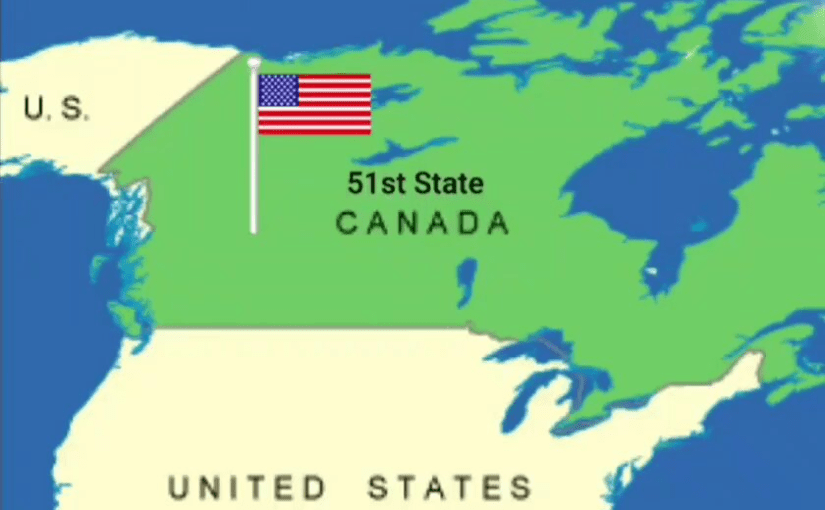
Canadians are angry with POTUS 47. Trump keeps joking about making our country of 40+ million people into a 51st state of the U.S.of A. The President of the United States says that Canada is “not viable as a country”. So far it is a trade war, but we above the 49th parallel are not holding our breath because we have come to experience the insanity found in that oval office to the south during the reign of POTUS 45. Canadians live next to a country with abundant metaphorical annexes where their own cultural differences are rarely acknowledged. Trump’s dis-united states are bickering amongst themselves, in some ways similar to the time when many jurisdictions wanted to secede from that bygone Union, so it’s hard to believe they would buy into their president’s plans to add to the family farm. Fun Fact: The USA already has 5 territories that have expressed a wish to be fully under the stars and stripes.

In my imaginings I can’t picture myself, or many Canadians, wanting to live above the space currently occupied by USA. Even if I had my own key.

Re: Comedy

My mom used to tease. My sister, father and I found her intentionally mean jokes discomforting. Consequently I learned that having a laugh at someone else’s expense was not comedy. John Cleese, of Monty Python fame, posted a message on Substack regarding the difference between affectionate teasing vs nasty teasing. I took exception to his exceptionalism because I’d seen the devastating results of my mom ‘taking the mickey’ out on innocent angels. It’s no surprise that her favourite comedians were Don Rickles, Joan Rivers, and Rodney Dangerfield. Mom was dead before Ricky Gervais made a name for himself through insults, but I’m sure she would have liked his style. Teasing, Insults, Swearing, and Sarcasm can be found in my Book of Humour under the chapter titled: Cheap Shots.

Humour is subjective. Art is required to be judged by the individual. It’s how we figure out that our mouth is not the only place where taste can be discerned. And, of course, it’s impossible for all to agree on what comedy means, anymore than we can be uniform in our response to the flavour of olives. My love of humour tends toward the silly and the slapstick. I don’t understand how my bride absolutely hates silly comedy yet she loves scatological humour. To me, the silliness found in Monty Python sketches is innocent and wise at the same moment. The Three Stooges enthralled me as a child with their antics of mayhem. Later, I laughed at the absurd body language of Jerry Lewis, Dick Van Dyke, Rowan Atkinson, and Jim Carrey.

My favourite actors are also comedians. Sometimes the line between pathos and buffoonery can seem gauze-like. Robin Williams mastered this dichotomy as did Jack Lemmon before him. Humour is perhaps the most provocative art form. The double entendre found in most witticisms sets up a conflict in the mind, making it difficult to decide the truth. Stand-up comedy is challenging in this way as it reminds me of the court jesters of centuries ago trying to please the royal master while playing to the impoverished masses. Editorial cartoonists like Michael deAdder perform a similar function of pillorying political figures to make an inconvenient truth apparent. In these cases we might join in mocking laughter; “The joke’s on you!”

Comedy has to catch you at the right moment. This year is the 50th anniversary of that comedic phenomenon Saturday Night Live. Lorne Michaels deserves credit for creating this iconic television show and nurturing hundreds of comics in the process. Dark, silly, political, sexual, racial, religious and physical humour are blended like a box of specialty chocolates. The spontaneous nature of the sketches, the improvisations, can land with a bang or a plop. Something coming off funny can depend on the mood of the audience as much as the skill of the performer.

What strikes your funny-bone may be arbitrary, yet comedy is necessary to our mental health. It’s no accident that situational comedies on television have been a staple of that medium. We need to laugh most when the situation seems most dire.

Re: Trigger

The word Trigger gets me thinking about guns. Don’t get me started on the 2nd Amendment of my basement neighbour’s Constitution! I’m triggered to think of the atrocities committed in the United States that are directly related to the insane belief that some Americans have regarding their right to bear arms. Of course, gun culture is not exclusive to the U.S.of A., but that nation sure knows how to promote it.

Most guys my age had a set of toy six shooters under the Christmas Tree. These faux firearms came with a roll of caps to create authentic sounds of engagement. As a nine year old I met up with my friends in a nearby ravine every weekend to play Cowboys and Indians. As well as my holstered cast aluminum pistols, I carried a replica carbine rifle and a derringer tucked into my sock. I was packin’!

Television at the time had role models to enhance your imagination. I could pretend to be Roy Rogers who had a dog named Bullet. I’d pretend to ride his horse named Trigger, chasing after bad guys who only understood justice from the point of a gun. Today you can view an endless stream of Netflix dramas that feature gun play. Violence is depicted as necessary, the weapon as an equalizer. Rarely is guilt factored into that fictional equation, since the end result justifies any and all means. So goes the script anyway.

What sets a person off can often be a good starting point to any discussion that requires resolution. I’ve been noticing lately that even a single word, misinterpreted, can incline the conversation in a surprising direction. Language can trigger memory and, like the speed of a bullet, the damage of that recollection pierces your heart as though the wound was occurring in real time. With feelings tightening, it’s very difficult to return to the onset: The flames of unresolved issues have been fanned into a firestorm of emotion. It’s a firefight.

I used to idolize the gunslingers I followed on my favourite tv westerns. They had a quick trigger finger and a focussed aim. I liked it when their precision shot would blast the gun out of the bad man’s hand, disarming the villain even while correspondingly shaming him for his intent to harm the innocent town folk. To this day incidents of bullying are most triggering for my childish mind. I picture myself as the sheriff walking about my village with a space gun (set to stun), or a rapid fire nerf shooter. I’ll be doing my rounds, ever watchful and fully prepared to immobilize the blaggards of my community. Thankfully, my adult sensibility has found ways to tap into a relevant response to current stressors.

I’m getting better at not letting triggers dictate my immediate action. I’ll review my past association with the words or behaviours I’m witnessing before going off half cocked. Metaphorically, for safety sake, I’ve put a lock on my triggers, to avoid any random violence. Peace and reconciliation are my aims.

Re: Kid

While binge watching the television series The Office I had an awakening: The entire cast act as kids! The writers/creators show humans doing adult jobs, in an adult business, all trying to be adults but they are all just children playing in a sandbox. I kid you not, watching the show with this lens of kid-ness, gave me insight and joy in equal measure. Each actor shows their unique childish pleasure-seeking side: Michael wants attention, Dwight is a warrior knight, Kevin wants to eat, Creed steals, Andy sneaks, Jim teases. And, like kids, they all want to become. We are the camera, watching, judging, cringing at all the examples of how rude, obnoxious, hilarious and immature the characters are behaving. Sometimes I caught myself from wanting to discipline Michael, “Stop kidding around, that’s not how adults are supposed to behave! Be serious. You are supposed to be the Boss!” No wonder when any of the cast stops being selfish for a moment and acts like an adult, we are mystified: Where did that maturity come from?

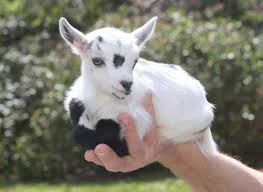
This masterful work of television offers a chance to put all kidding aside for a moment so that you can recognize aspects of human nature. I don’t think we ever completely outgrow our kid stage. In my family both my dad, mom and sister all followed Peter Pan out the window. I was left to look after the house. I sensed the adult void and assumed the role. I lost out on some parts of being a kid because I had to come to the conclusion, as Wendy did, that we all have to take responsibility for our actions.

Perhaps we are not too different from some insects. We have a larval stage when we eat constantly. We pupate as adolescents going through fundamental chemical changes. Some of us come out of our chrysalides as adults, fully operational. Yet we all know folks who are just barely adults; those with low tolerance levels, still behaving in excess/access mode or perpetually afraid. That immaturity can make us an easy target for manipulation. The wolf in sheep’s clothing could just as easily be the parent poser in a cozy sweater.

As a kid we are used to following instructions as long as we get a treat. As a kid it’s natural to point to the other saying, “He/She did it!” I’m not kidding around if I suggest that maybe a dictator appeals to the kid in us. We expect leaders to show us a safer place. Dictators take care of things. Despots come up with easy answers that don’t need to involve us kids. A despot as a sibling can tempt us to do irresponsible things. Trump may have been an example of a dictator who failed because he was too much like a kid. The adult part of us finally caught on to his disguise. The fun stopped. Perhaps we finally grow up when we realize that truth is fundamental. I hope I’m not kidding myself.

Re: Privilege

COVID continues and I’m binge watching the television series The Crown. Talk about privilege eh? I feel lucky to have something to occupy my thoughts amidst the luxury of NOT having coronavirus. The portrayal of the British Royal Family shows characters who are the epitome of privilege. Setting aside their vast wealth for a moment (and I don’t do that lightly), I ranted privately on how someone could be given the right to rule simply because of the circumstance of their birth. The reign of Queen Elizabeth II parallels my time in history since she ascended to the throne the year I was born. My British parents were working class and yet still had an affection for the “goings-on” at Buckingham Palace. My mom thought that Edward VIII did the right thing by abdicating and “leaving all that nonsense behind.” As the episodes of The Crown unfolded I often shook my head in a socially egalitarian way, yet before I got too judgemental about the Windsors I couldn’t help but take stock of the ways I have been privileged.

Firstly, I’m born a white skinned male. Enough said? I’ve had the privilege of a solid education. I held a career with public status and enjoyed an income healthy enough to support a family of five. I can’t help but wonder how others may see what I’ve done with my privileges. I do believe with privilege comes responsibility yet I recognize I have been selfish at times with my talents, my resources and my energy. Someone once told me that I “present well.” I’m sometimes embarrassed by the privileges I have not earned, however it’s been a privilege to help maintain the society within which I have been able to thrive. I try not to abuse the gifts that have been bestowed on me. I sincerely feel that privilege never gives me licence to be rude or disrespectful.

Birthright does not always enter into the success of an individual’s life, hard work and talent can place you in a privileged, enviable position. It’s true, those who work hard deserve something special for their efforts. However I also judge the way the wealthy few exercise their privilege. When I think of today’s 0.1%: Jeff Bezos, Elon Musk, Bill Gates, Mark Zuckerberg, for example, it’s clear they represent the new royalty. Their individual wealth gives them privileges far beyond anyone currently entitled to a crown.

When dog walker Amy Cooper famously ranted in Central Park she abused her privilege. When Ted Yoho swore at Alexandria Ocasio-Cortez he assumed his privilege would protect him. Ms. Cortez later stood in Congress on a ‘point of personal privilege’, and gave a moving speech related to human rights.

Sometimes it is clear where the line between privilege and right is drawn. The United Nation Declaration of Human Rights includes 30 rights felt to be essential to human life. They are often disregarded, usurped or dismissed by those who claim privilege, however these rights are inclusive, irremovable and do not depend on where, how or to whom you were entrusted at birth.

Re: News

“No news is good news” is a popular phrase attributed to the English King James around 1616. In the present day context the phrase might be distorted as: “All news is fake news.”, “Good news is suspect.“, “Bad news is everywhere.” As a person who needs to know, a day without news of some kind presents a dilemma of sorts.

Newspapers, of the actual made with paper kind, have been an important part of my life. Growing up in Toronto, I was used to the Telegram which was my father’s choice for print news. I loved the comic section on weekends and they had great coupons for use at the Toronto Exhibition (The Ex) every summer. I delivered the Toronto Star as a teen, snagging the occasional copy for free and enjoyed debating the different editorial points of view with my dad. When I went to train as a teacher, the Globe and Mail became essential to me for the job postings. Previously, Dad would have referred to the Globe as “that rag!” because of its editorial tone against workers and its support of business before people. In truth, I did snag my first job interview thanks to the Globe.

I encouraged all my sons to have a paper route. It may seem old fashioned but I still maintain that this early job helped them build personal qualities of orderliness, perseverance, responsibility and tolerance. They osmotically became curious about what they were carrying each day, and how the task exposed them to their community, their village members, and a wider world.

Digital media now takes centre stage for news delivery. Some content remains faithful to the journalistic standard of daily print newspapers around the globe. For example, I enjoy The Guardian being dropped off in my virtual mail box every morning, like the ‘Hear Ye, Hear Ye’ of old England, bringing me a non-North American perspective on stories of the day.

I recently had a brief Twitter exchange with a member of The National, CBC’s nightly news platform. I have some issues with television as a news source: the commercials, the sensationalism, the growing folksiness, the ‘team’ approach. I dislike turning a news broadcast into entertainment. I want nightly news to be delivered with a serious tone by someone who takes the day’s events as seriously as I do. Later, I can enjoy Stephen Colbert helping me look at the absurdity of some news items, he’s amusing and provocative, but he’s no Walter Cronkite, Ed Murrow or Diana Swain.

I would much rather know than not know. Gathering news from a variety of sources brings me peace, even if the news is bad. From the information I have gathered I can make a plan, formulate an idea, or resolve a conundrum. No news is definitely NOT good news for me. I wouldn’t call myself a ‘news junkie’. This is a harsh interpretation of the need for facts and indicates a compulsion. I resist feeling compelled by anything, but I do get a bit twitchy when my morning paper doesn’t arrive on time.

Re: Write

I am a writer. It took me a while to say that, to myself, before I could proclaim it to the world. I grew up with the notion you had to BE, before you could claim to be. There was something in my mother’s teaching that made me reluctant to attest to something about myself unless someone else, officially, had acknowledged it first. Even when I became an adult and wrote for my daily newspaper, my mother continued to think; ‘a Writer is someone who writes Books.’

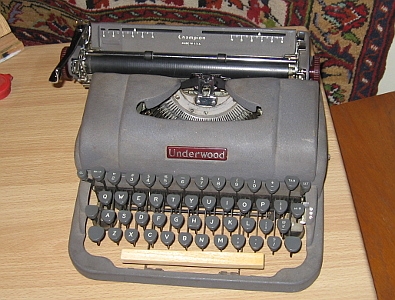
I have mixed feelings about the drive to be a writer as my father spent almost every spare moment during my pre-teen years clacking on his Underwood. Having gone through my own mid-life crisis I can recognize now, what was going on with my dad. He was at a crossroads and he thought sending off manuscripts, with rejection slips inevitable, just might bring him the fame he was after. My mom kicked him out of the apartment for his ‘writing obsession’ and only let him back after he promised to write no more. These were very stressful days for me. The house was suddenly very quiet after he took his typewriter and left. To this day I will feel heartache whenever I see one of these antique word processing machines. The departure scene became forever connected to WRITING. To venture into the land of career writing became filled with the prospect of following in my father’s failed footsteps. Nothing pleasing to picture with that scenario; move along please.

What a negative space I occupied; Being unable to write because it didn’t feel right. Thankfully I recognized that this attitude was largely self-imposed. As my teaching career wound down I approached our local daily newspaper with an idea for a weekly column. It felt like a rite of passage when I got hired. The Daily Press even used me as a roving reporter covering the arts scene on the weekends. I tapped away on the keyboard of a new Bondi Blue iMac (much quieter than my dad’s machine). I discovered that the more I wrote the more I wanted to write. I had tapped into an artistic side of me that had been hungering for release. I wrote editorials. I wanted to be a righter of wrongs. I kept poetry diaries and trip journals. During my last few years of teaching everyone in my classroom wrote lots of stuff. We shared the results together with delight. We played with homonyms, synonyms and antonyms. We made up nonsense words and made them into cartoon characters. Sometimes it only takes one person to read your work to make you feel accomplished.

One year, to honour the passing into the new millennium, I wrote a full page of thoughts for each day of 2000 thinking it would be a curiosity for my grandkids someday. My wife was diagnosed with stage four cancer in January 2001. For the next 288 nights she asked for a bedtime story; either Winnie the Pooh or a page from my Millennial Journal.

Re: Television

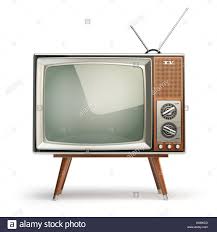
I think many people my age can say their childhood was influenced by what they saw and heard on television. For several hours before and after school the characters I watched on that old TV set provided childcare and I did feel nurtured by them all: Captain Kangaroo, Mr. Green Jeans, The Friendly Giant, Romper Room’s Miss Molly, Buffalo Bob. They were as real to me as if they lived down the dirt road I walked to get to school. Combined, they were like a third parent; offering advice, a quiet moment together. They gave me ideas to explore when I was out on my own.

As I got older I would plan my after school time with the scheduling calendar in the mini magazine, TV Guide. The white lettering on a square TV screen of their logo became as familiar to me as the CocaCola brand. I studied the pages each week using a pen to circle my favourite shows. I read insider info about the actors and learned about things like ‘Prime Time’ and ‘Soap Operas’. I remember one September when the networks were announcing their Fall lineup I pounced on that Preview edition, cutting and pasting the show titles onto a Bristol board display for a grade five art assignment. I was just approaching adolescence when NBC announced that they were programming a new space series. I’ll fully admit to the state of my pubescent hormones at that moment by declaring orgasmically that Star Trek was the seminal TV program of my life.

Who would think that a telecommunication device would offer so much enjoyment to the viewer; young and old alike. The four years leading up to my mom’s death in a nursing home included regular doses of programming through the Turner Classic Movie channel. In conversations about the films she viewed, it was clear the plot had become melded with her own life memories. Some at the extended care facility even suggested that TV watching was becoming too intense for my mother and therefore ill advised.

Such comments reminded me of the early days of television when it was forecast that viewing could not take place too close to the set, or too much viewing would dull the mind or distort your perceptions of the real world. Parents often questioned me about the advisability of television quality and quantity for their children during parent/teacher nights. Many were shocked that I allowed my own children to watch The Simpsons. My view has always been less about censorship and more about using whatever is televised as an opportunity for discussion. I would teach my children the difference between watching Television and watching a Program. If I felt suspicious of the content of an episode or series I would ask that I be allowed to join them in the viewing.

It is safe to say that television has contributed to my development just as novels have done to previous generations. The characters and incidents I have witnessed on the smaller screen have made a lasting impression and continue to inform my being.