Re: Phonebook

My 96 year old blind mother-in-law asked if I was whispering something. We were sitting together in the living room and I was channel surfing on the smart TV using a remote control that I could direct with by voice. When I told her what I was doing she asked for more information. I thought to myself afterwards that my discussion with her about this new-fangled technology must have made her amazed. The fact that I can talk to my television awes me too.

If I were to describe a phonebook to my grandkids they would call me a silly old grandpa. I don’t know how I could convey to them that it was an old form of data filing, sorting, and acquisition; just for phone numbers! I think you got a new volume every year. It came in the mail. In large centres like Toronto, where I used to live, you’d get two books, one for phone numbers and one, called the Yellow Pages, for all the stores and services. These were thick soft-cover books listing thousands of names of people who you could talk to, just by dialling their number. Some homes had a special piece of furniture called a telephone table, that would have a seat attached and a special drawer or shelf for the phonebook. For some reason this curio-table would go right by the front door, where the phone guy would hook up your rotary phone to sit all stylish-like on the table’s top. As a teenager I got no privacy sitting on that telephone table in the front hallway of my parent’s duplex.

If I wanted privacy I would go to our strip mall down the street where folks could make their phone calls from a phone booth. These booths were on most street corners back in the day. They typically measured 32X32X90 inches with a funny folding door. Believe it or not, inside those closet-like compartments you would find a well-used phonebook. Smart-ass folks would sometimes tear pages from the phonebooks for all manner of reasons, leaving you puzzled when you were almost at last names starting with Y, only to find the Ys were missing.

Thinking about technology, systems, and industries of the past can get you time tripping. Inventions propel the human animal in directions only limited by our imagination. The Dr. Who television phone booth is called a Tardis, where you can time travel. And, believe it or not, magicians and guys with large biceps once made money proving that they could rip a phonebook in half. Today you can get pointers on how to do that on Youtube.

Smartphones carry far more data than a single phonebook ever did. Imagine being able to scroll to find your contact person. Gee Whiz! The other day while walking in a local park my wife made a phone call, and using that same device she took pictures of flowers that were then identified for her instantaneously. She then looked up a restaurant where we dined later following the route provided by her phone! Dial phones used to receive random wrong numbers. That hasn’t changed.

Re: Post

My dad loved writing letters. In a desk drawer by his apartment door he kept a bunch of stamps, notepaper, envelopes, and cards for when he felt inclined to send something off in the post. He was raised on the value of the British Royal Mail Service. Often he initiated the correspondence to family or friends with a quick one-page newsy hello. When a letter came for him he would always write back the same day.

A recent headline read, ‘Canada Post in Crisis’. The article suggested letter writing was dead. The popularity of Amazon free shipping, and the rise of labour costs were all reasons for our crown corporation to be in existential trouble. A world without some form of communication across borders would be isolating. Connections of the global sort stoke my imagination. To me the message will always be key, regardless of how it is delivered. I can get amused by thoughts of carrier pigeons, Pony Express riders, ham radio broadcasts, or telegraph typers sending my notes of love or encouragement. I’ve enjoyed my online relationships, especially flourishing through Covid times. Social media platforms can contribute to feelings of togetherness in times of alienation.

Postal service has changed greatly since my relatives in England counted on their daily mail. Traditional bright red post-boxes, looking a bit like vertical cannons, can still be seen on British street corners for tourists to mail a postcard home. Now it’s more likely that a smart phone photo will be snapped of the same sight and sent digitally and instantaneously to curious relations abroad. I have a decorative mailbox on the wall outside my front door. I’m always hopeful for the clanky sound of the lid when a letter is dropped by a postal worker. Some housing areas have community mailboxes that encourage a bit of neighbourly banter. I once lived in a mining town that had a village postoffice. My mail had a postbox number, which I thought was very rural and romantic. On my daily visits I was happy to say hello to either the postmaster or postmistress behind the service counter. How quaint!

Dad set a high bar for postage stuff. For a while in my adulthood I felt I met his standard. Then came email. I lost my pen-to-paper skills, however I kept my joy of wrapping a parcel for delivery by Canada Post. I still take pride in building my own cardboard containers for packages; wrapping them in craft paper with a neat address. Handing parcels to my local postal clerk gives me a special feeling of reaching out. Recently I felt saddened when one of my mailings to Germany was returned to me, undamaged but stamped ‘Undeliverable’. I got my money back but the sense of a disconnect in the universal link of global communication left me slightly shaken.

In grade school I communicated with several pen pals. I loved receiving mail envelopes with foreign stamps on them. The letters inside felt magical. These messages helped create a bridge of understanding between cultures, breaking stereotypes and prejudices. Now I type this for you.

Re: Relationship

My bride and I have great conversations. This truth was key to our relationship from the get-go. Over the years we have developed a nice back and forth rhythm that rarely sees turbulence. Sometimes though, one of us may take exception to the words of the other. It’s hard to backtrack and trace where the intellectual response changed to an emotional one. The trigger is usually released when one of us feels threatened.

We watched an intriguing movie called Companion. It’s advertised as a scary film but the story has deeper elements about the way in which folks view relationships. Key to the film’s plot is that the lead character is a robot (this is clear in the trailer so I’m not giving anything away). I found it fascinating how the film slowly revealed what the characters needed from each other. We find that all the lead boyfriend wants is sex (even though he’s shy to admit that fact to his friends). He doesn’t like the term ‘fuck-bot’ but that is really as far as the relationship with Iris (his rental robot) goes. He wants to use her to attain his goals. This one-way relationship is more common than we wish.

Which got me thinking about how we can have a bond with things; humans, ideas, other species, and almost anything. I can have a fondness for a coffee mug. I may cherish a memory or a comfy sweater. Some people are fine with their prime relationship being with a pet. I’m growing to love Time itself. Once when I was sitting by an ocean shoreline I thought everything about that moment was relatable. The people passing by, the birds in the air, the sound of the ocean swells connected to my heartbeat and breathing. It felt like I was part of the mysterious continuum. I didn’t want the relationship I was having with this singular moment to stop. Likewise, while reading a book, I can feel this dialogue between me and the author is as strong as if we were sharing a coffee together, at the same bistro table, on a beautiful day. I’ll finish the book not wanting to say goodbye. That’s a temporal relationship!

Comics make jokes about over-age children staying in their parents’ basement unable to face the ‘real world’ due to having formed limiting, constricting attachments to their video games. Back in my day my stamp collections sometimes kept me from exploring the wider population of folks who were different than me. In maturity, I believe finding a mutual connection is the most exhilarating thing one can experience. Paramount to the experience is a sense that you are giving as much as you are getting. That balance is tricky, sticky, messy, and confusing. When it comes to humans being together in the present, their separate pasts must be welcomed guests. A shared, interesting story of what happened, might infect or enhance the stories we’ll tell at some point in our future.

That’s where conversation creates a comfortable feedback loop. It’s better when things stay curious rather than turning chaotic.

Re: Follow

I had a Following on Twitter. My Followers viewed my writing with enough interest or affection to become my online tribe. It was as easy as clicking on a digital button. Likewise, I followed a group of authors, journalists, thinkers and prophets on that social media site. I left to find a more hospitable climate. My principles prevented me from supporting the marketplace Twitter had become when billionaire Elon Musk bought the company and renamed it X.

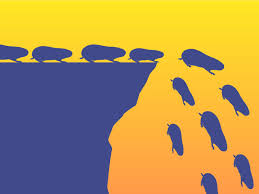
Lemmings supposedly follow so blindly that they herd together and jump off cliffs. It’s a myth. I hear my mom’s voice asking me if I’d do something awful just because everyone else was doing it. For whatever reason, someplace along my timeline, I decided not to be a follower of fashion. I became a loner, since group dynamics invoked a fear reaction, I avoided clusters. If I see that someone has gained a certain popularity, my first response will be repulsion. That magnetic contrariness might indicate a psychological recognition, perhaps a certain jealousy even. I’ll say to a bossy person, “You can’t tell me where to go! I’ll tell you where to go!”

When I have a need to decide something I like my thoughts to flow along a logical path without interruption. I want to be led to a conclusion by my own choosing. This doesn’t mean I’m averse to recognizing leadership, only that my criteria for the position of Leader is pretty demanding. I look for these values/skills/attributes: Innovation, Clarity, Intelligence, Compassion, Individuality and Creativity. We all manifest a leadership figure at points in our lives. The leader you have in your mind, your conscience say, is constructed out of all the people you have ever allowed to have influence over you. Before deciding something we might ask ourselves, “What would so and so do?” To follow, we must have a guide we can trust, even if the guide is a figment of our imagination.

We love it when someone follows-up on a request or suggestion we’ve made. We feel validated. If we feel like someone has paid attention, we are more likely to consider a proposal they make in turn. Loyalty can make us sheep, easily herded. Some will pursue others to get what they want. I sometimes think computer bots are set up that way. Our capitalist society needs data. Company algorithms will stalk (like a wolf) following the path left by our buying habits to ‘help’ us make our next purchase based on our shopping/internet history.

I was ten years on the Twitter site. I know this because the robots in charge of the algorithm sent me balloons on each anniversary date. I felt special in a way. I felt connected, like someone in the old days might have felt if they had a pen pal. The virtual connection helped during the isolating days of Covid. Now we have other matters of worldly importance to comment on or stew over. I’ve followed a flock to Bluesky. Time will tell how long I’ll inhabit this virtual space.

Re: Mystery

One of my favourite lines from a film is delivered by the owner of a theatre in early London. The movie is Shakespeare in Love and this character (played beautifully by Geoffrey Rush) is asked how the play he has sponsored can possibly go on. His reply is simple, “I don’t know. It’s a mystery!” Life is indeed mysterious and the wonder of it can flabbergast me.

Social media, as an art form, is an extension of theatre throughout the history of humanity. It is  a communication medium writ large and I’m loving the feelings of connection I get from the internet of things. I wanted to use the handle WhoNoz when I first opened an account on Twitter in recognition of this curiosity of our internet age. How I can have a relationship (even a virtual one) with someone in Australia by tweeting something on my computer and getting a follow back is a mystery to me. I like to think of myself as someone who knows some things. I acknowledge at the same time that I can’t know everything. It’s confusing and a bit contradictory, while thinking that I have an opinion, even though I’m no expert. I could just as easily lift my shoulders in a moment of exasperation declaring, “Who Knows?”

Many of my elders confess to loving mystery stories. Some pulp fiction writing is all about who did what and where. Even though I love the enduring character of Sherlock Holmes, I’ve never been a fan of the mystery genre of story telling. In a real life conversation I am often dismissive of the idea that getting to the why of things is an important objective. The mystery to me is discovering the how of making something happen. That is why I am thrilled by stories of quests. I want my characters, real or fictional, to boldly go forth on a mission of discovery. The question of how moves you into the future of stuff. I wonder what mysteries these adventurers will uncover. What truth will lay exposed after the search is complete? What lessons will be learned by the characters? Will I have found, by being a witness, that my life is more understandable?

Life deserves to be examined; each day awaits discovery. Even in a life that seems easy to describe there is mystery to be enjoyed. I’ve been taking medication for a heart dysfunction called Atrial Fibrillation. Recently I got an opportunity to have a surgeon try to correct the irregular misfiring of my heart muscles so that my beat is constant and predictable. Call me crazy, but I awaited the procedure with gleeful anticipation: Here was something new, that I could embrace, that just might make my health and my life better! I suppose one can accept mystery if one can be trusting in the process, just as Philipe Henslowe believed that the show must go on, back in 16th century England.

In my life I’d say that knowing, even when it’s hard to, gives me a positive bearing for my next step.

Re: Cars

I took a mental inventory of all the cars I’ve ever owned: a VW Beetle, a Honda Civic, a Chevy Blazer, a Toyota Previa, a Toyota Camry, a Dodge Ram Roadtrek and finally a Toyota Yaris. I also enjoyed a decade riding a 50cc SYM Fiddle II. Each vehicle matched the times/needs of my life: youth, parenthood, facilitating, or adventuring. At one point I had the camper van, the Yaris and the scooter parked simultaneously in my carport. Coincidentally all modes of transport were coloured white. My youngest son was impressed, commenting, “You’ve got a fleet!”

My Beetle was second hand & red. It cost me $750. I drove to Maine and back home to Whitby. I outfoxed a policeman while driving it back from a barn-party. The Civic was my first brand new car, costing around $1500. I drove it to Timmins with my first wife by my side, excited about my first job. A new Blazer truck seemed the right thing to get for a growing family. It cost me $8,000 but it lasted me ten years and, one memorable summer, it took a family of five camping all over the East Coast of Canada. When I bought my Previa it was all the buzz in 1991. I took a test drive and I called it a shuttlecraft because it reminded me of StarTrek-TNG. My teenaged boys absolutely loved it. I checked the bank account and squeezed out the $21,000 MSRP. I shared the cost of two Camrys during a transitional stage in my life (one black and one gold which symbolically illustrated my emotional flow from darkness to heavenly days). My new bride encouraged me to get a used Roadtrek I had coveted for decades. Together we took to the road, enjoying the feeling of no-fixed-address.

Cars give us freedom and independence. My bride loves using the Yaris to get away, even if it is just an autonomous ride into the city. Being older, I notice I am becoming more tense while driving or in the passenger seat. I’m weighing the odds of having an accident (I’ve had 4). I’m finally realizing the impact automobiles have on our health and the environment. When I was in high school you could get away with drinking while driving. It took decades before groups like MADD convinced us of the folly of mixing alcohol and gasoline. Now we have climate change.

It’s still a car culture, big ass truck sales are on the rise. Joy rides are still a thing even though they may be shorter. In our community there’s a growing interest in making roads safer with designated lanes for cars, busses, and bicycles. Car owners are not happy about sharing the road that they have dominated for decades. With modern realities, we are all going to need to create a new culture, less dependent on fossil fuels.

Die-cast Dinky cars, easily imagined in the chubby hands of a kid in a sandbox, may soon be a sight only in story books. The environment must come first.

Re: Photo

My bride has a new found passion. She’s been loving her cell phone and its photographical features. She goes to a photo club once a week to share her work and gain knowledge about the art form. I love it when she shares her homework with me; discussing the theme for the week’s assignments, showing me her latest on-screen captures, scrolling through the dozens of shots of charmingly photographable subjects while deciding which one has just the right composition.

I love the Kodachrome Song by Paul Simon; “makes you feel all the world’s a sunny day!” The lyrics conjure a picture of happy times. Times of the past seen through the lens of a camera. But before we get too sentimental let’s remember that those cameras, not the ones now compressed into our digital devices, used to be lugged around by a shoulder strap that dug a groove in your neck. I’ve owned all kinds of photographic devices. I started with one of those little brown boxes called Brownies. The film was expensive and therefore precious. I remember counting down the twelve shots, one by one until I turned the roll in to a developer who would give me single photos, on magical paper, that would remind me of how much fun I had at the beach. Back then, I kept the scalloped edge photos in a biscuit tin just like my mom had once kept her sepia coloured treasures of ancient family poses.

Photofinishing is not just what horses do in a close race. My former father-in-law used to have his own darkroom, thereby expressing his creativity while saving film processing fees. He died before the digital age but he would have had all the photoshop style software and apps to go with his hobby for sure. As I got older I was happy to transfer all the heritage slides onto a flash drive as a Christmas gift for my now grown three sons. Memories they can share over social media platforms. Pictures that are now part of The Cloud; that awesome computer photo and data bank that makes my head spin: “it’s a wonder I can think at all.”

Along with my first child I purchased a second-hand SLR Canon camera. I became the Family Photographer, with all the honours and responsibilities that came with that title. The device itself weighed several pounds and as I collected lenses and filters I needed a small suitcase to carry all the equipment. I call this time My Slide Period since I felt I was becoming a true artist of film. Mounds of slides required a filing system. A projector and screen were purchased for family fun. I entertained guests who would always seem polite and interested. Not!

My passionate wife is learning new skills and experiencing the world in a creative way, all because of a device that lets her send a message plus photos to people anywhere in the world. There’s always a new improved IPhone, promising astounding photo features.

“I can read the writing on the wall.”

Re: Insurance

The insurance business is an industry that depends on our fears & doubts to drive its operating model. Buying insurance is clearly an example of damned if you do/damned if you don’t. Either way it’s hard to come out of any exchange/interaction with this business without feeling like a chump.

Seven years ago my wife and I bought a new car. It was a great deal until we sat down with the fellow in charge of wrapping up the sale. He convinced me to put another two grand into insuring the purchase against future repairs. “For peace of mind.” he asserted. “You would want to protect your investment.” He said this money could be viewed as a hedge against accidental repair costs. At the end of seven years I could get my money back if I didn’t make a claim. I signed the paperwork while foreseeing a future out of my control. It was a trap!

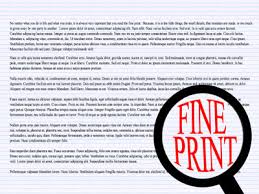
I’m compulsive when it comes to paperwork. I’ve spent plenty of time assembling documents, affidavits, testimonials for a variety of purchases gone wrong in my life. Air travel reimbursements, plumbing conflicts, health care overpayments, warrantee disputes, car accident confusions all have a file in my trusty steel cabinet. But the devil is in the details. During those seven years my wife and I had lots of distractions, both good and bad. I ended up misreading the refund date amidst the fine print. I called the insurance company to be told I had missed my window for a refund. But I had extenuating circumstances! They were sorry but they were bound by their policy. I stewed some more. I kicked myself for betting on a negative outcome. I said to myself, “I knew it!”, so many times I lost count. I had to find a way to forgive myself for not being on top of my affairs.

In my country there are laws against NOT having home or auto insurance. Insurance agents promote buying insurance as a smart thing while making profits on our distrust of a product’s viability. We are advised to believe the machine we buy will not last, the device might be a factory lemon or, worse yet, the thing we have spent our hard earned money on will get stolen. If you are insured against loss/damage or theft there will be no worries, or so we’re made to believe. Sounds like a smart thing to do, until you have to make a claim and then you wished you had read all the fine print.

In principle I want value for my dollar but I don’t wish to put a price on my being. Life insurance strikes me as just plain evil. I don’t want to think that a death settlement would be compensation for my lack of presence. I know I am approaching my expiry date but my body is not insurable in the sense that my loss can be put on some corporate ledger. Insurance doesn’t provide balance. Keep your policies! My value is intrinsic.

Re: Puzzle

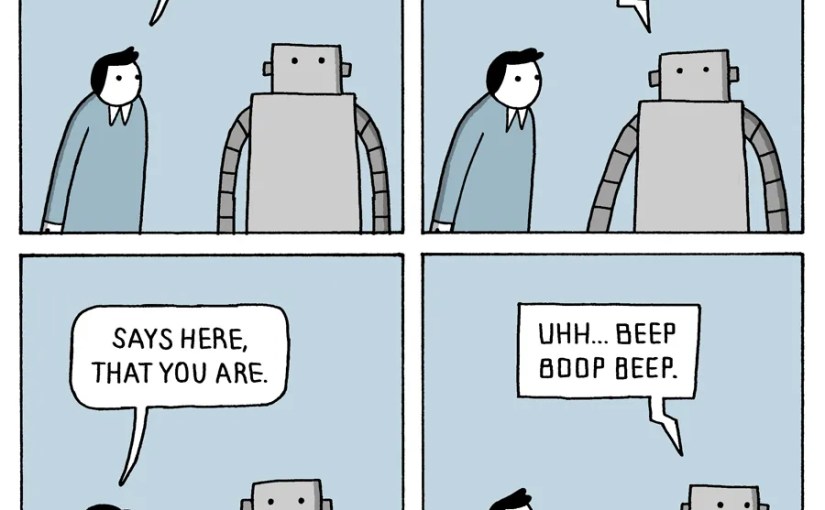
Those items of furniture that look great on the small screen of your phone device arrive at your door in a single cardboard box. They could be from Ikea or a host of other quick and easy delivery companies. One of these arrived at my door the other day. My wife had been tracking it so I wasn’t unaware, just a bit fretful. The source of my anxiety was the basic puzzle of what we would have to go through if we didn’t like it. We would then have to send it back and what would that mean? These ancillary costs to my mental health are always on my mind.

I like puzzles generally. I feel smart when I can solve them. I love doing crosswords. My mind seems to expand in different directions when I work on a jigsaw puzzle (as long as there is a tidy place to put the assembly and I can keep my worry of lost pieces under control). One of my favourite things to build is a custom made cardboard box for the delivery of presents to my family far away. I measure and cut carefully to avoid wasted space in the parcel. The postal workers at my local depot always smile as they measure my package and report the payment due. Supporting these old systems and pastimes pleases me.

My former father-in-law loved the three dimensional wooden puzzles you can get at farmers’ markets of in craft stores. Being an engineer, he liked playing Jenga and pick-up-sticks. He tried to show me how to play Tetris on his computer once which made me nervous for a whole day afterward. I got revenge by buying him a Christmas present of magic metal rings that were supposed to detach and separate but never did in his lifetime. Pay back can be pleasing.

I think of myself as a puzzler. I enjoy having an enquiring personality. As I age I try to keep my two cranial hemispheres firing on all synapses. I tone my left side by writing daily; using language is the key here. My right hemisphere enjoys the spatial dimensions of thought so this comes in really handy when I have to put things together, like the bureau in that box by the door, that was waiting to be opened. ‘I have a project.’ I said to my self with encouragement.

Space was made and time was allowed for the task at hand. Out of the box came all the assorted pieces. Tools were assessed. I gazed at the instructions that were numbered for clarity.  I was building this piece of furniture in front of my 95 year old special mom. She saw my puzzlement over the parts displayed before her and said, “I know you can do it.” I asked how she was sounding so sure. She answered, “ Because you are good at crossword puzzles.”

I appreciated her puzzling connection yet heart felt encouragement. I began fitting the pieces together. It pleased me that her presence gave truth to the saying; Two heads are better than one.

Re: Fix

I remember my dad used to fret so much when a television repairman had to be called to our house. In the first place he had to admit to himself that his skills with dials, tubes and antennae had been for nought. Secondly it would mean he might be shamed after the technician could fix the problem with a turn of a screw. Then of course came the bill, which would set my factory working father back half a day’s wage.

When my dishwasher went on the fritz recently I thought of my dad. I started into a brain spiral about repair vs replace. I called and got some opinions, which still left me in a quandary. On the one hand I had a perfectly good appliance that only needed a gasket (or so I thought). A competing idea had me considering the domino effect of falling/failing returns on my original investment. My DIY skills are limited, but like my wonderful dad, I have a certain amount of pride in looking after the things that I own so when they fail I take it personally.

Some things you just can’t fix on your own, especially problems of a non-material sort. Especially problems of the relationship sort! My bride and I have generally done a great job ironing out our differences. When problems between me, her or us crop up, we use different strategies to overcome the missing or damaged parts. I usually try to charge in and fix things but my wise woman often tells me, “I just want you to listen.”

Getting a fix on things is a way to focus attention on the important things. I want my mind to stick with the essentials during a problem solving exercise. It’s no coincidence when we use the phrase, ‘glued to the task’ to indicate just how deep our concentration can be when we are attending to the job at hand. I have an image of my dad trying to apply a fixative to a broken china cup handle. He had to hold the pieces until the epoxy set, all the while unknowingly sticking his tongue out of his mouth as if to tether his thoughts.

I can rarely control my imagination, so I have to rely on structure to anchor my wandering mind. When a problem is too overwhelming, I occasionally turn to the medicine cabinet for a prescription. I  recently rewatched the dramatic film Man With a Golden Arm starring Frank Sinatra.

https://www.tcm.com/video/198811/man-with-the-golden-arm-the-1956-i-need-a-fix/

I think of the many folk who are drawn to street drugs in our city. Illicit drug use is a problem with no easy fixes for millions through the world. The things that make our lives better sometimes make them worse. When a device, friend or situation lets us down we may feel temporarily defeated. Sometimes a technician of the mechanical, digital or psychological sort can help us fix the problem. It’s worth it to make the call.