Re: Art

Re: Encounter

I enjoy the encounters I have when I am out and about in my community. A simple stroll to my village to renew my prescriptions, a stop for an ice cream cone, or finding a sale in a grocery store will bring a smile to my face especially when I have a moment with a real person.

Abraham is his name. We met at an afterparty at a local theatre. He acted in the play that night, and I was an audience member. I started the conversation as he was choosing some cheese and paté, from a tray on a pedestal. I gushed with enthusiasm over the dynamic representation of a fight scene involving athletic coordination that was the climax of the plot. On stage, Abraham and his acting partner had just parried in a violent dance, each thrusting a blade with death being the intended outcome. All this action happened in remarkable slo-motion choreography, while I watched a mere three metres from the stage apron. Now I was standing near Abraham, at the meet and greet, trying to speak without crackers spilling out of my mouth.

Encounters can be exhilarating, sometimes messy, and rarely planned. A chance encounter can stay with us for a long time, if not forever. I remember as a teen being brave enough to ask if I could have an old lobster pot that seemed discarded by a house near where I was camping with my parents. I was with a friend at the time, and as he waited a few yards back at the top of the driveway, I negotiated with the owner. I said I had long wanted a suitable keepsake for my many years as a child coming to this beachside campground in Maine. I was going off to university and imagined the rectangular lobster trap would make an excellent coffee table. The owner handed his artifact to me as a gift, the look on his face was one of pure benevolence. I still remember my friend appearing equally stunned by the exchange saying, “You got it just by talking to him!”

I’m still feeling the isolating effects of Covid19. Back then we were encouraged not to have encounters due to risk of exposure to the virus. Even though I tend to introversion on the social spectrum I missed those times when I regularly attended mass cultural events. During those covid years I got used to encountering others over social media where exchanges didn’t involve the risk of a stray sneeze. In the longer term, Covid19 made us all a bit insecure about approaching others.

Now that I’m back attending the arts events that I love, engaging other humans will return in fits and starts. My social muscle memory emboldens me to initiate confidently. The actor Abraham seemed pleased that I had dared to approach that night at the theatre. He said, “And what about you?” Which raised my praise to dialogue level. Oh my, what to say next!

I’m going to need more practise at this conversation game.

Re: Manage

Once I was responsible for the care of my dying partner. Over the course of nine months, from diagnosis to death, I attended to her medical, emotional, psychological, physical, and incidental needs. Folks who have had similar trials will tell you how hard it is, yet somehow we all manage, because we have to.

Manage is a brother to Cope; yet coping has a big sigh attached to it. Related words like supervise, oversee, or control can sound overly dramatic. The act of managing is not just a technical thing requiring lists, deadlines, deliverables, outcomes, and client satisfaction. A good management scheme recognizes the elements of emotion found in doing the task.

To manage our own life might be best if we could just rely on logical thinking. But thinking only of the reasons why you want to keep your life on a positive track precludes the examination of your emotional response.

My bride and I were once Resident Managers at a newly built downtown condo tower. We were at the beck-and-call of almost one hundred owners in this modern structure of 15 stories. And boy were there stories! Each owner had his/her/their unique reasons for buying into the property. Each had personalities that required personal attention or group instruction. My wife and I tried to build community, while managing the demands of the job. We had to respond to residents who had decided their problem had become unmanageable. Consequential incidents such as; robberies, fire, flooding, vehicle accidents, equipment failures, births, or escaped animals were a few of the managerial complications that were part of our five year commitment to this post-retirement, self-directed, and amusing vocation.

Then came eldercare, which is a whole different can of worms. Management stresses here centre around ensuring the elder is feeling valued, even while declining in their faculties. I find the hardest part of this responsibility is managing my own feelings around caring for another. As an elder loses ability to manage themselves it’s easy for the caregiver to feel resentment, fatigue, frustration, and isolation. I find responding to another’s dependency is a challenge. Respect is hard to maintain when a relationship loses its two-way-street understanding. Ideally, I would like to only manage myself. But that’s not a reality since I impact others, just as they have influence over my life.

All three of my grown sons are in career management positions. They also manage themselves and their relationships quite well. Like me, they have a strong desire to be independent. My employers sometimes told me that I was ‘management material’. I believe that to manage one’s life is, by itself, a measure of success. I have felt blessed by the times when governments, agencies, neighbours, friends, family, co-workers, and lovers have helped me to manage my affairs.

Back when I provided end-of-life care to my first great love, there were many times I felt overwhelmed. Near the end of my ordeal a friend named Jaakko visited the depressing scene and said, “I don’t know how you manage.” I gasped at the comfort these acknowledging words provided. Then and now, I carry on.

Re: Tender

When my mind is in a whirl over things domestic or international, I try a little tenderness. Which is not just a classic Otis Redding song but a way to shift my attitude. Music helps me set the course for a new perspective that is more harmonious because of its positivity.

Tender is a word that can be viewed from many perspectives. For instance, I like to think of myself in this word’s noun form; as in, One Who Tends. I like to tend to my tiny garden occasionally. I like to take care of business by tending to the bills and other finances of our household. I love tending to my lover. I think every work-er is also a tend-er since he or she cares for the final product of their labour. When I was a teacher of small kids I loved attending to the instructional needs of the members of my classroom. In that situation I also tried to be tender in the performance of my duty towards the little rascals.

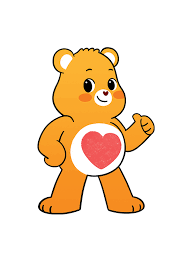
Many of my wee students once had a liking for the Care Bears, a heavily advertised multi-media marketing bonanza that started with a delightful series of paintings by Elena Kucharik in 1981. The collection was an inspiration for expansive commercialization (cards, dolls, clothes, toys, records, books, television, etc.) but the central theme of friendship, community, and caring was touching for many folks, young or old. One of the ten original Care Bear characters was Tender Heart. The stuffed toy version was a favourite of my youngest son for so long he wore the fabric heart off of his plush chest. After so much hugging and squeezing you might say that this comfort-toy became tenderized.

I find the use of the restaurant item Chicken Tenders rather disturbing even though they are delicious. Recently our BC Ferries ‘put out a tender’ inviting bids for construction of a new line of coastal ships, which had me thinking about their intent. Perhaps the management team was hoping only ship builders promising tender-loving-care would apply. Maybe the winning bidder would have proven to employ the tenderest engineers when it came to their craft. Hard to say.

Showing tenderness towards an object like a kitchen appliance is one thing, but having tender thoughts towards another human being isn’t always easy. If we are a caregiver, for example, we may still be tender from wounds inflicted by the very person we currently look after. Treating ourselves with tenderness may be even more difficult if we suffer guilt from past performance. When my emotional scars ache I surprise myself by finding stable ground in a musical phrase. A key word like tender can lead me to songs containing that word or sentiment. I can move from Grumpy Care Bear to Tenderheart by searching Youtube for musical references. The Beegees asked for tenderness from Fanny. Elvis Presley pleaded, Love Me Tender. The group General Public wondered where it was and Paul Simon couldn’t find any. Otis Redding had tenderness right when he crooned, “It makes it easier, easier to bear.”

Re: Diversity

Diversity is our strength, uniformity leaves us open to disease. The backtracking currently underway in the USA regarding diversity support is creating a poisonous environment for all but the 1%. DEI is frowned upon by those who already have everything they want and need. Diversity/Equity/Inclusion policies are designed as an acknowledgement of differences within our work environment, and in our communities.

In university I learned how monocultures are unnatural in the environment. Agricultural mega companies like Monsanto bring the message that uni-crops create more yield, thereby increasing profits for farmers. This artificial system requires massive amounts of round-up chemicals and GMO seeds to produce sustainable results. This isn’t the way of Nature. In natural systems, diversity rules because every species has value, a place, and a function. Insisting on a uniform culture is damaging to a society and to global progress. I dream of world Nations being United in the common cause of Humanity. That requires all of us to foster a belief that inclusion matters. Every human has value, a place, and a function.

Social media flows by opinion and algorithms. The AI process prefers to look for commonalities. Artificial intelligence loves similarity, like a young child trying to make connections and learn what it’s like to be an adult, the child wants to see who is like who. The tricky part is that most folks don’t like being labelled. Yes there is safety in numbers, yes birds of a feather like to flock together, yes a herd can survive better when they travel as one unit, but a herd can be decimated by a single viral infection. Conformity can be dangerous.

Recent Pride parades offer up an observable example of a society’s diversity. These events encourage everyone to respect differences, while promoting the things we have in common. We have to get over our innate, natural fear of difference. We can belong to a clan without making war on the other clans. I have been happy to live in places where diversity is encouraged because options are important to me. The greater the diversification within a city or nation, the healthier the population. Citizens can decide to march to the tune of a different drummer, even decide to play their own drum, when they feel safe to do so.

Tyranny is supported by unified, singularly focussed individuals. MAGA policies are designed to exclude any outliers. Followers of trumpism have confused the need for consistency with a desire for uniformity. Communities can be consistent in their approach to any issue without being coerced into wearing a uniform that identifies intolerance towards non-believers. During these times of WWIII proportions, I am grateful for those who stand up for the values of equity and fairer treatment for the 99%. Folks like Bernie Sanders, Charlie Angus, Alexandria Ocasio-Cortez, Beto O’Rourke, and Naomi Klein have a national and global impact. These folks speak for me.

If Humanity is to survive it will be because diversity shows the way. In Nature and in Politics variety of perspective offers a balance to the challenges of reality.

Re: Phonebook

My 96 year old blind mother-in-law asked if I was whispering something. We were sitting together in the living room and I was channel surfing on the smart TV using a remote control that I could direct with by voice. When I told her what I was doing she asked for more information. I thought to myself afterwards that my discussion with her about this new-fangled technology must have made her amazed. The fact that I can talk to my television awes me too.

If I were to describe a phonebook to my grandkids they would call me a silly old grandpa. I don’t know how I could convey to them that it was an old form of data filing, sorting, and acquisition; just for phone numbers! I think you got a new volume every year. It came in the mail. In large centres like Toronto, where I used to live, you’d get two books, one for phone numbers and one, called the Yellow Pages, for all the stores and services. These were thick soft-cover books listing thousands of names of people who you could talk to, just by dialling their number. Some homes had a special piece of furniture called a telephone table, that would have a seat attached and a special drawer or shelf for the phonebook. For some reason this curio-table would go right by the front door, where the phone guy would hook up your rotary phone to sit all stylish-like on the table’s top. As a teenager I got no privacy sitting on that telephone table in the front hallway of my parent’s duplex.

If I wanted privacy I would go to our strip mall down the street where folks could make their phone calls from a phone booth. These booths were on most street corners back in the day. They typically measured 32X32X90 inches with a funny folding door. Believe it or not, inside those closet-like compartments you would find a well-used phonebook. Smart-ass folks would sometimes tear pages from the phonebooks for all manner of reasons, leaving you puzzled when you were almost at last names starting with Y, only to find the Ys were missing.

Thinking about technology, systems, and industries of the past can get you time tripping. Inventions propel the human animal in directions only limited by our imagination. The Dr. Who television phone booth is called a Tardis, where you can time travel. And, believe it or not, magicians and guys with large biceps once made money proving that they could rip a phonebook in half. Today you can get pointers on how to do that on Youtube.

Smartphones carry far more data than a single phonebook ever did. Imagine being able to scroll to find your contact person. Gee Whiz! The other day while walking in a local park my wife made a phone call, and using that same device she took pictures of flowers that were then identified for her instantaneously. She then looked up a restaurant where we dined later following the route provided by her phone! Dial phones used to receive random wrong numbers. That hasn’t changed.

Re: Finite

Some things end. Some things are irreplaceable. Some things are lost forever. Our planet is finite: It has an expiry date. We mere humans do not know when the world will end but it-will-end. Memento mori needs to be part of a school board’s curricula.

In art class I used to enjoy inspiring my students with the thought that their ideas could create infinite possibilities. I never had the heart to tell them to get on with it because their life, in the grand scheme of things, is very short. Procrastination might be something to avoid but it’s easy to get a manyana attitude. A recent film titled The Life of Chuck points out that reality. Here we are shown how preciously fragile humans are, compared to natural processes of more cosmic proportions.

I believe death is absolute; it is final. You may leave pieces of you in your will, your legacy, or in the hearts of others, but otherwise you will vanish. You can only exist for so long: That is what finite means. I had a German-born childhood friend who used to announce the end of things by using a Spanish sounding word: Finito. My mom used to be amused by his casual dismissiveness. Once as we were enjoying P&J sandwiches in my childhood kitchen, and as we came close to the end of the jam Mom said, “When it’s gone, it’s gone!” I like the simplicity of the French word Fin to indicate the end of things. At the end of an artsy film with subtitles, I’ll get a certain comfort when the credits scroll to a completion and FIN is displayed in bold letters telling us it’s over now, time to go home.

Many natural resources can be renewable with the right degree of stewardship. In our nonchalant attitude to climate change we forget that many things are non-renewable. Species themselves are finite. When a certain type of living thing becomes extinct that is a clear end-of-the-line. Despite tales of harvesting DNA to clone bygone beasts as in Jurassic Park filmology, the likelihood that our declining planet can even support another T-Rex is improbable.

My best friend advises me to not squander my time. I know I’m finite. In art, science or politics there is room for your work to live on after you have ceased to be, but we are not immortal in the sense of the roman or greek gods. Historically some cultures have theorized an afterlife. Some had tombs built and their bodies carefully preserved, like the ancient Egyptians, to enable transport to the great beyond. Viking folk believed Valhalla would let them live eternally. I wonder if there are still cryogenic chambers available for 21st century billionaires who imagine a flight to infinity and beyond.

We can’t predict when we’ll expire. Sadly some of us will go before our time, leaving others in shock while they commiserate and consider what the rest of their lives might hold for them. We have a shelf-life. Hopefully we won’t just sit there wondering what comes next.

Re: Allergy

People with allergies can be the butt of jokes. When schools had to design policies around the potentially deadly outcome of peanut allergies in children, controversial comedian Louis CK got headlines because he suggested that “If touching a nut kills you, maybe you’re supposed to die.”

Today, I was tempted by a fresh black cherry. When I am exposed to certain foods I can get allergic reactions that could include; a runny nose, sneezing, coughing, shortness of breath, swelling, itchy palate, or red eyes. I can relate to the ads on television during allergy season promoting their product’s efficacy in removing all these sorts of symptoms. I know about the risk of certain foods, but that cherry looked so red, ripe, and delicious. I ate it and felt fine, for ten minutes, then I got all the reactions I just described. I didn’t die, but I was a noisy, mucus-filled mess for half an hour. ’Twas not a pretty sight.

I didn’t always suffer from the A disease. In my twenties, I moved from southern to northern Ontario and that particular summer was apparently the worst pine pollen bloom of-all-time. The yellow powder was smeared on vehicle windshields, it coated clothing hanging outside to dry, and was a sticky icing on the surface of lakes and rivers. I can’t see how anyone could avoid having their lungs clogged by this powdery air. From that bio-hazard summer to this day I can start sneezing over unknown elements in the air, or in the beverages I drink, or on the animals I pet, or in some of the foods I ingest. It’s a crap shoot.

Many medications are available for allergy relief. My doctors have prescribed many remedies (the best being codeine) and I have settled on a formula of antihistamine, decongestant, and anti-inflammatory to reduce most of the symptoms, most of the time. Sometimes I can predict what might bring on an attack and take the necessary pill(s) in advance. I always carry a tissue in my pocket. It’s usually damp.

The first thing I’m asked when going to a hospital is, “Do you have any allergies?” I want to be dismissive but I usually say it’s only seasonal. When I sneeze (loudly) in a grocery store aisle I want to go to customer service to tell them to assure everyone with an announcement, “It’s just allergies folks!” I fell in love with a woman who took out a Kleenex after her first bite of food, from our first restaurant meal, just as I did too! It’s breezy to be sneezy, when you’re in love.

Jeff Bridges was in a film about a plane crash. Surviving this ordeal, he finds that he no longer has a severe strawberry allergy. In joy, he becomes fearless in attitude, thinking he was somehow blessed by the tragic experience, making him immune to normal human frailty. There are many ailments that afflict our species. Within the great spectrum of illness I know that I am lucky to only have a response to a few allergens. It’s not likely to kill me.

Re: Account

To have an account is one thing. To hold yourself or others to account is another. Like many words in the English language, a single word can have multiple meanings. This is what this word means to me. It may evoke different thoughts or even have different meanings for you. The fun is in the interpretation, not necessarily the dictionary’s standard.

Last week I was sitting in a parking space waiting for my bride to return with a bag of yummies from the grocery store. A car pulled up in the space beside me, a woman got out of the driver’s side leaving the car running. A man was sitting in the passenger seat with his window open. I was too far away to suggest he turn off the car without shouting and sounding aggressive. The fumes from the exhaust came through my open window. The woman returned a few minutes later and, to my surprise, stooped to look at the tire of her car which was just opposite my window. I quietly asked, “Why did you leave your car running?” Well, I was bombarded with all sorts of answers/excuses from both of the car’s occupants. In summary, they thought I was choosing something minor to “bitch” about.

The incident made me think of times when I try to be accountable for my choices. Holding myself to account is not easy in a complicated world. I am aware of making daily decisions about what is best for myself, my partner, my situation, and the world in general. Sometimes priorities are made that seem inconsistent with my own needs or the greater good. Small things, like leaving a car running, can add to larger things, like global warming. When and how we decide to practise our principles is not easy. I wonder to what degree do we have a responsibility to remind others to be accountable. Shouting at a politician seems easy but when our neighbour appears to be doing harm we might fear coming across as The Accountability Police.

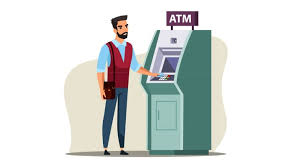
When my sons were small I advised them on ways to be financially accountable. I taught them about bank accounts, credit dangers, and saving for a rainy day. My wife kept a monthly ledger to show how money comes in and money flows out. As banking technology changed they taught me about ATMs, bank cards, email transfers, and other online services. I was once a slave to doubt about whether I would ever have enough money for my needs or wants. But by taking things all into account, I slowly learned to balance the fears of loss with the reality of my good fortune.

Holding myself to account means I must judge my choices based on a variety of factors. Commenting on other’s behaviour is a potential minefield of explosive consequences. Everyone has had moments where they have wished they had said something. Who hasn’t glared at a parent of crying/misbehaving kids! Like it or not we are all accountants of our life experiences. No one can judge us better than ourselves.

Re: Cult

Some words contain words. Cult is part of culture in more than just structure. There are elements of cultism in every culture. Citizens of a culture make the decision to embrace what is practised, or not. The essence of a country’s culture is demonstrated by how resources are allocated to promote the larger values of the collective. Sometimes these tribal desires to belong can conflict with our individual wants, wishes, or needs.

When folks agree to do similar things together a connective thread is created. I like to think of that as the art of living. Defining a culture is how societal groups are formed. Individuals in families may often repeat to each other “This is the way we do things.” Teams often bond over the wish to be united so that literal goals can be achieved. After a tragedy, a city might suggest that the way forward would be by recognizing common values. I remember, after the bombing of marathon runners in 2013, newspapers promoted solidarity by printing headlines; Boston Strong! What fascinates me is the border between a healthy culture and a restrictive cult.

Throughout history people have collected into groups for protection, efficiency, or the pursuit of a shared experience. Religions are built on this desire to belong to something greater. Few of us want to be alone in our beliefs or occupations. Unions, fraternities, and sororities have been an essential part of the workplace so we can feel like comrades of industry. Military institutions have aspects of cult conditioning within their training. When you belong to any group you have to give up a bit of yourself for the greater good.

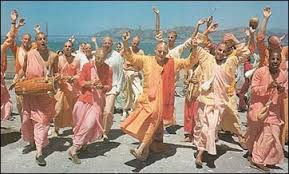
With the fracturing of our understanding of cultural mainstays comes doubt over what is important. Factions, sects, and brotherhoods become more important when traditional ideas of the common good are muddled. Cults begin to grow, fracturing the confidence populations once had for their society’s documents of legality, equality, and fraternity. When I read of organizations having a crisis of culture it worries me that fundamental values have been twisted to suit the needs of the powerful. Most people will think of cults with a capital C as those practising life on the fringe of religiosity. The rules of belonging in a cult-like setting are very oppressive of individual freedoms. In some cases you are coerced to deny your own history in order to begin life under a new set of guidelines. Life in some 60s communes was like this, and I have concluded that being involved with any religion is cultish.

Communal systems can get complicated when group and personal needs conflict. To some degree educational institutions are designed to indoctrinate our children to the ways of the national interest. In Canada, our ten provinces and three territories have their own policies, procedures, and legislation within the framework of the larger federation. All regions have their own priorities and practises (especially Quebec, and lately Alberta) yet we all call ourselves Canadian.

Cultures must evolve to survive. I would celebrate a global culture of peace as a priority.

Re: Drawer

This word must be hard for ESL students. I taught elementary school kids and they would have more trouble with words if they were hard to pronounce. Drawer has a sound like shore when it’s used in sentences about places to put things. But an artist can be a draw-er, which makes me think of someone involved with practising law, which puzzles me even more because that person is a lawyer, which is consistent with someone who works with wood who might be a called a sawyer. Poor students! Imagine the questions if I assigned The Adventures of Huckleberry Finn and his friend Tom who explored the Mississippi River while dressed in muddy cotton drawers!

My dad was a drawer. He would draw on his life experiences to tell fabulous tales. In that sense he was a collector of curiosities & thoughts, in another sense of the word he actually drew stuff. He used a pencil to sketch or a brush to add colour to his surroundings. His drawings were his perception of the world, put on paper. He was sometimes commissioned to replicate a favourite dwelling. One house-proud person was so delighted by his pastel reproduction she exclaimed, “That’s exactly how I see it when I’m turning into the driveway.” When he told me this story and showed me the photo he had taken, I noticed he had left out a telephone pole, and a hydrant, from his final sketched landscape. I understood he was a drawer in that instant. He allowed that the homeowner would draw her own conclusions, all the while anticipating her human need for fantasy.

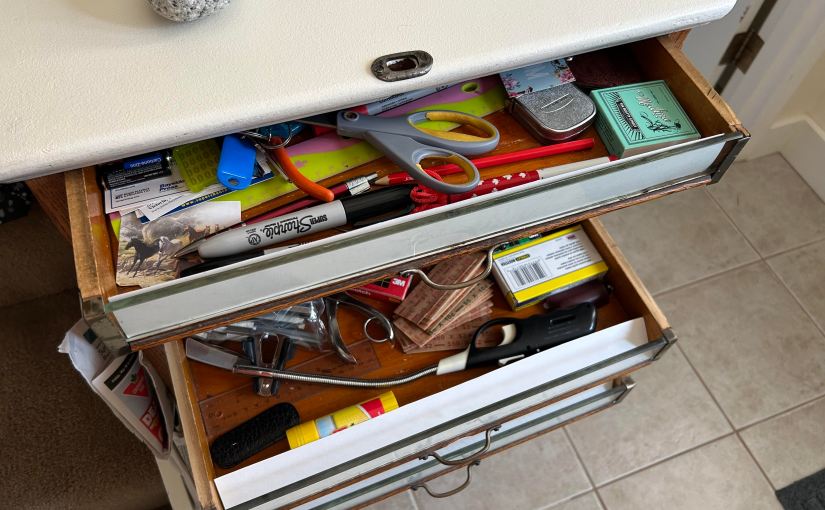
Everyone has a junk drawer, sometimes in the kitchen, sometimes in the bedroom. Like a magpie we collect stuff and toss them here for when we think we might need them. Even things that have no use. If you can’t afford a place with an attic or basement crawlspace, a drawer will do to hide those old love letters, secret things, or stuff not worthy of the knickknack shelf. My mom had a glassed-in corner curio-cabinet with shelves that could be pulled out for closer examination. She kept her thimble and teaspoon collections in these suede-lined drawers. I can picture her in my childhood memory excitedly drawing on a cigarette as she talked about the origins of these treasures. She let the ash fall where it may.

Thanks to my dad’s influence, story telling later became a big part of my teaching curriculum. I often read fairytales to instigate study of other subjects. I remember one student designing an efficient water well, for a science fair project, after hearing Diamonds & Toads by Charles Perrault being read in class. Together, other students did their research and discovered there were many fables based on the drawing of water from wells. My essay is about to draw to a close. Let your imagination wander.