Re: Art

Re: Manners

What might be considered offensive to some is quite acceptable to others. Simply put; that is what the word Manners means to me. I don’t need a dictionary to soften the edges of my definition so please don’t be offended by my bluntness. Words can offend, behaviour can offend, one’s choice of hair style may offend. All this because a culture is defined by its manner of existence.

Societies are built on acceptable performance. Etiquette is taught early, and often by shaming. Parents dole out these initial nuggets of advice/discipline. Junior will be admonished for picking his nose, or pulling down his pants. The little one must learn that certain gaseous noises will not be tolerated. Kids learn that we are not amused when children make too much noise or run too fast. There is always a measure of respectability that must be adhered to or an elder will make us blush with regret. Youth are not off the hook outside the home either. School and church confirm or contradict the comportment required while a person is functioning as a member of the community. Adults can get quick tutorials too: Government officials are coached in proper manners when they assume an ambassador’s responsibilities. Those of lower socioeconomic status or non white skin colour often end up in jail.

I’ve never been impressed by high society. Ann Landers, Dear Abby or Martha Stewart types aren’t about to change my mind if they think something is a ‘good thing’. I shall not follow that lead. I have low tolerance for self appointed protocol police. If something is publicly regulated I will consider the reasoning behind the statute before I buy into it. If conduct is judged just because it’s considered ‘Proper’ then I’ll give it the royal wave or the middle finger salute, in a manner of speaking.

Those touting good manners are often guilty of pointing the finger: ‘How could you!’ quickly becomes, ‘How dare you!’ which then degrades to, ‘Shame on you!’ Artists and entertainers are often unfairly judged by those who look down their noses. A recent documentary about Sinead O’Connor was a case in point. Her talent and valid protests became secondary considerations in the face of impolite demeanour. Here was a beautiful singer and sexual activist, unfairly beaten down, shunned even, by those holier than thou elements of the music industry and the religious community. She dared to be different.

Manners are a human construct. Modern civilizations don’t tend to embrace differences. We are wary of the odd man out. We worry what’s behind a questioner of authority. That may be why politicians so rarely suggest outside the box solutions, because any non-conformity to traditional mannerly thinking is threatening to order and good government.

Isn’t it a wonder then, how we can ever get to addressing the big issues without making offence. It’s easier to say, ‘But that’s not how we do things here!’ Revolutionary thinking is bad manners. So there! Let’s just accept it, then let’s get on with the important stuff in life.

Re: Kept

I don’t have any well kept secrets because I’ve never been good at hiding things. I don’t enjoy keeping people guessing if there is news to tell. I can keep to my own thoughts though, and I’ve sometimes kept a diary. I’m reasonably good at keeping up with a conversation. I’ve kept going to work when it was the last thing I wanted to do just to keep up appearances. I have reluctantly worn a silly hat in keeping with the situation.

Julia is a television series created by Daniel Goldfarb. In the second season, episode two Stockard Channing has a guest role as Frances Field. While at a dinner gathering, her character makes a short speech. Frances says” “We’re all kept…I know I’ve been kept. I was kept by my late husband…I assume you’re kept…good fortune comes and goes. Here’s to sharing everything you have. Here’s to being kept.” There is a long pause as people leave the table saying goodnight. Frances turns to her date and says, “Was it something I said?”

I wondered about that speech. I tried to trace examples in my life of being kept. I asked my 95 year old special mom for an opinion. She said immediately “I am kept” and then “but I don’t feel hard done by.” My mother-in-law is such a realist when it comes to figuring out life. Being almost blind and hard of hearing means she is very dependent on others for her care. So in that way she is kept, but content and grateful to be so, we mutually concluded. Her response has kept me thinking.

The phrase ‘kept woman’ flashed through my mind as I reviewed that conversation. I started to realize that Ms.Field was perhaps feeling equally blessed when she gave that dinner toast. She felt her needs were being looked after and she didn’t mind suggesting that some of her autonomy had been lost as a result of being kept. She was being realistic however, in implying that getting along in life requires exchanges and compromises that don’t necessarily have to diminish one’s character.

Yet where do we draw a line for ourselves? I don’t wish to be someone’s puppet; kept on strings in a case, in a corner. Neither do I wish to be in the driver’s seat for someone else. I respect that everyone has a right to their own life and to live it as they please. For a number of years in my youth I was often left in charge of my sister. Our mother made it clear that she didn’t want us to look unkempt, lest neighbours grow suspicious of her shirking her parental responsibilities. I was expected to get my sister to and from school, sometimes also making her lunches and dinners. I was told to look after her until mom or dad came home from work. I was my sister’s keeper.

My parents kept me in line. I became responsible as a result (perhaps neurotically so). I’ll continue to share parts of me. And I’ll show gratitude whenever someone chooses to look after my needs.

Re: Wallet

I’ve never lost my wallet, but I’ve thought I had lost it many times. I check for the presence of my wallet frequently, sometimes obsessively. When I’m on holiday it is always on my mind. I’ll pat my back pocket and check the drawers or shelf of the room I’m staying in. When I am secure in knowing its presence I’m calmer. On occasion, I may even kiss it for luck to ward off evil spirits.

My son lost his wallet while moving his belongings to a new apartment. In the busy-ness of loading and packing he put it gingerly on the car’s rooftop. The obvious happened when he got behind the wheel and merged with other traffic. The shock of picturing what he had done wrong must have been numbing. He went back through his trip, in a futile attempt to rescue his wallet from the road where it must have fallen but to no avail. His credit cards had to be cancelled but luckily he had only $40 in cash. A couple of week’s later he got a call from his local police department saying the wallet had been turned in! Much to his amazement the wallet’s contents were intact! When he shared this story with me, we both commented on how our faith in humanity had been enhanced by this simple act of unselfishness.

Some folk say the cell phone has become their most highly valued object to carry everywhere. When I told others of my son’s mishap they related by saying how they had lost their phones and had been bereft as to what to do when a record of their identity had gone AWOL. Indeed, when you consider what is loaded onto our devices they become a veritable code to who we are in this world. Comparatively, the wallet with its old timey paper access cards, wrinkled photos, bills, receipts, bus passes, loyalty IDs & embossed business cards becomes a relic you might see on display at a museum of not so modern culture.

I made my first wallet when I was nine from a craft kit I got for Christmas. It came with pre-cut leather and strands of gimp plastic lace. When constructed it looked a bit like a folding moccasin with a side gash for paper cash (I never had any of that), a snap pouch for coins and a cool slit for bus tickets. There was a single clear plastic window under which I put my library card and my swimming pool registration card. With this wallet, fully loaded, I could get access anywhere.

Throughout my life other wallets have not lived up to the level of self confidence given to me by that first homemade beauty. However I still choose each new wallet by giving it a smell test. The leather scent knocks me out. A wallet has always given me a sense of importance. It contains a bit of my past and present and some assurance that my future is secured. A cell phone seems cold in comparison.

Re: Zoo

I don’t like to keep words in boxes (dictionaries). I respect the notion that language is forever evolving. For example, when I come into contact with the word Zoo I jump to initial conclusions based on my experiences. The very sound of that word triggers an emotional response. Before I enter into a discussion regarding zoos, in general or specifically, I need to consider the context of the engagement. Perhaps my understanding of the meaning of this word will change as I consider a different point of view. With this word Zoo I have now covered all the letters of the alphabet. Maybe one day my effort will serve as a children’s ABC style learning book but for older folk: P is for Price, A is for Art, Z is for Zoo etc.

Language researchers like lexicographers or etymologists enjoy studying words. I am not a researcher yet I like writing about how the English language has made me who I am. Most adults have a vocabulary of 10 000 words used on a regular basis. Human beings separate themselves by language, physical borders, personal boundaries or behaviour. It almost seems natural that we seek to enclose ourselves.

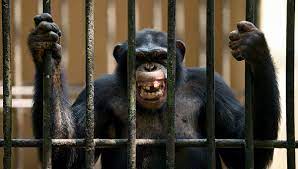
Zoos as an institution can depress me. Aquariums for aquatic mammals are jails. Captivity is not something that appeals to me. Keeping (owning) pets of any kind is a questionable human habit. Surprisingly, I used to aspire to working in a zoo. I once visited a hobby farm or ‘family zoo’ that appalled me. The star attraction both times, 30 years apart, was a very sad looking chimpanzee. After all that time the pathetic creature was in the same cage, not looking any wiser. The film Planet of the Apes comes to mind. In the late eighties some zoos underwent a transformation from the confined structure of old bars, iron gates and concrete screened buildings to more open air enclosures where the wild habitat was imitated to a certain degree. On a visit to such a zoo in Europe I was enthralled that I could walk about in an open field with giraffes. I came very close to chucking a career in teaching during a mid-life crisis after reading that Al Oeming had started a conservation area for ungulates in Alberta and wanted workers educated in wildlife management. Pick me!

It’s funny how we throw our arms in the air in exasperation saying, “It’s a zoo out there.” Clearly we have built our own self confining spaces. Sometimes we live in cages of our own design. Maybe that’s why we feel a zoo is ok for animals. Maybe that accounts for our belief that it’s acceptable practise to incarcerate fellow humans. I truly think planet Earth would do better if it was less managed by our species. With climate change, perhaps we are being shown that we can’t continue to harvest/corral/confine everything just to make our lives better, richer or safer.

‘We reap what we sow’ sounds fitting in this context. 

Re: Label

Things can be labelled but people must not. I don’t like to label others anymore than I enjoy having a tag placed on me. Humans are varied as a species and as individuals. Each single soul has multiple characteristics. I am not one thing: I am retired, male, Canadian, married, a writer, a dreamer, an adventurer, a grandfather. All those things and more. To label me would be an insult to all I was, and will be. Freedom is being unlabelled.

In my workshop I once had a labeller thingy: one of those devices you could punch embossed letters or numbers onto a plastic adhesive tape. The tape came in a variety of colours and was useful to denote things that begged to be sorted. It was a fun gizmo that I used to fashion labels for my sons’ belongings. I organized their shelves, their toys, their dresser drawers. I taught them how to read using the coded labelling as a practical way to put things into groups.  I organized their life because when my life was organized I felt a certain measure of peace.

Labels are often inefficient even though they are used to inform. The label on the can of baked beans on a shelf in a grocery store tells us its ingredients, even how beneficial it might be to our health. Yet it cannot tell us how it will taste. Companies pay huge sums of money to marketing firms to advertise their products. Labels are helpful to making money on products that people are told they must have for happiness or success. Labels sometimes rise to the status of brands and logos when they have become personified. Consumers become conditioned to believing that the labels they choose to buy will enhance the person they want to be in the global marketplace of our corporate world.

AI is raising the bar on labelling practises. Our personal phone devices are programmable to the point that they can scan codes. Under the guise of making life easier, we are folding ourselves into the capitalist matrix every time we use a QR label. In an insidious way we become a label to the machine of commerce because our personal data gets fed into AI systems that analyze our preferences and performance as a customer. In this scenario we risk our role as citizens when our civilization puts greater value on transactional bytes.

As a career elementary school teacher I was involved in many meetings where children were classified. Criteria for selection into groups varied. Many of us resisted the use of distinguishing labels. Our intent was for our students to be their fullest selves. During the horror of Nazi Germany a precedent was set for identifying humans considered to be of lesser value. We must resist being labelled in the name of profit, protocol or politics. Using scanning devices to assign us to a strata of consumer culture, to make us mere cogs in the wheel of Consumerism, or any ‘ism’, is a corruption of what it means to be Human.

Re: Play

A friend of mine asked the other day, “What do you do for fun?” I had to think, and I’m still thinking. In days gone by I might have made a list which included; playing street hockey, snow castle building, pick-up baseball, fishing or splashing around in a creek. Now, at age 71, my definition of fun is very different. I wonder if my ability to even have fun is still in play.

In the video playback in my brain, my first thoughts around playing are of the sandbox. My dad built my sister and me one of those playthings when we were toddlers. We were sad to leave it behind but we found one came with the courtyard of the apartment when we moved to Scarborough. This one had triangular corner wooden seats where mothers sat to watch over their children playing with strangers. Much later I built a deluxe rectangular sandbox so that my three sons could play safely in the backyard of our duplex in Timmins. I crafted a cover to prevent other animals from peeing and pooping in it, since awareness of intestinal worms brought fear to the hearts of parents at that time in history.

Playgrounds come in many configurations. I had a summer job one year creating modular climbing stuff for kids to enable them to build muscle and expand their imaginations. It’s amazing how designs of wood, metal, plastic and rope can foster team building, giggles galore, the sharing of secrets and playful expressions of friendship. Whenever I pass one in my neighbourhood I feel triggered by childhood memories. I love the happy sounds of children playing freely yet I don’t linger by the fencing since I’m sensitive about my maleness. We can’t play innocent when it comes to ignorance of society’s current insecurities.

The world of imagination is not limited to youth. The push and pull of good and evil is often played out in the theatre. Truth be told, the play’s the thing I’m most attracted to when it comes to thoughts of fun at my stage of life. I’ve never been involved in a theatrical production but I sure have felt my emotional response as an audience member watching the plot unfold on the stage. I’m envious of Playwrights for being able to use their way with words, and then on completion, creating an opportunity for so many other artists to interpret and extend their work. 

I can delight in watching others have fun. I feel lucky to be a grandfather so I can get a chance to relive some of my infancy vicariously. Sometimes, the toddler I’m being silly with might look at me like I’m an alien from another planet: I’m handed a bit of Play-Doh and I start to mold a goofy face and I’m told, ‘Not THAT way!’ Or I’m given a balloon and I start to punch it crazily and my granddaughter runs crying to her mommy.

Silly is something I do for fun. It may not play well with others.

Re: Trust

What do I trust, that the sun will come up, that tomorrow will come, that ‘the cheque will be in the mail’? Trust has been on my mind lately, as I listen to war news, trusting that the people we have entrusted to run our governments do the right thing by finding a road to peace.

I remember moralistic school lessons when I was a student. Values were not explicitly outlined when I became a teacher. I found ways to fold philosophical concepts into the classrooms of my primary grade children. Values are still preached in churches but carry a ‘must do’ condescending tone. I search for examples in society where values are exhibited and commented on, in a community context. Personally, I strive to behave in a consistent manner. I live far from my grandchildren. When I talk to them through digital means I trust that they will learn that I am lovable, kind and have a multitude of values they may wish to emulate. To be a trustworthy individual is a great asset to oneself and to the world. Earning a person’s trust is my primary goal when seeking friendship.

When I lose trust in someone or something it is a large step towards losing all hope. The United States of America puts great store in religion using, “In God We Trust” as a motto for their belief in government, its constitution, their almighty currency and their very way of life. I don’t accept that gods of any shape or form have input into human existence. Truth be told, I don’t trust easily. When I put faith in someone’s actions I have reached a level of trust which is not common to me. I reserve that for my wife alone whom I depend upon for my daily companionship and happiness. I put ultimate trust in myself; I am a naive soul in that way. A friend, who had gone through a rocky break-up and found a new relationship after depressed times, said of her recovery, “I’ve learned to trust again.” I believe the truth in that declaration is that trust must come before love.

There is a trend for companies to advertise themselves as trusted brands. I got a survey request recently that asked me to rate various products using human qualities like trustworthiness, friendliness, honesty and loyalty. A local financial institution sent fliers in the mail suggesting they could handle my money better because they were, after all, a Trust Company not a bank. This is further anthropomorphizing of a corporation! I don’t care for this manufactured consent approach in the marketplace. And a product is a product no matter how organic it might be!

Two songs about these thoughts come from children’s cartoon classics: The Jungle Book and Toy Story. The former is sung by the Svengali-like snake Kai, using trust as a tool for manipulation. The latter song is a happy tune describing the roots of friendship. Our personal, societal and international existence must depend on our mutual desire to trust one another.

Re: Coat

My dad owned a heavy dark camel hair overcoat when I was a teenager. During those times of pride and prejudice, he cut an impressive figure. He once came to give me a message while I was in the school cafeteria. My friends murmured, as adolescents do, when he walked towards me looking very official. To this day, I regret feeling embarrassed by his presence; when I chose to exchange only the necessary few words of acknowledgement with a man deserving of the distinguished aura he created. 

Reality can’t be disguised with a metaphorical coat of paint. But we try don’t we, with the things we go into debt buying, with the ways we choose to adorn ourselves, with the people we fawn over while ignoring those who matter most. Charades. Facades. A bit of bunting might hide the pretence. What we wear is still considered an indicator of ascendence. The clothes still denote the wealth of the man/woman who wears them. We all strive for and feel we deserve our own coat of many colours.

There was a folky English tradition amongst my parent’s generation to acquire a family Coat of Arms. You would send your last name and any details you could remember of your ancestors to some company. Weeks later you would receive a fancy printing of a heraldic emblem befitting your royal station. We four Thompsons of Canada, newly immigrated from the mother country, were distinctly lower class. Any chance to raise our status, to coat us with a veneer of respectability, was a challenge to be accepted. My dad accomplished this by behaving in the ways of a kind British Gentleman. My mother sought to climb the social ladder in ways that made me doubt her sincerity and question her motivation. 

These two hosted many parties. When my sister and I were young we lived in a small two bedroom apartment where our folks found space to entertain hoards of scary adults in various states of revelry. The noise would keep us awake, so we would wander between the legs of dancers in the living room. We might venture onto the balcony to find people kissing or saluting the moon. We saw frowns, heard swears, and recognized tears from the serious ones talking dramatically in the kitchen. My sister had the ability to fall asleep curled between guests on the couch. I would venture wearily down the narrow hallway to find my parents’ bed, covered with a mound of coats. Predictably, in the absence of adequate closet space, coats were tossed here at the moment of greeting. Fur coats, trench coats, leather jackets, satiny shoulder wraps, knitted, woven, quilted and stitched items smelling of tobacco, perfume and sweat, all flung in a heap and mysteriously reclaimed at the end of a night’s celebrations. I would squirrel my way into this fragrant mass of fabric escaping the mayhem while finding comfort in the arms, collars, buttons, pockets and belts. I would wake in my bunk next morning wondering of the magic of adulthood.

Re: Reflect

Reflection requires a certain amount of stillness which is challenging my body’s circulatory system. I’ve got a case of chilblains in my toes as a result of too much idle thinking which is freaking me out. I’m of an age where parts go missing or malfunction. I have a personality that is suited to pondering and puzzling so I think that should ward off dementia but it seems my body is being sacrificed while I attend to intellectual matters. 

My current three common activities are like the classic educational three R’s adapted as: Reflect, Read, wRite (the last one is a cheat but makes for the alliteration, so what). Truth is I prefer to reflect, rather than deflect. Issues are important for me. I probably dwell on general news items too much for my own good. I’m a good muller. I like to share my reflections when anyone cares to listen. My 95 year old special mom likes my cerebral wanderings and we often have great dialogues. Reflecting on stuff has helped with her memory and gives me insight into my own aging process.

We both read a lot during the day. She likes to listen to her audio books while my wife and I catch a film on television. Since she has a headphone set, it’s a fine arrangement so that we can keep track of each other all in the same room. It provides an Upscale Nursing Home atmosphere: Complete with kitchen privileges. When I ruminate on the way my life has changed with the advent of Elder Care, I’m glad I can see the humour at most times because when I glance at myself in the mirror I notice the telltale signs of stress and fatigue. I figure getting these observations down on this website will help me laugh when I have time to review these seemingly endless days of routine.

In years gone by I used to see myself reflected in my kids. My eldest I thought carried my enquiring mind, my middle son knew how to look on the bright side of life, and my youngest exhibited my peace loving soul. I pictured them growing up happy and, by and large, they have. To gain a perspective one must reflect. Narcissus of Greek myth fell into a pool because of a singular point of view so his story tells us to include others, resisting the vain notion that only our reflections count. 

Truth be told I rarely spend time examining my mirror image. My wife will straighten my mussed hair with gentle fingered caresses and that suits me just fine. She and I have developed a way of mirroring each other’s feelings so that conversation becomes more revealing. Our own individual thoughts can often lack clarity. Two people ruminating offers surprising revelations and outcomes. Like two songbirds playing off of each other’s melodies perhaps. In my retelling of Echo and Narcissus I see the two lovers being blessed for respecting each other’s uniqueness. That way they look into the pool in unison, loving what they behold. It’s a selfie!

Re: Plan

At one point in my sister’s life she was offered a job as an assistant city planner. I was surprised until I realized it was part of my mother’s plans for her. My sister and I were opposites in the ways of organizing one’s life: she was ever the spontaneous type, while I was very careful about every step I took. My mother, on the other hand, loved to create objectives for others. When my sis declined the offer of the city job my mom behaved like the Big Bang had just occurred. I watched the fireworks and vowed never to organize another soul’s life.

Perhaps it is a sign of the times when we let professionals plan our life events. Travel Advisors, Tour Guides, Fitness Trainers, Personal Shoppers and Menu Planners are some of the helping professions that suggest many are opting away from self care. Wedding planners have been around for a while but the occupation Life Coach suggests some of us have lost the skill to manage our own lives. My sister may have benefitted from a Personal Manager. She associated setting goals with a lack of freedom. I am amazed when others don’t prepare for their own future. My recently deceased father-in-law had no notion of planning for his declining years. At 94, on his deathbed, he said, “I didn’t see this coming.” Leaving his daughter and wife to sort out what he had left behind.

To plan is a part of my DNA so I like to be the one having a plan of action. I don’t want to be some piece of krill or bit of biota floating on the breeze or drifting in the sea spray. I may not always know where I want to go, but I like having a system that tells me I’m headed somewhere with purpose. Recently I was flustered by a friend who came to spend time with my wife. The visit had a next door neighbour drop-in feel but she came with her husband and flew across three provinces. With flimsy aspirations for a whole week, they had left it up to us to create a game plan. My lover rose to their expectations in spectacular fashion, leaving me feeling like a caught fish helplessly gasping for air in the bottom of a boat.

I like to be ready for a rainy day, yet I won’t go so far as to have an earthquake/tsunami emergency kit in my pantry. I feel comfort when my savings account is at a certain self-imposed amount. I don’t jump in the car and head off without an idea of my itinerary and an old fashioned foldable road map is in my glove box. To plan is to have peace of mind, it’s a way to corral the unknowables of time and place. Planning is the guide book of life. A character in the book Shark Heart by Emily Habeck used this logic when describing the value of making plans: A Plan leads to Control which leads to Peace.