Re: Uncle

I make a point of talking to my uncle every month. I use my computer so I can see him and because it is a free way to connect since he lives way across the Atlantic Ocean. He’s the only uncle I have left, so I feel a certain responsibility. He is my auntie’s husband after all. But that doesn’t really explain things.

As kids we sometimes cry out “Uncle” when we are in a wrestling hold. It might be a universal safe word that tells our playmate/opponent that we’ve had enough and we give in before further damage is done. Once during an overnight adventure with my scout pack I got into a bear cub like scuffle with another boy. Saying Uncle to his aggression made me feel ashamed. I remember leaving the scene shouting that he would be sorry, “Just you wait! I’ll be famous one day!” I screamed.

I showed him.

Parents who had children in the fifties would advise their kids to call family friends Uncle or Aunt to somehow distinguish them from untrustworthy strangers. Even as a kid this creeped me out that I had an Uncle Frank even though he wasn’t a REAL uncle. From my parent’s point of view I suppose this might be an innocent bit of labelling in the name of ranking a friendship. Such confusion of terms and association has led to child abuse all in the effort to show familiarity. Sticks and stones eh.

My authentic uncle in England has been an important addition to my life even though we have only been together about a half dozen times. He was a buddy to me when I had a brief solo adventure in Europe that went bust in my late teens. I learned how to sail under his tutelage. Once he travelled to Canada while I was raising a young family of my own. I took him on his first fishing trip, we travelled together with my dad and eldest son on a northern train trip. During this time, I hosted a backyard salmon bake with gallons and gallons of wine and we talked about Shakespeare’s impact on the world until the stars above our heads astounded us with their brilliance.

And now I watch him getting old on Skype. I want him to remain as he was but he gets forgetful even amidst a short conversation. I’m not getting any younger either and my uncle is a reminder that life is finite. Covid has shown us that no one lasts forever. As long as we have a present we don’t have to rely on memories to buoy us up. So I call him to remind him of the fun we had together and to thank him for being the elder in my life. I wonder to myself how the past can invade the present, grasping us, like in a wrestling match.

I’ll say Uncle to death’s embrace at some point. For now, I’ll surrender to the joy that is mine, today. https://www.youtube.com/watch?v=eaCDXcXnpVI

Re: Tolerance

I learned much from my dad when it came to tolerance. He had to put up with a lot from my mother. I watched as a child at the way he navigated his hurt feelings over accusations and recriminations delivered at random moments by his wife. When I was older I couldn’t help but feel he should have stood up for himself more often. Ironically my mom’s intolerance for him led to a temporary separation.

Much of my understanding of tolerance comes from my parents’ examples. How one lives with tolerance is instructive. I’ve learned to recognize differences, inconsistencies, strengths and weaknesses in others. That awareness has helped me feel tolerance, but for a healthy relationship you need a step further: If you want a relationship to last you have to accept the other, flaws and all.

My father worked at a ball bearing manufacturing plant. He used to amaze me with his precision drawings and schematics of all the individual working parts. He had a position in the quality control department towards the end of his career. Long before computer technology, he used specific tools to make the measurements. He talked about perfecting the tolerances so that wear and dysfunction was kept to a minimum. Engineers often worry about stresses on material so they work hard to create designs that increase the tolerance against environmental hazards like weather. The mechanics of anything we build must meet rigid standards to keep risks of injury at a low level. For example, the last condo building I lived in boasted of being erected on top of springs to reduce potential earthquake damage.

Humans can react to life’s challenges on a tolerance spectrum. I have a low tolerance for small talk. My wife can’t tolerate silliness. We all have our pet peeves. Some things can grate on our nerves while other stuff sheds our psyche like water off of a duck’s back. I tried to list my top ten non-tolerances but only got to eight: anger, gambling, tattoos, war, waste, heat, pets and stasis.

We sometimes judge others by their patience or lack thereof. Recently I squirmed along with others in a medical clinic waiting room while an anxious patient pulled a Karen on the receptionist. “I can’t tolerate this medication!” She shouted until the doctor came out to calm her fears. Meanwhile we sat with our own thoughts on how we might have managed such a crisis differently.

Perhaps our tolerance for people or situations mellows with age. Elders have gained wisdom from multiple trials enabling them to better tolerate the shocks of life. Getting older gives us a sense of a continuum more akin to a lazy river rather than a cloverleaf intersection on an interstate highway. A feeling of urgency or desperation can be part of youth which can lead to intolerance and dismissiveness. On the other hand being aged can make us cranky and view the world as something no longer recognizable.

My grandkids will likely have to learn to tolerate a robot’s view of things. Oh my!

Re: When

I hate waiting in line. It takes patience to wait for anything. The child in me wants to ask, “When?” Hell for me is the same as stasis. I’m not an antsy person, most people think of me as calm. I can be calm, tranquil even. I’ve been known to bask in the serenity that comes from doing absolutely nothing.  When I have a choice, being still is an easy option, yet I do not like to feel becalmed, beached or otherwise adrift in the Sargasso Sea waiting for a satisfactory trade wind. Under constricting circumstances, the Then part of my life story seems to never come, so I’m stuck crying out, “When!”

There are six great journalistic questions: Who, what, when, where, why, and how. The third in the list was the question I most asked as a kid. Learning patience is hard for anyone, especially when you are four or 94. As a kid whining to my mother I would hear, “If you ask again we won’t be going!” I wouldn’t be getting, having, or knowing either, depending upon the context. When my elderly mother-in-law asks ‘When’ I stay quiet, figuring I’ll have a while before she asks again. She may even forget the whole thing as she listens to her radio. When my own children asked ‘When’ I would say, ‘In twenty minutes.’ This arbitrary amount of time never satisfied them since it could end up meaning sometime next week for all they knew. Sometimes I’m not very helpful.

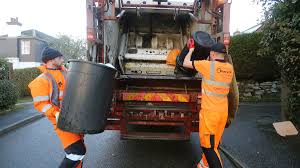
One of my grandkids loves watching for the garbage truck coming down the street. In his city, the sanitation drivers/workers are very predictable. I saw my little DNA carrier run to the window one morning for no apparent reason. Moments later I realized his little ears had picked up the characteristic screechy sound of the vehicle because there was the workman lifting the cans into the back hopper. My grandchild turned back to his living room play looking satisfied that his world was in order. He was learning to trust that sometimes the Whens of life fit into a schedule that can be planned for and predicted.

I don’t think we can blame technology on our lack of patience. Even as grown-ups we want our stuff now, not tomorrow. Putting in a call to get service for a broken appliance or delivery information can be problematic. We are usually given a window of time when an agent will arrive. Recently for me that ‘window’ was “Between 9am and 5pm on Tuesday” and I paced the day away.

Perhaps adults’ patience level has been eroded lately with all our systems, simply because we are frustrated by the slow approach of getting to that question of when. Confidence in necessary change is enhanced if the public can have a predictable timeline of action. As a citizen I don’t want to be told it will take a metaphorical twenty minutes if it really isn’t going to happen during this business/tourist/health/government cycle.

Then my trust goes in the garbage

Re: Cage

One of my first memories of childhood was my dad taking me to the Riverdale Zoo, near the Don Valley in Toronto. It was an old style animal park built in 1894. I remember there were lots of cages and barred enclosures. Another time we went to a private zoo in Maine and I fed peanuts to a curiously charming caged chimpanzee. Much later, as an adult, I was shocked to see the very same primate; fingers grasping rusty bars, woefully swinging back and forth. Penning animals is controversial these days. Back when I was a kid humans had to be protected from the ferocious beasts. Nowadays it would be more appropriate if we kept the flora and fauna sheltered from our influences.

Oh we can be a barbarous species! How terrible is man who imagines two people fighting it out; last man standing. One on one sports like Boxing and UFC are signs of man’s depravity, packaged as entertainment. Being a peace loving fellow, I don’t see getting enjoyment from watching humans bloody one another while literally confined in a cage or ring. Crowds shout encouragement. We bet on a winner. We get trapped in a form of collective mass hysteria. We all lose.

Even the meekest among us can build our own personal enclosures. At their best these are places where we find comfort or security.  If we are lucky we can decorate our homes to our choosing. We can make our private spaces reflect our personality while containing the things we need to survive or flourish. For those with less means, life itself can be confining. Through circumstance or plain bad luck some exist only in a place to escape from. We can sometimes feel trapped in the cages of our own minds. Temple Grandin famously built a hug machine contraption to find reassurance in a confounding world. What others saw as confinement, she found that the device gave her control within her unique autistic world.

It may be a zoo out there and we must learn to share it. There are occasions when misbehaving children are given a time out to think about their transgressions. My sons got used to the limits of a set of stairs until they realized the error of their ways. Older mis-deeders in our society go to prison, often for the wrong reasons and usually without positive outcomes. We can’t hope to correct the penal system until prisons become creative way-stations to a better life rather than models of going nowhere fast.

Having suffered from episodes of depression and anxiety, I can relate to those who find themselves in cages not of their own design. The experience of mental illness is a tiny world where the smallest things need to be protected, where others are to be feared. I admire those who find ways to free themselves of the constraints of conventional life. Folks who climb mountains, both real and metaphorical, have pushed against their personal boundaries. These adventurers have found space to breathe, to create and to live large.

Re: Sick

“I’m sick and tired of this mess.” My mom used to moan before collapsing into our chromed kitchen dinette set. She was referring to her very existence, I came to learn, as she asked me to sit beside her while she smoked cigarettes and figured things out. From a very young age I got the idea that sickness has an emotional component.

Sick seems worse than ill; it’s more violent at least. There’s often vomit involved. We remember, vividly, all the times when we have been really sick. On a return flight from Europe my wife and I were served a rice dish that seemed a bit off. Within an hour of eating, my tummy was a gyro of gurgles. Then I got seriously nauseous, taking several runs to the tiny airplane bathroom, then retching in my home airport after disembarking, only to continue vomiting after the long taxi ride to my house. Somewhere in that mix diarrhea was involved. For a long time after that I was sickened by the thought of rice. The slightest inkling of a sickening feeling sent me running for an antacid.

Cleaning up after another person who spews is the highest calling. Contents of one’s stomach should never be seen. Puke is disgusting. Bile is worse. I watched a film recently where a character was breaking off their relationship to their friend saying, “You sicken me.” She acted as though she was throwing up as she was delivering her line. I got the point and so did the boyfriend. 

One of the quickest ways to stop feeling sorry for yourself is to consider the spectrum of health. We’re not always able to label our illness but we sure can tell a story of someone who was sicker. We judge sickness. Perhaps that’s why it’s hard to call into the office saying we can’t come in because we don’t want someone else second guessing our self diagnosis. There may be whispers of shirking one’s duty to the company. Long Term Covid may change attitudes regarding the sincerity and necessity of health care needs.

My first experience with health trauma occurred when I was fourteen. My sister was riding a bicycle and was struck by a car. She was rushed to Sick Children’s Hospital where she was treated for multiple injuries. She was in a cast for a long time and she had some long term issues that affected life for the whole family. Watching her recovery from the accident gave me a new perspective on priorities. I think the incident made me less likely to complain about the little aches and pains of life. It stiffened my resolve to see the other person’s situation clearly before forming an opinion.

My mom would regularly declare that she was sick to death of a situation or a person. Time after time she pulled herself out of her funk: Not really a complainer, yet always a bitch. I wonder if repetitive negative emotion does us in eventually. Let’s call it ‘Death by Crankiness’. What a way to go!

Re: Sprawl

In my present location I look out from a fifth floor balcony at many square miles of identical rooftops. Without a GPS to guide you, there is a real risk of getting lost when you go out for a walk in such a neighbourhood. This is referred to as urban sprawl, an expression coined in the 1930s to describe areas of aggressive, largely unrestricted housing development.

My posture can be considered urban sprawl since I’m citified and have been lounging a lot lately. I’ll blame Covid slowdown for the way my body has begun to sprawl. Parts of me are spreading out, boldly going where they’ve not ventured before. I admit, slothfulness has always been one of my characteristics, but in the morning, once I am vertical, I have a certain energy. When I walk I have been considered quite military in bearing. In fact some folk have pointed out that my body sort of slants backwards a few degrees even while I am strolling. It’s a different matter when I sit.

Lounging about may give me a bad reputation for seeming to not care or being unambitious. I do care. I can be active when the time is right. However, I’m not very flexible. I am uncomfortable sitting at ninety degrees to eat a meal at a table. But then again eating is not a favourite pastime. If you help me into and out of a beanbag chair I might be inclined to stay there all day. I like the current expression for lazing about as ‘just chilling’. Breathing is easier in this position. I can do my best crossword puzzle solving while sprawled across a comfy couch.

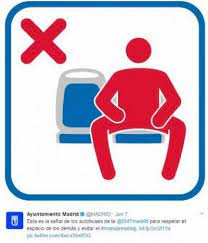
I have a stepson who likes to say, “If you are not living on the edge you are taking up too much space.” My need for comfort is not about entitlement, however in public I try to be respectful. The municipal government of Madrid takes sprawling on public transport very seriously. Manspreading is rude. There are signs and fines for validating your manliness over more than your share of seat. In Canada there is debate about the space men command to be comfortable. https://torontosun.com/2014/12/29/anti-manspreading-campaign-called-sexist

Hands behind my head, back angled at least 110 degrees to my thighs, legs splayed and feet supported by a stool. This is my characteristic configuration as I read, type these words or watch television. My body was meant for a Lazy-Boy recliner, but I don’t have one so I improvise. With the right number of cushions I can be comfortable sprawling on the floor, up against a wall. I can hear people telling me not to slouch, it’s bad for your back, you look sloppy, even slovenly. I can’t argue with that.

I’ll conclude by agreeing that municipal sprawl is the antithesis of edgy and personal sprawl in public lacks grace. Meanwhile, I have a foldable chaise lounge perfect for sprawl worthy moments. I’ll be outside with a magazine if you need me.

Re: Heart

My heart skipped a beat the other day. In fact it skipped several beats, enough to make me wonder what was going on. My son-in-law just happened to be stopping by for lunch so I asked him to take me to the hospital instead.

It was the prudent thing to do. Heart disease claims more lives in Canada than any other illness. I had been having heart palpitations (what I called kittens chasing each other in my chest) with some regularity for the past several months. My wife and I had agreed that, ‘the next incident’ would be the one where I would go to emerg. I considered my father, who died while on holiday in Portugal due to his heart health issues. He was only seven years older than I am right now. Memento mori.

My son is thirty years younger than I am. He and his wife have just bought their first house. After the move they enjoyed reporting a heartfelt sense of permanence, saying the decision was a “coup de coeur” experience. News of their combined joy pulled at my heart strings as though a song of love and longing had just arrived after a commercial break. A song such as this favourite of mine by Tony Bennett. https://www.youtube.com/watch?v=r6DUwMnDxEs

There are many songs written from the heart. Some popped into my head as I waited for a doctor upon entering the hospital’s emergency department. It was a large open area room akin to a Costco warehouse. Direction arrows were taped to the concrete floor, clerks stood at their posts. Instead of food samples or coupons I answered questions and was directed to a succession of stations where I was tested and questioned further. I got labelled then someone came with a wheelchair to take me through the final portal. Here, in a small room, I was told to lay on a bed around which gathered no fewer than seven medics. They stopped my heart twice in an attempt to reset it from a high of 185BPM. I felt well attended to, so I wasn’t frightened.

While being monitored and tested further, I listened to the busy sounds of the ER setting. I contemplated the news cycle since late 2019 of Covid calls to action in hospitals around the world. Many unrelated deaths occurred because folks like me were resisting going for medical attention for other ailments, like the atrial fibrillation which became my diagnosis on this day. Surprisingly my heart beat returned to normal as quickly as it had raced to my attention. Latest incident over, I have appropriate medication to forestall a similar occurrence and an appointment for a follow-up consultation with a cardiologist.

I felt gratitude that I had avoided a stroke which I was told was a potential with my condition. I was heartened to see our health care system work so well on my behalf. I’m happily feeling the beat of a consistent rhythm, giving me hope for what my future may hold.

Re: Pool

“Right here in River City” is a lyric from The Music Man and it is the first thing that comes to mind when I think of pool. The billiard kind, on a table, with balls rolling on a quality felt. My grandfather, a grand champion in his country, taught me the basics of banked shots and finesse with a chalk tipped cue. He snookered me many a time before I got the hang of the game. My mom however, agreed with the flim flammer character Harold Wilson, who felt that pool halls were places of sin. Here Mr.W. is played by Hugh Jackman singing a clip from ‘We’ve Got Trouble’.

https://www.youtube.com/watch?v=8UOL5CzvxnI

Both my parents encouraged me to swim. I was enrolled in the Red Cross program and got badges up to Bronze level. I competed in local level swim meets, once getting a third place in Breast Stroke. I took SCUBA lessons in two different pools, then completed my open water certification near Tobermory, Ontario. Now in my seventh decade I tend to splash around when I enter a pool, yet I still feel confident that I won’t drown.

Bodies of water encourage me to enter. I love the feeling of buoyancy. I love holding my breath and sliding porpoise-like under the surface, frolicking in the two worlds of air and liquid. I prefer a hotel stay that gives me access to a pool. Even a half hour in the chlorine infused water gives me an emotional lift that is a combination of youthful exuberance and entitled bliss. The building where I’m staying in Mississauga has just opened its outdoor pool. I was there on the first day, waiting by the gate. Children were gathered, freshly freed from school, looking as excited as I was to have a swim. They hung back while I tested the waters and took the first dive. Sublime.

When I lived in Schumacher, I swam in the oldest indoor pool in Northern Ontario. The atmosphere in the vaulted room felt as confining as underground shafts built by the mining company that had made this recreational space for its employees and their families. I have found natural pools of water whenever I have travelled. Hot springs in New Zealand, frosty kettle lakes near Timmins, the ocean-like fresh water expanses of Lake Superior and the salty delight of the Pacific and Atlantic Oceans.

When I first visited Victoria in British Columbia, my eldest son took me for a midnight New Year’s Eve swim held at a community pool. It was a tonic to celebrate time passages in that way. I remember the walk along the dark streets and a gin&tonic to cap the evening when we got back to his apartment. A friend of my wife asked her to cat sit her pets once and I went along because of the beautiful private pool located in her condo complex.

Where ever I go I pack a bathing suit. A chance to immerse myself in healing waters is not to be missed.

Re: Attachment

My son watched aghast as Prince Harry was asked yet again if he misses his mother. I understood how he could relate to the royal, having lost his own mom to cancer twenty years ago. We both wondered why some people maintain such strong attachments.

“Hang on tightly, let go lightly” is a wonderful line from the film ‘The Croupier’. I’m proud that my sons and I have found ways to detach ourselves from events that have caused us sorrow. We have learned to say goodbye without forgetting. In our own ways we continue to practise the meaning of living in the present. I love my sons not because they are mine, but because of who they are. When I learned the value of loving detachment I made a committed step towards a more mature attitude to life in general and other people in particular. I feel safer knowing I can detach from my own ego, from unhealthy situations, from the pressures of conformity. I will not blindly wave a flag nor join a parade.

I’m learning late in life not to be attached to an outcome. I wished I had had a clearer sense of this when I had sought out opportunities in the past. Perhaps a desire for something is closely linked to our wish for attachment. Sometimes our singularity compels us to seek the security of group membership. Even a kite needs to be tethered by guiding hands before it can soar. Admittedly, this analogy falls down when you consider that your individuality risks being constrained by an idea, a process or a brand. An obligation can also be an attachment that holds you back from discovering what’s best for all concerned. Truth can be the scissors that cut through those tethers that prevent us from experiencing a healthier personal reality.

Getting over ourselves can often mean stepping from the centre of our web of connections. Detaching from some filaments and letting go of the security of the collective is frightening but necessary to growth. I was clinically depressed five years before the death of my wife. I look back in gratitude that I had that span of time to sort myself out. In hindsight, I needed those years to be a better person for my dying spouse. I found ways to be more responsible for myself so I could be of greater assistance to my loving partner.

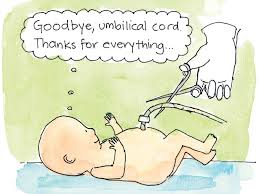
It isn’t an easy journey but I believe it begins with the cutting of the umbilical cord. To me that marks the start of one’s life, when you know you are truly alone. From that moment there are varying degrees of dependency, agency, and clarity regarding who is really in charge of your existence. Calling the shots means knowing when to seek help, receive help and provide help.

These days I’m attaching myself to the joys of life using a lighter thread enabling me to feel less bound by convention: More tuned in to the slightest breeze of welcoming change. I wish to fly higher and see further.

Re: Body

‘We all need some body to lean on.’ I’ve separated a compound word back there on purpose. If the great Bill Withers tune comes to mind that’s ok by me, just lean on me, while I try to amuse you with what the word Body brings to my mind. I promise I’ll stay away from bodily functions, body humour and noises a body might make.

When typing the word Body I must admit my first thoughts are sexy ones. A country song by The Bellamy Brothers plays now in my head; “If I said you have a beautiful body/Would you hold it against me?” That makes me think of times I’ve shared my body. I’ve been lucky that others have been attracted to me. I’ve been lucky to be fit without really trying. I’ve been in no major accidents and have few ailments. Like most people, I wish some parts of my body were better: longer, firmer, brawnier, hairier, or more flexible. Generally I think I’m presentable if not lovable.

Body talk is often frowned upon. Some folks are too quick to assume that the speaker/writer/painter/photographer is body shaming, or lascivious or sexist or objectifying. When the subject of bodies is portrayed within the context of communicating feeling or ideas more tolerance is needed. My overriding biased opinion is that, yes the human body is a thing (flesh, bones, blood & stuff), but always a beautiful one. I truly marvel at the variety and assortment of fleshy things that are in this big world. How wonderful it is when our soul gets to decide how to practise play while using a body full of movement, senses and expressions!

Some feel their body gets in the way. I was surprised by a comment Melanie Safka made recently in an interview about impediments to her musical career. I naively thought that all men and women had the ability to shape their lives equally. Boy! Girl! Was I wrong! Melanie said,”I kind of wished I didn’t have a body.” That statement made me ponder the male/female divide when it comes to how we view our bodies. As a young adult I was very attracted to her bodacious body and also to her body of work. I memorized the lyrics to ‘Brand New Key’ and I empathized along with her when she sang, ‘What Have They Done To My Song Ma.’

https://www.theguardian.com/music/2021/dec/14/singer-songwriter-melanie-woodstock-was-unbelievably-frightening

During award shows my favourite category is Lifetime Achievement. A human is being recognized for the work they’ve done using their body, mind and spirit over the course of a majestic period of time. Pity the person who didn’t appreciate the award winner in the early days. Prejudice may start when a body meets a body and the impression is only skin deep. Snap decisions based on looks can affect a career or a relationship. Judging a book by its cover can inhibit you from discovering a story that may change your life.