Re: Prophet

Early every New Year media sources look for seers who are willing to share their predictions. I didn’t see many prophecies this year. Maybe Covid19 trauma has dulled our sense of tomorrow. In many art forms, visions of the future still abound. For example, from an episode of the viral apocalypse TV series ‘Station Eleven’ a character in an airport makes a speech to calm the crowd “There is no future!” the soothsayer declares. With that, those assembled begin talking about what they can do with the frightening realities of the moment. Living in the present is hard. I prefer the hopefulness of the future, while other souls cling to the past for comfort. 

World religions have a bazillion prophets. Characteristically men dominate the list. I have a sweet spot for Sarah, a woman more legend than fact, who lived to be 107 years of age. There is that guy named Joseph Smith, the Mormon founder and follower Brigham Young whose visions led to the deaths of many. In principle and for my tastes, prophets must lead by example, must not profit, nor advocate for exclusivity, status or ethnic cleansing. I have inwardly gasped when I have caught the holiness within others whom I have met. The thought that God might walk amongst us intrigues me. 

Clairvoyants fascinate me. They’re often referred to as people ‘ahead of their time’. A list of my personal oracles can include folks from many walks of life: Jacques Cousteau, Isaac Asimov, Rachel Carson, H.G. Wells, Desmond Tutu, Martin Luther King Jr., George Carlin, Peter Weir, Maude Barlow, Greta Thunberg are examples. From people like these I have felt subtly directed on a path to a full and responsible life.

I like a map to ease my wandering ways. I look for wake up signs everywhere I go: Indications of what might be in store for me. Sometimes these signals can be found in nature, other times I might be viewing a piece of art. Prophecy can be disguised in a time loop. I may not know if I am looking back from my older self or gazing through the bars of my crib. I’ll get a feeling that I’ve been here before. A familiar sense, a deja vu perhaps, comes over me telling me to pay attention. I’ve had some prophetic moments like this. I may not remember what I ate or wore that day but I’ll still recall the sense of being out of time. I’m learning to use this information.

When I began writing these entries I had several objectives, but I couldn’t have predicted that I would complete this one; my 200th personal essay. With humility I see myself following a wondering path similar to premier essayist and diviner Michel de Montaigne. Recording one’s passage is a bit like making a time capsule for the future. I won’t pretend to have a crystal ball. I can’t foresee what will become of me or others. I’m content being my own light.  I’ll continue to let it shine.
Re: Intent

Intention is not everything, but it’s a start. It has been said that the road to hell is paved with good intentions. I don’t believe in an afterlife so I prefer to do what I can while I have breath in me. Heaven can be found by following through. There are shelves filled with self help books that show examples of how we can move from the idea to execution. The best advise I’ve read is pick a method to accomplish your goals then stick with it until you fail. Then try again.

I remember a clever comic strip that showed a boy scout helping an elder across a busy street. When he got her to the other side she said, “Thanks sonny but I didn’t want to cross”. I’ve been that scout, trying to do the right thing but unintentionally screwing up. Having good intent will not mitigate a misguided decision. Sometimes all it takes is asking first, acting next. Resolving to do the right thing by others takes practise. As a parent I bought all of the books by Barbara Coloroso, a well known child behaviour expert. She came to visit our community on a promotional tour for her work, my wife and I sat in the audience taking notes. I am still guided in everyday life by her quote; “Say what you mean, Mean what you say, and Do what you say you will do.”

I can relate to finding the right mood/moment/headspace to start or complete a task. Certain inexplicable things sometimes have to be just right before I can proceed with an intention. It is hard to create a balance between the aphorisms, ‘He who hesitates is lost’ and ‘Look before you leap’. Sometimes I relish a day spent procrastinating. Other days I will rejoice that I have tackled those things that have nagged at me. I often start the day with intention, in the form of a list on paper or in my head. If I don’t always accomplish what I set out to do, I forgive myself.

A child may react to being caught in a misdeed by saying that they didn’t mean it or they didn’t know any harm would come. Parents may allow some wiggle room in the name of learning. However, intention in a courtroom setting must be critically judged. Murders are classified as to the level of intentionality. If the accused is found to have malicious intent then judgement will be harsh.

Jean Talon is a character in early French Canadian history who may hold a key to viewing intent in a positive light. His title was as the first Intendant of New France; a CAO of the colonies. The translation of Intendant to English is Steward. I love the thought that an intention can be something we have a responsibility to see to fruition. If our intent is worthwhile it must not be squandered but put on the first available To Do list. A hopeful idea has little meaning without practical application. We must do what we intend.

Re: Understand

I took a two hour road trip with someone several years ago. Please understand that I zone out after a few minutes as a passenger in any vehicle. I’m not much better at conversation if I’m driving the car. Then I put myself on auto pilot as my mind numbs to anything but safety on the highway. On this particular trip though, the time sped by because we were dissecting the phrase, “I can dig it.” 

We both got the reference to the sixties, back when the phrase was popularized. We were of a similar age to appreciate the context behind ‘getting it’ but wondered if there was a difference between relating and understanding. Today when we say,”I can relate” after a friend has told us a story we want to convey that we understand as well as feel empathy. While in the car, that division between mind and heart kept us alert as we gave examples of understanding someone’s point of view while not necessarily relating to their situation.

For example, I understand why a person may choose to own a pet. I confess that I don’t prefer animals in the home, even though I have shared space with dogs, cats, a rabbit, a lizard and tropical fish at various times in my life. My sister and her daughter have both been pet lovers. When my niece said goodbye to her latest dog I asked if she would get another animal. She knows I would have a hard time relating to her decision if she did. Perhaps we can relate to our next of kin or loved ones because it is easier to empathize. They are relatives after all, so understanding their behaviour is not always conditional for our love. 

If I want to understand something or someone I take steps to evaluate the information provided. I’ll listen, observe, compare and contrast in a genuine effort to see the facts. This is head space work, scientific even. I don’t relate to the desire to go jogging. I understand the joy of fresh air, wind in my hair and using physical, not fossilized, energy. But would I make going for a daily run a lifestyle choice? Nope!

Back in the Trump days it was understandable to me how his brand could be seen as commercially appealing. I also ‘got’ the hatred for Hillary. And yet I could not relate to those who chose to vote for someone with so many obvious flaws. The division I see amongst the population of the United States today is a result of one side ignoring the work that is required to understand. In interviews these folks will actually be heard saying, “I don’t need to know.” 

Understanding certainly helps you to ‘get’ another person. When I am in conversation with someone, I like it when they check in with a phrase or comment which suggests they want to confirm what they just heard. They may not ‘dig’ my point of view but it’s wonderful to find out that they want to understand me.

Re: Cable

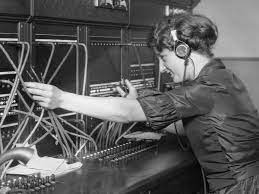
The first transatlantic communications cable was completed in 1858. It was telegraph back then; dots and dashes pulsing under the waves. Now we have similar cables of fibre optic material. I’m sometimes not sure if we have come very far when is comes to cable technology. Full disclosure: I’m going to sound old-timey in this blog so laugh away if you could use some chuckle therapy. I wish I could laugh, and maybe I’ll get there but the wounds are still fresh. I’ve had two chats with two different cable companies in the space of a month and “I’m mad as hell and I’m not going to take it anymore.” (Network 1976) 

Incident #1: My WIFI receiver was getting hotter than usual. I went to Shaw Cable’s website and initiated a Live Chat. 37 minutes of soul sucking chatting later, it dawned on me (chuckle here) that I was discussing my problem with an algorithm (new word meaning Robot). I finally asked the robot if I could have a technician come and replace the old device. I got an appointment booked and was told they would mail me the equipment. Two deliveries of tech stuff arrive. The cable guy arrives. He shakes his head as I relate the story. 

Incident #2: After setting up cable & WIFI in a rental in Ontario I was contacted on the phone by Bell Communications, at dinner and on weekends, for a total of five calls. They wanted to know if I was pleased with the service and if I wanted to upgrade any features. I said it was too early to say, but I would call them if I needed any help and please don’t interrupt me again. When I did call them (at least this time I got a real service agent) about a question regarding service irregularities due to jet flight over the building, I was told they could do nothing. When I pointed out my parents-in-law, five floors up, didn’t have the problem, the fellow got defensive. When I asked for a cable guy to come check the installation he said that everything looks good from his end and he couldn’t authorize it. I asked to speak to a manager and was told I would receive a follow-up chat (again with the chatting). All I got was an email telling me I might want to change the location of my connection.

There was a lot of chattering going on. I should mention that I’m triggered by the word Chat. I used to work with a school Principal who used the phrase, “Let’s have a chat,” whenever he wanted to stress a point of discipline. Every time I Skype I see dozens of avatars who just can’t wait to have a live chat with me. On the one hand I’m grateful we have cables (chuckle again, as you do your Wireless Age type thinking). On the other hand I sometimes feel the cable community is manipulating me. Chipmunk chatter, is what this is. Forgive me for being such a chatterbox.

I’m only human.

Re: See

I’d like to buy a seeing-eye dog for my mother-in-law. She is legally blind, and at 93 cannot see her way to the effort involved in engaging a support animal. Her inability to see details bothers me a lot. We used to play Scrabble together and she’s sharp at cards. We’ve tried braille versions but again, there is a learning curve that requires time; a lot of which she no longer has. Being with a less-sighted person requires patience and elements of translation. I guided her fingers to help me put together a table recently. I held out a bolt, showed her the hole, handed her an Allen key, then marvelled at how she used her fingers to ‘see’ the way to complete the job. She giggled.

Of all the senses, sight is the one I fear losing the most. I rely on my vision to warn me of danger and to remind me of beauty. If seeing is believing, I wonder what you can trust when you no longer have the confirmation of sight. In my mind’s eye I have enough experience to generate a memory of sight; a whiff of watermelon will produce a juicy picture of thought, the smell of salt in the air will point me towards the seashore, the taste of salty tears will vividly call me to the sight and sound of ocean waves.

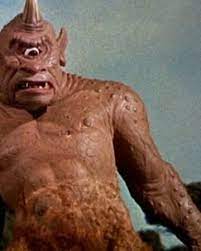
As a young boy I was mesmerized by tales of vision being taken, hampered or restored. I loved the way Rapunzel cures her lover’s blindness with her tears. Odysseus could enjoy watching the Sirens by being tied to his ship’s mast, later he bested the Cyclops by driving a stake into that beast’s solitary eye. Perseus was able to take the head of Medusa by averting his gaze from the Gorgon, using his shield as a mirror.

Visualization can transport. I use this technique often when I am stressed or feeling alone. It’s a way of seeing that is equally underrated by the general population and overused by self-help gurus. When I hear a siren I visualize that someone will soon receive help. I find it useful to see into the future; projecting my thoughts along a potential pathway so that I can test the ground before I commit to a step. I taught my sons to climb a tree using this forward thinking method. Now they tease me by suggesting that I imagine myself already achieving the task. It makes sense to look before you leap.

People still go to fortune tellers to see if someone else can picture their road ahead. These seers, using a crystal ball, tea leaves, palm veins or tarot cards may access another form of seeing. We, mere mortals, must rely on the electro/chemical signals produced when light passes in front of our eyes. When I dream of having super powers I wish for omniscience, or at least X-ray vision like Superman.

I’m not a superhero though. If I were I would restore my special mom’s sight.

Re: Promise

“I’ll keep you posted.” A familiar promise heard as two people part ways. Like other promises that may or may not be kept, this one signals an intention. Politicians’ promises are really statements of policy. These promises are intentional too, at least to the extent that candidates want people to know where they stand on the issues. And then hopefully you will vote for them.

When I was a parent of young children my wife and I tried hard not to make promises to them. Any politician will tell you that situations change and decisions must be made with the currently available data. Tell that to a six year old who has been looking forward to going to the beach on Saturday. “But you promised!” Their tears matching the rain that started falling that same morning. Sometimes factors align in such a way that promises can’t be answered in the fashion we would have liked. Yet a promise spoken can also be a signal for hope, showing a direction we would like to go.

“Now that is a promising development.” Might be something said after countries align in their commitment to combat Global Warming. The climate crisis demands that we don’t settle for what looks promising. We must put words into measurable action. My cake making grandmother would comment that the proof will be in the pudding and if there is a failure to act then someone is going back on their promise: The time for ‘half-baked’ ideas is over.

When a promise isn’t kept I feel let down. At every meeting of my Boy Scout pack we promised to ‘do our best’ and I took that seriously. Repeated disappointments, causing erosion of trust, can lead to cynicism, anger or worse; apathy. Every election cycle I get excited (there’s the Charlie Brown in me). I hold out hope that policy & action will be seen. I’m careful to match the incumbent’s rhetoric with his/her record. I try to interpret the validity behind a candidate’s promises. My vote is a response to those promises, but it can’t end there. As a citizen I also promise that I will do what I can to support the programs designed to fulfill those promises.

Financially, a promise can be called an IOU. A contract has been made based on the funds being returned on a given schedule. Depending on who you borrowed the money from, there could be very severe penalties if you default. When it comes to money, I’ve tried hard to stick to the advice of Polonius, ‘Neither a borrower nor a lender be.’, with varying degrees of success.

On my wedding day I made one of the grandest of all promises. A promise so big it is called a vow. It’s a good thing that I wasn’t the only one making a solemn vow that day. With two lovers working to keep their promises, ideally each partner is committed to making the promise a continuous reality. Here is a true example of actions speaking louder than words.

Re: Treasure

I think of the word Treasure in an emotional fashion like Adventure. I can imagine going on a voyage and discovering, at the end of my quest, a treasure most spectacular: That’s the little boy inside me, treasuring a moment of imagination. I want to believe anything is possible. And treats are like treasure. Like pirate’s booty, often buried for later.

Financially speaking, my parents were lower class. When holidays or birthdays came around there was always a feeling of stress in the house. Once my folks actually told us not to expect anything under the tree that Christmas. I learned to treasure what I had. Sometimes our parents surprised us with treats, gifted just because they had extra money that week. I remember treasuring a chemistry set presented this way, right out of the blue, like magic. Much later I remember a trip to Canadian Tire with my dad. I was looking for a single drill bit for a project I was working on. He bought me a deluxe set which I still treasure as much as any legacy he may have left.

I follow a fellow on Twitter who has made it his mission to reduce litter in his neighbourhood. He posts photos of the haul from the walk around his block. On one excursion he picked up a plastic lid that may be one of the first Tupperware toppers. Someone’s garbage is another man’s treasure is a phrase that comes to mind. He finds value in his personal project and the community sometimes joins him in this unselfish voluntary labour. My Nanna would have called  this good citizen, David Boudinot, a treasure.

Some people rise to the status of ‘National Treasure’: Sort of like a popularity contest yet hopefully due to merit. Cirque du Soleil once had that label in Canada. Other groups and people of note have been recognized as being treasured by their fellow citizens. Not to be confused with a National Treasury, which is a place where gold used to be stored as a country’s monetary standard. The success of a country was often measured by wealth of this nature. I often wonder if some countries with fewer ‘material things’ feel impoverished. Or do they have another measure of treasures that would teach me something I don’t know about value.

As a retired person with a successful career behind me, I am treasuring the fruits of my labour. Financially I’ve been luckier than my parents. My eldest son and I got into a deep dialogue around the topic of success and how it is measured. I still treasure the moments I had with him as father to son and now I place great value on our adult friendship. His generation has not had the easiest road to career style employment as my generation. In my eyes he has succeeded, regardless, in finding treasures along the way.

When I downsized I gave away many things I once thought were treasures. Now I look to time as a treasured gift to spend freely.

Re: Voice

Every artist has a desire to find their own authentic voice through their work. In song, the quality of the voice seems obvious, however it isn’t about technical ability alone. There is a craft to be learned with all art for sure, but one’s singular voice can only come from your soul. I believe the iconic image of the ‘struggling artist’ is a reference to this creative force willing itself alive. It’s hard to define or keep consistent. Often we sing a different tune. The voice one seeks is sometimes merely a whisper or an echo, or a memory. It needs to be heard, begs to be seen, desires to be applauded. When it doesn’t show itself, it’s frustrating. Writers call it a block, visual artists fear the blank canvas. Actors too, can draw a blank, freezing on stage. Sculptors agonize over quarried stone or soft clay, unable to hear what lies within. Dancers stiffen, singers go mute for lack of direction from their inner voice. Whether vocal or metaphorical, I believe your voice will eventually assert itself.

To be given a public voice through fame must feel intimidating. Celebrities experience this when suddenly their opinion matters. The microphone is poked at their face. The questions come fast and furious. When you’re famous everyone wants to know how you feel, where you stand, whose side you’re on: Give us your opinion please so we ordinary people know how to act. Under such pressure to be a role model, it’s no wonder to me that many simply crack. I worry for the pressures placed on Greta Thunberg in this regard. She is receiving good guidance to stay with the issue, diverting attention from herself by exhorting us to “Listen to the science.”This latest video shows Ms.T.’s familiar voice speaking for the planet.

https://www.youtube.com/watch?v=7WvehTbuvIo

We all have degrees of difficulty when it comes to giving voice to our feelings and thoughts. We may be shy about speaking up, speaking out and making ourselves heard. Yet how else are we to be known by others. We show respect to people who give us their opinion even though we may not share it. We turn to some for advice, when they have earned our trust through their words and deeds. I remember, in late adolescence, telling my parents that I had changed career plans. I thought the news would disturb them. But they heard the passion in my voice and gave me their support. Coming out with any news can feel dangerous, especially if what you want to reveal is against a societal norm. For example, Ellen Page’s transition to Elliot Page has fascinated me. I can’t imagine what that’s like, yet through her journey, my own vocal notes have changed. I deeply respect those who use their voice to help redefine culture. Their story, their struggles, their desire to be understood, accepted and supported provide a new context in which we can all re-examine our own lives and our place on Earth.

Re: Question

Children can annoy us with their constant questions yet a teacher comes to value a student who shows curiosity. When interest to go deeper into a subject is shown, the answers desired will be close at hand. Questioning forms a basis from which we discover. A well thought out question opens doors to knowledge and understanding. The popular game show Jeopardy is a creative reversal of the question/answer format of dialogue.

Some people have bridled at my questioning ways. To some folk, my questions have aroused suspicions of ulterior motives. Indeed, the questioner can sometimes be viewed as an intrusive examiner or interrogator in the manner of a police officer or a court room lawyer. My sister and mother used to accuse me of giving them ‘the 3rd degree’ whilst all I was after was an opportunity to find out how they perceived an event. Unfortunately many feel that answering a direct question puts them in a position of potentially being judged. I dated someone for a while who grew annoyed with the level of intimacy that questions and answers provided in our relationship. She would qualify her answers by insisting that her words not be used against her during some later conversation. To her, any question was a potential trap.

I like being asked questions as much as I like giving answers. I’m a sucker for an online survey, somehow feeling honoured that someone or some organization values my opinion. In Canada we are currently undergoing a nationwide census. I felt a bit miffed that I got the short form questionnaire while some of my friends got the long form version. There is certainly controversy in this era of information technology. I fully appreciate how my eagerness to participate and share my thoughts could endanger my privacy. Yet my use of this blog site is a testament to my belief that sharing information can be a healthy way to show that I have feelings and valid thoughts that others might relate to or appreciate.

‘Ask me no questions and I’ll tell you no lies’ is a phrase that has been around for more than a century. Here’s a charming musical admission from Bing Crosby who sings these words in an attempt to avoid a conflict of interest. https://www.youtube.com/watch?v=iOABpY4PKko

In many current cultures it is still deemed rude to ask someone about their finances, religion, politics or sexual preferences yet these are all important topics that lead us to understand another person’s point of view. There is a diplomatic art to questioning so perhaps a tactful beginning is advisable: “Forgive the intrusion…” or the pre-question question, “May I ask you a question?”

I believe a questioner is making an offering. If there is curiosity of intent and good manners in the delivery then I say nothing ventured, nothing gained. I love it when people tell me that I ask good questions. I also enjoy broadening my understanding of people’s choices. I only wish there was more time to get around to everyone.

Re: Awe

“Awesome!” and “Far Out!” are sounds that tumble out of my mouth whenever I’m amazed at what I’m experiencing. With these exclamations I’m not passing judgement on the surprising subject matter, I’m just feeling joy in the wonder of the moment. Just as the character Spock from the old television series Star Trek says, “Interesting” or “Fascinating” he too is expressing curiosity. My Awesome is just a big fat Wow regarding the mystery of life as I experience it. The singer/songwriter John Denver clearly understood how to express delight in the world around him. I feel to show enthusiasm is to embrace life and all its observable mysteries.

https://www.youtube.com/watch?v=2-OhYLVSGj0

My only social media account is Twitter. Recently I had my first experience with a post getting a lot of attention. People took issue with me using the word awesome to describe a short video that made my head metaphorically explode. It was a shipping container that housed fans and wires and a computer-looking array. Since it had no narration, I retweeted asking for an explanation of what I was seeing. Thousands of responses later the world seemed to think my awesome choice of words was either evil or masterful. I sincerely wasn’t choosing sides on the Blockchain/Bitcoin/NFT debate, only expressing a sense of wonder. Oh well.

Language is full of pitfalls. The word Awful carries a negative connotation even though it literally means, ‘full of awe’. I’ve been reading about philosophers lately and have discovered that a common connection with all the theories is that the world, and the humans who inhabit it, are pretty awesome. Each writer is filled with awe when it comes to his/her philosophy of life. I wondered if I would come across someone who had a philosophy of awesomeness. In the feature length cartoon ‘The Lego Movie’, there is an inspiring song ‘Everything is Awesome’ which captured the enthusiasm I had in mind. It’s obviously written for youngsters but I’m a kid at heart.

https://www.youtube.com/watch?v=StTqXEQ2l-Y

If I understand Phenomenology correctly, it is our experience that defines the meaning of life. Martin Heidegger and other bright minds began a discussion of this idea of how phenomena interact with the consciousness. Detractors suggest Phenomenology might be dangerous because it lacks focus. Psh-Posh! Perhaps this minor philosophical movement can be restarted with my humble input. First, I humbly suggest a name change: Let’s try, Awelogy: The Philosophy of Wonder.

I’m working on some initial precepts: *When you greet the morning after your first breath of consciousness, be grateful. *Put aside your preconceptions when experiencing things. *Observe and allow yourself to be awestruck *Reserve judgement *Share your wonder with others *Resist sarcasm or mockery

These are nascent thoughts but I am in earnest. I plan to discuss this notion of Awelogy whenever I get the chance to slip it into conversation. Maybe one day one of my grandchildren may smile over my efforts and say in amazement, “Oh grandad!”