Re: Insurance

The insurance business is an industry that depends on our fears & doubts to drive its operating model. Buying insurance is clearly an example of damned if you do/damned if you don’t. Either way it’s hard to come out of any exchange/interaction with this business without feeling like a chump.

Seven years ago my wife and I bought a new car. It was a great deal until we sat down with the fellow in charge of wrapping up the sale. He convinced me to put another two grand into insuring the purchase against future repairs. “For peace of mind.” he asserted. “You would want to protect your investment.” He said this money could be viewed as a hedge against accidental repair costs. At the end of seven years I could get my money back if I didn’t make a claim. I signed the paperwork while foreseeing a future out of my control. It was a trap!

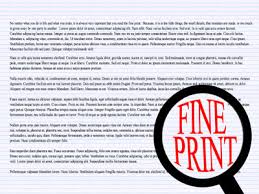
I’m compulsive when it comes to paperwork. I’ve spent plenty of time assembling documents, affidavits, testimonials for a variety of purchases gone wrong in my life. Air travel reimbursements, plumbing conflicts, health care overpayments, warrantee disputes, car accident confusions all have a file in my trusty steel cabinet. But the devil is in the details. During those seven years my wife and I had lots of distractions, both good and bad. I ended up misreading the refund date amidst the fine print. I called the insurance company to be told I had missed my window for a refund. But I had extenuating circumstances! They were sorry but they were bound by their policy. I stewed some more. I kicked myself for betting on a negative outcome. I said to myself, “I knew it!”, so many times I lost count. I had to find a way to forgive myself for not being on top of my affairs.

In my country there are laws against NOT having home or auto insurance. Insurance agents promote buying insurance as a smart thing while making profits on our distrust of a product’s viability. We are advised to believe the machine we buy will not last, the device might be a factory lemon or, worse yet, the thing we have spent our hard earned money on will get stolen. If you are insured against loss/damage or theft there will be no worries, or so we’re made to believe. Sounds like a smart thing to do, until you have to make a claim and then you wished you had read all the fine print.

In principle I want value for my dollar but I don’t wish to put a price on my being. Life insurance strikes me as just plain evil. I don’t want to think that a death settlement would be compensation for my lack of presence. I know I am approaching my expiry date but my body is not insurable in the sense that my loss can be put on some corporate ledger. Insurance doesn’t provide balance. Keep your policies! My value is intrinsic.

Re: Evil

Like most people, I choose to hear no evil, speak no evil and see no evil. But it’s hard these days not to at least ponder the use of this word. Evil seems to be all around us right now. It’s written about in our newspapers, it’s demonstrated on our nightly news, it pops up on our social media sites. I think evil holds some kind of attraction yet I am puzzled as to why.

One genre of film or book I least like is horror. I shy away from tales of the bad deeds that humans do onto others. My recreational viewing and reading is a search for the best we humans can be while overcoming the restrictions of existence. Stories of evil are prevalent in any historical age and no nation is immune from showing inhumanity in policy or deed. Sometimes we Canadians get sanctimonious when it comes to our presence on the world stage yet one only needs to turn to our government’s record regarding the treatment of indigenous populations to put us in our place.

Evil lives in people’s minds. Ignorance can be manipulated by someone to promote and nurture an evil intention. Evil is present whenever I think I can use someone else to attain my goals. Use can quickly turn to abuse if the result of a personal or professional transaction is not satisfactory. Beyond the individual, entire community power structures can be created to maintain the status quo. Society quickly becomes a Them against Us scenario. The abusive power invokes fear through threats and intimidations. An evil power thrives when the community is uneducated. Even majority populations can be cowed into believing things that are not true. False narratives become integral to the structure of Evil.

Prejudice forms part of the root of Evil: That creeping thought that enters the mind suggesting that you, or we, are better than those others, over there. Evil grows. It’s an egregious event to see and hear folks suddenly turn against each other. Sides are chosen by leaders spouting rhetoric that fans the hatred. If you are not with us then you might be considered stupid, or worse, like animals. The road to expressions of indecency towards our fellow creatures is not winding, nor is it as short a distance as we might wish to believe. Thoughts of defence, turn to acts of revenge, turn to denial of the very existence of the other, all too quickly.

Blame is cloaked evil. Many could be named as prophets of hell: Hitler is often invoked yet there are others who have taken a leadership role in acts of inexcusable terror throughout history. Measuring the severity of the crime against humanity gets us a list of who to blame but doesn’t absolve those who clapped, who made deals, who saluted, who perpetrated the policy, who cast their vote. Few can say they had no role. When the finger pointing is done we are still not absolved of responsibility.

Ideologically, we are no better than our neighbour, even if someone tries to convince us it’s true.

Re: Manners

What might be considered offensive to some is quite acceptable to others. Simply put; that is what the word Manners means to me. I don’t need a dictionary to soften the edges of my definition so please don’t be offended by my bluntness. Words can offend, behaviour can offend, one’s choice of hair style may offend. All this because a culture is defined by its manner of existence.

Societies are built on acceptable performance. Etiquette is taught early, and often by shaming. Parents dole out these initial nuggets of advice/discipline. Junior will be admonished for picking his nose, or pulling down his pants. The little one must learn that certain gaseous noises will not be tolerated. Kids learn that we are not amused when children make too much noise or run too fast. There is always a measure of respectability that must be adhered to or an elder will make us blush with regret. Youth are not off the hook outside the home either. School and church confirm or contradict the comportment required while a person is functioning as a member of the community. Adults can get quick tutorials too: Government officials are coached in proper manners when they assume an ambassador’s responsibilities. Those of lower socioeconomic status or non white skin colour often end up in jail.

I’ve never been impressed by high society. Ann Landers, Dear Abby or Martha Stewart types aren’t about to change my mind if they think something is a ‘good thing’. I shall not follow that lead. I have low tolerance for self appointed protocol police. If something is publicly regulated I will consider the reasoning behind the statute before I buy into it. If conduct is judged just because it’s considered ‘Proper’ then I’ll give it the royal wave or the middle finger salute, in a manner of speaking.

Those touting good manners are often guilty of pointing the finger: ‘How could you!’ quickly becomes, ‘How dare you!’ which then degrades to, ‘Shame on you!’ Artists and entertainers are often unfairly judged by those who look down their noses. A recent documentary about Sinead O’Connor was a case in point. Her talent and valid protests became secondary considerations in the face of impolite demeanour. Here was a beautiful singer and sexual activist, unfairly beaten down, shunned even, by those holier than thou elements of the music industry and the religious community. She dared to be different.

Manners are a human construct. Modern civilizations don’t tend to embrace differences. We are wary of the odd man out. We worry what’s behind a questioner of authority. That may be why politicians so rarely suggest outside the box solutions, because any non-conformity to traditional mannerly thinking is threatening to order and good government.

Isn’t it a wonder then, how we can ever get to addressing the big issues without making offence. It’s easier to say, ‘But that’s not how we do things here!’ Revolutionary thinking is bad manners. So there! Let’s just accept it, then let’s get on with the important stuff in life.

Re: Label

Things can be labelled but people must not. I don’t like to label others anymore than I enjoy having a tag placed on me. Humans are varied as a species and as individuals. Each single soul has multiple characteristics. I am not one thing: I am retired, male, Canadian, married, a writer, a dreamer, an adventurer, a grandfather. All those things and more. To label me would be an insult to all I was, and will be. Freedom is being unlabelled.

In my workshop I once had a labeller thingy: one of those devices you could punch embossed letters or numbers onto a plastic adhesive tape. The tape came in a variety of colours and was useful to denote things that begged to be sorted. It was a fun gizmo that I used to fashion labels for my sons’ belongings. I organized their shelves, their toys, their dresser drawers. I taught them how to read using the coded labelling as a practical way to put things into groups.  I organized their life because when my life was organized I felt a certain measure of peace.

Labels are often inefficient even though they are used to inform. The label on the can of baked beans on a shelf in a grocery store tells us its ingredients, even how beneficial it might be to our health. Yet it cannot tell us how it will taste. Companies pay huge sums of money to marketing firms to advertise their products. Labels are helpful to making money on products that people are told they must have for happiness or success. Labels sometimes rise to the status of brands and logos when they have become personified. Consumers become conditioned to believing that the labels they choose to buy will enhance the person they want to be in the global marketplace of our corporate world.

AI is raising the bar on labelling practises. Our personal phone devices are programmable to the point that they can scan codes. Under the guise of making life easier, we are folding ourselves into the capitalist matrix every time we use a QR label. In an insidious way we become a label to the machine of commerce because our personal data gets fed into AI systems that analyze our preferences and performance as a customer. In this scenario we risk our role as citizens when our civilization puts greater value on transactional bytes.

As a career elementary school teacher I was involved in many meetings where children were classified. Criteria for selection into groups varied. Many of us resisted the use of distinguishing labels. Our intent was for our students to be their fullest selves. During the horror of Nazi Germany a precedent was set for identifying humans considered to be of lesser value. We must resist being labelled in the name of profit, protocol or politics. Using scanning devices to assign us to a strata of consumer culture, to make us mere cogs in the wheel of Consumerism, or any ‘ism’, is a corruption of what it means to be Human.

Re: Man

I am a man. I think I am a man because of my biology and my training. I was taught that I could pee standing up, that I could help make a family by being a provider, that women and children must be saved first in a disaster. Some of that, perhaps all, is outdated thinking. But still, I know within my being, that I am a man.

This man: Me. I am taking small steps to learn that not all men, not all human beings, are created alike. By our very nature we are formed from the same flesh and blood and so must be treated, collectively with the same respectful humanity. However, I have come to learn that I am a Privileged Man by virtue of my whiteness and wealth. This troubles me. The equal rights declaration, “I am a Man!” is not lost on me. I learned of my manhood by example, as all men do. My father taught me there can be gentleness in a man. He spoke of femaleness and maleness as characteristics that men and women can share. For a while I was confused about these juxtapositions. I saw violence in my mother so I knew that hatred was not the purview of a man, alone. I learned that it was alright to cry, and yet tears may let others in on your secrets.

What it means to be a man has been a topic of discussion since the times of the wise Greeks. Most often, in my interpretation, these definitions have been restrictions to mankind’s full potential. Robert Bly made an attempt at defining the need for a men’s movement. His book, ‘Iron John’ was a great read using an old folk tale as a guide. The flaw in the text was the assumption that Man must be thought of as opposed to Woman. Our physiology must not predetermine our preferences, attitudes or behaviour. I believe there is more harm than good in concluding that the sexes think and act in a standardized pattern.

There is no manual on how to become fully human just as there is no series of steps to raising a child. Cultures may provide clues that help us to nurture nature. But nature will usually prevail. Societies may fear gender dysphoria to the extent of enacting laws that do more harm. Resolving issues of sexuality and gender identity will require love, not restrictive laws. It is clear to me that neither manipulation nor manhandling will be effective strategies when resolving these issues. I was recently moved by the role that Ben Whishaw played in the film Women Talking. He reminded me of my father in the way he showed respect for members of the opposite sex. His performance, proved there can be fluidity between the feminine and masculine ways of thinking. This quote from Psalms comes to mind: “O Yahweh, how manifold are thy works”

By virtue of my manhood I’m a member of the Patriarchy yet I am a man who does not want Power to rest in my maleness alone.

Re: Uncle

I make a point of talking to my uncle every month. I use my computer so I can see him and because it is a free way to connect since he lives way across the Atlantic Ocean. He’s the only uncle I have left, so I feel a certain responsibility. He is my auntie’s husband after all. But that doesn’t really explain things.

As kids we sometimes cry out “Uncle” when we are in a wrestling hold. It might be a universal safe word that tells our playmate/opponent that we’ve had enough and we give in before further damage is done. Once during an overnight adventure with my scout pack I got into a bear cub like scuffle with another boy. Saying Uncle to his aggression made me feel ashamed. I remember leaving the scene shouting that he would be sorry, “Just you wait! I’ll be famous one day!” I screamed.

I showed him.

Parents who had children in the fifties would advise their kids to call family friends Uncle or Aunt to somehow distinguish them from untrustworthy strangers. Even as a kid this creeped me out that I had an Uncle Frank even though he wasn’t a REAL uncle. From my parent’s point of view I suppose this might be an innocent bit of labelling in the name of ranking a friendship. Such confusion of terms and association has led to child abuse all in the effort to show familiarity. Sticks and stones eh.

My authentic uncle in England has been an important addition to my life even though we have only been together about a half dozen times. He was a buddy to me when I had a brief solo adventure in Europe that went bust in my late teens. I learned how to sail under his tutelage. Once he travelled to Canada while I was raising a young family of my own. I took him on his first fishing trip, we travelled together with my dad and eldest son on a northern train trip. During this time, I hosted a backyard salmon bake with gallons and gallons of wine and we talked about Shakespeare’s impact on the world until the stars above our heads astounded us with their brilliance.

And now I watch him getting old on Skype. I want him to remain as he was but he gets forgetful even amidst a short conversation. I’m not getting any younger either and my uncle is a reminder that life is finite. Covid has shown us that no one lasts forever. As long as we have a present we don’t have to rely on memories to buoy us up. So I call him to remind him of the fun we had together and to thank him for being the elder in my life. I wonder to myself how the past can invade the present, grasping us, like in a wrestling match.

I’ll say Uncle to death’s embrace at some point. For now, I’ll surrender to the joy that is mine, today. https://www.youtube.com/watch?v=eaCDXcXnpVI

Re: Trigger

The word Trigger gets me thinking about guns. Don’t get me started on the 2nd Amendment of my basement neighbour’s Constitution! I’m triggered to think of the atrocities committed in the United States that are directly related to the insane belief that some Americans have regarding their right to bear arms. Of course, gun culture is not exclusive to the U.S.of A., but that nation sure knows how to promote it.

Most guys my age had a set of toy six shooters under the Christmas Tree. These faux firearms came with a roll of caps to create authentic sounds of engagement. As a nine year old I met up with my friends in a nearby ravine every weekend to play Cowboys and Indians. As well as my holstered cast aluminum pistols, I carried a replica carbine rifle and a derringer tucked into my sock. I was packin’!

Television at the time had role models to enhance your imagination. I could pretend to be Roy Rogers who had a dog named Bullet. I’d pretend to ride his horse named Trigger, chasing after bad guys who only understood justice from the point of a gun. Today you can view an endless stream of Netflix dramas that feature gun play. Violence is depicted as necessary, the weapon as an equalizer. Rarely is guilt factored into that fictional equation, since the end result justifies any and all means. So goes the script anyway.

What sets a person off can often be a good starting point to any discussion that requires resolution. I’ve been noticing lately that even a single word, misinterpreted, can incline the conversation in a surprising direction. Language can trigger memory and, like the speed of a bullet, the damage of that recollection pierces your heart as though the wound was occurring in real time. With feelings tightening, it’s very difficult to return to the onset: The flames of unresolved issues have been fanned into a firestorm of emotion. It’s a firefight.

I used to idolize the gunslingers I followed on my favourite tv westerns. They had a quick trigger finger and a focussed aim. I liked it when their precision shot would blast the gun out of the bad man’s hand, disarming the villain even while correspondingly shaming him for his intent to harm the innocent town folk. To this day incidents of bullying are most triggering for my childish mind. I picture myself as the sheriff walking about my village with a space gun (set to stun), or a rapid fire nerf shooter. I’ll be doing my rounds, ever watchful and fully prepared to immobilize the blaggards of my community. Thankfully, my adult sensibility has found ways to tap into a relevant response to current stressors.

I’m getting better at not letting triggers dictate my immediate action. I’ll review my past association with the words or behaviours I’m witnessing before going off half cocked. Metaphorically, for safety sake, I’ve put a lock on my triggers, to avoid any random violence. Peace and reconciliation are my aims.

Re: Violence

The Oscars Slap. The Slap that was heard around the world. The outrage over this one violent act, even amidst conflict in locations throughout the globe, came as more of a shock to me than the slap itself. By the time this page is posted there will have been lots of sincere discussion and whataboutery on social media, in print and in coffee shop gatherings. Conversation is a good thing. This incident produced an excellent exchange with my eldest son.

Together we identified the issues that this act of violence highlighted: female agency, male power, comedic intent, manners, and personal illness were among the many relevant points. For me the central issue was society’s tolerance of violence. I told my son that I could not condone any form of violent action against another. I see many challenges in life in a spectral way. With respect to violence I might place a hurtful comment on one side of a continuum and an act of war on the other extreme. The point I was making with my son was that I believed that emotion drives the violence and regardless of the degree, we are responsible as individuals to control our responses to anger, hate, or other feelings that would fuel hurting others. “You’re more of a pacifist than I am.” said my son. I’ll take the label.

The Covid-19 reality has made death a counting game. I fear that it has produced a tolerance among us to loss. Likewise with the war in Ukraine, in the early days we have argued against helping for fear the conflict will escalate. Meanwhile people are hurt from disease and the feeling that they are struggling alone. Essentially we are alone, yet we help our neighbour. We are individuals, yet under normal circumstances we resist using violence to solve our problems. When collectively we act emotionally we can advance civilization. The opposite can also be true; when we are pushed we want to push back.

Looking back through my life I recalled two people who have faced my violent response: One was a bully at school when I was twelve, the other was a student who was swinging a ruler at me in my early days as a teacher. He had cornered another student and I stepped in to protect, slapping the aggressor in the process. I’ll put the former down to youthful indulgence but the latter I felt instant regret. I apologized and wished I could have thought of a better way to defuse the situation. Most schools now have a zero tolerance policy to violence and bullies are called out, even when the behaviour is passive/aggressive.

I find it surprising that we tolerate violence in some sports and not in others. I look at the Will Smith/Chris Rock altercation and wonder why that awards show went on at all. I thought of movie westerns where one punch leads to a wrecked saloon. Simply put, maybe saner heads prevailed on Oscar night. Everyone assembled took a breath and carried on. More violence would have been wrong.

Re: Prime

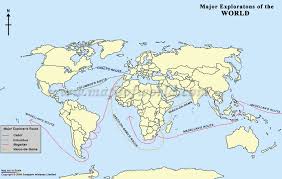
Any Star Trek fan will tell you that The Prime Directive is the primary consideration whenever contact is made with another life. I’m priming the metaphorical pump here, when I suggest that this fictional Star Fleet Regulation is relevant to current discussions surrounding colonialism. In our real world of the late 15th century, explorers were faced with similar moral dilemmas yet were emboldened by The Doctrine of Discovery to claim whatever land was found for God and Crown. Aboriginal land was considered prime real estate by powerful naval nations. The expectation was to expand the Empire, fully sanctioned by the powers of the day. Living things, including fellow humans, were either considered in the way or resources to be used by the conquerors. Settlement and extraction of wealth was the prime directive. Throughout the world there is currently a renewed accounting of the results of this maniacal arrogance.

It’s enough to make anyone want to give a Primal Scream. Countless millions of lives lost like so much prime beef: Disregarding, dismissing and debasing fellow humans by renaming them as Primitive. Disgusting! Impossible to escape from the reality of man’s inhumanity to man. Seemingly impossible to reconcile the idea of human progress with all that degradation. Information we were fed in schools is sanitized through the lens of the victor. In my experience, public schools in the 1950s and sixties did not promote diverse historical viewpoints. In the countries affiliated with the British Empire, the pink area on old maps, we were taught to honour the establishment of the colonies. We traced maps and learned of benevolent conquest. We wrote essays about the captains of tiny ships who sailed through impossibly vast seas. Between the lines researchers can reveal grasping power hungry individuals, corrupt systems, antithetical religions and evil societies. The injustice has always been there and new evidence of it is being brought to light everyday. Truth is being spoken. Secrets are being exposed. Lies are being challenged. Apologies are being made. There is a demand to have these errors acknowledged by current governments.

And still the primal patterns of power and racism continue.

I dream of a world where we are united by discovery and share what we find. Our planet suffers due to our selfishness. As shepherds of the Earth we are failing to unite around a common healthy cause. Primarily we seek to serve our own needs regardless of the consequence to others. It seems a grim reality, an inconvenient truth even, that our primary function is to satisfy our urges. I’d like to believe that science has the answer: a Unified Theory of Everything as envisioned by the likes of Stephen Hawking. I wonder if there is a place of thought where it’s understood that individuals are like prime numbers sometimes and composite numbers at other times. Yet it’s impossible to dream up an appropriate metaphor for what it means to be human. We don’t fit into Number Theory. We have names. We are far from being mathematically perfect. We are all united by life.

Re: Fight

Cancer is advertised as something we must fight. Yet fighting isn’t the answer; calm, methodical, verifiable research is the only solution. We regularly use fighting references when we want to overcome, push forward, resolve tension or see the back end of discomfort. The recent impeachment trial of past U.S. President Donald Trump saw his defence team cut and paste numerous examples of the use of the word Fight from speeches made by prominent Democrats. Without the full context however, the video made both sides of the constitutional hearing appear foolish because of how we overuse this violent word Fight.

There are many examples of peaceful methods to demanding change. I admit that sometimes writing letters, Tweeting our displeasure, congregating in silent protest, marching in solidarity, creating blockades, imposing sanctions or demanding compensation are not enough to change minds. Fighting must not be our first method of resolving a problem. The United States of America is not the only country to fight abundantly, but they sure have a record for liking that word Fight in the context of almost anything. When a problem comes up, it seems to be the American Way to wage a war with it. Currently, it’s a war on viruses.

To fight everything and anything puts a ‘me against the rest’ stamp on our language. Once it is in our common language we find ways of making it sound reasonable so our actions then become the meaning of the word. I have fought for things I believed in and I have run from trouble, but a response to a perceived threat doesn’t need to be just Fight or Flight. Some creatures in nature survive by Freezing. You won’t survive long if you are the proverbial deer caught in the headlights, but an animal like an armadillo can get out of a tight spot with a predator by rolling into a compact ball. Other animals can even feign death to avoid conflict. A mother Killdeer doesn’t fight to protect her nest, she Freaks, making a spectacular distraction. Likewise we humans can sometimes turn to comedy to draw attention away from an aggressor. We can Fawn in an attempt to placate the offender, for a moment, to ease the tension. Turning the other cheek doesn’t need to mean acceptance, or even meekness. It can be a method of biding time until a positive awareness returns. In family arguments, rather than fight, it may be a choice to admit Fatigue with yet another go round on the same grievance. These avoidance techniques give us a chance to gain a new, more useful perspective.

Only the person at that particular time and place knows the best way out of a threatening situation. I have felt the walls closing in on me. Regular doses of aggression being pushed on us will surely inform our responses, however I feel intuitively that fighting is not the answer. I’m not wishing to be part of any Fight Club, especially when someone is trying to convince me it’s for a good cause. I’ll seek peace first.