Re: Story

I’m thrilled that my three grandchildren are being read stories to. I have yet to have that task assigned to me, what with COVID19 keeping my little ones from scrambling up on Grandpa’s lap. For now I have enjoyed the sight of them tumbling for access beside their parents while we long distance chat though the magic of the internet. The young ones’ smiles and squeaks of glee fill my ears and heart as cardboard pages are turned beyond the screen that separates us.

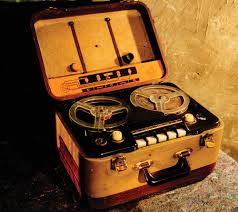
My father, who loved to create his own stories, once had to work night shift when my younger sister was in her prime bedtime story time. Unable to share tales with her to settle her to sleep, he crafted yarns on a reel to reel tape recorder. He left the cumbersome machine on a stool by her bed, asking me to press the start button. His voice would quickly work its magic spell on her anxious soul. Once down, she was a deep sleeper. I sometimes surrendered to sleep, as I sat on my bed nearby, only to be jolted awake by the flap, flap, flap of the tape’s end. 

Stories have always bound us together. Ancient ancestors recited tales around the campfire. Today we create blogs. When we travel and meet others we might share a meal together and ask, “So, what’s your story?” Our stories are our lives: Interpreted so that we may understand ourselves. Told, so that others may know us. The character Tyrion Lannister in this scene from The Game of Thrones speaks well of the power of stories. 

History is really a series of stories, retold, written down, debated and repeated. Unfortunately, men have generally been the arbiters of HIStory, with women’s roles often being left as footnotes. Societies are slowly coming to realize that the truths of our lives have only been half told and that HERStories cannot be left unrecorded. A woman is not the ‘better half’ of a partnership story anymore than her past can be lewdly considered ‘storied’ as in pulp fiction novels. All human beings contribute to the narrative that is OURStory.

When I witness a large crowd of people I’m overwhelmed by the thought of all those stories: Globally almost 8 billion! The story of one can seem as simple as choosing yes or no. Now I add an extra to my circle. Then I add those who are close to me, then those who I work with and others I’m only vaguely familiar with. Like rain drops on a quiet pond, I picture a vast collection of Venn diagrams; spaces where stories overlap, large arcs where stories are still unfolding, and along the edges there are stories I can only imagine. My story is only complete when it’s placed within the context of this vast community.

I don’t know how to comprehend the many stories of humanity but sometimes I have a Eureka moment when I experience poetry. https://www.youtube.com/watch?v=Ws5klxbI87I

Re: Gluttony

When I think of a gluttonous person the picture that comes to mind is someone very large; of the size of characters in Pickwick Papers or akin to sumo wrestlers, that kind of large. Of the ancient deadly sins I match this word with Greed. One and the same; Greed and Gluttony are about over indulgence, over spending, and over doing almost anything. I’m referring to the act of extravagance. It’s not about fat shaming but living within your means. Gluttony to me is about consuming more than you need. The best skit I have ever seen on this subject is the revolting tale of Mr. Creosote as told by the Monty Python crew from the film, The Meaning of Life.  https://www.youtube.com/watch?v=GxRnenQYG7I

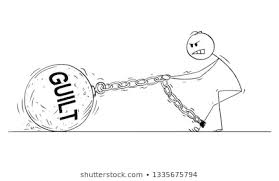
Paul Anka is credited with this guiding phrase: ‘Moderation in all things, including moderation.’ My mom used to like that quote. She was part of a post WWII tribe that had little in the way of material things. When things got comparatively better, the flood gates to excess were opened. When I was growing up she would have spells of acquisition that accompanied her care free attitude. One month we may have been looking for coins between the sofa stuffing and the next (with overtime pay in the envelope) treats were allowed. When the pantry invariably became depleted I might be inclined to ask if I could have the last of the jam. In response, Mom would flip her hand, “When it’s gone, it’s gone!”, which made me feel as guilty as sin.

Apparently, there are seven sins: Pride, Greed, Wrath, Envy, Gluttony, Lust and Sloth. I was taught not to be lazy, to control my temper, to not whine about what others may have, to measure my wants, and that if I boasted my head would surely swell. Of all those early lessons I think I absorbed, with lasting success, that gluttony is bad. I do believe that too much of anything leads to a serious disconnect with others and is responsible for the damage we have done to this finite planet. I’m told this is a homesick-like feeling called solastalgia. When it’s gone, it’s gone.

Preaching minimalism didn’t get me far in conversations with my sister, who like our parents before us, chose to maximize her paycheque with payday loans of one sort or another. She was always reaching for the proverbial brass ring, hoping to keep the ride going even when resources ran out. In her tribe I was considered a stuffed shirt when I questioned, “How much stuff do you really need?” 

On Twitter, #taxtherich often gets attached to rants about inequity, inequality and gluttony. Building a consumer based society has had its negative drawbacks. We’ve designed a land of plenty where almost any fantasy can be explored, meanwhile obesity, drug use, suicide and multi-billionaires are ubiquitous. We are encouraged to buy the latest and trash the once repairable: There will always be more. Our gluttony has squandered our precious home. Wastefulness is on my list of the new deadly sins.

Re: Morning

Today I announced to my wife that every morning I wake, I feel joy at having another day with her in it. This will be too sickly sweet for some readers yet I’m in earnest. For as long as I can remember, morning has been the best part of my day, I sing in the morning! I Zip-a-dee-doo-dah to the glory of another beautiful day.  https://www.youtube.com/watch?v=6bWyhj7siEY. On this particular morning, I proclaimed how my partner continues to be an essential part of my happiness.

I know others who embrace the sunrise with enthusiasm, perhaps pulling on runners and jogging off into the sweaty distance. I’m not one of those energized ‘Morning Larks’ any more than I am a ‘Night Owl’. My mornings have no imperatives and are not as manic as I might be presenting. I greet them calmly, with coffee in hand, as an appreciative witness, with expansive wonder and abundant gratitude. https://www.youtube.com/watch?v=e0TInLOJuUM 

I have written poems on mornings. Some poets write about mournful experiences and revel in the mire of despair. I can be sad but I fail to see what can ever be sad about dawn: It is the beginning of a new day! Nothing bad has happened yet. Possibilities are out there to be grasped. Carpe Diem! 

Several years of my teaching career were not sunny on awakening. My walk to school was filled with dread since the principal at my school would notoriously sit up all night preparing ‘changes’ that would be translated into operational edicts. Many were terrorized by this man’s obsessions. Those horrible mornings began a depressive spiral that sent me into medical sick leave. My optimistic outlook was shattered. My hopeful view of morning had been broken. But those were rainy days of despair. https://www.youtube.com/watch?v=dPmbT5XC-q0

I’m better now, even though I live in a temperate rainforest. Rainy mornings bring a smile to my lips as I linger (post retirement) in the warm folds of my bedsheets. I’ve run for the morning cup of coffee, some cookies and the newspaper. Now with the rain drops patterning on the window I surrender to the morning and hope it lasts past noon. 

There is inevitability to mornings. Sometimes I feel resigned to the pattern of my place on the planet as it speeds in its orbit around the light source. Sometimes I have celebrated the new day by pondering possibilities of action: “Will this be the day I ask her out?” “I’m not letting another day go by without demanding that raise.” “I shan’t spend another day cooped up inside!” “Today is the day I tackle those tax forms.” So many choices await at daybreak. Whether we realize it or not, get excited or not, embrace it or not, a new day will begin, every 24 hours. This joyful scene clip from Peter Rabbit is beautifully imitated by Olivia, in the spirit of the morning. https://www.youtube.com/watch?v=WQBTyVYmG8U

Re: Right

I’m right handed so that means my left brain is dominant too. Left brainers are logical and enjoy using language to solve problems. Our left brain also holds the controlling functions, which drives my family crazy since I am constantly weighing the odds, reducing the risk and planning strategies for comfort and continuity. I do however, feel the rightness of this approach.

Yet, I encourage my right brain. The right hemisphere thinks spatially and is usually not aware of the passage of time. This side sometimes corresponds to left handedness and is therefore often associated with artists. I once purchased a workbook to tease this creative side; Drawing on the Right Side of the Brain. Written, a while back, by Betty Edwards, this book is a classic treatise that unlocks this poorly used hemisphere while helping many people to draw and think in a right-sided way. I believe there is an artist in all of us and sometimes we have to tell our left brain to stop being so bossy.

It may seem contradictory but you can be left handed and still have a right wing ideology. This notion of politically being left or right came about after the French Revolution, when the more conservative thinkers (think aristocrats) sat on the right side of the appointed leader of the assembly. Left wing thinkers are generally considered to be more inclusive and progressive when assessing policy. I feel sort of strangled when simplistic labels are tossed about. We can hinder dialogue and even promote division when rushing to call someone out, purely based on their political position. Folks on either side of this dividing line can spout self-righteous dogma. Everyone wants to feel like they are on the right side of an argument. Trouble is, we are rarely right all of the time. 

Currently the United States of America is locked in a right/left ideological campaign that will be tested, thankfully, hopefully, by an election. I don’t quite understand how the Republican Party has become synonymous with Right Wing Rednecks any more than I fathom how some think all Democrats are Tree Hugging Commies. Voices on both sides have shouted over each other claiming Constitutional priority. It’s been astonishing to watch so much pain and passion literally spilling out onto the streets. All the world over is tense about the outcome of who will be in charge of the planet’s most powerful country, once this extraordinary year is over.

I admit that I am left leaning yet I can appreciate that, logically, a bird needs both wings to fly straight. My conservative nature used to drive my sister nuts. I can thank my love of the arts for bringing me to mental landscapes of inclusivity often enough to be able to empathize with leftist behaviour. I feel anger when conservative governments claim they have the answers. A government is not a business. Jobs are not the most important thing. I look forward to a time when our society recognizes the value of each individual life. It’s the right thing to do.

Re: Soul

Long ago, a book called The Aquarian Conspiracy was gifted to me. I recalled it yesterday when someone talked of a soul connection. When I heard this term my first thought went amusingly to the bottom to my foot. Going further off on a tangent I called to mind my favourite fish dish; Breaded Sole. Solely on the basis of these diversions I’m not sure how I can get back to matters of the spirit, but I will try.

I’ll suggest that spirits float free; think ghosts. When they find a host to inhabit let’s call them souls. Some have told me how they can see an aura surrounding an individual. I don’t believe that you can use any of your five regular senses to determine a soul’s existence. But when you do sense its presence you know it. We sometimes refer to that recognition by using a word like  Soulmates if the relationship has longevity, yet even brief encounters with strangers can seem astonishingly intimate when they involve a soul connection. The soul is at once separate from the body and attached to it. It’s along for the ride: On a soul train! The soul adds to one’s personality yet doesn’t dominate it. We can’t be whole without acknowledging this aspect of our existence. I find that music tunes me in to my soul faster than anything else.

When I have recognized the soul within another person my heart has leapt. Once I stood transfixed by a harmonica playing homeless person. Babies show their soul when playing “Peek-A-Boo”. I recently had an ultrasound examination. I was cared for by a technician who had a warm professional manner. The whole event was surprisingly relaxing. I asked lots of questions and she helped calm my fears. As I was shown the way out of the office the examiner said, “It was really nice to meet you.” It was the way she said it! I felt she recognized my soul. It was an instant quite magical yet also remarkably familiar. There is a scene in the film ‘What Dreams May Come’ where we get a sense of this intangible mystery of the soul. 

I’m not a pet lover but I do enjoy other species. And I’m not embarrassed to say that I have sensed the souls within some of these animals. A while back I did some volunteering at a Therapeutic Riding Stable and I encountered one horse called Bangsy that seemed to connect with me from the first day of meeting. He watched me. He responded to me as other horses did not. He got me. I thought my soul had touched him too. When we say we have had a ‘meeting of the minds’ I suspect we really are talking about a soul connection.

So if the body is a carrier of a soul I will be ever watchful for opportunities to recognize others in this way. This spirit may have come my way before so I’ll say, “Hey!”

Re: Hospitality

Some words fall out of favour in the English language. I was talking to an inn keeper recently and commented on his facility being so hospitable. He was flattered and said that he and his wife had made it a point, when they bought the place, to make hospitality their number one responsibility. And it showed; not only was the location of the lodge immaculately maintained but the gift of personal service could be felt from the first greeting. I’m in the habit of using the internet travel site Trip Advisor so I gave the hotel a glowing review.

I’ve never travelled extensively in the lower United States, yet I’ve always heard talk of their ‘southern hospitality’. Perhaps the phrase is a boast from the days of rich, White plantation owners. It must have been easier to look after guests due to the prevalence of slave labour. Also ironically, the word Hospitality comes up in several obscenity laced rap songs performed by Black artists. Check out Ludacris: https://www.youtube.com/watch?v=2QWQVm9J5DM

As an act of service, hospitality is not restricted to hotels and restaurants. I would say our village grocery store provides the highest standard of hospitality from produce managers, butchers through to check-out workers. It’s not an easy job to maintain customer satisfaction, especially when shoppers themselves can be less than hospitable. When coronavirus restrictions were first implemented in our region, I was surprised to see ‘essential workers’, like grocery clerks,  being applauded with banging pots during the evening yet later criticized in newspaper ‘letters to the editor’ for insisting on a fair wage. Some hotel workers in our district actually went on a hunger strike to keep the focus on their plight of being poorly compensated. Many wondered why the cheerleading of these essential workers had receded like the tide. I imagined someone inhospitably suggesting, “OK. Crisis is over. Now get back to work.”

No doubt, the hospitality industry has been hit hard economically with the realities of the Coronavirus Pandemic. Some governments and corporations have recognized the need for financial relief for the workers who have been laid off as a result of closures and health care compliance. I have applauded initiatives where the most needed members of our work force have been provided financial as well as moral encouragement. I believe a guaranteed income for all is a way that governments can show that hospitality works both ways. 

It would be inhospitable of me not to mention hospital workers. When we have the need to go to a hospital we expect a level of care above what even the best parent could provide. Only once have I experienced disappointment at the hands of a medical professional. Every hospital worker throughout the world has faced pressures beyond anything I would normally complain about, pre or post COVID19.  Our society venerates hospital staff but doesn’t always provide the resources necessary for optimal care. This pandemic has reminded us of the importance of caring for others, of being hospitable, as a first response to our neighbours.

Re: Adamant

I went down a rabbit hole of ideas recently after working on a Jumble Word puzzle: ‘a mad ant’ translated to a surprisingly apt anagram for adamant. Ad-a-mant is a catchy word for a repetitive melody. For days I hummed a one word song using a made up tune. From there, my word search journey took me from early punk rock through to memories of a difficult work colleague.

This word reminded me of Stuart Leslie Goddard, aka Adam Ant! I have no idea if Mr. Goddard created his band Adam and the Ants (and later his solo name) because he was adamant about his musical role in the world. His videos https://www.youtube.com/watch?v=o41A91X5pns seem to scream adamancy, so he must have considered that Adam Ant might be an appropriate label. I thought his chosen name sounded a bit like a Marvel superhero, so I did more research and found Mr. Ant was indeed written up as a comic book character.

Adamancy sounds like something that must be in Latin as part of a heraldic crest. It suggests to my ear, a level of religious zeal. I hear someone say, “This is where I draw a line in the proverbial sand.” Indeed to be adamant is to express serious concern about a topic, principle  or behaviour. I asked my partner to describe some things she was adamant about; cleanliness came to her mind first. I wondered what I felt adamant about. I do have a stubborn nature: You can’t tell me what to do! Yet I don’t want to come across as being unbending. I remember a story in my youth that had something to do with how it is better to be a reed in a storm rather than a mighty oak. The latter plant will often crack, be uprooted or break under the relentless force of the wind. 

When I am in a heated discussion I will fight for those principles I feel adamantly about. Some of my beliefs are sacrosanct: Autonomy, Optimism, Preparation, Husbandry, Honesty, Forgiveness, Redemption. Hopefully I can make my point without making the other person or group feel threatened. It is a balancing act to be authentic whilst maintaining an open mind to suggestion or persuasion. Listening to a different point of view doesn’t have to make you feel manipulated. Changing my mind doesn’t mean I’ve lost my way.

I once had a conversation with a principal where I worked as a teacher. He was adamant that all his staff pursue a consistent approach in their professional practise. He was a ‘My way or the highway’ kind of guy. I suggested that individually we could reach for consistency in our methodology but what he was really expecting was uniformity. Many people, like this school principal, want others see the world as they do in order to maintain control. This can lead to intolerance, prejudice, bigotry and racism. In any relationship the worst thing you can do is try to change the other.

Re: Important

At the beginning of every decision making process I ask myself a question: What’s important? Those who wish to defund the police have likely asked that question. If they have, I hope their answer is less about police and more about the wider desire for more appropriate care for the members of the community. I believe policing is important in a community yet so is adequate mental health services, affordable housing and well funded schools. When it comes to a healthy world many things are important.

Everyone believes in causes. We feel it is socially important to give to something. Sometimes we don’t think of ourselves as a good cause. Deciding what’s important is really personal; requiring observation, a solid evaluation and then judgement. We can agree that human lives are important. But which lives? Here is the question for our age and every other through history. BLM highlights not just the importance of one race of people, just as Feminism is not only about the importance of one gender. During COVD19 times some politicians have actually decided that the economy is more important than the lives of a ‘few’ elderly folks. We all are important, to the economy, to our community, to our families, to ourselves.

I’m cursed with these thoughts that everything is important, when sometimes nothing really matters. Aristotle once commented; “Poetry is something more philosophic and of graver import than history.” In my philosophy I’m a forest person so every tree matters. A range of people; Ani DiFranco, Oscar Wilde, artists mostly, have a history of promoting equality in their work. A view that all people and things have import to the world at large is gaining strength, particularly as societies navigate a climate crisis. There is some truth to the poetic notion that a butterfly’s behaviour has consequences far beyond a flight to find nectar. More importantly, human’s must be earnest about their impact on the environment. The question of what’s important doesn’t have to be an either/or listing. Individually and collectively we can create priorities, then set a timeline for action that can have a graded outcome. 

The heading for a series of columns I once wrote for a daily newspaper was called ‘Just Because’. The title came to me when I was walking for no real reason on a circular nature trail.  William James, sometimes referred to as the Father of American Psychology, once said,”We never fully grasp the import of any true statement until we have a clear notion of what the opposite untrue statement would be.” At the time of my short hike, stuck in the mire of self importance, I surprisingly needed to find out what wasn’t important, before I could see what was. I could write, for ‘no real reason’ because sometimes it feels important to write without any expectation of outcome. Sometimes the importance of things can only be determined after the event. 

Like in the film Groundhog Day, perhaps history must repeat before we discover what’s  important. https://www.youtube.com/watch?v=GncQtURdcE4

Re: Legacy

I’ve had some amazing students in my classrooms. Some children have burned so brightly I’ve wondered at the time if this moment in their lives would eclipse all other accomplishments. Collectively, what they have left to me, is an affective legacy. Just as I have been part of my students’ lives they have shared themselves in ways that have influenced who I am today. 

Lately the term ‘Legacy’ has come up in news reports to describe what a particular politician might leave behind as they vacate their office. Lessons may have been learned from their tenure in government. If the leader was of great stature they may have created change that will live on in national policies and the consciousness of the citizenry. Hopefully these achievements will be referred to before the death of the individual. Contributions are worthy of repeating long before funeral speeches are written. 

While some wealthy people have used philanthropy to improve their social legacy, only history will say whether their overall impact as human beings will be revered or frowned upon. Gaining inheritance money or being a child of a celebrity can often be viewed as riding on someone else’s coat tails. Children of parents who have gone to prestigious universities in the United States are able to get Legacy Status for admission and thereby skipping the line. Recently people of privilege went a step further using bribery to receive bogus scholarships for their children.

Every Canadian knows of the legacy of Terry Fox, a one legged runner who attempted to cross our giant country to raise money for cancer research. His achievement and humility are factors that make his name appear on lists of top ten important Canadians, something he hadn’t envisioned or desired when he began the straightforward act of running. His legacy inspired Steve Fonyo to continue his run of a lifetime. Each year many run in Terry’s honour and hundreds of thousands contribute to boost this financial legacy. Individuals are often praised for what they leave behind. Groups of individuals can also be recognized for making a lasting contribution. Banners in stadiums attest to past achievements in sport. Plaques, stars in pavements or statues we erect can’t tell the whole story behind the individual honoured for their legacy.

Like the over used word ‘Hero’ we may be in a time when we hunger for an example of greatness so much that we might use ‘Legacy’ too easily. And yet no other word can be relevant to describe Captain Tom Moore as an example of a person’s actions leaving behind an imprint for the ages. https://www.youtube.com/watch?v=TPxOjHgqFrY . Capt. Tom’s example inspired others, such as John Hillman of Oak Bay, to add to his own personal legacy by raising money for a cause by the simple act of walking. https://www.youtube.com/watch?v=T7s4JshbjUA .

Sir Isaac Newton once wrote, “If I have seen further it is by standing on the shoulders of Giants”. Ultimately we increase the value of any legacy by continuing the work that has been started. 

Re: Compass

There is a compass rose on the sidewalk at the busiest corner of our downtown. I found it helpful when I first moved here to orient myself on the street grid. It provided a sense of place for the wayward way I was feeling while I settled into my new home. A compass rose is normally a feature on a map and as a kid I loved planning imaginary adventures while tracing the outlines on maps. I got hold of maps of ancient mariners like Vasco da Gama or Francis Drake so I could follow their routes around the world. Most youngsters enjoyed comics yet I also found pleasure leafing through an atlas, which gave me an all encompassing view of what might be possible, at least in my imagination.

The compass is one of the four great inventions that came from the dynasties of China. The device was modified through the ages from a simple lodestone beginning. Navigation over great distances became possible. It helped fulfill our innate urge to go somewhere; to boldly go where no one had been before. I was given my first compass in Boy Scouts. I learned how to use it on rambles through the woods and while canoe tripping. Having one in my pocket gave me confidence that I would not lose my way. Later I would teach the use of the compass during a fun outdoor activity called orienteering. Using a topographical map and compass bearings, students in teams could find the quickest or most efficient way to a fixed point. Somewhat like this sport is a newer craze called geocaching; this international activity uses a GPS device to discover treasure drops left by others, uniting geography with community.

I love the way the word Compass is part of the word Compassion. This was surely by the coincidence of matching letters, yet compellingly accurate since the act of compassion can show us the way to meet others in life. Being compassionate is akin to being kind and is promoted by all religions and creeds. I was once given a translation of the Bible called ‘The Way’.

Merely holding a compass in your palm can be philosophically profound. As the needle naturally settles to magnetic north, you become aware of the 360 degrees which encompasses your position. This suggests a moment of unlimited potential as you choose which direction to face, then take your first step. You are the centre of the world, have a unique vantage point and fundamental choice regarding which way to go. The cliché of ‘the way forward’ becomes a shallow expression since your options, by degrees, are in the hundreds. You can go back from where you started, veer to the northeast, or, in Peter Pan speak, “Second star to the right and straight on ’til morning. ”

Technology continues apace with digital devices like the commonly used GPS, which has become invaluable for modern day adventurers.  It does position you globally in a very precise way, however, perhaps paradoxically, it only shows you where you are, it doesn’t tell you where to go. That is up to you.