Re: Panic

I have a panic room in my head and it works the opposite of a safe haven. I’ve never seen a film style panic room; where actors portraying people victimized by home invaders find sanctuary. My panic room is a room in my mind. My panic room must have doors and windows to let fresh air in. I’m only there because I have been stifled by repeating thoughts that whirl me into a panic response. My panic room door must not be locked for then a key may be lost, the key to understanding how I got there in the first place, even if the key is found the latch may be corroded, the knob broken, a sealed room of past hurts will continue to mildew with dark mold teeming with disease. No confidence can be regained whilst in the panic room of my mind.

I once helped a student take the moment necessary to come out of his panic room. Something triggered him to rise beside his desk. I called his name. He had the posture of a cornered animal. He started towards the door, tripping and falling to the floor. Students quieted as he lay there, eyes darting. It was not a seizure but some strange force had seized him. Taking advantage of his stillness I moved beside him and placed my palm lightly over his heart. His breathing calmed and his classmates remained breathless. He looked at me. He sat up. I asked his friend to accompany him to the office so the secretary could call his parents. He left for the day. It wasn’t until year’s end that he mentioned the incident and thanked me. I told him I would always remember what happened as though I had been guided: The right person, in the right place, at the right time.

I most feel panic when things seem out of order. My way seems barred. Access is being denied. I feel trapped, painted into corner, claustrophobic, breathless, suffocated. In the midst of this anxiety attack I feel there is no way out, yet why I enter there in the first place is always a mystery to me. I don’t know the why of panic’s approach, yet I’m getting better at the how of waving it goodbye.

A Yoga instructor once advised me to see disagreeable thoughts as flowing through and not lingering. Deep breathing helps. Calm may be the opposite of panic. I like the way some pronounce calm with a noticeable ‘l’. When stressed I will linger with the middle section of the word repeatedly sounding it out as ‘c-ah-m’. I’ve developed strategies as I’ve aged to minimize the risk of entering into a panic response. I have medicine that brings comfort when needed. Just knowing it’s there in the cabinet is often enough for relief. I’ve learned to visualize safe places; like a verandah with a swing. Peace is found there, sitting for a spell with a cooling lemonade, taking time to gather my thoughts, settling me into a fresh perspective.

Re: Crisis

What one considers a crisis is subjective. I write this knowing that the troubles in my life can’t be ranked on the scale of dilemmas others in the world have now, or will experience. For example, on tonight’s news, I just watched horrified as hundreds gathered at the Kandahar airstrip clambering onto the fuselage of a taxiing aircraft. That was a scene of crisis on an unforgiving and unforgivable scale.

One could say that our thoughts on crises are all relative. Yet that is so dismissive. I’ve known people who would not admit their troubles just because they thought others suffered more. That would be like not talking about love because you feel outclassed by romantic stories you have heard others share. Shakespeare, Byron or Browning would advise you to proclaim your love in words relatable. Every person’s feeling has value, from woe to whimsy. Judgements on the quality or quantity of your experience will only send you into a crisis of confidence.

I’ve had momentary crises; like locking my keys inside my car, forgetting important papers for a meeting, or getting stuck in traffic. I’ve had prolonged crises that have required persistence and courage. Recently my hot water tank burst moments before I came downstairs to make my morning coffee. I stepped into a puddle of water and immediately panicked but then sprang into action, took off my terry towel bathrobe with a Sir Frances Drake flourish, dropping it on the water so I wouldn’t slip. I turned off main valve and clicked the power switch to the unit. I called the plumber to arrange repair, mopped and prepped the area. Within 30 hours from start to finish it was all sorted. I felt gratitude that I had been there to catch the situation before it became the crisis that it wasn’t.

We can’t always be so lucky. And yet our imaginations can lead us into crisis mode so quickly. A problem that is hard to solve at first glance may be deemed a crisis, that’s when you need help and you need to work toward a solution. I’m learning to be more critical while in the throes of a crisis. Even a moment, for prayer or meditation, can give me the time gap needed to act more efficiently, prudently, safely. I worked with a school principal who told me he handled a crisis by giving it to someone else. Others I’ve known have been able to just let things be. https://www.youtube.com/watch?v=-TGg7cGQRlg

As far as the climate crisis goes we can’t just let it be. Neither can we turn it over to someone else to fix. Regular maintenance of our selves, our institutions or our systems will minimize problems. The evidence of our neglect of the planet has been around for many years and yet we continue to fail to act. We ignore all warning signs of a crisis at our peril. Now we find ourselves in a perilous planetary situation. Our Earth is calling for a common collective critical response.

We must answer.

Re: Normal

I’m challenged by this word right now. I’m looking for anchors as I am being swept into the whirlpool of opinion regarding the New Normal. My previous definitions are lacking the clarity they once had for me. I feel like my brain might be labelled Abby Normal as interpreted by Igor in the film Young Frankenstein. https://www.youtube.com/watch?v=C9Pw0xX4DXI

Sometimes I surrender to the unknown cauldron of noxious bubbling stew that can be life, by placing it in a corner where I can keep an eye on it. On these days I’ll settle into a favourite chair with a book and a heating pad. As I reflect on written works presented by an array of authors, I lose my anxiety while a multitude of characters play out theirs. One magazine article recently suggested that PTSD sufferers most often complained that their life no longer had any semblance of normality. In all seriousness, I can relate.

Normally we go about our lives with a routine. Even if it’s an unhealthy routine it can have some satisfaction because the elements don’t stray far from the norm that we expect. That’s one of the reasons that change can be so frightening: Because it goes against the norm.

The question of what is normal can be as perplexing and profound as asking what is the meaning of life itself. These questions become more overwhelming when everyone is experiencing war, famine or pestilence. Under normal circumstances I’ve built my days around my comforts and my knowns. The current and inconvenient truth is that now I feel less comfortable and I find I know less than I thought I did. Searching for a state of normalcy is exhausting. It is not in my nature to go with the flow or leave things to others. I’m not one to fly by the seat of my pants. I resist the possibility that I might find out something later. I’m normally known by my loved ones as being the man with the plan. I don’t want to wait and see what might happen without considering all possibilities and probabilities, thereby establishing a normative approach to life. This makes me feel more confident when it comes time to take that next step, even if it is a baby one.

Maybe the so called ‘new normal’ is really a version of the paranormal. Funny how there is a resurgence of interest in UFOs and aliens. Real XFiles are being released from security vaults distracting us from the real horrors of our present; ie, Climate Crisis! The highest grossing films have fictional characters that are definitely super normal. These comic book super heroes are depicted as saviours. They may be bringing us more comfort than we like to admit. Establishing a feeling of normality can come after data collection. I like my experience being placed on a spectrum or a Bell Curve. I’m mathematically challenged so a graph brings me perspective on what is normal or what is fringe. My life, graphically, feels like that kind of wave.

Re: Library

I have temporarily relocated to come to the aid of family. My first consideration was finding a place to stay. My second; to get myself a library card. For me, books are a source of comfort and libraries are a hub for enquiring minds.

In grade three I was intimidated by Mrs.Powers, the Teacher Librarian at my school. It didn’t help that I committed a crime that year. I lost a book that I borrowed from one of her shelves. I  searched everywhere while reporting to Mrs.P.  each week about my lack of progress. She became a constant reminder of my shame. When I found the book, months later, I couldn’t bear to return it. I tossed it down my apartment incinerator chute.

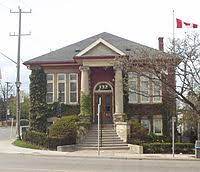
Many years later Janice appeared. She was my first high school romance. She volunteered at our town library. I would meet her there to go on a date. She encouraged me to get a membership. I developed an association between my feelings for Janice, the other librarians I encountered while waiting and the overall atmosphere of calm found in this stone building filled with things to read.

Being a solitary sort of person I somehow feel less alone while searching the stacks in a library. In University I sometimes arranged to meet someone in a library rather than a campus pub. I filled my spare time between classes in Teacher’s College sitting in a comfy chair catching up on ‘classics’ I had missed through my youth. Later as an elementary school teacher and as writer for a newspaper I depended on my town library for research material. My wife and I took our children for library programs while they were still comfortable to sit on a lap for story time.

I came across a letter my son wrote to his grandparents regarding his love of books. While in high school he worked at a Coles book store where he had borrowing privileges. He reported, “I’m so in love with words right now that I feel I could easily make my life’s ambition to read until I’ve lived thousands of lives, in thousands of lands by merely turning the pages of worn out books that come alive by my active eyes.”

Last month I was in the branch of my local library picking up a hold I had requested. I overheard a lady struggling to describe a book to the librarian at the front desk. It sounded like the very book I was about to check out so I held it up, boldly calling, “You mean this one?” I could sense the half dozen bibliophiles presently among the shelves stop breathing. The lady turned to see me holding up the book. Her eyes widened. “That’s it!” she cried. Two librarians came from a back room to confront the ruckus. There was still a pause felt in the air. A voice said, “Now that’s serendipity.” Another, “It happens all the time. You just have to be alert.” I left smiling, happy to be part of such a splendid community.

Re: Practice

I was taught in grade school that if Practice was spelled with an ‘ice’ ending then it was a noun, otherwise it was okay to use the spelling Practise in any situation. For all spelling rules and forms I now count on my wife who has a phenomenal memory for such things. She is also practised in the healing arts so when I get a headache from too much wordplay I have access to a nurse and a quick soothing remedy.

Sometimes I need to go to a medical clinic. Nowadays I might be checked over by a Nurse Practitioner and she might tell me that my issue isn’t within her scope of practice so I’ll be referred to a specialist. The medical profession offers a wide variety of practices which have, in Canada at least, taken over the almost heritage realm of General Practitioners. Seems like everyone practises something these days, which is a good thing if viewed through the lens of life long learning. Meanwhile I continue to practise being patient.

One of my deficiencies is that I abhor repetition. I was one of those irritating students who picked up things quickly enough to be at a B level most of the time. I was content when one teacher referred to me as a Jack of All Trades. Never too good at anything, that way I could just blend in, go unnoticed, especially in high school. Practise is all about repeating the task until it becomes second nature yet I still can’t persevere. It’s an area in life where boredom wins out. I’ll try almost anything, but briefly; until I feel I’ve got the taste of it. My history is littered with “That’s enough” decisions: only two week’s of lifeguard training, one week of violin lessons, barbells that collect dust in my closet, a Polish dictionary with an uncracked spine and a forehead sweatband for jogging that was used once. Give me a New York Times crossword however, and I’ll bend over it until it’s filled.

Practise makes perfect is a cliché that never grows old. It’s one of the few expressions that I don’t yawn over because it is so relevant to anything that requires effort. I’m amazed at the amount of practise it takes to go beyond acceptable. Levels of human accomplishment in sport, art, science don’t happen overnight. I believe those folks we call genius types have raw talent for sure, but that gift is only fully realized through practise. All three of my sons practised piano. Neither wanted to be a concert pianist but their parents both thought that music experience was a good thing for general proficiency: We wanted our children to practise what we preached. Practically speaking it was an effort for all concerned; the student was often reluctant, the parent was sometimes annoyed, finances were definitely drained. However the practising resulted in a lifetime love and understanding of music. And the youngest son has been a member of several bands and is a practised song writer. I’m allowed to be proud.

Re: Prime

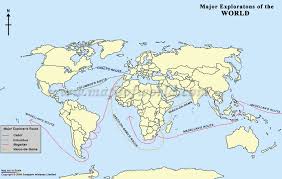
Any Star Trek fan will tell you that The Prime Directive is the primary consideration whenever contact is made with another life. I’m priming the metaphorical pump here, when I suggest that this fictional Star Fleet Regulation is relevant to current discussions surrounding colonialism. In our real world of the late 15th century, explorers were faced with similar moral dilemmas yet were emboldened by The Doctrine of Discovery to claim whatever land was found for God and Crown. Aboriginal land was considered prime real estate by powerful naval nations. The expectation was to expand the Empire, fully sanctioned by the powers of the day. Living things, including fellow humans, were either considered in the way or resources to be used by the conquerors. Settlement and extraction of wealth was the prime directive. Throughout the world there is currently a renewed accounting of the results of this maniacal arrogance.

It’s enough to make anyone want to give a Primal Scream. Countless millions of lives lost like so much prime beef: Disregarding, dismissing and debasing fellow humans by renaming them as Primitive. Disgusting! Impossible to escape from the reality of man’s inhumanity to man. Seemingly impossible to reconcile the idea of human progress with all that degradation. Information we were fed in schools is sanitized through the lens of the victor. In my experience, public schools in the 1950s and sixties did not promote diverse historical viewpoints. In the countries affiliated with the British Empire, the pink area on old maps, we were taught to honour the establishment of the colonies. We traced maps and learned of benevolent conquest. We wrote essays about the captains of tiny ships who sailed through impossibly vast seas. Between the lines researchers can reveal grasping power hungry individuals, corrupt systems, antithetical religions and evil societies. The injustice has always been there and new evidence of it is being brought to light everyday. Truth is being spoken. Secrets are being exposed. Lies are being challenged. Apologies are being made. There is a demand to have these errors acknowledged by current governments.

And still the primal patterns of power and racism continue.

I dream of a world where we are united by discovery and share what we find. Our planet suffers due to our selfishness. As shepherds of the Earth we are failing to unite around a common healthy cause. Primarily we seek to serve our own needs regardless of the consequence to others. It seems a grim reality, an inconvenient truth even, that our primary function is to satisfy our urges. I’d like to believe that science has the answer: a Unified Theory of Everything as envisioned by the likes of Stephen Hawking. I wonder if there is a place of thought where it’s understood that individuals are like prime numbers sometimes and composite numbers at other times. Yet it’s impossible to dream up an appropriate metaphor for what it means to be human. We don’t fit into Number Theory. We have names. We are far from being mathematically perfect. We are all united by life.

Re: Promise

“I’ll keep you posted.” A familiar promise heard as two people part ways. Like other promises that may or may not be kept, this one signals an intention. Politicians’ promises are really statements of policy. These promises are intentional too, at least to the extent that candidates want people to know where they stand on the issues. And then hopefully you will vote for them.

When I was a parent of young children my wife and I tried hard not to make promises to them. Any politician will tell you that situations change and decisions must be made with the currently available data. Tell that to a six year old who has been looking forward to going to the beach on Saturday. “But you promised!” Their tears matching the rain that started falling that same morning. Sometimes factors align in such a way that promises can’t be answered in the fashion we would have liked. Yet a promise spoken can also be a signal for hope, showing a direction we would like to go.

“Now that is a promising development.” Might be something said after countries align in their commitment to combat Global Warming. The climate crisis demands that we don’t settle for what looks promising. We must put words into measurable action. My cake making grandmother would comment that the proof will be in the pudding and if there is a failure to act then someone is going back on their promise: The time for ‘half-baked’ ideas is over.

When a promise isn’t kept I feel let down. At every meeting of my Boy Scout pack we promised to ‘do our best’ and I took that seriously. Repeated disappointments, causing erosion of trust, can lead to cynicism, anger or worse; apathy. Every election cycle I get excited (there’s the Charlie Brown in me). I hold out hope that policy & action will be seen. I’m careful to match the incumbent’s rhetoric with his/her record. I try to interpret the validity behind a candidate’s promises. My vote is a response to those promises, but it can’t end there. As a citizen I also promise that I will do what I can to support the programs designed to fulfill those promises.

Financially, a promise can be called an IOU. A contract has been made based on the funds being returned on a given schedule. Depending on who you borrowed the money from, there could be very severe penalties if you default. When it comes to money, I’ve tried hard to stick to the advice of Polonius, ‘Neither a borrower nor a lender be.’, with varying degrees of success.

On my wedding day I made one of the grandest of all promises. A promise so big it is called a vow. It’s a good thing that I wasn’t the only one making a solemn vow that day. With two lovers working to keep their promises, ideally each partner is committed to making the promise a continuous reality. Here is a true example of actions speaking louder than words.

Re: Hero

In a recent New York Times crossword I found the clue ‘Rescuer’ and it had me stumped for most of the puzzle. A four letter answer was required and it started with the letter H. Finally solving the other words forced me to see it was HERO. I spent the rest of that afternoon thinking about what a hero is to me.

Words are fascinating in that they require a definition. Discovering the meaning of a word can be tricky depending on context within a sentence, the tone of voice of the speaker, grammatical origins and even body language can be an important criterion for understanding. My first thought regarding the word Hero was not concerning rescuing, although I see it now. Perhaps it is because almost everyone these days is referred to as a hero. The term is so ubiquitous that it reminds me of the trend to present a Participation Award to anyone who shows up for an event.

If I was rescued from certain death I might refer to my saviour as a hero whether they be male or female (the feminized word heroine is simply awful). From childhood onward, people who have done heroic deeds have enthralled me. Boys of my age would have read tales of knights rescuing damsels, of sheriffs bringing justice to the American west, of explorers sailing the seven seas, or of ball players making baseball diamonds sparkle with their talent. As I got older my definition of an act of heroism became more philosophical and broader in scope to include those who challenged the status quo. These ‘idea heroes’ may not have been active in a physical sense, but their abstract thinking made them stand apart from the crowd.

Hero is an overused word and doesn’t belong with every expression of gratitude. Confusing fame or institutional power with heroism gets me in a bit of an anxious knot. Comic book heroes won’t save us. Some modern songs suggest we crave, even worship, the idea of a personal hero. https://www.youtube.com/watch?v=bWcASV2sey0

Media personalities are often over quoted merely due to their celebrity. I wonder why the military profession is automatically tagged as being heroic. I’m not even sure bravery is a prerequisite for being a hero; determination certainly, and a sense of selflessness but most rescuers report they didn’t feel courageous at the time of the call for help.

I believe extraordinary constructive behaviour is heroic. Citizens who make an unselfish contribution to their communities are heroic. I would label some Olympic level athletes heroes just as I would someone who has devoted their life to an artistic passion. Folks might begin their personal list of heroes with Martin Luther King Jr., Mahatma Gandhi, Sylvia Pankhurst, or Linus Pauling. Pick a professional discipline, set some criteria, define parameters and let the list making begin! The debate might get heated determining which of those named are either Noteworthy, Great, or Truly Heroic. Be prepared to be convinced when someone asserts, “My dad is my hero.”

Re: Bank

Where I spent my formative years there was a small river that wound its way to Lake Ontario. Its banks were muddy, with tangled roots grasping for water. I hid plastic toy soldiers amongst these fibrous tendrils, lit small red firecrackers to imitate war. It felt safe here, with my back against the wall of cool earth, watching the creek water smoothly trickle past my feet.

I have Scottish ancestry so I feel a yearning kinship while humming the lilt from ’On the Bonnie, Banks of Loch Lomond’. https://www.youtube.com/watch?v=gb8AGuD2uOI

One of my favourite television shows from that time was the hypnotic black and white classic, ’Tales of the River Bank’. The creators seemed to imagine exactly what was on my mind as I used small toys to create a miniature world. https://www.youtube.com/watch?v=-VTn6VlUXNA

I took to television with an eye for more than entertainment, like many in a previous generation had immersed themselves in books. While I did find comfort and escape in reading my mind quickly awoke to world issues. I chose stories that spoke of adventuring to different lands on the open sea. I could bank on authors like Farley Mowat to set a pleasing compass course by spinning tales of non or near fiction. His stories of man and nature contrived to inspire and are so relevant to today’s angst over the decline of Earth’s natural resources. In early adulthood, I wept through parts of ‘A Whale for a Killing’ and later gasped at the abundance that once was found off The Grand Banks off Newfoundland in ‘Sea of Slaughter’. In high school my Student Aptitude Test results indicated I was destined to be either a Banker or a Lighthouse Keeper. Hardly occupations for my adventurous spirit! When my mom found out I clearly remember her show of disappointment while my father made a joke of it by saying, “I wouldn’t bank on it son.”

In the northern Ontario town where I spent my career my neighbourhood bank had a history dating back to Gold Rush days. When I first strode in to open an account I was awed by how much it reminded me of the banks depicted in the film Butch Cassidy and the Sundance Kid: Lots of wood, brass and a mammoth safe standing sentinel in a corner. It’s hard to believe that this was in the late nineteen seventies! Two tellers sat behind antique looking arched frames with vertical bars. There was a small safety deposit box room at the very back but the only other room was one accessed by a heavy oak door on which was carved the manager’s name.

I enjoyed having my bank book stamped and updated while chatting with the tellers. When a new bank branch of chrome and glass was built into a modern mall nearby, some new fangled ATMs were installed. My sons taught me how to use them. It took time for me to feel safe along the walls of this bank.

Re: Sense

With the luck of my second marriage, I acquired a ‘Special Mom’. She has a quiet, accepting presence that I appreciate whenever I get the chance to be with her. I watch her and discover nuggets of wisdom. She has lived long enough to share many treasures, among them, common sense.

Many might agree with the notion regarding ‘common sense’ as being anything but common. It’s a sense that seems to grow as the traditional senses diminish. Caution is part of this sense as well as patience. I feel for those who have lost one or more of the tradition five: Taste, Sight, Sound, Touch, Smell. Losing one of these gems will necessitate adjustments I don’t know if I’m brave enough to face. But age does create new challenges to overcome.

I remember a childhood talking game that proffered which sense you could manage without. In order to help us decide, we might playact with a blindfold, stuff Kleenex up our noses, plug up our ears, or wear thick gloves. We were young scientists and needed props to facilitate our silly investigation. I felt that being blind would create the greatest amount of trauma. I’m mildly claustrophobic and being without vision added to that closed in feeling. In fact I remember feeling fear the first time I saw someone walking on the street with a cane.

In that way I think Emotion is a sense. It comes from the heart. When we speak of feeling something, it is beyond our physical senses. I feel that Emotion is the sixth sense that is so often stated in fiction. If it is suggested you are using your sixth sense you are likely tapped into something you can’t quite explain yet you know there is truth to what you are experiencing. You are engaging with intuition, such a misunderstood sense. Like an ‘Empath’ in some space SciFi story you are sensing something ‘out beyond’ even though others can’t detect it with their lesser senses. Spiderman would know what I’m talking about.

We link our senses to our emotions with our language choices. We might have a ‘Bad taste in our mouth’ after an uncomfortable event. We could be ‘blinded’ by love. Perhaps we feel that we are ‘out of touch’ with a current reality. Someone’s idea may illicit, “That smells fishy to me.” At the end of a tiring experience we can feel we have ‘carried the weight of the world’ on our shoulders. Western medicine is slowly becoming aware of what Eastern practitioners have know all along: our sensual experience can focus attention where it is needed.

We know we are alive when our senses are engaged. Depression is often characterized as a state where senses were numbed. Depression is the closest we get to death while still breathing. I think the experience of the senses is the whole reason for living.

My mother-in-law has poor vision and weak hearing yet I haven’t sensed that her reality has got her down. That’s a comforting thing for me to witness.