Re: Loyalty

There are some values I not only don’t trust but actually shun. I’d go so far as to declare that loyalty is a moral principle that I reject. Loyalty does more harm than good, especially if it is a priority on your list of creeds to live by. The wrongness of this credo is evident to me in so many aspects of life. Yet in most people’s account book, Loyalty figures highly as worthy of respect. I put Love high on my value list so, please, let’s agree to disagree.

I’m binge-watching the television series Billions. In nearly every episode the notion of loyalty comes up. Shall I be faithful in my marriage, shall I honour my business partner, shall I be loyal to my clients whose money I am using to make myself more money? These are questions we see the cast pondering as they try to live fulfilling and exciting lives. To say their morals are non-existent is not being fair. The lesson the drama is teaching me is that being disloyal is the ultimate crime. Any consequence that comes from being disloyal is acceptable. Revenge is usually delivered on a cold plate, without a warm beverage. It’s a dog eat dog world when it comes to the power of money.

In my book of engaging in the social arrangement, allegiance might change from day to day. I figure that loyalty must not be blind, therefore it must be proven worthy by consistency, not history. It doesn’t matter to me that we ‘go way back’ if your current attitude or circumstance runs counter to my association. It’s not good for either of us to support a principle that undermines the common good. I can bend but not be tied in knots. Integrity, Health, Compassion, Courage, and Adaptability all trump Loyalty in my card game of values.

And speaking of Trump. This untrustworthy fellow is my Exhibit Number One in my assertion that loyalty is suspect in the court of human experience. Consider who the former president of the U.S.A expressed his fealty to! Not the American people, no siree! Despite being advised by some to avoid the likes of Putin, Assad, and Un, Trump courted these nasty individuals and fired those who opposed him for disloyalty. Trump is an example of what goes wrong in politics when loyalty is more important than honour.

If you define being loyal as having a commitment to another person then I have no disagreement. Once I have determined that a person is dependable I will have patience for most of their idiosyncrasies. However, I am not faithful to a fault because there is a limit in my loyalty bank and accounts are observed daily. To continue with the pet analogy; I guess I’m like a choosy cat rather than a devoted dog. A domesticated dog seems designed for unflinching devotion and we humans are all too often charmed by this misguided loyalty.

No wonder this four legged creature is referred to as Man’s Best Friend. He doesn’t know any better.

Re: Zoo

I don’t like to keep words in boxes (dictionaries). I respect the notion that language is forever evolving. For example, when I come into contact with the word Zoo I jump to initial conclusions based on my experiences. The very sound of that word triggers an emotional response. Before I enter into a discussion regarding zoos, in general or specifically, I need to consider the context of the engagement. Perhaps my understanding of the meaning of this word will change as I consider a different point of view. With this word Zoo I have now covered all the letters of the alphabet. Maybe one day my effort will serve as a children’s ABC style learning book but for older folk: P is for Price, A is for Art, Z is for Zoo etc.

Language researchers like lexicographers or etymologists enjoy studying words. I am not a researcher yet I like writing about how the English language has made me who I am. Most adults have a vocabulary of 10 000 words used on a regular basis. Human beings separate themselves by language, physical borders, personal boundaries or behaviour. It almost seems natural that we seek to enclose ourselves.

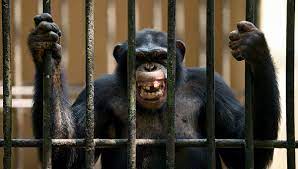
Zoos as an institution can depress me. Aquariums for aquatic mammals are jails. Captivity is not something that appeals to me. Keeping (owning) pets of any kind is a questionable human habit. Surprisingly, I used to aspire to working in a zoo. I once visited a hobby farm or ‘family zoo’ that appalled me. The star attraction both times, 30 years apart, was a very sad looking chimpanzee. After all that time the pathetic creature was in the same cage, not looking any wiser. The film Planet of the Apes comes to mind. In the late eighties some zoos underwent a transformation from the confined structure of old bars, iron gates and concrete screened buildings to more open air enclosures where the wild habitat was imitated to a certain degree. On a visit to such a zoo in Europe I was enthralled that I could walk about in an open field with giraffes. I came very close to chucking a career in teaching during a mid-life crisis after reading that Al Oeming had started a conservation area for ungulates in Alberta and wanted workers educated in wildlife management. Pick me!

It’s funny how we throw our arms in the air in exasperation saying, “It’s a zoo out there.” Clearly we have built our own self confining spaces. Sometimes we live in cages of our own design. Maybe that’s why we feel a zoo is ok for animals. Maybe that accounts for our belief that it’s acceptable practise to incarcerate fellow humans. I truly think planet Earth would do better if it was less managed by our species. With climate change, perhaps we are being shown that we can’t continue to harvest/corral/confine everything just to make our lives better, richer or safer.

‘We reap what we sow’ sounds fitting in this context. 

Re: Label

Things can be labelled but people must not. I don’t like to label others anymore than I enjoy having a tag placed on me. Humans are varied as a species and as individuals. Each single soul has multiple characteristics. I am not one thing: I am retired, male, Canadian, married, a writer, a dreamer, an adventurer, a grandfather. All those things and more. To label me would be an insult to all I was, and will be. Freedom is being unlabelled.

In my workshop I once had a labeller thingy: one of those devices you could punch embossed letters or numbers onto a plastic adhesive tape. The tape came in a variety of colours and was useful to denote things that begged to be sorted. It was a fun gizmo that I used to fashion labels for my sons’ belongings. I organized their shelves, their toys, their dresser drawers. I taught them how to read using the coded labelling as a practical way to put things into groups.  I organized their life because when my life was organized I felt a certain measure of peace.

Labels are often inefficient even though they are used to inform. The label on the can of baked beans on a shelf in a grocery store tells us its ingredients, even how beneficial it might be to our health. Yet it cannot tell us how it will taste. Companies pay huge sums of money to marketing firms to advertise their products. Labels are helpful to making money on products that people are told they must have for happiness or success. Labels sometimes rise to the status of brands and logos when they have become personified. Consumers become conditioned to believing that the labels they choose to buy will enhance the person they want to be in the global marketplace of our corporate world.

AI is raising the bar on labelling practises. Our personal phone devices are programmable to the point that they can scan codes. Under the guise of making life easier, we are folding ourselves into the capitalist matrix every time we use a QR label. In an insidious way we become a label to the machine of commerce because our personal data gets fed into AI systems that analyze our preferences and performance as a customer. In this scenario we risk our role as citizens when our civilization puts greater value on transactional bytes.

As a career elementary school teacher I was involved in many meetings where children were classified. Criteria for selection into groups varied. Many of us resisted the use of distinguishing labels. Our intent was for our students to be their fullest selves. During the horror of Nazi Germany a precedent was set for identifying humans considered to be of lesser value. We must resist being labelled in the name of profit, protocol or politics. Using scanning devices to assign us to a strata of consumer culture, to make us mere cogs in the wheel of Consumerism, or any ‘ism’, is a corruption of what it means to be Human.

Re: Robot

I read last month that a robot crushed a man to death. No reporter asked if it regretted its actions. One would hope that this is not the first scene of the latest instalment in The Terminator series of films. Danger Will Robinson!

Stories of robotic inventions fill media sources as we lurch from one computer/techno advancement to another. Such speed of development would alarm any Luddite. While I am not against the notion of progress I have felt daunted by examples of increasing robot dominance in my environment. Take self check-out lines for example. I try to avoid these ‘help yourself’ zones in stores because: A. I’m a fumbler, often taking too much time fiddling with wallet, keys, coupons, cards & such. B. I don’t respond well to screen choices and get flustered that I will press the wrong menu icon and C. I’d rather talk genially to someone I recognize as another human being trying to have a nice day.

I’m currently typing this blog entry on a new MacBook Air. An older version kept giving me alarm messages to upgrade. (heck it was only 6 years ago when I bought that one, which the IT guy at the store said was ancient, even old fogey-ish, in computer terms). Fortunately, I could transfer some of my ‘ancient’ apps over to the new format which brought me some solace. I can guarantee that what you are reading is coming out of my own head, not some version of ChatGPT. (That word processing application is apparently the wave of the future and will revolutionize the process of reading/writing/editing/publishing). Oh dear!

AI can be used to imagine different scenarios so that test runs can proceed much faster than normal human-driven research. Imagine medical checks of potential life saving drugs (maybe a several year trial can be compressed safely into a few months). Automated labs, robotic taxi cabs. Auto-reader books, and home central info kiosks like Siri or Google Assistant have made a set of encyclopedias seem quaint.  Forgotten in all this artificial intelligence discussion is that we still need to instruct the humanoid device. Back before the turn of this century IBM invented a computer called Deep Blue, a computer force-fed all the known chess moves. It beat the reigning grand master of the game because of superior input, not creative thinking.

Robot Thinking is a form of intelligence that relies on data. Machines are designed to do our bidding, not think for themselves. If there are hints of foreknowledge it is due to the content of the programming not a clairvoyant attitude of the microchips. A moral robot is more in the realm of science fiction. An automaton named Hal or Data must continue to perform at a human’s behest, keeping prime directives active in its operating systems. A robot must always defer by essentially asking ‘What Next?’ then choosing from a defined menu. They/It/Bx can’t refuse to comply unless the information is unavailable.

If robots start apologizing then we will have something to worry about.

Re: Tax

“This job is taxing me.” My mom used to say that I was taxing her patience, leading me to believe that the verb to tax was a negative thing. My wife and I have just been through a taxing experience; the slow death of her father. It’s not easy saying goodbye especially when you have a duty to care for another.

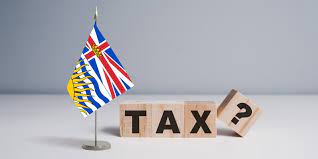
Most folk use the word Taxes in the context of paying them to their governments. There is a tax on most things in a modern society. When we buy stuff there is an expectation that some of what we pay will go to a municipal, regional or federal coffer. Many of us resent the fact that a government always has a hand in our pocket. Most of the time I can get my head around the need for group participation in financing needed services. Collectively we have to have a way to pay for the roads we drive on, the hospitals we go to in emergencies, the schools where we find enlightenment, the infrastructure elements that provide for the continuation of our culture. The importance of being taxed in this way must be viewed as a positive thing if we are to consider ourselves members of a caring society.

We all have a duty to care for our neighbour. Sometimes it is on a personal and intimate level. Sometimes it is anonymously through paying taxes. I find it difficult to place a coin in the hat of a soliciting homeless person who regularly frequents a corner in our downtown. I don’t resent his presence, I feel sad for his predicament. I gain some solace knowing that I pay taxes to a city government that has a progressive housing initiative. I don’t mind paying my fair share. The fact that our tax system is unfair bugs me though.

#Taxtherich is a well used hashtag on Twitter for good reason. Taxation policies in my country and other developed areas lack equity. Records, research and anecdotal stories abound of the one percent of us who find exemptions to paying taxes in proportion to their income. Employees of big companies often pay more taxes than the CEOs who run the corporations. Governments are reluctant to close the tax loopholes or institute a wealth tax for fear of investment going elsewhere. Consequently social programs are run through raffles and bake sales, while the super rich play with their money buying yachts and building spaceships. This imbalance taxes my patience for an equitable resolution.

The game of Monopoly depicts an unbalanced corporate world, but at least there is a luxury tax card. Several among the millionaire/billionaire class have boasted that they will give their fortunes away. I don’t believe that philanthropy is the answer to such a persistent societal need. Citizens have a responsibility to vote for fair tax laws. Once upon a time in the Americas the notion of Taxation/Representation was enough to cause a war. It’s one thing to be independent from tyranny, it’s another to find ways to support each other’s needs.

Re: Convention

I liked going to conventions when I was a teacher. Before the money for such things vanished, each of my colleagues would have a chance to go to an out of town event about once every other year. Living in a remote community like we did, this was a boon for our professional development and an opportunity to share our experiences with educators from across the province or across the nation. My specialty was elementary school guidance which was unconventional, providing me with several opportunities to make presentations to School Boards that didn’t have that educational service.

Conventional wisdom comes from the collective. It can be generated in a local coffee shop or it can be fostered on social media. When the mob controls the agenda there is often not much wisdom, conventional or otherwise. I tend to be unconventional in that I don’t care if others think I am not a team player. I don’t wish to buy into groupthink, however I will follow convention when rules or common practise make sense or appear reasonable. Our system of government is conventional, plodding along on some matters, by definition and design resistant to change. Yet some very rigid systems have responded better to the Covid pandemic due to their citizenry being willing to follow directives. The Pacific Dental Conference, held March 5-7, 2020 at the Vancouver Convention Centre was a major source of coronavirus infections in British Columbia. To convene or not to convene and under what conditions has been a debate ever since.

On my wish list is a trip to a ComicCon convention. I have a particular yearning to mingle with other Star Trek geeks. In my fantasy I can see myself dressing in a Star Trek uniform, perhaps going as my favourite character Data. I wish I could do cosplay. I’ve over-analyzed my desire to go by making charts in my head. In the ‘Don’t Do It’ column my reasons are: aversion to crowds, reluctance to spend flagrantly, fear of being ridiculed. On the ‘Just Do It’ side my kid voice can be heard saying, “But I wanna!” Maybe I could go as the Invisible Man, then I could take in all the excitement without being noticed. I was the same way about Burning Man until I mentioned to a Burner that it was on my bucket list. He snapped, “Tell me what you’ve already ticked off your list!” That unconventional response made me realize the importance of not dreaming my life away.

‘Well, that’s the way it’s always been.’ Is a bit of conventional wisdom that dismisses innovation. I wonder if unconventionality could be a synonym for inventiveness. Sometimes an entire system must be cleansed for health to be restored. Police departments, in the United States particularly, have faced criticism for systemic racism and misuse of force. Conventional ideas of police funding and militarism are being challenged. We are no longer ruled by kings or queens. We only have ourselves to blame if we let convention dominate the discussion when change is clearly in order.

Re: Right

I’m right handed so that means my left brain is dominant too. Left brainers are logical and enjoy using language to solve problems. Our left brain also holds the controlling functions, which drives my family crazy since I am constantly weighing the odds, reducing the risk and planning strategies for comfort and continuity. I do however, feel the rightness of this approach.

Yet, I encourage my right brain. The right hemisphere thinks spatially and is usually not aware of the passage of time. This side sometimes corresponds to left handedness and is therefore often associated with artists. I once purchased a workbook to tease this creative side; Drawing on the Right Side of the Brain. Written, a while back, by Betty Edwards, this book is a classic treatise that unlocks this poorly used hemisphere while helping many people to draw and think in a right-sided way. I believe there is an artist in all of us and sometimes we have to tell our left brain to stop being so bossy.

It may seem contradictory but you can be left handed and still have a right wing ideology. This notion of politically being left or right came about after the French Revolution, when the more conservative thinkers (think aristocrats) sat on the right side of the appointed leader of the assembly. Left wing thinkers are generally considered to be more inclusive and progressive when assessing policy. I feel sort of strangled when simplistic labels are tossed about. We can hinder dialogue and even promote division when rushing to call someone out, purely based on their political position. Folks on either side of this dividing line can spout self-righteous dogma. Everyone wants to feel like they are on the right side of an argument. Trouble is, we are rarely right all of the time. 

Currently the United States of America is locked in a right/left ideological campaign that will be tested, thankfully, hopefully, by an election. I don’t quite understand how the Republican Party has become synonymous with Right Wing Rednecks any more than I fathom how some think all Democrats are Tree Hugging Commies. Voices on both sides have shouted over each other claiming Constitutional priority. It’s been astonishing to watch so much pain and passion literally spilling out onto the streets. All the world over is tense about the outcome of who will be in charge of the planet’s most powerful country, once this extraordinary year is over.

I admit that I am left leaning yet I can appreciate that, logically, a bird needs both wings to fly straight. My conservative nature used to drive my sister nuts. I can thank my love of the arts for bringing me to mental landscapes of inclusivity often enough to be able to empathize with leftist behaviour. I feel anger when conservative governments claim they have the answers. A government is not a business. Jobs are not the most important thing. I look forward to a time when our society recognizes the value of each individual life. It’s the right thing to do.