Re: Art

Re: Listen

It can sound like a quibble when someone points out that there’s a difference between hearing something and listening. Damn semantics! But there’s truth to that separation. Listening requires purposeful attention. Perhaps that’s why a leader of a group will shout, “Listen up!” before beginning an address. In arguments we sometimes can be accused of selective hearing or be told, “You only hear what you want to hear.” Tinnitus gets in the way of my hearing sometimes, perhaps that’s why I make a point of concentrating when someone is talking. I actually like moments when I can provide a listening ear to bring comfort. Regrettably, my sister used to think that the focus I brought to a conversation made me seem too intense for her liking. 

My grade six teacher would challenge us to listen for specific changes in a piece of music to better understand what emotion the composer was trying to convey. Like my dad, he was very dramatic when he read us stories, lowering his voice so we would lean in to pick up his change of accent, or a whisper to invite suspense. He was definitely my favourite of all of my school teachers. As part of English studies, Mr. Stroud twinned us with a classroom in Newfoundland. We each had a pen pal, who we wrote to every second week. When their letters came back to us, we would learn to listen to the printed word and ‘read between the lines’ to find meaning. I think of Mr. S., whenever I watch the awesome teacher film ‘Conrack’, starring Jon Voight.  https://www.youtube.com/watch?v=ZTePeZag_yI

Being a good listener takes discipline and practise. Some have called it an art form. We’ve all been in a situation where someone has accused us of not listening, when really what happened was we failed to understand. I took courses in listening attentively during my training to be a Guidance Counsellor. In class sessions, we would pair up and role play scenarios. The goal was not just to gather the facts of the problem but also to relay to the other that we really understood what they were trying to say. 

I have been challenged during COVID19 with my listening skills. It’s very clear to me that I listen to people with more than my ears. As I age my hearing has weakened. With mask wearing, I’ve realized how much I’ve depended on lip reading to bridge the gap of missed vowel sounds. I’ve watched more closely for changes in body language. All this attentive listening requires keen eyesight too, “Hold on I’ll get my glasses.” These Covid realities have made communicating more like work. It doesn’t help when my inner voice is sounding negative either. For stress relief I’ve been reminded that listening to nature breeds a calmer attitude. The breeze through the trees, a bird on a branch, waves on the shore or rain on the window will bring my focus back to what matters most. This moment can have healing sounds worth listening to.

Re: Heel

I like to keep one step ahead of things. This makes it hard on me when situations require that I heel, while others take the lead. I’m not saying I need a leash, but recent events surrounding Covid19 restrictions mean I have to hold back my urge to take charge. I like to be ahead of the pack, or at least off to the side minding my own business. These days I’m feeling I have to wait for my dinner, whine for a walk or watch expectantly by the front door. When I die, I’m not coming back as a dog.

Perhaps coincidentally, cracked heels run in my family. My nan’s chiropodist used to remove the callused skin on her heels with a device like a potato peeler. My mom would forecast, “So if you don’t wear socks more often, you’re going to end up just like her.” I was given many cautionary tales as a kid and sometimes I’d have to decipher the meanings. My mom would frequently bring me to heel. “Robert, come sit and talk with me.” She’d pronounce like a summons, while tempting me with a loaf of fresh baked bread. Our kitchen table was one of those chromed things with a stained formica top. Mom smoked while she talked, her monologues might last only one cigarette but sometimes she’d chain smoke, punctuating sentences by butting out into a perpetually dirty glass ashtray. I remember a story of a guy she used to work with being described as, ‘such a heel’. That’s the only part I remember; that he was a heel. The fun visual stuck, sort of like the image of a dickhead, with roughly the same connotation.

I’ve learned that heels can come in all shapes and sizes. Evangelical tent preachers can sometimes be heels, taking advantage of trusting people, as depicted in the great Burt Lancaster film Elmer Gantry. https://www.youtube.com/watch?v=z73HAUbQNp4

My dad liked imitating a crazed religious healer we occasionally saw on Sunday morning television. He would playfully slap the heels of his hands on my forehead or both sides of my head while crying out, “Now! Rise and be Healed!”

I’m married to a legitimate healer. She practised nursing and complementary medicine in her working years. Now she brings this experience to our friends and family. Besides reminding me to put cream on my rough heels, my wife has provided her healing arts to all manner of damage I have done to myself; from falling out of trees, to stubbing toes, to traffic accidents, to convalescence after minor surgery.

Once, a friend of mine tried to show me the healing art of bread making. He demonstrated the correct way to knead the dough using the heels of his hands. Later, kitchen filled with intoxicating aroma, bread warm from the oven, I would ask for the heel of the loaf, just as I had enjoyed as a boy. I’d slice hard butter on it, then add a daub of peanut butter. Comfort food for a weary pilgrim.

Re: Skin

My skin has been aging. It’s getting that thin parchment paper look that I remember when my parents got older. When I look at the onion skin on the top of my hand I immediately think of my father. I’m not alarmed. I play with this loose skin the same joyous way I grasp the tiny fresh finger buds on my baby grandchildren.

Skin is the covering of the soul. It is not immortal yet it is valuable as the body’s first line of defence. Humans carry almost 4 kilograms of skin, making it the biggest organ in the body. A soft exoskeleton to be sure yet it protects us from chemical and biological invasion. Early concerns for our skin came after a ‘Booboo’ or an ‘Owie’. A simple skinned knee often caused a rush of welcomed attention as we were attended to by loving hands. We watched with wonder as a scab formed.  Some of us learned to develop a thicker skin to repel hurtful words.

I used to hate being called a skinflint, but if you want to have skin in the game you have to acquire a level of toughness. We embellished stories of how we survived by the skin of our teeth. Maybe we later grinned in the mirror to see if there actually was skin on them. And maybe that’s why we brushed!

And what’s the skinny on mule skinners? Such expressions and meanings we give to words can be baffling when they pop in your head as a skinny little snippet from your long ago past. My grandad used to ask me for some news with the phrase, “What’s the skinny son?” I used to own a mule skinner’s knife when I was a boy scout. I kept it in a leather holster that fastened to my belt for easy access on canoe trips. My dad referred to hard labour work he did in WWII as mule skinning, yet I’m sure he was never put in charge of a team of mules.

I have an urge to launch into a debate when someone tosses off the cliché; Beauty is only skin deep. Or the similar platitude; You can’t judge a book by its cover. I love the beauty of a person’s skin and I love the beauty of their character. The meaning and wonder of Martin Luther King Junior’s speech notwithstanding, I have a dream that we celebrate both skin and soul for the gifts that they are.

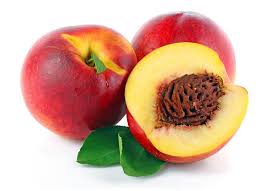
The sight of skin often brings me in for a closer examination. I was never a pudding lover as a kid, but one look at the caramel skin on a baked rice pudding drew me in for a delicious taste. I pet fruit in grocery stores. It’s something I miss as a result of Covid19 restrictions. It’s intimidating to see a sign next to the melons, ‘Please take the one you touch.’ I like to stroke a nectarine before choosing. I’ll palpate for softness on a cantaloupe skin. I can’t resist.

Re: Love

I’ve hesitated a while before doing a posting on the word Love. Many people are either uncomfortable using this word or frustrated because it doesn’t do justice to their feelings. Love is impossible to explain yet easy to know: Like trying to describe a colour. Metaphors and similes bring you close to an understanding but the uniqueness of love resists analogies. It can come in spectrums, shades and categories. Love as a theme can be overused and also under appreciated. It’s likely the most talked about word in the English language but we find it hard to say the phrase, “I love you.” The language of love may have its very own unlettered alphabet. Love is felt but not seen. We know it though; just as the movement of a leaf can tell us that air exists. Perhaps love is undefinable, yet it is as real as in this heartfelt song by John Denver. https://www.youtube.com/watch?v=rKhBPps7_Fc

In an effort to define love, we often try to qualify it. We talk of unconditional love, puppy love, unrequited love or romantic love in a desire to place the love-ness into a category. I recall a conversation with a friend when I had told him I thought I had fallen in love. To confirm my news he asked, “So do you Really love her?” Without that qualification he just couldn’t accept my announcement. Funny, how we feel a need to know the kind of love being discussed before we can buy into the reality.

I don’t believe any art form can be created without love. In this way I believe Love equals Art. A life’s creative work cannot be summed up in any other way but without referencing love. Poems of love tell of yearning, exultation, catastrophe and pain. Painters have described love as the light by which they work. Plays and novels have used countless words in exhilarating ways to give meaning to this single word; Love. Art tends to avoid any kind of labelling or judgement, when it comes to love. A song about love is open to the listener’s interpretation. We can judge, if we want, who or what the singer is referring to. Or we can just bask in the splendour of loving words, such as those found in this masterpiece by Rolf Løvland, sung by Josh Groban. https://www.youtube.com/watch/aJxrX42WcjQ

Growing up, we soon learn that love can hurt, be used against us, bring us hope or lift us to heights unimagined. Love can tangle us in knots of indecision or leave the way clear of doubt. As I get older I’ve lost the need to categorize love. People can have loving feelings towards all manner of things; human or not, living or not. Love is energy, moving out from us and returning. Love supports us, enabling us to be the best that we can be. My advice to the lovelorn is to be watchful. Love is everywhere. It is there when someone says, “I’ve got your back.”

Re: Endurance

The times we are in require endurance. People living in North America have now been suffering from the impact of the Coronavirus pandemic for over a year. We are showing signs of fatigue as we try to endure closures, lockdowns, lay-offs, long lines, crowded hospitals, enclosed spaces, domestic tension, business uncertainty, mental breakdown, unexpected shortages, restricted travel, etc. The list is long as we try to hang on or hang in.

Yet I have not tested positive for Covid-19 so I call myself lucky. There are numerous perspectives when it comes to pain and grief. I stop myself from complaining about my particular situation, knowing full well that someone else will be finding life much harder. Currently, I’m only suffering from the repercussions of our society’s response. Nevertheless I wonder how much longer I can endure fundamental changes to my existence.

I’m awed when I hear tales of lost miners or people who have been abducted or imprisoned for lengthy periods. There are many compelling stories of individuals who have managed to prevail while entrapped. Anne Frank & Henri Charriére for example, lived through unendurable experiences. In a modern context, two Canadians, Michael Kovrig and Michael Spavor, have now been detained by Chinese authorities for more than two years. Situations may differ but people who have endured must find a similar inner strength to stick it out.

Those who undertake endurance runs capture my enduring attention. I marvel at their willpower. The desire to be first must not be their only motivating force. I recall back in the seventies watching people hang on to the side of a boat, parked on the street. A local sports store offered the vessel in a questionable contest to promote the grand opening. Several entered, despite the hardships of the strict rules (ex. one hand must always be on the boat, only six ten minute bathroom breaks per day allowed). The winner, literally the last one holding on, endured for eight days in all types of weather.

The popular television series ‘Survivor’ and ‘Alone’ have sometimes captured this phenomenal human quality of persistence. We watch and judge as contestants muster calm, a focus, a belief: ‘this too shall pass’. With many contests, prize money is the light at the end of the proverbial tunnel. In real life situations however, I believe incentive comes from seeing the light that is already there.

What makes things endurable for me is a sense that what I am doing has value. I thrive on a voice telling me to hang in there, to keep calm and carry on, to persevere. I don’t need a thrill that speaks to outlasting others in a virtual race. In my most adverse times I haven’t even imagined a finish line. Sometimes you just don’t have a choice but to hang in there. We must have conviction that we are durable. Like other generations who have faced down forces that have made life difficult, giving up is not a satisfying alternative. Soon we will say with pride, we did endure.

Re: Fish

I like the non gendered word Fisher; someone who fishes for their livelihood. Even Jesus must have preferred it to Fisherman/Fisherwoman since he extolled his disciples, “I will make you fishers of men.” I have been interested in fish for as long as I can remember.  My favourite bedtime story was McElligot’s Pool by Dr. Seuss. Pretend you’re a kid again, listen with wonder and you’ll see why I got hooked.  https://www.youtube.com/watch?v=yNH6i3KSYsk

When I got older, the first novel I read was about an old man who went out to sea and caught a fish as big as his boat. Once, when asked what super power I would like, I said I wanted gills like Aquaman. I kept several aquariums in my bedroom during adolescence. I have visited many large city aquariums including a beautiful one in Lisbon, Portugal. I learned how to use SCUBA gear so I could join my finned friends in their own habitat. I studied Ichthyology in university as part of my Bachelor’s Degree in Fish and Wildlife Biology. I spent one summer surveying lakes in Northern Ontario to help the government determine if there were viable areas to develop for a fishing tourism industry.

The watery world we live on fascinates me. I’m not alone, as a book by Laura Trethewey called ‘The Imperilled Ocean’ attests. I could find myself in these chapters devoted to how we all are personally linked to the ocean and its creatures. It brought back memories of idle summer holidays immersing myself in the tidal zones along Wells Beach, Maine. Now living in British Columbia I am very aware of the impact of the salmon fishery. I’ve just finished a great book about salmon by Mark Kurlanski. The controversies of salmon farming, hatcheries, fish ladders, commercial fishing, fish cannons, river habitat are discussed. When greed, politics and climate realities merge it’s clear something fishy is going on.

I remember the first fish I caught, a Sunfish, was barely bigger than my hand. It’s scales were coloured like a rainbow. I won’t forget it’s perfectly round eye, staring back at me. Everyone near me shouted congratulations yet I felt sad. I was surprised how its brilliant colours faded as its gills stopped moving.

Philosophically, I like using fishing as an analogy for life. I used to encourage my children to go out into life as though they were going fishing: “Cast your line son. You never know what might come to your bait.” Fishing in this broader sense requires amounts of patience, perseverance, courage and curiosity. When looking for a mate or a date it’s important to keep trying. My mom once tried to console me when I was crushed by an adolescent breakup, “There are plenty of fish in the sea.” Whether applying for a job, signing up for a course of studies, deciding on a purchase or looking for a new friend, fish around until satisfied. You never know, what you might catch could just be a new way of thinking.

Re: Kind

I’ve heard many authors at signing events respond to someone’s gushing praise of their work with a rote rendition of, “You are very kind.” The use of the word kind, in this context, devalues it. We are not being kind when we show someone how much they are appreciated, we are being grateful. I wish we could see acts of kindness more often. It is not something that is regularly practised, yet when we see someone helping another who has stumbled we recognize a kind heart. I believe in kindness as a form of love. If more readily applied in our behaviour it can improve life on earth. 

In University I studied Life Sciences, particularly wildlife biology. I became familiar with the work of Carl Linnaeus, a scientist who developed a system of classification of living things based on precise particulars of biological design. I had fun sorting specimens into well defined categories by kind, using observable physical characteristics. These days it is much easier and more conclusive to use DNA to sort living things. Consequently we have discovered that some species are closer kin than we could ever have imagined.

Some people say they have a kindred spirit, someone so close to their kind of thinking/feeling that they form a bond. The fictional character Anne Shirley, of Green Gables fame, talked a lot about this kind of friendship. While she gathered kindling for the wood stove she had thoughts of becoming less isolated as an orphan and more kin to the kindhearted community that would become her home. Author Lucy Maude Montgomery writes beautifully of a time where manners and kindness abound yet her stories are not all sweetness. She doesn’t shy away from issues found in a closed society. For example, she exposes Avonlea villagers who could be quick to tell outsiders to “Go home to your own kind!” Since the first printing of Ms. Montgomery’s widely popular stories, there has been numerous interpretations. The latest in Canada is ‘Anne with an E’. This television series is so charmingly sweet it could kill you with its kindness.

Babies, like birds, quickly show they prefer to flock together. Kiley Hamelin has done research work at the University of British Columbia showing that even young babies can sort puppet identifiers according to whether they are helpful or not. They can determine the kindness in others at a very early age, suggesting that figuring out who is kind among us may be a matter of survival and integral to forming bonds of friendship and family.

In British Columbia, Canada, residents have been lucky to have a Provincial Health Officer named Dr. Bonnie Henry. She is held in high regard for the work she is doing to control the spread of the COVID19 virus. At news briefings she is not afraid to show her humanity, often crying over grim news,. Her advisories and updates on the pandemic usually end with a familiar mantra, “Be Kind, Be Calm, Be Safe.” Indeed: Kindness comes first.

Re: Dignity

One of my Twitter friends, who uses the handle Black Mamba, posted a query about ‘Quiet dignity’ recently. That got me thinking about my dad. He was a fellow with a dignified bearing and when he went out wearing his heavy black camel hair coat he cut an impressive figure. Yet he was working class all the way, earning less annual salary when he retired than what I received in my first year of teaching. He valued honesty, harmony and quiet. He showed it in his behaviour. He did not aspire to dignity, but from my observations, he personified it. 

Some see the characteristics of dignity in a negative way equating it with arrogance, pomposity, prudery, and indifference to others. My father was often quick to make himself secondary in a gathering at his home in an effort to let his guests shine. Never hoity-toity and also never afraid to be the clown, I once saw him dress in an outlandish costume for a municipal function. It puzzled me that he would put himself out there in such a manner when it wasn’t even Halloween. One of my few regrets is feeling embarrassed by my father at that moment.

I think dignity is one of those things we are taught. Early on I was told to stand up straight and speak only when spoken to. The outfit I chose to wear was judged before I left for school. I was asked if I had clean underwear lest I be involved in an accident and had to be undressed in hospital. I recall hearing folks indicate that some behaviours or occupations were beneath their dignity. Others have told me that they would never dignify certain remarks with a comment of their own.

Some, like my dad, taught me the importance of giving others dignity by showing respect. I once sang in a choir with an elderly gentleman who had an air about him that I came to believe was a state of grace. Some church people called him refined. When he interacted socially I never saw him belittle anyone for a point of view, even if he disagreed with their perspective. Donald Trump is the antithesis of men such as these. His indignations abound and are public record. Heads of state can be faulted for false displays of dignity; that’s where pomposity is found. Yet The Donald seems to flaunt his indignity, even as he struts royally with tissues stuck to the heel of his shoe. My grandmother would have been mortified.

Dignity is not confined to nobility, though it is often equated to it. All humans deserve to be treated with dignity. All life is worthy. Animal activists claim that we must look harder at the way we treat other living things since they suffer huge indignities under our watch, as permitted by biblical edict,”…they may rule over the fish in the sea and the birds in the sky, over the livestock and all the wild animals, and over all the creatures that move along the ground.”

We must do better.

Re: Face

One of my very first memories was of me, chattering nonsense at the dinner table, then being told by my mother to “Shut your face!” I would come to face the truth that that was her way of joking. Growing into an adult I have had to face the facts about my parents, as all children must do, if any sort of relationship is to be maintained.

I have another memory of my mother when she was a municipal politician, where doing an about face was a match for her personality. Getting ready for a meeting, she would always get her face on. She rarely wore makeup but used cosmetics to make herself ‘public’ as she would put it. I’ve often wondered about the sincerity of the cosmetic industry for this reason. As a heterosexual male I have always been most attracted to women who eschew adorning themselves. Natural faces are so beautiful; freckles, blemishes, scars and all.

Let’s face it, many people create a facade for their true selves. Some can’t accept their reality as they face the mirror, so they invent someone who is more in line with who they wish to be. https://www.youtube.com/watch?v=ytZsndEc830 .

It must be hard to use dating apps for that reason. As you scroll through the choices all you have to go on are the manufactured bios and carefully posed selfies. When it comes time for the risky face to face meeting, it is like the old notion of a blind date; cross your fingers and hope you haven’t made a mistake.

I’m that way with the celebrities I have chanced to meet. I usually get all flustered, heart racing in an OMG moment. I lose my sense of normality as I overthink what I must say or do when faced with the fact that they are right there in front of me. I’ll always regret a brief encounter with Neil Sedaka. He looked lost without an entourage at an airport in North Bay, Ontario and I didn’t offer to help, rudely acting like a VIP myself, off to catch my flight.

Other times in my life I have been able to put on a brave face. During sick leave for depression, several of my grade eight students sent me get well cards asking if I would attend their graduation ceremonies. I didn’t know whether I could face the music, so to speak, of returning to the environment that had been partially responsible for my nervous breakdown. Thankfully, with a friend to accompany me, I could face up to the hard therapy of getting on with life. Facing reality is damned hard work. That event was the first step of many I took to recover and rebuild my identity.

Using Facetime is a wonderful way to show your two dimensional self during COVID19. I live far from my grandkids, so I love to see their grinning, curious faces. While I long for a good old fashioned three dimensional hug, at least having screen time with them is better than any television show.

Re: Idea

My blog postings start with one word. Sometimes I don’t have the foggiest idea what will happen next. Often the idea itself comes easily, putting it into a sensible composition with relatable context is the hard part. To me it is fun to play with ideas and that’s the point because even Einstein said that imagination is more important than knowledge. Ideally, this short essay may have some ideology that will be relevant to your life experience. But, you be the judge.

My parents used to challenge me with “What gave you that idea?” As a young adult, while going about my own business, someone once threatened, “Hey! What’s the big idea?” Of course ideas to be effective must be merged with reality. For example, a former girlfriend liked the idea of me but over time the reality got in her way. We can idealize, running the risk of making someone or something into a precious idol. No one individual can possibly be as perfect as the idea someone has made of them.

Ideology is really just a bunch of ideas that can lend themselves to greater understanding or a better way of living. Ideology has gotten a bad reputation because an ideological person is often prone to frantic rants telling us all how to live. Some ideas I can support, like those found in the song called Imagine. Here, Lennon & Ono work together to ideate a world where people live in peace. I can dig that. I tend to be an idealist, choosing any sunny bit of news to bolster my philosophy that the world is inherently good. I have a set of ideals that help keep me on a path. Which reminds me of a principal I once worked with who loved to have brainstorming sessions, “There are no wrong answers!” He would shout. He was after ideas, which made things seem democratic. Unfortunately he would go away on the weekend and comeback Monday morning with a whole bunch of ‘from now on’ pronouncements that didn’t resemble anything we had written down in our break-out groups. So much for collaboration!

An idea is a creation of thought. Maybe there is no such thing as an original idea. Ideas might come from dreams, be inspired by muses or spring from a collective consciousness. We profit from those who made the first leaps of imaginative thought. It’s not important to me where an idea comes from. One thing I believe; ideas are part of what it means to be human, so they mustn’t be ignored.

When we try to imagine a different world, that’s an ideation. I can form an attachment to an idea and adjust my behaviour accordingly. An idea leads from awareness to making a plan; like treating our environment as though it’s critical to our survival. From that singular notion we can build a set of ideals that we can put into practise to move us closer to a more healthy, sustainable planet. An ideology based on nurturing our planet I will support. In my opinion there is nothing more imperative.