Re: Art

Re: Convention

I liked going to conventions when I was a teacher. Before the money for such things vanished, each of my colleagues would have a chance to go to an out of town event about once every other year. Living in a remote community like we did, this was a boon for our professional development and an opportunity to share our experiences with educators from across the province or across the nation. My specialty was elementary school guidance which was unconventional, providing me with several opportunities to make presentations to School Boards that didn’t have that educational service.

Conventional wisdom comes from the collective. It can be generated in a local coffee shop or it can be fostered on social media. When the mob controls the agenda there is often not much wisdom, conventional or otherwise. I tend to be unconventional in that I don’t care if others think I am not a team player. I don’t wish to buy into groupthink, however I will follow convention when rules or common practise make sense or appear reasonable. Our system of government is conventional, plodding along on some matters, by definition and design resistant to change. Yet some very rigid systems have responded better to the Covid pandemic due to their citizenry being willing to follow directives. The Pacific Dental Conference, held March 5-7, 2020 at the Vancouver Convention Centre was a major source of coronavirus infections in British Columbia. To convene or not to convene and under what conditions has been a debate ever since.

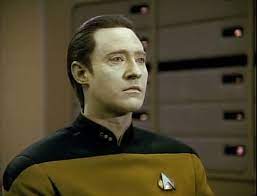
On my wish list is a trip to a ComicCon convention. I have a particular yearning to mingle with other Star Trek geeks. In my fantasy I can see myself dressing in a Star Trek uniform, perhaps going as my favourite character Data. I wish I could do cosplay. I’ve over-analyzed my desire to go by making charts in my head. In the ‘Don’t Do It’ column my reasons are: aversion to crowds, reluctance to spend flagrantly, fear of being ridiculed. On the ‘Just Do It’ side my kid voice can be heard saying, “But I wanna!” Maybe I could go as the Invisible Man, then I could take in all the excitement without being noticed. I was the same way about Burning Man until I mentioned to a Burner that it was on my bucket list. He snapped, “Tell me what you’ve already ticked off your list!” That unconventional response made me realize the importance of not dreaming my life away.

‘Well, that’s the way it’s always been.’ Is a bit of conventional wisdom that dismisses innovation. I wonder if unconventionality could be a synonym for inventiveness. Sometimes an entire system must be cleansed for health to be restored. Police departments, in the United States particularly, have faced criticism for systemic racism and misuse of force. Conventional ideas of police funding and militarism are being challenged. We are no longer ruled by kings or queens. We only have ourselves to blame if we let convention dominate the discussion when change is clearly in order.

Re: Location

Location, location, location is a classic real estate slogan designed, I think, to make you feel lucky about the prospect of buying an over priced house that still need lots of remediation. I can’t complain since each time I have relocated in my life I have been fortunate to have initiated the move and I’ve found the resources to be satisfied with the result. I ache for those who are forced from their homes due to poverty, war or other threats. Globally we are seeing a rise in mass migrations. Some of our cities are having difficulty finding positive solutions for a homeless crisis. Choosing one’s own location, geographically or metaphorically is healthier for all concerned if you can have options available to you.

As a child I was fascinated with stories of wandering animals: Mammals that magically find their way to feeding grounds. Butterflies that spend months flying to seasonal homes. Birds that navigate huge distances to locate their nesting sites. The life cycles of eels and salmon over generations that necessitate unimaginable journeys to sometimes secret locations. Dolphins and other whales that use echo-location to maintain their position within their pods and their bearings on where they are headed.

My eldest son brought me news about a day trip that had him slightly flustered. Finding himself located at the end of a rural road, he admitted he wished he had a map: The paper foldable kind that was always in the glove compartment of a car. (I can hear someone asking, “What’s a glove compartment?”). Anyway, number one son was temporarily lost, without a GPS signal and no way of locating his position on this remote country road. He eventually got some bars showing on his phone, downloaded a map and figured out his way. As he told me his story I thought of learning how to use a compass as a Boy Scout. The leader advised us earnestly that with this device in our pocket we would never, ever, be lost.

Philosophically speaking, knowing one’s place in time and space brings confidence and comfort. That’s how we get the feeling of Home. As life ticks along, that original location where we were born, where we grew up, where we had our first experiences provide a mark on the map of our life. Many conversations start with, “So, where are you from?”, for good reason. Those we meet feel less lost when they hear the answer to that question. It helps to know where we are in relation to others we meet. Societal relationships depend on this orientation of its citizens as needfully as some animals need the stars to navigate home.

I feel discomfort when I can’t locate my needful things. As I age my memory helps me recall where I’ve been so I can make sense of my present circumstances. I can be less concerned with the future when I know where I am in the present. Life is a constant journey of finding yourself in relation to your surroundings and yes, sometimes a map helps.

Re: Birth

Spring is a time for rebirth. It’s the season for positive change. A birth heralds new possibilities. A new generation can now lead us to a better way, a better life, a better world. After our mothers bore us, we must now bear the responsibility of making our lives count for something. That is the challenge inherent in our birth. Maybe that is part of the meaning of birthright: each of us has a chance, a right and a responsibility to use our lives well and to leave a worthy legacy. When I experienced the births of my own three boys, I remember being awed by the process itself. Now as I watch my grandchildren, I am enjoying their eager minds birthing new ideas, new games to play, new imaginings that sparkle out when they awake to greet a fresh day. I love being surprised by their behaviours.

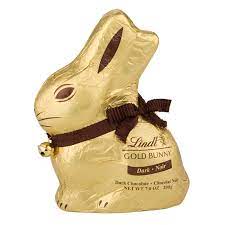
Recently my wife told me a story of how her mother responded to her gift of Easter treats. Chocolate eggs had been placed for easy finding to accommodate tired elderly eyes. On this particular spring morning, my mother-in-law got up early with laser vision gathering up a feast of sweets, filling her pockets and quickly going back to bed. When she arose for a second time that same morning, she seemed petulant that she hadn’t got as many treats as her husband. The trail of foil wrapping, brown chocolatey smudges on her bedsheets and breast pocket attested to her haul, yet still she doubted the accounting. Endearingly, Mom asked her daughter to help tie the Lindt bunny’s bell ribbon necklace around her frail wrist. At 92 she allowed her 2 year old soul to shine through.

Our personal birthday, the anniversary of our beginning, can be a time to reflect on how far we’ve come and where we want to go. I am getting old enough to not think back to count my age, but rather to see how many more years until 100. I’m closer to that date than I am to the year of my birth. Age doesn’t scare me too much at this point. Luckily I have been able to witness the experience of others born before me. My elders have taught me much about patience and other important values. What I am most charmed by is the way the seniors in my life have returned to their childlike selves in response to events in their lives. 

My fondest and most frustrating memories of my sister often revolved around her gathering the treats of life too fast for me to catch up, leaving me wondering if I had got my share. I need not have fretted. Judging by my mother-in-law’s Easter egg experience, I’ll have a chance to be a kid again. Life viewed this way surely eliminates the fear of death. Maybe this is a signal that life is a never ending circle. Death, as we call it, is just another sort of birth. With patience, we’ll soon discover what’s next and find happiness there.

Re: Jim

I heard a knock on my front door. During Covid times contact with anyone is a rarity, so I answered, starving for connection. It was Jim Carrey standing there in living colour. He said, “Hi I’m Jim Carrey. I know it’s short notice but can I quarantine here?” He dropped his backpack in the hallway. “It’s a good thing you answered your door because I was just about to jimmy the lock.” My mouth was probably still open. “Just kidding!”he added.

I said I had a spare room, that he was welcome to stay since I was a big fan. I called him Mr. C. out of respect and a couple of times Captain Jim came out as I was jibber-jabbering wondering out loud why he would come here to the Saanich Peninsula. He told me a friend had said that Harry and Meaghan had spent time near here to get away from the paparazzi. I smiled at the way he contorted his face while saying, ‘paparazzi’.

I told him I had seen his last drawing posted on Twitter, Feb 11, 2021 and wondered if he was all right. I talked about being a fan, a fanboy, a Stan and the differences between the terms. My words were spilling out so fast, I began to wonder if he’d reconsider his request to stay. He pulled a Slim Jim from his jean jacket and asked, “You got anything to eat?” Luckily, I had been on a quick masked raid to my village grocer so I had plenty of food. I showed him the fridge. He grinned, “Alrighty then!”

Our time together went quickly. I told him my wife was away looking after her elder parents so I really appreciated having someone to talk to. We bonded like stereotypical Canadians, played crokinole, ate bacon and drank beer. He said it was good to be home. To celebrate Day Seven we ordered take-out food. Slurping udon noodles, Jimmy pretended to be a comically clichéd Asian woman. This made me cough and get red in the face.

One night we got into our jimmy jammies, watched a couple of old Star Trek episodes and got kind of drunk on craft beer. Jimbo started doing impersonations again. He’s silly that way. Famous characters named Jim appeared out of nowhere: Jimmy Durante, James Belushi, Jimmy Stewart, James T. Kirk, Jiminy Cricket, James Dean, James Coburn, Jimmy Cagney. He did a skit of Jimmy Carter on a roof hammering in shingles. I told him he nailed that one and we both rolled on the floor laughing.

On his last day with me, he told me how he had almost lost his sanity from the constant intrusion on his life. I shared how I had once suffered depression from trying to get things perfect. He said, “Life is hard man.” Before I was ready, Jim was at the front door. I stood feeling awed by the whole experience. He raised his arms in farewell, “In case I don’t see ya”.

And then he was gone.

Re: Moral

A society’s culture is rooted in morals. What we think is proper etiquette or acceptable behaviour is a guide for how we spend our time as citizens. Over a lifetime, some things that may have been considered immoral are found to be, by consensus, quite acceptable. Governments are elected on the basis of these perceived morals. When I vote I mark the ballot thinking, “This is the way I wish my culture to be.” That vote comes with trust that the politician will live up to the platform that was presented. I look for leaders who exhibit moral behaviour. I’m wary of crafty candidates who can sound like a moralist, spouting the short-comings of his/her opponent, then once in office backtrack on some of those do-rights.

I grew up enjoying Aesop’s Fables. Usually these tales told of animals or humans learning or teaching lessons of life by their actions or misadventures. My memory of these stories is like a warming blanket. I hear patient voices describing the scenes and questioning me about the outcome. Sometimes I recall being asked if I could guess the moral of the story. The fable that has been most influential for me is what I call the ‘sour grapes’ story. It quickly comes to mind when I have a desire, like the fox, that cannot be fulfilled.

Speaking of stories: ‘Where the Crawdads Sing’ has a female protagonist who grows up in a marsh. She is a natural part of the marsh, as though the biome was her mother. In the story a death occurs. Murder is suspected. One of my moral principles is that murder is wrong, yet in nature we see examples of it all the time. This beautifully written novel compelled me to examine this particular aspect of morality. I found myself wondering about the difference between immorality and amorality. Does a soldier have to suspend his/her morality when they go to war? Is war itself an immoral act of desperation to protect one’s home or culture? Is a suicide bomber or kamikaze pilot justified if it’s for a moral cause?

Talking about or teaching morals is not exclusive to educators, elders or religious folk. Most of us shy away from sounding preachy when in public. Sometimes the Letters to the Editor section of magazines and newspapers reveal moralists who are primarily making themselves feel virtuous by calling out others for impropriety. Michelle Obama, referring to the slanderous nature of political rhetoric, famously said, “When they go low, we go high.”

A strange burst of behaviour was noted recently in some countries near the Red Sea. Adults there were choosing to drink beverages out of baby bottles, perhaps seeking comfort in unsettling Covid times.  Authorities throughout the region quickly used vague laws to stamp out what they referred to as public immorality and indecency. It was said that these practises “violate Bahraini customs and traditions.” Cultures are dependant, it would seem, on the principle that what is acceptable for one, must be considered moral for all.

Re: Awe

“Awesome!” and “Far Out!” are sounds that tumble out of my mouth whenever I’m amazed at what I’m experiencing. With these exclamations I’m not passing judgement on the surprising subject matter, I’m just feeling joy in the wonder of the moment. Just as the character Spock from the old television series Star Trek says, “Interesting” or “Fascinating” he too is expressing curiosity. My Awesome is just a big fat Wow regarding the mystery of life as I experience it. The singer/songwriter John Denver clearly understood how to express delight in the world around him. I feel to show enthusiasm is to embrace life and all its observable mysteries.

https://www.youtube.com/watch?v=2-OhYLVSGj0

My only social media account is Twitter. Recently I had my first experience with a post getting a lot of attention. People took issue with me using the word awesome to describe a short video that made my head metaphorically explode. It was a shipping container that housed fans and wires and a computer-looking array. Since it had no narration, I retweeted asking for an explanation of what I was seeing. Thousands of responses later the world seemed to think my awesome choice of words was either evil or masterful. I sincerely wasn’t choosing sides on the Blockchain/Bitcoin/NFT debate, only expressing a sense of wonder. Oh well.

Language is full of pitfalls. The word Awful carries a negative connotation even though it literally means, ‘full of awe’. I’ve been reading about philosophers lately and have discovered that a common connection with all the theories is that the world, and the humans who inhabit it, are pretty awesome. Each writer is filled with awe when it comes to his/her philosophy of life. I wondered if I would come across someone who had a philosophy of awesomeness. In the feature length cartoon ‘The Lego Movie’, there is an inspiring song ‘Everything is Awesome’ which captured the enthusiasm I had in mind. It’s obviously written for youngsters but I’m a kid at heart.

https://www.youtube.com/watch?v=StTqXEQ2l-Y

If I understand Phenomenology correctly, it is our experience that defines the meaning of life. Martin Heidegger and other bright minds began a discussion of this idea of how phenomena interact with the consciousness. Detractors suggest Phenomenology might be dangerous because it lacks focus. Psh-Posh! Perhaps this minor philosophical movement can be restarted with my humble input. First, I humbly suggest a name change: Let’s try, Awelogy: The Philosophy of Wonder.

I’m working on some initial precepts: *When you greet the morning after your first breath of consciousness, be grateful. *Put aside your preconceptions when experiencing things. *Observe and allow yourself to be awestruck *Reserve judgement *Share your wonder with others *Resist sarcasm or mockery

These are nascent thoughts but I am in earnest. I plan to discuss this notion of Awelogy whenever I get the chance to slip it into conversation. Maybe one day one of my grandchildren may smile over my efforts and say in amazement, “Oh grandad!”

Re: Make

I think making things is the highest calling. Humans were created to create. When I talk to my grandchildren I ask them what they made today. I want to know what they’ve been up to, what they might have done or thought about doing, before I comment on their cuteness. When I was a teacher of elementary school students, making something was an important part of our day. During guidance talks we would discuss ways we could make things, rather than take things. And sometimes at the end of a day, the best thing we’ve made is someone smile.

My dad would often read me something he had just read from his newspaper, then he’d start a conversation by asking, “What do you make of that my son?” Making sense of the world was of paramount importance to my father. He practised several art forms, admitting that the act of making things from scratch helped him sort out his troubles. My first wife was a determined craftsperson whose skills in homemaking helped our family of five make ends meet.

When I start writing a think piece like this one I make it up as I go along, because it’s a work in progress. And sometimes the process of making things can be reason enough. There is an element of ‘fake it til ya make it’ like jello cooling in the fridge. A bit of writing can look like it’s complete but still not quite set. When I make dinner I rarely follow a recipe, trusting that when I get everything plated that it will be as tasty as I had imagined. Sometimes what we make is never as perfect as we would like it to be.

We say the word Make many times throughout our conversations: Make the most of it, make a mess of it, make sense of it, make a mountain out of a molehill, make hay while the sun shines, make war, make peace, make love, make out, make money, make do, make sure, make your mark, make the best of a bad situation, Make.Some.Noise!, make amends, make it happen, make your way in the world, make a promise, make light of a situation.

Globally we are in a climate crisis partly due to our productivity. We are making things that have  changed the health of our environment. Many modern day prophets have been warning us that we need to make up for our mistakes before it is too late. I continue to hope that humans have the capacity and creativity to remake the agenda of prosperity; to fashion it for all not the few, to take from nature only that which can be replaced, to think of needs more often than wants.

“What do you want to make of yourself?” Might be a question I pose as I’m gazing into the mirror of my thoughts. The answer changes with age and circumstance. Many things make us who we are in this present moment, yet life is truly what we make of it.

Re: Fight

Cancer is advertised as something we must fight. Yet fighting isn’t the answer; calm, methodical, verifiable research is the only solution. We regularly use fighting references when we want to overcome, push forward, resolve tension or see the back end of discomfort. The recent impeachment trial of past U.S. President Donald Trump saw his defence team cut and paste numerous examples of the use of the word Fight from speeches made by prominent Democrats. Without the full context however, the video made both sides of the constitutional hearing appear foolish because of how we overuse this violent word Fight.

There are many examples of peaceful methods to demanding change. I admit that sometimes writing letters, Tweeting our displeasure, congregating in silent protest, marching in solidarity, creating blockades, imposing sanctions or demanding compensation are not enough to change minds. Fighting must not be our first method of resolving a problem. The United States of America is not the only country to fight abundantly, but they sure have a record for liking that word Fight in the context of almost anything. When a problem comes up, it seems to be the American Way to wage a war with it. Currently, it’s a war on viruses.

To fight everything and anything puts a ‘me against the rest’ stamp on our language. Once it is in our common language we find ways of making it sound reasonable so our actions then become the meaning of the word. I have fought for things I believed in and I have run from trouble, but a response to a perceived threat doesn’t need to be just Fight or Flight. Some creatures in nature survive by Freezing. You won’t survive long if you are the proverbial deer caught in the headlights, but an animal like an armadillo can get out of a tight spot with a predator by rolling into a compact ball. Other animals can even feign death to avoid conflict. A mother Killdeer doesn’t fight to protect her nest, she Freaks, making a spectacular distraction. Likewise we humans can sometimes turn to comedy to draw attention away from an aggressor. We can Fawn in an attempt to placate the offender, for a moment, to ease the tension. Turning the other cheek doesn’t need to mean acceptance, or even meekness. It can be a method of biding time until a positive awareness returns. In family arguments, rather than fight, it may be a choice to admit Fatigue with yet another go round on the same grievance. These avoidance techniques give us a chance to gain a new, more useful perspective.

Only the person at that particular time and place knows the best way out of a threatening situation. I have felt the walls closing in on me. Regular doses of aggression being pushed on us will surely inform our responses, however I feel intuitively that fighting is not the answer. I’m not wishing to be part of any Fight Club, especially when someone is trying to convince me it’s for a good cause. I’ll seek peace first.

Re: Kid

While binge watching the television series The Office I had an awakening: The entire cast act as kids! The writers/creators show humans doing adult jobs, in an adult business, all trying to be adults but they are all just children playing in a sandbox. I kid you not, watching the show with this lens of kid-ness, gave me insight and joy in equal measure. Each actor shows their unique childish pleasure-seeking side: Michael wants attention, Dwight is a warrior knight, Kevin wants to eat, Creed steals, Andy sneaks, Jim teases. And, like kids, they all want to become. We are the camera, watching, judging, cringing at all the examples of how rude, obnoxious, hilarious and immature the characters are behaving. Sometimes I caught myself from wanting to discipline Michael, “Stop kidding around, that’s not how adults are supposed to behave! Be serious. You are supposed to be the Boss!” No wonder when any of the cast stops being selfish for a moment and acts like an adult, we are mystified: Where did that maturity come from?

This masterful work of television offers a chance to put all kidding aside for a moment so that you can recognize aspects of human nature. I don’t think we ever completely outgrow our kid stage. In my family both my dad, mom and sister all followed Peter Pan out the window. I was left to look after the house. I sensed the adult void and assumed the role. I lost out on some parts of being a kid because I had to come to the conclusion, as Wendy did, that we all have to take responsibility for our actions.

Perhaps we are not too different from some insects. We have a larval stage when we eat constantly. We pupate as adolescents going through fundamental chemical changes. Some of us come out of our chrysalides as adults, fully operational. Yet we all know folks who are just barely adults; those with low tolerance levels, still behaving in excess/access mode or perpetually afraid. That immaturity can make us an easy target for manipulation. The wolf in sheep’s clothing could just as easily be the parent poser in a cozy sweater.

As a kid we are used to following instructions as long as we get a treat. As a kid it’s natural to point to the other saying, “He/She did it!” I’m not kidding around if I suggest that maybe a dictator appeals to the kid in us. We expect leaders to show us a safer place. Dictators take care of things. Despots come up with easy answers that don’t need to involve us kids. A despot as a sibling can tempt us to do irresponsible things. Trump may have been an example of a dictator who failed because he was too much like a kid. The adult part of us finally caught on to his disguise. The fun stopped. Perhaps we finally grow up when we realize that truth is fundamental. I hope I’m not kidding myself.

Re: Guide

Influencers are big news. High profile people are courted by business, advertisers and social media sites to guide opinion or spark controversy. Guidance sells. Having a blue checkmark on your Twitter profile or thousands of followers on Facebook, you become worthy of attention. Providing guidance in a social media setting is increasingly problematic however, since users equate celebrity with credibility. This may be a new kind of going with the flow.

The mania and methods of social media sites have us following trendy others too easily. The best advice I ever got from my mother was not to be a sheep. Listening to alternative voices is important yet we must be guided by more than the flavour of the week. Fashionable morals need not dictate central principles and values. I’m conflicted by the conversations over ‘Cancel Culture’.  Guiding principles and societal values are no excuse for shunning individuals or ruining careers. Surely we can parse an offensive singular statement from general behaviours or opinions that are consistently abusive or prejudiced. We can stand for something by standing up. Censorship misses the point of the importance of active listening. Without an open conversation to guide us, there is no satisfactory conclusion. 

Our guidance can still come from the usual places. I was thinking recently how I’ve been guided in my life. I attempted a ‘top five’ list of influential forces. While some were people, some circumstances provided me with guidance. In review form, here’s what I came up with to describe how I came to this place called me.

Television: This device became my message, to paraphrase Marshall McLuhan, from my earliest days. The glowing eye has had a watchful presence over me from my fifth birthday onward. Even now, I reference TV programs when I am thinking/writing/conversing. One of my chores from an early age was to go to the grocery store to pick up a TV Guide. Using it as an early reader, I learned about schedules, film, advertising and media culture.

Scouting: Through several formative years with the Boy Scout movement I learned what perseverance and goal setting meant, how to stand up for myself and prepare for a rainy day.

My mother: She was a stronger personality than my father by far. I was lucky to be favoured by her over my sister, yet her manipulation of the family dynamic left lasting scars. 

My sister: Taking care of my younger sister was a regular activity of my childhood. I was held responsible for her whereabouts and missed out on the freedom of childhood.

Being alone: Hard to know whether my nature is to be an introvert or whether my early life trained me for solitude. I had one solid friend in early adolescence. While most of my life has been guided by turning inward, I have been blessed by the love and guidance provided by two wonderful wives.

With my advancing age I find myself trusting more. I look to my children for guidance regarding new technologies and societal shifts; for new ways to love and contribute.