Re: Secret

Hooray for me! I kept a secret while being a painfully honest person. That’s hard to do because with secrets come lies. To preserve the secret, a fib can feel inevitable. And I told several white lies. That’s how it went for me anyway, when I tried to surprise my bride of almost twenty years.

The story of this secret starts with me being pulled into a gallery by my wife to see, “The most amazing painting for our wall!” It was colourful and big, the original painting that is, but the lie became that size too. I went back to the gallery privately a total of six times to arrange the acquisition of my lover’s desire. Gallery staff became quickly amused by my instructions to keep everything Top Secret (at first it seemed like fun but I realized later that I was putting a lot on their shoulders). One employee actually offered to make up a story if ever she encountered my wife on a subsequent visit. Spies are needed in the secrecy business I guess. I insisted that all receipts and communication came to me through a selected email. Even with these well-laid plans I tried not to wince whenever it looked like I may have been discovered by the birthday girl. Long story short; the secret survived until the reveal of the gift. I was a hero but somewhat dazed and confused.

I read once that a secret was like carrying a fresh egg in the palm of your hand for days. My birthday secret was joyous but after months of deception I wondered about secrets that may cause injury. Secrets aren’t always a happy thing. For example we may see someone, a friend of a friend perhaps, in a compromising position. We may wonder if we should tell others involved about the secret being displayed. We may wonder if it’s our business to do so. There was a Jumbotron video capture at a Coldplay concert recently that led to someone being fired. What happened in Boston, didn’t stay in Boston.

Gossip is like a confidence that a friend has shared with us in the way that we must decide to be part of the secret or not. I wouldn’t trust a friend who told me never to share what he/she/they just told me. I don’t want that responsibility. I don’t want to be a confidante. If the secret is that precious I don’t know if I could be trustworthy enough to carry that fragile thing around with me. Being Cis, I can only imagine the turmoil that is a daily part of life for someone with gender dysphoria. What does one do with feeling constantly apart while trying to understand oneself? Society and its rules are responsible for making confidentiality ok sometimes, or a matter for public consumption depending on circumstance.

When my mom had to keep a secret she would confide that she wasn’t sure if her deodorant would hold up. I’m wondering now if that’s why antiperspirants were originally marketed to women. Sexist! My brand is Mennen. Don’t tell anyone.

Re: Encounter

I enjoy the encounters I have when I am out and about in my community. A simple stroll to my village to renew my prescriptions, a stop for an ice cream cone, or finding a sale in a grocery store will bring a smile to my face especially when I have a moment with a real person.

Abraham is his name. We met at an afterparty at a local theatre. He acted in the play that night, and I was an audience member. I started the conversation as he was choosing some cheese and paté, from a tray on a pedestal. I gushed with enthusiasm over the dynamic representation of a fight scene involving athletic coordination that was the climax of the plot. On stage, Abraham and his acting partner had just parried in a violent dance, each thrusting a blade with death being the intended outcome. All this action happened in remarkable slo-motion choreography, while I watched a mere three metres from the stage apron. Now I was standing near Abraham, at the meet and greet, trying to speak without crackers spilling out of my mouth.

Encounters can be exhilarating, sometimes messy, and rarely planned. A chance encounter can stay with us for a long time, if not forever. I remember as a teen being brave enough to ask if I could have an old lobster pot that seemed discarded by a house near where I was camping with my parents. I was with a friend at the time, and as he waited a few yards back at the top of the driveway, I negotiated with the owner. I said I had long wanted a suitable keepsake for my many years as a child coming to this beachside campground in Maine. I was going off to university and imagined the rectangular lobster trap would make an excellent coffee table. The owner handed his artifact to me as a gift, the look on his face was one of pure benevolence. I still remember my friend appearing equally stunned by the exchange saying, “You got it just by talking to him!”

I’m still feeling the isolating effects of Covid19. Back then we were encouraged not to have encounters due to risk of exposure to the virus. Even though I tend to introversion on the social spectrum I missed those times when I regularly attended mass cultural events. During those covid years I got used to encountering others over social media where exchanges didn’t involve the risk of a stray sneeze. In the longer term, Covid19 made us all a bit insecure about approaching others.

Now that I’m back attending the arts events that I love, engaging other humans will return in fits and starts. My social muscle memory emboldens me to initiate confidently. The actor Abraham seemed pleased that I had dared to approach that night at the theatre. He said, “And what about you?” Which raised my praise to dialogue level. Oh my, what to say next!

I’m going to need more practise at this conversation game.

Re: Manage

Once I was responsible for the care of my dying partner. Over the course of nine months, from diagnosis to death, I attended to her medical, emotional, psychological, physical, and incidental needs. Folks who have had similar trials will tell you how hard it is, yet somehow we all manage, because we have to.

Manage is a brother to Cope; yet coping has a big sigh attached to it. Related words like supervise, oversee, or control can sound overly dramatic. The act of managing is not just a technical thing requiring lists, deadlines, deliverables, outcomes, and client satisfaction. A good management scheme recognizes the elements of emotion found in doing the task.

To manage our own life might be best if we could just rely on logical thinking. But thinking only of the reasons why you want to keep your life on a positive track precludes the examination of your emotional response.

My bride and I were once Resident Managers at a newly built downtown condo tower. We were at the beck-and-call of almost one hundred owners in this modern structure of 15 stories. And boy were there stories! Each owner had his/her/their unique reasons for buying into the property. Each had personalities that required personal attention or group instruction. My wife and I tried to build community, while managing the demands of the job. We had to respond to residents who had decided their problem had become unmanageable. Consequential incidents such as; robberies, fire, flooding, vehicle accidents, equipment failures, births, or escaped animals were a few of the managerial complications that were part of our five year commitment to this post-retirement, self-directed, and amusing vocation.

Then came eldercare, which is a whole different can of worms. Management stresses here centre around ensuring the elder is feeling valued, even while declining in their faculties. I find the hardest part of this responsibility is managing my own feelings around caring for another. As an elder loses ability to manage themselves it’s easy for the caregiver to feel resentment, fatigue, frustration, and isolation. I find responding to another’s dependency is a challenge. Respect is hard to maintain when a relationship loses its two-way-street understanding. Ideally, I would like to only manage myself. But that’s not a reality since I impact others, just as they have influence over my life.

All three of my grown sons are in career management positions. They also manage themselves and their relationships quite well. Like me, they have a strong desire to be independent. My employers sometimes told me that I was ‘management material’. I believe that to manage one’s life is, by itself, a measure of success. I have felt blessed by the times when governments, agencies, neighbours, friends, family, co-workers, and lovers have helped me to manage my affairs.

Back when I provided end-of-life care to my first great love, there were many times I felt overwhelmed. Near the end of my ordeal a friend named Jaakko visited the depressing scene and said, “I don’t know how you manage.” I gasped at the comfort these acknowledging words provided. Then and now, I carry on.

Re: Outcome

I don’t remember when I first learned about compound words. Every word has a certain power when used effectively. A hyphenated word brings an idea together quite nicely while two or more words that are smashed together can be particularly enlightening. For a planner like me there is something very satisfying when all my organizing, mapmaking, list-making and future gazing creates an outcome that fits the contents of my imagination.

Our personal stories are often crafted to have outcomes that put us centerstage. In our vision of life, past or future, we tell our tales of adventure, defeat, disappointment, shame, honour etc. within the context of how we wish To Be in the world. I went on a much needed four-day holiday with my partner to an island retreat. I hadn’t anticipated getting lost in this fairly remote place, but I did, get lost. But it was temporary. A stranger appeared, literally driving out of the nowhere woods. I leapt from my car, waving my arms to stop him from going further along the dirt track. He smiled, led us to our destination only five minutes away, then vanished in a shower of small stones. The outcome, besides my embarrassment, was a good story of my fallibility.

At the Pearly Gates of Heaven, so it is said, you will discover the outcome of your existence. Someone will have kept a notebook of your transgressions and accomplishments. You will be judged. Of course you will likely disagree with the assessment. You will have kept your own ledger of regrets, misdemeanours, sacrifices, and awards of distinction. This island paradise I visited was Eden-esque; it certainly felt like heaven. While there, I talked with a young fellow about the importance of family. He was determined to tell me about how his life changed after becoming a father. He said he couldn’t have anticipated such a marvellous outcome as his crying fragile baby, turning into the boy that he so dearly loved.

For business types, the outcome is only read as the bottom line. The great Hudson’s Bay Company, established as a cornerstone for Canadian commerce back in 1670, recently died. From my point of view it was a case of neglect by rich folks less interested in history and more in profit. The outcome: Bankruptcy. I pushed my mother-in-law around our local HBC in a wheelchair. She commented on the bare aisles and naked mannequins. We both thought that the space felt like a garage sale. Our outcome: A feeling of loss.

On this temporary island of welcomed respite, my wife and I watched the tides filling and emptying a lagoon twice daily. We could gaze out our shorefront window and intentionally develop a new rhythm; one defined by more natural needs and intentions. Time felt less important here, we tended to ignore our digital handcuffs. The inbox and outbox of our manufactured world lost meaning. Our existence in this curious world felt familiar. The outcome of this experience has yet to be fully determined, but there can be no limit to our imagination.

Re: Inflammation

It’s entirely possible that a person can have inflammation of the psyche. I know because I have been feeling it lately. My symptoms include: Redness of the face when ever I see a picture of The Donald, Swelling of the chest as I pace about the rooms of my vindictive mind imagining what might be an appropriate punishment for these perpetrators of injustice, Pain in my brain as I try to rationalize how the state of the world came to be so scary for my grandchildren. I fear that I have lost control of my moral compass. Most alarmingly, my soul is feeling the heat of all these conflicted emotions.

The political world has been set on fire by our faux leaders, billionaires, and capitalist conglomerates. Meanwhile many parts of the natural world are aflame with the results of human induced climate change. The Anthropocene was a recent term used to define humankind’s dominance over our planetary systems. I suggest that our planet’s destruction at the hands of Homo sapiens is rapidly resulting in a new geological period. Let’s call it The Inflammatory Age. It’s clear to me that everything on this globe called Earth is suffering from a sickness quite like the illnesses that spring up in our body systems. Earth has been keeping the score of multiple abuses to its structure. Constant extraction of its minerals, pollution of its water, air, and lands have taken a toll on its health. Warring nations have been inflaming the hearts and minds of youth to the point they are absorbing the negative energy and losing all sense of peaceful solutions. When does acute illness, become chronic; leading to death or extinction?

My health care advisors tell me the inflammation in our physical body is responsible for many of our ailments.  With every infection, inflammation of the nearby cells is initially involved as a protective measure. It could make things worse however, complicating the healing process. The original injury is therefore harder to manage. Sometimes through my life I have felt feverish for no apparent reason. My joints get swollen and uncomfortable. Pain relievers can help me through these spells of an aching body. This fever can be brought on by stress which can be a contributing factor to my discomfort. If our body is electric, and of a chemical nature, then it’s no wonder we short-circuit every once in a while during the natural course of living.

A bull cannot be inflamed by the sight of red. He is tortured into a rage by the constant twisting of the matador’s cape. So too am I enraged by the antics of people intent on bullying for the sport of it all. The answer is not by fighting fire with fire. Not in my peace-loving book anyway!

Once upon a time during Covid-19 our provincial health officer, Dr, Bonnie Henry called on our population to be kind, be calm, and be safe. She sensed that fear inflames during times of crisis. I agree with that wisdom: Inflammatory comments don’t help, only hinder, our return to healthy living.

Re: Exist

I find it amusing that an anagram for Exist is Exits. We are living in Existential times, say many articles I read these days. Some headlines scream; “It’s an Existential Crisis!” or “Our very Existence is being jeopardized!” or “Human’s will soon cease to Exist on our planet!” Certainly civilization is in a roiling turmoil, sufficient to make us feel that it’s time to seek the exits of the great theatre of life (the vomitoria of ancient roman amphitheatres come to mind).

But wait! Before we search for that way-out from our own arena, let’s consider together what defines our existence. Hamlet was right when he opined that to be or not to be was the question. I believe we must be, simply because we are. Life is precious, to ourselves and to others. I’ve known folks who have committed suicide. I’ve contemplated shuffling off this mortal coil. What held me back was that the fear of missing out was greater than the fear of what comes next.

My existence is dependent on my thoughts. I am aware of my presence because I feel things. My senses send me signals of pleasure and pain. To be present means to acknowledge the messages being received, even if they are uncomfortable. All things will pass. I can’t always relate to what’s happening around me so I find comfort in the parade. Maybe I’ll join in later, or start my own parade. We are characters in a play of our own making. All the world’s a stage.

When I read stories of people who have disappeared I wonder what their previous existence had been like. I’m going to assume here that they arranged their own disappearance. After their escape, I’ll assume they had a life, somewhere, even though the ones they left behind may do better emotionally by thinking they are dead. The story writer in me wants these vanished souls to have an alternate world; a world free of the hassles from which they felt they had to depart. Imagine being so uncomfortable that you had to get as far away from your current experience as possible. It’s hard to believe that such a disappearing act would be possible in this age of surveillance. Yet, in Canada alone, tens of thousands go missing every year.

There is no doubt that we are in an existential moment in history. The world-wide pinball machine seems to be in continuous tilt mode. Lights flash warning after warning: Climate change, Terrorist attack, War crimes, Political lies, Viral pandemic, Species extinction. Prophets are screaming end-of-days rhetoric. Please wake me up when it’s all over!

Then I see my wife smile at me. I see a sparrow land nearby and tilt its tiny head. A breeze teases the hairs on my arm. I smell a barbecue cooking. I swallow my saliva. I am alive! I exist and my existence doesn’t have to matter to anyone else but me. Each day can be better than what I thought it might be. I’ll never miss out if I hold on for one more day.

Re: Zoo

I don’t like to keep words in boxes (dictionaries). I respect the notion that language is forever evolving. For example, when I come into contact with the word Zoo I jump to initial conclusions based on my experiences. The very sound of that word triggers an emotional response. Before I enter into a discussion regarding zoos, in general or specifically, I need to consider the context of the engagement. Perhaps my understanding of the meaning of this word will change as I consider a different point of view. With this word Zoo I have now covered all the letters of the alphabet. Maybe one day my effort will serve as a children’s ABC style learning book but for older folk: P is for Price, A is for Art, Z is for Zoo etc.

Language researchers like lexicographers or etymologists enjoy studying words. I am not a researcher yet I like writing about how the English language has made me who I am. Most adults have a vocabulary of 10 000 words used on a regular basis. Human beings separate themselves by language, physical borders, personal boundaries or behaviour. It almost seems natural that we seek to enclose ourselves.

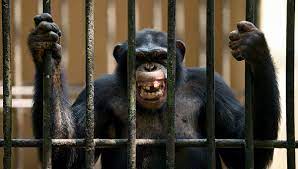
Zoos as an institution can depress me. Aquariums for aquatic mammals are jails. Captivity is not something that appeals to me. Keeping (owning) pets of any kind is a questionable human habit. Surprisingly, I used to aspire to working in a zoo. I once visited a hobby farm or ‘family zoo’ that appalled me. The star attraction both times, 30 years apart, was a very sad looking chimpanzee. After all that time the pathetic creature was in the same cage, not looking any wiser. The film Planet of the Apes comes to mind. In the late eighties some zoos underwent a transformation from the confined structure of old bars, iron gates and concrete screened buildings to more open air enclosures where the wild habitat was imitated to a certain degree. On a visit to such a zoo in Europe I was enthralled that I could walk about in an open field with giraffes. I came very close to chucking a career in teaching during a mid-life crisis after reading that Al Oeming had started a conservation area for ungulates in Alberta and wanted workers educated in wildlife management. Pick me!

It’s funny how we throw our arms in the air in exasperation saying, “It’s a zoo out there.” Clearly we have built our own self confining spaces. Sometimes we live in cages of our own design. Maybe that’s why we feel a zoo is ok for animals. Maybe that accounts for our belief that it’s acceptable practise to incarcerate fellow humans. I truly think planet Earth would do better if it was less managed by our species. With climate change, perhaps we are being shown that we can’t continue to harvest/corral/confine everything just to make our lives better, richer or safer.

‘We reap what we sow’ sounds fitting in this context. 

Re: Puzzle

Those items of furniture that look great on the small screen of your phone device arrive at your door in a single cardboard box. They could be from Ikea or a host of other quick and easy delivery companies. One of these arrived at my door the other day. My wife had been tracking it so I wasn’t unaware, just a bit fretful. The source of my anxiety was the basic puzzle of what we would have to go through if we didn’t like it. We would then have to send it back and what would that mean? These ancillary costs to my mental health are always on my mind.

I like puzzles generally. I feel smart when I can solve them. I love doing crosswords. My mind seems to expand in different directions when I work on a jigsaw puzzle (as long as there is a tidy place to put the assembly and I can keep my worry of lost pieces under control). One of my favourite things to build is a custom made cardboard box for the delivery of presents to my family far away. I measure and cut carefully to avoid wasted space in the parcel. The postal workers at my local depot always smile as they measure my package and report the payment due. Supporting these old systems and pastimes pleases me.

My former father-in-law loved the three dimensional wooden puzzles you can get at farmers’ markets of in craft stores. Being an engineer, he liked playing Jenga and pick-up-sticks. He tried to show me how to play Tetris on his computer once which made me nervous for a whole day afterward. I got revenge by buying him a Christmas present of magic metal rings that were supposed to detach and separate but never did in his lifetime. Pay back can be pleasing.

I think of myself as a puzzler. I enjoy having an enquiring personality. As I age I try to keep my two cranial hemispheres firing on all synapses. I tone my left side by writing daily; using language is the key here. My right hemisphere enjoys the spatial dimensions of thought so this comes in really handy when I have to put things together, like the bureau in that box by the door, that was waiting to be opened. ‘I have a project.’ I said to my self with encouragement.

Space was made and time was allowed for the task at hand. Out of the box came all the assorted pieces. Tools were assessed. I gazed at the instructions that were numbered for clarity.  I was building this piece of furniture in front of my 95 year old special mom. She saw my puzzlement over the parts displayed before her and said, “I know you can do it.” I asked how she was sounding so sure. She answered, “ Because you are good at crossword puzzles.”

I appreciated her puzzling connection yet heart felt encouragement. I began fitting the pieces together. It pleased me that her presence gave truth to the saying; Two heads are better than one.

Re: Tolerance

I learned much from my dad when it came to tolerance. He had to put up with a lot from my mother. I watched as a child at the way he navigated his hurt feelings over accusations and recriminations delivered at random moments by his wife. When I was older I couldn’t help but feel he should have stood up for himself more often. Ironically my mom’s intolerance for him led to a temporary separation.

Much of my understanding of tolerance comes from my parents’ examples. How one lives with tolerance is instructive. I’ve learned to recognize differences, inconsistencies, strengths and weaknesses in others. That awareness has helped me feel tolerance, but for a healthy relationship you need a step further: If you want a relationship to last you have to accept the other, flaws and all.

My father worked at a ball bearing manufacturing plant. He used to amaze me with his precision drawings and schematics of all the individual working parts. He had a position in the quality control department towards the end of his career. Long before computer technology, he used specific tools to make the measurements. He talked about perfecting the tolerances so that wear and dysfunction was kept to a minimum. Engineers often worry about stresses on material so they work hard to create designs that increase the tolerance against environmental hazards like weather. The mechanics of anything we build must meet rigid standards to keep risks of injury at a low level. For example, the last condo building I lived in boasted of being erected on top of springs to reduce potential earthquake damage.

Humans can react to life’s challenges on a tolerance spectrum. I have a low tolerance for small talk. My wife can’t tolerate silliness. We all have our pet peeves. Some things can grate on our nerves while other stuff sheds our psyche like water off of a duck’s back. I tried to list my top ten non-tolerances but only got to eight: anger, gambling, tattoos, war, waste, heat, pets and stasis.

We sometimes judge others by their patience or lack thereof. Recently I squirmed along with others in a medical clinic waiting room while an anxious patient pulled a Karen on the receptionist. “I can’t tolerate this medication!” She shouted until the doctor came out to calm her fears. Meanwhile we sat with our own thoughts on how we might have managed such a crisis differently.

Perhaps our tolerance for people or situations mellows with age. Elders have gained wisdom from multiple trials enabling them to better tolerate the shocks of life. Getting older gives us a sense of a continuum more akin to a lazy river rather than a cloverleaf intersection on an interstate highway. A feeling of urgency or desperation can be part of youth which can lead to intolerance and dismissiveness. On the other hand being aged can make us cranky and view the world as something no longer recognizable.

My grandkids will likely have to learn to tolerate a robot’s view of things. Oh my!

Re: Usual

I’ve often thought it would be cool to have a place in the community where you could walk in and say, “I’ll have my usual.” Someplace where everyone knows your name. A casual place where things usually just flow, where you can expect to drink from the cup of kindness.

https://www.youtube.com/watch?v=7KtAgAMzaeg

Usual is a cousin of Normal. There is a calm we get from familiar situations. My middle son and his lovely wife are building a beautiful life with my grandson. Before they were married, their relationship was stressed by long distance realities. Both had busy lives in two different countries. An ocean separated them! There were Skype calls and flight arrangements to be made. Even a language barrier to overcome. Their love grew despite all the challenges. When talk turned to choosing Canada as their place to live together, I remember asking them what they were looking forward to about their decision. They answered simultaneously, “Just to feel normal!”

A usual existence isn’t necessarily boring. The regular parts of your life can be anticipated with excitement, especially when you get to choose what those parts contain. Some couples thrive on weekly date nights for instance. Any routine that you can look forward to will add spice to your life. Several teachers I worked with in my career in education actually looked forward to September when they could ‘get back to normal’. I didn’t share that perspective but as a planner, I could appreciate the need for a structured lifestyle after the randomness of the summer months.

My sister often lived on the edge of chaos. Her unpredictable nature often made me nervous, but even her active personality needed times of surety. Like her mother before her, my sister counted on holidays to be just perfect. Perfection in this case meant that Christmas, for example, had to be exactly the same as last year. Variation would ruin the expectation and the expectation became the reason for the season. After my sister’s death, her only child made a wonderful decision on the following Christmas. My niece went on a trip to Thailand. From my viewpoint it was a reset: A very unusual and courageous way to declare her independence.

We all need our touch points of normalcy. My mother-in-law, at 94, cannot envision a week ending without her Fish Friday meal. She hasn’t worked for decades, and she is not a devout Catholic yet a dinner without fish as the main course on a Friday would throw her equilibrium out of whack. Likewise, James Bond must have his martini shaken, not stirred.

Thankfully, I don’t need a bar to go to at the end of a hectic day. I’ve enjoyed the regularity of family life despite those times when I would have liked to get away. When my existence gets too ‘same old, same old’ I count on my wife to suggest something that might mix it up a bit. I have found that contentment lies in the natural rhythms of being. Cheers!