Re: Character

Actors who play supportive roles in movies or plays are sometimes referred to as character actors. Even though Robin Williams has played the lead in films, I like the way he brings out the personality of the characters he plays. Mr. Williams is also adept at caricature. His imitation of cultural icons by vocal and physical impersonations is hilariously accurate. People who mime others surely must have great skill in observing a person’s characteristics, beyond the obvious ticks, accents and mannerisms.

I often wonder how we get our particular character traits. Some must come to us genetically, while others are likely crafted over time from our connection and responses to mentors, neighbours, coaches, teachers or friends. I have a quiet character. I am quite patient, faithful, persistent and optimistic. Those are some self-perceived personality traits of a positive nature that I hope others recognize in me. I don’t know if I’d be brave enough to ask someone how they might characterize me. I might not like an honest answer.

As an elementary school teacher, I have asked my students to choose an animal that has characteristics that might best match their personalities. I have also asked them to tell me their favourite comic book superhero. One autistic fellow refused to play this game of self identification unless he could choose a dinosaur that best represented him. This matchmaking with a safe non human character lead to some great lists of characteristics and of important values like courage, fairness, cooperation, kindness, honesty and determination.

Sometimes we recognize our character in another and rejoice in the knowing. I remember a conversation I had with a complete stranger that entered into this realm of soul connection. It struck both of us as profound and later he brought me a book called The Aquarian Conspiracy saying mystically, “You are one of us.” Much later I watched the film Avatar and relived this moment from my past when one of the animated characters said, “I see you.”

Sometimes I’ve wished that another person’s character would change so that I would find them more agreeable. With maturity I realized that I would have to change my ways or find a path of acceptance when it comes to individual differences. I still love stories where the central character sees the light and vows to behave in a more positive manner. I wish that this would happen with President Trump most days, but I’ve had to conclude that some characters are immutable.

The content of one’s character is an important matter in any historical age. Men and women of virtue, from all walks of life, have provided us examples of how to live productive and compassionate lives. Who hasn’t heard Martin Luther King Jr. speak these words on the significance of character. https://www.youtube.com/watch?v=Wxc6iqRC-n8

We look to influencers who can show us the way to our best selves. Hopefully each of us can then model an example of exemplary character that ripples ever outward.

Re: Best

Those of us who are competitive or ambitious want to be more than better; we want to be Best. The urge to ‘Be Best’ would get the attention of the current First Lady of the United States of America. Ms. Trump is determined that her program, despite the poor grammar, will be valuable for child development. Comedian Randy Rainbow suggests a different conclusion.

I’ve never had the honour of being the best man at a wedding. Somedays I feel better than others. I’ve been told I am a good neighbour. I believe in the presumption that the best is yet to come yet I also realize that Good is often good enough. When I’m not feeling my best it’s usually best for me to meditate or take a nap rather than transfer my mood to someone else. I try to be better everyday but I know I’ll never be perfect ‘cause that would make me Best and who am I to say I’m better than you anyway.

Grammatically speaking I see the value of superlative and comparative adjectives. They aid the writer who’s into description. Philosophically however, I resist thinking in these terms. I don’t like the feeling of dominance that Super brings to Superlative. And without a clear criteria for comparative points of view how can you have a satisfying conversation? For example is it the Best Poutine Ever because of the crispness of the fries, the squeak of the cheese curds or the savouriness of the gravy? Just what are we arguing about here!

Discussing the qualities of film is always a lively debate in my family, especially when it comes to the Oscar pick for Best Picture in any given year. Here’s the top pick from 1946: The Best Years of Our Lives. https://www.youtube.com/watch?v=1yc5PugV4mk . It’s not your average overacted late forties melodrama! When I revisit this film I’m stunned by these performances. Others may be stunned in another way by the slower story-telling pace of the film. Before an argument begins it’s probably best to say that choosing best of anything is subjective, at best.

Speaking of controversy, I had this jingle in my head as I shaved yesterday. “Gillette! The best a man can get.” The catchy tune came from this 1989 advertisement which seemed harmless for its time. https://www.youtube.com/watch?v=ThDBf14qPsc
Recently the same company got into hot water for attempting to send a message in this post #metoo age about how men could be better behaved.

The 45th President of the United States has been called many things. This sophomaniac continues to convince voters with his braggadocio attitude that he is the best choice for your vote in this election year. He has called himself the “Greatest president God ever created.” New red ball caps may need to be embroidered ‘God Knows Best’. My anxiety levels need lowering so I’m hoping that beastly Trump gets bested in November.

Re: Herd

A pandemic is declared. The behaviour of humans is now a matter of life and death. The human herd is working hard to protect itself from the Coronovirus. Details change daily, sometimes hourly, in terms of government directives and casualty figures. “Have you heard the latest?” is the question posed by neighbours, family and friends even as they practise social distancing and spacial awareness lest the virus reach out its infectious properties. Since we are affected as a group in these situations, we necessarily respond as a group. We can help or hinder each other’s health by how we look after ourselves and our herd.

I have found it curious to be a witness as countries and their governments decide how best to take on the issues presented by this pandemic. At the outset of risk to their country, the United Kingdom chose to pursue a controversial policy endorsing the concept of Herd Immunity.
https://www.aljazeera.com/news/2020/03/herd-immunity-slow-coronavirus-pandemic-200320092928984.html. They soon reversed their position when infected numbers grew alarmingly. There is some logic to letting things work themselves out, but as a society where do we draw the line on numbers of dead people? Stranger still is how we tolerate lifestyle illness, suicide and traffic deaths more readily than succumbing en masse to viral infection.

Herding humans is an art form at Disney resorts around the world. Here, park goers are herded efficiently through endless lineups to get to their tickets, get them to their ride or help them get fed. I’ve always been anxious in a herd, part of it has to do with being an introvert. Amusement parks, arenas and packed airports are places that make me hyper alert. As an individualist, I’m not myself when others surrounding me have the potential to exhibit random behaviour, so my tendency is to resist the pull of the mob. Herd behaviour was seen recently as shoppers struggled to stock up on social isolation supplies. Survival is the imperative to the point of scoring the last rolls of toilet paper, canned SPAM or, more menacing still, ammunition. Herd mentality clicks in during crisis.

Once, as a young father I had to quickly gather my young sons at their grandparent’s trailer park location. There was a commotion over a car, seen racing through the park grounds. The driver was cornered near us by bat and crowbar carrying residents who smashed his windshield. Further violence seemed imminent. Fortunately the police arrived in the nick of time and took the cowering driver into custody as park citizens continued to taunt and shout their anger. My children saw a herd of humans at its worst.

There are other formal names given to animals that gather. I’d like another word than Herd to describe humans. We could Band like gorillas, Parade like elephants or even Convocate like eagles. Being Shrewd like apes might be helpful to emulate. In Canada we humans gather to make decisions like owls in a Parliament. My favourite collective noun is a Zeal of zebras.
I could join that fun sounding herd.

Re: Mean

“Everything happens for a reason” is easy to say, harder to believe. Just what do we mean by that phrase? Perhaps we are merely trying to find meaning in what might have just happened to us. We want to fathom the grand meaning of life, yet we don’t have the context to make a reasonable connection. To paraphrase a classic, “If a butterfly flaps its wings in my son’s backyard, I’ll be inclined to go ten pin bowling.”

Imagine a strange scenario: A baby born in the backcountry. Her parents die and she is raised by wolves. She survives, thrives, grows old and dies never having known another human. Did her life have meaning? Surely life can have no meaning without context or connection. We have meaning only when those we have touched remember us and respond to that memory. I think that is why funerals (or Celebrations of Life) are so important. During an end of life event, we get to pronounce what a person has meant to us. As a collective we confirm that the person did not die in vain; that a legacy remains despite the loss. We, by extension, are made significant for having known another and are encouraged to continue our journey.

Meanwhile, I’ve been meaning to write about the word Mean for a while. Sometimes with a word like this it’s hard to cover all the thoughts that bubble up. I mean it! I could go on a rant about how I wish people weren’t so mean to others. Or I could say how happy I was to discover that the mean price of a house like mine has risen in the last six months. Each time I pick apart a word my intention is to find out how it has affected me.

Perhaps intention is key to meaning. When we say we want a meaningful relationship with someone, we are intending to give as much as we get. Reciprocity can add to our understanding of life. It starts by ‘walking a mile’ in someone’s shoes. Yet sometimes after all we do to find commonality and mutuality with another, we must go our separate ways and define a new meaning for our personal path.

Graffiti, like other art forms, is rooted in an exclamation: I exist! All artists use creativity to find meaning. Regardless of an artist’s depth of training or natural skill, their work shows us what they have discovered so far. One of the first ubiquitous bathroom stall etchings was a drawing of a head with a large nose peeking over a horizontal line with the caption, ‘Kilroy was here’. A one-liner, a bumpersticker or a meme all do the same thing: They attempt to crystallize our thoughts on the meaning of life.

Sometimes I have felt that life has no meaning for me. On those occasions I’ve been grateful for the loving souls who have given me counsel to let some time pass. The urgent question, “Why am I here?”, is often solved by waiting patiently for meaning to present itself.

Re: Judge

Someone who has an opinion is often thought to be judgemental, now that’s an unfair judgement. In fact I believe the word Judge needs a hard look before we jump to conclusions regarding a person’s intent during a conversation. I think evaluation is appropriate. It keeps us safe from dangerous situations and people who may wish to harm us. Judgement implies sentencing and I’m not for that. Society sometimes has to judge and individuals who are authorized by governments to make judgement must tread carefully, lest their judgement ends up doing harm. In my experience judgement can lead to abuse.

For example, I may be walking in the wilds and come across a bear. I have heard that bears are dangerous, shouldn’t be fed and may strike out when cornered. My personal conclusion is to give bears a wide berth. My evaluation may suggest bears and I have to find ways to co-exist. That would be my preference. It would be wrong to judge, that because of my evaluation, all bears must be killed or be put in cages.

I have been in conversations where someone has said, “Now don’t judge me.” This usually means that the person is not sure how I would feel about their behaviour. I have to reassure them that I’m not here to judge. I might jokingly say that they are in luck because I didn’t have my gavel with me that day. Or I might refer to Sammy Davis Jr. posing as a judge on the television show Laugh-in and uttering what would become one of comedy’s first memes “Here Come Da Judge! ”https://www.youtube.com/watch?v=3hIcKkKID8k . Hippies might have said, “I don’t care about your behaviour, just don’t hurt anyone.”

Polite manners of speech often force us into thinking along the lines of judging or being judged. Too bad, since once an emotional line has been crossed both sides stop trying to come to a mutual conclusion. A threat has been perceived, thoughtful exchange degenerates into shouting or worse. When an evaluation can come about as a result of full participation then no judgement is really necessary, only planning together for resolution of the original problem. No further protest is needed since there is a will to rectify rather than justify.

I’ve been shaped by film as some people are shaped by books or influential mentors. One of the themes of A Christmas Carol (1951, starring Alastair Sim) is judgement. In a memorable scene at a rag shop, characters gather to talk of their employer after his death:

Charwoman, “Why wasn’t he natural in his lifetime? …If he had been, he’d have had somebody to look after him…”
Mrs. Dilber, “It’s the truest word that ever was spoke…It’s a judgment on him.”

This scene is the clincher. Lucky for Scrooge he is given a view of his selfish, misguided life while he still has a chance to change it. He sees the truth in his charwoman’s statement, not in judgement, but in genuine curiosity; “Why wasn’t he kinder?”

Re: Mission

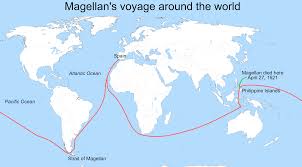
“Your mission, should you choose to accept it.” Says the self-destructing audio tape given to agent Jim Phelps at the beginning of the television show, Mission Impossible. https://www.youtube.com/watch?v=0TiqXFssKMY. It was one of my favourite shows as a kid. I loved all things relating to adventure. I loved drawing detailed maps in elementary school of early explorers: Magellan, Vasco de Gama, Shackleton, Cook. I remember being fascinated by the twin tales of Stanley and Livingston: Reporter Henry Stanley was sent on a mission by his newspaper, The New York Herald in 1871, to find the presumed missing missionary David Livingston.

In the Kama Sutra of sexual positions, ‘missionary style’ (male dominant facing female) is reported to have been promoted by white African missionaries as the acceptable way for natives to procreate. This sexual act offers the promise of creation; a mission by two people to provide an individual to further the continuation of humanity. A lofty mission that has had many motives and several potential outcomes.

Most corporations, of the business sort, have well defined mission statements. The intention of the mission mantra is to focus investor imagination and provide a set of achievable goals. I worked with school principals in the eighties when societal managers were hungry to adopt a business model of operations. We were advised to see an educated student as our product so therefore could create a mission document focussed on that outcome. I fear our children’s education will become even more like an assembly line process as we move ever closer to the merging of biology with AI technology

During my career, I met many colleagues who considered education as their mission in life. For me, however, my job was not the singularity of my life. I would never have referred to my work in schools as a calling. Some people do seem born to do what they do. Recent films about Fred Rogers suggest that his teaching about love and acceptance rose to the level of a mission. In the final scene of A Beautiful Day in the Neighbourhood, Mr. Rogers is shown at a piano while other crew members of his children’s show are packing up to go home, their job finished.

Missionaries bring a message to the world. Their prophet-like work needs support and accommodation from the rest of us. Many individuals throughout history have been heralded as innovators; their missions lauded yet doomed to fail when public opinion has swung the other way. I don’t believe that any individual with a creative vision can succeed alone. I’ve been supported when I’ve had an idea. I suspect those who support great leaders feel their role is to enable the mission: They become Sanchos to their Don Quixottes.

A timeless film, The Mission, tells the story of several characters on personal, political, military, corporate and religious quests in eighteenth century South America. Their chosen missions come into serious conflict. They discover for themselves how missions are huge burdens that come at great cost. https://www.youtube.com/watch?v=Ui91q7Y9xPk

Re: Cast

The toys I remember having the most fun with as a child were die cast. I had trucks, cars, army guys, planes. I have kept one: A wheelbarrow. Go figure. When I was eight I broke some bones in my foot. Back then the affected parts were encased in a plaster cast to immobilize the area. Suddenly I was famous! My schoolmates had heroic sympathy for me. I was cast in a whole new light. Children who I thought hadn’t even noticed me before, were happy to write funny sayings or well wishes on my cast.

In my adolescence there was nothing I liked better to do than to go fishing. With little allowance, I considered the purchase of my equipment carefully. I had a Mitchell 300 spinning reel, not a baitcast nor a spincast variety. My friend and I would spend many a lazy summer on a river or creek casting into small pools and eddies, hoping for a strike. During those blissful moments of singular concentration all other thoughts of teenaged angst were cast aside.

My parents cast my sister’s baby shoes in bronze. This was my mom’s idea as she was trying, I’m casting about for a reason here, to shed her lower class English roots. WWII had cast a long dark shadow over her adolescent experience. She refused to believe her die was cast so , while my sister was yet to be born, she persuaded my dad to immigrate to Canada. People of the Downton Abbey set will appreciate how the British Empire spread this idea of your place in society. Consider the Caste system which still exists in India. It is as if Shakespeare’s pronouncement ‘All the world’s a stage…’ was taken so seriously by government that each citizen was given a clearly defined role to play. Peace, Order and Good Government eh what?

I’ve often wondered what it would be like to go to a casting call to audition for a part in a play or film. My favourite stage or television productions are always ones with a varied cast of characters. Due to the technological advance of green screen computer enhancement, you don’t get too many movies these days advertising a ‘cast of thousands’, but for my Sunday matinee viewing pleasure as a kid, there was nothing to compare to Ben Hur or Around the World in Eighty Days. https://www.youtube.com/watch?v=vjiCO8k6Jhg

During Shakespeare’s time, ruling British monarchs waffled over rules regarding the casting of female roles. The underrated film ‘Stage Beauty’ examines this political dilemma. One of the best lines in the film is, “Who are you now?”
https://www.youtube.com/watch?v=lLlKmqH_5ak. This film alludes to the challenges of defining oneself. A current phrase used in self exploration is, “I identify as…”. Part of becoming mature is being able to be comfortable with your individual nature. Looking into that metaphorical mirror we must be able to see ourselves as the one who will play the most important role within that play of a lifetime.

Re: Motive

Motive is a cool word that can grow with the addition of syllables. Motive, a noun, can blossom into Motivate, a verb, then growing again to Motivation to become Motivational. It’s fun to see how flexible a word can be with a prefix or suffix. Like LEGO but with letters! So many different permutations eh?

My mother used to work for a busy private detective in Toronto. She picked up on some of the undercover language at the time; “That sounds like their MO. Just give me the facts. I wonder what their motive is.” It was one of many reasons I felt fear and love for my mom. She would often use her training and natural instinct to find out a reason behind my sister’s or my misbehaviour. We resented it. “You don’t know me!” I can still hear my sister yell after being accused, analyzed and sentenced almost in a single breath by our mother in a rush of anger. I’ve long past given up trying to sleuth out someone’s motive for a particular behaviour.

If we work at it we can come to know ourselves. I’ve concluded my own prime motivators are Fear and Love. Burrowing down into those two headings I find I can relate all my motivation to either Waste, Cost or Loss. Fearful mode is not where I wish to spend a lot of my time, yet fear of losing things makes me put things away carefully and therefore like all OCD individuals I get joy, pleasure, even loving feelings when I have ordered my world.

Some motivational speakers are making money helping us reduce, or cope with loss. FOMO (fear of missing out) is an acronym I just recently learned. If you feel FOMO you may become motivated to be involved. You might be worried about your time being squandered. No one wants to lose time when there is only one lifetime to live. When I graduated from University I was strongly motivated to get a job. I had met a woman I wanted to start having kids with and that was going to cost money, lots of it. Once I got a job I enjoyed the paycheques. I loved earning money and supporting my growing family. In the early days of employment I was fearful that I would lose my job.

Lately it’s Waste that has become a motivating force in my life. I’m motivated out of love for the planet to use less, waste less and make my efforts more kind, more respectful. I make servers in restaurants smile when I ask for a doggy bag. I used to do that because of the money I had spent, now it’s more about the thought of food being thrown out that motivates my request. Cost doesn’t urge me to action like it once did; I feel confident I can get by. I’ve seen and felt the loss of loved ones and precious things so I am less motivated to worry about this inevitability.

Perhaps wasting less can become a more universal motive for saving our precious planet. We can always hope.

Re: Truth

There is only one truth. Usually this universal truth is described as scientific fact. The existence of gravity on a planetary body is irrefutable. Scientists use the scientific method to explain observations, then they form conclusions which can then be tested over and over by other scientists for accuracy. Empirical evidence is the cornerstone of any scientific discovery.

Often Truth comes with a number. You get a traffic ticket because you were travelling at 100mph. The measurement on the bathroom scale indicates 85kgs. The library fine must be payed since your book is 2 days overdue. You may disagree with any of these numbers but you can’t say they are false. Science isn’t the only area where we can be confident in a singular truth. Banks keep track of the financial numbers and we feel confident that our account is accurate and up to date. Our judicial system is based on finding the truth, the whole truth and nothing but the truth. Historians make a point of checking facts of events so that we all can agree that certain things did happen as witnessed. Unscrupulous governments or corporations can distort historical documentation to bend the truth in their favour and thus control the citizen or consumer. I remember first being awakened to this deception thru George Orwell’s novel ‘1984’. https://www.youtube.com/watch?v=m6Ybkd_beUU

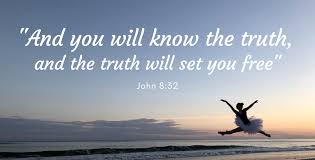
We often like to ignore the truth, even when it is staring us in the face. Seems these days that people are playing fast and loose with the truth. We see so many examples of the twisting of facts and figures that we can lose trust in the authority of numbers. Mark Twain found humour in this manipulation by suggesting, “There are lies, damn lies and statistics.” We’d like to know deep down that the truth can set us free, yet how will we know it when we see it?

Oprah Winfrey has often encouraged her followers to trust ‘your truth’. I would call this Personal Truth. It is subjective. It is not truth at all: it is belief. We all have a belief system that helps us make decisions. We grow up learning rules of life; some we keep from childhood, some we discard when they are no longer useful. ‘Your truth’ may put you in danger if it causes you to ignore objective truth. Our true selves may crave speed but we are testing the laws of physics and tempting statistics when we drive our car too fast. Slow down or better yet, stay off the roads or maybe try out for NASCAR. You pick.

Throughout history people have found comfort in joining others with similar beliefs. When your truth finds commonality in a community then you have found faith. This is Social Truth. Like Personal Truth it is still subjective. Viewing Social Truth as fact can be comforting but also very dangerous. Religion is a Social Truth. Some sects attempt to provide evidence that their faith is fact or at least better than the other person’s faith. This has led to war.

And, perhaps finally, there is our current Inconvenient Truth: Climate Change. https://www.youtube.com/watch?v=h4DFXUndvbw

Re: Why

My granddaughter has discovered the word Why. This is an amazing step for one small girl. This word can be used to stop time in its tracks. Bath time can be delayed while answers are being weighed. Even if the answer is not understood, an important moment of assurance has been established: Why is a very powerful word. From our beginning we learn to use language to shape our environment, to control, or at least influence, those around us who are important to our well being. From the parents’ point of view, the word Why can sometimes seem as a test, at best it is surely a quest for information. Here is a wonderful song by Anne Murray that captures the importance and frustration of this word. https://www.youtube.com/watch?v=AYsadwkBrnI

Before wee babes can formulate discernible words, sounds sub in for communicating needs. Likely, the word When was the first question which came out more like Whaaa! This universal cry: When will I be fed? When is my diaper going to be changed? When is Mommy coming? Translation: Whaaa? Whaaa?

Journalists are taught the five Ws in order to get the important elements of a story. The who, where, what, when, why of an incident are key to understanding. The reporter wields these questions as a surgeon might use a scalpel, to expose from witnesses the details of the event. In my chronological order of question development I see Who, What and Where, as words learned after the When and Why of baby vocabulary: The Who? babes can see, the What? they can point to or grab, The Where? will eventually be explored on pudgy knees.

Getting to How, now that is the most important question of all. In my life, the question of how has been the difference between youthful thinking and adulthood. After you have accumulated data on the first five questions it is the “how about it?’ that looms large. When we reach How, we are searching for our essential selves. We alone can answer the How’s of life: How will I behave? How will I make a living? How do I want to fit into this world? How shall I be?

I’ve spent many a frustrating time trying to figure out an answer to why after an event in my life. It’s a windy road of back alleys and dead ends. It’s a journey of little use. It’s a spinning wheel of thought, endlessly circling without resolution, without direction, without hope. Here’s David Clayton Thomas singing about the trouble with Why. https://www.youtube.com/watch?v=kK62tfoCmuQ

Agonizing over the Why of something is part of human nature. Most times the reasons behind something are not as important as finding a way out, over, through or forward. Inspecting the How To, can point the way to the future better than any other question. How is a hopeful word. When you become an adult, dumping the Why frees you to consider your present moment so you can finally assert, “This is how it’s going to be from now on.”