Re: Hero

In a recent New York Times crossword I found the clue ‘Rescuer’ and it had me stumped for most of the puzzle. A four letter answer was required and it started with the letter H. Finally solving the other words forced me to see it was HERO. I spent the rest of that afternoon thinking about what a hero is to me.

Words are fascinating in that they require a definition. Discovering the meaning of a word can be tricky depending on context within a sentence, the tone of voice of the speaker, grammatical origins and even body language can be an important criterion for understanding. My first thought regarding the word Hero was not concerning rescuing, although I see it now. Perhaps it is because almost everyone these days is referred to as a hero. The term is so ubiquitous that it reminds me of the trend to present a Participation Award to anyone who shows up for an event.

If I was rescued from certain death I might refer to my saviour as a hero whether they be male or female (the feminized word heroine is simply awful). From childhood onward, people who have done heroic deeds have enthralled me. Boys of my age would have read tales of knights rescuing damsels, of sheriffs bringing justice to the American west, of explorers sailing the seven seas, or of ball players making baseball diamonds sparkle with their talent. As I got older my definition of an act of heroism became more philosophical and broader in scope to include those who challenged the status quo. These ‘idea heroes’ may not have been active in a physical sense, but their abstract thinking made them stand apart from the crowd.

Hero is an overused word and doesn’t belong with every expression of gratitude. Confusing fame or institutional power with heroism gets me in a bit of an anxious knot. Comic book heroes won’t save us. Some modern songs suggest we crave, even worship, the idea of a personal hero. https://www.youtube.com/watch?v=bWcASV2sey0

Media personalities are often over quoted merely due to their celebrity. I wonder why the military profession is automatically tagged as being heroic. I’m not even sure bravery is a prerequisite for being a hero; determination certainly, and a sense of selflessness but most rescuers report they didn’t feel courageous at the time of the call for help.

I believe extraordinary constructive behaviour is heroic. Citizens who make an unselfish contribution to their communities are heroic. I would label some Olympic level athletes heroes just as I would someone who has devoted their life to an artistic passion. Folks might begin their personal list of heroes with Martin Luther King Jr., Mahatma Gandhi, Sylvia Pankhurst, or Linus Pauling. Pick a professional discipline, set some criteria, define parameters and let the list making begin! The debate might get heated determining which of those named are either Noteworthy, Great, or Truly Heroic. Be prepared to be convinced when someone asserts, “My dad is my hero.”

Re: Itch

What is an itch and why do we have it? I could google my lead question but it isn’t really a question and I rarely do any research other than a quick Siri type throw away inquiry because I have to satisfy an itch of the curiosity sort. Suffice to say that I’ve been itching to write about itches because they are among the few basic things that humans have in common with other animals.

Let’s agree that the origins of itching are elusive. I suspect a link to the Missing Link can be made whereby living together in caves created an environment for pests. Once bitten or bored into, Neanderthals would scratch to remove the parasite, otherwise they might fall prey to infection, disease, even death. Maybe these ancient humans didn’t die out from war with Homo Sapiens but because they couldn’t invent an efficient scratching protocol. This must be the source of our ancestral behavioural DNA as though some distant memory compels us to attend to our itches: That’s my theory anyway so I’ll pick away at it for now.

If you refuse to acknowledge an itch I don’t think it ever goes away. Itchiness can be a symptom of physical disease, yet psychologically an itch is an urge: To find out. To start a fight. To get going. To get started. Or, to leave your spouse, as in The Seven Year Itch.

https://www.youtube.com/watch?v=fJgC549mpRk

An Itch can be a form of curiosity and while you are scratching you just might come up with an amazing idea. Kids love to scratch. As with passing gas, it is a continuous source of amusement. Surely the title of The Itchy & Scratchy Show from The Simpsons was inspired by this fascination with moving fingernails across our skin. One of my children’s favourite camping songs was ‘Flea, Fly, Mosquito’ nicely rendered with all its silliness in this youtube video by Arlo & Alro’s dad of Tiny Mule Songs.

https://www.youtube.com/watch?v=BC6Ey_QyGQw

Dogs and cats have very satisfying lives, I can imagine, because they are always licking, scratching or rooting around looking to please themselves. No one tells them to go moisturize! I can relate when I watch films of chimpanzees, grooming each other with scratches and nibbles. It looks naturally healthy to be itchy from time to time. At the Imax a few months ago I watched as scientists recorded, ‘for the first time in the wild’, a grizzly bear stopping to satisfy an itch in the middle of its back by rubbing against a spruce tree. I’m no different. I love a good scratch. I’m quite dependent on my wife for getting at those hard to reach places. I have gone all consumer-ish and invested in some ‘money back guaranteed’ quality backscratchers ‘as seen on TV’. I’ve been told that attending to an itch (especially in public) is the epitome of bad manners. Yet we can feel collectively encouraged when someone says, “You scratch my back I’ll scratch yours.”

Re: Age

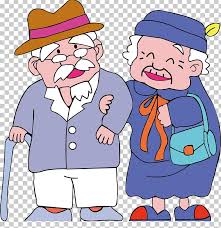
The view that age is a state of mind sells anti-aging products and makes seniors feel better about themselves but perhaps we are just kidding ourselves. Some may look good for their age, while others must surrender to the inevitable sag and wrinkle. If you have the means for a little cosmetic enhancement then I guess age is relative. I enjoyed a second look at The Curious Case of Benjamin Button which is a film that oddly turns the aging process upside down. Benjamin returns to baby-like form as some of his senses get shuffled out of play. Similarly, as I age, my sense of caution, for example, is winning out over my sense of adventure. If I’m honest with myself, my body has been aging steadily since I passed sixty. My hands mark me; I see my father’s tanned oniony skin when I pause from this typing.

Parents love to report how their baby is a day old, a week old, then a month old. The age of the newly born is so precious it must be clearly defined in celebration of its existence. Children sometimes correct you if you guess their age wrong. A ‘Four’ is adjusted to ‘Four and a half!’ because at that tender age 6 months carries great significance to their rank in the world. On the other side of the age specific spectrum, a decade may seem a brief span of time to a septuagenarian.

While I was paying attention to other things, The Age of Aquarius, morphed into New Age practises, to the Age of Entitlement, which was part of the Consumer Age before being summarized as the Anthropocene. Ironically we may be facing a global environment catastrophe equivalent to the Dark Ages because our leaders maintain Stone Age regressive thinking. It’s the age old story of greed, immediate gratification and wishful thinking. We aren’t getting any wiser.

We lost many aged folk through Covid19 pandemic missteps. Strange that we can value vintage automobiles, aged cheddar or cellar casked wine more than we do our grandparents. Our standards around assisted living facilities (barely sanitized old age homes) must change to reflect a greater respect for what elders can provide in a wholesome, healthy society. Wisdom, like beauty and love is ageless in a way. When our terms of reference for Age become so narrow that we begin labelling people dismissively as Boomers, GenXers, Millennials, we are in danger of demonstrating ageism, as restrictive a label as all the other forms of prejudice.

Mature First Nations individuals whom I have known have often been referred to as Elders and I’d like to follow the path of humility, wisdom and patience that comes with that territory. In correspondence with the younger members of my family I have self identified and signed off on notes as West Coast Elder. This WCE moniker helps distinguish me geographically and it’s also how I’d like to be perceived as a senior member of the collective.

I’ll take that as a respectful salute to my agedness.

Re: Stale

My son and I had a covid talk about feeling stale. It doesn’t help that we are both without a significant other right now for different reasons too lengthy to go into, however we both admitted that life in the pandemic is bland and tasteless. When waking in the morning there isn’t that pop of enthusiasm that makes you want to be up and get going on something. We wonder where the zest has gone as we return to bed at the end of a lacklustre day. If you took this feeling out of the global pandemic context, the symptoms would suggest we are both depressed. Indeed, reports of research on the psychological impact of the last year show evidence of widespread depressive illness, even among children.

One of the first signs of depression can be a change in your senses. I remember losing taste when it happened to me. Coincidentally it can also be one of the symptoms of the body’s response to the coronavirus. I find that circular connectivity to the covid19 virus interesting: you may not get the illness that causes a sensation of staleness but trying not to get the disease also makes your life exceedingly drab and boring. I wonder if a whole culture can go stale. It’s a damned if you do, damned if you don’t situation.

Things can grow stale in interpersonal relationships. Back when I paid attention to magazines at the grocery store check-out lane, Cosmopolitan magazine used to have front cover titles that claimed easy solutions to renew the romance in your life. In what is clearly a sexist approach to handling problems, I remember women were advised to be open to new sex positions. Men were supposed to show their softer side by bringing flowers or generally being more attentive. Both sexes were told to open metaphorical windows to banish staleness; bringing fresh air into their lives by being more spontaneous, by getting off on a secret rendezvous that often involved lots of lube.

I’m known in my family to love creating a meal from stale food. I enjoy making casseroles, chilis or soups from leftover fridge specimens. Heck, I’ve been chastised for plucking things from the trash bin under the sink. I come by the trait honestly, so they say, since my dad used to love telling stories of life in the North African WWII airbase where he was stationed. There was lots of weevil filled bread pudding, moldy cheese, and questionable beef stew. He would often be seen in our kitchen creating impromptu recipes from stuff my mom or sister had left on their plates, mumbling something about Louise Pasteur and penicillin.

The latest stat suggests Canadians throw out 79 kilograms of food waste each year. My penchant for using things up, repurposing or making the most out of every tiny morsel has a positive side. I also try not to buy into the ‘latest thing’ philosophy. I’ll choose consumer items that last, repair stuff and pass things on rather than trash them. I don’t think conservation should ever go stale.

Re: Convention

I liked going to conventions when I was a teacher. Before the money for such things vanished, each of my colleagues would have a chance to go to an out of town event about once every other year. Living in a remote community like we did, this was a boon for our professional development and an opportunity to share our experiences with educators from across the province or across the nation. My specialty was elementary school guidance which was unconventional, providing me with several opportunities to make presentations to School Boards that didn’t have that educational service.

Conventional wisdom comes from the collective. It can be generated in a local coffee shop or it can be fostered on social media. When the mob controls the agenda there is often not much wisdom, conventional or otherwise. I tend to be unconventional in that I don’t care if others think I am not a team player. I don’t wish to buy into groupthink, however I will follow convention when rules or common practise make sense or appear reasonable. Our system of government is conventional, plodding along on some matters, by definition and design resistant to change. Yet some very rigid systems have responded better to the Covid pandemic due to their citizenry being willing to follow directives. The Pacific Dental Conference, held March 5-7, 2020 at the Vancouver Convention Centre was a major source of coronavirus infections in British Columbia. To convene or not to convene and under what conditions has been a debate ever since.

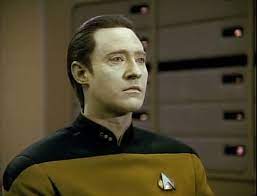
On my wish list is a trip to a ComicCon convention. I have a particular yearning to mingle with other Star Trek geeks. In my fantasy I can see myself dressing in a Star Trek uniform, perhaps going as my favourite character Data. I wish I could do cosplay. I’ve over-analyzed my desire to go by making charts in my head. In the ‘Don’t Do It’ column my reasons are: aversion to crowds, reluctance to spend flagrantly, fear of being ridiculed. On the ‘Just Do It’ side my kid voice can be heard saying, “But I wanna!” Maybe I could go as the Invisible Man, then I could take in all the excitement without being noticed. I was the same way about Burning Man until I mentioned to a Burner that it was on my bucket list. He snapped, “Tell me what you’ve already ticked off your list!” That unconventional response made me realize the importance of not dreaming my life away.

‘Well, that’s the way it’s always been.’ Is a bit of conventional wisdom that dismisses innovation. I wonder if unconventionality could be a synonym for inventiveness. Sometimes an entire system must be cleansed for health to be restored. Police departments, in the United States particularly, have faced criticism for systemic racism and misuse of force. Conventional ideas of police funding and militarism are being challenged. We are no longer ruled by kings or queens. We only have ourselves to blame if we let convention dominate the discussion when change is clearly in order.

Re: Birth

Spring is a time for rebirth. It’s the season for positive change. A birth heralds new possibilities. A new generation can now lead us to a better way, a better life, a better world. After our mothers bore us, we must now bear the responsibility of making our lives count for something. That is the challenge inherent in our birth. Maybe that is part of the meaning of birthright: each of us has a chance, a right and a responsibility to use our lives well and to leave a worthy legacy. When I experienced the births of my own three boys, I remember being awed by the process itself. Now as I watch my grandchildren, I am enjoying their eager minds birthing new ideas, new games to play, new imaginings that sparkle out when they awake to greet a fresh day. I love being surprised by their behaviours.

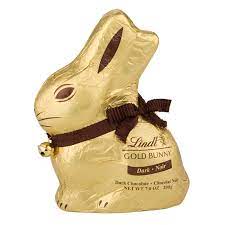
Recently my wife told me a story of how her mother responded to her gift of Easter treats. Chocolate eggs had been placed for easy finding to accommodate tired elderly eyes. On this particular spring morning, my mother-in-law got up early with laser vision gathering up a feast of sweets, filling her pockets and quickly going back to bed. When she arose for a second time that same morning, she seemed petulant that she hadn’t got as many treats as her husband. The trail of foil wrapping, brown chocolatey smudges on her bedsheets and breast pocket attested to her haul, yet still she doubted the accounting. Endearingly, Mom asked her daughter to help tie the Lindt bunny’s bell ribbon necklace around her frail wrist. At 92 she allowed her 2 year old soul to shine through.

Our personal birthday, the anniversary of our beginning, can be a time to reflect on how far we’ve come and where we want to go. I am getting old enough to not think back to count my age, but rather to see how many more years until 100. I’m closer to that date than I am to the year of my birth. Age doesn’t scare me too much at this point. Luckily I have been able to witness the experience of others born before me. My elders have taught me much about patience and other important values. What I am most charmed by is the way the seniors in my life have returned to their childlike selves in response to events in their lives. 

My fondest and most frustrating memories of my sister often revolved around her gathering the treats of life too fast for me to catch up, leaving me wondering if I had got my share. I need not have fretted. Judging by my mother-in-law’s Easter egg experience, I’ll have a chance to be a kid again. Life viewed this way surely eliminates the fear of death. Maybe this is a signal that life is a never ending circle. Death, as we call it, is just another sort of birth. With patience, we’ll soon discover what’s next and find happiness there.

Re: Moral

A society’s culture is rooted in morals. What we think is proper etiquette or acceptable behaviour is a guide for how we spend our time as citizens. Over a lifetime, some things that may have been considered immoral are found to be, by consensus, quite acceptable. Governments are elected on the basis of these perceived morals. When I vote I mark the ballot thinking, “This is the way I wish my culture to be.” That vote comes with trust that the politician will live up to the platform that was presented. I look for leaders who exhibit moral behaviour. I’m wary of crafty candidates who can sound like a moralist, spouting the short-comings of his/her opponent, then once in office backtrack on some of those do-rights.

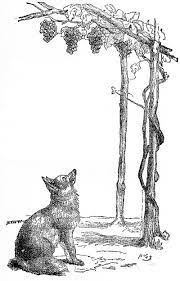
I grew up enjoying Aesop’s Fables. Usually these tales told of animals or humans learning or teaching lessons of life by their actions or misadventures. My memory of these stories is like a warming blanket. I hear patient voices describing the scenes and questioning me about the outcome. Sometimes I recall being asked if I could guess the moral of the story. The fable that has been most influential for me is what I call the ‘sour grapes’ story. It quickly comes to mind when I have a desire, like the fox, that cannot be fulfilled.

Speaking of stories: ‘Where the Crawdads Sing’ has a female protagonist who grows up in a marsh. She is a natural part of the marsh, as though the biome was her mother. In the story a death occurs. Murder is suspected. One of my moral principles is that murder is wrong, yet in nature we see examples of it all the time. This beautifully written novel compelled me to examine this particular aspect of morality. I found myself wondering about the difference between immorality and amorality. Does a soldier have to suspend his/her morality when they go to war? Is war itself an immoral act of desperation to protect one’s home or culture? Is a suicide bomber or kamikaze pilot justified if it’s for a moral cause?

Talking about or teaching morals is not exclusive to educators, elders or religious folk. Most of us shy away from sounding preachy when in public. Sometimes the Letters to the Editor section of magazines and newspapers reveal moralists who are primarily making themselves feel virtuous by calling out others for impropriety. Michelle Obama, referring to the slanderous nature of political rhetoric, famously said, “When they go low, we go high.”

A strange burst of behaviour was noted recently in some countries near the Red Sea. Adults there were choosing to drink beverages out of baby bottles, perhaps seeking comfort in unsettling Covid times.  Authorities throughout the region quickly used vague laws to stamp out what they referred to as public immorality and indecency. It was said that these practises “violate Bahraini customs and traditions.” Cultures are dependant, it would seem, on the principle that what is acceptable for one, must be considered moral for all.

Re: Make

I think making things is the highest calling. Humans were created to create. When I talk to my grandchildren I ask them what they made today. I want to know what they’ve been up to, what they might have done or thought about doing, before I comment on their cuteness. When I was a teacher of elementary school students, making something was an important part of our day. During guidance talks we would discuss ways we could make things, rather than take things. And sometimes at the end of a day, the best thing we’ve made is someone smile.

My dad would often read me something he had just read from his newspaper, then he’d start a conversation by asking, “What do you make of that my son?” Making sense of the world was of paramount importance to my father. He practised several art forms, admitting that the act of making things from scratch helped him sort out his troubles. My first wife was a determined craftsperson whose skills in homemaking helped our family of five make ends meet.

When I start writing a think piece like this one I make it up as I go along, because it’s a work in progress. And sometimes the process of making things can be reason enough. There is an element of ‘fake it til ya make it’ like jello cooling in the fridge. A bit of writing can look like it’s complete but still not quite set. When I make dinner I rarely follow a recipe, trusting that when I get everything plated that it will be as tasty as I had imagined. Sometimes what we make is never as perfect as we would like it to be.

We say the word Make many times throughout our conversations: Make the most of it, make a mess of it, make sense of it, make a mountain out of a molehill, make hay while the sun shines, make war, make peace, make love, make out, make money, make do, make sure, make your mark, make the best of a bad situation, Make.Some.Noise!, make amends, make it happen, make your way in the world, make a promise, make light of a situation.

Globally we are in a climate crisis partly due to our productivity. We are making things that have  changed the health of our environment. Many modern day prophets have been warning us that we need to make up for our mistakes before it is too late. I continue to hope that humans have the capacity and creativity to remake the agenda of prosperity; to fashion it for all not the few, to take from nature only that which can be replaced, to think of needs more often than wants.

“What do you want to make of yourself?” Might be a question I pose as I’m gazing into the mirror of my thoughts. The answer changes with age and circumstance. Many things make us who we are in this present moment, yet life is truly what we make of it.

Re: Fight

Cancer is advertised as something we must fight. Yet fighting isn’t the answer; calm, methodical, verifiable research is the only solution. We regularly use fighting references when we want to overcome, push forward, resolve tension or see the back end of discomfort. The recent impeachment trial of past U.S. President Donald Trump saw his defence team cut and paste numerous examples of the use of the word Fight from speeches made by prominent Democrats. Without the full context however, the video made both sides of the constitutional hearing appear foolish because of how we overuse this violent word Fight.

There are many examples of peaceful methods to demanding change. I admit that sometimes writing letters, Tweeting our displeasure, congregating in silent protest, marching in solidarity, creating blockades, imposing sanctions or demanding compensation are not enough to change minds. Fighting must not be our first method of resolving a problem. The United States of America is not the only country to fight abundantly, but they sure have a record for liking that word Fight in the context of almost anything. When a problem comes up, it seems to be the American Way to wage a war with it. Currently, it’s a war on viruses.

To fight everything and anything puts a ‘me against the rest’ stamp on our language. Once it is in our common language we find ways of making it sound reasonable so our actions then become the meaning of the word. I have fought for things I believed in and I have run from trouble, but a response to a perceived threat doesn’t need to be just Fight or Flight. Some creatures in nature survive by Freezing. You won’t survive long if you are the proverbial deer caught in the headlights, but an animal like an armadillo can get out of a tight spot with a predator by rolling into a compact ball. Other animals can even feign death to avoid conflict. A mother Killdeer doesn’t fight to protect her nest, she Freaks, making a spectacular distraction. Likewise we humans can sometimes turn to comedy to draw attention away from an aggressor. We can Fawn in an attempt to placate the offender, for a moment, to ease the tension. Turning the other cheek doesn’t need to mean acceptance, or even meekness. It can be a method of biding time until a positive awareness returns. In family arguments, rather than fight, it may be a choice to admit Fatigue with yet another go round on the same grievance. These avoidance techniques give us a chance to gain a new, more useful perspective.

Only the person at that particular time and place knows the best way out of a threatening situation. I have felt the walls closing in on me. Regular doses of aggression being pushed on us will surely inform our responses, however I feel intuitively that fighting is not the answer. I’m not wishing to be part of any Fight Club, especially when someone is trying to convince me it’s for a good cause. I’ll seek peace first.

Re: Kid

While binge watching the television series The Office I had an awakening: The entire cast act as kids! The writers/creators show humans doing adult jobs, in an adult business, all trying to be adults but they are all just children playing in a sandbox. I kid you not, watching the show with this lens of kid-ness, gave me insight and joy in equal measure. Each actor shows their unique childish pleasure-seeking side: Michael wants attention, Dwight is a warrior knight, Kevin wants to eat, Creed steals, Andy sneaks, Jim teases. And, like kids, they all want to become. We are the camera, watching, judging, cringing at all the examples of how rude, obnoxious, hilarious and immature the characters are behaving. Sometimes I caught myself from wanting to discipline Michael, “Stop kidding around, that’s not how adults are supposed to behave! Be serious. You are supposed to be the Boss!” No wonder when any of the cast stops being selfish for a moment and acts like an adult, we are mystified: Where did that maturity come from?

This masterful work of television offers a chance to put all kidding aside for a moment so that you can recognize aspects of human nature. I don’t think we ever completely outgrow our kid stage. In my family both my dad, mom and sister all followed Peter Pan out the window. I was left to look after the house. I sensed the adult void and assumed the role. I lost out on some parts of being a kid because I had to come to the conclusion, as Wendy did, that we all have to take responsibility for our actions.

Perhaps we are not too different from some insects. We have a larval stage when we eat constantly. We pupate as adolescents going through fundamental chemical changes. Some of us come out of our chrysalides as adults, fully operational. Yet we all know folks who are just barely adults; those with low tolerance levels, still behaving in excess/access mode or perpetually afraid. That immaturity can make us an easy target for manipulation. The wolf in sheep’s clothing could just as easily be the parent poser in a cozy sweater.

As a kid we are used to following instructions as long as we get a treat. As a kid it’s natural to point to the other saying, “He/She did it!” I’m not kidding around if I suggest that maybe a dictator appeals to the kid in us. We expect leaders to show us a safer place. Dictators take care of things. Despots come up with easy answers that don’t need to involve us kids. A despot as a sibling can tempt us to do irresponsible things. Trump may have been an example of a dictator who failed because he was too much like a kid. The adult part of us finally caught on to his disguise. The fun stopped. Perhaps we finally grow up when we realize that truth is fundamental. I hope I’m not kidding myself.