Re: Zoo

I don’t like to keep words in boxes (dictionaries). I respect the notion that language is forever evolving. For example, when I come into contact with the word Zoo I jump to initial conclusions based on my experiences. The very sound of that word triggers an emotional response. Before I enter into a discussion regarding zoos, in general or specifically, I need to consider the context of the engagement. Perhaps my understanding of the meaning of this word will change as I consider a different point of view. With this word Zoo I have now covered all the letters of the alphabet. Maybe one day my effort will serve as a children’s ABC style learning book but for older folk: P is for Price, A is for Art, Z is for Zoo etc.

Language researchers like lexicographers or etymologists enjoy studying words. I am not a researcher yet I like writing about how the English language has made me who I am. Most adults have a vocabulary of 10 000 words used on a regular basis. Human beings separate themselves by language, physical borders, personal boundaries or behaviour. It almost seems natural that we seek to enclose ourselves.

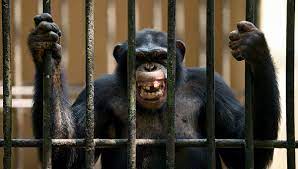
Zoos as an institution can depress me. Aquariums for aquatic mammals are jails. Captivity is not something that appeals to me. Keeping (owning) pets of any kind is a questionable human habit. Surprisingly, I used to aspire to working in a zoo. I once visited a hobby farm or ‘family zoo’ that appalled me. The star attraction both times, 30 years apart, was a very sad looking chimpanzee. After all that time the pathetic creature was in the same cage, not looking any wiser. The film Planet of the Apes comes to mind. In the late eighties some zoos underwent a transformation from the confined structure of old bars, iron gates and concrete screened buildings to more open air enclosures where the wild habitat was imitated to a certain degree. On a visit to such a zoo in Europe I was enthralled that I could walk about in an open field with giraffes. I came very close to chucking a career in teaching during a mid-life crisis after reading that Al Oeming had started a conservation area for ungulates in Alberta and wanted workers educated in wildlife management. Pick me!

It’s funny how we throw our arms in the air in exasperation saying, “It’s a zoo out there.” Clearly we have built our own self confining spaces. Sometimes we live in cages of our own design. Maybe that’s why we feel a zoo is ok for animals. Maybe that accounts for our belief that it’s acceptable practise to incarcerate fellow humans. I truly think planet Earth would do better if it was less managed by our species. With climate change, perhaps we are being shown that we can’t continue to harvest/corral/confine everything just to make our lives better, richer or safer.

‘We reap what we sow’ sounds fitting in this context. 

Re: Own

The times in my life that have worked out for the better have been those occasions when I have owned the narrative. Times when I have made the best out of a poor situation. Times when I could have felt ‘done to’ but instead I decided that I could find a place for myself amidst the lives of others. It’s best not to feel victimized or even put upon. In the best or the worst of times, having some control allows us to use our creativity to make an adventure out of any circumstance. Taking ownership is the first step towards making a plan.

I resist the phrase, ‘You’ve made your bed now go lie in it’. Yet, owning the problem can enhance your responsibility; moving you into a place where opportunities await. Change becomes less shocking. You alone are best positioned to decide the best choices to make within the reality. Currently I am sharing the daily task of elder care. My wife’s mother is living with us so that her unique needs can be met. I rarely feel as though I want to jump ship but assessing my role in this present picture is a challenge. I could say to my bride, “She not my mother, you deal with it.” Or, I can accept my situation better the more I feel involved: I can read newspaper stories to this special 95 year old (almost blind) woman. I can engage her in a stimulating conversation. I can invite her to help me solve the crossword. I can walk her to the seaside, sit with her, and describe the scene my eyes can still see. I owe it to myself to own every moment I have in concert with the people in my world. In this scenario I am working towards the goal of recognizing the value of thinking, “Well she’s my mother too.”

Owning the present in an affirmative way has helped me accept change. As a teen my parents separated (I discovered I felt better when I spent more time independently with each of them). My first wife was raised in a church going family and wanted that lifestyle for our children (I found a new side of myself by joining the choir and learning biblical teaching). My second wife was into healthy food choices (I found the world of cuisine expanded my curiosity and gave me a heightened awareness of other countries and cultures). I adapted rather than acquiesced.

During one talk with my elder roomie, I asked her what she thought about the word Own. She blurted out, “Well I don’t own any furniture anymore.” An obvious statement coming as the consequence of downsizing and a cross country relocation to a small townhouse with her daughter and me. Digging out of the confusion of a life no longer being normal takes a lot of patience, until you find what is normal again. Owning up to the part you can play and being unafraid to design your own script can help with the success of any of life’s productions.

Re: Man

I am a man. I think I am a man because of my biology and my training. I was taught that I could pee standing up, that I could help make a family by being a provider, that women and children must be saved first in a disaster. Some of that, perhaps all, is outdated thinking. But still, I know within my being, that I am a man.

This man: Me. I am taking small steps to learn that not all men, not all human beings, are created alike. By our very nature we are formed from the same flesh and blood and so must be treated, collectively with the same respectful humanity. However, I have come to learn that I am a Privileged Man by virtue of my whiteness and wealth. This troubles me. The equal rights declaration, “I am a Man!” is not lost on me. I learned of my manhood by example, as all men do. My father taught me there can be gentleness in a man. He spoke of femaleness and maleness as characteristics that men and women can share. For a while I was confused about these juxtapositions. I saw violence in my mother so I knew that hatred was not the purview of a man, alone. I learned that it was alright to cry, and yet tears may let others in on your secrets.

What it means to be a man has been a topic of discussion since the times of the wise Greeks. Most often, in my interpretation, these definitions have been restrictions to mankind’s full potential. Robert Bly made an attempt at defining the need for a men’s movement. His book, ‘Iron John’ was a great read using an old folk tale as a guide. The flaw in the text was the assumption that Man must be thought of as opposed to Woman. Our physiology must not predetermine our preferences, attitudes or behaviour. I believe there is more harm than good in concluding that the sexes think and act in a standardized pattern.

There is no manual on how to become fully human just as there is no series of steps to raising a child. Cultures may provide clues that help us to nurture nature. But nature will usually prevail. Societies may fear gender dysphoria to the extent of enacting laws that do more harm. Resolving issues of sexuality and gender identity will require love, not restrictive laws. It is clear to me that neither manipulation nor manhandling will be effective strategies when resolving these issues. I was recently moved by the role that Ben Whishaw played in the film Women Talking. He reminded me of my father in the way he showed respect for members of the opposite sex. His performance, proved there can be fluidity between the feminine and masculine ways of thinking. This quote from Psalms comes to mind: “O Yahweh, how manifold are thy works”

By virtue of my manhood I’m a member of the Patriarchy yet I am a man who does not want Power to rest in my maleness alone.

Re: Elder

My wife and I are in the midst of eldercare. Her mother is nearing 95 and needs attention. She is partially blind (can’t read print or signs, sees shadows and outlines). We are working with community services to build her a life worth preserving while sheltering her in our own home. We are not noble, just practical. We want what we think is best for her. We feel she has deserved a respectful conclusion after a life of care to others.

I placed my own elderly mother in a nursing care facility almost a decade ago. My sister and I concluded that we couldn’t meet her special needs. She was an elder who was difficult to serve. Of the three locations where she received government old age long term care, the last publicly funded centre was up to the task. She had five good years in a former hospital in British Columbia before she died of natural causes. After her death I was shocked to discover that a Nursing Home in Pickering, where she had previously been in residence, was discovered to have the most Covid deaths within Ontario.

Many cultures honour their seniors. The culture of caring for elders seems like a distant tradition for white folk. We tend to stick them somewhere and invite them over for holidays; but only if they promise to behave. Wealthy elders can afford nursing care in higher end Retirement Homes. Many may be supported, like my mother was, within a patchy arrangement of government funding. Often these old folks homes are dependent on staffing. The inequities between standards of eldercare surfaced with the recent pandemic. In Canada we have a federal Minister of State for Seniors but the office appears to have minimal influence.

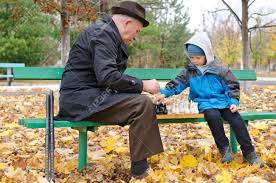
Elders are people first so they can be cranky or angelic in spurts. I’ve known many people older than me, whom I have loved to think of as my friends. I’m growing old now too and can better appreciate the toll longevity can take on a person’s physical and emotional well being. I don’t like to feel pushed into believing that 70 is the new 50. That puts pressure on me to live up to a standard. Like most spirited elders I feel 17 and always will enjoy sensing that I am young at heart. I’m not turning into a fossil or becoming an old fogey in attitude. On my best days, I’d like to believe that I am eldering: growing old with grace.

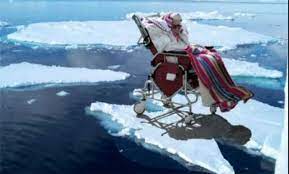
My wife’s mother appears happy to be in our company. She jokes how it is better than being turned out to pasture or left to float away on an ice floe. Our village on Vancouver Island has a community centre for the elderly called ‘New Horizons’. I like the encouraging sound of that, since I rebel at the thought I might be at the end of things. We old folk continue to need opportunities for stimulation, restoration, even growth. I’ve a lot to learn & my special mom has a lot of wisdom still to give.

Re: Contract

After watching the film ‘An Affair To Remember’ with my 94 year old special mom, she engaged my wife and I in a discussion about marriage. “Why would anyone get married these days?” Our conversation covered the idea of a union being a contract between two people desiring to show a public commitment to each other. “But why?” She still wanted to know. We didn’t have a scientific explanation.

The business case for a marriage contract is pretty straight forward. There is money involved. Bank accounts. Valued possessions. Pets even! Most jurisdictions contend that after a certain amount of time in cohabitation two people are seen as having an agreement as a couple. I’m no divorce lawyer but the argument seems to go that a 50/50 split is required if your differences become irreconcilable. Now this can change if you both had the forethought to sign a prenuptial contract. To me that is just cold comfort because a prenup seems calculated to find failure. But prudence can be a red flag. I don’t believe love can be found anywhere near a judge. Justice maybe, but no love baby.

Getting a new phone contract was very stressful. So many decisions to make. Multiple offers were presented regarding data plans, equipment, insurance, privacy. I was glad my bride was there to help me not feel manipulated by a Glengarry Glen Ross style salesmen. Our guy Michael seemed trustworthy. I only used a signature once at the mall kiosk and that was on an iPad using my finger. Looking over the fine print of my new communications econtract that was sent digitally to my email account, I see that there are stiff penalties if I don’t return the upgraded equipment. Hopefully my anxiety will dissipate over time.

I do like the security of a contract when it comes to major purchases. This is the language of a black and white world. I’m old enough to still understand the respect shared with a handshake. An understanding is arrived at that I will provide payment for services clearly spelled out in writing. Yes, there are grey areas indicated in the fine print even in the most iron clad agreement (it’s almost a given that no one reads this part of the contract). Perhaps this is where the social contract overlaps with business contracts: Perhaps trust is the ink in the pen, fluid until it sets.

When I chose to marry, my intent was to make a promise to myself as much as to my wife. Our vows were on a beach. We didn’t have a signing ceremony, although we did receive an official certificate of participation. We began the business of living together not in a contractual sense but as a memorandum of understanding. We recognized there may be grey areas, yet we would make space for amendments. We never wanted to let ourselves down during our association.

I’m a romantically formal guy in one sense: On that beach we signed our Magna Carta: A loving charter of rights and privileges between two souls.

Re: Evacuate

I’ve recently had a moving experience. It seemed like a move on the surface: There were boxes to pack, items to sort, donations to be made, a yard sale, and relocation planning. This was all accomplished with the usual amount of fuss, tears and goodbyes. Things get emotional with a move.

I’ve been involved in several moves in my lifetime yet this was like no other. I tried to wrap my head around the experience by using different descriptors like Leaving, Escaping, Evacuating, Purging, Departing, Fleeing, Vacating. This seemed most like an evacuation. We left behind things. We knew we weren’t likely to ever come back. Fortunately, we weren’t joining a long line of similar evacuees, fleeing a war zone, but we did have a sense of loss, a sense of leaving a homeland. We felt these feelings vicariously. My wife and I saw them, in the eyes of our 94 year old dependent elder.

My mother-in-law had just witnessed the death of her husband after a protracted illness. The reality of what to do next lay ahead and we three decided that a relocation was necessary. My wife and I wanted to take our mother home with us to the place that we had loved before all this turmoil had begun. That meant our elder had to leave the apartment she had existed in for 44 years. Not an easy thing to accomplish; physically or emotionally. She was good humoured and forward thinking, telling her life long friends that she was excited about the prospect of a fresh beginning. She described how she felt grateful we had the resources for a successful transition.

When my wife and I first fell in love the notion of running away from it all was a frequent item of conversation. We thought that life would be freer and simpler if we just owned a backpack to carry a few necessities. We wanted to hit the road, be of no fixed address. Moving away from circumstances that have made us feel trapped felt liberating. One of the reasons we originally made a home in British Columbia was because we wanted to start life anew. 

My special mom has a great sense of humour. We equated our seemingly sudden departure to an ‘Elvis has left the building’ sort of moment. There were momentary hilarious thoughts of the whole exercise being like a bowel movement: All sorts of memories and possessions being expelled and flushed away. She hadn’t been evicted but there was real sadness in the eyes of the superintendent when the lease on the apartment had to be terminated. Along with her sunshiny attitude Mom had moments of darker comedy when she asked me jokingly if we were going to set her on an ice floe and push her out to sea. Reassurance was provided.

We are now settled together, we three. Our elder is busy exploring her new neighbourhood. The trauma of the move is over and a new chapter in our lives awaits to be written.

Re: Missing

The thing about saying you miss something is not about the ‘something’ so much as missing the collective stuff that came with it. The smell, sound or visual may remind us that we are missing a moment in time: Being OF that time. But, just like realizing you can’t be in two places at once, you also can’t be in multiple time frames at once. Freaky but true.

When someone asks me what I will enjoy first after a ‘time away’ I have many answers. The cliché for people being on holiday and returning is the Dorothy statement; ‘There’s no place like home’. In that sense home can be a catch-all term to describe aspects of what makes our life unique. I can imagine that prisoners or soldiers love satisfying cravings upon release from their duties. I haven’t often felt that I wished I were somewhere else. I don’t think I’ve ever wished for another reality either, so maybe that’s why I can’t say I’m missing something or someone. That makes me lucky I guess. I can appreciate stuff while simultaneously minimizing the big picture importance, if that makes sense. Hang on tightly, let go lightly.

Looking forward to something might suggest what I have missed.  Luxuriating in a long hot shower certainly delights me.  Walking in the summer rain makes me wonder why I don’t do it more often. Slowly licking an ice cream cone must never be a rare treat. When I’ve been away from the touch of my bride my heart doesn’t quite beat to the same rhythm. I guess when we can conjure up a sense of longing, which is a projection into the future, we know better of those things that have left us gasping for joy in the past.

I’ve sometimes been missing in action in a metaphorical sense when I have not paid close enough attention to the delights of the present. Shame on me! Regret comes from this place when I should have known better to capitalize on the moment. Carpe Diem must begin each thought that leads to action. Indeed, being remiss is not a good fall back position. A healthy dose of forethought might reduce feelings of FOMO.

I’ve been having some illuminating conversations with my special 94 year old mother-in-law. She’s missing things that she hasn’t used in forty years. There are tears. And then she surprises me with a question like, “What have we discovered today?” I’m on a mission to find out how it might be for me if I get a chance to look back on my life after so many decades. We both keep talking about the importance of staying grounded in the now of life, not necessarily the know of it. There is no point in being upset when you can’t recapture something from your past. Politically or otherwise we can’t make the past great again.

I’m learning that time has its own plan. We won’t miss out on anything if we tend what is before us. Plant the seeds. Watch your garden grow.

Re: Tolerance

I learned much from my dad when it came to tolerance. He had to put up with a lot from my mother. I watched as a child at the way he navigated his hurt feelings over accusations and recriminations delivered at random moments by his wife. When I was older I couldn’t help but feel he should have stood up for himself more often. Ironically my mom’s intolerance for him led to a temporary separation.

Much of my understanding of tolerance comes from my parents’ examples. How one lives with tolerance is instructive. I’ve learned to recognize differences, inconsistencies, strengths and weaknesses in others. That awareness has helped me feel tolerance, but for a healthy relationship you need a step further: If you want a relationship to last you have to accept the other, flaws and all.

My father worked at a ball bearing manufacturing plant. He used to amaze me with his precision drawings and schematics of all the individual working parts. He had a position in the quality control department towards the end of his career. Long before computer technology, he used specific tools to make the measurements. He talked about perfecting the tolerances so that wear and dysfunction was kept to a minimum. Engineers often worry about stresses on material so they work hard to create designs that increase the tolerance against environmental hazards like weather. The mechanics of anything we build must meet rigid standards to keep risks of injury at a low level. For example, the last condo building I lived in boasted of being erected on top of springs to reduce potential earthquake damage.

Humans can react to life’s challenges on a tolerance spectrum. I have a low tolerance for small talk. My wife can’t tolerate silliness. We all have our pet peeves. Some things can grate on our nerves while other stuff sheds our psyche like water off of a duck’s back. I tried to list my top ten non-tolerances but only got to eight: anger, gambling, tattoos, war, waste, heat, pets and stasis.

We sometimes judge others by their patience or lack thereof. Recently I squirmed along with others in a medical clinic waiting room while an anxious patient pulled a Karen on the receptionist. “I can’t tolerate this medication!” She shouted until the doctor came out to calm her fears. Meanwhile we sat with our own thoughts on how we might have managed such a crisis differently.

Perhaps our tolerance for people or situations mellows with age. Elders have gained wisdom from multiple trials enabling them to better tolerate the shocks of life. Getting older gives us a sense of a continuum more akin to a lazy river rather than a cloverleaf intersection on an interstate highway. A feeling of urgency or desperation can be part of youth which can lead to intolerance and dismissiveness. On the other hand being aged can make us cranky and view the world as something no longer recognizable.

My grandkids will likely have to learn to tolerate a robot’s view of things. Oh my!

Re: Transition

Death is a transition. I’m not about to suggest what might be found on the other side of life, but I do feel that anyone’s death causes a ripple in the cosmic fabric. My father-in-law died. His death caused his immediate family to pause and consider; “What comes next?” While he is in transit, who knows where, we living souls must decide how and where to continue our existence.

My wife’s mother, after 68 years with the same fella, after living almost 40 plus years in the same place, has decided she wants to come home with us to Victoria, BC. There will be many stages to this transition. As my special mom comes to terms with no longer being a wife she appears to be open to the probability of forming new relationships. There may be time for assisted living. Some of her friends have said they are enjoying the experience. Another scenario might be a new home to accommodate the three of us. We will have to tread slowly as we respectfully navigate each other’s preferences while adapting to any new possibilities. Decisions will have to be made with sometimes conflicting emotional interests: sentimentality, practicality, comfort, personalities, individual abilities and disabilities will all have to be balanced to find a new normal.

A physical move is often difficult: packing, a relocation road trip and unpacking! There’s an endless need to analyze information to determine the best course of action. Everyone has a moving story that fits somewhere on a spectrum of Hell to Mildly Annoying. Time can modify the worst of these experiences so they can eventually become humorous. The mental and emotional toll is never easy to cleanse. The psychological transition may require metaphorical bandaids to patch over ruffled feathers. Dismissive words that belittle real worries can add to the trauma of transit from point A to point B.

It is in this regard that I can find empathy with Transexual individuals. Their journey requires a movement of realms beyond my comprehension. It is a monumental transition, not entered into lightly. I have taken my sexuality for granted, yet I can empathize with the journey required to find peace within your own body. Elders, like me, can certainly relate to a body that changes with age. As our parts deteriorate we moan that we don’t like what we see. Those wealthy enough will choose surgery to pull their saggy bits back into place. We’ve all looked in the mirror and been judgemental: Society’s gaze can be crippling especially as you transition into a new you.

From birth to death we are constantly in a transitory state. There are times when we feel stagnant. In all the times of my life, I have hated stasis the most. Whether we are moving through time or space we can make our experience easier or harder. I’ve learned to seek people and advice like I would opening a book. Information assists me in making better decisions. Other’s stories can enable a smoother transition regardless of the nature of the change.

Re: Yes

The YES/NO binary fascinates me. When I went to university computers were a becoming thing. Beginning science students at my college had to take a basic programming course. We used punch cards, stacks of them. We talked Fortran to a whirligig machine the size of a classroom. The best thing I got out of the course was learning Flow Chart methodology. I still use this principle to make personal decisions.

Life is not always a matter of a yes or no decision. A yes answer to a question can mean you agree, and when it comes to a contractual understanding I believe it shows strong character to commit to the outcome. On the other hand, saying yes can also be a process to finding out. I always told my young sons when they were out with others that if things went south and they started to feel uncomfortable, they could always call me for a pick up. Deciding yes doesn’t mean there is no turning back, yes doesn’t mean you are stuck. There is always something else you can do; it’s quite fine to change your mind.

When we are in autopilot we probably don’t think too much about our Yes/No response rate. Most of our lives we just flow along. I’ve said a resounding Yes to marriage twice in my life. Choosing teaching as a career was a fateful Yes. I’ve chosen affirmative responses to life changing questions when folks have shown confidence in me even when I have doubted my own ability. I once chose to question the YES of life in the midst of some dark days.

Back when I was coding those punch cards, the computer could only determine between one and zero. Like an On/Off switch the pathway to an answer flowed like an electrical current until a solution was found. As we move closer to AI robotics I wonder if we’ll be able to program something like a shrug into a SimBot. A simple yes or no is restrictive to creativity. A Maybe thrown in, once in a while, can stimulate imagination.

I love saying Yes. But it’s not always a practical answer. My wife says I’m a very emphatic person. I joke with her sometimes that life would be more fun if there was a limit to the negatives; Don’t, Not now, Not really, Never! M’Eh is the worst: That response combines a dismissive attitude with an apathetic outlook. Nothing is ever accomplished with a M’Eh. Unfortunately my reflex response, whenever we are out shopping, is No! I hate being a spoilsport. I can make firm and relatively quick decisions because I know myself well but my mind is not suited for a black or white rigid existence either.

My mother-in-law showed me her wedding pictures yesterday. She’s been saying her final goodbyes to her husband of 68 years. It took him nine years before he agreed to the union. I watched her smile like Mona Lisa as these memories played about in her head. Her lifetime started with a Yes.