Re: Surgery

My first experiences with surgery came before I was seven years old. Back in my early years it was routine to have your tonsils out before you got too long in the tooth. The idea, as I remember being told, was to reduce the risk of illness in the throat. As a bonus the surgeon would often yank out the adenoids. Now, more than sixty years later, whenever I think of hospitals I recall the smell of ether.

On the best advice of the day, my parents chose to have me go under the knife for the tonsillectomy. Just a year later, near my birthday, I was exploring a barn and a large iron bar fell across the toes of my left foot, smashing several bones. I had a bit of emergency surgery done and a cast was placed on my leg up to my knee. It became this young adventurer’s point of pride the following week at his birthday party. Every guest signed their name to my plaster of Paris leg as a tribute to my survival.

Surgical procedures have no doubt changed in my lifetime. Rich folk are choosing costly cosmetic surgery in the hopes of drinking at the well of eternal youth. New advances in prosthetics and bionics are also enabling greater mobility after corrective surgeries. Whether the surgery is elective or needed as a result of illness or accident, recovery times have been reduced since my tonsil days when ice cream was prescribed after the first night in a hospital ward. For example, it amazes me how quickly women are sent home after delivery of their baby, even if complications would suggest caution. I recently had prostate surgery which went according to plan, but then I was discharged too early only to find myself back in emergency and recovering from that ordeal. Perhaps our medical system is becoming too intent on freeing up beds as a cost saving policy, even when further monitoring is warranted. Aftercare is surely as important as the original dramatic diagnosis of the need for surgery.

Reading about the gold rush days of North American I am amused to discover that surgery and dentistry were often practised by the same person as indicated by their shingle hanging near a saloon on the boardwalk of a pioneer town. In those days a surgeon might have been called a sawbones in direct relation to the nature of their work. The early rudimentary nature of this medical profession is visually apparent in this opening scene of Dances With Wolves.

Which leads me to segue to military surgical strikes: Where the intent is to precisely remove a foreign threat by using an assassin, a tactical team, a smart bomb or a drone. Like bodily surgeries the objective is to get rid of any threatening or unnecessary bits before they affect the smooth running of he organism. In the case of limited warfare, the organism at risk is deemed to be the free world. Send in James Bond! https://www.youtube.com/watch?v=9PM5I0jKxb8

Re: Pain

Recently I opted for some elective surgery. While in hospital, the most frequent question posed by the nurse was, “Are you experiencing pain?” This question was clarified with, “On a scale of one to ten.” Aside from coping with the real pain, this question caused stress pain. I couldn’t identify the pain level, since it varied from moment to moment. The consistency of the pain was also a factor: there was dull ache, sharp spasms, performance anxiety, all over ague, perpetual angst, stiff muscular knots and constant ringing in my ears. It was impossible to assist the nurse’s valid question because I clearly couldn’t un-sort my feelings.

When it comes to pain, I’m a baby. I can take the sight of blood or a nasty bump but when I feel a low grade headache coming on I run to the medicine cabinet. I keep all the brands of pain relievers so that I can cover all the bases when pain strikes. I think of pain as discomfort, not the, ‘Oh God I’ve just been shot!’, sort of experience. Lucky me. I’ve never had an extreme level of pain. I’ve only been in one fistfight in my life. My sparring partner proclaimed to the grade six class one day that he was going to bring ‘A whole lotta pain’ my way. My classmates witnessed the choosing of the location for the fight later that day and some even showed up to see the result. It was over in a few minutes; blows were struck, noses bloodied, honour restored. I went home after feeling manly yet bruised. I was offered an ice pack and a hot cup of tea.

Recently I’ve been enjoying the drama of a British TV series, Call the Midwife.
https://www.youtube.com/watch?v=4tY0eUynAOY . The episodes have renewed my respectful belief that I could never give birth to a child. In reality, I’ve been a father to three sons, watching my wife handle the painful moments of childbirth. Now each time I saw a mother crying out to the television midwives I’ve moved into the room with them, almost becoming them, as though they hold a painful memory. Yet after the TV birth there is joy! How can this be? I’d picture myself immediately asking for knock-out drops.

We use the word Pain in our language frequently. Someone at the office is a ‘Pain in the Neck’ or worse, ‘A Pain in the Butt’. When we were bringing bad news we used to lead into the announcement by saying, “I’m pained to say this…”. Most country songs are about painful breakups or loss. This kind of emotional pain is surely at the heart of the OXY crisis.
https://www.pharmacytimes.com/contributor/marilyn-bulloch-pharmd-bcps/2018/08/how-oxycodone-has-contributed-to-the-opioid-epidemic

Even though I am British born I find it hard most times to offer a stiff upper lip to discomfort. I will take an easy fix, just as long as it comes over the counter and is medically tested. I hope I never know what real pain is.

Re: Mission

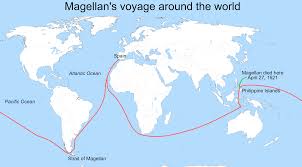
“Your mission, should you choose to accept it.” Says the self-destructing audio tape given to agent Jim Phelps at the beginning of the television show, Mission Impossible. https://www.youtube.com/watch?v=0TiqXFssKMY. It was one of my favourite shows as a kid. I loved all things relating to adventure. I loved drawing detailed maps in elementary school of early explorers: Magellan, Vasco de Gama, Shackleton, Cook. I remember being fascinated by the twin tales of Stanley and Livingston: Reporter Henry Stanley was sent on a mission by his newspaper, The New York Herald in 1871, to find the presumed missing missionary David Livingston.

In the Kama Sutra of sexual positions, ‘missionary style’ (male dominant facing female) is reported to have been promoted by white African missionaries as the acceptable way for natives to procreate. This sexual act offers the promise of creation; a mission by two people to provide an individual to further the continuation of humanity. A lofty mission that has had many motives and several potential outcomes.

Most corporations, of the business sort, have well defined mission statements. The intention of the mission mantra is to focus investor imagination and provide a set of achievable goals. I worked with school principals in the eighties when societal managers were hungry to adopt a business model of operations. We were advised to see an educated student as our product so therefore could create a mission document focussed on that outcome. I fear our children’s education will become even more like an assembly line process as we move ever closer to the merging of biology with AI technology

During my career, I met many colleagues who considered education as their mission in life. For me, however, my job was not the singularity of my life. I would never have referred to my work in schools as a calling. Some people do seem born to do what they do. Recent films about Fred Rogers suggest that his teaching about love and acceptance rose to the level of a mission. In the final scene of A Beautiful Day in the Neighbourhood, Mr. Rogers is shown at a piano while other crew members of his children’s show are packing up to go home, their job finished.

Missionaries bring a message to the world. Their prophet-like work needs support and accommodation from the rest of us. Many individuals throughout history have been heralded as innovators; their missions lauded yet doomed to fail when public opinion has swung the other way. I don’t believe that any individual with a creative vision can succeed alone. I’ve been supported when I’ve had an idea. I suspect those who support great leaders feel their role is to enable the mission: They become Sanchos to their Don Quixottes.

A timeless film, The Mission, tells the story of several characters on personal, political, military, corporate and religious quests in eighteenth century South America. Their chosen missions come into serious conflict. They discover for themselves how missions are huge burdens that come at great cost. https://www.youtube.com/watch?v=Ui91q7Y9xPk

Re: Cast

The toys I remember having the most fun with as a child were die cast. I had trucks, cars, army guys, planes. I have kept one: A wheelbarrow. Go figure. When I was eight I broke some bones in my foot. Back then the affected parts were encased in a plaster cast to immobilize the area. Suddenly I was famous! My schoolmates had heroic sympathy for me. I was cast in a whole new light. Children who I thought hadn’t even noticed me before, were happy to write funny sayings or well wishes on my cast.

In my adolescence there was nothing I liked better to do than to go fishing. With little allowance, I considered the purchase of my equipment carefully. I had a Mitchell 300 spinning reel, not a baitcast nor a spincast variety. My friend and I would spend many a lazy summer on a river or creek casting into small pools and eddies, hoping for a strike. During those blissful moments of singular concentration all other thoughts of teenaged angst were cast aside.

My parents cast my sister’s baby shoes in bronze. This was my mom’s idea as she was trying, I’m casting about for a reason here, to shed her lower class English roots. WWII had cast a long dark shadow over her adolescent experience. She refused to believe her die was cast so , while my sister was yet to be born, she persuaded my dad to immigrate to Canada. People of the Downton Abbey set will appreciate how the British Empire spread this idea of your place in society. Consider the Caste system which still exists in India. It is as if Shakespeare’s pronouncement ‘All the world’s a stage…’ was taken so seriously by government that each citizen was given a clearly defined role to play. Peace, Order and Good Government eh what?

I’ve often wondered what it would be like to go to a casting call to audition for a part in a play or film. My favourite stage or television productions are always ones with a varied cast of characters. Due to the technological advance of green screen computer enhancement, you don’t get too many movies these days advertising a ‘cast of thousands’, but for my Sunday matinee viewing pleasure as a kid, there was nothing to compare to Ben Hur or Around the World in Eighty Days. https://www.youtube.com/watch?v=vjiCO8k6Jhg

During Shakespeare’s time, ruling British monarchs waffled over rules regarding the casting of female roles. The underrated film ‘Stage Beauty’ examines this political dilemma. One of the best lines in the film is, “Who are you now?”
https://www.youtube.com/watch?v=lLlKmqH_5ak. This film alludes to the challenges of defining oneself. A current phrase used in self exploration is, “I identify as…”. Part of becoming mature is being able to be comfortable with your individual nature. Looking into that metaphorical mirror we must be able to see ourselves as the one who will play the most important role within that play of a lifetime.

Re: Speech

Two speeches marked my youth with vivid words of instruction on how to behave in the world. The first, notably remembered as the “Ask not…” speech, was delivered in 1961 by John F. Kennedy at his inauguration as the 35th President of the USA.
https://www.youtube.com/watch?v=SODxisodLA0 The second, popularly named the “I have a dream…” speech, was delivered in 1963 by Martin Luther King Jr. after his March on Washington DC event. https://www.youtube.com/watch?v=3vDWWy4CMhE

In the early sixties my parents and teachers guided me to use public speaking to overcome my natural shyness. Much to my wonderment, I won several local and regional competitions and was chosen by my grade eight graduating class to be their valedictorian. That training has emboldened me to speak up in my community as needed. I have chaired meetings, led workshops, been a guest on television programs and introduced other speakers at various events. Yet I’m still sort of shy.

The talent of being a speaker, or one who speaks in public seems archaic in some ways. Yet we still expect someone to say a few words when we are gathered; at weddings, funerals, church services, rallies, office parties, gallery openings, award ceremonies, protests and all manner of celebrations. Someone may shout, “Speech, Speech” to encourage an orator, while another drawn to a microphone may admit, “I’m speechless.” To give a speech may seem old fashioned but delivering an oral message of substance and emotion still has relevance in this age of text-messaging. Speaking for myself, I’d wonder who could not be moved by the “How dare you…” speech from Greta Thunberg, delivered to the United Nations in 2019. https://www.youtube.com/watch?v=DYqtXR8iPlE. Her message is in some ways delivered like the town crier of old bringing news, proclamations, or in this case, a dire warning.

In countries with Parliamentary governments there is the tradition of the Speaker. He or she is responsible for keeping those elected from going rogue, in a manner of speaking. All speeches must be formally directed to the Speaker who decides if they are in order. The right to speak freely is enshrined in the constitutions and laws of many countries. From the lowly plebe to the highly entitled throughout history, we all have the right to say what is on our mind. Whether you exercise that right in a circle with a ceremonial conch shell, at a Speaker’s Corner, in a coffee shop, or if you get selected as a guest on a talk show, your opinion matters.

Mr. Kennedy urged us with his words to be active in our community. Mr King invited us to dream and then to help build a more inclusive land for all citizens. Ms. Thunberg asks us to pay attention to the science so we can work together to save our planet. All speakers talk, some walk their talk. We can amplify speeches by our actions. Hopefully for the betterment of our species and all other species on this planet that we share.

Re: Separation

“Break it up!” is something you might hear a police officer or a school principal say, when they are trying to separate a pair of combatants. “Get a room!” could be shouted when two romantic individuals are getting closer than others wish to see them, in public. Violence and sex can be motivators for opinion regarding how closely joined we wish to be in society. I recently heard the term ‘joined at the hip’ when someone suggested that Canadian males are more likely to be closer to their partners than in other countries. There is a parallel disgusting phrase that involves being whipped, used in judgement against these considerate husbands. I enjoy the cartoon comic strip called Zits by Jerry Scott & Jim Borgman. Their characters RichandAmy delightfully examine this idea that two can be inseparable and not necessarily insufferable.

Examples from television and film history can inform, as to how we view the separation as a societal norm. The Dick Van Dyke Show is often dated to its era for the way the matrimonial lead actors slept in separate beds. Ahead of its time, All in the Family demonstrated issues of racial separation. Segregation is institutionalized forced separation as sanctioned at various times around the world: the southern U.S., Northern Ireland and South Africa are but three recent examples where governments have divided people based on race, colour or religion. LL Cool J has a great scene in the film Toys where he explains his military perspective on plated food. https://www.youtube.com/watch?v=GLQxAvy66NM

My middle son and his present wife had to find ways to cope with their undesired separation while they were dating. A Canadian, he met his bride-to-be in Poland, and they both underwent a long distance romance while paperwork was completed for permanent residency in Canada. I often commented on their emotional stamina. I recently had to navigate a similar mine field as I endured prolonged separation from my wife as she tended to her ailing parents in another province. My output of angst ridden poems would verify the extent of my unrest. Bill Withers captured my mood perfectly. https://www.youtube.com/watch?v=tIdIqbv7SPo

In Canada there’s been a historical divide between Quebec and TROC
(therestofcanada), yet despite numerous referenda we continue our association as a collective of diverse provinces (ten) and territories (three). I like to think it’s because we, as a nation, prefer to congregate rather than separate. That could be an election slogan or at least a cute bumper sticker. I have relatives in the U.K. who are still shaking their heads over the mess that was created by the referendum to separate from the European Union.

The current mess that is the presidency of Donald Trump came about as a result of a great political divide within the United States of America. When feelings of separation become so heated that walls are built, you know there is trouble at the core. Canadians, being so close are not immune to this hateful ideology. I’m hopeful we can see the benefits of solidarity.

Re: Fame

A nerdy game I used to enjoy playing in high school started with the question, ‘Would you rather have fame, fortune or power when you grow up?’ It wasn’t really a game, more like a continuation of the more childish Aladdin’s magic lamp suggestion, ‘If you had three wishes…’.

I loved camping with my parents (I had my own ‘Famous’ brand rucksack and cooking equipment). I enjoyed learning about the woods and the ways of the world as a boy scout. I got into scraps while in uniform and one time I remember shouting as I got pummelled, “I’m going to be famous!” The bully just laughed, but I felt buoyed by my hopeful prediction. Even when I was older I felt that youthful sense of optimism when I saw myself through the eyes of the characters in the musical Fame. https://www.youtube.com/watch?v=nqMmquNLnHg

In my youth, I thought it would be way cool to be famous. I saw only positives to being recognized wherever I went. The other two options didn’t appeal. I was actually frightened by the prospect of having more money than I thought I could handle. Likewise with power, I couldn’t see having dominance over another. I never felt my influence extended any further than the tip of my nose. But fame! Now that would give me access: Right this way sir. Of course we have room for you. Follow me I’ll show you to your table. Certainly we can make that happen.

There used to be a common saying, Big Fish in a Small Pond, that indicated you could be well known in your small community while no one in the wider world would have heard of you. Today I’m wondering if the reverse is true, due to social media. The potential for a small voice to be amplified through Twitter or Facebook can potentially enable a metaphorical small fish to make a big splash in the world’s ocean of varied opinions. I suspect that is why online platforms are so popular. I enjoy giving my opinion, whether it leads to nods or shakes of the head. The possibility is there to get more than just the 15 minutes of fame that Andy Warhol prophesied. The internet has expanded the idea of the nineteenth century speakers’ corner in Hyde Park, England for good and for ill. https://www.youtube.com/watch?v=l4yHwCaptL0

I remember one of my elementary school teachers often using the proverb, “Oh how the mighty have fallen.” I can’t quite figure out why some people enjoy seeing celebrities come down a notch or two. But I guess fame is currency so if you feel you have been de-famed, you can seek restitution from your detractors in court by suing for defamation of character. If you fail in your suit, your reputation will live on in infamy, like those who bombed Pearl Harbour.

Everything has a down side. For instance, being famous would make it hard to find privacy. Achieving balance on the FAME spectrum from anonymity to renown may be difficult. I shall ponder further.

Re: Protest

I live in a community where people come out to protest on a regular basis. I join in because I naively see it as a sign of democratic action. Based on the signs people carry to support their outrage/concern, there may be other motivations for their presence in the crowd. For example, at a recent climate change rally, I saw one overweight man sporting a T-shirt that read ‘I love CO2’ while waving another ‘I love fossil fuels’. Was he after sales or just being contrary?

Being somewhat afraid of large crowds and a functional introvert to boot, you can often find me at rallies like this leaning against a tree where I can appreciate the shade or gain some shelter from the drizzle. An activist I’m not. Rather a cheerleader/witness. My sign would probably read; ‘I see what you mean’ or ‘I’m here for you.’ Some protest signs written by a more anarchistic sort can seem like manifestos: small print on corrugated cardboard, begging to be read, to acknowledge the effort that it took to pour out such passionate thoughts. Short form declaration: ‘Pay attention! I mean it!’

Protests I’ve attended clearly allow folk to vent. Quiet self expression is as evident as a collective shout of alarm. At a recent Fridays For Future congregation I was impressed how Greta Thunberg’s leadership had encouraged a diversity of ages, backgrounds and emotions to come together in a harmonious demonstration of concern over the climate crisis. Amidst the speeches, music and cheering a small hole opened in a part of the crowd as a lone middle-aged male removed his clothes and poured a bottle of motor oil over his body, miming his anguish over pipeline leaks. He wasn’t arrested. People gave him space.

In our city protests tend to be peaceful. Marches and rallies offer up chants, poems, speeches and slogans. Some who line the streets join in if they find a friend or are moved by the cause. Sometimes it seems counterproductive to see smiles on the protesters’ faces while they’re shouting to end war. It makes me wonder about the line between protest and carnival. But in Canada it’s true we are polite and, for better or worse, we work hard at trying not to offend others, even those with whom we disagree.

Art lives and thrives in protest settings. Feelings pour out in creative ways. I always feel grateful for the civility expressed at protest gatherings I’ve been to in Canada. I’ve heard bystanders thank the calm looking police officers for just being there. My sons, in contrast, have been witness to protests that have started out civil but have turned violent, often as a result of police being instructed to clamp down on demonstrators.

There is much injustice in our current world. Perhaps there always has been, yet now it’s easier to see. It’s easier to name the wrongs. It’s easier to find something or someone specific to blame. At the same time it seems harder to find someone who will listen. https://www.youtube.com/watch?v=4r3KlDamA3U

Re: Search

Searching is what adventurers do. Some questers are fictional: Sherlock Holmes searched for clues to solve the unsolvable, Don Quixote searched for wrongs to be righted, James T. Kirk journeyed to find new worlds. Sir John Franklin was a real life adventurer. He searched for a Northwest Passage to China over the top of North America. When he and his crew disappeared a massive search was joined to unlock the mystery of their whereabouts.

One of my first memorable desires was to search the seven seas with Jacques Cousteau. I enrolled in Marine Biology at university to achieve what had become an adult goal. However, during the course of my studies I had to do an inner search. I questioned whether I had the right stuff to live life away from home and family. In this soul searching, I concluded that being a family man, married to a like minded woman was my primary goal. I quested for Mrs. Right: a woman with a heart of gold. https://www.youtube.com/watch?v=2qkjchElp0s

That seemed like an adventure that would be the ticket to my happiness. Along with my search to find the secrets to a loving family I ventured into the world of religion. I self studied various texts and practised what could be found in the community of the United Church of Canada. I joined choirs, became a soloist. One choir leader found that I often changed some of the lyrics as I sang. When she asked why, I told her that my search for God hadn’t yet made me accept some of the script. She showed me how grace can be found through understanding. A hymn that captured my spiritual belief at that time was turned into a cool folk song by Jim Croce, https://www.youtube.com/watch?v=oAjzEQgZBh0

When I started writing columns for a daily paper I enjoyed searching for the right words. I would pore through my small collection of books looking for quotes and phrasing. I had friends (research assistants?) at the local library who looked things up for me when I’d exhausted my personal resources. My eldest son is a historical writer and researcher. He digs deep to find primary source information: diaries, letters, journals, original news stories. My first wife used to love searching through microfiche to unearth dead ancestors.

Internet search engines are a game changer. For those who love knowledge, web sites can open worlds of information. Access to facts that previously had to be dug up like a pirate’s buried treasure, now spring to life at the typing of a few computer keys. I first tried Alta Vista, Excite (I liked that name) then Yahoo before I settled on everyone’s favourite: Google. How did we ever manage before we could ‘just google it’? When I want specifics I go to Youtube (music&video clips), IMDB or Rotten Tomatoes (film information) or Wikipedia (historical profiles).

Whether you travel abroad to search for answers or sit in Zen-like contemplation. One must do as Captain Jean-Luc Picard commands: https://www.youtube.com/watch?v=0ie5usEuNdI

Re: Lone

There is a difference between being alone and being lonely. I was taught early on, by circumstance and by design, to enjoy my own company so I rarely feel lonely as a result. As a young boy, I spent a lot of time going on imaginary adventures while roaming the neighbourhood creeks and woods. I’d be Robin Hood in the summer and in winter, when the plow made snow mountains in our parking lot, I would pretend to be George Mallory or Sir Edmund Hillary scaling those impossible peaks.

One of my early favourite comic books was about Lancelot. When I wasn’t head first into tales of the Knights of the Round Table, the television was a third parent. I was enamoured with the exploits of The Lone Ranger. He was my first TV hero. I loved running around the house yelling, “Hi Ho Silver! Away!” https://www.youtube.com/watch?v=hxIuIxqo2So
I usually enjoyed serious stuff over comedy. I recall being drawn to an angst ridden film starring Tom Courtenay called ‘Loneliness of the Long Distance Runner’. https://www.youtube.com/watch?v=XXMS5ZXKvYA .
‘Then Came Bronson’, a short lived series based on a man traveling around on a motorcycle all by himself, also captured my attention. https://www.youtube.com/watch?v=bYsztoaU9Ls
Later I enjoyed novels and short stories that contained characters who defined the theme: one person facing challenges alone or, at the very least, on their own terms.

Having such a childhood pattern of being on my own naturally led to me being perceived as a loner in high school. I had a group of friends during those years but I was never a part of that IN crowd that many aspire to during adolescence. I hear my mom’s voice when I reflect on those days. “Don’t be a sheep.” she would say. My classmates never treated me with suspicion for my lone wolf status. One year I was valedictorian for my cohort and I often won public speaking contests, so I wouldn’t call myself shy.

Solitary figures in history cast their spell on me as I grew older. The imposter story of Archie Delaney, or Grey Owl as he wanted to be known, fascinated me as I was reaching into adolescence. The exploits of solo sailors Robin Knox-Johnson and Robin Lee Graham enthralled me. I wanted to have an occupation like Jane Goodall where I could be left alone in the jungle interpreting my own wonderings about the world around me.

Texas calls itself the Lone Star State, perhaps because collectively the settlers there wished to distinguish themselves from Mexico or even the rest of the United States. Likewise, I was never frightened by my inherent separateness. I have used my independence to define myself, while still valuing those I let close to me. After reading the book Quiet by Susan Cain it became clear to me that introverts have a role to play. ‘One’ doesn’t have to be the loneliest number after all. https://www.youtube.com/watch?v=d5ab8BOu4LE