Re: Sacrifice

On Remembrance Day, every year, we hear about the ultimate sacrifice. It’s one of the mythologies we practice religiously in hopes of feeling comfort within our cultural choices. Every holiday in my history has had collections of clichés over which I’ve puzzled while searching for meaning. I’ve wondered if my quest for understanding could be considered a sacrifice; as in a waste of time.

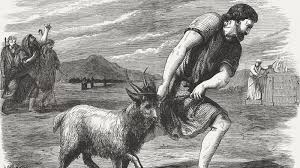
Giving of one’s self can be seen as a sacrifice if a life is lost. Many societies have rationalized the offering of the vestal virgin, the first born son, the sacrificial lamb, or the oath of allegiance to signify a desire to please the gods or confirm the relevance of the greater good. Jesus (or any other innocent soul for that matter) didn’t die for my sins, but because of them. I think it is pathetic that Abraham (if he ever existed) would ever be asked to kill his son as a gift to a god. Some of these old notions were based on ignorance regarding the movement of the planets, the changing of the seasons, who represented the accepted deity, or who was in charge at the time. In our modern world, I can’t accept unconditionally that one must die before their time so that another may live.

To give our lives in war is a death sacrifice. Honour, tradition, and cultural correctness play a part here. We reward, in memory and ceremony, those who have given so others may carry on. I’ve just rewatched the classic 1939 anti-war film The Four Feathers. The main character chooses not to go to war and his former friends and lovers give him a white feather (a symbol of cowardliness) as a rebuke for his choice. He goes on to prove what courage and sacrifice really look like.

In an economical sense, citizens are often asked to make sacrifices when times are lean. I think this can be called a living sacrifice. Parents providing for their children first, seems natural. Looking after our elders need not be legislated. In just societies I would hope that government provides support for those who choose to put others’ needs first, before their own. In my perfect world the innocents would be protected rather than be the first to feel the sting of want. Alas the wealthy and powerful are often the last to sacrifice even a tiny portion of their abundance. Indeed, it is those in power who persuade us to sign-up for the good of all. Their propaganda hides them from their own accountability.

On Christmas Day, every year, we are invited to hope for goodwill towards others. Most folk are examples to me of living-in-sacrifice: they give parts of themselves generously in work, play, and care. I learn by these examples of altruism. I am moved when this comes naturally, as part of being human. The reward for such behaviour doesn’t come in heaven (as some might preach). I believe it’s up to all of us to see service from others as a personal sacrifice, freely given, and needing acknowledgment right this very minute.

Re: Imagination

Imagine for a moment you are enthralled by a young mind telling you a story from their imagination. In this context facts are unimportant, only the drama and wonder of thinking how this idea could possibly have begun in the first place.

There I was one afternoon relating the story of the big bad wolf and the three little pigs to my three year old imaginative friend. He was rapt as I told him that some versions of this fairytale had the wolf EAT the pigs (my listener has a vegetarian mother). He stopped me several times to repeat sections. A couple of times I had to assure him that every character was doing what came naturally. At the end of my tale I asked what he thought of eating meat from pigs (we had had sausage for lunch) or chicken (he concluded that birds don’t count). He said he didn’t care about fish.

Any teacher will tell you it’s a perk of the job to listen to examples of imaginary thought from their students. I remember my mom always saying the phrase “out of the mouths of babes” whenever she concluded a story about my sister or me to her friends. Back then there was a television program Kid’s Say The Darndest Things hosted by Art Linkletter. Later the program was rebooted with Bill Cosby posing as the questioner of the kids. Imagine!

My young friend ruminated on my fairytale for a moment (bathroom break). The house continued to buzz with kitchen clean-up and quiet adult conversation when he came back and sat beside me on the couch. I thought he was going to ask for another fairy tale but no, he began to tell me something that sounded like a recipe for baked horse. Allow me to provide a condensed version of his culinary how-to: You have to put on gloves and get all the poop out. Next (he instructed) you cut off the tail and chop the horse into pieces that will fit into the oven. Keep everything clean (he emphasized). When it’s all very hot then you spread on some mayonnaise (at this point he smacked his lips!)

After the first narration my young friend was clearly impressed by the attention he was getting (by now his parents had joined in, listening with a measure of shock & awe). The show must go on! He raised his arms and asked if I would remember his horsey story (I assured him that I would never forget it). He then stepped onto the floor and performed an interpretive dance version of The Baked Horse Recipe. His hands got rid of all the poop, the snipped tail miraculously flew into the air on sprouted wings, the horse bits were pushed into the oven, and the spreading of the mayonnaise was the piece de resistance! He could have bowed because we all wanted to give him a standing ovation. I suggested to his parents that he must be enrolled in acting classes immediately, or at least chef school.

Re: Choose

My niece as a young girl loved to have a choose meal: a buffet of food items laid out by her mother for grazing. That little girl could not be still in her chair when other members of the family gathered to dine. That come and go arrangement used to irk her grandad, whom she called Popop (coincidentally a name that unintentionally yet neatly labelled her behaviour of popping up and down).

For a while there was a popular series of children’s books styled as Choose Your Own Adventure. The construction of the pages allowed the reader to decide, at the bottom of the page or end of a chapter, which page to turn to, for the narrative to continue. Sometimes your choice would lead to a quick ending, or a multiple series of back and forth page flips before the action was resolved. Reminiscent of game shows on television that ask if you might choose between door number one etc.

I watched a riveting two person play recently, called Armstrong’s War. A young wheelchair-riding girl guide chooses to read to a youngish army veteran to gain her Service merit badge. In the narrative we learn that circumstances beyond both characters’ control required choices of life-changing proportions. Playwright Colleen Murphy’s script examines how complicated it can be to select a course of action. It’s an anti-war tale without cliché and a strong message about how our society could make better choices. With the current rise globally of authoritarian governments, I watched this play unfold amid a background thought of the meaning of democracy. I wondered how much choice we really have in this context.

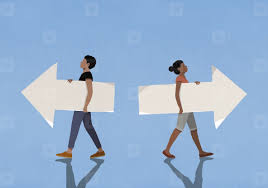
We think we are choosing all the time; what to eat, who to partner with, how to fill our days, what to watch on TV, or when to walk in the park. Choosing feels like an active pursuit, we know in our minds that we always have a choice but choosing means we have to go from the abstract to the real. Sometimes choice feels like a burden, an obligation even. Other times we get riled if our choices are restricted because we equate choosing with freedom. We can choose from a menu board that’s presented (as in a slate of candidates) or the menu board that we have built in our minds to cope with everyday decision making (when to do the laundry). I confess that as my age increases I try to purposefully reduce the options in my brain so that the stress of choice is minimized. However, when outside pressures reduce my personal authority I can rise up tall in human right’s fashion. Currently I join the MAiD debate, proclaiming my right to choose a dignified death.

My niece has grown into a responsible adult, despite her Poppop’s concerns over her eating habits. She’s making great decisions on how to raise her almost three year old. He gets to choose but he minds his mom enough to consider a healthy path. I watch from the comfort of my elder chair and continue to learn.

Re: Revelation

“Caw!” Quoth the raven Evermore. He was joined in harmony by his siblings Always, Persistently, and Perpetually. These four trickster birds congregate around our townhouse, pecking at the seams of the concrete parking area, searching for grubs in the exposed cracks. Their presence is measured, methodical, and eerily portentous. My fearless 96 year old special mom does not see the poet Poe in the bird’s beady black eyes. She arrived back from her walk yesterday as I was opening the front door. Around her ankles, like excited little children, were five crows trick-or-treating for more peanuts. “Caw! Who’s the smart one eh?”

Seers, prophets, and soothsayers have always held a fascination for me. Especially in times of high anxiety I will be on the lookout for signs of someone knowing. Knowledge brings me comfort and if news can come in the guise of a forecast then all the better to ease my tension. Even getting a hint of warning will give me some direction since I like to plan for the worst, while maintaining a hope for the best.

These days it’s hard to avoid news of the rise of fascism. In many parts of the world politicians are no longer hiding their true colours. Trumpism is the latest version of autocratic rule. POTUS 45 may have been the clown we liked to mock but POTUS 47 is on the attack, denying every valid criticism, and claiming victory where no praise is warranted. The Donald’s craziness is no longer funny (even the comedians at SNL are appearing to be having a hard time satirizing his global-threatening behaviour). Bernie Sanders and Alexandria Octavio-Cortez are teaming up at many NO-KINGS rallies in an effort to reveal the danger faced in the USA, and throughout the world. I was buoyed at the support provided to Zohran Mamdani in the race for the mayoralty of New York City. Here is a politician with a vision for a metropolis that puts working people first, not wealthy speculators.

Revelation can be a light bulb, eureka-shouting moment. Or it can be a quiet dawning. However the truth gets to us we have to do our part by keeping the blinds open. In order for something to be revealed to us we must be alert to the messaging. I’m reading from many sources as I try to wrap my head around what’s going on. Some just trust FoxNews, Rachel Maddow, or John Oliver. I also seek valued counsel in the many Canadian journalists named Mark (as in ‘mark -my-words’). Investigative reporters like Heather Cox Richardson, Chris Hedges, and Abilio James Acosta have earned my respect for their remarkable precognition. Knowing things are bad can be depressing. Of course I will try to put a shine on the news, as is my nature to balance the good with the bad. I will listen to musical prophets like Alanis Morrisette, who artistically place ideas in their lyrics that give me guidance. I’ll keep one hand in my pocket while the other is giving the peace sign. Then everything will be fine, fine, fine.

Re: Secret

Hooray for me! I kept a secret while being a painfully honest person. That’s hard to do because with secrets come lies. To preserve the secret, a fib can feel inevitable. And I told several white lies. That’s how it went for me anyway, when I tried to surprise my bride of almost twenty years.

The story of this secret starts with me being pulled into a gallery by my wife to see, “The most amazing painting for our wall!” It was colourful and big, the original painting that is, but the lie became that size too. I went back to the gallery privately a total of six times to arrange the acquisition of my lover’s desire. Gallery staff became quickly amused by my instructions to keep everything Top Secret (at first it seemed like fun but I realized later that I was putting a lot on their shoulders). One employee actually offered to make up a story if ever she encountered my wife on a subsequent visit. Spies are needed in the secrecy business I guess. I insisted that all receipts and communication came to me through a selected email. Even with these well-laid plans I tried not to wince whenever it looked like I may have been discovered by the birthday girl. Long story short; the secret survived until the reveal of the gift. I was a hero but somewhat dazed and confused.

I read once that a secret was like carrying a fresh egg in the palm of your hand for days. My birthday secret was joyous but after months of deception I wondered about secrets that may cause injury. Secrets aren’t always a happy thing. For example we may see someone, a friend of a friend perhaps, in a compromising position. We may wonder if we should tell others involved about the secret being displayed. We may wonder if it’s our business to do so. There was a Jumbotron video capture at a Coldplay concert recently that led to someone being fired. What happened in Boston, didn’t stay in Boston.

Gossip is like a confidence that a friend has shared with us in the way that we must decide to be part of the secret or not. I wouldn’t trust a friend who told me never to share what he/she/they just told me. I don’t want that responsibility. I don’t want to be a confidante. If the secret is that precious I don’t know if I could be trustworthy enough to carry that fragile thing around with me. Being Cis, I can only imagine the turmoil that is a daily part of life for someone with gender dysphoria. What does one do with feeling constantly apart while trying to understand oneself? Society and its rules are responsible for making confidentiality ok sometimes, or a matter for public consumption depending on circumstance.

When my mom had to keep a secret she would confide that she wasn’t sure if her deodorant would hold up. I’m wondering now if that’s why antiperspirants were originally marketed to women. Sexist! My brand is Mennen. Don’t tell anyone.

Re: Poetry

I believe that Art (the essential practise, not the person) saves the world. From what, you might ask. Well, some may deny it, but the world would be a darker place without Art in its many forms. And I’m not talking about the art only accessed through galleries, theatres, or museums. I’m referring to the art that comes from within us; that creative process that can drive our imaginations. Art is found in nature, is replicated by human, and is a particle of the soul. By definition, Art was present at the moment of creation, and will remain to be witnessed long after humans have become extinct.

Poetry is an art form; an item on a page to be read, an expressive line to be spoken, an incantation to soothe, or a melody to be sung. Poetry is a practise, a methodology, and a natural response to our environment. A poem is often the first piece of writing read aloud to young children. When a mother sings a lullaby to her child, she is evoking a rhythmic talisman of love that was born centuries before and will light up lives for centuries to come. Blessed are the children who are encouraged to find the Art within.

Having said all this grand stuff I don’t wish to be imagined as this poetry-reading exclusionist. I don’t believe that a poem a day will keep the boogey-man away. However, I have been calmed by coming across a poem in a magazine, written on a subway wall, or copied onto a social media posting. I have written, mailed, or sung poetry for my lovers, relatives, friends, and once for an enemy. The latter poem –– scribbled in a rage of hateful words on a scrap of paper, spat on, torn into tiny pieces, buried in a muddy stream bank and stomped on –– was never delivered. Poems can relief stress. Poems can heal. Practising poetry can be a form of meditation. Poetry helps us to become our best selves.

I could list poets who have inspired me to recognize that I contain multitudes. Poets, who suggest that we have value because we are unique, need to be heard. Shel Silverstein comes to mind: My skin is sort of brownish/Pinkish yellowish white/My eyes are greyish blueish green/But I’m told they look orange in the night/My hair is reddish blondish brown/But it’s silver when it’s wet/And all the colours I am inside/Have not been invented yet.

During my teaching career, I scheduled poetry time as part of each day. Regardless of the age of my students, joy was found during these periods of word fun. No poem was judged better or worse. Nothin had to rhyme. We all laughed or sighed at the combinations of noun, verb, adjective, adverb, or nonsensical words. Playing with words using pen on paper can be like scribbling on a sketch pad. The outcome is not as important as the process. All you need is your imagination, a few moments, and the encouragement to begin.

Re: Garden

There was a side garden at the home I named Spindrift in Timmins, Ontario. It started out as a strip of lawn I hated to mow, running down the east side of the building. When we first moved there, my wife Claudia suggested it might make a pretty garden path. Over the ensuing years I built a fence & a gate to define its borders. I tore up the sod, then added fresh loam and mulch to the topsoil. My sons helped collect some slate-like stepping stones from an old mine-site nearby. Their mother found bleeding heart, forget-me-not, clover and creeping thyme to plant along the pathway. My father found this secret garden enchanting and sketched it before he died while holidaying in Portugal. His sketch was framed and hung in the front room of Spindrift, where palliative care was provided for my ailing wife. My teacher colleagues volunteered to weed & tend this special garden as Claudia’s death neared. I wonder now, having moved so far away, if this sanctuary garden still provides the delights of spring blossoms.

Currently my special mom is receiving eldercare from her only child and me in a small townhouse in Victoria. My wife Susan likes to call this narrow, three story home Treehouse Towers. A large Douglas Fir, at the west side of our house drops needles onto our small north-facing backyard garden. Black-hooded warblers love to peck and toss these needles looking for tiny forage. Inside the sliding doors leading out on this scene my 96 year old mother-in-law may eat lunch while listening to her audio books. John Steinbeck is one of her favourite authors. When she finished East of Eden she concluded that the story alluded to that first biblical garden, “Only now,” she said, “Eden is surrounded by dark clouds from an easterly wind.” 

I believe life is a garden of earthly delights even though I have never been much of a gardener, of things floral or vegetable. As a former teacher I like to think I helped nourish children in the manner of the original idea behind the Kinder-Garten. My birth mother told stories of how she and her teen girlfriends would create Victory Gardens, which were being promoted as a way of providing much needed food during WWII in England. Amidst the bombing raids she said that working on the land with shovel and hoe provided a sense of hope. Not having a green thumb doesn’t stop me from planting seeds of other sorts to keep my feelings optimistic.

The original story, The Secret Garden by Frances Hodgson Burnett has been visioned in many art forms. In all versions, The Garden is depicted as a transformative place where fears can be overcome and confidence restored. The needs of the plants become metaphor for human basic needs: warmth, sustenance, order, health, and community. There is loss along with new growth found in any garden. Life is discovered here, even amongst tangled weeds. A garden may have a wall, or fence, yet a gate can be found through which joyous secrets can be explored.

Re: Refuge

My uncle is aghast that in his country, refugees who travel across the English Channel are “put up in hotels”. I’ve long since given up on his rants about the injustices of the immigration system. The reality of finding a place of refuge for millions throughout the world is a reminder of global inequity. Privileged folks, like my relative in the UK, just don’t see past their own need to protect their borders with walls or fences.

Poets like Robert Frost would disagree. From Mending Walls: “Before I built a wall I’d ask to know/What I was walling in or walling out/ And to whom I was like to give offense.” Perhaps artists are the first to lend sympathy to those forced from their home environments by war, persecution, climate change, or lack of employment opportunities. No one who wasn’t suffering hardship of any sort would make a choice to go to a foreign land. When I read of refugee camps, I consider my mustard seed of related experience and feel great empathy for these wandering nomads.

“Are there no workhouses…” is a line spoken by the miserly fictional character Ebenezer Scrooge, as he brushes off a plea for Christmas charity. Those humans who seek refuge from the pains of the world are of no concern to this wealthy man. The billionaires continue to profit from playing with their money while the 99% struggle on with the results of bottom-line focussed corporations and ostrich politicians. Mother Nature has no voice yet the signs of her woe are everywhere.

We had a storm in our spot by the sea yesterday. Trees swayed in the gusts and heavy autumn rain fell. I revelled today as I looked up to see flocks of birds appear out of some mysterious hidden location further up our street. I walked gingerly, stepping over branches and mounds of leaves, and wondered where they had found a place of refuge. Reading the newspaper later I discovered ferries had been cancelled, power lines downed, and op/eds were shrieking over the lack of attention being paid to climate change.

Where is refuge to be found from the onslaught of depressing news. From my perspective as a media consumer, I often feel myself to be a refugee trying to stay balanced in this modern era of deliberately manufactured discord. I feel history will look back on the 2020s as an equivalent to the horrors of the two previous world wars. The idea of a current definition of WWIII would include; cyber insecurity, polarization of states, economic irregularity, resource misuse, widespread inequity, global human migration, climate instability, religious intolerance, military expansion, and pandemic unpreparedness. The list reads like the side-effects, in fine print, found on the package for the latest cure-all medication.

Some sort of prescription is certainly needed if humanity is to make it out of this century alive. Veterans of past wars sought shelter where they could and helped their neighbour when they could. Time for us to do the same.

Re: Door

I had a dream about an elevator last night. It was one of those freight elevators with a large sliding outer door, plus an expandable screen door. When I approached, the two doors were open and the elevator space was jammed with people as in a sardine can. There was no room for me, and there was no desire on the faces of the folks crammed together to make room either. I pondered that dream all day as I ventured through one type of portal after another.

In our city we have an old-fashioned elevator like the one in my dream. It was part of a marine museum that has closed down. A door on a travelling closet, what an idea! I think of Dr. Who’s Tardis or C.S.Lewis’s children’s series, The Lion, The Witch, and the Wardrobe. In stage plays, the indoor scenes have doors leading our imaginations elsewhere: Walk through and the performers might find themselves out-of-doors. The original Wizard of Oz movie, had a scene that once made viewers gasp in delight as they were transported from black&white cinematography to full technicolour. Actress Gwenyth Paltrow, in the film Sliding Doors, plays a character who is confronted with the consequences of choosing (or not) to step into a subway car. Actors Robbie & Farrell go on A Big Bold Beautiful Journey through doors to their past, while taking us along for the ride.

They say the eyes are the doorway to a person’s soul. Cliché-wise that may be an open-and-shut case but I wonder if that makes the eyelids into doors of skin. Ewww! Scarier still, our eyes, held wide open, can suggest a vacancy as in, “You’re dead to me!” My favourite door is a castle’s portcullis, more like a vertical closing gate, but one which keeps out marauders while still giving a view of the countryside. Doorways are metaphorically about choices: We can hold a door for someone who follows, put our foot out to stop it from closing, or place a welcome mat at the doorstep as an invitation to all who have travelled thus far. It’s doubtful that anyone still carries their bride/groom/partner over the threshold of their abode after getting hitched. Although some still might mark their front door with symbols of protection or guidance. A boss may say his/her/their door is “always open.” But that begs the question of why there is even a door there in the first place.

I’ve always thought it would be cool to be an elevator doorman. I can imagine myself assisting folks as they navigate the vertical highway, “What floor please?”. Most folks want the elevator experience to be over as quickly as possible. They’ll engage with their cell phones or stare intently at the floor indicator over the door. When I was a condo superintendent I enjoyed the reaction I got when I asked fellow Otis riding travellers a few questions or made astute observations while on the way to the lobby. That’s me, always trying to open the door to conversation.

Re: Suspect

A new Superman movie came to theatres recently. I went to see it with my bride because I’m fond of the fictional character and wondered how a current director might envision his place in this threatened world we live in today. The usual suspects were present, bringing me comfort, humour, and a symbolical resolve. I concluded that all might be well with the world. I had a suspicion that the new director was trying to show modern relevance. It was a weak attempt, but my hope remains.

My mom could always catch me in a lie saying “You look suspicious.” Modern research involving children under the age of one suggests that suspicion is innate and responsible for keeping us safe as a species. Apparently we are wired to pick out The Other from a line-up of random strangers. This discovery is comforting and frightening at the same time. It’s a nature/nurture debate. I always thought we were wary of strangers by being taught through scary fairy tales. I always believed that other cultures became fearful of other cultures because of their biased programming. As a result when I became a parent and a teacher I was always careful that I wasn’t sharing my own prejudices with my youngsters. And yet; there’s DNA!

Films about aliens implant the idea that we must look for the difference that identifies the stranger among us. Sometimes this is obviously comical. I’ve been watching the television series Resident Alien and this question of human difference is in every episode. Quite often the obvious human characters are more freakish in their behaviour than the actual guy from outer space. Early on in season one, we laugh as the police are trying to find a culprit for a murder, and their search leads them down one wrong path after another. The finger pointing is endless.

In the real world news we are exposed to political suspects in an endless parade of good-cop/bad-cop antics as leaders try to expose or twist the truth to their advantage. The classic strategy is to use fear to divide us into sides, then once we are yelling at each other reason goes out the window. I’ve never enjoyed mystery or crime novels for the simple reason I don’t want to spend my leisure time (let alone any time) trying to figure out who-done-it. Trumpism (fascism with a new name) quickly recognized that Power must find Suspects in order to buy into people’s desire to see that government has control over the situation.

I had a period in my life where I devoured the tales of Sherlock Holmes as told by Sir Author Conan Doyle. Holmes was a detective who took an exacting, measured approach to his detective work. He was sceptical of the usual suspects. His methodical work was based on physical evidence and he refused to jump to conclusions (that was Dr. Watson’s department). In a similar way I respected the real life director Alfred Hitchcock whose suspense films involved carefully crafted clues to amuse the armchair detective.

In real life, I’ve suspected that being suspicious about my suspicions is often a circular trap that inhibits me from finding the actual truth.