Re: Inflammation

It’s entirely possible that a person can have inflammation of the psyche. I know because I have been feeling it lately. My symptoms include: Redness of the face when ever I see a picture of The Donald, Swelling of the chest as I pace about the rooms of my vindictive mind imagining what might be an appropriate punishment for these perpetrators of injustice, Pain in my brain as I try to rationalize how the state of the world came to be so scary for my grandchildren. I fear that I have lost control of my moral compass. Most alarmingly, my soul is feeling the heat of all these conflicted emotions.

The political world has been set on fire by our faux leaders, billionaires, and capitalist conglomerates. Meanwhile many parts of the natural world are aflame with the results of human induced climate change. The Anthropocene was a recent term used to define humankind’s dominance over our planetary systems. I suggest that our planet’s destruction at the hands of Homo sapiens is rapidly resulting in a new geological period. Let’s call it The Inflammatory Age. It’s clear to me that everything on this globe called Earth is suffering from a sickness quite like the illnesses that spring up in our body systems. Earth has been keeping the score of multiple abuses to its structure. Constant extraction of its minerals, pollution of its water, air, and lands have taken a toll on its health. Warring nations have been inflaming the hearts and minds of youth to the point they are absorbing the negative energy and losing all sense of peaceful solutions. When does acute illness, become chronic; leading to death or extinction?

My health care advisors tell me the inflammation in our physical body is responsible for many of our ailments.  With every infection, inflammation of the nearby cells is initially involved as a protective measure. It could make things worse however, complicating the healing process. The original injury is therefore harder to manage. Sometimes through my life I have felt feverish for no apparent reason. My joints get swollen and uncomfortable. Pain relievers can help me through these spells of an aching body. This fever can be brought on by stress which can be a contributing factor to my discomfort. If our body is electric, and of a chemical nature, then it’s no wonder we short-circuit every once in a while during the natural course of living.

A bull cannot be inflamed by the sight of red. He is tortured into a rage by the constant twisting of the matador’s cape. So too am I enraged by the antics of people intent on bullying for the sport of it all. The answer is not by fighting fire with fire. Not in my peace-loving book anyway!

Once upon a time during Covid-19 our provincial health officer, Dr, Bonnie Henry called on our population to be kind, be calm, and be safe. She sensed that fear inflames during times of crisis. I agree with that wisdom: Inflammatory comments don’t help, only hinder, our return to healthy living.

Re: Doctor

“Is there a doctor in the house!” Now that’s a phrase I’ve heard might be called out in a medical emergency by someone in a theatre. I’ve never witnessed that happening in the many plays I’ve attended. I’ve never been involved in a doctor intervention while being a passenger of an airplane either. This is another high drama location, that probably requires a mid-flight turn to get a patient to a hospital. Doctors to the rescue!

Canada is thought by many to be the home of ‘free’ health care. It is comforting to know that in a crisis situation citizens have access to hospital care without the added stress on their personal bank account. However for those of us without a Family Doctor our view of the tax funded, government sponsored/administered health system is not as seamless as it would appear to outsiders. Doctors retire. They move. Medical Centres close. Patients who have seen their doctor as just a phone call away may suddenly find themselves building confidence with a new physician at best, or stuck playing musical chairs in a clinic at worst.

Recently all these things have happened to me. To complicate things I had to spend an extended period of time away from my home province. To complicate things even further I had a heart incident that required intervention and follow-up treatment. Since health care is a provincial responsibility my health card was questioned. I had prescription drug needs that kept everything ticking (literally). Without my records I had to relate familiar stories about my medical history way too many times. When I returned home I joined thousands of others without a GP or Primary Care Physician and therefore have had slower than normal access to the specialists I need for my condition.

“What’s up Doc?” is a question that comes to mind in my lighter moments of feeling. I don’t want to skip the line for appropriate care. Sometimes I just want to know where I am in the line. I’ve questioned the notion of the word Care. I don’t like to point fingers in blame. Every doctor who has ever looked after me has done just that. In an emergency and over time, when I’ve come in need the questions have been answered in full. I would wish the same for everyone. Trouble is, there aren’t enough doctors for everyone in Canada right now.

I counted eight professionals around my bed when I was admitted to the emergency ward for my rapid heart arrhythmia. That’s a healthy amount of care for sure. Doctors are all about saving a life. It’s in their Hippocratic Oath. I count doctors, nurses and teachers as being the most important professionals in an advanced society. I fully recognize as an educated adult that I am primarily responsible for my health. I’m also smart enough to know that I can’t meet all of my own health needs. A solid health care system must make ease of access a key component for all in Canada and around the world.

Re: Life

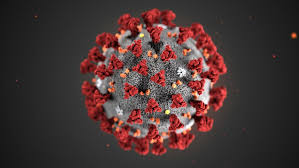
The virus COVID-19, like others of its kind, is not a living thing. It can’t respire. It can’t metabolize nor can it make other viruses. One of several key elements to life is being able to replicate. Since a virus has limited genetic material it requires a host to reproduce. Humans can be that host. Our cells take what is lifeless, replicating new specimens that can be transmitted to other living things through our mucus: A case of deadly biological complicity. Yuck!

In these days of pandemic we are searching for a lifeline. It’s frustrating to think that the best an average citizen can do is to stay home, thereby avoiding the infection and the consequences of spreading the contagion. Our lifestyles have drastically changed, even as we count ourselves lucky if we haven’t contracted the virus. Worldwide, medical professionals labour to bring life giving care to those who are stricken. We see the lifeless bodies of those mortals who have succumbed to the infection being taken from the chaos of underfunded, understaffed and underprepared hospital emergency spaces in increasing numbers and we wonder if there will be life after this Coronavirus. We wonder if life can ever be liveable again.

My parents used to subscribe to Life magazine. Pictorially and textually I learned much from leafing through those pages. As a teen I started collecting Time/Life books; thin well bound volumes on a multitude of subjects in history, science and nature. I used the books for research and for wonder. Like all who are youthful I believed that there were keys to bringing justice and harmony to the world. Just as the periodic table of chemical elements has order, I figured once humankind came up with a plan that worked for all then we would experience heaven on earth. I have always felt lucky that I haven’t had to personally experience the effects of war. In my lifetime I haven’t had to adapt to massive change; until now.

We say that we make or earn a living when we refer to going to work. It’s a financial context that doesn’t include other aspects of life. I prefer the rarely used word, Livelihood, to describe all of the things we do as we build our unique existence. In the presence of the economic shutdown that is one result of the pandemic, survival is paramount. After the crisis I hope our society takes a hard look at what matters most in life. We must eat. We must be housed. Our planet must be clean. We must have equity. We must know joy. We must feel peace and purpose. We’ve been taught that life is what you make it. It’s up to us to create a life worth living. https://www.youtube.com/watch?v=WBNChSa-rkA

Confronting death can make you hyper aware of life. Those who climb mountains often site that as a reason for the risks they take on the edge of things. Perhaps now, humans throughout the world will unite in a common definition of what constitutes a life well lived.

Re: Herd

A pandemic is declared. The behaviour of humans is now a matter of life and death. The human herd is working hard to protect itself from the Coronovirus. Details change daily, sometimes hourly, in terms of government directives and casualty figures. “Have you heard the latest?” is the question posed by neighbours, family and friends even as they practise social distancing and spacial awareness lest the virus reach out its infectious properties. Since we are affected as a group in these situations, we necessarily respond as a group. We can help or hinder each other’s health by how we look after ourselves and our herd.

I have found it curious to be a witness as countries and their governments decide how best to take on the issues presented by this pandemic. At the outset of risk to their country, the United Kingdom chose to pursue a controversial policy endorsing the concept of Herd Immunity.
https://www.aljazeera.com/news/2020/03/herd-immunity-slow-coronavirus-pandemic-200320092928984.html. They soon reversed their position when infected numbers grew alarmingly. There is some logic to letting things work themselves out, but as a society where do we draw the line on numbers of dead people? Stranger still is how we tolerate lifestyle illness, suicide and traffic deaths more readily than succumbing en masse to viral infection.

Herding humans is an art form at Disney resorts around the world. Here, park goers are herded efficiently through endless lineups to get to their tickets, get them to their ride or help them get fed. I’ve always been anxious in a herd, part of it has to do with being an introvert. Amusement parks, arenas and packed airports are places that make me hyper alert. As an individualist, I’m not myself when others surrounding me have the potential to exhibit random behaviour, so my tendency is to resist the pull of the mob. Herd behaviour was seen recently as shoppers struggled to stock up on social isolation supplies. Survival is the imperative to the point of scoring the last rolls of toilet paper, canned SPAM or, more menacing still, ammunition. Herd mentality clicks in during crisis.

Once, as a young father I had to quickly gather my young sons at their grandparent’s trailer park location. There was a commotion over a car, seen racing through the park grounds. The driver was cornered near us by bat and crowbar carrying residents who smashed his windshield. Further violence seemed imminent. Fortunately the police arrived in the nick of time and took the cowering driver into custody as park citizens continued to taunt and shout their anger. My children saw a herd of humans at its worst.

There are other formal names given to animals that gather. I’d like another word than Herd to describe humans. We could Band like gorillas, Parade like elephants or even Convocate like eagles. Being Shrewd like apes might be helpful to emulate. In Canada we humans gather to make decisions like owls in a Parliament. My favourite collective noun is a Zeal of zebras.
I could join that fun sounding herd.

Re: System

I find comfort in rules. Rules are part of systems. Systems attempt to address randomness. Right now the systems that have been a large part of my life are breaking down. I welcome the possibility that with this breakdown will come new systems that better serve those who have so often been marginalized in society.

Natural systems are based on science and the physical order of things. For example our bodies have a circulatory system that makes sure our cells are fed and waste products are removed. Photosynthesis is a system in nature whereby plants use carbon dioxide to produce oxygen. Our planet is part of a Solar System that exists as a result of a systematic progression from events beginning with the theorized Big Bang. We are in a climate emergency right now. Humans have interfered to such an extent with natural systems, that problems around the world have become systemic. Radical change in our cultural and governmental systems is required for our planet’s very survival

Human constructed systems are created to keep things moving. They are often based on what is considered the norm. Human behaviour is often considered when constructing systems: Picture a Bell Curve. The majority of the population will be in the middle hump of 80%. Some of the best systems are the ones that have a plan for the fringe elements of the ten percent on either side of the hump. Rules must be kept flexible if the outliers are to survive. This group of people suffer the most when human systems break down. There’s irony here since economically the richest one percent is technically in a fringe zone. The obscenely wealthy hardly need protection from the slanted economic system from which they profit. These folks own and control so much that I would argue that some sort of equalization rules need to be established. Let’s call these rules, fair taxation.

My local hospital recently initiated a system to deal with people entering their emergency wing. They called it a Rapid Assessment and Discharge Unit. This particular system, as in many others, relies on professionals being efficient. My recent experience proved the opposite of the Unit’s intent as the rules were so strict that my assessment depended on a cavalier doctor. My recovery ended up taking longer as a direct result of this medical system failing me.

I once volunteered with my wife as a coat check for a local charity event. We arrived early to the function only to find no system in place to accurately account for the coats. Quickly we made up duplicate tickets from a wheel of paper stubs, organized the coat racks to visually track times of entry, found more hangers and created a secure perimeter. We were ready! We had systematically created and ticked off all the required boxes to success.

We are all responsible to some degree for system failure so we must all find a role to play in resolving issues before they become systemic. That can mean speaking up, acting out or voting in. It’s our world too and we have a part in protecting it and defining it for ourselves and for future generations.

Re: Surgery

My first experiences with surgery came before I was seven years old. Back in my early years it was routine to have your tonsils out before you got too long in the tooth. The idea, as I remember being told, was to reduce the risk of illness in the throat. As a bonus the surgeon would often yank out the adenoids. Now, more than sixty years later, whenever I think of hospitals I recall the smell of ether.

On the best advice of the day, my parents chose to have me go under the knife for the tonsillectomy. Just a year later, near my birthday, I was exploring a barn and a large iron bar fell across the toes of my left foot, smashing several bones. I had a bit of emergency surgery done and a cast was placed on my leg up to my knee. It became this young adventurer’s point of pride the following week at his birthday party. Every guest signed their name to my plaster of Paris leg as a tribute to my survival.

Surgical procedures have no doubt changed in my lifetime. Rich folk are choosing costly cosmetic surgery in the hopes of drinking at the well of eternal youth. New advances in prosthetics and bionics are also enabling greater mobility after corrective surgeries. Whether the surgery is elective or needed as a result of illness or accident, recovery times have been reduced since my tonsil days when ice cream was prescribed after the first night in a hospital ward. For example, it amazes me how quickly women are sent home after delivery of their baby, even if complications would suggest caution. I recently had prostate surgery which went according to plan, but then I was discharged too early only to find myself back in emergency and recovering from that ordeal. Perhaps our medical system is becoming too intent on freeing up beds as a cost saving policy, even when further monitoring is warranted. Aftercare is surely as important as the original dramatic diagnosis of the need for surgery.

Reading about the gold rush days of North American I am amused to discover that surgery and dentistry were often practised by the same person as indicated by their shingle hanging near a saloon on the boardwalk of a pioneer town. In those days a surgeon might have been called a sawbones in direct relation to the nature of their work. The early rudimentary nature of this medical profession is visually apparent in this opening scene of Dances With Wolves.

Which leads me to segue to military surgical strikes: Where the intent is to precisely remove a foreign threat by using an assassin, a tactical team, a smart bomb or a drone. Like bodily surgeries the objective is to get rid of any threatening or unnecessary bits before they affect the smooth running of he organism. In the case of limited warfare, the organism at risk is deemed to be the free world. Send in James Bond! https://www.youtube.com/watch?v=9PM5I0jKxb8