
Re: Tender

When my mind is in a whirl over things domestic or international, I try a little tenderness. Which is not just a classic Otis Redding song but a way to shift my attitude. Music helps me set the course for a new perspective that is more harmonious because of its positivity.

Tender is a word that can be viewed from many perspectives. For instance, I like to think of myself in this word’s noun form; as in, One Who Tends. I like to tend to my tiny garden occasionally. I like to take care of business by tending to the bills and other finances of our household. I love tending to my lover. I think every work-er is also a tend-er since he or she cares for the final product of their labour. When I was a teacher of small kids I loved attending to the instructional needs of the members of my classroom. In that situation I also tried to be tender in the performance of my duty towards the little rascals.

Many of my wee students once had a liking for the Care Bears, a heavily advertised multi-media marketing bonanza that started with a delightful series of paintings by Elena Kucharik in 1981. The collection was an inspiration for expansive commercialization (cards, dolls, clothes, toys, records, books, television, etc.) but the central theme of friendship, community, and caring was touching for many folks, young or old. One of the ten original Care Bear characters was Tender Heart. The stuffed toy version was a favourite of my youngest son for so long he wore the fabric heart off of his plush chest. After so much hugging and squeezing you might say that this comfort-toy became tenderized.

I find the use of the restaurant item Chicken Tenders rather disturbing even though they are delicious. Recently our BC Ferries ‘put out a tender’ inviting bids for construction of a new line of coastal ships, which had me thinking about their intent. Perhaps the management team was hoping only ship builders promising tender-loving-care would apply. Maybe the winning bidder would have proven to employ the tenderest engineers when it came to their craft. Hard to say.

Showing tenderness towards an object like a kitchen appliance is one thing, but having tender thoughts towards another human being isn’t always easy. If we are a caregiver, for example, we may still be tender from wounds inflicted by the very person we currently look after. Treating ourselves with tenderness may be even more difficult if we suffer guilt from past performance. When my emotional scars ache I surprise myself by finding stable ground in a musical phrase. A key word like tender can lead me to songs containing that word or sentiment. I can move from Grumpy Care Bear to Tenderheart by searching Youtube for musical references. The Beegees asked for tenderness from Fanny. Elvis Presley pleaded, Love Me Tender. The group General Public wondered where it was and Paul Simon couldn’t find any. Otis Redding had tenderness right when he crooned, “It makes it easier, easier to bear.”

Re: Elder

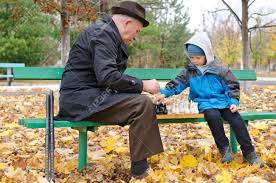
My wife and I are in the midst of eldercare. Her mother is nearing 95 and needs attention. She is partially blind (can’t read print or signs, sees shadows and outlines). We are working with community services to build her a life worth preserving while sheltering her in our own home. We are not noble, just practical. We want what we think is best for her. We feel she has deserved a respectful conclusion after a life of care to others.

I placed my own elderly mother in a nursing care facility almost a decade ago. My sister and I concluded that we couldn’t meet her special needs. She was an elder who was difficult to serve. Of the three locations where she received government old age long term care, the last publicly funded centre was up to the task. She had five good years in a former hospital in British Columbia before she died of natural causes. After her death I was shocked to discover that a Nursing Home in Pickering, where she had previously been in residence, was discovered to have the most Covid deaths within Ontario.

Many cultures honour their seniors. The culture of caring for elders seems like a distant tradition for white folk. We tend to stick them somewhere and invite them over for holidays; but only if they promise to behave. Wealthy elders can afford nursing care in higher end Retirement Homes. Many may be supported, like my mother was, within a patchy arrangement of government funding. Often these old folks homes are dependent on staffing. The inequities between standards of eldercare surfaced with the recent pandemic. In Canada we have a federal Minister of State for Seniors but the office appears to have minimal influence.

Elders are people first so they can be cranky or angelic in spurts. I’ve known many people older than me, whom I have loved to think of as my friends. I’m growing old now too and can better appreciate the toll longevity can take on a person’s physical and emotional well being. I don’t like to feel pushed into believing that 70 is the new 50. That puts pressure on me to live up to a standard. Like most spirited elders I feel 17 and always will enjoy sensing that I am young at heart. I’m not turning into a fossil or becoming an old fogey in attitude. On my best days, I’d like to believe that I am eldering: growing old with grace.

My wife’s mother appears happy to be in our company. She jokes how it is better than being turned out to pasture or left to float away on an ice floe. Our village on Vancouver Island has a community centre for the elderly called ‘New Horizons’. I like the encouraging sound of that, since I rebel at the thought I might be at the end of things. We old folk continue to need opportunities for stimulation, restoration, even growth. I’ve a lot to learn & my special mom has a lot of wisdom still to give.

Re: Doctor

“Is there a doctor in the house!” Now that’s a phrase I’ve heard might be called out in a medical emergency by someone in a theatre. I’ve never witnessed that happening in the many plays I’ve attended. I’ve never been involved in a doctor intervention while being a passenger of an airplane either. This is another high drama location, that probably requires a mid-flight turn to get a patient to a hospital. Doctors to the rescue!

Canada is thought by many to be the home of ‘free’ health care. It is comforting to know that in a crisis situation citizens have access to hospital care without the added stress on their personal bank account. However for those of us without a Family Doctor our view of the tax funded, government sponsored/administered health system is not as seamless as it would appear to outsiders. Doctors retire. They move. Medical Centres close. Patients who have seen their doctor as just a phone call away may suddenly find themselves building confidence with a new physician at best, or stuck playing musical chairs in a clinic at worst.

Recently all these things have happened to me. To complicate things I had to spend an extended period of time away from my home province. To complicate things even further I had a heart incident that required intervention and follow-up treatment. Since health care is a provincial responsibility my health card was questioned. I had prescription drug needs that kept everything ticking (literally). Without my records I had to relate familiar stories about my medical history way too many times. When I returned home I joined thousands of others without a GP or Primary Care Physician and therefore have had slower than normal access to the specialists I need for my condition.

“What’s up Doc?” is a question that comes to mind in my lighter moments of feeling. I don’t want to skip the line for appropriate care. Sometimes I just want to know where I am in the line. I’ve questioned the notion of the word Care. I don’t like to point fingers in blame. Every doctor who has ever looked after me has done just that. In an emergency and over time, when I’ve come in need the questions have been answered in full. I would wish the same for everyone. Trouble is, there aren’t enough doctors for everyone in Canada right now.

I counted eight professionals around my bed when I was admitted to the emergency ward for my rapid heart arrhythmia. That’s a healthy amount of care for sure. Doctors are all about saving a life. It’s in their Hippocratic Oath. I count doctors, nurses and teachers as being the most important professionals in an advanced society. I fully recognize as an educated adult that I am primarily responsible for my health. I’m also smart enough to know that I can’t meet all of my own health needs. A solid health care system must make ease of access a key component for all in Canada and around the world.

Re: Hospitality

Some words fall out of favour in the English language. I was talking to an inn keeper recently and commented on his facility being so hospitable. He was flattered and said that he and his wife had made it a point, when they bought the place, to make hospitality their number one responsibility. And it showed; not only was the location of the lodge immaculately maintained but the gift of personal service could be felt from the first greeting. I’m in the habit of using the internet travel site Trip Advisor so I gave the hotel a glowing review.

I’ve never travelled extensively in the lower United States, yet I’ve always heard talk of their ‘southern hospitality’. Perhaps the phrase is a boast from the days of rich, White plantation owners. It must have been easier to look after guests due to the prevalence of slave labour. Also ironically, the word Hospitality comes up in several obscenity laced rap songs performed by Black artists. Check out Ludacris: https://www.youtube.com/watch?v=2QWQVm9J5DM

As an act of service, hospitality is not restricted to hotels and restaurants. I would say our village grocery store provides the highest standard of hospitality from produce managers, butchers through to check-out workers. It’s not an easy job to maintain customer satisfaction, especially when shoppers themselves can be less than hospitable. When coronavirus restrictions were first implemented in our region, I was surprised to see ‘essential workers’, like grocery clerks,  being applauded with banging pots during the evening yet later criticized in newspaper ‘letters to the editor’ for insisting on a fair wage. Some hotel workers in our district actually went on a hunger strike to keep the focus on their plight of being poorly compensated. Many wondered why the cheerleading of these essential workers had receded like the tide. I imagined someone inhospitably suggesting, “OK. Crisis is over. Now get back to work.”

No doubt, the hospitality industry has been hit hard economically with the realities of the Coronavirus Pandemic. Some governments and corporations have recognized the need for financial relief for the workers who have been laid off as a result of closures and health care compliance. I have applauded initiatives where the most needed members of our work force have been provided financial as well as moral encouragement. I believe a guaranteed income for all is a way that governments can show that hospitality works both ways. 

It would be inhospitable of me not to mention hospital workers. When we have the need to go to a hospital we expect a level of care above what even the best parent could provide. Only once have I experienced disappointment at the hands of a medical professional. Every hospital worker throughout the world has faced pressures beyond anything I would normally complain about, pre or post COVID19.  Our society venerates hospital staff but doesn’t always provide the resources necessary for optimal care. This pandemic has reminded us of the importance of caring for others, of being hospitable, as a first response to our neighbours.