Re: Cult

Some words contain words. Cult is part of culture in more than just structure. There are elements of cultism in every culture. Citizens of a culture make the decision to embrace what is practised, or not. The essence of a country’s culture is demonstrated by how resources are allocated to promote the larger values of the collective. Sometimes these tribal desires to belong can conflict with our individual wants, wishes, or needs.

When folks agree to do similar things together a connective thread is created. I like to think of that as the art of living. Defining a culture is how societal groups are formed. Individuals in families may often repeat to each other “This is the way we do things.” Teams often bond over the wish to be united so that literal goals can be achieved. After a tragedy, a city might suggest that the way forward would be by recognizing common values. I remember, after the bombing of marathon runners in 2013, newspapers promoted solidarity by printing headlines; Boston Strong! What fascinates me is the border between a healthy culture and a restrictive cult.

Throughout history people have collected into groups for protection, efficiency, or the pursuit of a shared experience. Religions are built on this desire to belong to something greater. Few of us want to be alone in our beliefs or occupations. Unions, fraternities, and sororities have been an essential part of the workplace so we can feel like comrades of industry. Military institutions have aspects of cult conditioning within their training. When you belong to any group you have to give up a bit of yourself for the greater good.

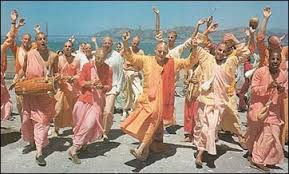
With the fracturing of our understanding of cultural mainstays comes doubt over what is important. Factions, sects, and brotherhoods become more important when traditional ideas of the common good are muddled. Cults begin to grow, fracturing the confidence populations once had for their society’s documents of legality, equality, and fraternity. When I read of organizations having a crisis of culture it worries me that fundamental values have been twisted to suit the needs of the powerful. Most people will think of cults with a capital C as those practising life on the fringe of religiosity. The rules of belonging in a cult-like setting are very oppressive of individual freedoms. In some cases you are coerced to deny your own history in order to begin life under a new set of guidelines. Life in some 60s communes was like this, and I have concluded that being involved with any religion is cultish.

Communal systems can get complicated when group and personal needs conflict. To some degree educational institutions are designed to indoctrinate our children to the ways of the national interest. In Canada, our ten provinces and three territories have their own policies, procedures, and legislation within the framework of the larger federation. All regions have their own priorities and practises (especially Quebec, and lately Alberta) yet we all call ourselves Canadian.

Cultures must evolve to survive. I would celebrate a global culture of peace as a priority.

Re: Owl

The owl has several attributes that show up in my personality. Firstly, the animal’s patience is astounding. I’ve seen one in a tree, shoulders hunched up, barely moving, perched on a branch waiting, waiting, and waiting some more. Their feathers are so soft looking, almost furry, and patterned to make themselves blend into their surroundings. Owls are the quietest birds, with wings specially designed to make almost no sound so that wary mice don’t even know they’re around until it’s too late. Owls seem secretive to me. All knowing! They aren’t for show. They mean business, have places to go, and a need to survive.

When I was an elementary school teacher, I would often discuss animals to start the children on a creative train of thought. A simple question like, “If you could be another creature, which would you be?” might occupy an entire afternoon of discussion, art, and even environmental studies. In those days I refused to choose my own kinship animal, because I felt connected to so many interesting species who share the planet with me. Disney films and author A.A. Milne probably directed my lasting amusement with owls. I can relate to Winnie the Pooh’s friend Owl when he pontificates and, also, when he goofs by spelling his own name as Wol!

I chose a coded version of the word Owl for my social media avatar name, wh0n0z, which graphically shows two owl-like eyes. I like the immediate reference to intelligence (folks can be know-it-alls and still err in judgement). Also implied with this pseudonym is the shrugging attitude of ‘Who really knows eh?’ (an introvert’s go-to). Or, more aggressively, “I’m slightly bored so leave me alone.” Owl people may get a bad rep for being picky, having their head in the clouds or appearing seriously snobbish. I think of my owl persona as though it were a horoscope sign. Owls are curious. Ergo, my favourite question is How, which is a delightful anagram of Who, which is the sound that owls in cartoons make.

Even a wise old owl like me can show contradictions. When I served on several organizational Boards I used to be called a stealth director because I preferred to be quietly working behind the scenes, making contacts and connections that may have been considered controversial. You see I didn’t want to draw early attention to myself until the cat was in the bag (or the mouse was in my beak, so to speak).

The cliché for the owl archetype was probably set in ancient Grecian times since the goddess Athena advertised the Value of Wisdom. She even had a pet owl. In the 1981 film Clash of the Titans, Perseus is assisted by a mechanized version of Athena’s owl named Bubo. This FX creature was actually an animatron that didn’t always work convincingly in its scenes with the real life actors. And its name suggests something clownish, which is great if you consider that no one’s character can be one dimensional. In other words; A bird is more than just feathers.

Re: God

When I was a child my parents did not lead me in ways to suggest a reverence for the word or meaning of God. They even spelled it differently: Gawd! Pronouncing it with exasperation, as if someone had let them down again. At the time my friends and I thought the Catholic kids who were educated in the scary looking building down the street belonged to the Others so we teased them. As I grew I ditched my ridicule but maintained my curiosity regarding God-fearing personalities. I was curious enough to marry one. My first wife was a gentle soul, raised in the ways of a Christian. She practised her spirituality rather than spouted it. She was subtle in her evangelism; leaving a newish version of the Gospel out on a side table for example, knowing I liked to read almost any text. It was that gentle persuasion that got me accompanying her to services on Sunday. I came to understand the Bible not as the Word of God but for its intent.

This became my God Period: going to church on a regular basis with my growing family. During those years I included myself through reading, leading, singing and otherwise participating in finding out more about my spirit. It was fun and rewarding. I learned a lot about people. I think it helped me be a good father to my children and a husband to my wife.

A survey from Angus Reid Polling landed in my email inbox last week asking me to identify my faith status from a long list of choices. I chose ‘none of the above’ for several reasons: I don’t practise the tenets of any one faith, I don’t attend any religious functions, I don’t pray. I believe that religion no longer has a place in my life. The idea of God still fascinates me as it did when I was using it to understand community but I am not a godly person. Calling myself a humanist sounds banal. Being an atheist just sounds argumentative.

Yet here I capitalize the word God. I still feel as godless as when I was a child. I don’t believe that a god created all things. As an artist I have sometimes entertained the notion that I am the maker of my existence, yet I resist using The Creator’s name as an expletive out of respect. I feel I can appreciate the many deities that are worshipped throughout the world while never feeling the urge to kneel. I have witnessed some amazing things but do not believe that these happenings were the result of a divine hand. I refuse to give credit to a supreme power, nor will I accuse such an entity of meddling negatively in my personal affairs.

Many philosophers, I have read, describe themselves as anti-theist. I find much in common with that willful declaration. My spiritual side comes out when I’m being silly, when I’m feeling carefree holding hands with my wife, when I’m awestruck by the vastness of the universe and all it contains.

Re: Fate

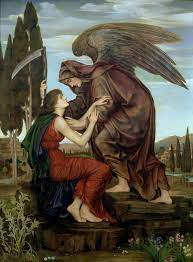
In the apartment building where I’m currently residing we learned of a fatality. The news rippled quickly regarding the circumstances of this fateful night when the living were shockingly presented with the reality of death. Rumours circulated. In the hallways, lobby and elevators, strangers with lowered heads talked to other strangers seeking solace, consolation or reassurance. Those who knew the deceased sheltered in place. Mortality strikes fear in us all.

In conversation with my mother-in-law, we shared a phrase, ‘there but for the grace of God go I’ as if to count ourselves lucky. I thought about the word Fate, all of that day and the next. I thought of the ways in which we tempt fate, by being reckless, careless or selfish. I wondered how this fit within the context of Covid vaccinations. I mused over ways we wish for things to come true and then, when they do, how we might profit from those wishes. A belief in Fate can be a form of wish making. Taken in a positive way Fate can be a nice idea, as long as you don’t mind giving up free will. Fatalists may convince themselves that Fate is on their side, at least until it’s not. Gamblers hold on to Fate’s hand, tightly.

When my first wife was dying of cancer, I never wanted her to die, yet I wished for an end to the suffering. I could never say that Fate dealt her a bad hand nor could I weaken her significance in my life by suggesting that shit happens. Sometimes the wishes we make will be granted to us in a form we hadn’t expected. Hence we have the phrase ‘be careful what you wish for’. Long ago, when my mom spoke those words I felt menaced as if she might know something I didn’t about my future. Several years ago the book ‘Secret’ popularized the notion that you could manifest your destiny. All a person needed was a vision board, or some such graphic depiction, for Fate to be firmly in your control. Fatalism tamed.

People often talk about being fated: being in the right place and at the right time. It is the most dramatic way to describe the meeting of a true love, from across a crowded room, we just happened upon each other. It was kismet. Fortune shone on us.  Love came along and tapped us on the shoulder on a beautiful starlit night. Could it be magic?

https://www.youtube.com/watch?v=U7mugNlqtdk

Shakespeare wrote much about Fate: “Men at some time are masters of their fates.” As did the writers for the Star Wars films giving us the meme, ‘may the Force be with you’. As much as we’d like to, we cannot know what the fates will allow. Our destiny awaits, yet it is impossible to understand it as Fate, until it happens. I have wished for fame, fortune, happiness (the big three) only to discover them in smaller measure. Yet I feel as fortunate as a king.

Re: Truth

There is only one truth. Usually this universal truth is described as scientific fact. The existence of gravity on a planetary body is irrefutable. Scientists use the scientific method to explain observations, then they form conclusions which can then be tested over and over by other scientists for accuracy. Empirical evidence is the cornerstone of any scientific discovery.

Often Truth comes with a number. You get a traffic ticket because you were travelling at 100mph. The measurement on the bathroom scale indicates 85kgs. The library fine must be payed since your book is 2 days overdue. You may disagree with any of these numbers but you can’t say they are false. Science isn’t the only area where we can be confident in a singular truth. Banks keep track of the financial numbers and we feel confident that our account is accurate and up to date. Our judicial system is based on finding the truth, the whole truth and nothing but the truth. Historians make a point of checking facts of events so that we all can agree that certain things did happen as witnessed. Unscrupulous governments or corporations can distort historical documentation to bend the truth in their favour and thus control the citizen or consumer. I remember first being awakened to this deception thru George Orwell’s novel ‘1984’. https://www.youtube.com/watch?v=m6Ybkd_beUU

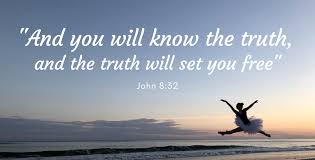
We often like to ignore the truth, even when it is staring us in the face. Seems these days that people are playing fast and loose with the truth. We see so many examples of the twisting of facts and figures that we can lose trust in the authority of numbers. Mark Twain found humour in this manipulation by suggesting, “There are lies, damn lies and statistics.” We’d like to know deep down that the truth can set us free, yet how will we know it when we see it?

Oprah Winfrey has often encouraged her followers to trust ‘your truth’. I would call this Personal Truth. It is subjective. It is not truth at all: it is belief. We all have a belief system that helps us make decisions. We grow up learning rules of life; some we keep from childhood, some we discard when they are no longer useful. ‘Your truth’ may put you in danger if it causes you to ignore objective truth. Our true selves may crave speed but we are testing the laws of physics and tempting statistics when we drive our car too fast. Slow down or better yet, stay off the roads or maybe try out for NASCAR. You pick.

Throughout history people have found comfort in joining others with similar beliefs. When your truth finds commonality in a community then you have found faith. This is Social Truth. Like Personal Truth it is still subjective. Viewing Social Truth as fact can be comforting but also very dangerous. Religion is a Social Truth. Some sects attempt to provide evidence that their faith is fact or at least better than the other person’s faith. This has led to war.

And, perhaps finally, there is our current Inconvenient Truth: Climate Change. https://www.youtube.com/watch?v=h4DFXUndvbw