Re: Relax

I once took a course in anger management. When I indicated this fact on a resume, at a subsequent job interview for a high school teaching position, the boss asked if I had anger issues. I said, “No but a lot of people seem to.” The tension dispersed and he laughed. I explained to the Principal that in teaching I found it helpful to have a variety of skills for defusing the anger I had found in my classrooms. He was listening. I told him that some strategies also benefitted me when it came time to talk through issues with adults during parent/teacher reporting sessions. I said it was an aspect of teacher education that I thought was missing from my original training. He seemed impressed, but I didn’t get the guidance counsellor position that I was applying for that day. I was disappointed. I don’t think it’s sour grapes to say that I suspected he was looking for an administrative policeman in his school, not the conciliator model I was presenting. His loss.

Anybody who has been in a tense situation will tell you the aggressive moment can escalate quickly if someone says the equivalent of, “Just Relax.” As I get older I find it easier to find a calm place to reside in most situations. Tension usually comes looking for me when I have to wait for something, so being retired from the strains of working life sure does help the blood pressure. I’ve also learned that considering priorities before making a decision helps me to wind down enough so that I can make a better decision. ‘It can wait’ are three helpful de-stressing words and not a bad philosophy: ‘acuna matata’, ‘don’t worry be happy’ ‘manyana’. All cultures have suggestions for taking it easy before blowing a gasket.

I think another secret is to build comfort into your day. I could make a list of suggestions but everyone knows their own keys to going with the flow. Some are wise enough not to seek stress to begin with, however, an uneventful life is not very fulfilling. That’s why they call it Stress Management; too much relaxation and we become slugs needing to be fed, too little down time and we can become a bomb ready to explode. I’m getting better at delegating the things I know will create anxiety. I’ll let a trusted friend drive me places because I tense-up in traffic. I am learning to step aside while another friend or colleague solves a problem. I trust my life partner to work by my side. I don’t need to take on every responsibility that’s on my menu of life.

Being high strung maybe okay for high pitched orchestral instruments but not for people. For those who tend to be edgy there are plenty of relaxation techniques to practise. When all else fails I’ll take a glass of spirits, a chill pill or THC brownie without any accompanying guilt. There is a lot to be said for recognizing when our anxiety is getting in the way of our better selves. Life is way too short to let urgency set your agenda, even if that sounds contradictory.

Re: Laughter

At one point during my first marriage, my wife and I looked at each other through tears saying simultaneously, “We’ve got to laugh more.” We’d just been laughing, belly aching hard, over something that is lost to my memory. It was fun to be breathless from humour rather than daily toil. We knew we had been missing something with our laser focus being trained on the responsibility of parenting three little boys. We were strung out on diapers, defiant temper tantrums and sibling squabbles. Laughter is the best medicine, at least that’s what Reader’s Digest said back then, and we realized in that hysterical moment that we had been laugh deprived.

I’m a serious guy by nature and I know I don’t laugh enough. I prefer topics of conversation that go deep. My shoulders seem adapted to carry the weight of the world. Some people hide from the dark side of life while I can be a bit intimidated by a room full of chortling people. For just an insane moment I’ll think that I am the butt of someone’s joke and it puts me off balance. My mom used to be a master of sarcasm, which I never learned to master. She would preach that her humour was an attempt to make a person laugh at themselves; “Come on I’m just kidding!” I think she had a twisted understanding of the phrase, ‘Laugh with me, not at me.’

There is probably a reason why late night talk shows are so popular. We do need to laugh at ourselves and the situations we find ourselves in when everything seems so grim. We need the news delivered with a dash of comedy; just a spoon full of sugar and all that miserable stuff is a tad easier to swallow. History is filled with examples of clowns and jesters presiding over a community spectacle while our fellow citizens were led to the gallows by the executioner’s hand. Slapstick comedy comes from such roots: Someone falling is irresistibly funny in spite of our desire to express empathy for a person’s plight. My favourite comedians are still The Three Stooges yet they are consistently mean to each other. Go figure.

Maybe laughter is a judgement on us and from us. My wise 94 year old mother-in-law asked me recently if I can I laugh at myself. I wondered what she was getting at. I gave her a philosophical answer along the lines of not enjoying being teased. I said I didn’t like it if I thought someone was laughing at my expense. She sort of went, “hmmm”. Which made me feel judged. I wanted to go all Popeye on her telling her to accept me as I am. In the end it wasn’t an issue, just a question, and there I go again being too serious.

Laughing out loud is an expression of our soul. Like showing any emotion, a laugh can connect us to our spirit. I’ll start with a chuckle and see if I can work my way up to a roar.

Re: Umpire

I like the game of baseball for many reasons. Top of the list is because baseball tells a story and umpires are important players in that story. Collectively they are a third team on the field. Their decisions regarding the pace, adjudication and conclusion of any particular contest is a factor in the drama that unfolds through a standard nine innings. The position of Umpire is not exclusive to baseball but the title has a more judgemental ring to it than Referee. And the oft used short form Ump sounds perfect when describing my mixed feelings towards the game’s ultimate decision makers.

In some sports like Ice Hockey, violence is shruggingly accepted as part of the game, but physical aggression against another player is extremely rare in Baseball. I think that’s because of the gentlemanly code of conduct enforced by the team of umpires. They are quick to reproach players and coaches if they cross a line of contact or conduct. Anything considered bad behaviour, particularly disrespect for the ump, is not tolerated. Punishment is swift. Opposing team members are given minimal warning. It is not unusual for players, coaches or even the managers to be thrown out of the game. I like a game where the umpires’ involvement is frequent. The entertainment value is enhanced for me when a player and ump argue. It can get heated if a manager intercedes on his player’s behalf. Spittle can fly as combatants engage face to face, sometimes within inches of each other, yet there is no laying on of hands. Television viewers are left to read the lips of the throwers of obscenities. “You’re outta Here” can be the final ruling by the Ump who has had enough of the oral aggression. Such marvellous theatre! A courtroom without a gavel, just a conspicuous demonstrative flourish of an arm!

Strike calls at home plate and tag outs on base can be controversial so there is room for appeal through a replay analysis. This adds to the importance of umpiring I feel. It is revealing that the sport recognizes the humanity of the participants that way. It is also notable how umps have discretion as to the timing of the game when one of the players gets hurt during the interaction. Batters routinely question the home plate umpire to see if he is okay, if he gets in the way of a foul ball, even if he previously made a bad call on a pitch. Morals are on display. Kindness is found here.

I feel sports fans must never bad mouth an umpire. Go ahead and groan at a call but don’t throw your crackerjacks. Umps try their best. They know that adherence to the rules makes for a fairer game. They are dressed in black, like judges, for a reason; to make them stand out as the voice of reason in an otherwise emotional game. Respect must be shown, not only for their role but for the sanctity of the game itself. Baseball would change forever if rulings became fully automated: Bots and Baseball would simply not work!

Re: Stress

Trump is back in the regular news cycle and that has me stressed. I’m not alone. That man! Even his name produces stress in many folk. When the 45th President of the United States was on the last election hunt, I asked my doctor for some psychiatric help. The specialist he referred me to asked why I felt anxious. He looked stunned when I named The Donald at the top of my list. History has born me out. Meanwhile I’ve now got the mental health support I need to weather the next storm.

We humans are elastic for the most part. We like to think that we can accommodate, collaborate or compensate but there are times when it becomes mighty hard to even tolerate a person, a group or a situation. Our capacity for stretching can be based on individual temperament which may be grounded by our genes, our upbringing or our experiences. It’s complicated. So complicated that we must never suggest to another to “Just get over it.” People, like cars, have been known to have breakdowns. Even steel bridges snap under pressure.

I was a career elementary school teacher; a profession often ranked high among stressful occupations. My colleagues and I were taught how to see challenges as eustress: a sunny, positive label that encouraged us to master our own fate. Natural body chemicals like adrenaline or dopamine can help. Caffeine helps others. Many turn to jogging, yoga, alcohol or drugs. Back then we didn’t talk much about mental health. Stress leave was stigmatized but prevalent. Going to the psychiatrist was considered a failure in character.

Studies in animal behaviour have suggested that stress produces a fight or flight response in almost all creatures. I’ve discovered that I can mimic those two reactions very quickly in my head, however society frowns on me acting out with a punch, push, slap, or a hasty flight down the stairs and out the back door while shouting obscenities. (Ahem) Besides that, I have found that other F responses have worked for me in tense situations. For example, I’ve been known to faint. My favourite bird example, in stress management, is a Killdeer, who fakes a broken wing to save her nestlings. Sometimes I will ingratiate myself by fawning. Flailing about saying nonsensical things  can confuse an aggressor. I may distract my opponent by fucking, flaunting or feigning my way through a predicament. Or, I can put on a brave front, but it may not last long before I beg for forgiveness.

Identifying my stressors has taken me a while to pin down, yet it has been an essential starting point to create a sense of inner peace. To most people I appear calm and obliging (It’s magic!). However, I’ve become aware and confident enough that I can say to myself and/or others; “This is stressing me out.” I try to avoid the triggers that make me want to shout those words. I’m not afraid to ask for professional help. My brain, after all, is just another body part that needs love and attention.

Re: When

I hate waiting in line. It takes patience to wait for anything. The child in me wants to ask, “When?” Hell for me is the same as stasis. I’m not an antsy person, most people think of me as calm. I can be calm, tranquil even. I’ve been known to bask in the serenity that comes from doing absolutely nothing.  When I have a choice, being still is an easy option, yet I do not like to feel becalmed, beached or otherwise adrift in the Sargasso Sea waiting for a satisfactory trade wind. Under constricting circumstances, the Then part of my life story seems to never come, so I’m stuck crying out, “When!”

There are six great journalistic questions: Who, what, when, where, why, and how. The third in the list was the question I most asked as a kid. Learning patience is hard for anyone, especially when you are four or 94. As a kid whining to my mother I would hear, “If you ask again we won’t be going!” I wouldn’t be getting, having, or knowing either, depending upon the context. When my elderly mother-in-law asks ‘When’ I stay quiet, figuring I’ll have a while before she asks again. She may even forget the whole thing as she listens to her radio. When my own children asked ‘When’ I would say, ‘In twenty minutes.’ This arbitrary amount of time never satisfied them since it could end up meaning sometime next week for all they knew. Sometimes I’m not very helpful.

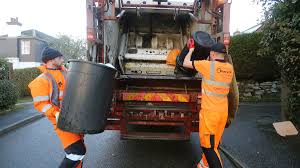
One of my grandkids loves watching for the garbage truck coming down the street. In his city, the sanitation drivers/workers are very predictable. I saw my little DNA carrier run to the window one morning for no apparent reason. Moments later I realized his little ears had picked up the characteristic screechy sound of the vehicle because there was the workman lifting the cans into the back hopper. My grandchild turned back to his living room play looking satisfied that his world was in order. He was learning to trust that sometimes the Whens of life fit into a schedule that can be planned for and predicted.

I don’t think we can blame technology on our lack of patience. Even as grown-ups we want our stuff now, not tomorrow. Putting in a call to get service for a broken appliance or delivery information can be problematic. We are usually given a window of time when an agent will arrive. Recently for me that ‘window’ was “Between 9am and 5pm on Tuesday” and I paced the day away.

Perhaps adults’ patience level has been eroded lately with all our systems, simply because we are frustrated by the slow approach of getting to that question of when. Confidence in necessary change is enhanced if the public can have a predictable timeline of action. As a citizen I don’t want to be told it will take a metaphorical twenty minutes if it really isn’t going to happen during this business/tourist/health/government cycle.

Then my trust goes in the garbage

Re: Usual

I’ve often thought it would be cool to have a place in the community where you could walk in and say, “I’ll have my usual.” Someplace where everyone knows your name. A casual place where things usually just flow, where you can expect to drink from the cup of kindness.

https://www.youtube.com/watch?v=7KtAgAMzaeg

Usual is a cousin of Normal. There is a calm we get from familiar situations. My middle son and his lovely wife are building a beautiful life with my grandson. Before they were married, their relationship was stressed by long distance realities. Both had busy lives in two different countries. An ocean separated them! There were Skype calls and flight arrangements to be made. Even a language barrier to overcome. Their love grew despite all the challenges. When talk turned to choosing Canada as their place to live together, I remember asking them what they were looking forward to about their decision. They answered simultaneously, “Just to feel normal!”

A usual existence isn’t necessarily boring. The regular parts of your life can be anticipated with excitement, especially when you get to choose what those parts contain. Some couples thrive on weekly date nights for instance. Any routine that you can look forward to will add spice to your life. Several teachers I worked with in my career in education actually looked forward to September when they could ‘get back to normal’. I didn’t share that perspective but as a planner, I could appreciate the need for a structured lifestyle after the randomness of the summer months.

My sister often lived on the edge of chaos. Her unpredictable nature often made me nervous, but even her active personality needed times of surety. Like her mother before her, my sister counted on holidays to be just perfect. Perfection in this case meant that Christmas, for example, had to be exactly the same as last year. Variation would ruin the expectation and the expectation became the reason for the season. After my sister’s death, her only child made a wonderful decision on the following Christmas. My niece went on a trip to Thailand. From my viewpoint it was a reset: A very unusual and courageous way to declare her independence.

We all need our touch points of normalcy. My mother-in-law, at 94, cannot envision a week ending without her Fish Friday meal. She hasn’t worked for decades, and she is not a devout Catholic yet a dinner without fish as the main course on a Friday would throw her equilibrium out of whack. Likewise, James Bond must have his martini shaken, not stirred.

Thankfully, I don’t need a bar to go to at the end of a hectic day. I’ve enjoyed the regularity of family life despite those times when I would have liked to get away. When my existence gets too ‘same old, same old’ I count on my wife to suggest something that might mix it up a bit. I have found that contentment lies in the natural rhythms of being. Cheers!

Re: Artifact

My mother-in-law has been giving some thought to what she might like to take with her when she moves one last time. When I asked her which of her keepsakes were most important to her she said immediately, “My pictures!” I could relate to that sentiment since I have been in charge of family photography. Recently I digitalized all of that wealth so that my next move will be easier.

The task of cleaning out storage lockers, cupboards, closets, attics or sheds can be onerous and honouring. Through the layers of dust, artifacts of a personal nature are revealed. Letters and journals can be examined to make a time stamp, like rings on a tree stump, showing what was going on in our past, in times passed. Sorting comes easy when items literally break apart in your hands. Things that someone once thought might retain value, are not even yard sale worthy. Then again the adage,’One man’s junk is another man’s treasure’ continues to contain a nugget of truth.

I met up with a fellow who ran a New Immigrant Fellowship based around learning how to use a bicycle. My in-laws created a new memory for themselves by donating the wheels they had used when they were still able to peddle. In my job as cleaner/sorter in this downsizing adventure it is helpful to work with someone who sees value in letting go. I believe some of our curios are meant to make someone else smile. Clothes can be laundered and given away. Garden tools can be offered up to create new gardens of earthly delights.

My special mom has treasures from her daughter and grandkids that help her remember things hard to recapture. She wants to pass on family heirlooms. She has a pottery figurine she likes to have right next to her bed. It’s curious what each of us counts as treasure. I used to wonder what my birth mother was thinking as she stroked an old deckle edged Kodak black&white photograph. It was one taken of her sister, its corners now softened to the consistency of linen.

What we keep may be ‘art-in-fact’. Respect must be shown to the original owner of the relic. Museums around the world are coming to terms with this truth; that their cultural artifacts (some involving human remains) may have been procured under false pretences. Governments are seeking to rectify and reconcile with Indigenous People who have had their heritage put on display. Justice for these situations may be found through repatriation; a giving back of what was not ours to begin with.

I can’t imagine what I might leave behind as an artifact. I’ve already discarded things I once thought useful but no longer found important enough to shelve or even seal in a box. I can be very sentimental when exposed to an idea. I can cry when I see an artist earnestly creating. Generally though, old things are just curiosities to me. I’m an old thing after all, and pretty curious to boot.

Re: Spectacle

Being a follower of the philosophy of awesomeness I’m naturally drawn to anything spectacular. Occurrences in the sky can make me gasp with pleasure. I love double rainbows. A bright full moon with a three dimensional texture will knock my socks off. While travelling on the prairies I’ve been awed by the spectacle of distant cloud formations slowly approaching my position then dropping rain in great curtains, quenching the arid landscape.

I can be gobsmacked by human feats of invention. I love a grand fireworks display as though I’m seeing it for the first time. Uniformed marching members of parades don’t turn me on like they did when I was a kid. Back then my mom would warn me not to make a spectacle of myself. Her admonishments made me shy, but maybe I’m just naturally introverted so I mustn’t blame her for my lack of desire to seek the spotlight. I had to get a pair of glasses (horrible cheap black rimmed ones) in grade eight which caused me a bit of teen angst. You could say I felt a spectacle due to my spectacles!

In adult situations, I prefer to be a shadow assistant or second-in-command. Once, a Chairperson of a Board, on which I served, called me a ‘stealth director’ which underscored my wish to be seen and not heard. I like to be judged by my actions. I am surprisingly happy when I find out someone has been talking about me. Some have said it is better to be gossiped about, rather than being the one to spread rumours. Balcony seats in opera houses were designed to show off patrons, much as scandal sheets, like the National Enquirer, serve the purpose of getting celebrities the notice desired. Can you be humble and not wish to attract attention, all at the same time? I seriously don’t recall an occasion when I’ve purposefully made a spectacle of myself. Whether that is because I’m not very daring in social situations or that I’m just not easily embarrassed, I haven’t figured that out yet.

A spectacle can draw us together. The lustre of pomp and ceremony has somewhat dimmed for me as I age. Staged events, particularly political ones, can make me feel less than impressed when I think the money could be better spent elsewhere. However, I still feel attached to the culture surrounding the Olympics: the intent to showcase human excellence, the effort to break down borders and barriers through sport is inspiring to witness. It’s a reminder of how far we have come from the days of the Roman Colosseum where human life was treated with such disregard.

We see what we want to see. We hear what pleases us. I confess to filtering life through rose coloured glasses when the landscape surrounding me presents discord. It can be a matter of survival to change focus when my emotional resources are low. But I do have a special pair of spectacles for when it’s important to see as clearly and as far ahead as possible.

Re: Accessible

I’ve wondered what it means to be personally accessible. Throughout my varied relationships with others I have striven to provide access even though I have a reticent personality. I resist the pronouncement, “My door is always open.” Because in truth it isn’t. Just because I consider myself a good listener doesn’t mean I’ll always hear what you say. My spirit has access points. I’ve discovered I’m more open to someone who poses thoughtful questions. The way to my heart is not through my stomach but by accessing my sensitivity to truth, justice and inclusivity.

When my wife and I were looking for a place to live after retirement I thought up an ABC list for a potential location. The A stood for Access, the B for Beauty and the C for Cost (an obvious bottom line in any list). At the time, our accessibility needs were few since we were both retired and healthy. So there was no need to be near work, a hospital or a school since our family days were well behind us. We desired to be near to city services, cultural amenities and community gathering spots all preferably accessed by foot. Victoria B.C. provided on the first two so we had to adjust our budget and expectations to fulfill our dream. I stuffed my desire to curse the cost.

Like other white middle class males I have felt the urge to get huffy when my access is denied. As a teen, at a beach resort I once fumed for several minutes after I showed up bare chested to a ‘No Shirt/No Service’ restaurant and was turned away. “How dare they!” I railed against the authorities. My friends covered me, literally, by finding me a Tee to wear. When you get used to doors opening for you, it’s easier to be shocked when access is denied. We all get a little testy when internet service goes down or water gets shut off in our apartment. I can make myself feel outrage when something appears unjust. I’ll go to lengths to advocate for myself and those I love. The squeaky wheel does get greased.

Some folk strive for access: to the executive washroom, to the halls of power, to the information highway, to the happening concert, to the next big thing. I’ve never been ambitious enough to barge in front of people, yet I have coveted what others have excluded from me. The child in me wants to point and shout, “But how come she has one and I don’t?” In my perfect world no one needs to fight an urge to bud in line, because there is no line. In this world we shape laws that focus on inclusivity. Technology is used to further the goals of accessibility rather than being commodified for the rich. Here, we are taught that our resources are plentiful and not restricted to a pie shape. As a matter of justice, we all have equal access to food, shelter, education, healthcare, employment and recreation. Here, truth opens all doors.

Re: Reciprocity

Finding equivalency in a relationship can be frustrating. It’s not like you want metaphorical cash back in your daily exchanges. Yet without a consistent feeling that your love is being reciprocated, I believe it is doomed to fail. We’ve all heard of partnerships where one side feels used or taken advantage of because of their easy going personality. I feel carrying a cross is the quickest way to get crucified.

No one should be a door mat to another. It’s true that getting along with someone requires patience and a mature recognition that no one can be exactly like you. And deeper, longer lasting alliances with someone require a mutual commitment to give and take. I hang a lot of my thoughts regarding my bonds with others on the word Reciprocity; 5 syllables, that’s a mouthful yet there is so much here philosophically to work with when you are figuring out matters of the heart.

Often, the expectation of a ‘you scratch my back, I’ll scratch yours’ arrangement can be distorted into a tit for tat exchange. Someone might even venture, “What’s in this for me?”. That phrase sounds callous, however, it’s true that at any point in a relationship one of you’ll wonder what you’re personally getting out of the union. When my partner tells me she loves me I sometimes say, “I love you more.” Even while thinking I do, truly, want to love her more. I know I can’t realistically match every one of her overtures of caring, in breadth or depth.

When I can’t be reciprocal it’s usually because I’m not well. That’s when I count on others going beyond their normal quota of caring. I’ll make an effort to show reciprocation when the shoe is on the other foot. It sounds like I’m making my behaviour conditional and I guess I am in an unspoken way. We have to be careful in our expectation of others while at the same time recognizing a one sided arrangement when we see it.

There are stages and occasions in a lifetime where reciprocity will never be realized. In my book of love, a child must never feel that payback is a requirement of their familial arrangement. Likewise when we contribute to someone’s wellness after an accident/illness, we know our effort can never be matched.

Think of a time when you might have said, “The next one’s on me.” You recognize a gift, want to return the favour, perhaps even work out a repayment plan. Many gifts can’t be repaid in kind. Many favours can’t be replicated. I warmed to the notion of ‘paying it forward’ as represented in a film of the same name. https://www.youtube.com/watch?v=qfW0wCV9iFI

Here, the desire for reciprocity is found in spreading the love. Each caring act builds on the one before it. Here we are, trying to give our 100% knowing full well we can’t sustain that level of mutuality. Thus when we can’t, our mates are there to top us up to wholeness.