Re: Art

Re: Theft

Everyone has a tale of theft. Either someone has taken something from you or you have stolen from someone else. We rarely feel comfortable admitting the latter but my oh my, don’t we all like to target the other when we have felt robbed.

I’ve never been a train or bank burglar but as a kid I enjoyed the exploits of bandits like Butch Cassidy, the James Brothers, and Bonnie & Clyde. I was so emotionally kidnapped by tales of that Prince of Thieves, Robin Hood, that I visited Sherwood Forest in England when I was an adult. I could never excuse violent acts but I think there are times when theft can be forgiven, if not justified. Looting is a form of theft that can take place after a natural disaster. Studies in the wake of break-ins after Hurricane Katrina suggested that desperate people were seeking food, medicine or shelter. These were acts of survival not of anarchy. I believe that rioting can be a response to societal theft: When one person or group abdicates their part of the social contract (providing government oversight, a living wage, adequate health care, access to education), then that agreement is henceforth non-binding.

As a child I was tempted many times to lift something in the manner of the Artful Dodger. Once I spied a set of magnets in a clear cellophane pack on a display rack at a local five and dime store. I had learned that year in grade three that a magnet has a mysterious ability to attract. In an impulsive moment I pocketed the package. I couldn’t believe I made it street side without sirens or flashing lights. I rushed home and hid my shoplifted booty in the very back of one of my dresser drawers. There it remained for months, unopened. As an adult who should know better, I took a stapler from a teachers’ workroom at the school I worked at, ostensibly to organize some student marking while at home. I soon rationalized that it was mine. While not a moral dilemma equivalent to that fictional loaf of bread stolen by Jean Valjean in the novel Les Misérables, it’s a source of personal regret notwithstanding.

https://www.youtube.com/watch?v=kP9fFngHgkQ

We could use some modern ‘rob from the rich/give to the poor’ stories. I keep struggling with the whole concept of ownership. Our life is so short, so why not share. An equitable tax system would help. Wages based on the common wealth of a nation would benefit everyone. The societal balance sheet is tilted in favour of the wealthy. I feel profit is a form of theft. Intellectual property is a scam. I wonder how Banksy feels about copyright laws. Passive income from tax sheltered corporate shares is also theft. We’re being robbed!

I was once mugged while delivering pizzas but I kept my dignity. Never let anyone steal your sense of who you are, your time, your identity, your future or your opportunities. Keep your true and precious self inviolate.

Re: When

I hate waiting in line. It takes patience to wait for anything. The child in me wants to ask, “When?” Hell for me is the same as stasis. I’m not an antsy person, most people think of me as calm. I can be calm, tranquil even. I’ve been known to bask in the serenity that comes from doing absolutely nothing.  When I have a choice, being still is an easy option, yet I do not like to feel becalmed, beached or otherwise adrift in the Sargasso Sea waiting for a satisfactory trade wind. Under constricting circumstances, the Then part of my life story seems to never come, so I’m stuck crying out, “When!”

There are six great journalistic questions: Who, what, when, where, why, and how. The third in the list was the question I most asked as a kid. Learning patience is hard for anyone, especially when you are four or 94. As a kid whining to my mother I would hear, “If you ask again we won’t be going!” I wouldn’t be getting, having, or knowing either, depending upon the context. When my elderly mother-in-law asks ‘When’ I stay quiet, figuring I’ll have a while before she asks again. She may even forget the whole thing as she listens to her radio. When my own children asked ‘When’ I would say, ‘In twenty minutes.’ This arbitrary amount of time never satisfied them since it could end up meaning sometime next week for all they knew. Sometimes I’m not very helpful.

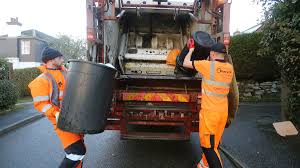
One of my grandkids loves watching for the garbage truck coming down the street. In his city, the sanitation drivers/workers are very predictable. I saw my little DNA carrier run to the window one morning for no apparent reason. Moments later I realized his little ears had picked up the characteristic screechy sound of the vehicle because there was the workman lifting the cans into the back hopper. My grandchild turned back to his living room play looking satisfied that his world was in order. He was learning to trust that sometimes the Whens of life fit into a schedule that can be planned for and predicted.

I don’t think we can blame technology on our lack of patience. Even as grown-ups we want our stuff now, not tomorrow. Putting in a call to get service for a broken appliance or delivery information can be problematic. We are usually given a window of time when an agent will arrive. Recently for me that ‘window’ was “Between 9am and 5pm on Tuesday” and I paced the day away.

Perhaps adults’ patience level has been eroded lately with all our systems, simply because we are frustrated by the slow approach of getting to that question of when. Confidence in necessary change is enhanced if the public can have a predictable timeline of action. As a citizen I don’t want to be told it will take a metaphorical twenty minutes if it really isn’t going to happen during this business/tourist/health/government cycle.

Then my trust goes in the garbage

Re: Usual

I’ve often thought it would be cool to have a place in the community where you could walk in and say, “I’ll have my usual.” Someplace where everyone knows your name. A casual place where things usually just flow, where you can expect to drink from the cup of kindness.

https://www.youtube.com/watch?v=7KtAgAMzaeg

Usual is a cousin of Normal. There is a calm we get from familiar situations. My middle son and his lovely wife are building a beautiful life with my grandson. Before they were married, their relationship was stressed by long distance realities. Both had busy lives in two different countries. An ocean separated them! There were Skype calls and flight arrangements to be made. Even a language barrier to overcome. Their love grew despite all the challenges. When talk turned to choosing Canada as their place to live together, I remember asking them what they were looking forward to about their decision. They answered simultaneously, “Just to feel normal!”

A usual existence isn’t necessarily boring. The regular parts of your life can be anticipated with excitement, especially when you get to choose what those parts contain. Some couples thrive on weekly date nights for instance. Any routine that you can look forward to will add spice to your life. Several teachers I worked with in my career in education actually looked forward to September when they could ‘get back to normal’. I didn’t share that perspective but as a planner, I could appreciate the need for a structured lifestyle after the randomness of the summer months.

My sister often lived on the edge of chaos. Her unpredictable nature often made me nervous, but even her active personality needed times of surety. Like her mother before her, my sister counted on holidays to be just perfect. Perfection in this case meant that Christmas, for example, had to be exactly the same as last year. Variation would ruin the expectation and the expectation became the reason for the season. After my sister’s death, her only child made a wonderful decision on the following Christmas. My niece went on a trip to Thailand. From my viewpoint it was a reset: A very unusual and courageous way to declare her independence.

We all need our touch points of normalcy. My mother-in-law, at 94, cannot envision a week ending without her Fish Friday meal. She hasn’t worked for decades, and she is not a devout Catholic yet a dinner without fish as the main course on a Friday would throw her equilibrium out of whack. Likewise, James Bond must have his martini shaken, not stirred.

Thankfully, I don’t need a bar to go to at the end of a hectic day. I’ve enjoyed the regularity of family life despite those times when I would have liked to get away. When my existence gets too ‘same old, same old’ I count on my wife to suggest something that might mix it up a bit. I have found that contentment lies in the natural rhythms of being. Cheers!

Re: Dismiss

In the digital dating world the act of swiping left is an example of dismissal. The social media apps and sites are primed to get you what you want in the impulsive twitch of a finger. My eldest son is not happy with this form of meeting people yet it is the sign of our times: We want immediate access. In general, we’ve become dismissive of one another’s point of view so profoundly that we seek shelter within our tribal connections. Our thoughts are comforted by the wishes of the flock. It’s easier to disregard the outsiders when we are on the same page of groupthink.

I watched an episode of Star Trek:Enterprise that was streamed on television the other day. Disclaimer: I am a trekkie rather than a Star Wars fan so don’t dismiss me out of hand. May the Force be with you. In this particular episode the captain tells three separate crewmen that they are dismissed. The meetings take less than a minute each. All three had more to say but the head officer was done with gaining feedback. Space army language, it was clear, is perfunctory. The script in this case was obvious; we all have a job to do, so do your duty.

Imagine life in the armed forces on Earth, where being dismissed is a regular occurrence. I can’t imagine what that does to your self esteem to appear so individually inconsequential. Someone decides what’s best for the many, while the individual is always expendable. Soldiers are tools, militarized human beings, trained to function for one purpose, discarded when expired, honoured once a year. Attention! Eyes front! You’re dismissed.

Dismissal is a failure to accommodate even more than it is a case of poor communication. I was a career teacher, with a daily requirement to hear a room full of students’ thoughts and feelings. The class management component was always a challenge for me, since I have a more one to one communication style. Many lessons would involve a debate of some sort, either over content or perspective. I was never a ‘My way or the highway’ educator, which sometimes made me an easy target for a persistent dissenting voice, calling out, “But why?” If I’m being kind to myself, I can’t ever recall saying, “Case dismissed” as a judge might, while ruling over a controversial situation. I never wanted a student to feel that their opinion had been lost in the translation. However, at the end of some very long and eventful school days, I was very pleased to pronounce, “Class dismissed!”

Strangely, we can be dismissive of good things too. Consider when we wave off a compliment from a colleague, family member or friend. Humility has its place, yet acceptance of someone’s regard for us is important to acknowledge. Likewise when we neglect to give praise or take goodness for granted we dismiss the nectar of life. The value of another soul is precious. We gain so much by pausing, by paying attention, before moving on with our own lives.

Re: Cage

One of my first memories of childhood was my dad taking me to the Riverdale Zoo, near the Don Valley in Toronto. It was an old style animal park built in 1894. I remember there were lots of cages and barred enclosures. Another time we went to a private zoo in Maine and I fed peanuts to a curiously charming caged chimpanzee. Much later, as an adult, I was shocked to see the very same primate; fingers grasping rusty bars, woefully swinging back and forth. Penning animals is controversial these days. Back when I was a kid humans had to be protected from the ferocious beasts. Nowadays it would be more appropriate if we kept the flora and fauna sheltered from our influences.

Oh we can be a barbarous species! How terrible is man who imagines two people fighting it out; last man standing. One on one sports like Boxing and UFC are signs of man’s depravity, packaged as entertainment. Being a peace loving fellow, I don’t see getting enjoyment from watching humans bloody one another while literally confined in a cage or ring. Crowds shout encouragement. We bet on a winner. We get trapped in a form of collective mass hysteria. We all lose.

Even the meekest among us can build our own personal enclosures. At their best these are places where we find comfort or security.  If we are lucky we can decorate our homes to our choosing. We can make our private spaces reflect our personality while containing the things we need to survive or flourish. For those with less means, life itself can be confining. Through circumstance or plain bad luck some exist only in a place to escape from. We can sometimes feel trapped in the cages of our own minds. Temple Grandin famously built a hug machine contraption to find reassurance in a confounding world. What others saw as confinement, she found that the device gave her control within her unique autistic world.

It may be a zoo out there and we must learn to share it. There are occasions when misbehaving children are given a time out to think about their transgressions. My sons got used to the limits of a set of stairs until they realized the error of their ways. Older mis-deeders in our society go to prison, often for the wrong reasons and usually without positive outcomes. We can’t hope to correct the penal system until prisons become creative way-stations to a better life rather than models of going nowhere fast.

Having suffered from episodes of depression and anxiety, I can relate to those who find themselves in cages not of their own design. The experience of mental illness is a tiny world where the smallest things need to be protected, where others are to be feared. I admire those who find ways to free themselves of the constraints of conventional life. Folks who climb mountains, both real and metaphorical, have pushed against their personal boundaries. These adventurers have found space to breathe, to create and to live large.

Re: Free

I was born into a white British family, so I kind of had priority boarding from my very first breath. Coming from that place of privilege makes it hard for me to write about freedom because I’ve never felt unfree. There has been only a few times in my life where access has been denied. I’ve never had to struggle for my freedom. Lucky me!

My whiteness sometimes makes me feel hypocritical when I gather with others to protest. My maleness, my skin colour and my affluence have made me shy about saying, in one way or another, “Life is not equitable!” It’s a moral conundrum, yet I delight in being free to join others to speak against injustice. Just because I have it good doesn’t absolve me from defending the rights of others. I believe we have a collective responsibility to make freedom ring true for all.

Freedom isn’t limited to what you can get out of life: It’s about how you can be. I enjoyed listening to an album called ‘Free To Be’ with my kids when they were young.

https://www.youtube.com/watch?v=_26FOHoaC78

We would sing along and talk about what made us feel free to be ourselves. The LP promoted inclusion, acceptance and compassion for others. We discussed how freedom and responsibility must be linked if we cherish being together in community. Without a mutual understanding of freedom, souls do not flourish and life can feel like a cage. Our world is literally a zoo of our own making: It can be Eden or Hell. Our current climate crisis can attest to how humans have squandered their heritage through selfishness. When our individual freedoms become exclusive to our collective interests, we risk our ultimate freedom: To live.

The strangely titled Freedom Convoy that took over the downtown streets of Ottawa in 2022 has puzzled me. The very ability to protest is an indication that we live in a free society yet these truck weaponizing individuals promoted the notion that we were giving over our freedoms by wearing Covid masks. Nightly news showed folks bathing in a hot tub on a city street, police passing by, letting them off scot-free. That was amusing, but for me, they abused their right to free speech by screaming and cursing at their fellow Canadians. Our government created an inquiry into this whole sordid event to answer questions about its use of the Emergency Measures Act. My hope is not so much for retribution on these rowdy protesters but that Justice Paul Rouleau will outline a definition of freedom that we can all file for future reference.

Nelson Mandela was imprisoned for 27 years. The society he lived in had deadly ideas about what it means to be free. The white folk of South Africa enforced the rule of birth entitlement as the key to freedom. Mr. Mandela felt differently: ”For to be free is not merely to cast off one’s chains but to live in a way that respects and enhances the freedom of others.”

Re: Servant

There is a distinction between being a servant or a slave. A friend of my son once surprised those gathered for a back yard BBQ by stating, “I ain’t nobody’s bitch.” Someone had just asked him how he liked his new job and he was telling us that already he wasn’t getting along with the boss. He worked at a grocery store. He was tasked to keep the floors swept so that customers wouldn’t slip on entry. When he wasn’t doing that he was assigned to bringing in the carts from the parking lot. Basic service work, minimum wage.

Recently deceased Queen Elizabeth II, expressed in speeches and in her actions that she saw her life as service. Her servant salary was quite different to that of a grocery cart boy. As a society, I think most of us place a high value on service to others, even while we underpay the majority. A housewife is a role we take for granted in most of the world. Putting aside the sexual discrimination elements inherent in the title, the job description of a person who makes a home for others is a lengthy list which can cover a number of well paid professions: Cook, Laundry Worker, Psychologist, Teacher, Early Childhood Educator, Personal Care Worker, Financial Planner, Management Coordinator etc. If these services were contracted out separately the monthly expenses for a family of four would be prohibitive. The important role of Homemaker could be supported with a government cheque. A guaranteed wage might resolve this issue, as well as other cases where service goes unsung.

Ironically perhaps, the nobility of being a servant was sensitively portrayed in an episode of the television series The Crown. Sydney Johnson, a real life character who was valet to the abdicated King Edward VIII, was shown as a graciously giving fellow, even though he was only a notch above a slave to every royal whim. I cringed when I saw the Duke make a request for his silver cigarette case. I felt like yelling at the screen, “Get it yourself!”

Full service gas stations used to have lots of employees dashing about checking oil, pumping fuel and washing windshields. DIY is now the language norm in more than just filling up your tank. But I must admit to feeling let down when I can’t find someone to help me when I’m looking for a product in a store I don’t frequent. I get royally indignant wondering why the customer is no longer always right. I can relate to the symbolic Karen in these moments.

My father served with distinction in North Africa during the second world war. Later, through his work in community he taught me by example the value of volunteering. My mother was a Public Servant in the manner of an elected official in her region. Growing up with them, I witnessed how giving service to others is an essential part of being human. Everyone wants to feel a part of something, giving of yourself honours your life as well as those who receive your offerings. Volunteerism builds humanity and humility.

Re: Percent

Mathematics and Language don’t initially seem to go together. My random anecdotal idea regarding the word Percent is that people use it often in an attempt to win an argument. Folks are best off not using math terms if they have little number sense, like me. I refuse to get into a debate with anyone who uses percent as part of their language, not because I don’t choose to believe them but because I’m going to get lost in the numbers. I’ll ask for a print out. With a hard copy in hand I’ll be able to source their point of view in a calm manner before endorsing or denying their position.

Really, I’m more comfortable visualizing a scale of one to ten. There are fewer numbers. Everyone loves it when a friend tells them that they are ‘there for you 150%’ but no one really believes it. You can’t carry around more than the whole 100% of yourself. Percentages can be manipulated just like any other statistic. I understand the math of 100%. That’s a whole thing right there. I am a complete entity, but I have 100% of me to work with as a starting point. Take off, say 10% for poor hearing. If it’s a Monday, deduct another 5%. During the winter, after sundown, my sense of self is reduced by a further 15%. Here you go; 70%. There. That’s all you get. Sorry.

Netflix advised me that I could watch a certain film feature because it was a 95% match to my viewing history. That’s good to know. I enjoy a healthy interest rate on my investments but the interest on my mortgage is worrisome. Because I’m not a smoker I have a lower chance of getting lung cancer. But because I’m lazy my percentile risk of heart disease is as much as 5 times more than an Olympic athlete. I don’t buy lottery tickets so I have 0% chance of winning. I can live with that.

I think it’s cool that percent is used in the dairy aisle in my grocery store. I don’t have to squint to read the nutrition stats. I don’t have to calculate the portion size from the package volume. I don’t have to do any math when I shop for milk: I just use the label that’s handily provided on the package. If I’m thinking heart healthy I’ll go low, say 2%. If I want to feel a bit of luxury for tea time I’ll go 10%. When I’m looking to feel Royal I’ll choose 18% to pour on my sliced bananas. If I’m going the full Herb Alpert then it’s 35% baby!

Relationships often fail because one partner decides that the significant other isn’t doing their share. A 50/50 arrangement is often discussed as the goal but that could be ambitious when one of you is in the dumps (review second paragraph). My partner loans me some of her percentage when my reserves aren’t very rich. I try to reciprocate. 100% can be neared when two share that goal.

Re: Trigger

The word Trigger gets me thinking about guns. Don’t get me started on the 2nd Amendment of my basement neighbour’s Constitution! I’m triggered to think of the atrocities committed in the United States that are directly related to the insane belief that some Americans have regarding their right to bear arms. Of course, gun culture is not exclusive to the U.S.of A., but that nation sure knows how to promote it.

Most guys my age had a set of toy six shooters under the Christmas Tree. These faux firearms came with a roll of caps to create authentic sounds of engagement. As a nine year old I met up with my friends in a nearby ravine every weekend to play Cowboys and Indians. As well as my holstered cast aluminum pistols, I carried a replica carbine rifle and a derringer tucked into my sock. I was packin’!

Television at the time had role models to enhance your imagination. I could pretend to be Roy Rogers who had a dog named Bullet. I’d pretend to ride his horse named Trigger, chasing after bad guys who only understood justice from the point of a gun. Today you can view an endless stream of Netflix dramas that feature gun play. Violence is depicted as necessary, the weapon as an equalizer. Rarely is guilt factored into that fictional equation, since the end result justifies any and all means. So goes the script anyway.

What sets a person off can often be a good starting point to any discussion that requires resolution. I’ve been noticing lately that even a single word, misinterpreted, can incline the conversation in a surprising direction. Language can trigger memory and, like the speed of a bullet, the damage of that recollection pierces your heart as though the wound was occurring in real time. With feelings tightening, it’s very difficult to return to the onset: The flames of unresolved issues have been fanned into a firestorm of emotion. It’s a firefight.

I used to idolize the gunslingers I followed on my favourite tv westerns. They had a quick trigger finger and a focussed aim. I liked it when their precision shot would blast the gun out of the bad man’s hand, disarming the villain even while correspondingly shaming him for his intent to harm the innocent town folk. To this day incidents of bullying are most triggering for my childish mind. I picture myself as the sheriff walking about my village with a space gun (set to stun), or a rapid fire nerf shooter. I’ll be doing my rounds, ever watchful and fully prepared to immobilize the blaggards of my community. Thankfully, my adult sensibility has found ways to tap into a relevant response to current stressors.

I’m getting better at not letting triggers dictate my immediate action. I’ll review my past association with the words or behaviours I’m witnessing before going off half cocked. Metaphorically, for safety sake, I’ve put a lock on my triggers, to avoid any random violence. Peace and reconciliation are my aims.

Re: Clown

A Jack in the Box is a clown puppet on a spring. You turn a crank on the side of the metal box where he lives to make music (Pop! Goes the Weasel) until the door on the top opens randomly and out jumps Jack the Clown. If you can recover from the shock, then just push the clown back down, close the lid and relive the experience. Sorta like life.

The circus came to our city one late summer and I took my first born and his younger brother to catch some of the excitement that live theatre provides. After enjoying a few simple rides, some candy floss and a small petting zoo we went into a large tent and sat on chairs arranged around a single large ring. We got to be in the first row so everything was up close. There were horses and jugglers, acrobats and clowns. One clown, face pasty white and eyes ringed in red make-up came out of nowhere flashing his large gloved hands and startled me. My children crawled into the arms of my wife sitting next to me. Chaos ensued. The clown man moved on along the circle. We decided that we had had enough for the day.

Santa is really a clown, “Who’s got a big red cherry nose?” He could be referred to as the King of the Clowns. Every year someone pretending to be Santa volunteers to dress up and be part of parades and company parties. Every large shopping mall has a North Pole display complete with a throne for Santa. Children are encouraged to overcome their shyness, sit alone on the big man’s lap while telling him their secret wishes. Some kids are visibly shaken by the experience yet caregivers feel compelled to continue this odd cultural tradition. Pictures are taken to keep the moment memorable, smiles or no smiles.

The author Stephen King has added an extra level of fright to the way we view clowns. Pennywise, the character in his story of clowning mayhem called IT is not a dude you would like to bump into. Lurking in the gutters, leering through the drain ways,  Robert Gray generates no laughter from me. Neither do clownish politicians who act one way and make policy decisions in another dimension of reality. There were times when court jesters were employed to divert the populace from unpleasant royal edicts. Comedy used this way could be risky. Several television & movie actors have toyed with the fine line between humour and pathos. Jack Lemmon, Norman Wisdom, Milton Berle, Red Skelton and Jim Carrey are among those successful with the transition between these emotional forms. Jerry Lewis was another who used his clown persona but not always with mass approval. Witness this questionable unreleased film; ‘The Day the Clown Cried’. Coming Soon! https://www.youtube.com/watch?v=8Cv3-MCkX7U

Sometimes I enjoy clowning around. Being silly allows me to step outside of my normally serious personality. I don’t use scary makeup. If others in the room appear shocked, I’ll quickly let them in on the joke.