Re: Suspect

A new Superman movie came to theatres recently. I went to see it with my bride because I’m fond of the fictional character and wondered how a current director might envision his place in this threatened world we live in today. The usual suspects were present, bringing me comfort, humour, and a symbolical resolve. I concluded that all might be well with the world. I had a suspicion that the new director was trying to show modern relevance. It was a weak attempt, but my hope remains.

My mom could always catch me in a lie saying “You look suspicious.” Modern research involving children under the age of one suggests that suspicion is innate and responsible for keeping us safe as a species. Apparently we are wired to pick out The Other from a line-up of random strangers. This discovery is comforting and frightening at the same time. It’s a nature/nurture debate. I always thought we were wary of strangers by being taught through scary fairy tales. I always believed that other cultures became fearful of other cultures because of their biased programming. As a result when I became a parent and a teacher I was always careful that I wasn’t sharing my own prejudices with my youngsters. And yet; there’s DNA!

Films about aliens implant the idea that we must look for the difference that identifies the stranger among us. Sometimes this is obviously comical. I’ve been watching the television series Resident Alien and this question of human difference is in every episode. Quite often the obvious human characters are more freakish in their behaviour than the actual guy from outer space. Early on in season one, we laugh as the police are trying to find a culprit for a murder, and their search leads them down one wrong path after another. The finger pointing is endless.

In the real world news we are exposed to political suspects in an endless parade of good-cop/bad-cop antics as leaders try to expose or twist the truth to their advantage. The classic strategy is to use fear to divide us into sides, then once we are yelling at each other reason goes out the window. I’ve never enjoyed mystery or crime novels for the simple reason I don’t want to spend my leisure time (let alone any time) trying to figure out who-done-it. Trumpism (fascism with a new name) quickly recognized that Power must find Suspects in order to buy into people’s desire to see that government has control over the situation.

I had a period in my life where I devoured the tales of Sherlock Holmes as told by Sir Author Conan Doyle. Holmes was a detective who took an exacting, measured approach to his detective work. He was sceptical of the usual suspects. His methodical work was based on physical evidence and he refused to jump to conclusions (that was Dr. Watson’s department). In a similar way I respected the real life director Alfred Hitchcock whose suspense films involved carefully crafted clues to amuse the armchair detective.

In real life, I’ve suspected that being suspicious about my suspicions is often a circular trap that inhibits me from finding the actual truth.

Re: Crime

I watched the film A Real Pain and came away with many thoughts related to how we make judgements in our modern world. In this movie people are taken on a tour that examines historical trauma. The characters visit sites in Poland where atrocities were committed; human against human. Some of the tourists in the film are seen experiencing the ongoing pain of dealing with the circumstances in their own lives. Judgements are made.

The morning paper brought more news of conflict, this time in Ukraine and Gaza and Lebanon. I read the headlines recalling the dialogue from last night’s dramatization of conflict and I struggled with the notion of crime. It was an aquarium experience: I was looking at events, both historic and current, as if through a barrier of glass. My looking only gave me a visual. I tried to understand the feelings of the other side but I couldn’t because I lacked immersion. A scuba diver can swim amongst dangerous fishes, an astronaut can experience inhospitable space and a soldier can merge with the horrific realities of war, but to enter these unknown environments you need protective gear. The world beyond the glass of this metaphorical aquarium holds uncertainty at the very least, and terror at worst.

From this vantage point I could observe the pain and suffering of crimes committed against humanity but seeing without Being, just dulled my understanding. I couldn’t draw any conclusions, let alone make judgements. Our judicial systems are set up to evaluate crimes, categorize their depth of destruction and apply a suitable punishment. I am neither a lawyer, nor a criminologist but some things I know to be true: Murder is wrong, Revenge is wrong, Despoiling our planet is wrong, Abuse is wrong.

Criminology holds a fascination for me: Motives for criminal behaviour, prerequisites for becoming a criminal and reasons why some areas of the world are more crime ridden, make me wonder about what it means to be human. We are not animals in fancy linen. Humans are imperfect. Religions have debated, conflated, obfuscated, excused and hidden sins of their institutions and of the societies they profess to protect. Israel, as a state, has to answer to the world court for its abuses in Palestine and Lebanon. Russia abuses politics when it suggests that Ukraine isn’t even a country. Crime cannot be justified. Crime exists separate from what came before and what is yet to come. Crime cannot be allowed to beget crime.

I believe some form of restorative justice is the peaceful way out of repetitive crime. Grace can be an antidote to the sadness of the human condition. This isn’t dream-scaping. It’s aspirational to plan for healing the pains that come with Being. While there is a comparative depth of pain, if we judge pain to be less or worse then we risk committing the crime of not caring. The suffering in Hitler’s Warsaw ghetto is no different from Netanyahu’s Gaza Strip. Both are crimes against humanity.

We must do something positive when we reach a conclusion, not create a new problem.

Re: Hierarchy

I don’t put much stake in status. I believe a system of hierarchy in a culture creates more harm than good. Perhaps it’s my lack of ambition that propels me to say this. Maybe it’s because I’m older (but not necessarily wiser). I never wanted to be the top dog in any setting, even though I appreciate recognition when it has come to me. When I have received accolades, I don’t view those who have patted me on the back as being lesser than. I like a level playing field.

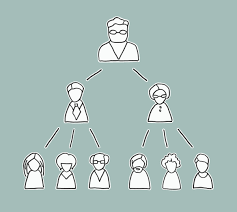
A state of hierarchy is present in our systems. There is a chain of command in more than just the military. Business operations are defined by their top down approach, with chiefs being tasked with providing direction for the underlings. Well advertised economic principles are expected to trickle down benefits to the masses. Religion expects followers instead of adherents; sheep who will not stray and never confront the status quo. I once had a brother-in-law who used a patriarchal methodology with his family because the bible told him so: Father knows best. Hierarchy is a ranking of people based on a particular management team’s view of the environment at hand. To benefit the ruler, someone is to be judged smarter than, cuter than, stronger than, whiter than, younger than, or more obedient than and then given a certificate, badge, job, or corner office to occupy. Control usually comes from a pyramid design for administration. Rarely do we have an example of co-leadership where all stakeholders are given an equal share in ownership or decision making.

Children learn early to express their authority. My middle son was quick to point out that his brothers were not the boss of him. I remember him once standing rigid at the top of a flight of stairs, fists clenched, while shrieking, “I know another way!” because his elder brother wanted him to follow his lead. Bosses are critical in a hierarchal society, or so the bosses tell us. It becomes accepted that decisions are made by those in charge. Some are offended by this when it is stated as fact; “You can’t make me!” is something I’ve heard often from my children and from my students.

One of the aspects of a second U.S. presidential term of Trump that frightens me is the way he uses his authority. I believe he feels exulted that he is head honcho. And 80 million people (far from the majority mind you) have given him permission to be The Boss over a vast and diverse collection of people. Most of those people, I suspect, just want to go about their business exercising their freedom to be autonomous within their particular setting. Some will argue that there must be some form of supremacy within a culture: A desk somewhere, perhaps, where the buck stops. I think again of people like Trump, democratically elected but part of a flawed system, who is destined to have the final say. We, the people, each of us alone, are sovereign.

Re: Puzzle

Those items of furniture that look great on the small screen of your phone device arrive at your door in a single cardboard box. They could be from Ikea or a host of other quick and easy delivery companies. One of these arrived at my door the other day. My wife had been tracking it so I wasn’t unaware, just a bit fretful. The source of my anxiety was the basic puzzle of what we would have to go through if we didn’t like it. We would then have to send it back and what would that mean? These ancillary costs to my mental health are always on my mind.

I like puzzles generally. I feel smart when I can solve them. I love doing crosswords. My mind seems to expand in different directions when I work on a jigsaw puzzle (as long as there is a tidy place to put the assembly and I can keep my worry of lost pieces under control). One of my favourite things to build is a custom made cardboard box for the delivery of presents to my family far away. I measure and cut carefully to avoid wasted space in the parcel. The postal workers at my local depot always smile as they measure my package and report the payment due. Supporting these old systems and pastimes pleases me.

My former father-in-law loved the three dimensional wooden puzzles you can get at farmers’ markets of in craft stores. Being an engineer, he liked playing Jenga and pick-up-sticks. He tried to show me how to play Tetris on his computer once which made me nervous for a whole day afterward. I got revenge by buying him a Christmas present of magic metal rings that were supposed to detach and separate but never did in his lifetime. Pay back can be pleasing.

I think of myself as a puzzler. I enjoy having an enquiring personality. As I age I try to keep my two cranial hemispheres firing on all synapses. I tone my left side by writing daily; using language is the key here. My right hemisphere enjoys the spatial dimensions of thought so this comes in really handy when I have to put things together, like the bureau in that box by the door, that was waiting to be opened. ‘I have a project.’ I said to my self with encouragement.

Space was made and time was allowed for the task at hand. Out of the box came all the assorted pieces. Tools were assessed. I gazed at the instructions that were numbered for clarity.  I was building this piece of furniture in front of my 95 year old special mom. She saw my puzzlement over the parts displayed before her and said, “I know you can do it.” I asked how she was sounding so sure. She answered, “ Because you are good at crossword puzzles.”

I appreciated her puzzling connection yet heart felt encouragement. I began fitting the pieces together. It pleased me that her presence gave truth to the saying; Two heads are better than one.

Re: Sunday

Of all the days of the week, I have the most mixed feelings when it comes to Sunday; the first day of a calendar row. In the early days of our relationship my bride and I would discuss why this day began the week rather than ended it. Hence the cause for confusion because Sunday is part of the week-end. Biblically, Sunday is the day when god rested because he had been busy creating everything on the six days previous.

Speaking of tradition; the reason behind the old names of days are so old. Maybe they just deserve to be forgotten. Just who cares anymore eh? Monday is everyone’s moody day but we don’t call it that. Well moon’s day sounds kind of sweet actually. Tuesday? Relates to war, so I’ll pass. Wednesday? Just who is this Woden dude anyway & why does he deserve a day? Thursday? hmm? If I had a hammer. Not bad, kinda folky. Friday? Frig? I’m getting frustrated enough to swear. Saturday? Woden (again with the norse god)? Washing day! Really? Sunday? Here’s comes the sun, finally a reference to The Beatles!

If we can’t rename the days then how about putting them on a spectrum. How about a colour to represent each day? Monday is moody blue for sure. Tuesday maybe purple, Wednesday is taupe, definitely a soul sucking military brown. Thursday is freshened with mint green. Friday might work as tangerine. Saturday is anything neon. So that leaves Sunday maybe a greyish yellow. We could name the days based on a flavour or the taste it leaves in our mouths. Monday leaves a bitter taste but it’s a necessary day so maybe spinach works. Tuesday has more promise but it’s still boring so maybe a liver paté. I’d say Wednesday is perfect for Spam or lima beans. Thursday is a pastry day. Friday tastes like toffee. Saturday is salty or spicy and Sunday reminds me of soup.

I suspect most people think Monday, Tuesday and Wednesday are pretty ordinary days. The thought of a weekend ahead gets us looking forward with anticipation so when Thursday comes around we are feeling the downward slope on the hill of labour. When I was working, I liked thinking of Thursday with excitement. I found time to fantasize and distort the realm of time so I broke the four following days down into seasons. Follow my reasoning here: Friday equals Spring, full of promise & anticipation, Saturday encapsulates Summer filled with stuff to do, Sunday has elements of Autumn melancholy yet still colourful and then Monday hits like Winter chills. Neither the mamas nor the papas like Mondays.

My favourite day, in conclusion, is the sunny sounding one. I like the name Sun Day as it evokes warmth and smiley faces. I’ve started posting my essays in honour of this day to make it part of yours. I would advocate for a revolution to labelling our calendars. Gone are my busy Sundays. My newspaper brings me a crossword which passes the time. Sometimes there is a biblical clue or two. It pleases me that I can answer them.

Re: Robot

I read last month that a robot crushed a man to death. No reporter asked if it regretted its actions. One would hope that this is not the first scene of the latest instalment in The Terminator series of films. Danger Will Robinson!

Stories of robotic inventions fill media sources as we lurch from one computer/techno advancement to another. Such speed of development would alarm any Luddite. While I am not against the notion of progress I have felt daunted by examples of increasing robot dominance in my environment. Take self check-out lines for example. I try to avoid these ‘help yourself’ zones in stores because: A. I’m a fumbler, often taking too much time fiddling with wallet, keys, coupons, cards & such. B. I don’t respond well to screen choices and get flustered that I will press the wrong menu icon and C. I’d rather talk genially to someone I recognize as another human being trying to have a nice day.

I’m currently typing this blog entry on a new MacBook Air. An older version kept giving me alarm messages to upgrade. (heck it was only 6 years ago when I bought that one, which the IT guy at the store said was ancient, even old fogey-ish, in computer terms). Fortunately, I could transfer some of my ‘ancient’ apps over to the new format which brought me some solace. I can guarantee that what you are reading is coming out of my own head, not some version of ChatGPT. (That word processing application is apparently the wave of the future and will revolutionize the process of reading/writing/editing/publishing). Oh dear!

AI can be used to imagine different scenarios so that test runs can proceed much faster than normal human-driven research. Imagine medical checks of potential life saving drugs (maybe a several year trial can be compressed safely into a few months). Automated labs, robotic taxi cabs. Auto-reader books, and home central info kiosks like Siri or Google Assistant have made a set of encyclopedias seem quaint.  Forgotten in all this artificial intelligence discussion is that we still need to instruct the humanoid device. Back before the turn of this century IBM invented a computer called Deep Blue, a computer force-fed all the known chess moves. It beat the reigning grand master of the game because of superior input, not creative thinking.

Robot Thinking is a form of intelligence that relies on data. Machines are designed to do our bidding, not think for themselves. If there are hints of foreknowledge it is due to the content of the programming not a clairvoyant attitude of the microchips. A moral robot is more in the realm of science fiction. An automaton named Hal or Data must continue to perform at a human’s behest, keeping prime directives active in its operating systems. A robot must always defer by essentially asking ‘What Next?’ then choosing from a defined menu. They/It/Bx can’t refuse to comply unless the information is unavailable.

If robots start apologizing then we will have something to worry about.

Re: Food

Food is not a big part of my life. There is no denying it’s a necessity, fuel for the body and all that, but eating as an activity isn’t high on my priority list. Most people think I’m strange for not going all exclamatory over the taste of something scrumptious. For my part, I think it is crazy that so many folk take photos of their food.

Some women I have known have been flummoxed that the way to my heart has not been through my stomach. I won’t refuse a meal that is prepared for me. I will always complement the chef. However, inside I will most likely feel that a self made meal would have been just as satisfying. And by satisfying I don’t mean gustatorily splendid, just pleasing enough to fill the need for energy to carry into the next activity. Leftovers are my favourite food. Leftovers make me smile because then when I eat them I’m serving a function; using stuff up. I hate waste, so even though I truly don’t relish the idea of eating, at least by eating leftovers (refrigerator ‘must gos’) I’m helping the planet in my small way. My perfect meal is prepared (what’s that?), eaten and dishes cleaned up in under thirty minutes. Call me Chef Boyardee!

On the Foodie spectrum, I’m obviously a One, while a Ten would be someone who is always looking up recipes, watching the food channel and/or discussing the next meal while eating one. My 94 year old mother-in-law wants to teach me the proper way to cook. There is a new edition of The French Chef that she asked me to order from the library. I think she fancies herself to aspire to the Julia Child level of cookery. She’s a sweetheart for telling me that recipes are meant to be followed line by line. My bride loves to experiment with food. I have told her that watching her cook is like being in an artist’s studio witnessing the creation of something magical.

Chefs are celebrities nowadays, perhaps they have always been notorious. In magazines and television, food experts are on display. I can’t imagine being on one of those competitive cooking shows where you get chopped, diced, or filleted for not producing the food du jour correctly, on time or in an artistic format. The final plating is crucial as it must use the china as one might paint on canvas. Get any aspect wrong by Top Chef standards and you are chopped for sure. Bon Appétit!

In my next lifetime I’d love to come back as a plant. I could be a mighty Douglas fir or a spongy mass of green moss. Ferns are nice. I could be a gentle fern, all green and leafy swaying with my kin, in a gully, communing with a babbling brook. That’s peaceful! No hunting for my dinner. I’d like to let chlorophyll do the job for me by taking the sun’s energy and turning it into an insta-meal. I’m a lazy eater I guess. Burp.

Re: Tax

“This job is taxing me.” My mom used to say that I was taxing her patience, leading me to believe that the verb to tax was a negative thing. My wife and I have just been through a taxing experience; the slow death of her father. It’s not easy saying goodbye especially when you have a duty to care for another.

Most folk use the word Taxes in the context of paying them to their governments. There is a tax on most things in a modern society. When we buy stuff there is an expectation that some of what we pay will go to a municipal, regional or federal coffer. Many of us resent the fact that a government always has a hand in our pocket. Most of the time I can get my head around the need for group participation in financing needed services. Collectively we have to have a way to pay for the roads we drive on, the hospitals we go to in emergencies, the schools where we find enlightenment, the infrastructure elements that provide for the continuation of our culture. The importance of being taxed in this way must be viewed as a positive thing if we are to consider ourselves members of a caring society.

We all have a duty to care for our neighbour. Sometimes it is on a personal and intimate level. Sometimes it is anonymously through paying taxes. I find it difficult to place a coin in the hat of a soliciting homeless person who regularly frequents a corner in our downtown. I don’t resent his presence, I feel sad for his predicament. I gain some solace knowing that I pay taxes to a city government that has a progressive housing initiative. I don’t mind paying my fair share. The fact that our tax system is unfair bugs me though.

#Taxtherich is a well used hashtag on Twitter for good reason. Taxation policies in my country and other developed areas lack equity. Records, research and anecdotal stories abound of the one percent of us who find exemptions to paying taxes in proportion to their income. Employees of big companies often pay more taxes than the CEOs who run the corporations. Governments are reluctant to close the tax loopholes or institute a wealth tax for fear of investment going elsewhere. Consequently social programs are run through raffles and bake sales, while the super rich play with their money buying yachts and building spaceships. This imbalance taxes my patience for an equitable resolution.

The game of Monopoly depicts an unbalanced corporate world, but at least there is a luxury tax card. Several among the millionaire/billionaire class have boasted that they will give their fortunes away. I don’t believe that philanthropy is the answer to such a persistent societal need. Citizens have a responsibility to vote for fair tax laws. Once upon a time in the Americas the notion of Taxation/Representation was enough to cause a war. It’s one thing to be independent from tyranny, it’s another to find ways to support each other’s needs.

Re: Uniform

Uniforms give me a creepy feeling. I once argued against providing a standardized school uniform in the public school where I was a teacher. Our principal had visited a local private school and got all excited about making His School like a family; all united and loyal to a common cause and some such nonsense. The staff was divided and it took a few of us to rally for the concept of individualism before his idea was shelved. We agreed to naming the sports team instead and that seemed to placate him. ‘Go Vikings!’

I can appreciate the value of a uniform for someone who serves the community. Police/Fire/Ambulance folk need to be recognizable so other people can gain quick access to help in an emergency. Where the scene gets muddy for me is in an assembly or parade situation. Masses of marching uniformed individuals remind me only of force, not unity. A military parade particularly is a spectacle of power and intimidation. Royal ceremonies and ultra flag waving events curdle my thoughts in the same manner. The pomposity and regalia of the recent British coronation to acknowledge and verify the ascendency of the costumed man formerly known as prince was surely a joke viewed through a twenty-first century lens. I lost all respect for people who claim to be royalists after this televised celebration of all things status quo.

For the wearer of the uniform, there will be a measure of pride. Friends I have had in health services and the military have told me their confidence is elevated when they are dressed for work. They become more than themselves in a way that transcends their individuality. They are part of a unit. There is power in a collective. Power that can be used with good intent, or malice. I believe the ‘Defund the Police’ movement was meant to address the abuse by members of municipal forces who have disrespected the very people for whom they wear their uniform. Even political leaders have been at a loss to tell citizens just who the security forces are serving and exactly what they are protecting. If the saying is true that, ‘clothes make the man/woman’ then a reorganizing of society itself is in order as long as the sight of someone in a uniform can generate a fear response.

My school principal, that master teacher, was misguided. He was after control, not collegiality. He didn’t distinguish between uniformity and consistency. In the school setting (and in community) a consistent approach to solving issues nurtures understanding and even sometimes conformity. Uniforms don’t promote solidarity, common values do. People will respond to leaders who say what they mean, mean what they say and follow through with consistent approaches. To be predictable doesn’t mean being boring. A uniform is boring and humans are born to be creative. We must always question authority while celebrating our differences. A uniform comes in a box.The uniform and the box are mass produced. Humans are best when they think outside of both.

Re: Servant

There is a distinction between being a servant or a slave. A friend of my son once surprised those gathered for a back yard BBQ by stating, “I ain’t nobody’s bitch.” Someone had just asked him how he liked his new job and he was telling us that already he wasn’t getting along with the boss. He worked at a grocery store. He was tasked to keep the floors swept so that customers wouldn’t slip on entry. When he wasn’t doing that he was assigned to bringing in the carts from the parking lot. Basic service work, minimum wage.

Recently deceased Queen Elizabeth II, expressed in speeches and in her actions that she saw her life as service. Her servant salary was quite different to that of a grocery cart boy. As a society, I think most of us place a high value on service to others, even while we underpay the majority. A housewife is a role we take for granted in most of the world. Putting aside the sexual discrimination elements inherent in the title, the job description of a person who makes a home for others is a lengthy list which can cover a number of well paid professions: Cook, Laundry Worker, Psychologist, Teacher, Early Childhood Educator, Personal Care Worker, Financial Planner, Management Coordinator etc. If these services were contracted out separately the monthly expenses for a family of four would be prohibitive. The important role of Homemaker could be supported with a government cheque. A guaranteed wage might resolve this issue, as well as other cases where service goes unsung.

Ironically perhaps, the nobility of being a servant was sensitively portrayed in an episode of the television series The Crown. Sydney Johnson, a real life character who was valet to the abdicated King Edward VIII, was shown as a graciously giving fellow, even though he was only a notch above a slave to every royal whim. I cringed when I saw the Duke make a request for his silver cigarette case. I felt like yelling at the screen, “Get it yourself!”

Full service gas stations used to have lots of employees dashing about checking oil, pumping fuel and washing windshields. DIY is now the language norm in more than just filling up your tank. But I must admit to feeling let down when I can’t find someone to help me when I’m looking for a product in a store I don’t frequent. I get royally indignant wondering why the customer is no longer always right. I can relate to the symbolic Karen in these moments.

My father served with distinction in North Africa during the second world war. Later, through his work in community he taught me by example the value of volunteering. My mother was a Public Servant in the manner of an elected official in her region. Growing up with them, I witnessed how giving service to others is an essential part of being human. Everyone wants to feel a part of something, giving of yourself honours your life as well as those who receive your offerings. Volunteerism builds humanity and humility.