Re: Concept

The question of how one conceives things is on my mind a lot these days. When I filter the daily news through my life experiences I find myself feeling very curious about how others reached a certain conclusion. It’s my teacher training at work here as I’ve tried in the past to find common ground with my students, but in this present-day case I’m searching for a way to conceptualize my internal struggle to understand myself.

Self-concept is the beginning. It’s not about ego. In architecture it’s important to have an initial design concept, which sets out the parameters for a project to grow. Imagine yourself as that project, and imagine how you want to build the best version of yourself. One’s self-concept is critical to fending off manipulation by others. I was once accused of being an island unto myself, but I don’t mean to suggest that our self-concept has to be a fortress set up to prevent invasion. Even if we intend to have a philosophical moat around us, we still need to design a drawbridge for the occasional interaction with roving troupes of minstrels and other artisans, thereby bringing joy into our cloistered lives. The walls do not a castle make.

I’m familiar with the concepts of life as espoused beautifully by the fictional coach Ted Lasso. Much has been said about the creative collection of characters in this award winning television series. Lasso seems a fish out of water as he navigates his job in a perpetual cultural clash with owners, players, and football fans. Amusingly, a goldfish is used as an example of winning behaviour as part of Coach Lasso’s concept of team solidarity. His intention is not to win, but to build. He wants the sportsmen in his charge to be better individuals first, only then can they become champions. I exulted in the revelation that a key to satisfaction in life is to be curious, rather than judgmental.

Concept is a forest-sized idea. Big picture views are my cup-of-tea. Whenever I’m planning something, it’s the outcome I wish to grasp. That may start with a question like, “Why am I doing this?” I believe if we can conceive something in its finished form then it can become a reality. Luck can factor into the final result but we must consider those initial conceptual ‘what ifs’. Some currently held concepts defeat me because they are not logic-driven but faith-driven. A manifestation board is cute, and even affirming, but it won’t work unless you find the keys to your dreams of a better life.

Religion is merely a concept, based on fear more than faith. I’ve been in congregations where action has been a way to fulfill the big concept. Bringing a healthy concept into reality is like conceiving of a child in your life and making that happen. The Idea of creating a new human is so awesome it deserves regular decision making, revisions, accounting, and celebrating of milestones along the way. Biology is only the beginning.

Re: Perfect

Pronouncing this meaningful word can produce a wonderful shift in perspective. For example, when I write this essay I reread, edit and change many parts of its structure to perfect the final result. I am active in my pursuit of a readable piece of writing. Meanwhile, if I’m being honest, there are only a few times when I can say the result of this writing process could be called perfect.

I enjoy the act of perfecting something to a point. I admire those who have the discipline to achieve a top score in their fields. For example in the sport of gymnastics, I remember Nadia Comăneci achieving the impossible in the Montreal Olympics of 1976. It was such an unusual feat that the scoreboard wasn’t enabled to display a Perfect Ten. Her achievement still generates debate about athletic scoring to this day. There are philosophical arguments suggesting that if you remove the goal, by saying the highest level can actually be achieved, then you have done a disservice to the human impulse to strive. When I was a teacher, I liked to advise my young friends to; “Have a go!”, “Give it your best shot.”, or “Reach for the stars!” The beauty is in the attempt. The outcome will take care of itself.

Seeking perfection is a noble goal, sometimes achieved, but requires a devotion to daily practise. The fictional character Mary Poppins may pronounce that she is, “Practically perfect in every way.” Whereas most of us characters are mere mortals and prone to error. We wish to have a perfect life, a perfect body, a perfect performance report at work, or a perfect partner. I have agency for the first three in that list but the latter is more a matter of luck, which I have, praise be!

My life is not perfect, except if I say it is. Others might see that my standing in the world is to be envied. In this same way, I can get a rise in my heart when I hear someone describe their life with high notes of glee. I sometimes can create a perfect day, other times I just have the planets in my favour. Joy comes when I recognize that near-perfection is achievable, even when it occurs through a series of mysterious connections. Consider for a moment how we sometimes say, “This is perfect timing.” We are excited when things go our way. I used to think, after a run of bad luck, that I was somehow more deserving of a treat. I guess that might be how gamblers fool themselves when they consider the odds of winning.

If practise makes perfect then after much effort I trust we can tell ourselves that we shined for a moment, however brief. Each feeling of satisfaction over a job well done, is a moment in the sun, so I feel we are allowed to bask for a while. We don’t need someone to caution us about getting a swelled head, nor do we need applause. Just a healthy dose of self-satisfaction.

Re: Mystery

One of my favourite lines from a film is delivered by the owner of a theatre in early London. The movie is Shakespeare in Love and this character (played beautifully by Geoffrey Rush) is asked how the play he has sponsored can possibly go on. His reply is simple, “I don’t know. It’s a mystery!” Life is indeed mysterious and the wonder of it can flabbergast me.

Social media, as an art form, is an extension of theatre throughout the history of humanity. It is  a communication medium writ large and I’m loving the feelings of connection I get from the internet of things. I wanted to use the handle WhoNoz when I first opened an account on Twitter in recognition of this curiosity of our internet age. How I can have a relationship (even a virtual one) with someone in Australia by tweeting something on my computer and getting a follow back is a mystery to me. I like to think of myself as someone who knows some things. I acknowledge at the same time that I can’t know everything. It’s confusing and a bit contradictory, while thinking that I have an opinion, even though I’m no expert. I could just as easily lift my shoulders in a moment of exasperation declaring, “Who Knows?”

Many of my elders confess to loving mystery stories. Some pulp fiction writing is all about who did what and where. Even though I love the enduring character of Sherlock Holmes, I’ve never been a fan of the mystery genre of story telling. In a real life conversation I am often dismissive of the idea that getting to the why of things is an important objective. The mystery to me is discovering the how of making something happen. That is why I am thrilled by stories of quests. I want my characters, real or fictional, to boldly go forth on a mission of discovery. The question of how moves you into the future of stuff. I wonder what mysteries these adventurers will uncover. What truth will lay exposed after the search is complete? What lessons will be learned by the characters? Will I have found, by being a witness, that my life is more understandable?

Life deserves to be examined; each day awaits discovery. Even in a life that seems easy to describe there is mystery to be enjoyed. I’ve been taking medication for a heart dysfunction called Atrial Fibrillation. Recently I got an opportunity to have a surgeon try to correct the irregular misfiring of my heart muscles so that my beat is constant and predictable. Call me crazy, but I awaited the procedure with gleeful anticipation: Here was something new, that I could embrace, that just might make my health and my life better! I suppose one can accept mystery if one can be trusting in the process, just as Philipe Henslowe believed that the show must go on, back in 16th century England.

In my life I’d say that knowing, even when it’s hard to, gives me a positive bearing for my next step.

Re: Trust

What do I trust, that the sun will come up, that tomorrow will come, that ‘the cheque will be in the mail’? Trust has been on my mind lately, as I listen to war news, trusting that the people we have entrusted to run our governments do the right thing by finding a road to peace.

I remember moralistic school lessons when I was a student. Values were not explicitly outlined when I became a teacher. I found ways to fold philosophical concepts into the classrooms of my primary grade children. Values are still preached in churches but carry a ‘must do’ condescending tone. I search for examples in society where values are exhibited and commented on, in a community context. Personally, I strive to behave in a consistent manner. I live far from my grandchildren. When I talk to them through digital means I trust that they will learn that I am lovable, kind and have a multitude of values they may wish to emulate. To be a trustworthy individual is a great asset to oneself and to the world. Earning a person’s trust is my primary goal when seeking friendship.

When I lose trust in someone or something it is a large step towards losing all hope. The United States of America puts great store in religion using, “In God We Trust” as a motto for their belief in government, its constitution, their almighty currency and their very way of life. I don’t accept that gods of any shape or form have input into human existence. Truth be told, I don’t trust easily. When I put faith in someone’s actions I have reached a level of trust which is not common to me. I reserve that for my wife alone whom I depend upon for my daily companionship and happiness. I put ultimate trust in myself; I am a naive soul in that way. A friend, who had gone through a rocky break-up and found a new relationship after depressed times, said of her recovery, “I’ve learned to trust again.” I believe the truth in that declaration is that trust must come before love.

There is a trend for companies to advertise themselves as trusted brands. I got a survey request recently that asked me to rate various products using human qualities like trustworthiness, friendliness, honesty and loyalty. A local financial institution sent fliers in the mail suggesting they could handle my money better because they were, after all, a Trust Company not a bank. This is further anthropomorphizing of a corporation! I don’t care for this manufactured consent approach in the marketplace. And a product is a product no matter how organic it might be!

Two songs about these thoughts come from children’s cartoon classics: The Jungle Book and Toy Story. The former is sung by the Svengali-like snake Kai, using trust as a tool for manipulation. The latter song is a happy tune describing the roots of friendship. Our personal, societal and international existence must depend on our mutual desire to trust one another.

Re: Own

The times in my life that have worked out for the better have been those occasions when I have owned the narrative. Times when I have made the best out of a poor situation. Times when I could have felt ‘done to’ but instead I decided that I could find a place for myself amidst the lives of others. It’s best not to feel victimized or even put upon. In the best or the worst of times, having some control allows us to use our creativity to make an adventure out of any circumstance. Taking ownership is the first step towards making a plan.

I resist the phrase, ‘You’ve made your bed now go lie in it’. Yet, owning the problem can enhance your responsibility; moving you into a place where opportunities await. Change becomes less shocking. You alone are best positioned to decide the best choices to make within the reality. Currently I am sharing the daily task of elder care. My wife’s mother is living with us so that her unique needs can be met. I rarely feel as though I want to jump ship but assessing my role in this present picture is a challenge. I could say to my bride, “She not my mother, you deal with it.” Or, I can accept my situation better the more I feel involved: I can read newspaper stories to this special 95 year old (almost blind) woman. I can engage her in a stimulating conversation. I can invite her to help me solve the crossword. I can walk her to the seaside, sit with her, and describe the scene my eyes can still see. I owe it to myself to own every moment I have in concert with the people in my world. In this scenario I am working towards the goal of recognizing the value of thinking, “Well she’s my mother too.”

Owning the present in an affirmative way has helped me accept change. As a teen my parents separated (I discovered I felt better when I spent more time independently with each of them). My first wife was raised in a church going family and wanted that lifestyle for our children (I found a new side of myself by joining the choir and learning biblical teaching). My second wife was into healthy food choices (I found the world of cuisine expanded my curiosity and gave me a heightened awareness of other countries and cultures). I adapted rather than acquiesced.

During one talk with my elder roomie, I asked her what she thought about the word Own. She blurted out, “Well I don’t own any furniture anymore.” An obvious statement coming as the consequence of downsizing and a cross country relocation to a small townhouse with her daughter and me. Digging out of the confusion of a life no longer being normal takes a lot of patience, until you find what is normal again. Owning up to the part you can play and being unafraid to design your own script can help with the success of any of life’s productions.

Re: Commit

There is a line or script reference in most romantic comedies or dramas that includes the word commitment. The plot usually goes like this: One partner or the other (usually the male) has shown no sign of moving to the next stage of the relationship. This person is stereotypically said to have ‘cold feet’ or maybe they are afraid of the deep end of the dating pool. Or maybe their outfits just don’t match. Anyway the text makes it clear that some people are just terrified to commit to saying the words; I Love You.

In the surprisingly good film, Gran Turismo, the word commit is used by the coach to urge the driver to make a choice and then put all his energy into it for ultimate success. This is a motor sport film so the drivers in training are being encouraged to be brave about their steering and speed decisions when it comes to risking life and limb while hurtling around the track at break-a-neck torque. There is a small romantic side bar in this movie but compared to the life or death decisions in the race cars, whether or not you can say Ti Amo seems too easy.

When it comes down to it, the essence of life is choice. We all have had times when we’ve had to commit to a decision. If you can feel your priorities clearly in the moment of yes/no, left/right, in or out, then you can commit with confidence. Mistakes will be made but at least you can say you are resolved to see things through to a conclusion. And maybe it’s being afraid of mistakes that inhibits us from committing. Yet we must make the attempt. As the wise character in a space film once said; “Do or do not, There is no try.”

The word Commit is often used in negative connotations. At some points in human history it was not uncommon to be ‘committed’ to an insane asylum. These places were like prisons for folks who didn’t fit into society. It was the culture of the times and an example of a fear response that people have towards others who don’t behave normally (whatever normal is deemed to mean). Another dark use of the word is in the context of some misdeeds. People ‘commit’ crimes, even rash ones that show no sign of commitment or forethought.

I have decided twice in my life to commit to another person in terms of a life long partnership. I actually enjoy the daily work required to keep a relationship healthy. Of course some days there could be a clash or two when I questioned myself, ‘Should I stay or should I go’. But those thoughts pass quickly because I truly believed the women I chose to share my life with also felt the joy and value of a shared life. It’s easier to walk a path together, hanging on tightly for assurance, letting go lightly around obstacles, committing to the shared experience of figuring out the next steps in the journey.

Re: Self

I can’t believe this is the 300th word that I’ve examined as it pertains to me, quite selfishly. I think all art is a selfish pursuit. A friend, who has commented on my work, has called it cheap therapy. He’s right in a way, since I get a chance to talk to myself and review my thoughts before sharing them with the world. I have no illusions about being the major benefactor of these essays. When I reread my words the feelings of self reflection can sometimes be powerful enough that I laugh or cry at my own expense.

I’m telling my mom, at this moment (even though she is long dead) that my head is not swelling from false pride. I’m still trying to convince her that I can be self interested and still be caring toward others. A person can be humble and still delight in the things they have created. In my understanding, being selfish is not in the same vein as being self-centred or perpetually self-involved. I try to view myself with the same level of enjoyment as I would the person next to me. In fact I love moments of one to one creative sharing since in that moment of context or conversation we have a mutual connection. Our souls have no borders.

Of course there is a line that some people may cross as they search to exclude others rather than embrace the human community. Making others irrelevant makes you a narcissist. There are many examples of narcissists in the current political landscape. Choosing a candidate to represent your interests in government is tricky enough without someone purposefully trying to manipulate you. Check carefully before you make a Trumpian Bargain: Your self-preservation as a trade for the charlatan’s self-aggrandizement.

Self help books have been a section in most book stores for quite a while. The Do-it-Yourself type can find these guides useful when the way to fix a problem becomes elusive. Many stores are currently promoting self-help options seemingly to speed your shopping experience. The resulting lack of need for cashiers and staff in general pads the corporations bottom line and speaks to the shareholders’ self interest. Yet all that glitters is not gold eh?

One of the responsibilities of a parent is to help their children develop a positive sense of self. It’s a delightful and complicated task to guide a child to see themselves as worthy individuals. I tried to help my boys understand that they had the power to decide the kind of person they wanted to be without becoming self possessed. Equally important to me was that the goal was not to be so selfless that actions became like a cross to bear. We all have needs. Our journey is to become self actualized. To reach for our best selves, we must aspire. Our goal can be accomplished through skill development, thoughtful reflection, watching others, reading, and conversation. Being self absorbed, as an act of personal creation, can awaken vistas of understanding and healing light. We are mighty!

Re: Get

“You can’t always get what you want…” A Rolling Stones song can be a philosophical code for living a life of satisfaction. I once had a great conversation with a friend about getting it: The it being life’s meaning. We both agreed that what you got, when you thought about life, was directly proportional to how much you thought about your existence. Most days I get why I’m here, existentially speaking.

The word Get has a lot of use for its size. This small word is used without much thought because it makes the sentence flow. Consider that you might be told to get stuffed, get it together, get cracking, get a room, get a life, get going, get real, get over it, get lost or ‘just try to get along already!’ Get suggests a direction as well as a directive. Sometimes we get anxious about getting there. Other times we long to get back to where we once belonged. We save money for a get-a-way so that we can get together or because we must get off the hamster wheel. I often wonder if we get what we deserve.

When I was a kid we were encouraged to recite what we got for our birthdays. After Christmas the question, “What did you get?” rang through the classrooms. As we emptied our halloween containers we would spread our fingers through the loot hoping to find those candies that we wanted most to get. Thinking back now, I wonder if this desire to acquire was a step towards indoctrinating us kids into the consumer world. After all, a capitalist society is predicated on getting stuff.

As 2020 dawned the exclamation, “You’ll never guess what I got!” gained a morbid new meaning: I was among the many who got Covid19. As advised, I had gotten all the shots to try and prevent it but the virus found me anyway proving I was not as immune as I thought I was, and that vaccinations probably kept me from dying like the seven million global souls.

One of my pet peeves surfaces while I’m in a fast food restaurant. A customer will look at the menu board and state more than ask, ‘Can I get…?’ which sounds rude to me. The annoying part of me wants to turn around and ask if their mother taught them the ‘Please may I have…’ sentence starter. What I’m getting at is the same kind of feeling when someone non-accepts a thank you by saying, ‘Not a Problem.’ Oh well, we are what we are. At this part of the blog I’m thinking of Judy Blue Eyes: It’s getting to the point where I’m no fun anymore. I am sorry. https://www.youtube.com/watch?v=QZGeU83K6Do

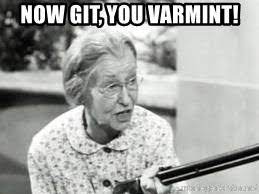
Harmonies by Crosby, Stills and Nash are at the blissful end of the vocal spectrum whereas a hillbilly yelling “Git”might be at the opposite pole. Language is forever fluid. I love it when I can capture the right word at the right time. It’s a Gotcha moment.

Re: Missing

The thing about saying you miss something is not about the ‘something’ so much as missing the collective stuff that came with it. The smell, sound or visual may remind us that we are missing a moment in time: Being OF that time. But, just like realizing you can’t be in two places at once, you also can’t be in multiple time frames at once. Freaky but true.

When someone asks me what I will enjoy first after a ‘time away’ I have many answers. The cliché for people being on holiday and returning is the Dorothy statement; ‘There’s no place like home’. In that sense home can be a catch-all term to describe aspects of what makes our life unique. I can imagine that prisoners or soldiers love satisfying cravings upon release from their duties. I haven’t often felt that I wished I were somewhere else. I don’t think I’ve ever wished for another reality either, so maybe that’s why I can’t say I’m missing something or someone. That makes me lucky I guess. I can appreciate stuff while simultaneously minimizing the big picture importance, if that makes sense. Hang on tightly, let go lightly.

Looking forward to something might suggest what I have missed.  Luxuriating in a long hot shower certainly delights me.  Walking in the summer rain makes me wonder why I don’t do it more often. Slowly licking an ice cream cone must never be a rare treat. When I’ve been away from the touch of my bride my heart doesn’t quite beat to the same rhythm. I guess when we can conjure up a sense of longing, which is a projection into the future, we know better of those things that have left us gasping for joy in the past.

I’ve sometimes been missing in action in a metaphorical sense when I have not paid close enough attention to the delights of the present. Shame on me! Regret comes from this place when I should have known better to capitalize on the moment. Carpe Diem must begin each thought that leads to action. Indeed, being remiss is not a good fall back position. A healthy dose of forethought might reduce feelings of FOMO.

I’ve been having some illuminating conversations with my special 94 year old mother-in-law. She’s missing things that she hasn’t used in forty years. There are tears. And then she surprises me with a question like, “What have we discovered today?” I’m on a mission to find out how it might be for me if I get a chance to look back on my life after so many decades. We both keep talking about the importance of staying grounded in the now of life, not necessarily the know of it. There is no point in being upset when you can’t recapture something from your past. Politically or otherwise we can’t make the past great again.

I’m learning that time has its own plan. We won’t miss out on anything if we tend what is before us. Plant the seeds. Watch your garden grow.

Re: God

When I was a child my parents did not lead me in ways to suggest a reverence for the word or meaning of God. They even spelled it differently: Gawd! Pronouncing it with exasperation, as if someone had let them down again. At the time my friends and I thought the Catholic kids who were educated in the scary looking building down the street belonged to the Others so we teased them. As I grew I ditched my ridicule but maintained my curiosity regarding God-fearing personalities. I was curious enough to marry one. My first wife was a gentle soul, raised in the ways of a Christian. She practised her spirituality rather than spouted it. She was subtle in her evangelism; leaving a newish version of the Gospel out on a side table for example, knowing I liked to read almost any text. It was that gentle persuasion that got me accompanying her to services on Sunday. I came to understand the Bible not as the Word of God but for its intent.

This became my God Period: going to church on a regular basis with my growing family. During those years I included myself through reading, leading, singing and otherwise participating in finding out more about my spirit. It was fun and rewarding. I learned a lot about people. I think it helped me be a good father to my children and a husband to my wife.

A survey from Angus Reid Polling landed in my email inbox last week asking me to identify my faith status from a long list of choices. I chose ‘none of the above’ for several reasons: I don’t practise the tenets of any one faith, I don’t attend any religious functions, I don’t pray. I believe that religion no longer has a place in my life. The idea of God still fascinates me as it did when I was using it to understand community but I am not a godly person. Calling myself a humanist sounds banal. Being an atheist just sounds argumentative.

Yet here I capitalize the word God. I still feel as godless as when I was a child. I don’t believe that a god created all things. As an artist I have sometimes entertained the notion that I am the maker of my existence, yet I resist using The Creator’s name as an expletive out of respect. I feel I can appreciate the many deities that are worshipped throughout the world while never feeling the urge to kneel. I have witnessed some amazing things but do not believe that these happenings were the result of a divine hand. I refuse to give credit to a supreme power, nor will I accuse such an entity of meddling negatively in my personal affairs.

Many philosophers, I have read, describe themselves as anti-theist. I find much in common with that willful declaration. My spiritual side comes out when I’m being silly, when I’m feeling carefree holding hands with my wife, when I’m awestruck by the vastness of the universe and all it contains.