Re: Choose

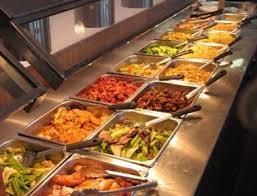
My niece as a young girl loved to have a choose meal: a buffet of food items laid out by her mother for grazing. That little girl could not be still in her chair when other members of the family gathered to dine. That come and go arrangement used to irk her grandad, whom she called Popop (coincidentally a name that unintentionally yet neatly labelled her behaviour of popping up and down).

For a while there was a popular series of children’s books styled as Choose Your Own Adventure. The construction of the pages allowed the reader to decide, at the bottom of the page or end of a chapter, which page to turn to, for the narrative to continue. Sometimes your choice would lead to a quick ending, or a multiple series of back and forth page flips before the action was resolved. Reminiscent of game shows on television that ask if you might choose between door number one etc.

I watched a riveting two person play recently, called Armstrong’s War. A young wheelchair-riding girl guide chooses to read to a youngish army veteran to gain her Service merit badge. In the narrative we learn that circumstances beyond both characters’ control required choices of life-changing proportions. Playwright Colleen Murphy’s script examines how complicated it can be to select a course of action. It’s an anti-war tale without cliché and a strong message about how our society could make better choices. With the current rise globally of authoritarian governments, I watched this play unfold amid a background thought of the meaning of democracy. I wondered how much choice we really have in this context.

We think we are choosing all the time; what to eat, who to partner with, how to fill our days, what to watch on TV, or when to walk in the park. Choosing feels like an active pursuit, we know in our minds that we always have a choice but choosing means we have to go from the abstract to the real. Sometimes choice feels like a burden, an obligation even. Other times we get riled if our choices are restricted because we equate choosing with freedom. We can choose from a menu board that’s presented (as in a slate of candidates) or the menu board that we have built in our minds to cope with everyday decision making (when to do the laundry). I confess that as my age increases I try to purposefully reduce the options in my brain so that the stress of choice is minimized. However, when outside pressures reduce my personal authority I can rise up tall in human right’s fashion. Currently I join the MAiD debate, proclaiming my right to choose a dignified death.

My niece has grown into a responsible adult, despite her Poppop’s concerns over her eating habits. She’s making great decisions on how to raise her almost three year old. He gets to choose but he minds his mom enough to consider a healthy path. I watch from the comfort of my elder chair and continue to learn.

Re: Command

At a hockey game in February, 2025, a singer named Chantal Kreviazuk chose to change the lyrics to Canada’s national anthem. It was a lyric heard around the world as a sign of protest over U.S. trumpian trade tariffs placed on their neighbour in the true north, strong and free. That last bit isn’t the lyric change, just a bit of cheekiness from me. What Ms.K. did was switch “in all of us command” to “that only us command” making the point that Canada will never become the 51st state, and we intend to stand on guard for us.

The word Command has a military sound. An order is given by a Commander, who is at the top of a Chain of Command. Those in military regalia have a Commanding Presence. I get a shiver when I reread those three sentences because I picture a pointed gun, directed at me to obey ASAP! Command rhymes with Demand which is what you are making if you are inviting someone to toe-the-line. That idea may be acceptable for training a dog on a leash. But people are not pets. We have agency. Humans are not meant to be commanded. We make our own rules. At least in a democratic society we do.

We can direct ourselves, if we agree on the commandments. If we can decide on a principle then we can try to live by it. This is sometimes easier said than done, but before you dismiss the idea consider that the use of commandments is not without precedent. Think about Moses. He was the guy in the Bible who asked his god for direction when the masses became unruly and started worshipping golden things. Since his god was the Commander of that time, Moses probably thought if he had some rules carved in stone his people wouldn’t mock his efforts to be leader of the pack, or flock, or whatever society was destined to become when the promised land was discovered. Luckily Moses got his tablets or all hell might have broken loose.

My summary of these biblical ten commandments break down this way: Love THE deity (3 mentions), Love your parents, Don’t steal (3 mentions), Don’t covet (2 mentions), and my favourite, Don’t lie about your neighbour. This is not a bad list, as lists go, but similar lists in other religions haven’t stopped war, ended poverty or made our planet any more congenial for their observance, strict or otherwise. I guess all commandments are meant to be broken. Such is the way of the human flesh. I would be sounding facetious if I wasn’t so flippant. I had only four basic rules as a young father, gently commanding my three sons to: Prioritize, Speak Truth, Be Brave, Show Kindness. As their commander for a time, I think our family ship sailed pretty well.

That hockey game between USA/Canada? The record will show that we won 3-2. While that wasn’t a commanding score, the victory felt like it proved the point of our self-determination.

Re: Hierarchy

I don’t put much stake in status. I believe a system of hierarchy in a culture creates more harm than good. Perhaps it’s my lack of ambition that propels me to say this. Maybe it’s because I’m older (but not necessarily wiser). I never wanted to be the top dog in any setting, even though I appreciate recognition when it has come to me. When I have received accolades, I don’t view those who have patted me on the back as being lesser than. I like a level playing field.

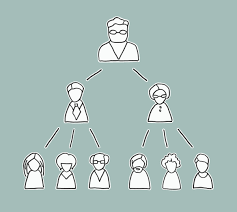
A state of hierarchy is present in our systems. There is a chain of command in more than just the military. Business operations are defined by their top down approach, with chiefs being tasked with providing direction for the underlings. Well advertised economic principles are expected to trickle down benefits to the masses. Religion expects followers instead of adherents; sheep who will not stray and never confront the status quo. I once had a brother-in-law who used a patriarchal methodology with his family because the bible told him so: Father knows best. Hierarchy is a ranking of people based on a particular management team’s view of the environment at hand. To benefit the ruler, someone is to be judged smarter than, cuter than, stronger than, whiter than, younger than, or more obedient than and then given a certificate, badge, job, or corner office to occupy. Control usually comes from a pyramid design for administration. Rarely do we have an example of co-leadership where all stakeholders are given an equal share in ownership or decision making.

Children learn early to express their authority. My middle son was quick to point out that his brothers were not the boss of him. I remember him once standing rigid at the top of a flight of stairs, fists clenched, while shrieking, “I know another way!” because his elder brother wanted him to follow his lead. Bosses are critical in a hierarchal society, or so the bosses tell us. It becomes accepted that decisions are made by those in charge. Some are offended by this when it is stated as fact; “You can’t make me!” is something I’ve heard often from my children and from my students.

One of the aspects of a second U.S. presidential term of Trump that frightens me is the way he uses his authority. I believe he feels exulted that he is head honcho. And 80 million people (far from the majority mind you) have given him permission to be The Boss over a vast and diverse collection of people. Most of those people, I suspect, just want to go about their business exercising their freedom to be autonomous within their particular setting. Some will argue that there must be some form of supremacy within a culture: A desk somewhere, perhaps, where the buck stops. I think again of people like Trump, democratically elected but part of a flawed system, who is destined to have the final say. We, the people, each of us alone, are sovereign.

Re: Dominion

The bible tells me so: Gen. 1 Verses 26 to 31 “And God said, Let us make man in our image, after our likeness: and let them have dominion over the fish of the sea, and over the fowl of the air, and over the cattle, and over all the earth, and over every creeping thing that creepeth upon the earth.” But what if I don’t want to!

To have dominion is to control stuff and I believe it is wrong to dominate other living things. For some folk their god is all powerful, so we can be too. But really, as a hominid, I’m just another creeping thing that creepeth over the earth. The state of the planet right now only proves my point: If we had been put in charge of this place we’ve sure enough done a terrible job of it. If we were made in an image of god then we haven’t been creative enough in return. We haven’t been good stewards.

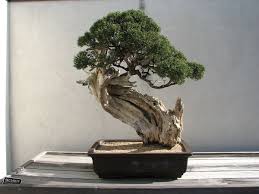
During the controlling phase of my life; when I felt things worked better by imposing order and good government, I had a small bonsai tree. Its roots were constricted like the feet of Chinese girls of ages past. Its limbs were shaped by twists of wire. Its growth was restricted by judicious use of fertilizer. I wasn’t a good pet keeper and this plant did not flourish. In the film Trees, And Other Entanglements, director Irene Taylor tells us of a famous Bonsai artist and others who attempt to represent their views of how plants should be shaped to serve our needs. It left me feeling a bit creepy.

Let’s face it, as a species we didn’t think through the whole industrial revolution period. Our machines have laid waste to the eden from whence we came. Now we find we must manage other species before the tipping point of their extinction. In university I studied for a degree in Fish and Wildlife Biology. Many of the courses described methods of farming multiple species so that these living resources could be effectively used to feed, clothe and house the ever growing and expanding human population. We were being trained to be efficient dominators of the environment’s flora and fauna. We studied how deer ate, so they could be fed better and then be hunted. We studied the salmon’s cycles so they would grow prosperous before they were netted. We studied forest growth so that we could improve tree yield before it could be harvested. We were given the licence to dominate every creature, animal or vegetable, to serve our own needs. We still fell short. We failed to be taught how to live with, rather than lord over, the Earth Garden.

Our colonizers, The British aristocracy, once ruled this land calling it The Dominion of Canada. The Crown still holds power in our affairs. The label has fallen out of favour but citizens may still proclaim allegiance during formal community events. I hope the age of possession is over. I don’t want us to be the master of all that we survey.

Re: Theft

Everyone has a tale of theft. Either someone has taken something from you or you have stolen from someone else. We rarely feel comfortable admitting the latter but my oh my, don’t we all like to target the other when we have felt robbed.

I’ve never been a train or bank burglar but as a kid I enjoyed the exploits of bandits like Butch Cassidy, the James Brothers, and Bonnie & Clyde. I was so emotionally kidnapped by tales of that Prince of Thieves, Robin Hood, that I visited Sherwood Forest in England when I was an adult. I could never excuse violent acts but I think there are times when theft can be forgiven, if not justified. Looting is a form of theft that can take place after a natural disaster. Studies in the wake of break-ins after Hurricane Katrina suggested that desperate people were seeking food, medicine or shelter. These were acts of survival not of anarchy. I believe that rioting can be a response to societal theft: When one person or group abdicates their part of the social contract (providing government oversight, a living wage, adequate health care, access to education), then that agreement is henceforth non-binding.

As a child I was tempted many times to lift something in the manner of the Artful Dodger. Once I spied a set of magnets in a clear cellophane pack on a display rack at a local five and dime store. I had learned that year in grade three that a magnet has a mysterious ability to attract. In an impulsive moment I pocketed the package. I couldn’t believe I made it street side without sirens or flashing lights. I rushed home and hid my shoplifted booty in the very back of one of my dresser drawers. There it remained for months, unopened. As an adult who should know better, I took a stapler from a teachers’ workroom at the school I worked at, ostensibly to organize some student marking while at home. I soon rationalized that it was mine. While not a moral dilemma equivalent to that fictional loaf of bread stolen by Jean Valjean in the novel Les Misérables, it’s a source of personal regret notwithstanding.

https://www.youtube.com/watch?v=kP9fFngHgkQ

We could use some modern ‘rob from the rich/give to the poor’ stories. I keep struggling with the whole concept of ownership. Our life is so short, so why not share. An equitable tax system would help. Wages based on the common wealth of a nation would benefit everyone. The societal balance sheet is tilted in favour of the wealthy. I feel profit is a form of theft. Intellectual property is a scam. I wonder how Banksy feels about copyright laws. Passive income from tax sheltered corporate shares is also theft. We’re being robbed!

I was once mugged while delivering pizzas but I kept my dignity. Never let anyone steal your sense of who you are, your time, your identity, your future or your opportunities. Keep your true and precious self inviolate.

Re: Servant

There is a distinction between being a servant or a slave. A friend of my son once surprised those gathered for a back yard BBQ by stating, “I ain’t nobody’s bitch.” Someone had just asked him how he liked his new job and he was telling us that already he wasn’t getting along with the boss. He worked at a grocery store. He was tasked to keep the floors swept so that customers wouldn’t slip on entry. When he wasn’t doing that he was assigned to bringing in the carts from the parking lot. Basic service work, minimum wage.

Recently deceased Queen Elizabeth II, expressed in speeches and in her actions that she saw her life as service. Her servant salary was quite different to that of a grocery cart boy. As a society, I think most of us place a high value on service to others, even while we underpay the majority. A housewife is a role we take for granted in most of the world. Putting aside the sexual discrimination elements inherent in the title, the job description of a person who makes a home for others is a lengthy list which can cover a number of well paid professions: Cook, Laundry Worker, Psychologist, Teacher, Early Childhood Educator, Personal Care Worker, Financial Planner, Management Coordinator etc. If these services were contracted out separately the monthly expenses for a family of four would be prohibitive. The important role of Homemaker could be supported with a government cheque. A guaranteed wage might resolve this issue, as well as other cases where service goes unsung.

Ironically perhaps, the nobility of being a servant was sensitively portrayed in an episode of the television series The Crown. Sydney Johnson, a real life character who was valet to the abdicated King Edward VIII, was shown as a graciously giving fellow, even though he was only a notch above a slave to every royal whim. I cringed when I saw the Duke make a request for his silver cigarette case. I felt like yelling at the screen, “Get it yourself!”

Full service gas stations used to have lots of employees dashing about checking oil, pumping fuel and washing windshields. DIY is now the language norm in more than just filling up your tank. But I must admit to feeling let down when I can’t find someone to help me when I’m looking for a product in a store I don’t frequent. I get royally indignant wondering why the customer is no longer always right. I can relate to the symbolic Karen in these moments.

My father served with distinction in North Africa during the second world war. Later, through his work in community he taught me by example the value of volunteering. My mother was a Public Servant in the manner of an elected official in her region. Growing up with them, I witnessed how giving service to others is an essential part of being human. Everyone wants to feel a part of something, giving of yourself honours your life as well as those who receive your offerings. Volunteerism builds humanity and humility.

Re: Reign

It is easy for me to remember Queen Elizabeth’s ascension to the throne of England, since I was born that same year. Her reign has been numerically equivalent to my lifetime. Being born in England has added to my connection with the crown. Yet a royalist I am not.

Just take the word ascension. What a load of codswallop! I cannot believe, let alone condone the thought that HRH is above me. I am a man. She is a woman. We are both citizens of the world. She does not reign over me. I can recognize her existence as a symbol in our government (Canada is a Constitutional Monarchy) while not personally acknowledging her sovereignty or authority over me. I don’t wish to rain on anyone’s parade of pageantry. Idealistically, royalty does not add anything to my life. I don’t need a pyramid system of hierarchal status to rein me in when I wander. The rule of law will suffice.

Like many of my age the singing of God Save the Queen was regular and rote. We were indoctrinated as children in school, each morning declaring with one voice: “Send her victorious/Happy and glorious.” How fortunate we weren’t required to sing words from some of the other verses such as: “Scatter our enemies/And make them fall/Confound their politics/Frustrate their knavish tricks.” As I grew older the singing of Canada’s anthem became more common yet once in a while The Queen was toasted at formal dinners. Recently I went to a New Year’s Day levée at the Provincial Lieutenant Governor’s House where we all sang a tribute to the sovereign and after some speeches of allegiance we all got some fancy free food. My principles seem to vanish when I am treated to some complimentary dainty delectables.

‘The time has come, so sayeth the Walrus, to move on to other things, not kings.’ I boldly paraphrase Lewis Carroll, who satirized the reign of another queen of the realm. As an anti-royalist I wish for a change away from deference to royal trappings. To imagine a King Charles makes me shake my head over the backward step that would be. Admittedly a reigning monarch is merely a symbol yet the symbolism is badly tarnished. Regardless of what you think of this Prince of Wales, surely his entitlement to ascend the throne does not require me to bow to nobility. What an awkward occasion that thought brings, even abstractly.

People once reigned, and now people who are elected to govern must lead. This is political evolution. One of my life principles is that rules must be challenged and often bent. Rules are made by humans, not heaven sent. The ruling class must be of the people, not above them. We may venerate people, but in the honouring of them our actions will rule the present. No statues are required. No forced observance either. Leaders’ efforts will be recorded in books, film and other forms of art for us to educate ourselves, then act currently as a gracious citizen.

Re: Promise

“I’ll keep you posted.” A familiar promise heard as two people part ways. Like other promises that may or may not be kept, this one signals an intention. Politicians’ promises are really statements of policy. These promises are intentional too, at least to the extent that candidates want people to know where they stand on the issues. And then hopefully you will vote for them.

When I was a parent of young children my wife and I tried hard not to make promises to them. Any politician will tell you that situations change and decisions must be made with the currently available data. Tell that to a six year old who has been looking forward to going to the beach on Saturday. “But you promised!” Their tears matching the rain that started falling that same morning. Sometimes factors align in such a way that promises can’t be answered in the fashion we would have liked. Yet a promise spoken can also be a signal for hope, showing a direction we would like to go.

“Now that is a promising development.” Might be something said after countries align in their commitment to combat Global Warming. The climate crisis demands that we don’t settle for what looks promising. We must put words into measurable action. My cake making grandmother would comment that the proof will be in the pudding and if there is a failure to act then someone is going back on their promise: The time for ‘half-baked’ ideas is over.

When a promise isn’t kept I feel let down. At every meeting of my Boy Scout pack we promised to ‘do our best’ and I took that seriously. Repeated disappointments, causing erosion of trust, can lead to cynicism, anger or worse; apathy. Every election cycle I get excited (there’s the Charlie Brown in me). I hold out hope that policy & action will be seen. I’m careful to match the incumbent’s rhetoric with his/her record. I try to interpret the validity behind a candidate’s promises. My vote is a response to those promises, but it can’t end there. As a citizen I also promise that I will do what I can to support the programs designed to fulfill those promises.

Financially, a promise can be called an IOU. A contract has been made based on the funds being returned on a given schedule. Depending on who you borrowed the money from, there could be very severe penalties if you default. When it comes to money, I’ve tried hard to stick to the advice of Polonius, ‘Neither a borrower nor a lender be.’, with varying degrees of success.

On my wedding day I made one of the grandest of all promises. A promise so big it is called a vow. It’s a good thing that I wasn’t the only one making a solemn vow that day. With two lovers working to keep their promises, ideally each partner is committed to making the promise a continuous reality. Here is a true example of actions speaking louder than words.

Re: Kid

While binge watching the television series The Office I had an awakening: The entire cast act as kids! The writers/creators show humans doing adult jobs, in an adult business, all trying to be adults but they are all just children playing in a sandbox. I kid you not, watching the show with this lens of kid-ness, gave me insight and joy in equal measure. Each actor shows their unique childish pleasure-seeking side: Michael wants attention, Dwight is a warrior knight, Kevin wants to eat, Creed steals, Andy sneaks, Jim teases. And, like kids, they all want to become. We are the camera, watching, judging, cringing at all the examples of how rude, obnoxious, hilarious and immature the characters are behaving. Sometimes I caught myself from wanting to discipline Michael, “Stop kidding around, that’s not how adults are supposed to behave! Be serious. You are supposed to be the Boss!” No wonder when any of the cast stops being selfish for a moment and acts like an adult, we are mystified: Where did that maturity come from?

This masterful work of television offers a chance to put all kidding aside for a moment so that you can recognize aspects of human nature. I don’t think we ever completely outgrow our kid stage. In my family both my dad, mom and sister all followed Peter Pan out the window. I was left to look after the house. I sensed the adult void and assumed the role. I lost out on some parts of being a kid because I had to come to the conclusion, as Wendy did, that we all have to take responsibility for our actions.

Perhaps we are not too different from some insects. We have a larval stage when we eat constantly. We pupate as adolescents going through fundamental chemical changes. Some of us come out of our chrysalides as adults, fully operational. Yet we all know folks who are just barely adults; those with low tolerance levels, still behaving in excess/access mode or perpetually afraid. That immaturity can make us an easy target for manipulation. The wolf in sheep’s clothing could just as easily be the parent poser in a cozy sweater.

As a kid we are used to following instructions as long as we get a treat. As a kid it’s natural to point to the other saying, “He/She did it!” I’m not kidding around if I suggest that maybe a dictator appeals to the kid in us. We expect leaders to show us a safer place. Dictators take care of things. Despots come up with easy answers that don’t need to involve us kids. A despot as a sibling can tempt us to do irresponsible things. Trump may have been an example of a dictator who failed because he was too much like a kid. The adult part of us finally caught on to his disguise. The fun stopped. Perhaps we finally grow up when we realize that truth is fundamental. I hope I’m not kidding myself.

Re: Idea

My blog postings start with one word. Sometimes I don’t have the foggiest idea what will happen next. Often the idea itself comes easily, putting it into a sensible composition with relatable context is the hard part. To me it is fun to play with ideas and that’s the point because even Einstein said that imagination is more important than knowledge. Ideally, this short essay may have some ideology that will be relevant to your life experience. But, you be the judge.

My parents used to challenge me with “What gave you that idea?” As a young adult, while going about my own business, someone once threatened, “Hey! What’s the big idea?” Of course ideas to be effective must be merged with reality. For example, a former girlfriend liked the idea of me but over time the reality got in her way. We can idealize, running the risk of making someone or something into a precious idol. No one individual can possibly be as perfect as the idea someone has made of them.

Ideology is really just a bunch of ideas that can lend themselves to greater understanding or a better way of living. Ideology has gotten a bad reputation because an ideological person is often prone to frantic rants telling us all how to live. Some ideas I can support, like those found in the song called Imagine. Here, Lennon & Ono work together to ideate a world where people live in peace. I can dig that. I tend to be an idealist, choosing any sunny bit of news to bolster my philosophy that the world is inherently good. I have a set of ideals that help keep me on a path. Which reminds me of a principal I once worked with who loved to have brainstorming sessions, “There are no wrong answers!” He would shout. He was after ideas, which made things seem democratic. Unfortunately he would go away on the weekend and comeback Monday morning with a whole bunch of ‘from now on’ pronouncements that didn’t resemble anything we had written down in our break-out groups. So much for collaboration!

An idea is a creation of thought. Maybe there is no such thing as an original idea. Ideas might come from dreams, be inspired by muses or spring from a collective consciousness. We profit from those who made the first leaps of imaginative thought. It’s not important to me where an idea comes from. One thing I believe; ideas are part of what it means to be human, so they mustn’t be ignored.

When we try to imagine a different world, that’s an ideation. I can form an attachment to an idea and adjust my behaviour accordingly. An idea leads from awareness to making a plan; like treating our environment as though it’s critical to our survival. From that singular notion we can build a set of ideals that we can put into practise to move us closer to a more healthy, sustainable planet. An ideology based on nurturing our planet I will support. In my opinion there is nothing more imperative.