Re: Mystery

One of my favourite lines from a film is delivered by the owner of a theatre in early London. The movie is Shakespeare in Love and this character (played beautifully by Geoffrey Rush) is asked how the play he has sponsored can possibly go on. His reply is simple, “I don’t know. It’s a mystery!” Life is indeed mysterious and the wonder of it can flabbergast me.

Social media, as an art form, is an extension of theatre throughout the history of humanity. It is  a communication medium writ large and I’m loving the feelings of connection I get from the internet of things. I wanted to use the handle WhoNoz when I first opened an account on Twitter in recognition of this curiosity of our internet age. How I can have a relationship (even a virtual one) with someone in Australia by tweeting something on my computer and getting a follow back is a mystery to me. I like to think of myself as someone who knows some things. I acknowledge at the same time that I can’t know everything. It’s confusing and a bit contradictory, while thinking that I have an opinion, even though I’m no expert. I could just as easily lift my shoulders in a moment of exasperation declaring, “Who Knows?”

Many of my elders confess to loving mystery stories. Some pulp fiction writing is all about who did what and where. Even though I love the enduring character of Sherlock Holmes, I’ve never been a fan of the mystery genre of story telling. In a real life conversation I am often dismissive of the idea that getting to the why of things is an important objective. The mystery to me is discovering the how of making something happen. That is why I am thrilled by stories of quests. I want my characters, real or fictional, to boldly go forth on a mission of discovery. The question of how moves you into the future of stuff. I wonder what mysteries these adventurers will uncover. What truth will lay exposed after the search is complete? What lessons will be learned by the characters? Will I have found, by being a witness, that my life is more understandable?

Life deserves to be examined; each day awaits discovery. Even in a life that seems easy to describe there is mystery to be enjoyed. I’ve been taking medication for a heart dysfunction called Atrial Fibrillation. Recently I got an opportunity to have a surgeon try to correct the irregular misfiring of my heart muscles so that my beat is constant and predictable. Call me crazy, but I awaited the procedure with gleeful anticipation: Here was something new, that I could embrace, that just might make my health and my life better! I suppose one can accept mystery if one can be trusting in the process, just as Philipe Henslowe believed that the show must go on, back in 16th century England.

In my life I’d say that knowing, even when it’s hard to, gives me a positive bearing for my next step.

Re: Booth

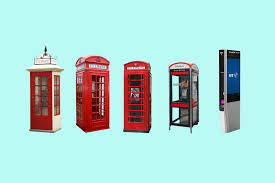
If words had scent, I suspect Booth would have the aroma of grandpa’s sweater, soft leather, or maybe pipe tobacco. This word popped into my head one morning as I was waking. Booth is not a versatile word like bandage, beverage, or even British. You can replace it with box, or kiosk perhaps but the word Booth has a vintage character.

In days gone by it was a place to find a phone. It was a communications site, a depot, a word station if you like. The last time I used a phone booth was in New Zealand, where I almost lost a phone card. Were it not for a scrounged safety pin I wouldn’t have been able to retrieve my pay card from the slot.  My earliest recollection of a proper phone booth was in England where my mom took my 2 year old sister to change her nappy. Much later, in Canada when I was a teen, I would go to a local mini-mall to make calls to girlfriends. We would exchange confidences and plan run-a-ways. Despite my avoidance of small spaces, these outmoded cabinets of conversation enabled me to escape from the prying ears of my mother who would tease me mercilessly if I used the home phone line.

On those dates I might have prearranged with a favourite restaurant to reserve a cozy booth in the corner, near the back, where my date and I could have more privacy. I believe there was a television game show about setting up a date night. It involved a sound proof booth where contestants had to wait in seclusion while the audience got the scoop on what would happen next, who would choose who, or if the answers matched the questions enough for compatibility or prize money. Strangely, some of these features can be found in the interrogation one gets when having a hearing test.

A phone booth has been featured often in television and film. The scene of Hitchcock mayhem comes to mind in The Birds. Why Clark Kent chooses to transform into Superman while inside one, I’ll never understand! I’ve never been a fan of Doctor Who, yet the concept of the Tardis fascinates me. It was designed after a commonly seen police box on London streets. It’s small in size but as expansive as time & space once you step inside. This long running British series is an expensive long distance call indeed! Joel Schumacher directed a superb suspense thriller titled Phone Booth. It nicely captured two of my worst fears whenever I made use of one of these curious glassed cubicles: claustrophobia, and paranoia of not having enough change.

And speaking of tense scenarios, I always thought it was curious that John Wilkes Booth managed to assassinate Lincoln while the President sat in a theatre booth. Death by booth squared! There now; I’ve given the word Booth a boost. Now I’ll consider ordering an old-timey British phone box on eBay and installing it in my back yard as a sentimental gesture.

“In for a penny, in for a pound.”eh?

Re: Most

“You’re the most!” Is a declaration that someone once said to me after I delivered on a promise. This cliched phrase (a relative of ‘you’re too much’) was delivered as a thank you when I held up my end of a bargain. It was one of those humbling moments because I didn’t think I had done all that much. Apparently I went beyond much, into the superlative Most!

The word Most is related to the word Best and can be used to describe all the things you really like. Extreme yet simple words like these appeal to the novice wordsmith and to aged writers who can still relate to the wonders of life. My grandson recently learned this word and wants to use it in his daily speech. He wants to know all the Most things; like who had the most fun, the most dessert, who got the most candies. I tell him I love him the most.

If I were to list the times in my life when I did my utmost, those events would be few. I tend to be a lazy guy, lacking what some might call ambition. The time I had to travel across the Atlantic Ocean to my very ill father comes to mind quickly as an example of superior effort. When I had to respond to a leaking hot water tank required a lot of quick thinking. Sometimes I find large gatherings rather taxing, but I wouldn’t describe my efforts to show patience on those occasions as herculean. In other words, it is probably true that my life is mostly moderate instead of extreme. While I try to get the most out of any circumstance I wouldn’t say that I go overboard to create drama or intrigue. That doesn’t mean I lack enthusiasm. For example, if I say “That’s the most fun I ever had!” someone is bound to point out that I said the very same thing last week. I sometimes, usually, regularly, and predictably live as a character in the film Groundhog Day.

My 95 year old special mom just filled out her MOST form. Medical Orders for Scope of Treatment is a document that directs others to respect her wishes in the event of a life threatening medical situation. Some jurisdictions use DNR (Do Not Resuscitate) paperwork. MOST sounds more positive somehow. The majority of us would like our last moments to be peaceful, I suspect. Most of all my mom wanted to make her medical wishes clear to anyone who might wonder how to proceed on her behalf. She tells her daughter that she has had a satisfactory life and doesn’t want to be anyone’s bother when it comes right down to it.

When Ella Fitzgerald sang the great Cole porter song ’You’re the top!’ she’s giving the highest accolade while feeling joy in the moment. and to my ears she is the mostest. I hope the best I can say, when I reach my special mom’s age, is that I did the most with what I had been given.

Re: Stories

While talking to my 95 year old special mom about a newspaper story of a neighbour who is lost, I became lost myself, in the flimsy gauze between truth and fiction. The report of the missing man has details that beg to be filled in with only my conjecture. My mom asks questions that I can’t objectively answer, yet a conclusion to the story had to be reached before we could move on with our day. Thus, the story in our community becomes wedded to our own story, even while the resolution to the story is pending. Even with her advanced age and experience, my mom found this hard to bear.

Bedtime stories are precious in the way they invite imagination. The child being read to goes on fantastical journeys with only a few words of script. Sometimes only a picture is enough to provoke multiple questions of why, how and where. The stories live on after the sleepy-head has been tucked in and the reader has left the room. Stories are meant to persist just as the witness to a life event takes in information and transforms the data into something relevant and understandable. In that way, life itself is a never ending story containing multitudes of chapters and possibilities.

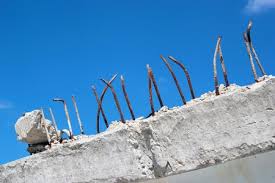
A building starts with a foundation. Stories are added to this physical structure to accommodate people and things. Sometimes in poorer countries the extra floors take time to build. I remember asking a tour-guide, while on a bus trip in Peru, about some buildings having rebar sticking out at the top of rows of cinder block. She told me it was a sign of hope in her community that one day enough money would be available to add a second floor onto the house, to make space for expanding families. A case of another story creating room for more stories.

Recently Andrea Skinner, a daughter of Alice Munro, made public her story of abuse at the hands of her step-father. Readers of Munro’s work talked and wrote about the revelation as though it was their story. Some couldn’t see themselves ever reading this Nobel Prize winning author’s stories ever again because of this new, real life chapter insertion into the Munro bibliography. Ms.Skinner’s misfortune reminded me when I was a toddler and being admonished never to tell tales on the family. I took that to mean; Don’t lie. Yet when I saw my mom talking with others she would often start a conversation with another adult by asking for gossip. I still find the difference between privacy and secrets confusing.

Any bit of fact can be turned into a story. I believe conspiracy theories are an attempt to make our imaginations come to life. We want to understand things so desperately that we join in the story making with other like-minded folk to explain the unfathomable. Every culture is built on stories. Sometimes the truth is hidden to get on with other things we think are more important.

My story is not like yours but we have chapters in common, let’s build on that.

Re: Break

Break and its homonym Brake can give me trouble when I am writing. I can imagine ESL teachers using this pair of words as examples in a humorous writing assignment. And sometimes the meaning within the sentence can give me pause to wonder why a third word hasn’t been invented to provide a better illustration.

Take Breakneck Speed for example. These two words clearly describe a perilous situation requiring brakes to be applied before physical damage occurs. “Gimme a break!” Is something shouted in exasperation, but is the person asking for time out or for someone to halt the forward momentum of the monologue as in “Shut up!” A work stoppage is not a break from routine but an effective strike action to put brakes on unfair labour practises. If someone  breaks a dish while cleaning up there is no R&R involved, just more work. Why does destroying something and taking a vacation get described by using the same word, same spelling: Break!

When you have broken a promise damage has been done and emotional repairs are needed. Perhaps your lifestyle, when it comes to your relationships, has been too fast and loose and you need to apply the brakes before more trouble comes your way. When it comes to romantic friendships we all know that breaking up is hard to do. In that case, maybe taking a break from normal routine is the best course of action before it’s forced upon you.

I’ve shared this conundrum of two spellings, too many meanings with others and they think I’m rather overreacting. When I was working on the details of this blog page I asked my 95 year old special mom what she thought. She is a whiz at spelling so wasn’t challenged by my ideas, just a bit exasperated by the reason behind my niggling point. She chewed on it, literally working through the rest of her breakfast, put down her utensils and calmly said, “That’s just the way it is.”

In Thunder Bay, Ontario the residents celebrate Spring Break, not by travelling to Florida or Mexico but by gathering in around Port Arthur to watch the winter ice break. The floes come apart making a noisy, metallic, crackling sound: Like a cross between pinewood in a fire and a waste metal recycling plant crushing cars. It’s big news every year since many container ships have had to put the brakes on their movement up the St.Lawrence River.

“Hold your horses!” I suddenly imitated a grumpy Abe Simpson bellowing to his son Homer. In my imagination I’m saying this to myself to put the brakes on this hamster wheel of thought. I then see a donkey, stubbornly taking a break and braying about his plight carrying loads so heavy he might suffer a broken bone. I picture this cartoon mule with his scrawny neck extended, and a speech bubble above his head, not saying HeeHaw but “Braaayyk!”

‘Brayk’, a new all-purpose word, meaning; ‘I’m tired please stop’. Take that, Spell Check!

Re: Book

Publishing is going through massive change. Books, magazines and newspapers used to be the norm since Johannes Gutenberg invented the press machine. In my lifetime there has been a decline in print sources delivering news and information. Text and picture can arrive by digital means but for most people my age that mode of delivery comes up short. Words on paper (I miss handwritten letters delivered by postal carriers) have a tactile benefit that cannot be understated. Words are meant to make us feel.

The old Hawaii Five-O television series had an oft quoted catchy line, “Book ‘em Danno” when referring to crooks being arrested. Books on the other hand must never be judged harshly, by their cover or otherwise. My special mom, who can’t even see the covers of her audio books, would agree. She reports that a good book is like comfort food. Her CD player is provided by CNIB (bless them) and when her discs arrive in the mail box she exclaims with delight. It’s a treat to see her smile when she is immersed in her world of words. She shows similar interest when my wife reads to her from my published work on this site.

I’m in the process of gathering columns I once wrote for a daily newspaper into a book. It’s a self publishing effort and I don’t intend to make any money from it. I had made photocopies of the individual columns which I kept in a three ring binder. First the pages had to be recopied and the data stored on a digital file. Then I had to bring it to experts to have it paginated. I next had to book an appointment at my local printing house. Other writers can relate to a similar process as everyone has a story to tell it seems. Every person is literally a walking book. Those who write are usually ravenous readers. I am unreservedly pro books, never want them to be banned, never want them to be burned (ironically the books in the story Fahrenheit 451 ARE burned). Both banning and burning still occur around the world which to me is a shocking example of misdirected anger.

If those who love food are ‘Foodies’, then I guess you could call fans of reading, ‘Bookies’. Too bad that label is attached to shady old-school gambling agents of the underworld sort. As an aside, I wish all gambling ‘pushers’ were arrested and booked for damage to society, but that’s for another blog page. In other WordPress postings, I’ve written about my love of libraries where words and other forms of artistic expression and information can be shared. I love the continuing impression that a source of books is central to any healthy community.

When I book my final passage to the great cosmic beyond, I’ll mix my life essence with countless others in the ether. I can imagine that blend of quantum particulate matter lodging in the head of some future writer who might wonder where that idea came from for another story.

Re: Sex

I never had a birds and the bees discussion with my father, perhaps consequently I was averse to having ‘the talk’ with my three sons. To even write about sex makes my typing fingers go all jittery. Thank goodness for auto correct while I try to navigate the politically incorrect. I may be timid about the topic of sex but I champion its inclusion in classrooms.

Currently North Americans are getting all hot and bothered about how sexuality, sexual orientation, sexual preference, and sexual identity can be taught in schools. Children’s rights are being trampled as we claw at each other over who is the responsible distributor of sex information. When it comes to sex curricula we all share the book, even though there is no single definitive volume on the subject. Parents, teachers, administrators, politicians are all probably a bit shy when it comes right down to how to approach sex.

We rarely open up about our sexual body parts. In the art world, some dare to showcase those things that are obvious whenever we step from the shower. The penis rarely gets talked about or even seen unless it’s associated with a crime scene. It is taboo in film to show a penis unless it’s a rubber one. I remember seeing an ad for a bunch of male performers who would play with their organs like a puppet (originated in Australia called Puppetry of the Penis, I never went, too embarrassed, but very curious in an innocent way). I’ve been to a performance of Vagina Monologues and remember being stunned by the bravery of the cast to talk about such intimate things. As a lover of language, I am amused by the variety of descriptions for our sex bits: A hot dog bun, a mussel, an acorn, a mushroom, a zucchini, a kiwi. Funny how we use items in the grocery store to help define what lies unexposed in our underwear. The pseudonyms for penis and vagina, even breasts, can fill a book or at least the length of a comic’s stand-up routine. Over sexualizing our body parts is part of the communication problem. An abundance of puritanical privacy and secrecy makes any issue of sexuality ripe for problematic intercourse or discourse.

Sex is an activity, an orientation, an identity or a bad word depending who is doing the talking

Much of what I thought I learned as a child about sexiness came from Playboy magazines that my friend and I would find in our apartment building’s basement storage lockers. We’d show each other pictures, giggling nervously while wondering if we’d get caught. When I taught students of that same age in sexual health classes, I was professional enough to engage them seriously. Many parents sat in on my tutorials, telling me how discussion continued with their children after going home. The recent British television drama Sex Education does an excellent job breaking down stereotypes and common misconceptions.

Conquering our bashfulness will be a first step toward talking to each other about who we are meant to be.

Re: Kill

In exploring my world through individual words, I’m often surprised when I come across a word that I haven’t examined in this blog. Kill is part of everyone’s vocabulary yet it’s one of those basement words that we might leave boxed up, unattended.

Maybe our fascination with killing comes packaged in our minds with the broader mystery of death. In the art world, we can love murder mysteries, film noir is fascinating and slasher movies are popular for date nights amongst teenagers. We are repulsed but intrigued by serial killers; we want to know details, the reasons behind the murder. When I hear an ambulance I’m curious if the siren stops close to our neighbourhood. If there is an accident on the highway, we rubber neck to see if there’s been some road kill. The dark side of our imagination isn’t pleasant. Yet it is present. Stephen King is a popular author for reasons beyond his skill with words.

I’ve known one person in my life who has gone to prison because he killed someone in a bar fight. This fellow was a run-of-the-mill boyhood friend. It’s curious to me why authority figures want to convince us that murderers are all insane. That’s usually the approach taken to try to dismiss the incessant gun play and resulting carnage that goes on in the United States. Some cases just don’t fit the madman stereotype. I’ve read of mercy killings for example, and have considered the more frequent accidental deaths involving highway collisions. I don’t believe that the Alberta truck driver who missed a stop sign causing the death of many members of the Humboldt Broncos can be called a crazed killer.

When we want to avoid the word Kill we invent a substitute like Slay, Slaughter, Smoke, Terminate, Disappear, Blow Away, Liquidate, Crush, Bump Off or Hit. Wordlessly, a mafia gangster might signal a death sentence with a kiss. Likewise, someone who wants you gone might make a slashing movement across his throat to show evil intent, even if he is ‘only joking’. Professionally, a director could yell “Cut!” while making a fierce chopping motion to signal her desire to kill the action in a scene.

We can’t fool ourselves by thinking normal God Fearing Folk don’t kill when it says in the Bible that there is a time for it. Our spoken word endorses the emotion behind the thought: “I’m going to kill you!” (we might cry out in rage). “We killed them!” (we might declare after a sporting victory). “I’m going to kill it!” (we boast after cramming for an exam). “He’s killing me softly…” (we might sigh/sing while bringing news of a lover to a friend). We feel proud when we kill two birds efficiently using only one stone. Hunters still find it necessary to pose while smiling beside their dead prey.

I try to avoid using the K word but I don’t want to be a killjoy when it comes to encouraging reflection. Words colour our perception of the world; it’s ignorance that kills.

Re: Get

“You can’t always get what you want…” A Rolling Stones song can be a philosophical code for living a life of satisfaction. I once had a great conversation with a friend about getting it: The it being life’s meaning. We both agreed that what you got, when you thought about life, was directly proportional to how much you thought about your existence. Most days I get why I’m here, existentially speaking.

The word Get has a lot of use for its size. This small word is used without much thought because it makes the sentence flow. Consider that you might be told to get stuffed, get it together, get cracking, get a room, get a life, get going, get real, get over it, get lost or ‘just try to get along already!’ Get suggests a direction as well as a directive. Sometimes we get anxious about getting there. Other times we long to get back to where we once belonged. We save money for a get-a-way so that we can get together or because we must get off the hamster wheel. I often wonder if we get what we deserve.

When I was a kid we were encouraged to recite what we got for our birthdays. After Christmas the question, “What did you get?” rang through the classrooms. As we emptied our halloween containers we would spread our fingers through the loot hoping to find those candies that we wanted most to get. Thinking back now, I wonder if this desire to acquire was a step towards indoctrinating us kids into the consumer world. After all, a capitalist society is predicated on getting stuff.

As 2020 dawned the exclamation, “You’ll never guess what I got!” gained a morbid new meaning: I was among the many who got Covid19. As advised, I had gotten all the shots to try and prevent it but the virus found me anyway proving I was not as immune as I thought I was, and that vaccinations probably kept me from dying like the seven million global souls.

One of my pet peeves surfaces while I’m in a fast food restaurant. A customer will look at the menu board and state more than ask, ‘Can I get…?’ which sounds rude to me. The annoying part of me wants to turn around and ask if their mother taught them the ‘Please may I have…’ sentence starter. What I’m getting at is the same kind of feeling when someone non-accepts a thank you by saying, ‘Not a Problem.’ Oh well, we are what we are. At this part of the blog I’m thinking of Judy Blue Eyes: It’s getting to the point where I’m no fun anymore. I am sorry. https://www.youtube.com/watch?v=QZGeU83K6Do

Harmonies by Crosby, Stills and Nash are at the blissful end of the vocal spectrum whereas a hillbilly yelling “Git”might be at the opposite pole. Language is forever fluid. I love it when I can capture the right word at the right time. It’s a Gotcha moment.

Re: Yes

The YES/NO binary fascinates me. When I went to university computers were a becoming thing. Beginning science students at my college had to take a basic programming course. We used punch cards, stacks of them. We talked Fortran to a whirligig machine the size of a classroom. The best thing I got out of the course was learning Flow Chart methodology. I still use this principle to make personal decisions.

Life is not always a matter of a yes or no decision. A yes answer to a question can mean you agree, and when it comes to a contractual understanding I believe it shows strong character to commit to the outcome. On the other hand, saying yes can also be a process to finding out. I always told my young sons when they were out with others that if things went south and they started to feel uncomfortable, they could always call me for a pick up. Deciding yes doesn’t mean there is no turning back, yes doesn’t mean you are stuck. There is always something else you can do; it’s quite fine to change your mind.

When we are in autopilot we probably don’t think too much about our Yes/No response rate. Most of our lives we just flow along. I’ve said a resounding Yes to marriage twice in my life. Choosing teaching as a career was a fateful Yes. I’ve chosen affirmative responses to life changing questions when folks have shown confidence in me even when I have doubted my own ability. I once chose to question the YES of life in the midst of some dark days.

Back when I was coding those punch cards, the computer could only determine between one and zero. Like an On/Off switch the pathway to an answer flowed like an electrical current until a solution was found. As we move closer to AI robotics I wonder if we’ll be able to program something like a shrug into a SimBot. A simple yes or no is restrictive to creativity. A Maybe thrown in, once in a while, can stimulate imagination.

I love saying Yes. But it’s not always a practical answer. My wife says I’m a very emphatic person. I joke with her sometimes that life would be more fun if there was a limit to the negatives; Don’t, Not now, Not really, Never! M’Eh is the worst: That response combines a dismissive attitude with an apathetic outlook. Nothing is ever accomplished with a M’Eh. Unfortunately my reflex response, whenever we are out shopping, is No! I hate being a spoilsport. I can make firm and relatively quick decisions because I know myself well but my mind is not suited for a black or white rigid existence either.

My mother-in-law showed me her wedding pictures yesterday. She’s been saying her final goodbyes to her husband of 68 years. It took him nine years before he agreed to the union. I watched her smile like Mona Lisa as these memories played about in her head. Her lifetime started with a Yes.