Re: Concept

The question of how one conceives things is on my mind a lot these days. When I filter the daily news through my life experiences I find myself feeling very curious about how others reached a certain conclusion. It’s my teacher training at work here as I’ve tried in the past to find common ground with my students, but in this present-day case I’m searching for a way to conceptualize my internal struggle to understand myself.

Self-concept is the beginning. It’s not about ego. In architecture it’s important to have an initial design concept, which sets out the parameters for a project to grow. Imagine yourself as that project, and imagine how you want to build the best version of yourself. One’s self-concept is critical to fending off manipulation by others. I was once accused of being an island unto myself, but I don’t mean to suggest that our self-concept has to be a fortress set up to prevent invasion. Even if we intend to have a philosophical moat around us, we still need to design a drawbridge for the occasional interaction with roving troupes of minstrels and other artisans, thereby bringing joy into our cloistered lives. The walls do not a castle make.

I’m familiar with the concepts of life as espoused beautifully by the fictional coach Ted Lasso. Much has been said about the creative collection of characters in this award winning television series. Lasso seems a fish out of water as he navigates his job in a perpetual cultural clash with owners, players, and football fans. Amusingly, a goldfish is used as an example of winning behaviour as part of Coach Lasso’s concept of team solidarity. His intention is not to win, but to build. He wants the sportsmen in his charge to be better individuals first, only then can they become champions. I exulted in the revelation that a key to satisfaction in life is to be curious, rather than judgmental.

Concept is a forest-sized idea. Big picture views are my cup-of-tea. Whenever I’m planning something, it’s the outcome I wish to grasp. That may start with a question like, “Why am I doing this?” I believe if we can conceive something in its finished form then it can become a reality. Luck can factor into the final result but we must consider those initial conceptual ‘what ifs’. Some currently held concepts defeat me because they are not logic-driven but faith-driven. A manifestation board is cute, and even affirming, but it won’t work unless you find the keys to your dreams of a better life.

Religion is merely a concept, based on fear more than faith. I’ve been in congregations where action has been a way to fulfill the big concept. Bringing a healthy concept into reality is like conceiving of a child in your life and making that happen. The Idea of creating a new human is so awesome it deserves regular decision making, revisions, accounting, and celebrating of milestones along the way. Biology is only the beginning.

Re: Segue

I’m glad it’s not considered cultural appropriation if you use a word from another language when you are talking or writing. To give credit where credit is due then I must say thanks to the Italians for inventing the word segue, which translates into English as ‘to follow’. Segue is a beautiful word I tend to use often in conversation when I want to steer the dialogue in a different direction.

The first time this word came to my attention I was an adult at a youth symphony orchestra performance in my community. During the introduction to the second piece of music in the programme, the conductor said that he wanted to lighten the mood by inviting us to segue our thoughts to our favourite natural environment as we listened. He was making a joke that I didn’t figure out until I learned that segue is also a musical term directing instrumentalists to follow on with the music and turn the page without a pause in the beat. So there I sat in the auditorium, lost in my thoughts of languages intersecting while the music flowed about me like a lazy river.

Words flow, rivers flow, and segue sounds poetic, romantic, and utilitarian all at once. If I think about it, almost every essay I’ve ever written could be described as a segue to the next one. I like it when I am in a lateral thinking mode. My son once gave the comment that he thought a single blog posting of mine was as far ranging as the plot of an episode of The Simpsons on television. At the keyboard, as I type the letters collect into words, and I find a zone of clarity (at least to me) when converging and diverging thoughts seem part of the same stream of consciousness. I am a communicator! have segued, therefore I am.

Come to think of it, Segue would be a great name for a human. Or at least a pet––Segue the cat! How about that? Some folk might like its nickname; Seggy. Which really isn’t a short form since it has the same number of letters. But while I’m segueing let me tell you about one of my best birthday surprises ever! When I turned 65, my bride advised me to get in the car as she was taking me to lunch. That’s fun, I thought to myself, thinking that was going to be my birthday gift. Well I had to guess again as we took off, after our meal, down some roads I had not travelled before. We eventually pulled into a driveway beside this truck that had an adventuring type word on the side. Still puzzled, and with my wife leading me to the door of a suburban house, she knocked.

A lady came out with helmets, opened a side door on the truck and pulled out two Segways. I had seen one in operation months ago and my loving partner had remembered how I had exclaimed in excitement. I learned a new skill that happy day. A new way to be in the now, and go with the flow.

Re: Encounter

I enjoy the encounters I have when I am out and about in my community. A simple stroll to my village to renew my prescriptions, a stop for an ice cream cone, or finding a sale in a grocery store will bring a smile to my face especially when I have a moment with a real person.

Abraham is his name. We met at an afterparty at a local theatre. He acted in the play that night, and I was an audience member. I started the conversation as he was choosing some cheese and paté, from a tray on a pedestal. I gushed with enthusiasm over the dynamic representation of a fight scene involving athletic coordination that was the climax of the plot. On stage, Abraham and his acting partner had just parried in a violent dance, each thrusting a blade with death being the intended outcome. All this action happened in remarkable slo-motion choreography, while I watched a mere three metres from the stage apron. Now I was standing near Abraham, at the meet and greet, trying to speak without crackers spilling out of my mouth.

Encounters can be exhilarating, sometimes messy, and rarely planned. A chance encounter can stay with us for a long time, if not forever. I remember as a teen being brave enough to ask if I could have an old lobster pot that seemed discarded by a house near where I was camping with my parents. I was with a friend at the time, and as he waited a few yards back at the top of the driveway, I negotiated with the owner. I said I had long wanted a suitable keepsake for my many years as a child coming to this beachside campground in Maine. I was going off to university and imagined the rectangular lobster trap would make an excellent coffee table. The owner handed his artifact to me as a gift, the look on his face was one of pure benevolence. I still remember my friend appearing equally stunned by the exchange saying, “You got it just by talking to him!”

I’m still feeling the isolating effects of Covid19. Back then we were encouraged not to have encounters due to risk of exposure to the virus. Even though I tend to introversion on the social spectrum I missed those times when I regularly attended mass cultural events. During those covid years I got used to encountering others over social media where exchanges didn’t involve the risk of a stray sneeze. In the longer term, Covid19 made us all a bit insecure about approaching others.

Now that I’m back attending the arts events that I love, engaging other humans will return in fits and starts. My social muscle memory emboldens me to initiate confidently. The actor Abraham seemed pleased that I had dared to approach that night at the theatre. He said, “And what about you?” Which raised my praise to dialogue level. Oh my, what to say next!

I’m going to need more practise at this conversation game.

Re: Phonebook

My 96 year old blind mother-in-law asked if I was whispering something. We were sitting together in the living room and I was channel surfing on the smart TV using a remote control that I could direct with by voice. When I told her what I was doing she asked for more information. I thought to myself afterwards that my discussion with her about this new-fangled technology must have made her amazed. The fact that I can talk to my television awes me too.

If I were to describe a phonebook to my grandkids they would call me a silly old grandpa. I don’t know how I could convey to them that it was an old form of data filing, sorting, and acquisition; just for phone numbers! I think you got a new volume every year. It came in the mail. In large centres like Toronto, where I used to live, you’d get two books, one for phone numbers and one, called the Yellow Pages, for all the stores and services. These were thick soft-cover books listing thousands of names of people who you could talk to, just by dialling their number. Some homes had a special piece of furniture called a telephone table, that would have a seat attached and a special drawer or shelf for the phonebook. For some reason this curio-table would go right by the front door, where the phone guy would hook up your rotary phone to sit all stylish-like on the table’s top. As a teenager I got no privacy sitting on that telephone table in the front hallway of my parent’s duplex.

If I wanted privacy I would go to our strip mall down the street where folks could make their phone calls from a phone booth. These booths were on most street corners back in the day. They typically measured 32X32X90 inches with a funny folding door. Believe it or not, inside those closet-like compartments you would find a well-used phonebook. Smart-ass folks would sometimes tear pages from the phonebooks for all manner of reasons, leaving you puzzled when you were almost at last names starting with Y, only to find the Ys were missing.

Thinking about technology, systems, and industries of the past can get you time tripping. Inventions propel the human animal in directions only limited by our imagination. The Dr. Who television phone booth is called a Tardis, where you can time travel. And, believe it or not, magicians and guys with large biceps once made money proving that they could rip a phonebook in half. Today you can get pointers on how to do that on Youtube.

Smartphones carry far more data than a single phonebook ever did. Imagine being able to scroll to find your contact person. Gee Whiz! The other day while walking in a local park my wife made a phone call, and using that same device she took pictures of flowers that were then identified for her instantaneously. She then looked up a restaurant where we dined later following the route provided by her phone! Dial phones used to receive random wrong numbers. That hasn’t changed.

Re: Announcement

Bugles once announced the arrival of invited guests to a fairytale ball. A red carpet is still occasionally used to indicate the presence of VIPs at a notable function. I’m a cinephile so I like the grand entrance of Hollywood movie stars as they strut their stuff and take their places before the year’s winners of an Oscar are revealed. The envelope please!

Folks love to be the first to tell the Big News. Others love to be the first to hear an announcement of importance. I haven’t been to a wedding in a while so I wonder if the tapping of the drinking glass is still the start to delivering a toast; to the bride, to the groom, or later whoever happens to be still in the banquet room. Parties are times of announcements, pronouncements, or opportunities to gossip. We all love hearing the latest news, especially when it makes us happy.

Recently I published my first collection of newspaper columns. I sent a copy of the beautifully bound book to the library in my old hometown. They accepted it with grace and sent me a picture of it sitting on a shelf, where book lovers might see it. A bit of me is in general circulation! I felt like trumpeting my accomplishment from the highest hilltop. Perhaps I was a Town Crier in another lifetime, reading from the scroll provided by the palace; ‘Hear ye, Hear ye! Gather round all who wish to be enlightened, informed, or otherwise amused.’ Newspaper boys used to shout, ‘Read all about it!’ Most news comes online now but you can still find artistic cards that are decorated to announce a birth, death, wedding, illness, or achievement. With the Canadian postal situation being in a state of disarray, one wonders how long the tradition of handwritten messaging will continue. Yet it still holds that even a word of condolence can feel like a gift when delivered to the mailbox right outside your door.

Announcements, good or bad, generate a buzz that we human bees transmit with glee. There was talk for weeks after Queen Elizabeth died. The recent meeting between our new PM Mark Carney and that Donald fellow had all Canadians feverish with expectation. People leaned in, metaphorically at least, to catch any body mannerisms or speech inflections that might reveal the truth behind the politics. Honestly though, it’s often hard to collect the courage to make a personal announcement.

Spreading the news can be premature. No one wants to let the proverbial cat out of the bag. Something may change between the time you choose to share your thoughts and what you’re anticipating will come true. There have been many times when I’ve said, “Guess what?” Then finding myself regretting giving the message. No one wants to jinx the future, even if we understand that we have no power over what comes next. The new world order, our personal world order, will evolve regardless of our excitement to be the herald of happiness or the bringer of bad tidings. It comes down to sharing what matters to us. That’s what counts.

Re: Talk

When a boss says, “Let’s have a chat.”, you know there is trouble ahead. I would prefer a request like, “I’d like to talk something over with you.” The latter suggests a mutual desire to solve a problem. Too many times the person wanting to have a discussion has already mapped out the attack strategy so that you’ll eventually hear, “There’s nothing you can say that will change my mind.” The situation, talk-wise, has come to a dead end.

That seems to be where we are in the world right now: At a dead end. The UN is a global talk opportunity between nations. There are many words spoken at many meetings with many reams of paper, and many talking points are recorded during discussion after discussion. This is where the phrase, ‘talk is cheap’ comes to mind. As I review the records of politicians there seems to be only a few who actually walk their talk. One exception is Manitoba Premier Wab Kinew. Since taking office he has shown that election promises can be kept. If he were talked about within the pages of The New Yorker magazine I bet he would be in the profile called Talk of the Town.

Bonnie Raitt sings a great version of Shirley Eikhard’s song, ‘Let’s Give Them Something to Talk About’. It’s a catchy hit primarily about gossip, which is a somewhat seedy form of talk that gets people into trouble sometimes. I like being talked about in a way, because it makes me feel folks are thinking about me. But I wouldn’t want to be slandered or have people think I’m different from what I may pretend to be. When TEDtalks first became a thing, I fancied myself giving a lecture where everyone would take notes and discuss the finer points in a coffee shop afterwards. Then I had a dream imagining that very scenario with the audience talking while I was speaking and I woke with a sweat, and a radio voice in my head moaning “Talk, Talk, Talk, all you do is Talk!”

A debate is high level talking where ideas are proposed and a ‘Winner’ is chosen for their eloquence and astuteness while in the hot seat (or a hot podium). In a panel discussion I usually find myself nodding off after the opening remarks. Political debates are the same snore-fests. I know I’m supposed to be paying attention but I’m wishing all the time that if I just had a pamphlet I could figure it out for myself.

I wouldn’t call myself a talkative person. After a stimulant I might get excited enough to run-on. There was this time I met someone I admired and I rallied many coherent thoughts and blasted them in a non-stop fashion leaving me sort of breathless and sadly with nothing left to say. I’ll never forget the look on the face of the person who absorbed all that enthusiasm. I reminded myself later to be more careful with my words. That said; I love talking happy-talk.

Re: Post

My dad loved writing letters. In a desk drawer by his apartment door he kept a bunch of stamps, notepaper, envelopes, and cards for when he felt inclined to send something off in the post. He was raised on the value of the British Royal Mail Service. Often he initiated the correspondence to family or friends with a quick one-page newsy hello. When a letter came for him he would always write back the same day.

A recent headline read, ‘Canada Post in Crisis’. The article suggested letter writing was dead. The popularity of Amazon free shipping, and the rise of labour costs were all reasons for our crown corporation to be in existential trouble. A world without some form of communication across borders would be isolating. Connections of the global sort stoke my imagination. To me the message will always be key, regardless of how it is delivered. I can get amused by thoughts of carrier pigeons, Pony Express riders, ham radio broadcasts, or telegraph typers sending my notes of love or encouragement. I’ve enjoyed my online relationships, especially flourishing through Covid times. Social media platforms can contribute to feelings of togetherness in times of alienation.

Postal service has changed greatly since my relatives in England counted on their daily mail. Traditional bright red post-boxes, looking a bit like vertical cannons, can still be seen on British street corners for tourists to mail a postcard home. Now it’s more likely that a smart phone photo will be snapped of the same sight and sent digitally and instantaneously to curious relations abroad. I have a decorative mailbox on the wall outside my front door. I’m always hopeful for the clanky sound of the lid when a letter is dropped by a postal worker. Some housing areas have community mailboxes that encourage a bit of neighbourly banter. I once lived in a mining town that had a village postoffice. My mail had a postbox number, which I thought was very rural and romantic. On my daily visits I was happy to say hello to either the postmaster or postmistress behind the service counter. How quaint!

Dad set a high bar for postage stuff. For a while in my adulthood I felt I met his standard. Then came email. I lost my pen-to-paper skills, however I kept my joy of wrapping a parcel for delivery by Canada Post. I still take pride in building my own cardboard containers for packages; wrapping them in craft paper with a neat address. Handing parcels to my local postal clerk gives me a special feeling of reaching out. Recently I felt saddened when one of my mailings to Germany was returned to me, undamaged but stamped ‘Undeliverable’. I got my money back but the sense of a disconnect in the universal link of global communication left me slightly shaken.

In grade school I communicated with several pen pals. I loved receiving mail envelopes with foreign stamps on them. The letters inside felt magical. These messages helped create a bridge of understanding between cultures, breaking stereotypes and prejudices. Now I type this for you.

Re: Relationship

My bride and I have great conversations. This truth was key to our relationship from the get-go. Over the years we have developed a nice back and forth rhythm that rarely sees turbulence. Sometimes though, one of us may take exception to the words of the other. It’s hard to backtrack and trace where the intellectual response changed to an emotional one. The trigger is usually released when one of us feels threatened.

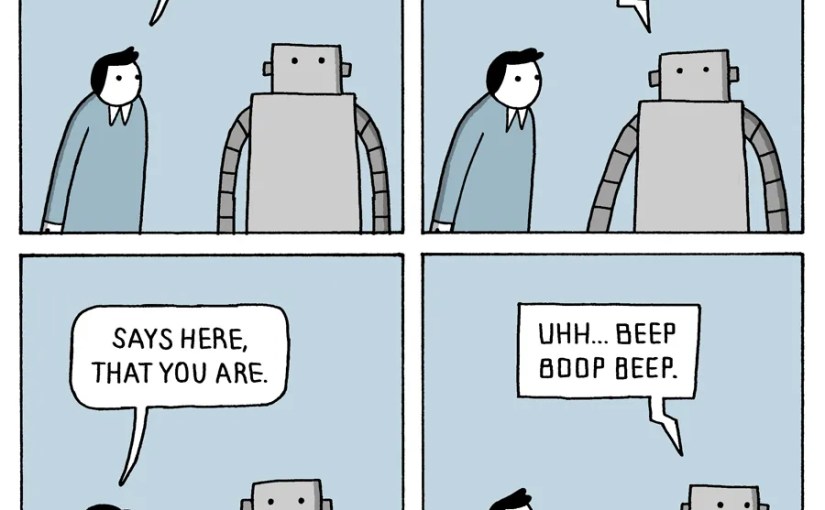
We watched an intriguing movie called Companion. It’s advertised as a scary film but the story has deeper elements about the way in which folks view relationships. Key to the film’s plot is that the lead character is a robot (this is clear in the trailer so I’m not giving anything away). I found it fascinating how the film slowly revealed what the characters needed from each other. We find that all the lead boyfriend wants is sex (even though he’s shy to admit that fact to his friends). He doesn’t like the term ‘fuck-bot’ but that is really as far as the relationship with Iris (his rental robot) goes. He wants to use her to attain his goals. This one-way relationship is more common than we wish.

Which got me thinking about how we can have a bond with things; humans, ideas, other species, and almost anything. I can have a fondness for a coffee mug. I may cherish a memory or a comfy sweater. Some people are fine with their prime relationship being with a pet. I’m growing to love Time itself. Once when I was sitting by an ocean shoreline I thought everything about that moment was relatable. The people passing by, the birds in the air, the sound of the ocean swells connected to my heartbeat and breathing. It felt like I was part of the mysterious continuum. I didn’t want the relationship I was having with this singular moment to stop. Likewise, while reading a book, I can feel this dialogue between me and the author is as strong as if we were sharing a coffee together, at the same bistro table, on a beautiful day. I’ll finish the book not wanting to say goodbye. That’s a temporal relationship!

Comics make jokes about over-age children staying in their parents’ basement unable to face the ‘real world’ due to having formed limiting, constricting attachments to their video games. Back in my day my stamp collections sometimes kept me from exploring the wider population of folks who were different than me. In maturity, I believe finding a mutual connection is the most exhilarating thing one can experience. Paramount to the experience is a sense that you are giving as much as you are getting. That balance is tricky, sticky, messy, and confusing. When it comes to humans being together in the present, their separate pasts must be welcomed guests. A shared, interesting story of what happened, might infect or enhance the stories we’ll tell at some point in our future.

That’s where conversation creates a comfortable feedback loop. It’s better when things stay curious rather than turning chaotic.

Re: Command

At a hockey game in February, 2025, a singer named Chantal Kreviazuk chose to change the lyrics to Canada’s national anthem. It was a lyric heard around the world as a sign of protest over U.S. trumpian trade tariffs placed on their neighbour in the true north, strong and free. That last bit isn’t the lyric change, just a bit of cheekiness from me. What Ms.K. did was switch “in all of us command” to “that only us command” making the point that Canada will never become the 51st state, and we intend to stand on guard for us.

The word Command has a military sound. An order is given by a Commander, who is at the top of a Chain of Command. Those in military regalia have a Commanding Presence. I get a shiver when I reread those three sentences because I picture a pointed gun, directed at me to obey ASAP! Command rhymes with Demand which is what you are making if you are inviting someone to toe-the-line. That idea may be acceptable for training a dog on a leash. But people are not pets. We have agency. Humans are not meant to be commanded. We make our own rules. At least in a democratic society we do.

We can direct ourselves, if we agree on the commandments. If we can decide on a principle then we can try to live by it. This is sometimes easier said than done, but before you dismiss the idea consider that the use of commandments is not without precedent. Think about Moses. He was the guy in the Bible who asked his god for direction when the masses became unruly and started worshipping golden things. Since his god was the Commander of that time, Moses probably thought if he had some rules carved in stone his people wouldn’t mock his efforts to be leader of the pack, or flock, or whatever society was destined to become when the promised land was discovered. Luckily Moses got his tablets or all hell might have broken loose.

My summary of these biblical ten commandments break down this way: Love THE deity (3 mentions), Love your parents, Don’t steal (3 mentions), Don’t covet (2 mentions), and my favourite, Don’t lie about your neighbour. This is not a bad list, as lists go, but similar lists in other religions haven’t stopped war, ended poverty or made our planet any more congenial for their observance, strict or otherwise. I guess all commandments are meant to be broken. Such is the way of the human flesh. I would be sounding facetious if I wasn’t so flippant. I had only four basic rules as a young father, gently commanding my three sons to: Prioritize, Speak Truth, Be Brave, Show Kindness. As their commander for a time, I think our family ship sailed pretty well.

That hockey game between USA/Canada? The record will show that we won 3-2. While that wasn’t a commanding score, the victory felt like it proved the point of our self-determination.

Re: Comedy

My mom used to tease. My sister, father and I found her intentionally mean jokes discomforting. Consequently I learned that having a laugh at someone else’s expense was not comedy. John Cleese, of Monty Python fame, posted a message on Substack regarding the difference between affectionate teasing vs nasty teasing. I took exception to his exceptionalism because I’d seen the devastating results of my mom ‘taking the mickey’ out on innocent angels. It’s no surprise that her favourite comedians were Don Rickles, Joan Rivers, and Rodney Dangerfield. Mom was dead before Ricky Gervais made a name for himself through insults, but I’m sure she would have liked his style. Teasing, Insults, Swearing, and Sarcasm can be found in my Book of Humour under the chapter titled: Cheap Shots.

Humour is subjective. Art is required to be judged by the individual. It’s how we figure out that our mouth is not the only place where taste can be discerned. And, of course, it’s impossible for all to agree on what comedy means, anymore than we can be uniform in our response to the flavour of olives. My love of humour tends toward the silly and the slapstick. I don’t understand how my bride absolutely hates silly comedy yet she loves scatological humour. To me, the silliness found in Monty Python sketches is innocent and wise at the same moment. The Three Stooges enthralled me as a child with their antics of mayhem. Later, I laughed at the absurd body language of Jerry Lewis, Dick Van Dyke, Rowan Atkinson, and Jim Carrey.

My favourite actors are also comedians. Sometimes the line between pathos and buffoonery can seem gauze-like. Robin Williams mastered this dichotomy as did Jack Lemmon before him. Humour is perhaps the most provocative art form. The double entendre found in most witticisms sets up a conflict in the mind, making it difficult to decide the truth. Stand-up comedy is challenging in this way as it reminds me of the court jesters of centuries ago trying to please the royal master while playing to the impoverished masses. Editorial cartoonists like Michael deAdder perform a similar function of pillorying political figures to make an inconvenient truth apparent. In these cases we might join in mocking laughter; “The joke’s on you!”

Comedy has to catch you at the right moment. This year is the 50th anniversary of that comedic phenomenon Saturday Night Live. Lorne Michaels deserves credit for creating this iconic television show and nurturing hundreds of comics in the process. Dark, silly, political, sexual, racial, religious and physical humour are blended like a box of specialty chocolates. The spontaneous nature of the sketches, the improvisations, can land with a bang or a plop. Something coming off funny can depend on the mood of the audience as much as the skill of the performer.

What strikes your funny-bone may be arbitrary, yet comedy is necessary to our mental health. It’s no accident that situational comedies on television have been a staple of that medium. We need to laugh most when the situation seems most dire.