Re: Door

I had a dream about an elevator last night. It was one of those freight elevators with a large sliding outer door, plus an expandable screen door. When I approached, the two doors were open and the elevator space was jammed with people as in a sardine can. There was no room for me, and there was no desire on the faces of the folks crammed together to make room either. I pondered that dream all day as I ventured through one type of portal after another.

In our city we have an old-fashioned elevator like the one in my dream. It was part of a marine museum that has closed down. A door on a travelling closet, what an idea! I think of Dr. Who’s Tardis or C.S.Lewis’s children’s series, The Lion, The Witch, and the Wardrobe. In stage plays, the indoor scenes have doors leading our imaginations elsewhere: Walk through and the performers might find themselves out-of-doors. The original Wizard of Oz movie, had a scene that once made viewers gasp in delight as they were transported from black&white cinematography to full technicolour. Actress Gwenyth Paltrow, in the film Sliding Doors, plays a character who is confronted with the consequences of choosing (or not) to step into a subway car. Actors Robbie & Farrell go on A Big Bold Beautiful Journey through doors to their past, while taking us along for the ride.

They say the eyes are the doorway to a person’s soul. Cliché-wise that may be an open-and-shut case but I wonder if that makes the eyelids into doors of skin. Ewww! Scarier still, our eyes, held wide open, can suggest a vacancy as in, “You’re dead to me!” My favourite door is a castle’s portcullis, more like a vertical closing gate, but one which keeps out marauders while still giving a view of the countryside. Doorways are metaphorically about choices: We can hold a door for someone who follows, put our foot out to stop it from closing, or place a welcome mat at the doorstep as an invitation to all who have travelled thus far. It’s doubtful that anyone still carries their bride/groom/partner over the threshold of their abode after getting hitched. Although some still might mark their front door with symbols of protection or guidance. A boss may say his/her/their door is “always open.” But that begs the question of why there is even a door there in the first place.

I’ve always thought it would be cool to be an elevator doorman. I can imagine myself assisting folks as they navigate the vertical highway, “What floor please?”. Most folks want the elevator experience to be over as quickly as possible. They’ll engage with their cell phones or stare intently at the floor indicator over the door. When I was a condo superintendent I enjoyed the reaction I got when I asked fellow Otis riding travellers a few questions or made astute observations while on the way to the lobby. That’s me, always trying to open the door to conversation.

Re: Finite

Some things end. Some things are irreplaceable. Some things are lost forever. Our planet is finite: It has an expiry date. We mere humans do not know when the world will end but it-will-end. Memento mori needs to be part of a school board’s curricula.

In art class I used to enjoy inspiring my students with the thought that their ideas could create infinite possibilities. I never had the heart to tell them to get on with it because their life, in the grand scheme of things, is very short. Procrastination might be something to avoid but it’s easy to get a manyana attitude. A recent film titled The Life of Chuck points out that reality. Here we are shown how preciously fragile humans are, compared to natural processes of more cosmic proportions.

I believe death is absolute; it is final. You may leave pieces of you in your will, your legacy, or in the hearts of others, but otherwise you will vanish. You can only exist for so long: That is what finite means. I had a German-born childhood friend who used to announce the end of things by using a Spanish sounding word: Finito. My mom used to be amused by his casual dismissiveness. Once as we were enjoying P&J sandwiches in my childhood kitchen, and as we came close to the end of the jam Mom said, “When it’s gone, it’s gone!” I like the simplicity of the French word Fin to indicate the end of things. At the end of an artsy film with subtitles, I’ll get a certain comfort when the credits scroll to a completion and FIN is displayed in bold letters telling us it’s over now, time to go home.

Many natural resources can be renewable with the right degree of stewardship. In our nonchalant attitude to climate change we forget that many things are non-renewable. Species themselves are finite. When a certain type of living thing becomes extinct that is a clear end-of-the-line. Despite tales of harvesting DNA to clone bygone beasts as in Jurassic Park filmology, the likelihood that our declining planet can even support another T-Rex is improbable.

My best friend advises me to not squander my time. I know I’m finite. In art, science or politics there is room for your work to live on after you have ceased to be, but we are not immortal in the sense of the roman or greek gods. Historically some cultures have theorized an afterlife. Some had tombs built and their bodies carefully preserved, like the ancient Egyptians, to enable transport to the great beyond. Viking folk believed Valhalla would let them live eternally. I wonder if there are still cryogenic chambers available for 21st century billionaires who imagine a flight to infinity and beyond.

We can’t predict when we’ll expire. Sadly some of us will go before our time, leaving others in shock while they commiserate and consider what the rest of their lives might hold for them. We have a shelf-life. Hopefully we won’t just sit there wondering what comes next.

Re: Cult

Some words contain words. Cult is part of culture in more than just structure. There are elements of cultism in every culture. Citizens of a culture make the decision to embrace what is practised, or not. The essence of a country’s culture is demonstrated by how resources are allocated to promote the larger values of the collective. Sometimes these tribal desires to belong can conflict with our individual wants, wishes, or needs.

When folks agree to do similar things together a connective thread is created. I like to think of that as the art of living. Defining a culture is how societal groups are formed. Individuals in families may often repeat to each other “This is the way we do things.” Teams often bond over the wish to be united so that literal goals can be achieved. After a tragedy, a city might suggest that the way forward would be by recognizing common values. I remember, after the bombing of marathon runners in 2013, newspapers promoted solidarity by printing headlines; Boston Strong! What fascinates me is the border between a healthy culture and a restrictive cult.

Throughout history people have collected into groups for protection, efficiency, or the pursuit of a shared experience. Religions are built on this desire to belong to something greater. Few of us want to be alone in our beliefs or occupations. Unions, fraternities, and sororities have been an essential part of the workplace so we can feel like comrades of industry. Military institutions have aspects of cult conditioning within their training. When you belong to any group you have to give up a bit of yourself for the greater good.

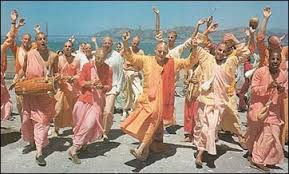
With the fracturing of our understanding of cultural mainstays comes doubt over what is important. Factions, sects, and brotherhoods become more important when traditional ideas of the common good are muddled. Cults begin to grow, fracturing the confidence populations once had for their society’s documents of legality, equality, and fraternity. When I read of organizations having a crisis of culture it worries me that fundamental values have been twisted to suit the needs of the powerful. Most people will think of cults with a capital C as those practising life on the fringe of religiosity. The rules of belonging in a cult-like setting are very oppressive of individual freedoms. In some cases you are coerced to deny your own history in order to begin life under a new set of guidelines. Life in some 60s communes was like this, and I have concluded that being involved with any religion is cultish.

Communal systems can get complicated when group and personal needs conflict. To some degree educational institutions are designed to indoctrinate our children to the ways of the national interest. In Canada, our ten provinces and three territories have their own policies, procedures, and legislation within the framework of the larger federation. All regions have their own priorities and practises (especially Quebec, and lately Alberta) yet we all call ourselves Canadian.

Cultures must evolve to survive. I would celebrate a global culture of peace as a priority.

Re: Triage

I like words that are used between languages. There must be no borders with communication. Triage is a French word that means to separate out, or to sort. I think sorting is a good thing, in a medical context or any other. When I sort my feelings I’m better able to communicate my thoughts. I can see what is most important after even a bit of reflection and attend to it first, with a plan of action.

My wife is a nurse. She brings her training, attention to detail, and compassion to various situations throughout our days together. We’ve started watching the television series called The Pitt. This is one manic show! Where I find the director’s techniques fascinating, my bride gets pumped by her familiarity with the emergency room intensity. I’m left panting by an episode’s end, and she is energized. We have fun deconstructing the scenes with me asking tons of questions about accuracy and medical procedures.

In the heat of a hospital emergency room it must take everything you’ve got to decide who is the most in need of attention. All your personal prejudices must be back-filed. You would have to suspend your personal opinions. Focussing on the goal of saving lives is paramount. But I marvel how anyone can keep their heart from interfering with their head when it comes to making choices. In most situations, I must first consider my heart, before allowing logic to enter.

Our planet needs a triage event. We need to decide what is important on this home called Earth. There is plenty to indicate our globe is sick and needs attention. I’ll imagine Climate Change as a first priority. Back in 1970, the USA sponsored the first Earth Day, we got a flag and a thumbs up for concern over lack of environmental awareness. In 1979 the first World Climate Conference was arranged by the United Nations, by then we had lots of data showing we knew that things were going to get gnarly on our planet. Still, we left the patient in the waiting room. By 1995, with things not decided, The Conference of Parties (COP) held the first of 29 (and counting) annual conferences to get a U.N. consensus on how to help an exhausted planet. I read the news today (Oh Boy!) and it’s not looking good as data shows the melting glaciers do not have long to exist. The patient is going to die before getting a bed for continuing care. Our Earth has been left in the metaphorical hospital hallway to await its fate while we capitalist, nationalistic humans worry over who is going to pay the bill.

It comes down to priorities. Setting goals is hard in business, harder in personal life and hardest when it comes to international solidarity. It’s easier for me to think of the planet as I do my partner. She will always come first; my life and happiness depend on her health. Once her needs are met I can move on to other matters.

That’s life.

Re: Shadow

My mom would sometimes answer my persistent childhood questions with, “Only the shadow knows.” She would say it in a spooky voice that gave me the creeps. It was much later that I learned it came from an old-timey radio program, The Shadow, about a vigilante and his female sidekick. I think my mom saw herself as a detective. She even worked part-time with a private eye on divorce cases involving suspicions of adultery. Dark serious stuff.

Shadowing someone sounds sinister. In the modern lexicon it might be described as stalking. But in business settings to shadow someone suggests a new employee watching and learning from someone more senior. As an experienced elementary school teacher I was asked to support newly graduated teachers in a mentorship role. One year I was assigned a policeman who gave up his career due to burnout (he had the grim job of taking crime photos). We had great conversations as he learned the ropes in the sometimes stressful arena of education. When he got a full-time position he honoured me with a poem describing how he had been “a shadow of his former self” before I helped him create a more satisfying work/life balance.

While in a playful mood with my young children I have used my fingers to create shadow puppets on a wall. One son helped me build a sun dial in our back garden to catch the movement of a shadow telling us the time of day. Another son loved how I read an abridged version of Peter Pan. We would playact the scene where Mary stitches a shadow onto Peter’s heels in an effort to ground the never/never boy to reality.

In the film Perfect Days there is a delightfully scene between two drunken middle-aged males playing a game of shadow tag. They exhaust themselves, trying to stamp on each other’s silhouette, then they get philosophical wondering if each other’s grey profile, when overlapping, would produce a darker shadow. It doesn’t get blacker as they hypothesized, which causes even more confusion. Directly and subtly, this intriguing film explores the shadows we cast as we move through our lives. We are led to build our own backstories of the characters in this film, from the brief shadowy references to their past. I love the way we are invited to consider time as fluid, moving gently from sunrise to sundown, until next time becomes now.

When I was a baby I giggled lots when my mom pushed my pram under the dapple of trees. The Japanese word for this speckled shadow from leaves is Komorebi. There is joy in this translation. For me this phoneme suggests the sound of a breeze through branches. It is hard to take a realistic picture of this mysterious play of lightness and shadow. A camera can distinguish light from dark and pick out the hues and tints of colour, yet our eyes measure more. The brain is reacting to what the eyes see as fact, yet life is about shading that perception with our constantly evolving selves. Perhaps answers can only be found amidst the shadows.

Re: Annex

I once pictured myself living like the TV character Fonz in a room above the garage of my friend’s house. My days would be happy, without my parents, yet close to a friendly group. I’d have my own key. Life in this annex would allow me to be me, without worrying if anyone was watching. This is sort of why I like relating to folks on television rather than real people.

When I had enough money to actually consider building a house I wanted the blueprints to show an annex that would enable me to welcome guests while keeping them at arm’s length. This auxiliary structure would be in the back garden like a granny house, or maybe in the basement with a separate door to the outside. I recall a TV detective named Baretta who had an extension built on his home allowing him to park his car in his living room. Now that would be cool.

What is not cool is when countries decide that annexing a neighbour country is acceptable. Throughout history powerful folks; Attila, Genghis, Alexander, Elizabeth, Polk, Hitler, Putin, and Netanyahu to name a few, showed that annexation through aggression was possible, whether in the name of The Doctrine of Discovery, colonialism, nation building, eminent domain, manifest destiny, or other justifications. To build an annex in an international context is not pretty; lives are lost, livelihoods are destroyed, cultures are melded, maps are redrawn with evermore confining borders where further abuse can be committed.

Russia’s leader has been pursuing his plans to annex Ukraine and absorb that piece of geography since 2014. Putin has said that Ukraine is not a country. The world has been watching with fear and loathing at this lack of global diplomacy. Israel’s leader has found excuses to exterminate Palestinians in what is clearly a genocide to many. Netanyahu has said that Gaza is not a country. The world has been watching.

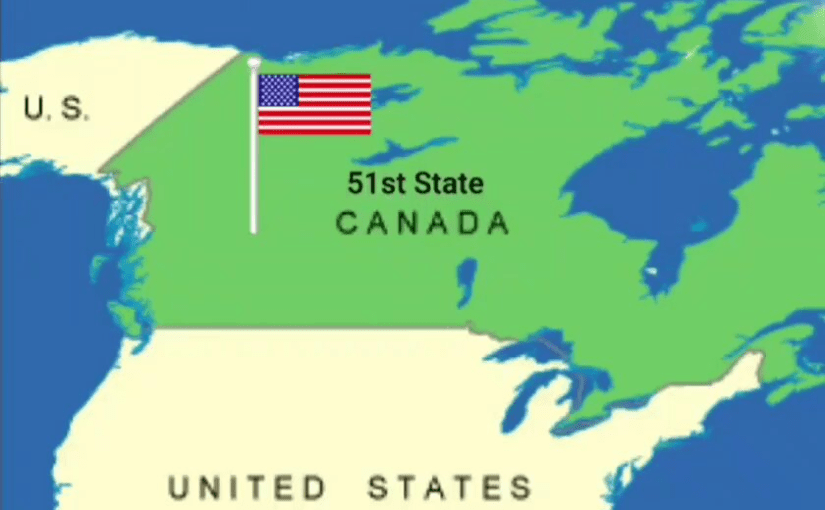
Canadians are angry with POTUS 47. Trump keeps joking about making our country of 40+ million people into a 51st state of the U.S.of A. The President of the United States says that Canada is “not viable as a country”. So far it is a trade war, but we above the 49th parallel are not holding our breath because we have come to experience the insanity found in that oval office to the south during the reign of POTUS 45. Canadians live next to a country with abundant metaphorical annexes where their own cultural differences are rarely acknowledged. Trump’s dis-united states are bickering amongst themselves, in some ways similar to the time when many jurisdictions wanted to secede from that bygone Union, so it’s hard to believe they would buy into their president’s plans to add to the family farm. Fun Fact: The USA already has 5 territories that have expressed a wish to be fully under the stars and stripes.

In my imaginings I can’t picture myself, or many Canadians, wanting to live above the space currently occupied by USA. Even if I had my own key.

Re: Empty

Emptiness can be both positive and negative. For example an empty calendar can be refreshing: There is no responsibility or must-do event waiting to corral your attention. Under those blank circumstances you can empty your thoughts if you wish or cram them with long denied pleasures. The negative part of emptiness suggests a void: A vast expanse of nothingness. I’ve had that feeling after a relationship break-up or a sudden loss. I felt so empty of ambition in those moments, my head seemed vacant of all ideas except a nagging question, “What am I going to do now?”

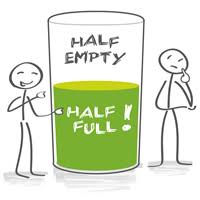
Generally speaking, I’ve been a ‘Glass half full’ sort of fellow, so if my vessel empties it’s because I need a rest, not because I’ve adopted a negative vibe. A soul can be depleted, that’s for sure, so it’s important to always check your levels to see if a top-up is required. I’m a guy who likes to keep the gas tank above the half-full line. I remember being highly anxious over a song that showed exultation over driving a car while ‘running on empty’. I imagine that scenario casting me into a void of no return. Not my kind of fun.

In my teens my mom admitted to being numb, emptied of emotion, because her relationship with my dad had been depleted. It was a sad time for all of us in the family that had once enjoyed relative abundance within the restrictions of a low-budget existence. Looking back on those depressing months before reconciliation, we all could have been described as walking wounded, barren of possibilities, grasping for mere survival. Board games had once been our favourite group activity. Now, in real life, we were playing a zero-sum game.

Most will run away from emptiness because we equate it to loneliness.  But an empty space or even a brief expanse of time can beckon. An empty container is often pictured on a still-life visual art canvas. It has beauty in form and structure all on its own. Being empty means the light can shine through and around in fascinating ways. A container can be full-some, in and of itself. Forms of yoga or meditation allow us to realize that an empty mind can be a starting point to new ideas. Going blank can lead to a refreshed way of thinking and understanding. There is a new car freshness to having a clean slate. An empty vessel can also suggest an expectation of forthcoming change or the approach of being filled with a hopeful breath of new life. Metaphors abound!

When I pass a hotel or apartment complex and see a No Vacancy sign I usually feel sad. I wonder why there is no more room to shelter someone in need. I feel badly for those missing out on a chance to stay, even for a little while, and experience what that place has to offer. But a flashing Vacancy is invitational. This place is Open for Business! Those in-between spaces, neither full nor empty, need our attention.

Re: York

I’ve learned to pay attention to symbols. I don’t always know their meaning at the time they present themselves but I get a certain pause that tells me to look again. I wonder if I am getting a message from my future self or simply a memory of something. Maybe something like a time capsule where the thought was packaged for future viewing only.

Anyway it might explain why I woke this morning to a nursery rhyme about a grand old Duke of York who had 10,000 men. When I came down for breakfast I was captivated by the way my bride had hung her sun hat over a chair post that had a cotton New Yorker book bag tangling. I continued to stare at the story created by hat and bag and chair. A memory came; of rushing to see my father after learning he was taken to a hospital in Maine. The journey required me to fly from England and catch a Grey Hound bus leaving from downtown New York at 2 in the morning. This mega-city was awake, bustling even, as I sped on foot through Times Square towards the subterranean depot.

I buttered my toast humming a medley of songs about the city that never sleeps: Barry Manilow told of how he survived by keeping the New York City rhythm in his life. Rod Stewart harmonized in a melancholic ode to a girl he hopes he’ll see tonight on a downtown train. Neil Sedaka chimes in to say he loves the place he calls his home. My breakfast ends with me tap dancing with Gene Kelly and his pals in a scene from On The Town; “The people ride in a hole in the ground.”

My English roots mean I’ve eaten sizzling hot Yorkshire Pudding (roast beef is a meager meal without its presence pooled in gravy on the plate). I’ve even been to the old Roman City of York with its magnificently preserved Cliffords Keep and the majestic cathedral York Minster. The latter construction is a massive structure that dominates the city yet the walls have carvings that give the building the lightness of lace. I feel a pull to both Yorks; the old and the new. I would like to live in either city to resolve the emotional tug that comes from anything York-ish.

Picking up the latest New Yorker magazine, I linger with the manuscript in my hands, looking at the cover art, hoping it holds the promise of unravelling the mystery that is symbolism. My love of magazines notwithstanding (the power and beauty I find in words written there) yet this magazine is a flimsy structure despite the heft of the title page font: New Yorker. “This has meaning”

Perhaps I am crossing borders to my Angle ancestors when I speak the word York as in some mystic chant to summon images of hunts for wild boar. The symbolism that draws me to that city; a geographical place but more than that. I wonder if there is something coded in my DNA.

Re: Quest

Back in the day when I wrote for my local newspaper, The Timmins Daily Press, I would often make a request of my readers to take time to wonder. My column was filled with questions about life and all of its curiosities. It was my writerly responsibility, I pompously thought at the time, to encourage some mental adventuring amongst the Tim Horton’s coffee crowd.

In my youth I thought often of going on quests. In school I loved to learn of the seafarers who cast off the mooring lines of their home port to seek out riches in foreign lands. Education in the fifties and sixties was all about studying heroes who cruised the oceans looking for new found lands where resources were just ripe for the taking. I loved looking at reproductions of the maps used and routes charted by Prince Henry the Navigator, Magellan, Vasco de Gama, Drake and Cook. Textbooks of my time as a student contained scant information regarding the indigenous folk whose presence would be dismissed by these European explorers, as one might swat a bug while sipping Pina coladas at poolside.

We only learned about the upside to adventuring in history. Kings and Popes suggested that our Earth and Seas were a place to play, to conquer, to dominate. The world was ours for the taking and if anyone else was on the beach when we landed they’d better step aside unless they wanted to be part of the servant class within our colony. White English folk were good at this questing for things that already were part of another’s culture. But the swarthy Portuguese and Spanish had their say in their day. French and Dutch also sought the resources of distant lands without questioning whether the indigenous had an opinion. Early Norse folk were romanticized as Vikings in tales of discovery but their questing objective was also narrow; land was the prize! Those inhabitants with foreign coloured skin were merely chattel to be enslaved.

The fictional character Don Quixote as written by Miguel de Cervantes went on a quest; an impossible dream to right the wrongs of man. I feel his mission was more about searching for his inner compass than vanquishing evil but the idea may be the same. Watching a documentary on rock climber and media sensation Sasha DiGiulian made me wonder what motivates some folk to do risky things. Questers have always desired to be the first, the fastest or the most innovative. Creatives also can be defined as testing the boundaries of mental and physical forms.

I hope all my grandkids become adventurers. I want them to be brave and explore the limits of their world, perhaps expanding the realms of existence for all humankind. When I was a teacher I used to love it when one of my students discovered a fresh way of thinking or doing or being. Questing can be a wondrous pastime. Life is about finding a place for yourself, not a specific geographical location or a plot of land, but discovering your unique purpose.

Re: Clearance

Sometimes medical tests take a while to schedule in the province where I live so I felt like I had won the lottery recently, when I got my lab booking sooner than anticipated. It reminded me of the pleasure that can be felt when you approach some congestion on the roadway and an authoritative person is there to wave you through.

If you’ve had to wait for your plane to take off then you’ll know that getting clearance is a delight. In kindergarten we are all taught about lining up and waiting our turn. It comes easy for those with good manners to be patient yet when I get sped through a line I feel so very special. That day at the hospital diagnostic centre everything seemed so streamlined: I arrived on time, my credentials were acknowledged, my appointment was confirmed, I was ushered to the correct wing, my medical technician knew what she was doing, the machines were fully functional, all tests were performed without hiccup, and done. I was cleared to leave.

I’ve enjoyed the feeling of hiking through deep woods. After stepping over fallen trunks and thrashing through tangles of underbrush it is an awesome experience to reach a clearing. Your walking pace can become more even, your balance is more assured, your weight seems lighter, your way is unimpeded and your view is uncluttered. It must feel liberating like this when you have had to be in court, your case has been examined from both sides and the judgement is that you are cleared of all charges. Imagine the relief! You are truly out of the woods and can now go about your life.

When I was a kid, I could see my parents tighten up whenever we approached the border separating Canada from the United States. Guards peered from their tiny huts with serious looks. Questions were asked and answered. The moment our car was waved through the check point, everyone exhaled. I’m no different as an adult when approaching a port of entry. As I surrender my passport I tense, hoping my documentation will measure up. My bride and I have been on many adventures to other countries. In every case I have shown gratitude along with nervousness to those who are authorized to provide clearance.

The other day I saw a vehicle marked with red licence plates being led by a police escort. I wonder what it feels like to have that level of access to the roadway? Or to anything for that matter. I can’t imagine a diplomat or any high level decision maker being troubled if they needed something ASAP.  Fortune 500 folk send their people to get stuff and price is no obstacle. Heck, I don’t normally go shopping unless there is a clearance sale that removes my inhibitions. I need the enticement of ‘the lowest price of the season’ before I feel good to go.

Giving myself permission is the first gateway I must pass through before making my way in this world. It sure is nice to find helpful people at intersections.