Re: Attachment

My son watched aghast as Prince Harry was asked yet again if he misses his mother. I understood how he could relate to the royal, having lost his own mom to cancer twenty years ago. We both wondered why some people maintain such strong attachments.

“Hang on tightly, let go lightly” is a wonderful line from the film ‘The Croupier’. I’m proud that my sons and I have found ways to detach ourselves from events that have caused us sorrow. We have learned to say goodbye without forgetting. In our own ways we continue to practise the meaning of living in the present. I love my sons not because they are mine, but because of who they are. When I learned the value of loving detachment I made a committed step towards a more mature attitude to life in general and other people in particular. I feel safer knowing I can detach from my own ego, from unhealthy situations, from the pressures of conformity. I will not blindly wave a flag nor join a parade.

I’m learning late in life not to be attached to an outcome. I wished I had had a clearer sense of this when I had sought out opportunities in the past. Perhaps a desire for something is closely linked to our wish for attachment. Sometimes our singularity compels us to seek the security of group membership. Even a kite needs to be tethered by guiding hands before it can soar. Admittedly, this analogy falls down when you consider that your individuality risks being constrained by an idea, a process or a brand. An obligation can also be an attachment that holds you back from discovering what’s best for all concerned. Truth can be the scissors that cut through those tethers that prevent us from experiencing a healthier personal reality.

Getting over ourselves can often mean stepping from the centre of our web of connections. Detaching from some filaments and letting go of the security of the collective is frightening but necessary to growth. I was clinically depressed five years before the death of my wife. I look back in gratitude that I had that span of time to sort myself out. In hindsight, I needed those years to be a better person for my dying spouse. I found ways to be more responsible for myself so I could be of greater assistance to my loving partner.

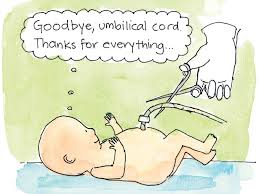
It isn’t an easy journey but I believe it begins with the cutting of the umbilical cord. To me that marks the start of one’s life, when you know you are truly alone. From that moment there are varying degrees of dependency, agency, and clarity regarding who is really in charge of your existence. Calling the shots means knowing when to seek help, receive help and provide help.

These days I’m attaching myself to the joys of life using a lighter thread enabling me to feel less bound by convention: More tuned in to the slightest breeze of welcoming change. I wish to fly higher and see further.

Re: Murder

The board game called Clue invites players to find out who committed murder. The box says it is a family game for ages 8 or older. My sister sent a colour videotape version of the game to my family of three boys years ago. I had just purchased a modern VHS player but still owned an old black and white television set. Colonel Mustard was hard to identify.

Killing someone is deadly business and sometimes grotesquely profitable, yet we are fascinated by tales of murder and mayhem. I grew up watching The Three Stooges swearing they’ll murder someone, “I’ll moidelize ya!” ‘Murdelize’ comes up in old cartoons too. It was all just meant to get a laugh from a five year old, I guess.

https://www.youtube.com/watch?v=6xsch0xj7lU

During my last years of high school I chummed around with a fellow who introduced me to CO2 gas pistols. They were loaded with harmless metal pellets. We used to walk the creek in our neighbourhood aiming at signs and stray tin cans. Pop bottles were best to hit because of the shattering glass special effect. On one of these ramblings my buddy aimed at, and killed, a pigeon that he spied innocently cooing at a railway crossing. Later the next year when I was away at university I learned that he was in a bar fight, murdered a guy and went to prison.

As an adult I wonder how there are classifications for murder. Surely there isn’t a rational reason for creating a spectrum for murderous intent. It’s one of the few areas in my personal philosophy when I won’t accept a shade of grey. I guess you have to be a lawyer to understand the degrees between accidental homicide and mass murder. In between those two extremes I could put manslaughter (the strangest of terms), but where would institutional execution fit, or war even? I don’t distinguish a difference between war and murder on a massive scale. War is murder. And murder is war at the personal level.

In the U.S.of A., we read of people getting away with murder on a regular basis. From my bench it appears as if money, connections or a crack legal team can get you off from pretty much any crime. White folk seem to win their case in court a greater percentage of the time. In the city where I live there is a fellow, by my reckoning, who has got away with two murders. Both of his victims were fringe members of society. A blind eye was turned.

‘Thou shalt not kill’ is only in the middle of the list that Moses reported was important to God. Those holy tablets rank kicking a ball on Sunday as being more consequential. I bring up God since he/she is often used as justification for state sanctioned killing. Yes, I get that sometimes you must defend yourself but the whole ‘God is on our side’ is used to rationalize even Genocide!

“Why?” you may ask. Now, I haven’t got a clue.

Re: Media

The first time ever I thought deeply about this word was when my grade ten art teacher started a lesson by using a Marshal McLuhan quote: ‘The medium is the message.’ After the discussion, we chose the medium we felt was appropriate to a theme of our choosing. Back then I believed I was being clever by using plasticine. I wanted to give a cheeky message that media could be molded or manipulated to suit the situation. Today, as a writer, I’m using this blog as my medium of choice. Let me massage your thoughts.

Most people view media as the platform through which any information is delivered. In a free society this means that the message is rarely filtered and can get manipulated. Wars and governments are won or lost on how well the propaganda machine can spew out ‘alternative facts’. The messenger becomes very important when it comes to interpreting the barrage of information. As citizens we must take some time to discover what is believable and who to trust. It has become difficult to discern the truth, especially when we are in such a hurry, yet some subjects are just too important to rely on a swipe right or left methodology.

Courtroom decisions are being made based on media evidence of crimes committed. Darnella Frazier was recognized with a Pulitzer Prize for courageously recording the murder of George Floyd, a video that spurred protests against police brutality around the world, highlighting the crucial role of citizens in journalists’ quest for truth and justice.

Today the options for information and entertainment are vast. My blind mother-in-law is less alone because of the joy she finds in listening to her reliable radio. I cling to a traditional, home delivered newspaper in a similar way. I enjoy television too, perhaps too much, especially now that I can stream programming without the annoyance of commercials. I’ll confess that Twitter has been a remarkable addition to my life. I find this format of social media helps me to see interesting perspectives from all over the world.

Media and reality have never been so blurred. I’m respectful of journalists who sometimes risk their health and safety to bring us important stories. Cellphone technology can transport us live to scenes only passersby used to witness. Film can be uploaded to Facebook or Instagram for millions of users to take a collective gasp, then resent for political action. I remember being shocked by one-day-old film from the war in Vietnam. Now with the war in Ukraine, President Zelenskyy, pictured below, can bring a real time humanitarian message to viewers of the Grammy Awards show. Art imitating life imitating art, was never more true.

https://www.youtube.com/watch?v=cG86Kezt0K0

I won’t take a medial position on this. A spiritual medium may mystically propose that my being and my message are essentially interconnected. I’ll interpret Mr.McLuhan by proffering that we are all, Media. I believe our thoughts/feelings/expressions can be connected to form a singular reliable understanding. Wow!

Re: Grey

Some words like Grey get as much attention as a senior citizen waiting in line at a bank. The word Grey/Gray even comes with two spellings, which my computer doesn’t appreciate. I think that gray has more complexity than the colour tone it describes. I’m grey; of hair, of perspective and sometimes of mood. Let me explain.

My hair has grayed slowly. My mom predicted that I would be bald by age thirty, but my hair persisted. I went through a salt and pepper phase but now, at age seventy, there are very few dark strands left on my head. So I am officially a ‘Grey Hair’; a term I used to use with some disrespect when referring to members of committees who’s opinions I didn’t share. Now, I like the way my grey hair lends me the illusion of wisdom, like Gandalf the Grey. I won’t use a hair dye. I used to feel sad when I saw female church elders who had tinted their soft grey locks with a blueing agent. (I quietly nicknamed them Blue Belles to cheer myself up).

Life is filled with shades of grey. Many folk feel that the world is either black or white. Some actually prefer seeing things as either/or. I suppose it makes it easier to decide yes or no. But events or ideas are rarely as singular as that. Taking a hard line on a topic means that the soft fringy edges will get ignored. Darkness and light have spectrums of illumination, tone, and pastel perspective. To me, grey does not suggest mediocrity of opinion or design. I’m quite content to see issues as shades of grey.  When I evaluate things I can sometimes rank them according to priorities, like selecting shades of colour when I am repainting my living spaces. I once painted all the walls in my home a light grey and was amazed how they took on a different colour as dawn moved into dusk. It reminded me of how my dad taught me to watch patiently for a rainbow to emerge through the greyness of a rainy day.

I admit that overcast days can make me moody, yet I tend to do my best writing on a grey cloudy day. In bright sunlight I have an urge to do silly things in a forest or on a beach, but on a hazy, darkened day I can somehow make better decisions. Where I live now, the skies are often tissue white, which is a remarkably happy, less stressful, contrast to the intensity of a cloudless stark blue sky. I remember being surprised when my wife and I previewed our wedding pictures; I hadn’t noticed that the skies were a light ash shade. When the sun set on our lengthy joyous pictorial, the sky behind and above us had exploded with a stunning pumpkin red wash that looked digitally manufactured.

The neutrality of grey can suggest a potential for inclusion. All colours are then complementary rather than competitive. Perhaps we can get to yes more effectively by starting with grey.

Re: Park

A park is a lovely place to go on a summer’s day. In Canada we are blessed with policies that require governments to recognize the need for natural spaces and recreational parks where citizens can go to revitalize their tired urban spirits. Some neighbourhood parks are so small they are called parkettes. When I was raising a family my young boys would pace by the door asking to go to a small patch of grass containing one small climbing apparatus, directly across the street. It’s freeing to go to a park.

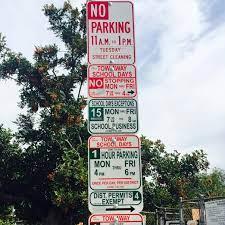
Now, finding a parking spot is a whole different scenario. How one word can carry two very different connotations is an example of the confusion found by some in the intricacies of the English language. And getting a parking ticket is the height of insult to me. My sister used to just stuff her parking tickets into her glovebox, avoiding paying until they came with additional fines. When I walk by a parked car with a ticket under its windshield wiper I always feel sorry for the owner. I’ve had so few I remember the circumstances in detail, but I’ll keep it short: One was in Toronto where I had parked on a street that was signed ambiguously (I almost got towed that time), another time in Toronto was on a quiet residential street where I had parked a large moving van, once in Vancouver’s Stanley Park I parked unknowingly in front of the  ticketing agent sitting in his unmarked vehicle and lastly in Victoria B.C. I had parked my tiny moped in what turned out to be a construction zone (I found the ticket neatly rolled and taped around my handlebar). Have a nice day!

Even when I am sure I am parked legally I am anxious until I can get back to my vehicle and gaze at the clear windshield. On street parking comes with the additional risk of being broken into. A city parkade with its multiple levels is also a source of stress for me. Even though I like the security and the friendly gate keeper the tight spaces make me fear scratches. And finding the car on return is easier than when you park at those huge Box Store parking lots. My wife is a whiz at navigating the tight corners of the ramps in downtown parkades and doesn’t seem at all concerned that the traffic control bar might come crashing down on the car’s hood before she has made it safely back onto the street. I find it best to close my eyes when I’m her passenger.

Once I tried to fight a parking ticket at city hall. I had to make an appointment with the mayor’s assistant. I came early and parked outside, near a municipal park, feeling calmed by three Garry Oak and a memorial fountain. I presented my evidence and supporting documentation, but the parking authority bureaucrats politely disagreed with my assessment of the situation. I drove home listening to Joni Mitchell. It helped.

https://www.youtube.com/watch?v=xWwUJH70ubM