Re: Money

Money makes the world go around. It seems true when we see almost everything being monetized. https://www.youtube.com/watch?v=PIAXG_QcQNU
We rate things on a monetary scale like never before: weekend movie box office receipts, visual art auction prices, team players’ salaries, a country’s GDP. It seems we trust a number over thorough critical analysis. Money speaks louder than words while we value stuff less.

When we put a price on everything it can be easy to lose a sense of its inherent value. Do we act in the world only to get payed? Are we driven only by the question, “What’s in it for me?” This monetization of the world is troubling. There are so many examples of public domains being swept aside for private interest. Water is a prime example. Corporations have found ways to monetize an essential element to all life on earth. Our lakes and rivers are being drained of this public resource so that it can be bottled (in plastic no less) and sold at a huge profit. We have been conned into buying something that falls free from the sky and, in most of Canada, runs free and safe from a tap. In this context the idea that air can be sold is possible. https://www.theguardian.com/global/2018/jan/21/fresh-air-for-sale

My grandparents used to use the phrase, ‘Almighty Dollar’ as a way to mock those who held their money too tightly. For them, money was ‘the root of all evil’ or at the very least, ‘not to be squandered’. I was taught that ‘money isn’t everything’ and to ‘spend it wisely’. Now we have wide social acceptance for those who have ‘made it big’ and moved on up ‘to that deluxe apartment in the sky’. We envy them. We blame them. We resent the 1% for their riches while we feel empty. https://www.youtube.com/watch?v=MYcqToQzzGY

Our television culture mirrors our desire to strike it rich one day, usually through celebrity or luck but not necessarily effort. Children, when asked what they want to be when they grow up answer; a rock star, a sports star or owner of a start-up. Lest we forget Donald Trump was elected in the U.S.A. as a model of the value we currently place on financial success.

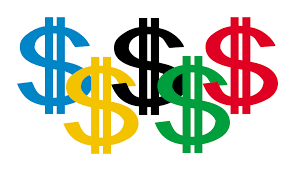
Money is seen as the end rather than the means. Worth has dollar signs rather than value. The word value is now translated as money or price rather than quality. Digital business owners are driven with a desire to find ways to monetize information. Computer application developers are searching for ways to make their ideas yield profit. The measure of a suitor’s love is still often equated by the carat size of the engagement ring. Marketers spend big bucks making us believe we must have an item. Don’t be fooled.

I’ll continue to trust that love or simple kindness can’t be bought or sold.
Re: Why

My granddaughter has discovered the word Why. This is an amazing step for one small girl. This word can be used to stop time in its tracks. Bath time can be delayed while answers are being weighed. Even if the answer is not understood, an important moment of assurance has been established: Why is a very powerful word. From our beginning we learn to use language to shape our environment, to control, or at least influence, those around us who are important to our well being. From the parents’ point of view, the word Why can sometimes seem as a test, at best it is surely a quest for information. Here is a wonderful song by Anne Murray that captures the importance and frustration of this word. https://www.youtube.com/watch?v=AYsadwkBrnI

Before wee babes can formulate discernible words, sounds sub in for communicating needs. Likely, the word When was the first question which came out more like Whaaa! This universal cry: When will I be fed? When is my diaper going to be changed? When is Mommy coming? Translation: Whaaa? Whaaa?

Journalists are taught the five Ws in order to get the important elements of a story. The who, where, what, when, why of an incident are key to understanding. The reporter wields these questions as a surgeon might use a scalpel, to expose from witnesses the details of the event. In my chronological order of question development I see Who, What and Where, as words learned after the When and Why of baby vocabulary: The Who? babes can see, the What? they can point to or grab, The Where? will eventually be explored on pudgy knees.

Getting to How, now that is the most important question of all. In my life, the question of how has been the difference between youthful thinking and adulthood. After you have accumulated data on the first five questions it is the “how about it?’ that looms large. When we reach How, we are searching for our essential selves. We alone can answer the How’s of life: How will I behave? How will I make a living? How do I want to fit into this world? How shall I be?

I’ve spent many a frustrating time trying to figure out an answer to why after an event in my life. It’s a windy road of back alleys and dead ends. It’s a journey of little use. It’s a spinning wheel of thought, endlessly circling without resolution, without direction, without hope. Here’s David Clayton Thomas singing about the trouble with Why. https://www.youtube.com/watch?v=kK62tfoCmuQ

Agonizing over the Why of something is part of human nature. Most times the reasons behind something are not as important as finding a way out, over, through or forward. Inspecting the How To, can point the way to the future better than any other question. How is a hopeful word. When you become an adult, dumping the Why frees you to consider your present moment so you can finally assert, “This is how it’s going to be from now on.”

Re: Harvest

Harvest is an old word that continues to gather new meaning. Harvest is the very act of gathering. For as long as there has been something to sow there has been something to reap. The word can be connected to autumn and the farmer’s harvest of crops. A hunter or fisher can return with sufficient catch for family or village. There is hope laced through the harvest. We wish that the abundance will be sustaining, bringing us emotional, spiritual and physical energy. We are all harvesters in that sense.

An urban worker can think that the weekly paycheque is a type of harvest for tasks completed. The feeling of reward that comes from harvesting the results of our efforts can bring much joy. It’s no wonder that history is filled with tales of harvest festivals and fairs. I used to go to the Canadian National Exhibition in Toronto. Beginning in 1897, its origins were agricultural yet as time passed it became a celebration of industrial and technological harvest. Annually, we got to see, touch and hear all the newest products and services that were the result of research and development. Likewise World’s Fairs, such as the breathtaking spectacle in 1939 New York show us the results of harvesting the ingenuity of humanity. https://www.youtube.com/watch?v=jIlhPFasI38

Harvest has a lot to do with assuring the future. A successful harvest ensures continued progress and healthy outcomes. There may be insurance for a failed agricultural crop but there is non for a dead planet. When it comes to our planet’s biological resources we have often failed in our harvesting. We have let greed guide the way rather than maintaining a sustainable resource. We’ve made a mistake thinking that the Earth will always provide. Numerous examples around the world show that we can’t continue taking without an eye to the future consequences. When I visited Newfoundland recently I was gobsmacked to learn just how significant the collapse, in 1992, of the cod fishery was to the inhabitants. Harvesting is more than an activity, it can be an entire culture. In this tragic, almost Biblical, scenario I saw meaning of the phrase ‘You reap what you sow.’ https://www.youtube.com/watch?v=aG8bSNpEGoE

Harvesting in the absence of stewardship is irresponsible. Monetary gain has to be removed as a motivator for harvesting non renewable resources. Climate change realities have been apparent for decades. I remember my university environmental science professor telling us in 1974 that the world’s ice fields were melting at a dangerously fast rate. Climate activists are now warning that the rampant harvest of fossil fuels will continue this warming trend and result in the ocean’s rising and flooding of coastal communities.

A responsible harvester takes only what is needed and saves the rest for a proverbial rainy day. Gluttony is ill advised. These harvest values have been the bedrock of civilization. Just as the sun sets and the moon rises, the earth will likely survive with us or without us. I’d like to contribute to the bounty. https://www.youtube.com/watch?v=xMjDc8MJotU

Re: Devote

Many English words are so close in meaning that they often require explanation after use. For example, I have an issue with the word loyalty yet I have no problem saying I am devoted to someone or something. Faith, Loyalty and Devotion are often linked as closely as siblings in the Etymological family. The latter suggests to me an action of giving one’s self over, sometimes completely and with willful intent. I am devoted to my wife, I am faithful as a result of that intention, yet my loyalty has limits. That can seem strange yet in context it’s consistent.

The conundrum of these three value words is well expressed in the love song, ‘Hopelessly Devoted To You’ made famous by Olivia Newton John in the film Grease. https://www.youtube.com/watch?v=i52mlmJtyJQ . In my defining way the word Devoted in this song is more like Loyalty. From my past experience, when the head is separated from the heart, decisions are fraught with danger. In my lexicon Loyalty, certainly the blind type, is foolish. I have faith that when both my emotion and my thinking are involved I can permit clear sighted devotion.

Having a career requires a certain level of devotion. Those training to be Olympic athletes would need the highest level of devotion to their goal. Equally, someone who wishes to master a musical instrument might say they are devoted to their art. I have worked with some teachers who exhibited this extreme level of devotion. It’s inspiring to see that high level of passion or devotion. There are many examples in history of religious figures who followed a calling and thus devoted their lives to a cause. That level of devotion moves too close to zealotry for my liking. A devout person I am not, for that means a willingness to forsake all else in an adherence to a defined path.

Whether in religious practise or other areas of a full life, I avoid thinking of myself as a devotee. Likewise I resist calling myself a fan of something or someone. Both terms suggest a slavery to a cause, or an overwhelming commitment to an idea. When we get ourselves so wrapped up in something that we lose sight of our original intention, we can move across the border from carefully considered thought into hopeless obsession.

During my church years I met many who espoused the practice of daily devotions. Some on the zealot end of the spectrum would rise at the same time each morning to follow their routine. Others saw value in spending a few minutes each day with an activity that centred their busy minds. These activities don’t need to be of a religious or scriptural nature. I have found reward in a singular moment gazing intently at a bee as it wiggles through a cluster of sweet flowers. Or, devoting time to listen to what my wife has to say when she returns home from an adventure makes me feel closer to her and brings me the peace I desire.

Re: Silly

I like being silly. Silliness is a part of me that rarely sees the light of day because I am such a serious person. When I get silly, people are often unsure whether to believe what I have just said so I will have to reassure them that everything I say isn’t to be treated as gospel.

My silliness is usually verbal. My late wife once called a halt to a family card game because I had started a series of silly sounds with our young sons that went on and on until my boys and I were in tears of laughter. I think silliness may be a guy thing. As a form of humour, silly ranks up there with slapstick. The Three Stooges: Adults acting as kids. What’s not to like? These comics were physically funny and goofy at the same time. As a kid I couldn’t get enough of them. As an adult, I marvel at their comic timing and visual artistry.

Being a self conscious individual and quite reserved in general, it’s no wonder friends and family members have taken umbrage when I let my silly out. There are some seeming contradictions to my silly side. For example, I don’t like Halloween or any kind of charade game. I feel badly when I’m teased and work hard not to tease others. Romantically, my enthusiasm can be construed as silly, but then love can be senseless and beyond rational explanation, so what’s wrong with that? https://www.youtube.com/watch?v=fK5oJcn99d4

The mood has to be right for me to feel comfortable being foolish. I have to be as malleable as a blob of Silly Putty. At my most absurd I am likely overtired. That’s when my funny bone is most sensitive to suggestion so an outrageous video can be very cathartic. Stand up comedians often rely on silliness to drive their sketch. A good performance will reveal just how crazy we humans are. George Carlin tops my list of artists who can make silliness seem sensible. His intellectual manner shone through even while he made endearingly goofy faces. Robin Williams was a master of showing the beauty of keeping the child within from being smothered by the responsibilities of adulthood. Time after time he would delight me with his silliness. https://www.youtube.com/watch?v=pmqmyYRi-lU

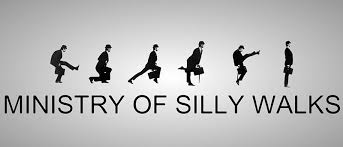
Responsibility can be a burden more lightly born when mixed with a dash of jester-ism. That’s likely why rulers once ordered fools to be amongst their court. The troupe Monty Python is clearly an example of using comedy to make the powerful look silly. https://www.youtube.com/watch?v=BoIdEjdZIls

Sarcasm is hurtful, yet silliness can’t possibly harm. An act of silliness may disturb someone’s sensibilities yet I say, “Get over yourself!” I herald those who can pull off purposeful irreverence through a silly reference. Sometimes a sound like a snort, well timed, can reveal the snobbery, the stuffiness, that too often comes with polite society. Kudos to those brave enough to bring others, too serious for their own good, to a heightened awareness of the value of nonsense.