Re: Tale

A tale can be like a story, but perhaps it will contain deeper sentiment, as in the great work of Charles Dickins, A Tale of Two Cities. A tale can be as old as time or it can be something you tattle. In the spectrum of fiction, a tale can sit safely beside a yarn, which is something a sailor may spin about an adventure at sea. Fable, legend, and myth will also be found on this imaginary language spectral line.

The telling of a tale requires picturesque language allowing us to suspend any disbelief we may have with the narrator. Unlike non-fiction stories that must rely on facts to communicate an account, fans of tales want to be convinced that what happened, actually could have happened. This manufacturing, to me, is not lying but colouring by using what we know with what-might-be. I like revisiting the Sarah Conner story in the Terminator film series. She’s like a princess, but a princess with purpose: a tale of, and for, future times.

I loved reading fairy tales to my kids as I once loved being read Grimm-like fables when I was a child. Cinderella popped into my head recently as an example of the possibility of time travel. It was a Back to the Future mind spin where I rationalized the need for the glass slipper lady to return home by the time the clock struck twelve. H.G. Wells’s classic futuristic novel Time Machine is an early attempt to suggest that travelling through time could be achieved, with the appropriate clockwork technology. I wondered if perhaps Cinderella was a time warp artist, riding in that magical pumpkin-ish looking coach. Her only fault might have been she didn’t coordinate the return-time better with her fairy godmother/timekeeper.

In my version of Cinderella, she discovers a way to end her despair entirely by leaving her old world behind. I picture my Cinderella being trapped in long days at Walmart, greeting others who have interesting lives, while she is mired in the drudgery of retail. As I see it, time travel only gets messy when we actually come in contact with our own lineage. Maybe you could come and go through the ages as long as we kept it out of the path of your own timeline. For example you could see the court of Cleopatra but not visit your grannie when she was three. Perhaps my Cinderella wouldn’t lose a shoe but a watch, and this is why she forgot the time paradox: you can’t be in two places at once. Marty McFly discovered that timing was everything or else the future would not exist as only he alone could tell it.

Dreaming, like what I’ve been writing here, is tale-telling. There must never be punishment for it, unless it’s intended to deceive or hurt another. We can believe in old-wive’s tales to the point where their value continues to inspire new discoveries in STEM research. The truth must always remain the goal, but I see no harm in embellishing the facts, for story’s sake.

Re: Mistake

I don’t like the phrase, ‘We all make mistakes’. It has a let-me-off-the-hook sort of vibe to it. We see the underlying theme of this phrase often as in Brittany Spears singing ‘Oops I did it again.’ Yes, the reality is that we humans err, but there is no sense of accountability when someone shrugs. In politics there may even be examples of a cover-up rather than an admission of any responsibility. A Director in the recording industry, television, or movies can ask for another take, if the first performances have missed the mark. Yet a shout of “Take Two!” is not going to cut it in an argument with someone you care about. On the in-real-time stage of life scenarios, the miss-takes are unfixable, since the show must go on.

“My Bad” or the snotty version, “Mea Culpa” is not a replacement for an apology. I guess being a Canadian I am hard wired to be apologetic. But a sorry verbalization that comes naturally is still not an excuse if I have exhibited bad behaviour. I once kept my whole young family waiting at a campsite for me to return from an errand of my own obsession. I wanted a silly travel sticker to complete my collection for a Great Lake Superior Tour promotion. So I left everyone to pack up the travel trailer while I went into town early. In my excitement, at the tourist parking lot, I locked my keys in the truck. Long story short, I got my sticker and was rescued by an affable hydro worker who had just the right length of wire to pull my vehicle’s lock button. But, I had kept my loved ones waiting nervously, thinking I had been in an accident. That’s on me.

We don’t always try to learn from our mistakes though. In the film ‘Juror #2’ the role of mistakes in one’s life is examined through an extended courtroom scene. Slowly the errors of human behaviour and the systems created to provide a sense of justice are revealed. It’s a film that explores cynicism, righteousness, loyalty and community standards to resolve what began as an accident of deathly proportions. We can learn from art.

Misinformed, miscalculated, misrepresented, misspoken, misfortune, and misunderstandings are part of the vocabulary of the errant human. Sometimes we screw-up and sometimes it seems that the universe conspires to make our life difficult. Yes there are such things as innocent mistakes, even innocent bystanders. Even in those occasions when we feel blind-sided or personally hard-done-by, I feel we can learn something to try to prevent another mishap. Accidents are sometimes preventable with a little forethought. My elderly mom blamed herself when she fractured her hip. She went into a darkened room to fetch something and slipped on a bit of plastic on the floor. “If only I had slowed down and thought it through.” She said of her fall. She walks about very carefully now, so I guess you could say that was a lesson learned.

Would that each of us could learn something from the vastness of human experience!

Re: Crime

I watched the film A Real Pain and came away with many thoughts related to how we make judgements in our modern world. In this movie people are taken on a tour that examines historical trauma. The characters visit sites in Poland where atrocities were committed; human against human. Some of the tourists in the film are seen experiencing the ongoing pain of dealing with the circumstances in their own lives. Judgements are made.

The morning paper brought more news of conflict, this time in Ukraine and Gaza and Lebanon. I read the headlines recalling the dialogue from last night’s dramatization of conflict and I struggled with the notion of crime. It was an aquarium experience: I was looking at events, both historic and current, as if through a barrier of glass. My looking only gave me a visual. I tried to understand the feelings of the other side but I couldn’t because I lacked immersion. A scuba diver can swim amongst dangerous fishes, an astronaut can experience inhospitable space and a soldier can merge with the horrific realities of war, but to enter these unknown environments you need protective gear. The world beyond the glass of this metaphorical aquarium holds uncertainty at the very least, and terror at worst.

From this vantage point I could observe the pain and suffering of crimes committed against humanity but seeing without Being, just dulled my understanding. I couldn’t draw any conclusions, let alone make judgements. Our judicial systems are set up to evaluate crimes, categorize their depth of destruction and apply a suitable punishment. I am neither a lawyer, nor a criminologist but some things I know to be true: Murder is wrong, Revenge is wrong, Despoiling our planet is wrong, Abuse is wrong.

Criminology holds a fascination for me: Motives for criminal behaviour, prerequisites for becoming a criminal and reasons why some areas of the world are more crime ridden, make me wonder about what it means to be human. We are not animals in fancy linen. Humans are imperfect. Religions have debated, conflated, obfuscated, excused and hidden sins of their institutions and of the societies they profess to protect. Israel, as a state, has to answer to the world court for its abuses in Palestine and Lebanon. Russia abuses politics when it suggests that Ukraine isn’t even a country. Crime cannot be justified. Crime exists separate from what came before and what is yet to come. Crime cannot be allowed to beget crime.

I believe some form of restorative justice is the peaceful way out of repetitive crime. Grace can be an antidote to the sadness of the human condition. This isn’t dream-scaping. It’s aspirational to plan for healing the pains that come with Being. While there is a comparative depth of pain, if we judge pain to be less or worse then we risk committing the crime of not caring. The suffering in Hitler’s Warsaw ghetto is no different from Netanyahu’s Gaza Strip. Both are crimes against humanity.

We must do something positive when we reach a conclusion, not create a new problem.

Re: Most

“You’re the most!” Is a declaration that someone once said to me after I delivered on a promise. This cliched phrase (a relative of ‘you’re too much’) was delivered as a thank you when I held up my end of a bargain. It was one of those humbling moments because I didn’t think I had done all that much. Apparently I went beyond much, into the superlative Most!

The word Most is related to the word Best and can be used to describe all the things you really like. Extreme yet simple words like these appeal to the novice wordsmith and to aged writers who can still relate to the wonders of life. My grandson recently learned this word and wants to use it in his daily speech. He wants to know all the Most things; like who had the most fun, the most dessert, who got the most candies. I tell him I love him the most.

If I were to list the times in my life when I did my utmost, those events would be few. I tend to be a lazy guy, lacking what some might call ambition. The time I had to travel across the Atlantic Ocean to my very ill father comes to mind quickly as an example of superior effort. When I had to respond to a leaking hot water tank required a lot of quick thinking. Sometimes I find large gatherings rather taxing, but I wouldn’t describe my efforts to show patience on those occasions as herculean. In other words, it is probably true that my life is mostly moderate instead of extreme. While I try to get the most out of any circumstance I wouldn’t say that I go overboard to create drama or intrigue. That doesn’t mean I lack enthusiasm. For example, if I say “That’s the most fun I ever had!” someone is bound to point out that I said the very same thing last week. I sometimes, usually, regularly, and predictably live as a character in the film Groundhog Day.

My 95 year old special mom just filled out her MOST form. Medical Orders for Scope of Treatment is a document that directs others to respect her wishes in the event of a life threatening medical situation. Some jurisdictions use DNR (Do Not Resuscitate) paperwork. MOST sounds more positive somehow. The majority of us would like our last moments to be peaceful, I suspect. Most of all my mom wanted to make her medical wishes clear to anyone who might wonder how to proceed on her behalf. She tells her daughter that she has had a satisfactory life and doesn’t want to be anyone’s bother when it comes right down to it.

When Ella Fitzgerald sang the great Cole porter song ’You’re the top!’ she’s giving the highest accolade while feeling joy in the moment. and to my ears she is the mostest. I hope the best I can say, when I reach my special mom’s age, is that I did the most with what I had been given.

Re: Stories

While talking to my 95 year old special mom about a newspaper story of a neighbour who is lost, I became lost myself, in the flimsy gauze between truth and fiction. The report of the missing man has details that beg to be filled in with only my conjecture. My mom asks questions that I can’t objectively answer, yet a conclusion to the story had to be reached before we could move on with our day. Thus, the story in our community becomes wedded to our own story, even while the resolution to the story is pending. Even with her advanced age and experience, my mom found this hard to bear.

Bedtime stories are precious in the way they invite imagination. The child being read to goes on fantastical journeys with only a few words of script. Sometimes only a picture is enough to provoke multiple questions of why, how and where. The stories live on after the sleepy-head has been tucked in and the reader has left the room. Stories are meant to persist just as the witness to a life event takes in information and transforms the data into something relevant and understandable. In that way, life itself is a never ending story containing multitudes of chapters and possibilities.

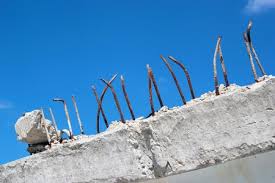
A building starts with a foundation. Stories are added to this physical structure to accommodate people and things. Sometimes in poorer countries the extra floors take time to build. I remember asking a tour-guide, while on a bus trip in Peru, about some buildings having rebar sticking out at the top of rows of cinder block. She told me it was a sign of hope in her community that one day enough money would be available to add a second floor onto the house, to make space for expanding families. A case of another story creating room for more stories.

Recently Andrea Skinner, a daughter of Alice Munro, made public her story of abuse at the hands of her step-father. Readers of Munro’s work talked and wrote about the revelation as though it was their story. Some couldn’t see themselves ever reading this Nobel Prize winning author’s stories ever again because of this new, real life chapter insertion into the Munro bibliography. Ms.Skinner’s misfortune reminded me when I was a toddler and being admonished never to tell tales on the family. I took that to mean; Don’t lie. Yet when I saw my mom talking with others she would often start a conversation with another adult by asking for gossip. I still find the difference between privacy and secrets confusing.

Any bit of fact can be turned into a story. I believe conspiracy theories are an attempt to make our imaginations come to life. We want to understand things so desperately that we join in the story making with other like-minded folk to explain the unfathomable. Every culture is built on stories. Sometimes the truth is hidden to get on with other things we think are more important.

My story is not like yours but we have chapters in common, let’s build on that.

Re: Worst

I had an incident involving insurance and it made me spiral to thoughts of worst case scenarios. As clouds of worsening doubt gathered about, I found surprising comfort in ranking the worst moments in my life in one paragraph. The effort convinced me that my current situation was not that bad. I just had to get a grip.

Making a list of tragedies and traumas sounds depressing but it did offer me a sense of control. Control can sometimes bring a certain calmness. If you like order in your life then putting things down on paper offers perspective. The list I made that day was revised several times. That’s a cool thing about judgement; our sense of a moment’s impact more or less changes as we gain the wisdom of hindsight. I call it My Best Worst List. This summary list became a therapeutic accounting of the crappy moments that I wish hadn’t happened, but did.

My first wife died of cancer when we were both only 50 years old. That was entered as the worst on my self-therapy list. I suffered clinical depression 7 years before that, making it second on my collection of lifetime worst events. A simple surgery went wrong so I had a hellish night in an emergency room. A family trip was once aborted due to a flat tire that nearly killed us all (I was driving and I still have chest pains from the memory of that experience). My sister ending her life prematurely is on my list. I had a best friend who bailed on a European hitchhiking trip AND being my best man at my wedding, which was a total bummer. In grade nine I got the one/two punch of my parents separating then we moved to a city AND I had to go to a new high school. Too cruel!

Bad things don’t have to happen before we know what the good times feel like. Pain is pain in the moment. Time heals if we don’t focus on our suffering. Feeling low is normal and it doesn’t have to be linked to one happening. Identifying something on a scale of bad to worse is the first step to understanding the bigger picture of your life. For me, sometimes it was a matter of encouraging myself to hang on for-one-more-day. On the worst days I felt lucky to have someone provide the guidance to see the way ahead, out of the gloom. Humour helps at the right time, delivered in a positive way. Silliness tends to lift me up before things get worser.

A ruined birthday party can be the worst thing in the whole world for a four year old. You grow older. Tragedies mount. You learn from the school of hard knocks. It helps to share your story, comparing war wounds over a beer and liverwurst lunch. You can laugh with a soul mate while discussing the value of worsted wool over synthetic fibre. Always remember; things could be worse! I’m resolved to leave the past where it belongs.

Re: Manners

What might be considered offensive to some is quite acceptable to others. Simply put; that is what the word Manners means to me. I don’t need a dictionary to soften the edges of my definition so please don’t be offended by my bluntness. Words can offend, behaviour can offend, one’s choice of hair style may offend. All this because a culture is defined by its manner of existence.

Societies are built on acceptable performance. Etiquette is taught early, and often by shaming. Parents dole out these initial nuggets of advice/discipline. Junior will be admonished for picking his nose, or pulling down his pants. The little one must learn that certain gaseous noises will not be tolerated. Kids learn that we are not amused when children make too much noise or run too fast. There is always a measure of respectability that must be adhered to or an elder will make us blush with regret. Youth are not off the hook outside the home either. School and church confirm or contradict the comportment required while a person is functioning as a member of the community. Adults can get quick tutorials too: Government officials are coached in proper manners when they assume an ambassador’s responsibilities. Those of lower socioeconomic status or non white skin colour often end up in jail.

I’ve never been impressed by high society. Ann Landers, Dear Abby or Martha Stewart types aren’t about to change my mind if they think something is a ‘good thing’. I shall not follow that lead. I have low tolerance for self appointed protocol police. If something is publicly regulated I will consider the reasoning behind the statute before I buy into it. If conduct is judged just because it’s considered ‘Proper’ then I’ll give it the royal wave or the middle finger salute, in a manner of speaking.

Those touting good manners are often guilty of pointing the finger: ‘How could you!’ quickly becomes, ‘How dare you!’ which then degrades to, ‘Shame on you!’ Artists and entertainers are often unfairly judged by those who look down their noses. A recent documentary about Sinead O’Connor was a case in point. Her talent and valid protests became secondary considerations in the face of impolite demeanour. Here was a beautiful singer and sexual activist, unfairly beaten down, shunned even, by those holier than thou elements of the music industry and the religious community. She dared to be different.

Manners are a human construct. Modern civilizations don’t tend to embrace differences. We are wary of the odd man out. We worry what’s behind a questioner of authority. That may be why politicians so rarely suggest outside the box solutions, because any non-conformity to traditional mannerly thinking is threatening to order and good government.

Isn’t it a wonder then, how we can ever get to addressing the big issues without making offence. It’s easier to say, ‘But that’s not how we do things here!’ Revolutionary thinking is bad manners. So there! Let’s just accept it, then let’s get on with the important stuff in life.

Re: Joy

My mom was Joy to her mother, for a period of time anyway. Perhaps that’s what joy is; a small glimpse of what might be, a flash of sunlight, something to squint into and smile over so we can continue to look for a more lasting happiness based on a mutually assured place in the sunshine of our thoughts. My mother Joy rarely shared the temperament her name suggests. Joyous she was not. She despised her own mother and barely got along with her own daughter. As a teenager I would ponder that name and wonder what the opposite might be, because surely that would be a better moniker for my mom’s contrarian spirit.

If joy is a notch above happiness then it stands to reason that it is hard to come by. A good mood does not come naturally to most people. I’d like to discover the country where it is common currency. To smile or not to smile; that should have been the Shakespearean question. For it is nobler to soldier-on than to reveal the general humdrum nature of one’s existence. There is a fellow named Gurdeep Pandher who posts regularly on social media encouraging the pursuit of Joy, Hope and Positivity. Along with this wonderful message he dances bhangra which, when joining in, somehow allows the oxygen to blend with the optimism in the bloodstream to metaphorically warm the chambers of even the Scroogiest heart.

I wake to feelings of joy each morning, even if I am kidding myself a little. The euphoria sputters and falls quickly to happy, then with a small breath in I am content, and before touching down on the floor with my cold feet I am convinced I am satisfied. If it is Christmas time I will hum ‘Joy to the World’ as I am shaving. My intention is to make a joyful noise unto the world, even if it sounds like I’m trying too hard. At other times of the year I might think thoughts of tulips, summer picnics, or an autumn romance just to keep embers of hope alive. I believe hope, joy, and faith all come as a combo from some spiritual warehouse but usually something goes wrong with my order and when I open the shipping container a part is missing.

Being in the season of darkness can leave us searching for the sun. At such times as these in a war torn, self-centred world it is hard to find solace or solidarity. When I think about my times of trouble I can recall mysterious moments of clarity. Like a lift in my being, a little leap grows from my heart and I suspect it might be joy. I can’t pin it down. The feeling flutters by. It doesn’t alight long enough for me to examine its structure, weight, colour or dimensions. Its transitory nature makes it difficult to classify yet I know the troubles that had been mine moments before were lightened by this different perspective. Joy to the world.

Re: Risk

When I was younger I took way more risks than I do now. The riskiest things I have done include: Diving headfirst off a cliff into a small pool of water, Driving a car after not sleeping the night before, Having unprotected sex, Saying no to my mother, Writing a review of a concert that I didn’t attend, Turning down a job offer, Rejoining the dating scene at age fifty, Seeking a life of no-fixed-address after retirement.

It is wise to at least look before you leap. Sensible folk will tell us that a little planning goes a long way. There are many phrases that can begin a cautionary tale, which we can share at a dinner party or submit to our children as a lesson on how to avoid daddy’s questionable behaviour. I find it fascinating how our languages have sayings that we can use to keep us safe from harm; if only we would take a moment to listen. Our inner voice may exclaim excitedly, ‘He who hesitates is lost.’ Then concurrently counsel, ‘Good things come to those who wait.’

Life can be scary, yet sometimes we make it scarier when we don’t do a risk analysis. We must not forget that fools rush in where angels fear to tread. Most perils can be avoided or at least ameliorated with a little thought before hand. And not all risks are physical. It took me a while to stop fearing imminent financial collapse even though I’ve been fortunate to have regular employment. I’ve felt the anxiety at the end of a monthly pay cycle but I’ve never known the riskiness of living on the street. I’ve weighed options of a benign sort when it comes to the emotional risk of relationships. The risk of a broken heart has been my Everest to conquer in life; something I have chosen with excitement, as a mountaineer might prepare for a risky climb. In this analogy, practice has brought the experience necessary to help me be safely awestruck by love.

Some may see risk taking as creating a fuller life, however, living on the edge is not in my comfort zone. I prefer to watch the thrill seekers, cheer them on even, rather than join in the mass revelry. There are some risks I will not take. I will not jump from an airplane, even with a parachute. I refrain from watching horror films. I am not a recreational drug user. I will not gamble with my money. I will not drink and drive. I will remain faithful to my lover. I will not let anger get the better of me. I will chew my food carefully.

There is reward in taking a risk. Staying in bed or not leaving your apartment will get you nowhere. Life is neither to be squandered nor played like a game of Risk. Situations are inevitable, occasionally dangerous, yet a moment or two of evaluation before proceeding with the next step is a valid price to pay. Steady on, take a breath, pause, be still and listen.

Re: Accessible

I’ve wondered what it means to be personally accessible. Throughout my varied relationships with others I have striven to provide access even though I have a reticent personality. I resist the pronouncement, “My door is always open.” Because in truth it isn’t. Just because I consider myself a good listener doesn’t mean I’ll always hear what you say. My spirit has access points. I’ve discovered I’m more open to someone who poses thoughtful questions. The way to my heart is not through my stomach but by accessing my sensitivity to truth, justice and inclusivity.

When my wife and I were looking for a place to live after retirement I thought up an ABC list for a potential location. The A stood for Access, the B for Beauty and the C for Cost (an obvious bottom line in any list). At the time, our accessibility needs were few since we were both retired and healthy. So there was no need to be near work, a hospital or a school since our family days were well behind us. We desired to be near to city services, cultural amenities and community gathering spots all preferably accessed by foot. Victoria B.C. provided on the first two so we had to adjust our budget and expectations to fulfill our dream. I stuffed my desire to curse the cost.

Like other white middle class males I have felt the urge to get huffy when my access is denied. As a teen, at a beach resort I once fumed for several minutes after I showed up bare chested to a ‘No Shirt/No Service’ restaurant and was turned away. “How dare they!” I railed against the authorities. My friends covered me, literally, by finding me a Tee to wear. When you get used to doors opening for you, it’s easier to be shocked when access is denied. We all get a little testy when internet service goes down or water gets shut off in our apartment. I can make myself feel outrage when something appears unjust. I’ll go to lengths to advocate for myself and those I love. The squeaky wheel does get greased.

Some folk strive for access: to the executive washroom, to the halls of power, to the information highway, to the happening concert, to the next big thing. I’ve never been ambitious enough to barge in front of people, yet I have coveted what others have excluded from me. The child in me wants to point and shout, “But how come she has one and I don’t?” In my perfect world no one needs to fight an urge to bud in line, because there is no line. In this world we shape laws that focus on inclusivity. Technology is used to further the goals of accessibility rather than being commodified for the rich. Here, we are taught that our resources are plentiful and not restricted to a pie shape. As a matter of justice, we all have equal access to food, shelter, education, healthcare, employment and recreation. Here, truth opens all doors.