Re: Communication

In grade six I was a prolific penpal writer. The best teacher I had had so far in my schooling, a Mr. Stroud, thought he could teach almost any subject through the craft of writing. I wanted to make him proud so I churned out all sorts of correspondence, mailing letters to a record high number of countries. When I graduated to junior high my dad’s friend introduced me to the wonders of international ham radio, so I got to talk to a new batch of people through that medium. Towards the end of high school and on into university, I was an eager letter writer for Amnesty International. This desire to communicate with the global society continued as I became a teacher, encouraging my students to use the power of their pen, or keyboard, or their voice to reach out to the world. Like my grade six teacher before me, I carried his instructional technique to stretch the conventional three Rs.

When it came to social media, I didn’t register with Facebook on account of questions about privacy. At the suggestion of an artist friend I started a Twitter account. I soon grew to love communing with like-minded souls who wished to amplify good vibes, while sharing their tastes in various art forms. Those were good years until the messaging on that platform became darker, less inclusive, and ultimately soul-sucking. When Elon Musk took over I joined the Xodus, closing my account, and switched to another of Jack Dorsey’s creations: Bluesky.

These on-line communities have been disparaged by some. The central joke seems to be that if you spend too much time with computer messaging, then you forget how to talk to a real person. Nah! During the Covid years I found my social media buddies to be a life-line. I’m naturally an introvert so I didn’t mind sheltering in place. I was not one of those who baked endless loaves of bread. I continued to use my favourite artistic skill, writing, to broaden my days of regulated isolation amidst the continually updated health advisories. I used my laptop as a bridge to friends in other countries, connecting me with stories of other governments’ approaches to quarantine, vaccines, and the public protests that followed.

When we all got back to face-to-face socializing I confess I did feel rusty. The eyes of another real person can make anyone feel a tad off-balance. Slowly I remembered my instincts/training to listen, digest, then speak my point-of-view in the politically correct order. I’m enjoying learning how my grandchildren are sharing their messages of discovery and hope. Their ways of communicating will be very different from my personal history. Yet the common thread will be to send out a signal, “Is anyone out there?” When a child shouts, ‘Grandpa look at me!’ I know they really mean ‘Can you see that I exist!’ It’s not that they need validation. Acceptance is really all that’s required. Then we can make a confident leap to ‘Let’s play together.’
Re: Cult

Some words contain words. Cult is part of culture in more than just structure. There are elements of cultism in every culture. Citizens of a culture make the decision to embrace what is practised, or not. The essence of a country’s culture is demonstrated by how resources are allocated to promote the larger values of the collective. Sometimes these tribal desires to belong can conflict with our individual wants, wishes, or needs.

When folks agree to do similar things together a connective thread is created. I like to think of that as the art of living. Defining a culture is how societal groups are formed. Individuals in families may often repeat to each other “This is the way we do things.” Teams often bond over the wish to be united so that literal goals can be achieved. After a tragedy, a city might suggest that the way forward would be by recognizing common values. I remember, after the bombing of marathon runners in 2013, newspapers promoted solidarity by printing headlines; Boston Strong! What fascinates me is the border between a healthy culture and a restrictive cult.

Throughout history people have collected into groups for protection, efficiency, or the pursuit of a shared experience. Religions are built on this desire to belong to something greater. Few of us want to be alone in our beliefs or occupations. Unions, fraternities, and sororities have been an essential part of the workplace so we can feel like comrades of industry. Military institutions have aspects of cult conditioning within their training. When you belong to any group you have to give up a bit of yourself for the greater good.

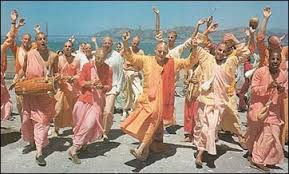
With the fracturing of our understanding of cultural mainstays comes doubt over what is important. Factions, sects, and brotherhoods become more important when traditional ideas of the common good are muddled. Cults begin to grow, fracturing the confidence populations once had for their society’s documents of legality, equality, and fraternity. When I read of organizations having a crisis of culture it worries me that fundamental values have been twisted to suit the needs of the powerful. Most people will think of cults with a capital C as those practising life on the fringe of religiosity. The rules of belonging in a cult-like setting are very oppressive of individual freedoms. In some cases you are coerced to deny your own history in order to begin life under a new set of guidelines. Life in some 60s communes was like this, and I have concluded that being involved with any religion is cultish.

Communal systems can get complicated when group and personal needs conflict. To some degree educational institutions are designed to indoctrinate our children to the ways of the national interest. In Canada, our ten provinces and three territories have their own policies, procedures, and legislation within the framework of the larger federation. All regions have their own priorities and practises (especially Quebec, and lately Alberta) yet we all call ourselves Canadian.

Cultures must evolve to survive. I would celebrate a global culture of peace as a priority.

Re: Herd

A pandemic is declared. The behaviour of humans is now a matter of life and death. The human herd is working hard to protect itself from the Coronovirus. Details change daily, sometimes hourly, in terms of government directives and casualty figures. “Have you heard the latest?” is the question posed by neighbours, family and friends even as they practise social distancing and spacial awareness lest the virus reach out its infectious properties. Since we are affected as a group in these situations, we necessarily respond as a group. We can help or hinder each other’s health by how we look after ourselves and our herd.

I have found it curious to be a witness as countries and their governments decide how best to take on the issues presented by this pandemic. At the outset of risk to their country, the United Kingdom chose to pursue a controversial policy endorsing the concept of Herd Immunity.
https://www.aljazeera.com/news/2020/03/herd-immunity-slow-coronavirus-pandemic-200320092928984.html. They soon reversed their position when infected numbers grew alarmingly. There is some logic to letting things work themselves out, but as a society where do we draw the line on numbers of dead people? Stranger still is how we tolerate lifestyle illness, suicide and traffic deaths more readily than succumbing en masse to viral infection.

Herding humans is an art form at Disney resorts around the world. Here, park goers are herded efficiently through endless lineups to get to their tickets, get them to their ride or help them get fed. I’ve always been anxious in a herd, part of it has to do with being an introvert. Amusement parks, arenas and packed airports are places that make me hyper alert. As an individualist, I’m not myself when others surrounding me have the potential to exhibit random behaviour, so my tendency is to resist the pull of the mob. Herd behaviour was seen recently as shoppers struggled to stock up on social isolation supplies. Survival is the imperative to the point of scoring the last rolls of toilet paper, canned SPAM or, more menacing still, ammunition. Herd mentality clicks in during crisis.

Once, as a young father I had to quickly gather my young sons at their grandparent’s trailer park location. There was a commotion over a car, seen racing through the park grounds. The driver was cornered near us by bat and crowbar carrying residents who smashed his windshield. Further violence seemed imminent. Fortunately the police arrived in the nick of time and took the cowering driver into custody as park citizens continued to taunt and shout their anger. My children saw a herd of humans at its worst.

There are other formal names given to animals that gather. I’d like another word than Herd to describe humans. We could Band like gorillas, Parade like elephants or even Convocate like eagles. Being Shrewd like apes might be helpful to emulate. In Canada we humans gather to make decisions like owls in a Parliament. My favourite collective noun is a Zeal of zebras.
I could join that fun sounding herd.