Re: Door

I had a dream about an elevator last night. It was one of those freight elevators with a large sliding outer door, plus an expandable screen door. When I approached, the two doors were open and the elevator space was jammed with people as in a sardine can. There was no room for me, and there was no desire on the faces of the folks crammed together to make room either. I pondered that dream all day as I ventured through one type of portal after another.

In our city we have an old-fashioned elevator like the one in my dream. It was part of a marine museum that has closed down. A door on a travelling closet, what an idea! I think of Dr. Who’s Tardis or C.S.Lewis’s children’s series, The Lion, The Witch, and the Wardrobe. In stage plays, the indoor scenes have doors leading our imaginations elsewhere: Walk through and the performers might find themselves out-of-doors. The original Wizard of Oz movie, had a scene that once made viewers gasp in delight as they were transported from black&white cinematography to full technicolour. Actress Gwenyth Paltrow, in the film Sliding Doors, plays a character who is confronted with the consequences of choosing (or not) to step into a subway car. Actors Robbie & Farrell go on A Big Bold Beautiful Journey through doors to their past, while taking us along for the ride.

They say the eyes are the doorway to a person’s soul. Cliché-wise that may be an open-and-shut case but I wonder if that makes the eyelids into doors of skin. Ewww! Scarier still, our eyes, held wide open, can suggest a vacancy as in, “You’re dead to me!” My favourite door is a castle’s portcullis, more like a vertical closing gate, but one which keeps out marauders while still giving a view of the countryside. Doorways are metaphorically about choices: We can hold a door for someone who follows, put our foot out to stop it from closing, or place a welcome mat at the doorstep as an invitation to all who have travelled thus far. It’s doubtful that anyone still carries their bride/groom/partner over the threshold of their abode after getting hitched. Although some still might mark their front door with symbols of protection or guidance. A boss may say his/her/their door is “always open.” But that begs the question of why there is even a door there in the first place.

I’ve always thought it would be cool to be an elevator doorman. I can imagine myself assisting folks as they navigate the vertical highway, “What floor please?”. Most folks want the elevator experience to be over as quickly as possible. They’ll engage with their cell phones or stare intently at the floor indicator over the door. When I was a condo superintendent I enjoyed the reaction I got when I asked fellow Otis riding travellers a few questions or made astute observations while on the way to the lobby. That’s me, always trying to open the door to conversation.
Re: Theatre

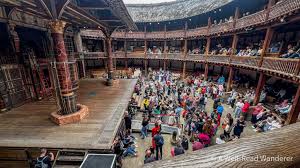
“Don’t go into theatrics.” my mom would say when I tried to explain why I did something she had thought was outrageous. Both my parents had local community experience on stage, so references to theatre popped up often during my childhood. My mom and dad met in a Social Club (which was a popular institution in pre-WWII England). These clubs were run by youthful members who planned dance-nights, sports events, card parties, and cultural festivals. Much later, in Canada and the USA, my parents organized successful amateur productions of traditional drama, musicals, and participatory community theatre.

My mom had plans for her son and daughter to go into showbiz. My sister and I performed on union hall stages and auditioned for television amateur shows. We didn’t like the spotlight. We didn’t dedicate ourselves to honing our talents. We were content with the theatre of our own lives. What we extended into our adulthood was our love of musical theatre, particularly as produced for the cinema. I knew many songs from these shows enough to sing heartily in the shower, or someplace private. My sister, once drunk, belted the lyrics out with enough gusto to convince me she knew them by heart too. Theatrically, our own paths diverged only slightly: She acted out on the karaoke stage while I joined voices with others in church choirs. My mother always referred to us as the devil and the angel. Pity us both.

That symbol of theatre; those masks of joy and sadness, are evident in personal lives as well as behind the curtain. There is an element of pretending in our behaviour. Some might refer to it as, “Fake it ‘till you make it.” I have to say I have tried to be genuine in my approach to life. Others have expressed that I am a man of even keel. I suppose I have tried to act that part whenever I can, being the guy everyone can count on. However there was one time in my early forties where I forgot my lines. In fact I totally went off-script and let others take the responsibility for life’s big play. Those days lacked the lift found in a musical production.

I relate closely to films that examine the complexity of the human condition. Recently I was transfixed by the television series Mare of Easttown. The titular character played by Kate Winslet, was disturbingly close to my memories of my sister. Within the gentle comedy of Ted Lasso I found that title character, played by Jason Sudeikis, to be as close to what I would like to be in my world. Self perception is often inaccurate and we may wish to deny the associations we deem fit to define us. Within the theatres of our mind we have had directors, script writers, costume designers, and singing coaches all trying to make our performance be spectacular.

A life’s work is finding the song we can sing, or the part we can play that will bring us to the red carpet knowing we’ve earned the recognition.

Re: Booth

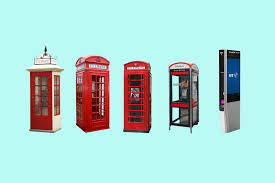
If words had scent, I suspect Booth would have the aroma of grandpa’s sweater, soft leather, or maybe pipe tobacco. This word popped into my head one morning as I was waking. Booth is not a versatile word like bandage, beverage, or even British. You can replace it with box, or kiosk perhaps but the word Booth has a vintage character.

In days gone by it was a place to find a phone. It was a communications site, a depot, a word station if you like. The last time I used a phone booth was in New Zealand, where I almost lost a phone card. Were it not for a scrounged safety pin I wouldn’t have been able to retrieve my pay card from the slot.  My earliest recollection of a proper phone booth was in England where my mom took my 2 year old sister to change her nappy. Much later, in Canada when I was a teen, I would go to a local mini-mall to make calls to girlfriends. We would exchange confidences and plan run-a-ways. Despite my avoidance of small spaces, these outmoded cabinets of conversation enabled me to escape from the prying ears of my mother who would tease me mercilessly if I used the home phone line.

On those dates I might have prearranged with a favourite restaurant to reserve a cozy booth in the corner, near the back, where my date and I could have more privacy. I believe there was a television game show about setting up a date night. It involved a sound proof booth where contestants had to wait in seclusion while the audience got the scoop on what would happen next, who would choose who, or if the answers matched the questions enough for compatibility or prize money. Strangely, some of these features can be found in the interrogation one gets when having a hearing test.

A phone booth has been featured often in television and film. The scene of Hitchcock mayhem comes to mind in The Birds. Why Clark Kent chooses to transform into Superman while inside one, I’ll never understand! I’ve never been a fan of Doctor Who, yet the concept of the Tardis fascinates me. It was designed after a commonly seen police box on London streets. It’s small in size but as expansive as time & space once you step inside. This long running British series is an expensive long distance call indeed! Joel Schumacher directed a superb suspense thriller titled Phone Booth. It nicely captured two of my worst fears whenever I made use of one of these curious glassed cubicles: claustrophobia, and paranoia of not having enough change.

And speaking of tense scenarios, I always thought it was curious that John Wilkes Booth managed to assassinate Lincoln while the President sat in a theatre booth. Death by booth squared! There now; I’ve given the word Booth a boost. Now I’ll consider ordering an old-timey British phone box on eBay and installing it in my back yard as a sentimental gesture.

“In for a penny, in for a pound.”eh?

Re: Man

I am a man. I think I am a man because of my biology and my training. I was taught that I could pee standing up, that I could help make a family by being a provider, that women and children must be saved first in a disaster. Some of that, perhaps all, is outdated thinking. But still, I know within my being, that I am a man.

This man: Me. I am taking small steps to learn that not all men, not all human beings, are created alike. By our very nature we are formed from the same flesh and blood and so must be treated, collectively with the same respectful humanity. However, I have come to learn that I am a Privileged Man by virtue of my whiteness and wealth. This troubles me. The equal rights declaration, “I am a Man!” is not lost on me. I learned of my manhood by example, as all men do. My father taught me there can be gentleness in a man. He spoke of femaleness and maleness as characteristics that men and women can share. For a while I was confused about these juxtapositions. I saw violence in my mother so I knew that hatred was not the purview of a man, alone. I learned that it was alright to cry, and yet tears may let others in on your secrets.

What it means to be a man has been a topic of discussion since the times of the wise Greeks. Most often, in my interpretation, these definitions have been restrictions to mankind’s full potential. Robert Bly made an attempt at defining the need for a men’s movement. His book, ‘Iron John’ was a great read using an old folk tale as a guide. The flaw in the text was the assumption that Man must be thought of as opposed to Woman. Our physiology must not predetermine our preferences, attitudes or behaviour. I believe there is more harm than good in concluding that the sexes think and act in a standardized pattern.

There is no manual on how to become fully human just as there is no series of steps to raising a child. Cultures may provide clues that help us to nurture nature. But nature will usually prevail. Societies may fear gender dysphoria to the extent of enacting laws that do more harm. Resolving issues of sexuality and gender identity will require love, not restrictive laws. It is clear to me that neither manipulation nor manhandling will be effective strategies when resolving these issues. I was recently moved by the role that Ben Whishaw played in the film Women Talking. He reminded me of my father in the way he showed respect for members of the opposite sex. His performance, proved there can be fluidity between the feminine and masculine ways of thinking. This quote from Psalms comes to mind: “O Yahweh, how manifold are thy works”

By virtue of my manhood I’m a member of the Patriarchy yet I am a man who does not want Power to rest in my maleness alone.