Re: Own

The times in my life that have worked out for the better have been those occasions when I have owned the narrative. Times when I have made the best out of a poor situation. Times when I could have felt ‘done to’ but instead I decided that I could find a place for myself amidst the lives of others. It’s best not to feel victimized or even put upon. In the best or the worst of times, having some control allows us to use our creativity to make an adventure out of any circumstance. Taking ownership is the first step towards making a plan.

I resist the phrase, ‘You’ve made your bed now go lie in it’. Yet, owning the problem can enhance your responsibility; moving you into a place where opportunities await. Change becomes less shocking. You alone are best positioned to decide the best choices to make within the reality. Currently I am sharing the daily task of elder care. My wife’s mother is living with us so that her unique needs can be met. I rarely feel as though I want to jump ship but assessing my role in this present picture is a challenge. I could say to my bride, “She not my mother, you deal with it.” Or, I can accept my situation better the more I feel involved: I can read newspaper stories to this special 95 year old (almost blind) woman. I can engage her in a stimulating conversation. I can invite her to help me solve the crossword. I can walk her to the seaside, sit with her, and describe the scene my eyes can still see. I owe it to myself to own every moment I have in concert with the people in my world. In this scenario I am working towards the goal of recognizing the value of thinking, “Well she’s my mother too.”

Owning the present in an affirmative way has helped me accept change. As a teen my parents separated (I discovered I felt better when I spent more time independently with each of them). My first wife was raised in a church going family and wanted that lifestyle for our children (I found a new side of myself by joining the choir and learning biblical teaching). My second wife was into healthy food choices (I found the world of cuisine expanded my curiosity and gave me a heightened awareness of other countries and cultures). I adapted rather than acquiesced.

During one talk with my elder roomie, I asked her what she thought about the word Own. She blurted out, “Well I don’t own any furniture anymore.” An obvious statement coming as the consequence of downsizing and a cross country relocation to a small townhouse with her daughter and me. Digging out of the confusion of a life no longer being normal takes a lot of patience, until you find what is normal again. Owning up to the part you can play and being unafraid to design your own script can help with the success of any of life’s productions.
Re: Elder

My wife and I are in the midst of eldercare. Her mother is nearing 95 and needs attention. She is partially blind (can’t read print or signs, sees shadows and outlines). We are working with community services to build her a life worth preserving while sheltering her in our own home. We are not noble, just practical. We want what we think is best for her. We feel she has deserved a respectful conclusion after a life of care to others.

I placed my own elderly mother in a nursing care facility almost a decade ago. My sister and I concluded that we couldn’t meet her special needs. She was an elder who was difficult to serve. Of the three locations where she received government old age long term care, the last publicly funded centre was up to the task. She had five good years in a former hospital in British Columbia before she died of natural causes. After her death I was shocked to discover that a Nursing Home in Pickering, where she had previously been in residence, was discovered to have the most Covid deaths within Ontario.

Many cultures honour their seniors. The culture of caring for elders seems like a distant tradition for white folk. We tend to stick them somewhere and invite them over for holidays; but only if they promise to behave. Wealthy elders can afford nursing care in higher end Retirement Homes. Many may be supported, like my mother was, within a patchy arrangement of government funding. Often these old folks homes are dependent on staffing. The inequities between standards of eldercare surfaced with the recent pandemic. In Canada we have a federal Minister of State for Seniors but the office appears to have minimal influence.

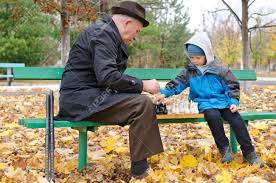
Elders are people first so they can be cranky or angelic in spurts. I’ve known many people older than me, whom I have loved to think of as my friends. I’m growing old now too and can better appreciate the toll longevity can take on a person’s physical and emotional well being. I don’t like to feel pushed into believing that 70 is the new 50. That puts pressure on me to live up to a standard. Like most spirited elders I feel 17 and always will enjoy sensing that I am young at heart. I’m not turning into a fossil or becoming an old fogey in attitude. On my best days, I’d like to believe that I am eldering: growing old with grace.

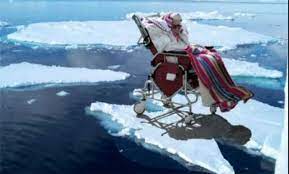
My wife’s mother appears happy to be in our company. She jokes how it is better than being turned out to pasture or left to float away on an ice floe. Our village on Vancouver Island has a community centre for the elderly called ‘New Horizons’. I like the encouraging sound of that, since I rebel at the thought I might be at the end of things. We old folk continue to need opportunities for stimulation, restoration, even growth. I’ve a lot to learn & my special mom has a lot of wisdom still to give.

Re: Evacuate

I’ve recently had a moving experience. It seemed like a move on the surface: There were boxes to pack, items to sort, donations to be made, a yard sale, and relocation planning. This was all accomplished with the usual amount of fuss, tears and goodbyes. Things get emotional with a move.

I’ve been involved in several moves in my lifetime yet this was like no other. I tried to wrap my head around the experience by using different descriptors like Leaving, Escaping, Evacuating, Purging, Departing, Fleeing, Vacating. This seemed most like an evacuation. We left behind things. We knew we weren’t likely to ever come back. Fortunately, we weren’t joining a long line of similar evacuees, fleeing a war zone, but we did have a sense of loss, a sense of leaving a homeland. We felt these feelings vicariously. My wife and I saw them, in the eyes of our 94 year old dependent elder.

My mother-in-law had just witnessed the death of her husband after a protracted illness. The reality of what to do next lay ahead and we three decided that a relocation was necessary. My wife and I wanted to take our mother home with us to the place that we had loved before all this turmoil had begun. That meant our elder had to leave the apartment she had existed in for 44 years. Not an easy thing to accomplish; physically or emotionally. She was good humoured and forward thinking, telling her life long friends that she was excited about the prospect of a fresh beginning. She described how she felt grateful we had the resources for a successful transition.

When my wife and I first fell in love the notion of running away from it all was a frequent item of conversation. We thought that life would be freer and simpler if we just owned a backpack to carry a few necessities. We wanted to hit the road, be of no fixed address. Moving away from circumstances that have made us feel trapped felt liberating. One of the reasons we originally made a home in British Columbia was because we wanted to start life anew. 

My special mom has a great sense of humour. We equated our seemingly sudden departure to an ‘Elvis has left the building’ sort of moment. There were momentary hilarious thoughts of the whole exercise being like a bowel movement: All sorts of memories and possessions being expelled and flushed away. She hadn’t been evicted but there was real sadness in the eyes of the superintendent when the lease on the apartment had to be terminated. Along with her sunshiny attitude Mom had moments of darker comedy when she asked me jokingly if we were going to set her on an ice floe and push her out to sea. Reassurance was provided.

We are now settled together, we three. Our elder is busy exploring her new neighbourhood. The trauma of the move is over and a new chapter in our lives awaits to be written.

Re: Birth

Spring is a time for rebirth. It’s the season for positive change. A birth heralds new possibilities. A new generation can now lead us to a better way, a better life, a better world. After our mothers bore us, we must now bear the responsibility of making our lives count for something. That is the challenge inherent in our birth. Maybe that is part of the meaning of birthright: each of us has a chance, a right and a responsibility to use our lives well and to leave a worthy legacy. When I experienced the births of my own three boys, I remember being awed by the process itself. Now as I watch my grandchildren, I am enjoying their eager minds birthing new ideas, new games to play, new imaginings that sparkle out when they awake to greet a fresh day. I love being surprised by their behaviours.

Recently my wife told me a story of how her mother responded to her gift of Easter treats. Chocolate eggs had been placed for easy finding to accommodate tired elderly eyes. On this particular spring morning, my mother-in-law got up early with laser vision gathering up a feast of sweets, filling her pockets and quickly going back to bed. When she arose for a second time that same morning, she seemed petulant that she hadn’t got as many treats as her husband. The trail of foil wrapping, brown chocolatey smudges on her bedsheets and breast pocket attested to her haul, yet still she doubted the accounting. Endearingly, Mom asked her daughter to help tie the Lindt bunny’s bell ribbon necklace around her frail wrist. At 92 she allowed her 2 year old soul to shine through.

Our personal birthday, the anniversary of our beginning, can be a time to reflect on how far we’ve come and where we want to go. I am getting old enough to not think back to count my age, but rather to see how many more years until 100. I’m closer to that date than I am to the year of my birth. Age doesn’t scare me too much at this point. Luckily I have been able to witness the experience of others born before me. My elders have taught me much about patience and other important values. What I am most charmed by is the way the seniors in my life have returned to their childlike selves in response to events in their lives. 

My fondest and most frustrating memories of my sister often revolved around her gathering the treats of life too fast for me to catch up, leaving me wondering if I had got my share. I need not have fretted. Judging by my mother-in-law’s Easter egg experience, I’ll have a chance to be a kid again. Life viewed this way surely eliminates the fear of death. Maybe this is a signal that life is a never ending circle. Death, as we call it, is just another sort of birth. With patience, we’ll soon discover what’s next and find happiness there.