Re: Invent

I’m not always convinced that ‘necessity is the mother of invention’. This is often a toss-off statement made by capitalists who want perpetual progress for financial gain. I admit I have a conflict with clichés of any sort. I am unconventional in that way. I prefer to be inventive, at least with my language, so I pondered away a rainy day trying to flesh out the imaginary family members responsible for inventive progress.

So if an invention (or even the basis of an idea) could be created by a metaphorical family member, then how might that look in a family tree sort of way, I wondered. This is complex and perhaps confusing thinking, I know, but welcome to my brain. So to review, and for the sake of the exercise, we’ll agree that Necessity is the mother of Invention. That would imply that no idea gets born w/o mommy dearest. I think there can be creation without a defined need for progress. Stay with me.

I believe some progress comes from pure inspiration: Out of the blue and unbidden. So let’s add the phrase that ‘inspiration is the grandparent of invention’. Now following that genealogical train of thought we could say that ‘desire is the teenager of invention’. Creative minds are everywhere in the human family. To seek innovation is a natural response to boredom and I can attest that my grandkids are always saying they are bored. Let’s make their creations come directly from their fresh cerebral capacity by saying that, ‘boredom is the grandchild of invention.’

In the world of inventions there is a great inventory of moments in human history when an idea has changed the cultures of the world. There has been talk lately of the great Industrial Revolutions (I prefer to refer to them as Evolutions since it tones down the violence, even though battles were fought over these great paradigms of change). The first IR was the invention of steam power, the second was the applications related to electricity, then came telephone/television as global communication, the fourth was the evolution of computers. Currently we are moving into a fifth realm where AI robotics are actually threatening our understanding of work.

If I were a kid again I would answer the question, “What do you want to be when you grow up?”, with the answer, “An inventor.” I hope I would be a socially conscious inventor like Jonas Salk who refused to patent his polio vaccine believing that his discovery must not belong to any one person since it was for the good of humanity. Likewise the honourable Sir Alexander Fleming believed penicillin must be available to everyone. I believe our souls are ultimately responsible for innovation. If we believe that celestial beings created us then I conclude that ‘creativity is the god-parent of invention.’

Plato thought the greatest human need was to be a creator. I believe we have a daily desire to invent what happens in our day. We have personal authority to do just that. That’s freedom.

Re: Diversity

Diversity is our strength, uniformity leaves us open to disease. The backtracking currently underway in the USA regarding diversity support is creating a poisonous environment for all but the 1%. DEI is frowned upon by those who already have everything they want and need. Diversity/Equity/Inclusion policies are designed as an acknowledgement of differences within our work environment, and in our communities.

In university I learned how monocultures are unnatural in the environment. Agricultural mega companies like Monsanto bring the message that uni-crops create more yield, thereby increasing profits for farmers. This artificial system requires massive amounts of round-up chemicals and GMO seeds to produce sustainable results. This isn’t the way of Nature. In natural systems, diversity rules because every species has value, a place, and a function. Insisting on a uniform culture is damaging to a society and to global progress. I dream of world Nations being United in the common cause of Humanity. That requires all of us to foster a belief that inclusion matters. Every human has value, a place, and a function.

Social media flows by opinion and algorithms. The AI process prefers to look for commonalities. Artificial intelligence loves similarity, like a young child trying to make connections and learn what it’s like to be an adult, the child wants to see who is like who. The tricky part is that most folks don’t like being labelled. Yes there is safety in numbers, yes birds of a feather like to flock together, yes a herd can survive better when they travel as one unit, but a herd can be decimated by a single viral infection. Conformity can be dangerous.

Recent Pride parades offer up an observable example of a society’s diversity. These events encourage everyone to respect differences, while promoting the things we have in common. We have to get over our innate, natural fear of difference. We can belong to a clan without making war on the other clans. I have been happy to live in places where diversity is encouraged because options are important to me. The greater the diversification within a city or nation, the healthier the population. Citizens can decide to march to the tune of a different drummer, even decide to play their own drum, when they feel safe to do so.

Tyranny is supported by unified, singularly focussed individuals. MAGA policies are designed to exclude any outliers. Followers of trumpism have confused the need for consistency with a desire for uniformity. Communities can be consistent in their approach to any issue without being coerced into wearing a uniform that identifies intolerance towards non-believers. During these times of WWIII proportions, I am grateful for those who stand up for the values of equity and fairer treatment for the 99%. Folks like Bernie Sanders, Charlie Angus, Alexandria Ocasio-Cortez, Beto O’Rourke, and Naomi Klein have a national and global impact. These folks speak for me.

If Humanity is to survive it will be because diversity shows the way. In Nature and in Politics variety of perspective offers a balance to the challenges of reality.

Re: Announcement

Bugles once announced the arrival of invited guests to a fairytale ball. A red carpet is still occasionally used to indicate the presence of VIPs at a notable function. I’m a cinephile so I like the grand entrance of Hollywood movie stars as they strut their stuff and take their places before the year’s winners of an Oscar are revealed. The envelope please!

Folks love to be the first to tell the Big News. Others love to be the first to hear an announcement of importance. I haven’t been to a wedding in a while so I wonder if the tapping of the drinking glass is still the start to delivering a toast; to the bride, to the groom, or later whoever happens to be still in the banquet room. Parties are times of announcements, pronouncements, or opportunities to gossip. We all love hearing the latest news, especially when it makes us happy.

Recently I published my first collection of newspaper columns. I sent a copy of the beautifully bound book to the library in my old hometown. They accepted it with grace and sent me a picture of it sitting on a shelf, where book lovers might see it. A bit of me is in general circulation! I felt like trumpeting my accomplishment from the highest hilltop. Perhaps I was a Town Crier in another lifetime, reading from the scroll provided by the palace; ‘Hear ye, Hear ye! Gather round all who wish to be enlightened, informed, or otherwise amused.’ Newspaper boys used to shout, ‘Read all about it!’ Most news comes online now but you can still find artistic cards that are decorated to announce a birth, death, wedding, illness, or achievement. With the Canadian postal situation being in a state of disarray, one wonders how long the tradition of handwritten messaging will continue. Yet it still holds that even a word of condolence can feel like a gift when delivered to the mailbox right outside your door.

Announcements, good or bad, generate a buzz that we human bees transmit with glee. There was talk for weeks after Queen Elizabeth died. The recent meeting between our new PM Mark Carney and that Donald fellow had all Canadians feverish with expectation. People leaned in, metaphorically at least, to catch any body mannerisms or speech inflections that might reveal the truth behind the politics. Honestly though, it’s often hard to collect the courage to make a personal announcement.

Spreading the news can be premature. No one wants to let the proverbial cat out of the bag. Something may change between the time you choose to share your thoughts and what you’re anticipating will come true. There have been many times when I’ve said, “Guess what?” Then finding myself regretting giving the message. No one wants to jinx the future, even if we understand that we have no power over what comes next. The new world order, our personal world order, will evolve regardless of our excitement to be the herald of happiness or the bringer of bad tidings. It comes down to sharing what matters to us. That’s what counts.

Re: Shadow

My mom would sometimes answer my persistent childhood questions with, “Only the shadow knows.” She would say it in a spooky voice that gave me the creeps. It was much later that I learned it came from an old-timey radio program, The Shadow, about a vigilante and his female sidekick. I think my mom saw herself as a detective. She even worked part-time with a private eye on divorce cases involving suspicions of adultery. Dark serious stuff.

Shadowing someone sounds sinister. In the modern lexicon it might be described as stalking. But in business settings to shadow someone suggests a new employee watching and learning from someone more senior. As an experienced elementary school teacher I was asked to support newly graduated teachers in a mentorship role. One year I was assigned a policeman who gave up his career due to burnout (he had the grim job of taking crime photos). We had great conversations as he learned the ropes in the sometimes stressful arena of education. When he got a full-time position he honoured me with a poem describing how he had been “a shadow of his former self” before I helped him create a more satisfying work/life balance.

While in a playful mood with my young children I have used my fingers to create shadow puppets on a wall. One son helped me build a sun dial in our back garden to catch the movement of a shadow telling us the time of day. Another son loved how I read an abridged version of Peter Pan. We would playact the scene where Mary stitches a shadow onto Peter’s heels in an effort to ground the never/never boy to reality.

In the film Perfect Days there is a delightfully scene between two drunken middle-aged males playing a game of shadow tag. They exhaust themselves, trying to stamp on each other’s silhouette, then they get philosophical wondering if each other’s grey profile, when overlapping, would produce a darker shadow. It doesn’t get blacker as they hypothesized, which causes even more confusion. Directly and subtly, this intriguing film explores the shadows we cast as we move through our lives. We are led to build our own backstories of the characters in this film, from the brief shadowy references to their past. I love the way we are invited to consider time as fluid, moving gently from sunrise to sundown, until next time becomes now.

When I was a baby I giggled lots when my mom pushed my pram under the dapple of trees. The Japanese word for this speckled shadow from leaves is Komorebi. There is joy in this translation. For me this phoneme suggests the sound of a breeze through branches. It is hard to take a realistic picture of this mysterious play of lightness and shadow. A camera can distinguish light from dark and pick out the hues and tints of colour, yet our eyes measure more. The brain is reacting to what the eyes see as fact, yet life is about shading that perception with our constantly evolving selves. Perhaps answers can only be found amidst the shadows.

Re: Us

I have a good sense of who I am. I’m also curious how other people go about life. Sharing and learning with another individual allows for something new to happen. No not another fleshy thing! I’m referring to a concept: The idea of Us. It’s such a small word yet packed with meaning. When two or more people (or tribes, or communities, or nations even) find a commonality, then an Us is born.

A new relationship has to make room for the individual differences. Eden-like is that first blush of association when souls recognize they are better together than alone. Hopefully the Me and You part is already well established. A union will be a work in progress. We’ve all seen power couples who feed off each other’s energy. They appear united in spirit, I think because they value the We that they have become. Yet complications arise testing the concept of Us: Perhaps a baby enters the picture, or an elder needs to join the expanding collective. In-laws can mess with the dynamic. Long surviving marriages can be a testament to the importance of Us, but with a caveat; Both partners must contribute to the success. One, providing nothing to the bond, undermines the structure. One, doing all the heavy lifting, will sacrifice themself irrevocably.

My Garden of Us will sound as naive as advocating for world peace. Which really is just another way of saying the same thing. Regarding this word Us, I could be talking about the U.S. of America. Right now, those fifty states are very disunited. Their union is in jeopardy. Some historians might point out that this particular republic has been floundering since 1776. I have a hard time getting around the fact the U.S. waged civil war over who had the right to own slaves! If the current 340 million population were considered a family then I’d recommend counselling, a divorce might be in order, or at least a call to Children’s Aid. Every U.S. election in my memory has created more of a gulf between parties than the election before (oops, did I mention Gulf!). The world has a lot to lose if trumpism is allowed to flourish. Really now. What will become of us?

One of my favourite memories of family time was gathering around a campfire. We listened to individual stories while we poked at the flaming logs. Others might join us to add diversity to our collective. When the fire went out, things got cold so we retreated to our separate places, but I believe we kept the fire that symbolized us, inside us. Our gratitude for being together was a form of cement. Through science we have learned that atoms can form bonds, creating molecular clusters of astounding resilience, flexibility, and utility. Love, Grace, or Joy are not factual things like scientific principles, yet I believe they are among the elemental units that enable us to experience things together. Our DNA confirms that we are one humanity. Our systems of congress must respect that reality, or we may perish as a species.

Re: John

My first memory of a person named John is regarding my dad’s brother. When I was six he took me to a typical British children’s park. There he pushed me around and around on a circular spinning thing. I learned later this was called a ‘Round-a-bout’ and according to an old expression what you gain on them you lose on the swings. My Uncle John was a philosophical guy, a dreamer really. He didn’t have a regular job that I was ever told about but he was my favourite family relative. My mom told me that he had a number of life tragedies, including finding his wife dead in the bathtub, electrocuted by a toaster.

Growing up I knew another ‘Uncle’ John (a family friend unrelated but deemed worthy of the title as was the custom of the time). I liked to hear tales of Long John Silver because he was a pirate, and I loved pirates more than dinosaurs when I was a kid of small age. Strangely to me, now that I type this, is my curiosity about John the Baptist. I think I like the fact that he was secondary in the Jesus story but he had a role to play in bringing salvation to the masses (sort of pirate-ish, if you think about it). When I read about Robin Hood I discovered his band of merry men, of which Little John was a member. Alan Hale Sr. played that fictional character so well in the 1938 film with Errol Flynn. I couldn’t tell you how many times I re-enacted that famous crossing the creek scene with my fellow Boy Scouts whenever we were out in the woods.

On those scouting trips we learned how important it was to keep our body systems functioning so daily evacuations in the ‘John’ were de rigueur. We actually called these poop pits the KYBO (as in Keep Your Bowels Open). Of course now-a-days it’s common to look for a Johnny-on-the-Spot when you are at an outdoor concert venue. That term strikes me as more grown-up sounding than Porta-Potty.

I wouldn’t name my child John in this age because of its association with toilets but also because John is a generic term for a guy that hangs with prostitutes (not that I have anything against sex workers) or is the recipient of a John Doe letter, poor fellow. Next to guys named Dick, I’m betting Johns get lots of teasing or abuse. There are some famous folk with this common name. The first bloke that comes to my mind because of my age is of course that Beatle, John Lennon.

Eclipsing all Johns of fame in a spiritual sense has to be John Denver. My feelings about John Denver ripple out to inform my desire to be creative. His work as a song writer, humanitarian, and fellow explorer of wondrous things have provided me with examples on how to live. He wanted to be the first citizen in space. I miss that country boy. He died flying high, like an eagle in the sky.

Re: Hierarchy

I don’t put much stake in status. I believe a system of hierarchy in a culture creates more harm than good. Perhaps it’s my lack of ambition that propels me to say this. Maybe it’s because I’m older (but not necessarily wiser). I never wanted to be the top dog in any setting, even though I appreciate recognition when it has come to me. When I have received accolades, I don’t view those who have patted me on the back as being lesser than. I like a level playing field.

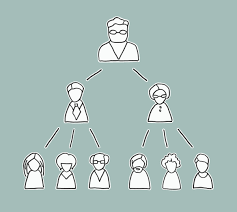
A state of hierarchy is present in our systems. There is a chain of command in more than just the military. Business operations are defined by their top down approach, with chiefs being tasked with providing direction for the underlings. Well advertised economic principles are expected to trickle down benefits to the masses. Religion expects followers instead of adherents; sheep who will not stray and never confront the status quo. I once had a brother-in-law who used a patriarchal methodology with his family because the bible told him so: Father knows best. Hierarchy is a ranking of people based on a particular management team’s view of the environment at hand. To benefit the ruler, someone is to be judged smarter than, cuter than, stronger than, whiter than, younger than, or more obedient than and then given a certificate, badge, job, or corner office to occupy. Control usually comes from a pyramid design for administration. Rarely do we have an example of co-leadership where all stakeholders are given an equal share in ownership or decision making.

Children learn early to express their authority. My middle son was quick to point out that his brothers were not the boss of him. I remember him once standing rigid at the top of a flight of stairs, fists clenched, while shrieking, “I know another way!” because his elder brother wanted him to follow his lead. Bosses are critical in a hierarchal society, or so the bosses tell us. It becomes accepted that decisions are made by those in charge. Some are offended by this when it is stated as fact; “You can’t make me!” is something I’ve heard often from my children and from my students.

One of the aspects of a second U.S. presidential term of Trump that frightens me is the way he uses his authority. I believe he feels exulted that he is head honcho. And 80 million people (far from the majority mind you) have given him permission to be The Boss over a vast and diverse collection of people. Most of those people, I suspect, just want to go about their business exercising their freedom to be autonomous within their particular setting. Some will argue that there must be some form of supremacy within a culture: A desk somewhere, perhaps, where the buck stops. I think again of people like Trump, democratically elected but part of a flawed system, who is destined to have the final say. We, the people, each of us alone, are sovereign.

Re: Bond

Bond is a four letter word like Love. Of course when I say this word out loud I want to continue: “Bond, James Bond.” Being a film lover, I have much respect for the longevity of the Bond franchise (25 movies all told, unless you count the 2 rebel outliers). I read recently that the Broccoli caretakers are on the search for the newest iteration of this iconic spy character. Good luck to the producers as they navigate the sticky issues of misogyny, political correctness, sexual diversity, and national identities.

Love of any sort starts with attraction, then association, and eventually an adhesion of sorts. When we make a vow or sign a contract we have joined ourselves to another. Those ties are binding until we find the original circumstances have changed in some way or another. We all have certain attractions to things, both natural and unnatural. We feel bonded to our pets, our family, our friends, and our possessions. Those bonds can often be hard to explain, difficult to maintain and tricky to break. Emotion, history and convenience are involved.

My dad used a paper glue that brushed on and had light adhesive properties for his artwork. I think it was called rubber cement and it was designed for artists who needed something to tack gently to another surface, then after the material was removed the glue could be rolled off by your fingertips. He also used a fixative in a spray can to set his pastel drawings. I learned that, metaphorically speaking, some things are meant to stay fastened while other things may be better thought of as a hasty-note.

In high school I remember saying to a prospective girlfriend, “I’m stuck on you.” I think that’s a lyric in a song by Lionel Richie. Anyway that relationship didn’t stick around, so to speak. Much later I concluded my best emotional bonds were cohesive rather than adhesive. The former is a fixation on someone of similar disposition; like minds as it were. The latter is more about the phenomenon of opposites that attract (another great song by Paula Abdul). My longest lasting bonds have been with people, women in particular, who share similar philosophies of life with me. Birds of a feather, if you catch my drift.

There is a contrariness here when thinking of magnetic attraction. North and South poles on two magnets are going to snap together when brought close to each other. I’ve been with others where sparks fly causing fusion of ideas in spite of lack of commonality. This is not a case of like-attracting-like. It’s a question of Game On! And I know some successful human bondings that are the result of a connection between two people who many would consider to be polar opposites. In those cases there is mystery at work. Maybe it’s a hidden bond that holds them up along with the friction, like a bracket-less shelf.

I am bound to freak out when the next James Bond is announced. Don’t ask me to explain it.

Re: Choice

I’ve just finished a provocative book by Robert Sapolski called Determined: A Science of Life Without Free Will. Its main point is that there is no such thing as independent choice. The author gives many examples and even scientific data to show that the act of choosing is not possible, even if we are determined to believe it to be true. Choice comes with so much baggage; personal, genetic, historical, cultural and generational. He argues that these patterns in our lives determine our characteristics and behaviour.

When I was in university the common-area lounge debate was often Nature vs Nurture. Looking back on those times it seems the imperative was to take a side. One fellow, I recall clearly, telling us all that he had a right Not to choose. He gave the example of the election held the week before our discussion. He shocked us by declaring he didn’t vote, and probably never would, as his form of protest against the system. I thought at the time that he was an example of anarchy, which was a side without a side I suppose.

If I choose to believe I have no choice I guess I join those who figure that Fate determines our lives. My 95 year old special mom likes to use the phrase, “What will be will be!” That dismissive comment might work for small burps in our existence but I’d hate to use that notion when it comes to global issues like climate change, inequity, famine, or war. Those who argue that something, as serious as humanity’s deterioration, is inevitable get me angry. When I can’t logically explain that choice is inherent to my being, then I’ll get emotional. And emotion will get me nowhere in a debate regarding my freedom of choice.

We can excuse our actions by complaining that we had no choice. To some that is a cop-out, to others who have less advantage, even from the moment of birth, it is a reason to connect A to B. That great David Lean film Lawrence of Arabia contains a narrative arc that illustrates this point dramatically. Lawrence saves a traveller in his caravan apparently destined to die and boasts that choice changes the outcome. In a following scene, that same man commits a deadly act ordained by the instructions of his god. Lawrence must then execute the very man he saved by his own hand.

Sometimes it’s enough to shrug your shoulders at the conundrum of the decision making process. My sister used to ignore the warning signs of a bad situation while I tend to masticate over every detail before picking the ‘best’ course of action. I’m guilty of shaming others by thinking “Well it’s your own damn fault.” I suspect that might be one of the rationals behind bombing Gaza into oblivion, because of the events of October 7, 2023. Choosing to rebel is considered less holy a crusade than an act of retribution. Therein lies the crime against humanity. Alternatively, when we choose something as important as peace we can make good on the promise of creation.

Re: Opposite

War is the opposite of art. In the midst of compelling, heart-wrenching photos of the current wars in Gaza and Ukraine, art is being dimmed just as surely as lives are being extinguished. Art creates, while war is nothing but destruction. Art defines the best in humanity, while war denigrates mankind with every rocket launched, with every bullet fired, and with every anti-personal device exploded.

To be opposite is to be opposed. Opposition plays a key role in incidents of unfairness. When one side dominates it is right for the minority to speak up in rebellion. A call to arms is required if dialogue is downplayed, demonized, dismissed or otherwise disparaged. Everyone has a right to be heard and understood. Systems must be in place to protect the vulnerable, not trample over them. I get upset when I have to take a side: Life is nuanced, not black and white. Looking within the fold and shades of an issue, I see promise in the act of negotiation. Capitulation isn’t necessary when the shared goal is accommodating humanity.

War rhetoric is divisive. People on the opposite side of the line drawn in the sand are referred to as Nonpersons; humans devoid of respect or legal protection. They are “human animals”, as described by current Israeli Prime Minister B. Netanyahu when he speaks of the enemy Hamas. All sorts of words have been used through the ages to delineate the opposite side, whether in war or debate. The opposing team is the foe, the work of the devil, the pagan, the unwashed, or the undeserving. The pronouncement is made, thus the enemy is not requiring compassion. The slaughter can begin.

Some say that the opposite of war is peace. Others know that the only thing you need for the seed of war is indifference. I will play devil’s advocate by suggesting that intolerance begins the process of creating The Other. Making a contrary statement, even if it’s a lie, will get the argument going. Currently on social media sites, those who wish to incite disharmony are using AI Bots to spread discord. One small distortion, strategically used by Influencers, can cause havoc. Consider the folks in Springfield, Ohio who had to battle the abuse from folks who believed that its residents were stealing cats & dogs for food, after Trump said he had heard this on TV.

Debates are often seen as being an example of opposites not attracting. The recent Trump/Harris debacle showcased clearly for me that you can’t have a debate when one party is unwilling to discuss issues. Solving the issue of the day is looking at the double edged sword and trying to minimize the damage done to a course of action. Having a respectful debate, in my mind, is about seeing two sides of the same coin, then figuring out what to do when things flip heads or tails. Often the two sides can be complementary, even if we can’t be complimentary of that person on the other side of the arbitrary fence.