Re: Encounter

I enjoy the encounters I have when I am out and about in my community. A simple stroll to my village to renew my prescriptions, a stop for an ice cream cone, or finding a sale in a grocery store will bring a smile to my face especially when I have a moment with a real person.

Abraham is his name. We met at an afterparty at a local theatre. He acted in the play that night, and I was an audience member. I started the conversation as he was choosing some cheese and paté, from a tray on a pedestal. I gushed with enthusiasm over the dynamic representation of a fight scene involving athletic coordination that was the climax of the plot. On stage, Abraham and his acting partner had just parried in a violent dance, each thrusting a blade with death being the intended outcome. All this action happened in remarkable slo-motion choreography, while I watched a mere three metres from the stage apron. Now I was standing near Abraham, at the meet and greet, trying to speak without crackers spilling out of my mouth.

Encounters can be exhilarating, sometimes messy, and rarely planned. A chance encounter can stay with us for a long time, if not forever. I remember as a teen being brave enough to ask if I could have an old lobster pot that seemed discarded by a house near where I was camping with my parents. I was with a friend at the time, and as he waited a few yards back at the top of the driveway, I negotiated with the owner. I said I had long wanted a suitable keepsake for my many years as a child coming to this beachside campground in Maine. I was going off to university and imagined the rectangular lobster trap would make an excellent coffee table. The owner handed his artifact to me as a gift, the look on his face was one of pure benevolence. I still remember my friend appearing equally stunned by the exchange saying, “You got it just by talking to him!”

I’m still feeling the isolating effects of Covid19. Back then we were encouraged not to have encounters due to risk of exposure to the virus. Even though I tend to introversion on the social spectrum I missed those times when I regularly attended mass cultural events. During those covid years I got used to encountering others over social media where exchanges didn’t involve the risk of a stray sneeze. In the longer term, Covid19 made us all a bit insecure about approaching others.

Now that I’m back attending the arts events that I love, engaging other humans will return in fits and starts. My social muscle memory emboldens me to initiate confidently. The actor Abraham seemed pleased that I had dared to approach that night at the theatre. He said, “And what about you?” Which raised my praise to dialogue level. Oh my, what to say next!

I’m going to need more practise at this conversation game.

Re: Mystery

One of my favourite lines from a film is delivered by the owner of a theatre in early London. The movie is Shakespeare in Love and this character (played beautifully by Geoffrey Rush) is asked how the play he has sponsored can possibly go on. His reply is simple, “I don’t know. It’s a mystery!” Life is indeed mysterious and the wonder of it can flabbergast me.

Social media, as an art form, is an extension of theatre throughout the history of humanity. It is  a communication medium writ large and I’m loving the feelings of connection I get from the internet of things. I wanted to use the handle WhoNoz when I first opened an account on Twitter in recognition of this curiosity of our internet age. How I can have a relationship (even a virtual one) with someone in Australia by tweeting something on my computer and getting a follow back is a mystery to me. I like to think of myself as someone who knows some things. I acknowledge at the same time that I can’t know everything. It’s confusing and a bit contradictory, while thinking that I have an opinion, even though I’m no expert. I could just as easily lift my shoulders in a moment of exasperation declaring, “Who Knows?”

Many of my elders confess to loving mystery stories. Some pulp fiction writing is all about who did what and where. Even though I love the enduring character of Sherlock Holmes, I’ve never been a fan of the mystery genre of story telling. In a real life conversation I am often dismissive of the idea that getting to the why of things is an important objective. The mystery to me is discovering the how of making something happen. That is why I am thrilled by stories of quests. I want my characters, real or fictional, to boldly go forth on a mission of discovery. The question of how moves you into the future of stuff. I wonder what mysteries these adventurers will uncover. What truth will lay exposed after the search is complete? What lessons will be learned by the characters? Will I have found, by being a witness, that my life is more understandable?

Life deserves to be examined; each day awaits discovery. Even in a life that seems easy to describe there is mystery to be enjoyed. I’ve been taking medication for a heart dysfunction called Atrial Fibrillation. Recently I got an opportunity to have a surgeon try to correct the irregular misfiring of my heart muscles so that my beat is constant and predictable. Call me crazy, but I awaited the procedure with gleeful anticipation: Here was something new, that I could embrace, that just might make my health and my life better! I suppose one can accept mystery if one can be trusting in the process, just as Philipe Henslowe believed that the show must go on, back in 16th century England.

In my life I’d say that knowing, even when it’s hard to, gives me a positive bearing for my next step.

Re: Photo

My bride has a new found passion. She’s been loving her cell phone and its photographical features. She goes to a photo club once a week to share her work and gain knowledge about the art form. I love it when she shares her homework with me; discussing the theme for the week’s assignments, showing me her latest on-screen captures, scrolling through the dozens of shots of charmingly photographable subjects while deciding which one has just the right composition.

I love the Kodachrome Song by Paul Simon; “makes you feel all the world’s a sunny day!” The lyrics conjure a picture of happy times. Times of the past seen through the lens of a camera. But before we get too sentimental let’s remember that those cameras, not the ones now compressed into our digital devices, used to be lugged around by a shoulder strap that dug a groove in your neck. I’ve owned all kinds of photographic devices. I started with one of those little brown boxes called Brownies. The film was expensive and therefore precious. I remember counting down the twelve shots, one by one until I turned the roll in to a developer who would give me single photos, on magical paper, that would remind me of how much fun I had at the beach. Back then, I kept the scalloped edge photos in a biscuit tin just like my mom had once kept her sepia coloured treasures of ancient family poses.

Photofinishing is not just what horses do in a close race. My former father-in-law used to have his own darkroom, thereby expressing his creativity while saving film processing fees. He died before the digital age but he would have had all the photoshop style software and apps to go with his hobby for sure. As I got older I was happy to transfer all the heritage slides onto a flash drive as a Christmas gift for my now grown three sons. Memories they can share over social media platforms. Pictures that are now part of The Cloud; that awesome computer photo and data bank that makes my head spin: “it’s a wonder I can think at all.”

Along with my first child I purchased a second-hand SLR Canon camera. I became the Family Photographer, with all the honours and responsibilities that came with that title. The device itself weighed several pounds and as I collected lenses and filters I needed a small suitcase to carry all the equipment. I call this time My Slide Period since I felt I was becoming a true artist of film. Mounds of slides required a filing system. A projector and screen were purchased for family fun. I entertained guests who would always seem polite and interested. Not!

My passionate wife is learning new skills and experiencing the world in a creative way, all because of a device that lets her send a message plus photos to people anywhere in the world. There’s always a new improved IPhone, promising astounding photo features.

“I can read the writing on the wall.”

Re: Film

My parents got me hooked on film as entertainment. Over the years I learned about my folks based on their enthusiasm for a movie. My dad loved adventure stories and my mom was all about the musicals. Debates about actors/actresses were common in our household when I was growing up. Judgements were made on who was the most beautiful, who danced the best, and who really looked like they meant it when they said, ‘I Love You’ on the big screen.

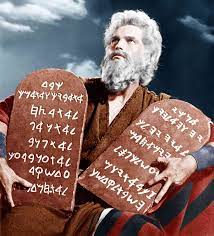
When my dad danced at parties he pretended to move like Fred Astaire. My mom proclaimed (many times) that Lauren Bacall was a bitch. I found it interesting that she mimicked Ms.Bacall’s screen persona around the house. During my formative years we lived in an apartment block right across a parking lot from a theatre. You could read what was playing on the neon display from our balcony. We were working poor but always had enough for the cheap tickets of that time. I remember the first Sunday that Ontario cinemas were allowed to open. Ironically on that particular Lord’s Day I watched Charlton Heston act like Moses in the epic film, ‘The Ten Commandments’.

A grand movie theatre is like a church. It is an artistic treat to sit in a vintage cinema. Some great drive-in theatres have thrilled me with their cultural ambience. While a setting can provide a sanctuary, I don’t think my joy in the genre is tied to a building or venue. I can get the same feeling of self satisfaction in front of my television. A regular feature on the TVO network was Saturday Night at the Movies with film host extraordinaire Elwy Yost. He would educate us with cool facts about the movie we were about to watch then tell us to turn the lights low and put our feet up. Once the credits were done, I was oblivious to all that was going on in the world. When any movie starts I get the same sense of calming anticipation.

Film, like all art forms, can attract snobs. My mother would never watch a remake of a film just on the principle that you can’t improve upon the original. I follow a cinematic expert on Twitter who refuses to pick a favourite actor/director etc. out of respect for the craft. I admit to favourites, yet I can find great things to say about any bit of celluloid that I watch. My wife and I have volunteered with film societies and festivals in numerous cities. One of the highlights of my life was learning how to prepare and run movies on the old reel to reel projectors only months before most cinemas converted to digital screening technology.

The sound and magic of flickering celluloid will always be part of the poetry of my life.  I’ve watched many shows several times and always find something new to relate to. When I first met my wife, I found it necessary that she learn to love me through my film preferences. In this case the way to my heart was via a message on the screen.

Re: Appropriate

Sometimes it is hard to find the appropriate word. I have to take into account the way language evolves over time. Add to that the changing societal norms of acceptable usage, then it takes courage to speak or write what might be on my mind. I believe that freedom of speech requires an appropriate filter if I wish to engage in meaningful conversation. Reading helps me stay on top of current language trends. Writers can suggest uses of words or phrases in ways that sometimes seriously startle me. A challenging author can get to the how of life rather than dwelling on the why.  That’s a grander exploration than the dead end annoyance of why someone did or said something controversial.

Cultural appropriation is in the news. Artists are currently frustrated by criticism when they explore features outside of their domain. I wonder how we can get to that place of cultural understanding if we do not pretend or act out roles that are unfamiliar to us. I think that it is part of the learning process to appropriate ways that may be foreign. Perhaps that can be a way to walk a while in the other’s shoes. If we hold too fast to notions of exclusivity we are in danger of discarding the concepts of openness and inclusivity.

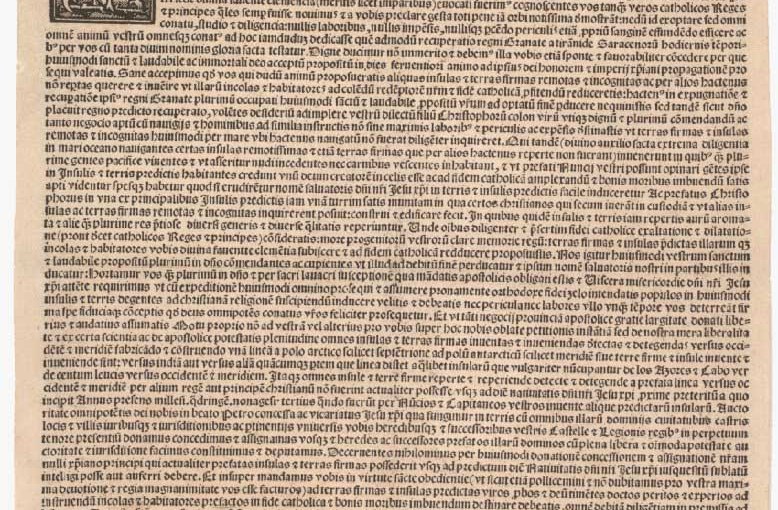
I have often felt outside. Luckily, belonging to a dominant culture allows me more freedom to be an outsider than someone who is already on the fringe or part of a minority. I get that being marginalized would make you hold on to what you have with greater passion, especially when your culture is being appropriated. Historically, The Doctrine of Discovery was a document legitimizing theft. It was a rationale for displacement and slavery. No one has a justifiable right to have their cultures appropriated by another. The appropriate English name we have for that is genocide: The ultimate form of appropriation.

Jesse Wente is a respected thinker and film critic. He has published a memoir called Unreconciled. While reading this book, I felt as though he was in the room with me, challenging my perceptions of inclusivity, patriarchy and colonialism with the gentle persuasion of a man honestly examining his own role in the world. In spite of my white skin and ancestry I recognized the truth of his life experience when I could relate it to the truth of my own existence. I could find a commonality even though we are not of the same tribe. I believe we share and value the importance of story telling in our individual lives. I felt closest to his words when I allowed myself to respectfully, in thought, tread where he had tread.

My high school was full of extracurricular opportunities. The many different clubs I joined helped me to understand my identity. Sometimes I found the membership requirements to be inappropriate to my goals, so I quit. I could always try another club. Sometimes my application to join a group was rejected, then I felt crushed. Words can break bones.

Re: Scene

My wife and I have been talking about scenarios on a daily basis. We both like to have some grasp of the future so we plot out possible scenes as a playwright might. Shepherding two seniors through end of life stages is no easy task, especially when they have so little intention to be part of the present scene. One will say it is too early for such talk while the other will prefer to listen to audio books. Both of them effectively leaving it to us to write what could happen next. Hard to make any headway when some of the players don’t even want to read the script, let alone help to write it.

Children are often being told not to make a scene. Parents hate to have attention drawn to them in a public place. My first wife had the effective strategy of scooping up our toddlers the second they misbehaved in a store. Into the car they would go for a chilly drive home where they would be confined to their room. Sounds harsh, yet it would always be followed up with a conversation on how the scene was seen by all of the actors involved. Kids are predisposed to act out their frustrations, fears and wants, yet they must learn the consequences and be guided towards solutions.

I used to accompany my artistic father on sketching walks. Rather than take a polaroid shot of a scenic view, he would sit for a bit on a small canvas foldable chair and focus his attention on picturesque details. He would make notes of colours so when he returned to his apartment he could use his pastels or oil paint to best affect. As a result, I fell in love with scenery in general and landscapes in particular. Even when I have been in a confined space I have tried to trick my mind into seeing a vista. I’ve found that even in a small backyard or on an apartment balcony I could visualize elements of a grand canyon just by narrowing my view to marvel at the details of the scene.

Nothing makes my emotions tingle so quickly as a well acted scene in a stage play, television serial or big screen film. When a scene can include the expanse of magnificent scenery, well, that memory forms a bond in my brain that forever informs the scenes of my own life. For example, I can recall the intricately placed scenery from a production of La Boheme my wife and I viewed at the Opera House in Oslo, Norway. This magnificent piece of architecture was a treat for the senses both inside and outside. My favourite film of all time, Lawrence of Arabia, has so many scenic scenes that I am awestruck by the planning it must have taken to make this masterwork of cinemascope.

Moments in time can be scenes from which lifetime memories are built. From birth to death  there are opportunities to wonder. The more involved we are, the more vivid the scenery.