Re: Art

Re: Comedy

My mom used to tease. My sister, father and I found her intentionally mean jokes discomforting. Consequently I learned that having a laugh at someone else’s expense was not comedy. John Cleese, of Monty Python fame, posted a message on Substack regarding the difference between affectionate teasing vs nasty teasing. I took exception to his exceptionalism because I’d seen the devastating results of my mom ‘taking the mickey’ out on innocent angels. It’s no surprise that her favourite comedians were Don Rickles, Joan Rivers, and Rodney Dangerfield. Mom was dead before Ricky Gervais made a name for himself through insults, but I’m sure she would have liked his style. Teasing, Insults, Swearing, and Sarcasm can be found in my Book of Humour under the chapter titled: Cheap Shots.

Humour is subjective. Art is required to be judged by the individual. It’s how we figure out that our mouth is not the only place where taste can be discerned. And, of course, it’s impossible for all to agree on what comedy means, anymore than we can be uniform in our response to the flavour of olives. My love of humour tends toward the silly and the slapstick. I don’t understand how my bride absolutely hates silly comedy yet she loves scatological humour. To me, the silliness found in Monty Python sketches is innocent and wise at the same moment. The Three Stooges enthralled me as a child with their antics of mayhem. Later, I laughed at the absurd body language of Jerry Lewis, Dick Van Dyke, Rowan Atkinson, and Jim Carrey.

My favourite actors are also comedians. Sometimes the line between pathos and buffoonery can seem gauze-like. Robin Williams mastered this dichotomy as did Jack Lemmon before him. Humour is perhaps the most provocative art form. The double entendre found in most witticisms sets up a conflict in the mind, making it difficult to decide the truth. Stand-up comedy is challenging in this way as it reminds me of the court jesters of centuries ago trying to please the royal master while playing to the impoverished masses. Editorial cartoonists like Michael deAdder perform a similar function of pillorying political figures to make an inconvenient truth apparent. In these cases we might join in mocking laughter; “The joke’s on you!”

Comedy has to catch you at the right moment. This year is the 50th anniversary of that comedic phenomenon Saturday Night Live. Lorne Michaels deserves credit for creating this iconic television show and nurturing hundreds of comics in the process. Dark, silly, political, sexual, racial, religious and physical humour are blended like a box of specialty chocolates. The spontaneous nature of the sketches, the improvisations, can land with a bang or a plop. Something coming off funny can depend on the mood of the audience as much as the skill of the performer.

What strikes your funny-bone may be arbitrary, yet comedy is necessary to our mental health. It’s no accident that situational comedies on television have been a staple of that medium. We need to laugh most when the situation seems most dire.

Re: Us

I have a good sense of who I am. I’m also curious how other people go about life. Sharing and learning with another individual allows for something new to happen. No not another fleshy thing! I’m referring to a concept: The idea of Us. It’s such a small word yet packed with meaning. When two or more people (or tribes, or communities, or nations even) find a commonality, then an Us is born.

A new relationship has to make room for the individual differences. Eden-like is that first blush of association when souls recognize they are better together than alone. Hopefully the Me and You part is already well established. A union will be a work in progress. We’ve all seen power couples who feed off each other’s energy. They appear united in spirit, I think because they value the We that they have become. Yet complications arise testing the concept of Us: Perhaps a baby enters the picture, or an elder needs to join the expanding collective. In-laws can mess with the dynamic. Long surviving marriages can be a testament to the importance of Us, but with a caveat; Both partners must contribute to the success. One, providing nothing to the bond, undermines the structure. One, doing all the heavy lifting, will sacrifice themself irrevocably.

My Garden of Us will sound as naive as advocating for world peace. Which really is just another way of saying the same thing. Regarding this word Us, I could be talking about the U.S. of America. Right now, those fifty states are very disunited. Their union is in jeopardy. Some historians might point out that this particular republic has been floundering since 1776. I have a hard time getting around the fact the U.S. waged civil war over who had the right to own slaves! If the current 340 million population were considered a family then I’d recommend counselling, a divorce might be in order, or at least a call to Children’s Aid. Every U.S. election in my memory has created more of a gulf between parties than the election before (oops, did I mention Gulf!). The world has a lot to lose if trumpism is allowed to flourish. Really now. What will become of us?

One of my favourite memories of family time was gathering around a campfire. We listened to individual stories while we poked at the flaming logs. Others might join us to add diversity to our collective. When the fire went out, things got cold so we retreated to our separate places, but I believe we kept the fire that symbolized us, inside us. Our gratitude for being together was a form of cement. Through science we have learned that atoms can form bonds, creating molecular clusters of astounding resilience, flexibility, and utility. Love, Grace, or Joy are not factual things like scientific principles, yet I believe they are among the elemental units that enable us to experience things together. Our DNA confirms that we are one humanity. Our systems of congress must respect that reality, or we may perish as a species.

Re: Blame

A young woman surprised me while sharing a story, saying she solved problems by finding someone to blame. There have been times when I’ve played the Blame Game so I wasn’t judging. However, I was shocked that pointing-the-finger would be her first choice for getting out of a difficult spot.

I believe it’s true that a finger, when pointed, will eventually turn back in your direction. Finding fault only stalls the effort to find a solution. In British Columbia we have no-fault auto insurance for that reason. When a traffic accident occurs, let’s conclude that what is needed is a resolve: fix the bumper, comfort the injured, and otherwise repair the damage. In all but the most unusual cases, if we drag each other to court then more problems will arise. I like that policy. Wouldn’t it be great if we went about resolving all our human woes by recognizing that we all play a part in the great dynamic of human existence.

It’s not always easy to concede though. Reconciliation takes time and cooperation. Sometimes we have to show humility even when we are bursting with self righteous indignation. I’ve been practicing putting myself to one side when I feel the upwelling of emotion. It’s not fence-sitting; more like going to a safe corner during a boxing match. In my mental time-out position, while I calm down, I can watch my imaginary, alternative self give some unnecessary blows. At the ring of the bell, ending this imaginary sparring, I can take stock, knowing I haven’t done any real damage by wanting my Point (jab, uppercut) to come first. Going for a knock-out punch is rarely necessary.

Victim impact statements are a bit like blaming, at least on the surface. Stating how another’s actions have altered your sense of security have value for the victim in getting feelings aired. The perpetrator of the offence may even learn something, or change their life-path. In a justice sense, finding fault is only really helpful if it changes the way we operate society’s systems. In other words, if we can truly find out the why of things, then maybe the answer will point the way to eliminating the origin of the problem.

While watching the film ‘Longing’ I was struck by the number of intersections we arrive at in life. These fictional characters discover some extremely challenging facts requiring them to choose: Do I go forward, back, or a multitude of sideways paths? Hopping on a Blame Train might have made their ride easier in the short run, but I liked the way restitution was found when apologies were given and allowances made, even in the face of trauma. This was the road less travelled. This was how to find truth and reconciliation.

In real life, we are all responsible for the wider picture. Most times the best thing to do is consult yourself first, without guilt. Blaming yourself is as bad as blaming others! Seeing the ultimate goal as being a learning experience will calm your urge to say, “Why me?”

Re: John

My first memory of a person named John is regarding my dad’s brother. When I was six he took me to a typical British children’s park. There he pushed me around and around on a circular spinning thing. I learned later this was called a ‘Round-a-bout’ and according to an old expression what you gain on them you lose on the swings. My Uncle John was a philosophical guy, a dreamer really. He didn’t have a regular job that I was ever told about but he was my favourite family relative. My mom told me that he had a number of life tragedies, including finding his wife dead in the bathtub, electrocuted by a toaster.

Growing up I knew another ‘Uncle’ John (a family friend unrelated but deemed worthy of the title as was the custom of the time). I liked to hear tales of Long John Silver because he was a pirate, and I loved pirates more than dinosaurs when I was a kid of small age. Strangely to me, now that I type this, is my curiosity about John the Baptist. I think I like the fact that he was secondary in the Jesus story but he had a role to play in bringing salvation to the masses (sort of pirate-ish, if you think about it). When I read about Robin Hood I discovered his band of merry men, of which Little John was a member. Alan Hale Sr. played that fictional character so well in the 1938 film with Errol Flynn. I couldn’t tell you how many times I re-enacted that famous crossing the creek scene with my fellow Boy Scouts whenever we were out in the woods.

On those scouting trips we learned how important it was to keep our body systems functioning so daily evacuations in the ‘John’ were de rigueur. We actually called these poop pits the KYBO (as in Keep Your Bowels Open). Of course now-a-days it’s common to look for a Johnny-on-the-Spot when you are at an outdoor concert venue. That term strikes me as more grown-up sounding than Porta-Potty.

I wouldn’t name my child John in this age because of its association with toilets but also because John is a generic term for a guy that hangs with prostitutes (not that I have anything against sex workers) or is the recipient of a John Doe letter, poor fellow. Next to guys named Dick, I’m betting Johns get lots of teasing or abuse. There are some famous folk with this common name. The first bloke that comes to my mind because of my age is of course that Beatle, John Lennon.

Eclipsing all Johns of fame in a spiritual sense has to be John Denver. My feelings about John Denver ripple out to inform my desire to be creative. His work as a song writer, humanitarian, and fellow explorer of wondrous things have provided me with examples on how to live. He wanted to be the first citizen in space. I miss that country boy. He died flying high, like an eagle in the sky.

Re: Fishes

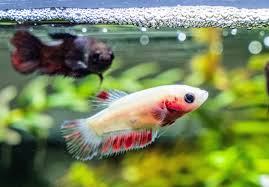
I kept an aquarium when I was in my early teen years. In several tanks in my bedroom I cared for neon tetras, gouramis, siamese fighting fish, angelfish, varieties of suckerfish and zebrafish. Those were the sorts of tropical fish available in the late sixties for someone on a limited budget like me. One of my friends had a saltwater aquarium which I envied for its exotic assortment. I made a deal with the local pet shop owner to provide him with the products of my fish breeding program in return for supplies. Most lucrative to sell were the Betta’s fry. I was able to coax this combative species to mate and produce eggs which were beautifully kept safe in bubble nets, not unlike the jelly masses of tadpole creatures, until they matured enough for market.

If something smells fishy, it probably is. The whole trade of popular aquarium species has a shady history. The practise of capturing and shipping constituted appalling loss to the local populations of fishes as well as contribute to habitat degradation in many parts of the world. I feel guilty to have been part of that capitalist agenda and yet through my exchange of home-grown fish I suppose I limited some of the need to get specimens from the wild.

During those years my hobbies revolved around fish. I spent endless hours during adolescence peering at my aquarium, cleaning the glass, separating the sick or pregnant fish to a hospital tank. I dedicated one tank to hold a collection of pond-life species that I captured from a nearby creek. I took notes, feeling like a young scientist, and later presented my findings to my high school biology teacher. This work and the resulting A+ grade was an encouragement to apply for university studies in Marine Biology. I also spent memorable leisure time sport fishing in rivers, streams, and lakes. I always had my rod and reel handy when the opportunity arose to hop in a boat or hunker on the shore. I felt a bit like Tom Sawyer on those occasions.

The natural resource industry is a big part of Canadian history. The early years of this country contain stories of greedy resource extraction of all kinds. For the famous fishers of Newfoundland this poorly managed industry would ultimately result in the great cod moratorium of 1992. This was a change of biblical proportions to a culture dependent on fish. Similar tales can also be told of other countries where the fishery was once never expected to be depleted. In the west coast current realities of salmon stock reductions due to over-fishing and poor habitat conditions make my heart ache for what bit of nature might still be left for my grandchildren.

I don’t earn money from working with fish like I used to, but I still go fishing when I need to change my lifestyle. Not fishing in the literal sense but as a metaphor for searching for possibilities. I’ll ask questions with baited subtext to see if the response brings a rewarding strike on my lure. Opportunities abound! It’s all how I cast my line.

Re: Mistake

I don’t like the phrase, ‘We all make mistakes’. It has a let-me-off-the-hook sort of vibe to it. We see the underlying theme of this phrase often as in Brittany Spears singing ‘Oops I did it again.’ Yes, the reality is that we humans err, but there is no sense of accountability when someone shrugs. In politics there may even be examples of a cover-up rather than an admission of any responsibility. A Director in the recording industry, television, or movies can ask for another take, if the first performances have missed the mark. Yet a shout of “Take Two!” is not going to cut it in an argument with someone you care about. On the in-real-time stage of life scenarios, the miss-takes are unfixable, since the show must go on.

“My Bad” or the snotty version, “Mea Culpa” is not a replacement for an apology. I guess being a Canadian I am hard wired to be apologetic. But a sorry verbalization that comes naturally is still not an excuse if I have exhibited bad behaviour. I once kept my whole young family waiting at a campsite for me to return from an errand of my own obsession. I wanted a silly travel sticker to complete my collection for a Great Lake Superior Tour promotion. So I left everyone to pack up the travel trailer while I went into town early. In my excitement, at the tourist parking lot, I locked my keys in the truck. Long story short, I got my sticker and was rescued by an affable hydro worker who had just the right length of wire to pull my vehicle’s lock button. But, I had kept my loved ones waiting nervously, thinking I had been in an accident. That’s on me.

We don’t always try to learn from our mistakes though. In the film ‘Juror #2’ the role of mistakes in one’s life is examined through an extended courtroom scene. Slowly the errors of human behaviour and the systems created to provide a sense of justice are revealed. It’s a film that explores cynicism, righteousness, loyalty and community standards to resolve what began as an accident of deathly proportions. We can learn from art.

Misinformed, miscalculated, misrepresented, misspoken, misfortune, and misunderstandings are part of the vocabulary of the errant human. Sometimes we screw-up and sometimes it seems that the universe conspires to make our life difficult. Yes there are such things as innocent mistakes, even innocent bystanders. Even in those occasions when we feel blind-sided or personally hard-done-by, I feel we can learn something to try to prevent another mishap. Accidents are sometimes preventable with a little forethought. My elderly mom blamed herself when she fractured her hip. She went into a darkened room to fetch something and slipped on a bit of plastic on the floor. “If only I had slowed down and thought it through.” She said of her fall. She walks about very carefully now, so I guess you could say that was a lesson learned.

Would that each of us could learn something from the vastness of human experience!

Re: Perfect

Pronouncing this meaningful word can produce a wonderful shift in perspective. For example, when I write this essay I reread, edit and change many parts of its structure to perfect the final result. I am active in my pursuit of a readable piece of writing. Meanwhile, if I’m being honest, there are only a few times when I can say the result of this writing process could be called perfect.

I enjoy the act of perfecting something to a point. I admire those who have the discipline to achieve a top score in their fields. For example in the sport of gymnastics, I remember Nadia Comăneci achieving the impossible in the Montreal Olympics of 1976. It was such an unusual feat that the scoreboard wasn’t enabled to display a Perfect Ten. Her achievement still generates debate about athletic scoring to this day. There are philosophical arguments suggesting that if you remove the goal, by saying the highest level can actually be achieved, then you have done a disservice to the human impulse to strive. When I was a teacher, I liked to advise my young friends to; “Have a go!”, “Give it your best shot.”, or “Reach for the stars!” The beauty is in the attempt. The outcome will take care of itself.

Seeking perfection is a noble goal, sometimes achieved, but requires a devotion to daily practise. The fictional character Mary Poppins may pronounce that she is, “Practically perfect in every way.” Whereas most of us characters are mere mortals and prone to error. We wish to have a perfect life, a perfect body, a perfect performance report at work, or a perfect partner. I have agency for the first three in that list but the latter is more a matter of luck, which I have, praise be!

My life is not perfect, except if I say it is. Others might see that my standing in the world is to be envied. In this same way, I can get a rise in my heart when I hear someone describe their life with high notes of glee. I sometimes can create a perfect day, other times I just have the planets in my favour. Joy comes when I recognize that near-perfection is achievable, even when it occurs through a series of mysterious connections. Consider for a moment how we sometimes say, “This is perfect timing.” We are excited when things go our way. I used to think, after a run of bad luck, that I was somehow more deserving of a treat. I guess that might be how gamblers fool themselves when they consider the odds of winning.

If practise makes perfect then after much effort I trust we can tell ourselves that we shined for a moment, however brief. Each feeling of satisfaction over a job well done, is a moment in the sun, so I feel we are allowed to bask for a while. We don’t need someone to caution us about getting a swelled head, nor do we need applause. Just a healthy dose of self-satisfaction.

Re: Owl

The owl has several attributes that show up in my personality. Firstly, the animal’s patience is astounding. I’ve seen one in a tree, shoulders hunched up, barely moving, perched on a branch waiting, waiting, and waiting some more. Their feathers are so soft looking, almost furry, and patterned to make themselves blend into their surroundings. Owls are the quietest birds, with wings specially designed to make almost no sound so that wary mice don’t even know they’re around until it’s too late. Owls seem secretive to me. All knowing! They aren’t for show. They mean business, have places to go, and a need to survive.

When I was an elementary school teacher, I would often discuss animals to start the children on a creative train of thought. A simple question like, “If you could be another creature, which would you be?” might occupy an entire afternoon of discussion, art, and even environmental studies. In those days I refused to choose my own kinship animal, because I felt connected to so many interesting species who share the planet with me. Disney films and author A.A. Milne probably directed my lasting amusement with owls. I can relate to Winnie the Pooh’s friend Owl when he pontificates and, also, when he goofs by spelling his own name as Wol!

I chose a coded version of the word Owl for my social media avatar name, wh0n0z, which graphically shows two owl-like eyes. I like the immediate reference to intelligence (folks can be know-it-alls and still err in judgement). Also implied with this pseudonym is the shrugging attitude of ‘Who really knows eh?’ (an introvert’s go-to). Or, more aggressively, “I’m slightly bored so leave me alone.” Owl people may get a bad rep for being picky, having their head in the clouds or appearing seriously snobbish. I think of my owl persona as though it were a horoscope sign. Owls are curious. Ergo, my favourite question is How, which is a delightful anagram of Who, which is the sound that owls in cartoons make.

Even a wise old owl like me can show contradictions. When I served on several organizational Boards I used to be called a stealth director because I preferred to be quietly working behind the scenes, making contacts and connections that may have been considered controversial. You see I didn’t want to draw early attention to myself until the cat was in the bag (or the mouse was in my beak, so to speak).

The cliché for the owl archetype was probably set in ancient Grecian times since the goddess Athena advertised the Value of Wisdom. She even had a pet owl. In the 1981 film Clash of the Titans, Perseus is assisted by a mechanized version of Athena’s owl named Bubo. This FX creature was actually an animatron that didn’t always work convincingly in its scenes with the real life actors. And its name suggests something clownish, which is great if you consider that no one’s character can be one dimensional. In other words; A bird is more than just feathers.

Re: Hospital

My dad hated hospitals and I wished I had probed his reasons why. Everyone has a different experience when it comes to seeking or getting medical care. I view hospitals as places to get repairs for the hard knocks of life, however I’ve never needed to go to one in an emergency. Lucky me; I go when I feel it’s time for mending.

My heart needed correcting for atrial fibrillation so I opted for a surgical approach. The wait was longer than a year so that added to my jubilation when I got cleared for the procedure. My bride escorted me to the correct wing of the complex and I was patient Number Five for my turn with the medical team. The plaque above the nurse’s station said CSS; Cardiac Short Stay. This ward had 18 beds with a ratio of three beds per nurse. The place was a constant buzz of activity from my arrival at 7:30 a.m. to my departure at 8 p.m.

I had lots of time to witness what a hospital (at least in this section) was all about. Computer monitors and tech-looking machines were everywhere but it became clear to me that people still drive this institution. I witnessed many types of workers with things to do, surprisingly most had a piece of paper, or a folder of papers, in one hand. Many papers were filed with other papers, which were then located and typed into an available computer to create what I imagined to be a permanent record. As time passed slowly, I pushed boredom aside by creating stories, most of which were true. I was prepped in several ways for my Pulsed Field Ablation (a new computer assisted technique). I was shaved in areas I’m too shy to mention. An IV that meant business was hooked up to my arm. In one instance a four-foot-tall nurse in full PPE hooked me up for an ECG. Meanwhile several nurses clustered nearby laughing hysterically over a gift shop novelty bag filled with stationary items, and labelled “For Those on a Diary Diet.”

I was there long enough to feel part of the gang. And then it was my turn. Anaesthetic is no laughing matter but somehow I managed to spill some unintentional jokes in the operating room. Through the mental fog, I shouted to all who were near that I was a man of words, not of numbers. Once in the doctors’ Total Control, a snake-like device entered my body to find its way to my heart where it corrected my arhythmic heart’s cadence. Seconds later (or so it seemed) I was coming out of that dreamland with difficulty; sore throat, disorientation. I even made manic calls for an imaginary chiropractor when my neck refused to work. Traumatic!

In conclusion, hospitals are institutions that rely on professional integrity. Real people seemed determined to help me feel better and I felt like an adventurer choosing a brand new medical procedure to lengthen the quality of my life. In short, it was a pretty decent way to spend a day.

Re: Follow

I had a Following on Twitter. My Followers viewed my writing with enough interest or affection to become my online tribe. It was as easy as clicking on a digital button. Likewise, I followed a group of authors, journalists, thinkers and prophets on that social media site. I left to find a more hospitable climate. My principles prevented me from supporting the marketplace Twitter had become when billionaire Elon Musk bought the company and renamed it X.

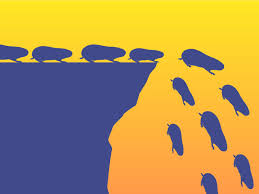
Lemmings supposedly follow so blindly that they herd together and jump off cliffs. It’s a myth. I hear my mom’s voice asking me if I’d do something awful just because everyone else was doing it. For whatever reason, someplace along my timeline, I decided not to be a follower of fashion. I became a loner, since group dynamics invoked a fear reaction, I avoided clusters. If I see that someone has gained a certain popularity, my first response will be repulsion. That magnetic contrariness might indicate a psychological recognition, perhaps a certain jealousy even. I’ll say to a bossy person, “You can’t tell me where to go! I’ll tell you where to go!”

When I have a need to decide something I like my thoughts to flow along a logical path without interruption. I want to be led to a conclusion by my own choosing. This doesn’t mean I’m averse to recognizing leadership, only that my criteria for the position of Leader is pretty demanding. I look for these values/skills/attributes: Innovation, Clarity, Intelligence, Compassion, Individuality and Creativity. We all manifest a leadership figure at points in our lives. The leader you have in your mind, your conscience say, is constructed out of all the people you have ever allowed to have influence over you. Before deciding something we might ask ourselves, “What would so and so do?” To follow, we must have a guide we can trust, even if the guide is a figment of our imagination.

We love it when someone follows-up on a request or suggestion we’ve made. We feel validated. If we feel like someone has paid attention, we are more likely to consider a proposal they make in turn. Loyalty can make us sheep, easily herded. Some will pursue others to get what they want. I sometimes think computer bots are set up that way. Our capitalist society needs data. Company algorithms will stalk (like a wolf) following the path left by our buying habits to ‘help’ us make our next purchase based on our shopping/internet history.

I was ten years on the Twitter site. I know this because the robots in charge of the algorithm sent me balloons on each anniversary date. I felt special in a way. I felt connected, like someone in the old days might have felt if they had a pen pal. The virtual connection helped during the isolating days of Covid. Now we have other matters of worldly importance to comment on or stew over. I’ve followed a flock to Bluesky. Time will tell how long I’ll inhabit this virtual space.