Re: Art

Re: Best

Those of us who are competitive or ambitious want to be more than better; we want to be Best. The urge to ‘Be Best’ would get the attention of the current First Lady of the United States of America. Ms. Trump is determined that her program, despite the poor grammar, will be valuable for child development. Comedian Randy Rainbow suggests a different conclusion.

I’ve never had the honour of being the best man at a wedding. Somedays I feel better than others. I’ve been told I am a good neighbour. I believe in the presumption that the best is yet to come yet I also realize that Good is often good enough. When I’m not feeling my best it’s usually best for me to meditate or take a nap rather than transfer my mood to someone else. I try to be better everyday but I know I’ll never be perfect ‘cause that would make me Best and who am I to say I’m better than you anyway.

Grammatically speaking I see the value of superlative and comparative adjectives. They aid the writer who’s into description. Philosophically however, I resist thinking in these terms. I don’t like the feeling of dominance that Super brings to Superlative. And without a clear criteria for comparative points of view how can you have a satisfying conversation? For example is it the Best Poutine Ever because of the crispness of the fries, the squeak of the cheese curds or the savouriness of the gravy? Just what are we arguing about here!

Discussing the qualities of film is always a lively debate in my family, especially when it comes to the Oscar pick for Best Picture in any given year. Here’s the top pick from 1946: The Best Years of Our Lives. https://www.youtube.com/watch?v=1yc5PugV4mk . It’s not your average overacted late forties melodrama! When I revisit this film I’m stunned by these performances. Others may be stunned in another way by the slower story-telling pace of the film. Before an argument begins it’s probably best to say that choosing best of anything is subjective, at best.

Speaking of controversy, I had this jingle in my head as I shaved yesterday. “Gillette! The best a man can get.” The catchy tune came from this 1989 advertisement which seemed harmless for its time. https://www.youtube.com/watch?v=ThDBf14qPsc
Recently the same company got into hot water for attempting to send a message in this post #metoo age about how men could be better behaved.

The 45th President of the United States has been called many things. This sophomaniac continues to convince voters with his braggadocio attitude that he is the best choice for your vote in this election year. He has called himself the “Greatest president God ever created.” New red ball caps may need to be embroidered ‘God Knows Best’. My anxiety levels need lowering so I’m hoping that beastly Trump gets bested in November.

Re: Change

“Be the change you wish to see in the world.” is a quote attributed to Mahatma Gandhi. When I think of the word Change the most available quote that comes to my mind is one my mother used to say often; “A change is as good as a rest.” She was referring to getting yourself out of a routine. Being in a rut is not a helpful place to be when you are on the road of life. I believe my mom was right; choosing a different path can bring refreshment, even enlightenment.

Not all change is welcome. In these changing times brought on by COVD-19 we can feel that change to our very livelihood has been inflicted upon us. Change is easier to handle when you are the creator of it or even if you have a stake in it. When someone else brings change there is a tendency to grumble. In our community we have a Grumpy Taxpayers Association who regularly criticize any change that our elected municipal officials legislate. Specifically they are concerned about the cost of things. In that regard I can relate. I often find myself gazing at the loose change in my hand and wondering how quickly it loses its worth.

Like cities throughout time, our downtown has its share of panhandlers. One fellow in particular gained some notoriety by the manner of his shout to passersby. “Spare a little change.” was his plea. You could hear the long drawn out word ‘Cha-i-n-ge’ a block before nearing him and for blocks further along. He was a veritable institution on one corner and when he relocated it caused a buzz in the community until word got out that he was working a corner closer to his new home. Throughout his time collecting coin he saw an abundance of pennies and nickels, then dimes and quarters. Regardless of the amount his cadence was never changeable.

Our change has changed. Inflation is ever changing the value of change in everyone’s pockets and purses. Where I used to keep a jar for quarters, I now have a plastic tub for loonies and toonies. I haven’t changed how I process my change even though the worth of it has declined. I still feel a childlike thrill when I save enough change to roll into a special paper sleeve designed for its respective denomination. A cylinder of nickels will total two whole dollars, a roll of quarters will create the equivalent of ten bucks and, hold your breath, a single tube of toonies amounts to $50! I’m old enough to remember my excitement as I walked to my corner candy store with a roll of pennies quickly growing warm in the grip of my tight little fist. A large bag of jujubes, caramels, liquorice and jawbreakers would soon be mine.

Change in the 21st century happens faster than it takes for a soft caramel to melt in your mouth. As always, there will be things we can change and things out of our control. Peace will come from knowing the difference.

Re: Life

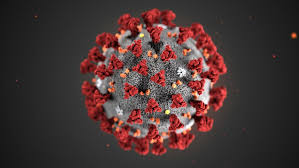
The virus COVID-19, like others of its kind, is not a living thing. It can’t respire. It can’t metabolize nor can it make other viruses. One of several key elements to life is being able to replicate. Since a virus has limited genetic material it requires a host to reproduce. Humans can be that host. Our cells take what is lifeless, replicating new specimens that can be transmitted to other living things through our mucus: A case of deadly biological complicity. Yuck!

In these days of pandemic we are searching for a lifeline. It’s frustrating to think that the best an average citizen can do is to stay home, thereby avoiding the infection and the consequences of spreading the contagion. Our lifestyles have drastically changed, even as we count ourselves lucky if we haven’t contracted the virus. Worldwide, medical professionals labour to bring life giving care to those who are stricken. We see the lifeless bodies of those mortals who have succumbed to the infection being taken from the chaos of underfunded, understaffed and underprepared hospital emergency spaces in increasing numbers and we wonder if there will be life after this Coronavirus. We wonder if life can ever be liveable again.

My parents used to subscribe to Life magazine. Pictorially and textually I learned much from leafing through those pages. As a teen I started collecting Time/Life books; thin well bound volumes on a multitude of subjects in history, science and nature. I used the books for research and for wonder. Like all who are youthful I believed that there were keys to bringing justice and harmony to the world. Just as the periodic table of chemical elements has order, I figured once humankind came up with a plan that worked for all then we would experience heaven on earth. I have always felt lucky that I haven’t had to personally experience the effects of war. In my lifetime I haven’t had to adapt to massive change; until now.

We say that we make or earn a living when we refer to going to work. It’s a financial context that doesn’t include other aspects of life. I prefer the rarely used word, Livelihood, to describe all of the things we do as we build our unique existence. In the presence of the economic shutdown that is one result of the pandemic, survival is paramount. After the crisis I hope our society takes a hard look at what matters most in life. We must eat. We must be housed. Our planet must be clean. We must have equity. We must know joy. We must feel peace and purpose. We’ve been taught that life is what you make it. It’s up to us to create a life worth living. https://www.youtube.com/watch?v=WBNChSa-rkA

Confronting death can make you hyper aware of life. Those who climb mountains often site that as a reason for the risks they take on the edge of things. Perhaps now, humans throughout the world will unite in a common definition of what constitutes a life well lived.

Re: Home

I am a person who loves his home so much that he calls it his sanctuary. I’ve been called a homebody. Perhaps being a white guy I can’t call myself a homeboy but I wouldn’t mind if someone called me a homie. Settling into a comfortable homey space, with a book and beverage at hand, is a sigh inducing event. The cliché ‘home is where the heart is’ could be my bumper sticker, needlepoint pillow, memorial bench plaque or business card accent. When Dorothy awakens from her trip to Oz stating, “There’s no place like home.” I can affirm it.

After my retirement from a teaching career, my wife and I thought we could roam about in a home on wheels, being of no fixed address. I got uncomfortable with that romantic ideal pretty quickly. Our next adventure was managing a condo as live-in janitors. I soon found out that my definition of a home was different from other folks. I got frustrated when the owners didn’t take care of their property with the same enthusiasm or respect that I always had for my own home. It seemed like an injustice to clean up after these people misusing their common space in the building whilst outside on the city street homeless wanderers were hunting for any corner that offered warmth.

An enduring memory I have of my childhood is floating in an army surplus dinghy off the coast of Maine. Fishing there with a friend would come to a close as dusk made the sky a deep royal blue along the shoreline. The lights of the beachside cottages would click on bringing a warm orange glow to spaces within. That thought never fails to bring on a yearning to get inside, safe and away from the approaching darkness. It’s the vision that comes to mind whenever I read the idiom ‘home and hearth’.

I recently had a conversation with a young fellow who had moved frequently within a short span of time. I asked him what home meant to him. He described the physical structure of a house or apartment was not the same as the feeling of home. The conversation had many silent moments where I wondered if he was homing in on the quintessential thing that made a home, a home. He went on to tell me that he had a future wish that his perfect home would include a loving family, a place for a BBQ and a big screen television set. He was describing some things that brought him comfort and security, things that he felt he needed to complete the picture of his home. At least in his head, at least for now.

Ravens take the role of homing pigeons in the television series, Game of Thrones. They carried messages and were rewarded with food and safe haven. A homing pigeon knows what a home is. When he finds it I can imagine he feels just as I do when I take in the peace I recognize in my abode.

Re: Olympics

Coronavirus disruption has meant cancelling the summer Olympics. To some it was inevitable, though the International Olympic Committee held back their decision until the situation became impossible to ignore. Canadian athletes were first to boldly state that they would not participate. Officially the 2020 event has been postponed yet will still keep the brand of this year as a message of hope.

The Olympics captures the value of sport in our lives. As a part of worldwide culture it is equal to artistic pursuits. Humans become more complete when they compete, using their bodies to go higher, get stronger and go faster. This reality of humanity is expressed so well in the symbols of the Olympics, for example the rings of the five colours found in the flags of the nations of the world. We speak of gold medal performances. We give tribute to those in other areas of life who make olympian contributions. We encourage children to have olympic-sized dreams.

I had dreams of attending the Olympic Games in Munich in 1972 with a German born friend. A short four years later I was employed and married, with my first child on the way when the Olympics came to Montreal in 1976. I remember some company producing a series of small guidebooks which I bound and kept for a while as a keepsake. They contained records of all the Olympic games and some cool individual profiles of several remarkable athletes. It was handy on my bookshelf to use when I watched subsequent games on television with my three young boys. I love how art and sport can mingle at these events. https://www.youtube.com/watch?v=CAFhNobJABU. Devotion, obsession, desire, compulsion, commitment; these are some words that might be used to express the sense of calling one must have to rise to Olympian stature. I admire that quest to the extent that I can tear up while watching a record breaking performance during summer or winter Olympic telecasts.

Controversies attached to the Olympic system due to the imbalance of power, the IOC structure, financial inequities or political manipulations can result in games being criticized. I grew up learning of the ideals of ancient Greece and Mount Olympus where the first athletes were awarded laurel wreaths in honour of their victories. I love the spiritual intent to support friendship, respect and excellence and the motto Citius, Altius, Fortius, proposed by Pierre de Coubertin upon the creation of the IOC and the modern games in 1894. A strong message of peace can be found in the doctrines of Olympism. So it is more than sport. It is a way of thinking and acting. I choose to follow that dream.

The Olympics will be missed in the summer of 2020. Athletes will continue to work toward personal goals. Qualifying events will be staged. Once the threat of Corvid19 has passed we will again congregate in stadiums and arenas to cheer for our favourite heroes. We will share in the realization of impossible dreams. We humans will continue to strive to be the best we can be.

Re: Herd

A pandemic is declared. The behaviour of humans is now a matter of life and death. The human herd is working hard to protect itself from the Coronovirus. Details change daily, sometimes hourly, in terms of government directives and casualty figures. “Have you heard the latest?” is the question posed by neighbours, family and friends even as they practise social distancing and spacial awareness lest the virus reach out its infectious properties. Since we are affected as a group in these situations, we necessarily respond as a group. We can help or hinder each other’s health by how we look after ourselves and our herd.

I have found it curious to be a witness as countries and their governments decide how best to take on the issues presented by this pandemic. At the outset of risk to their country, the United Kingdom chose to pursue a controversial policy endorsing the concept of Herd Immunity.
https://www.aljazeera.com/news/2020/03/herd-immunity-slow-coronavirus-pandemic-200320092928984.html. They soon reversed their position when infected numbers grew alarmingly. There is some logic to letting things work themselves out, but as a society where do we draw the line on numbers of dead people? Stranger still is how we tolerate lifestyle illness, suicide and traffic deaths more readily than succumbing en masse to viral infection.

Herding humans is an art form at Disney resorts around the world. Here, park goers are herded efficiently through endless lineups to get to their tickets, get them to their ride or help them get fed. I’ve always been anxious in a herd, part of it has to do with being an introvert. Amusement parks, arenas and packed airports are places that make me hyper alert. As an individualist, I’m not myself when others surrounding me have the potential to exhibit random behaviour, so my tendency is to resist the pull of the mob. Herd behaviour was seen recently as shoppers struggled to stock up on social isolation supplies. Survival is the imperative to the point of scoring the last rolls of toilet paper, canned SPAM or, more menacing still, ammunition. Herd mentality clicks in during crisis.

Once, as a young father I had to quickly gather my young sons at their grandparent’s trailer park location. There was a commotion over a car, seen racing through the park grounds. The driver was cornered near us by bat and crowbar carrying residents who smashed his windshield. Further violence seemed imminent. Fortunately the police arrived in the nick of time and took the cowering driver into custody as park citizens continued to taunt and shout their anger. My children saw a herd of humans at its worst.

There are other formal names given to animals that gather. I’d like another word than Herd to describe humans. We could Band like gorillas, Parade like elephants or even Convocate like eagles. Being Shrewd like apes might be helpful to emulate. In Canada we humans gather to make decisions like owls in a Parliament. My favourite collective noun is a Zeal of zebras.
I could join that fun sounding herd.

Re: Anniversary

This is my 100th blog posting. That’s a lot of words! As far as anniversaries go, anything marking one hundred is pretty big news. I remember the 100th anniversary of Canada’s formation as a nation. 1967 seems like forever ago, now that I think of it. When my country was 100 I was only 15. Our high school centennial project was a rock cairn memorial built with the very capable hands of our two year Diploma students. Those of us flowing through academic streams created art to be placed in a time capsule at the base of the monument. We were all caught up in the euphoria of Canada’s 100th birthday. We were young and hopeful.

A few years after this event, and far more important to my mom, was my parent’s 25th anniversary. They had a party where a gift table was loaded with a pirate’s treasure of silver. Plated silver trays, silver spoons, silver artwork, silver picture frames, and assorted silver goblets were displayed pridefully throughout our house for a while. After my folks moved, the items stayed in boxes in closets and attics until both my parents had died. My wife donated the trays to a local jeweller who then made some cool items for my sister and her daughter.
Alas, my sister is now dead.

I’m not person who dwells on the past. An idea will fascinate me more than a memory. I don’t choose to celebrate milestones in a grand way. Low key is me. Yet there is something almost magical about one hundred. The number 100 looks interesting to me in a digital way. 1,000 is not nearly as aesthetically pleasing. There is the comma.

Birthdays are really annual anniversaries. 0 and 100 are yippee moments in life. Marvellous bookends to our existence. So similar in many ways; the fresh outward wonder of a newborn, the inner wonder a centenarian must feel for having lasted. My eldest grandchild has had three personal anniversaries. She’s discovered holidays. Having enjoyed celebrating Valentine’s Day with her parents and younger brother this year, she asked with excitement, “When’s the next one?”.
I can learn from that joy.

Every time I see a bright full moon in the sky I think of my wedding day on a beach. A specific date, like a wedding anniversary, is often important. Forgetting it can be dangerous. My wife and I celebrate moon anniversaries. Technically this is a monthly thing but then it seems more enjoyable to be reminded of such a special event more often. Rather than wait a whole year until the next anniversary (and hypothetically overlooking it), we have the full moon to remind us of our enduring love. Thanks celestial orb.

When it comes down to it, celebrating an anniversary can be arbitrary. Sometimes the marking of time can conjure unhappy memories. I’ve often wondered why some famous people’s deaths are noted with more fanfare than their births. To me the beginning of a bright light is more significant. A new journey has begun.

Everyday I want to wake celebrating the now.

Re: Mean

“Everything happens for a reason” is easy to say, harder to believe. Just what do we mean by that phrase? Perhaps we are merely trying to find meaning in what might have just happened to us. We want to fathom the grand meaning of life, yet we don’t have the context to make a reasonable connection. To paraphrase a classic, “If a butterfly flaps its wings in my son’s backyard, I’ll be inclined to go ten pin bowling.”

Imagine a strange scenario: A baby born in the backcountry. Her parents die and she is raised by wolves. She survives, thrives, grows old and dies never having known another human. Did her life have meaning? Surely life can have no meaning without context or connection. We have meaning only when those we have touched remember us and respond to that memory. I think that is why funerals (or Celebrations of Life) are so important. During an end of life event, we get to pronounce what a person has meant to us. As a collective we confirm that the person did not die in vain; that a legacy remains despite the loss. We, by extension, are made significant for having known another and are encouraged to continue our journey.

Meanwhile, I’ve been meaning to write about the word Mean for a while. Sometimes with a word like this it’s hard to cover all the thoughts that bubble up. I mean it! I could go on a rant about how I wish people weren’t so mean to others. Or I could say how happy I was to discover that the mean price of a house like mine has risen in the last six months. Each time I pick apart a word my intention is to find out how it has affected me.

Perhaps intention is key to meaning. When we say we want a meaningful relationship with someone, we are intending to give as much as we get. Reciprocity can add to our understanding of life. It starts by ‘walking a mile’ in someone’s shoes. Yet sometimes after all we do to find commonality and mutuality with another, we must go our separate ways and define a new meaning for our personal path.

Graffiti, like other art forms, is rooted in an exclamation: I exist! All artists use creativity to find meaning. Regardless of an artist’s depth of training or natural skill, their work shows us what they have discovered so far. One of the first ubiquitous bathroom stall etchings was a drawing of a head with a large nose peeking over a horizontal line with the caption, ‘Kilroy was here’. A one-liner, a bumpersticker or a meme all do the same thing: They attempt to crystallize our thoughts on the meaning of life.

Sometimes I have felt that life has no meaning for me. On those occasions I’ve been grateful for the loving souls who have given me counsel to let some time pass. The urgent question, “Why am I here?”, is often solved by waiting patiently for meaning to present itself.

Re: Shame

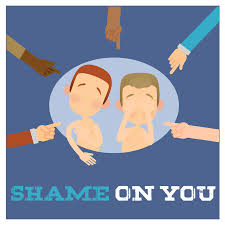
Shouting “Shame” at a protest rally on the steps of the Provincial Legislature building felt shameful. Yet I was drawn in by the pulse of those assembled as the speakers called out the injustices of previous governments. We were attempting to make ourselves heard and to hold those currently in power to account. Yet as I walked away from the demonstration, I felt slightly ashamed by my vocal use of that word. I felt embarrassed that I had lost some control over myself for the sake of joining in this act of public shaming.

I spoke with a friend about the meaning of shame and guilt within our personal narratives. She asked if I had experienced any shaming as a child. I told her one of my first memories, sitting with my parents at our dinner table, wanting to join in on the adult conversation. My mother loudly admonished me for barging in. “Shut your face!” she shamelessly shouted. I had been excited but now I was ashamed. I remember the blush of embarrassment, resisting tears yet fully shocked. What did I do? I was too young to analyze all the meaningful particulars, but now as an adult I can say to myself, I am not a bad person for interrupting my mother.

I can even say I bare no feelings of guilt, yet by telling this story I still feel the flush of shame coming to my cheeks. I was brought up in an age where parents and teachers might regularly say things like, “How dare you?” or “Shame on you!” to drive home their point of knowing one’s place in the world. Some old school teachers might send kids to the corner, or even get them to wear a dunce cap. My mom would give me the silent treatment when I had misbehaved. I wonder if shunning is a form of shaming.

The novel ‘The Scarlet Letter’ was one of several books I read in high school English class that had a lasting impact on me. In this moving story of shame, Religious zealots (Puritans) force the character, Hester Prynne, to wear a red letter A to atone for her sins. What astonished me was her grace in protecting those who had brought her this embarrassment. I learned that guilt is put onto us by others while shame is generated from within. She refused to be ashamed of herself. We too, can refuse to be ashamed of ourselves.

I don’t believe it was right then, anymore than it is now, to belittle someone. There are other ways to register disapproval of our elected officials or anyone who might offend our view of things. Questions can be posed, opinions shared, without pushing guilt on to the other. We don’t have to make others feel unworthy to satisfy our own sense of righteousness.

By the same token we have every right to shamelessly go about the business of our lives, looking for ways to express ourselves and be fully human without owning the knitted brows of disapproval that sometimes are directed at us.

Re: Price

During the sixties, my parents scrambled to make ends meet. The price of everything made everything priced just out of their reach. I would help my mother with the weekly chore of coupon cutting. The clipped ads would be arranged in an envelope according to shopping aisle. This package was presented to the check-out lady along with the cash from my dad’s pay envelope. My parents were too random to keep a budget so their mantra was simply, ‘Go Easy’. We rented an apartment, bought our car on time, took out loans for Christmas and a week of summer vacation. Bills piled up, most were paid. We did things when the price was right or if Mom had had enough penny pinching.

And Mom knew her prices. She once appeared on a local TV timed grocery dash in a neighbourhood food store winning a shopping cart load of meat and non-perishables. She rarely missed the television show, ‘The Price is Right’, once applying to be on as a contestant. I guess she got good at price guessing from all the catalogues she would thumb through with a far away look in her eyes.

We were brought up in a lower class environment, my sister and I, but some of our experiences were hard to put a price on. My father had an art book collection. Each volume contained pictures of beautiful works of art. From them I learned the difference between pricey and priceless. When my folks weren’t working, they spent time with us. Some of my fondest memories are around the kitchen table working on a school assignment, my mom chatting away with a pair scissors in her hand and my dad suggesting edits for my narrative. In a subliminal way, I was learning that there is the difference between price, worth, cost and value.

While watching gangster movies I also learned the notion, ‘everyone has a price’ or be careful not to ‘price yourself out of the market’ or even more sinister, ‘there’ll be a price to pay!’ Outside of this black market bargaining hopefully we can determine our own value and be safe in any transaction. Like it or not though, we sell ourselves everyday. Our body, our organs, our skills, our education all have a value and we can trade that value for a price, paid by some individual or some corporation who wants us. Hopefully we don’t sell ourselves short.

Chemically, our bodies (our ashes really) after death, are currently valued at approximately $160. Apparently most of that price comes from potassium. So unless you have some gold fillings or precious metal implants you are not worth much dead. All the more reason to regularly consider your worth when you are alive.

The price of stuff can’t be only consumer demand. Works of art are considered priceless yet fetch millions. Housing has become unaffordable for many. Cost and price are distractingly manipulated. Wealth is the new religion. I dream of a world where we get what we deserve not what we pay for.