Re: Art

Re: Think

Some might tell you they’re thinking all the time. I believe them. I get lost in my thoughts regularly, in a daydreamy sense. If someone asks me what I think I’m very flattered because I feel my view of the world is just as significant as the other guy. I don’t very often come to conclusions with my thinking, at least not in the sense that mine are better than yours. It’s the variety of thoughts that can spin off to holy shit moments that intrigue me enough to ask myself, “Where did that come from?”

Formal education helped me to organize my thinking. I’ve no doubt that significant teachers pointed the way to help me understand my world. When a teacher responded to my hand in the air, I felt empowered to share what was on my mind. The words Thank and Think are nicely related that way since I feel grateful for my ability to think through a problem or be thoughtful about another person’s situation. I sometimes wonder where the thoughts come from that link us as a human race.

My wife has convinced me that all creatures have ideas about their environment. Just because we have trouble communicating with other living things doesn’t mean they aren’t thinking about what they might do next. Some evidence shows that trees (aided by fungi) form an underground network of signals for food sourcing and defence. I believe in a collective consciousness: That mysterious force that delivers inspiration, insight and direction. I don’t believe that it comes from a divine source, as an answer to a prayer, but more likely from an unknowable cloud of electrical transmissions.

We humans have an electric field even when we don’t have our thinking cap on. There are billions of us on this planet continually discharging energy. We are a collection of charged particles bouncing about in a sea of chemicals. We might be called Sparkles in an alternative universe. In that sense I might wish to call a grandchild Ethereal in recognition of our lightness of being. This collection of atoms that is us, by any other name, is sweet and remains after we die. I can easily think that these motes, atoms, ions and microscopic bits constitute what some call a soul. So I wonder where the soul goes, when I cease to be Robert.

It’s tempting for me to suggest that these specks of me will become thoughts after I am gone. After all, what else will be left of me, except that which is discovered in someone else’s thinking. My grandkids might think of their grandpa when they are in the midst of story time at school. Likewise, someone reading these words might think of a living soul they haven’t seen in a while or recollect thoughts of an ancestor long dead but still alive in this manner of thinking.

I can’t be alone to think on the meaning behind 13.7+ billion years of stardust. I’ll be careful the next time I rub my eyes. Who’d a thunk it?

Re: Retire

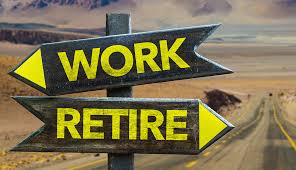
I’ve been retired from a career in teaching for seventeen years. I’m not tired of it. Back in 2006 I had reached the magic formula that gave me a full pension so I embraced the moment to call it quits. I told my friends, family, students, whoever would listen. During one of my last recess duties a six year old came up to me with her friends in tow. “You’re not going to be a teacher anymore?” asked one kid. I nodded. “I told you he’s retarded.” stated another little scamp. I reminded them all that the R word wasn’t polite and that I would be retired after Christmas. “See!” one student shouted as they scattered through the playground. I still miss the children, but not the job.

I wonder what the word retire really means. After a working life in education, I took a job with my wife in joint resident management of a condominium. During those five years in a new community I also did a lot of volunteering. I wasn’t as idle as the designation of Retired might suggest. I wasn’t even technically a senior citizen yet. I had relocated, reconnected, reestablished, renewed, reconsidered and revamped my life. Those labels don’t appear on drop down menus from online surveys of employment status. My life didn’t end when I halted my career. Some of my most active years were still ahead.

Workers are being slammed/shamed by some employers these days for being selective about how they see work after Covid19. There is a workers’ revolution underway and it’s about a quality labour environment. Union membership is on the rise again as a reflection of employees wanting a greater stake in their workplace choices. Consideration of preservation and equality of retirement benefits is part of the negotiation demands. We are currently living in an age of record profits for companies and share holders and yet workers, who create the wealth, are being scorned for wanting better employment conditions. Labour must be honoured.

Life long learning is a banner slogan and a quest that I take seriously. It used to be that some folk might be called ‘retiring’ in attitude or behaviour. I’m not someone who is reticent about revealing my feelings. I consider myself to be an introvert in general, yet I will never retire from standing up for a just cause. Education is key to my continuing to feel that I have a place in my community and my society. Right now I am doing lots of reading; a great activity during one’s retirement years!

There were times during my full time working days when I wanted to sing out and declare to my boss ‘Take this Job and Shove it!’. When I was on the countdown to my last day of teaching I cut out a large ad from a local furniture store; Don’t Pay Until 2006. I pinned the reminder to my cork board behind my desk. Children in my classroom may have had trouble with the concept of being retired, but I sure didn’t.

Re: Kill

In exploring my world through individual words, I’m often surprised when I come across a word that I haven’t examined in this blog. Kill is part of everyone’s vocabulary yet it’s one of those basement words that we might leave boxed up, unattended.

Maybe our fascination with killing comes packaged in our minds with the broader mystery of death. In the art world, we can love murder mysteries, film noir is fascinating and slasher movies are popular for date nights amongst teenagers. We are repulsed but intrigued by serial killers; we want to know details, the reasons behind the murder. When I hear an ambulance I’m curious if the siren stops close to our neighbourhood. If there is an accident on the highway, we rubber neck to see if there’s been some road kill. The dark side of our imagination isn’t pleasant. Yet it is present. Stephen King is a popular author for reasons beyond his skill with words.

I’ve known one person in my life who has gone to prison because he killed someone in a bar fight. This fellow was a run-of-the-mill boyhood friend. It’s curious to me why authority figures want to convince us that murderers are all insane. That’s usually the approach taken to try to dismiss the incessant gun play and resulting carnage that goes on in the United States. Some cases just don’t fit the madman stereotype. I’ve read of mercy killings for example, and have considered the more frequent accidental deaths involving highway collisions. I don’t believe that the Alberta truck driver who missed a stop sign causing the death of many members of the Humboldt Broncos can be called a crazed killer.

When we want to avoid the word Kill we invent a substitute like Slay, Slaughter, Smoke, Terminate, Disappear, Blow Away, Liquidate, Crush, Bump Off or Hit. Wordlessly, a mafia gangster might signal a death sentence with a kiss. Likewise, someone who wants you gone might make a slashing movement across his throat to show evil intent, even if he is ‘only joking’. Professionally, a director could yell “Cut!” while making a fierce chopping motion to signal her desire to kill the action in a scene.

We can’t fool ourselves by thinking normal God Fearing Folk don’t kill when it says in the Bible that there is a time for it. Our spoken word endorses the emotion behind the thought: “I’m going to kill you!” (we might cry out in rage). “We killed them!” (we might declare after a sporting victory). “I’m going to kill it!” (we boast after cramming for an exam). “He’s killing me softly…” (we might sigh/sing while bringing news of a lover to a friend). We feel proud when we kill two birds efficiently using only one stone. Hunters still find it necessary to pose while smiling beside their dead prey.

I try to avoid using the K word but I don’t want to be a killjoy when it comes to encouraging reflection. Words colour our perception of the world; it’s ignorance that kills.

Re: Create

Yes, I believe we are created in god’s image. Yet, I do not believe in God. I prefer to attend closely to another soul for proof of the act of creation. How that soul came into being I cannot fathom. How I came to be on this earth, I cannot comprehend. Yet I know for certain that we are all miracles of creation. That is a fact found in our DNA; each strand of which carries the markers of our uniqueness.

We as humans are constructed out of Big Bang stuff. As recipients of this creative matter and energy we are destined to travel a creative path. The best teachers do not indoctrinate or inculcate. As a teacher I thought of all of my students as singers, dancers and artists waiting to find the right tools and skills to enable their creative force within to show itself. Budding scientists, athletes, orators, change agents and titans of business sat in the desks of my classrooms. Each child will tell you their dreams of destiny. Each child will be confident in their ability to make something. Each child will be convinced they are a marvel, unless they are told they are not.

Children must never be deflected from their creative urges. I could be a strict parent in my time but I would not stand in my sons’ way when it came to them testing their creative aspirations (even if their music was definitely too loud). One of my favourite creators, the songwriter Harry Chapin, sang a poignant song (Flowers are Red) about a stifled creative urge. Here he is with entertainer John Davidson showcasing how ideas can spring up from daily experiences. Then this gem of a moment in music happened. https://www.youtube.com/watch?v=7qrbNygL0YU

The film, ‘The Fabelmans’ fictionalizes Steven Spielberg’s youth. This famous director was lucky, in a way, to have had the right magical dose of encouragement from various sources, not to mention an ingrained natural talent. The patriarch of the family perpetually thought of his son’s movie fascination as a hobby, while his mom revelled in his exploration of self. As I watched I wondered about my own parents, trying to guess who encouraged me to colour outside of the lines.

At the dawn of creation a spark was placed in all of us. Lucky are those who are born into the perfect environment to thrive. Most of us struggle for simple recognition of our innate creativity. Without a rudimentary acknowledgement of our gifts we begin to think less of ourselves, creatively or otherwise. Obviously, we are not all going to be famous artists. Gaining fame is not the point of creative pursuits, be they hobbies, pastimes or even professions. My father’s greatest talent was creating an atmosphere for making others feel appreciated: He made them feel gifted.

If God exists, I’m convinced he/she/they didn’t make junk. We have the genetics capable of creations of our own design. It’s paramount that we encourage ourselves and others to live up to that example.

Re: Get

“You can’t always get what you want…” A Rolling Stones song can be a philosophical code for living a life of satisfaction. I once had a great conversation with a friend about getting it: The it being life’s meaning. We both agreed that what you got, when you thought about life, was directly proportional to how much you thought about your existence. Most days I get why I’m here, existentially speaking.

The word Get has a lot of use for its size. This small word is used without much thought because it makes the sentence flow. Consider that you might be told to get stuffed, get it together, get cracking, get a room, get a life, get going, get real, get over it, get lost or ‘just try to get along already!’ Get suggests a direction as well as a directive. Sometimes we get anxious about getting there. Other times we long to get back to where we once belonged. We save money for a get-a-way so that we can get together or because we must get off the hamster wheel. I often wonder if we get what we deserve.

When I was a kid we were encouraged to recite what we got for our birthdays. After Christmas the question, “What did you get?” rang through the classrooms. As we emptied our halloween containers we would spread our fingers through the loot hoping to find those candies that we wanted most to get. Thinking back now, I wonder if this desire to acquire was a step towards indoctrinating us kids into the consumer world. After all, a capitalist society is predicated on getting stuff.

As 2020 dawned the exclamation, “You’ll never guess what I got!” gained a morbid new meaning: I was among the many who got Covid19. As advised, I had gotten all the shots to try and prevent it but the virus found me anyway proving I was not as immune as I thought I was, and that vaccinations probably kept me from dying like the seven million global souls.

One of my pet peeves surfaces while I’m in a fast food restaurant. A customer will look at the menu board and state more than ask, ‘Can I get…?’ which sounds rude to me. The annoying part of me wants to turn around and ask if their mother taught them the ‘Please may I have…’ sentence starter. What I’m getting at is the same kind of feeling when someone non-accepts a thank you by saying, ‘Not a Problem.’ Oh well, we are what we are. At this part of the blog I’m thinking of Judy Blue Eyes: It’s getting to the point where I’m no fun anymore. I am sorry. https://www.youtube.com/watch?v=QZGeU83K6Do

Harmonies by Crosby, Stills and Nash are at the blissful end of the vocal spectrum whereas a hillbilly yelling “Git”might be at the opposite pole. Language is forever fluid. I love it when I can capture the right word at the right time. It’s a Gotcha moment.

Re: Tax

“This job is taxing me.” My mom used to say that I was taxing her patience, leading me to believe that the verb to tax was a negative thing. My wife and I have just been through a taxing experience; the slow death of her father. It’s not easy saying goodbye especially when you have a duty to care for another.

Most folk use the word Taxes in the context of paying them to their governments. There is a tax on most things in a modern society. When we buy stuff there is an expectation that some of what we pay will go to a municipal, regional or federal coffer. Many of us resent the fact that a government always has a hand in our pocket. Most of the time I can get my head around the need for group participation in financing needed services. Collectively we have to have a way to pay for the roads we drive on, the hospitals we go to in emergencies, the schools where we find enlightenment, the infrastructure elements that provide for the continuation of our culture. The importance of being taxed in this way must be viewed as a positive thing if we are to consider ourselves members of a caring society.

We all have a duty to care for our neighbour. Sometimes it is on a personal and intimate level. Sometimes it is anonymously through paying taxes. I find it difficult to place a coin in the hat of a soliciting homeless person who regularly frequents a corner in our downtown. I don’t resent his presence, I feel sad for his predicament. I gain some solace knowing that I pay taxes to a city government that has a progressive housing initiative. I don’t mind paying my fair share. The fact that our tax system is unfair bugs me though.

#Taxtherich is a well used hashtag on Twitter for good reason. Taxation policies in my country and other developed areas lack equity. Records, research and anecdotal stories abound of the one percent of us who find exemptions to paying taxes in proportion to their income. Employees of big companies often pay more taxes than the CEOs who run the corporations. Governments are reluctant to close the tax loopholes or institute a wealth tax for fear of investment going elsewhere. Consequently social programs are run through raffles and bake sales, while the super rich play with their money buying yachts and building spaceships. This imbalance taxes my patience for an equitable resolution.

The game of Monopoly depicts an unbalanced corporate world, but at least there is a luxury tax card. Several among the millionaire/billionaire class have boasted that they will give their fortunes away. I don’t believe that philanthropy is the answer to such a persistent societal need. Citizens have a responsibility to vote for fair tax laws. Once upon a time in the Americas the notion of Taxation/Representation was enough to cause a war. It’s one thing to be independent from tyranny, it’s another to find ways to support each other’s needs.

Re: Wish

When I was younger, personal agendas were important. I would call them dreams and most days I had a plan. I’m not for tilting at windmills. Objectives must to be met. My mother was a task master. She taught me discipline. In that kind of environment there wasn’t much room for wishing. That didn’t make me cynical or even unimaginative. If I wanted something, then I would resolutely put a plan in place to reach my goal.

Wishing starts the quest process towards achievement. I see the act of making a wish like some people might view praying. I don’t believe there is a god to answer prayers anymore than I count on others to make my dreams come true. Sometimes I’ve been the lucky recipient of a gift or advice that gets me closer to realizing a dream but generally the achievement has been mine. I like to believe in my own ability. It is important for me to consider possibilities, identify the probabilities then make a decision to act on the most likely scenario. A while back that strategy was called ‘getting to yes’, then it morphed into The Secret (a sort of mystical plan involving seeing your future). Now people are talking about the science behind using your mind to get to the heart of the matter. No matter what language you use the idea is the same: Wish fulfillment.

Everybody has wishes. It makes no difference who you are. And no request is too extreme. I love the Washington/Harline song When You Wish Upon a Star. Here is a beautiful version sung by Sara Bareilles that may help you towards a new understanding of how desires are met.

https://www.youtube.com/watch?v=QhwT2jn9qHQ

This song articulates such a beautiful philosophy. It speaks of the mystery of life as well as suggest how things might be resolved. Some might toss a coin into a fountain or find a wishing well. Some might climb a mountain, write a letter to Santa, pull on a turkey wishbone or lie down on warm grass and gaze at clouds. We must never fear a little wishful thinking.

My wife and I love potato chips for a snack. Whoever finds a chip that is folded onto itself has discovered a wish chip. This special morsel must be shared with a kiss while both lovers are making a wish. When we went on an extensive trip to New Zealand, my bride made a manifestation journal of pictures cut from magazines while I created an agenda/itinerary/map. The forethought we put into this trip of a lifetime opened doors to famous places and roads less travelled.

I’m not embarrassed to admit I’m planner. I’m very careful about what I wish for. I normally resist waiting to see what might happen. For me, what starts as a wish will progress through idea/research/consultation/blueprint/rethinking/commitment to execution. I’ve kissed many a wish goodbye. I’ve also revelled in the challenge of getting to that pot of gold at the end of a rainbow.

Re: Contract

After watching the film ‘An Affair To Remember’ with my 94 year old special mom, she engaged my wife and I in a discussion about marriage. “Why would anyone get married these days?” Our conversation covered the idea of a union being a contract between two people desiring to show a public commitment to each other. “But why?” She still wanted to know. We didn’t have a scientific explanation.

The business case for a marriage contract is pretty straight forward. There is money involved. Bank accounts. Valued possessions. Pets even! Most jurisdictions contend that after a certain amount of time in cohabitation two people are seen as having an agreement as a couple. I’m no divorce lawyer but the argument seems to go that a 50/50 split is required if your differences become irreconcilable. Now this can change if you both had the forethought to sign a prenuptial contract. To me that is just cold comfort because a prenup seems calculated to find failure. But prudence can be a red flag. I don’t believe love can be found anywhere near a judge. Justice maybe, but no love baby.

Getting a new phone contract was very stressful. So many decisions to make. Multiple offers were presented regarding data plans, equipment, insurance, privacy. I was glad my bride was there to help me not feel manipulated by a Glengarry Glen Ross style salesmen. Our guy Michael seemed trustworthy. I only used a signature once at the mall kiosk and that was on an iPad using my finger. Looking over the fine print of my new communications econtract that was sent digitally to my email account, I see that there are stiff penalties if I don’t return the upgraded equipment. Hopefully my anxiety will dissipate over time.

I do like the security of a contract when it comes to major purchases. This is the language of a black and white world. I’m old enough to still understand the respect shared with a handshake. An understanding is arrived at that I will provide payment for services clearly spelled out in writing. Yes, there are grey areas indicated in the fine print even in the most iron clad agreement (it’s almost a given that no one reads this part of the contract). Perhaps this is where the social contract overlaps with business contracts: Perhaps trust is the ink in the pen, fluid until it sets.

When I chose to marry, my intent was to make a promise to myself as much as to my wife. Our vows were on a beach. We didn’t have a signing ceremony, although we did receive an official certificate of participation. We began the business of living together not in a contractual sense but as a memorandum of understanding. We recognized there may be grey areas, yet we would make space for amendments. We never wanted to let ourselves down during our association.

I’m a romantically formal guy in one sense: On that beach we signed our Magna Carta: A loving charter of rights and privileges between two souls.

Re: This

My bride and I were sitting side by side one morning, nothing unusual there. We were talking quietly, sharing confidences and sipping coffee from our favourite mugs. When the conversation turned to plans for the day she asked me, “What do you want to do today?” I answered, “This.”

Retirement gives me the luxury of choosing things to do based on THIS right here, right now. I love the simplicity of making decisions based on my present needs, wants and realities. No longer do I factor in thoughts of advancing my career, or even whether or not I have to go to work the next day. I’m also old enough to be free from the demands of parenting. As a society we talk a lot about time; the absence of it or the management of it. I’m learning that being away from a working day means I can better appreciate this moment.

This is a simple word to describe the present moment. That, by comparison, is a word suggesting the space and time over there, out of reach. Those, Them or even ‘Them Thar’ describe stuff that is beyond the present. I can get to those places if I want to. I can attend to them later or when the mood strikes. Them thar chores (if I’m pretending to imitate stereotypic hillbilly talk) can wait until another day. When I ponder the idea of these things I’m reflecting on a current desire to be here. Just here. Not there.

‘And now this’ is a lovely side segment on John Oliver’s television show, Last Week Tonight

https://www.youtube.com/watch?v=cjSgBGD0Zw4

I love the way this comic host skewers convention and mocks the status quo. Sarcasm is difficult for me but I love to watch it done well by others. Under his guidance I can laugh at absurdities while letting him be the judge of stupidity.

One of my favourite magazines is called THIS. I relish its currency: Topics are topical. Each issue encapsulates the importance of being current, edgy and relevant to the Now of Life. THIS Magazine explores in an uninhibited way the importance of our present reality. An article may make me want to look in another direction but the authors’ points of view keep my thoughts clearly on this, not that, so for the length of time I’m reading I’m clearly in the here and now, not somewhere else.

‘This is it’ (Make no mistake where you are.) is a great song by Kenny Loggins. The songwriter wants us to be aware, “It’s here, the moment is now, about to decide/No one can tell what the future holds.” https://www.youtube.com/watch?v=VS52sEUqxMo

It’s a carpe diem sort of song. Make no mistake, the lyrics invite you to choose the current situation to electrify yourself. No time for second guessing. No time to search for the illusiveness of that. It may keep the menu of your life simple if you declare your choice for what is right beside you.

Re: Fix

I remember my dad used to fret so much when a television repairman had to be called to our house. In the first place he had to admit to himself that his skills with dials, tubes and antennae had been for nought. Secondly it would mean he might be shamed after the technician could fix the problem with a turn of a screw. Then of course came the bill, which would set my factory working father back half a day’s wage.

When my dishwasher went on the fritz recently I thought of my dad. I started into a brain spiral about repair vs replace. I called and got some opinions, which still left me in a quandary. On the one hand I had a perfectly good appliance that only needed a gasket (or so I thought). A competing idea had me considering the domino effect of falling/failing returns on my original investment. My DIY skills are limited, but like my wonderful dad, I have a certain amount of pride in looking after the things that I own so when they fail I take it personally.

Some things you just can’t fix on your own, especially problems of a non-material sort. Especially problems of the relationship sort! My bride and I have generally done a great job ironing out our differences. When problems between me, her or us crop up, we use different strategies to overcome the missing or damaged parts. I usually try to charge in and fix things but my wise woman often tells me, “I just want you to listen.”

Getting a fix on things is a way to focus attention on the important things. I want my mind to stick with the essentials during a problem solving exercise. It’s no coincidence when we use the phrase, ‘glued to the task’ to indicate just how deep our concentration can be when we are attending to the job at hand. I have an image of my dad trying to apply a fixative to a broken china cup handle. He had to hold the pieces until the epoxy set, all the while unknowingly sticking his tongue out of his mouth as if to tether his thoughts.

I can rarely control my imagination, so I have to rely on structure to anchor my wandering mind. When a problem is too overwhelming, I occasionally turn to the medicine cabinet for a prescription. I  recently rewatched the dramatic film Man With a Golden Arm starring Frank Sinatra.

https://www.tcm.com/video/198811/man-with-the-golden-arm-the-1956-i-need-a-fix/

I think of the many folk who are drawn to street drugs in our city. Illicit drug use is a problem with no easy fixes for millions through the world. The things that make our lives better sometimes make them worse. When a device, friend or situation lets us down we may feel temporarily defeated. Sometimes a technician of the mechanical, digital or psychological sort can help us fix the problem. It’s worth it to make the call.