Re: Tender

When my mind is in a whirl over things domestic or international, I try a little tenderness. Which is not just a classic Otis Redding song but a way to shift my attitude. Music helps me set the course for a new perspective that is more harmonious because of its positivity.

Tender is a word that can be viewed from many perspectives. For instance, I like to think of myself in this word’s noun form; as in, One Who Tends. I like to tend to my tiny garden occasionally. I like to take care of business by tending to the bills and other finances of our household. I love tending to my lover. I think every work-er is also a tend-er since he or she cares for the final product of their labour. When I was a teacher of small kids I loved attending to the instructional needs of the members of my classroom. In that situation I also tried to be tender in the performance of my duty towards the little rascals.

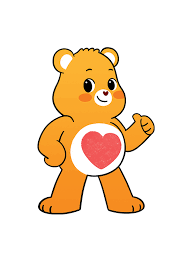
Many of my wee students once had a liking for the Care Bears, a heavily advertised multi-media marketing bonanza that started with a delightful series of paintings by Elena Kucharik in 1981. The collection was an inspiration for expansive commercialization (cards, dolls, clothes, toys, records, books, television, etc.) but the central theme of friendship, community, and caring was touching for many folks, young or old. One of the ten original Care Bear characters was Tender Heart. The stuffed toy version was a favourite of my youngest son for so long he wore the fabric heart off of his plush chest. After so much hugging and squeezing you might say that this comfort-toy became tenderized.

I find the use of the restaurant item Chicken Tenders rather disturbing even though they are delicious. Recently our BC Ferries ‘put out a tender’ inviting bids for construction of a new line of coastal ships, which had me thinking about their intent. Perhaps the management team was hoping only ship builders promising tender-loving-care would apply. Maybe the winning bidder would have proven to employ the tenderest engineers when it came to their craft. Hard to say.

Showing tenderness towards an object like a kitchen appliance is one thing, but having tender thoughts towards another human being isn’t always easy. If we are a caregiver, for example, we may still be tender from wounds inflicted by the very person we currently look after. Treating ourselves with tenderness may be even more difficult if we suffer guilt from past performance. When my emotional scars ache I surprise myself by finding stable ground in a musical phrase. A key word like tender can lead me to songs containing that word or sentiment. I can move from Grumpy Care Bear to Tenderheart by searching Youtube for musical references. The Beegees asked for tenderness from Fanny. Elvis Presley pleaded, Love Me Tender. The group General Public wondered where it was and Paul Simon couldn’t find any. Otis Redding had tenderness right when he crooned, “It makes it easier, easier to bear.”

Re: Worst

I had an incident involving insurance and it made me spiral to thoughts of worst case scenarios. As clouds of worsening doubt gathered about, I found surprising comfort in ranking the worst moments in my life in one paragraph. The effort convinced me that my current situation was not that bad. I just had to get a grip.

Making a list of tragedies and traumas sounds depressing but it did offer me a sense of control. Control can sometimes bring a certain calmness. If you like order in your life then putting things down on paper offers perspective. The list I made that day was revised several times. That’s a cool thing about judgement; our sense of a moment’s impact more or less changes as we gain the wisdom of hindsight. I call it My Best Worst List. This summary list became a therapeutic accounting of the crappy moments that I wish hadn’t happened, but did.

My first wife died of cancer when we were both only 50 years old. That was entered as the worst on my self-therapy list. I suffered clinical depression 7 years before that, making it second on my collection of lifetime worst events. A simple surgery went wrong so I had a hellish night in an emergency room. A family trip was once aborted due to a flat tire that nearly killed us all (I was driving and I still have chest pains from the memory of that experience). My sister ending her life prematurely is on my list. I had a best friend who bailed on a European hitchhiking trip AND being my best man at my wedding, which was a total bummer. In grade nine I got the one/two punch of my parents separating then we moved to a city AND I had to go to a new high school. Too cruel!

Bad things don’t have to happen before we know what the good times feel like. Pain is pain in the moment. Time heals if we don’t focus on our suffering. Feeling low is normal and it doesn’t have to be linked to one happening. Identifying something on a scale of bad to worse is the first step to understanding the bigger picture of your life. For me, sometimes it was a matter of encouraging myself to hang on for-one-more-day. On the worst days I felt lucky to have someone provide the guidance to see the way ahead, out of the gloom. Humour helps at the right time, delivered in a positive way. Silliness tends to lift me up before things get worser.

A ruined birthday party can be the worst thing in the whole world for a four year old. You grow older. Tragedies mount. You learn from the school of hard knocks. It helps to share your story, comparing war wounds over a beer and liverwurst lunch. You can laugh with a soul mate while discussing the value of worsted wool over synthetic fibre. Always remember; things could be worse! I’m resolved to leave the past where it belongs.

Re: Picnic

The word Picnic is so cute I just have to smile when I say it out loud. I’ve been on many picnics in my lifetime and they’ve all been perfect in their own way. Where ever you live, a meal enjoyed alfresco improves the taste of the food, no question. I’ve enjoyed outdoor feasts, snacks, suppers, barbecues and fireside weeny roasts. I’ve joined with others in traditional parks, in wayside rest areas, in rugged forests, poolside or on beaches. As a youngster I anticipated my father’s Company Picnic as a full summer’s day of free food, races, games, clowns and balloons.

In northern Ontario taking advantage of the great outdoors is a cultural imperative. My young family used to love gathering with other young families for winter picnics. We loved getting the spring season started early by tromping on skiis and snowshoes through sodden snow in mid April, digging out the picnic tables and making a blazing fire to summon the summer gods. On one such occasion we were startled by the sound of thunder in the distance. Our little kids thought we had disturbed a sleeping giant, when much to our surprise, rain poured down on our gathering while lightning gave the setting an electric light. Magical!

Another picnic tradition we held at that time in our lives was the annual day-before-school-starts-picnic. We kept the meal prep simple by getting a Family Pack Combo from KFC. Back then it came with a generously sized Sarah Lee chocolate cake. The five of us would consult on a favourite spot to dine. The mood was always mixed since I was a teacher losing my holidays, my homemaker wife would miss the daily joy of all of us being together, the boys would be mired in their own thoughts of new classmates, grade level expectations and having to wake up to an alarm. Somehow this early September picnic would soothe some of this drama.

After my first wife died it was a 5 star picnic that healed my wounded heart. When I discovered the courage to venture into the world of dating I was asked by a local beauty to a picnic that I will never forget. I went imagining hotdogs and beer. When we arrived at one of my favourite kettle lakes, she popped the trunk of her car to reveal a wicker picnic basket, colour coded bowls & containers, blankets & bottles: It was the real deal! I kid you not, there were six courses to this particular picnic du jour, yet there were many more courses of love to come.

Picnics make my heart lighten, remembering times with friends and family. Times of fresh air, abundant food shared with plenty of relish. I suppose there were ants, blackflies or other metaphorical pests to take some of the edge off the joy of the experience yet the dominant memory for me is of moments of bliss. A sniff of barbecued chicken, watermelon, a hot dog with mustard can transport me to a checkered blanket somewhere in time: My Happy Place.

Re: Miracle

The miracle of birth is a wonder of creation. There have been many circumstances labelled miraculous throughout world history. We don’t need to be religious thinkers to put weight on things that amaze us. Awe is everywhere.

Survival stories of car crashes, natural disasters or medical recoveries are often cited as miracles. My mom was a local track star in her early teens, following the sport into her adulthood. In August, 1954, a ‘Miracle Mile’ was run by Roger Bannister, beating the unimaginable time of four minutes. Stories of that Vancouver, Commonwealth Games record event were still being printed in Canadian newspapers when I immigrated to Canada later that fall.

I believe in miracles when I feel deserving or hopeful, yet everyday miracles may be just happenstance that end up making a great story that we can tell others as we age. I can’t quite get my head around the idea of finding a life long romantic partner. Mutual love is unfathomable. Is it fated when we find a soulmate? Couples will gasp, “It’s a miracle that we found each other!” Even that character Rick of Casablanca seemed awestruck,”Of all the gin joints in all the towns in all the world, she walks into mine.” Barry Manilow wrote a song about the wonder of it all. https://www.youtube.com/watch?v=wc-2F3VDs2w

On the day my mother died I lost my wedding ring. The death had been coming for a while, the loss made a bad day worse. After my wife and I got the call from the nursing home, we raced there to watch as she took her last breath. The nurse was notified, procedures ensued. The attendants couldn’t get her ring off, so I managed the job with a dab of cream. It was then I noticed that my ring wasn’t on my finger. A search began that alerted all staff, covering the whole building, including refuse bins, and outside all around the parking lot. I had to come back the next day to sign certificates and such and the search continued. I checked the car, my house, my clothing: No luck. Was this a weird cosmic thing where rings are traded in an alternate universe? Was there something here requiring a return to psychotherapy? Was it a lesson in grief? Was this someone’s idea of a joke? About a week later I went to pick up my mom’s ashes. I put the container on a shelf in my shed and decided to do a small clean-up. I repositioned things and moved my recycling boxes so I could sweep the floor. The broom made its swishing sound as it found leaves, bits of string, plastic bottle tops, then something heavier. I knew instantly what it was. I picked up my lost wedding ring and held it tightly in total disbelief. I called my wife. We cried with the miracle of it all.

Sometimes it’s a struggle to get up in the morning: Bones creak, muscles are stiff, phlegm must be cleared. Life is a miracle.

Re: Subway

As the train approached the station I felt the familiar rush of wind being pushed by the plunger of the lead car through the tubular underground channel. My hair blew back, I stepped further back from the platform, the brakes squealed and the announcer advised, “Please step back from the doors.” I was excited to be riding the subway of my childhood for the first time in fifty some odd years. The TTC (The Toronto Transit Commission) was once disparagingly referred to as Take The Car. In my opinion it stands up to other cities, at least in terms of efficient subways. It’s a modern mass transportation system that works.

My earliest memory of the Toronto subway was taking the bus from my childhood home in Scarborough to the nearest subway stop then navigating my way to dance lessons, stamp stores or to the C.N.E. My parents would take my sister and me downtown on special occasions like birthdays or when we won a trophy for something. It was extra special when I could get to sit in the very first car so I could get a visual sense of our forward momentum. It was scary and thrilling at the same time as the car pierced the darkness and then came the proverbial light at the end of the tunnel as we pulled into the tiled terminal. Some subways I have been in have more than tile at their station stops. In Stockholm for example, their Metro is worth riding even if you have no destination in mind. Each cavernous terminal point is beautifully lit with fascinating art and historical references to the city and Sweden’s culture. This experience might be called the Caves of Lascaux 2.0 for its modern nod to the famed prehistoric ochre paintings.

I don’t work in Toronto, nor do I use the city transit system on a regular basis so my opinion is based on fondness for the transport mode, happy childhood memories and fun touristy sorts of thought. This is not very scientific, hardly objective, yet riding the rails is fun. And for me it’s a sentimental trip. My first free range solo adventures hinged on my confidence in taking public transit. When I went to the Canadian National Exhibition my wallet contained change totalling no more than five dollars and a return TTC paper ticket. My first time alone there was when I was nine. My mom checked my wallet and combed back my hair with her palm. My dad asked if I had my handkerchief and quizzed me on bus stops. They both said to have fun, watch out for pickpockets and be home by eight.

I counselled myself the same way as my parents did, for my most recent trip. I researched the route by computer but eschewed taking a cell phone. I felt alert with self responsibility, didn’t get lost, consulted with a bus driver, was amused when a traveller bared his bum and some riders gasped. I didn’t scale Mt.Everest but my trips have created stories to tell.

Re: Pool

“Right here in River City” is a lyric from The Music Man and it is the first thing that comes to mind when I think of pool. The billiard kind, on a table, with balls rolling on a quality felt. My grandfather, a grand champion in his country, taught me the basics of banked shots and finesse with a chalk tipped cue. He snookered me many a time before I got the hang of the game. My mom however, agreed with the flim flammer character Harold Wilson, who felt that pool halls were places of sin. Here Mr.W. is played by Hugh Jackman singing a clip from ‘We’ve Got Trouble’.

https://www.youtube.com/watch?v=8UOL5CzvxnI

Both my parents encouraged me to swim. I was enrolled in the Red Cross program and got badges up to Bronze level. I competed in local level swim meets, once getting a third place in Breast Stroke. I took SCUBA lessons in two different pools, then completed my open water certification near Tobermory, Ontario. Now in my seventh decade I tend to splash around when I enter a pool, yet I still feel confident that I won’t drown.

Bodies of water encourage me to enter. I love the feeling of buoyancy. I love holding my breath and sliding porpoise-like under the surface, frolicking in the two worlds of air and liquid. I prefer a hotel stay that gives me access to a pool. Even a half hour in the chlorine infused water gives me an emotional lift that is a combination of youthful exuberance and entitled bliss. The building where I’m staying in Mississauga has just opened its outdoor pool. I was there on the first day, waiting by the gate. Children were gathered, freshly freed from school, looking as excited as I was to have a swim. They hung back while I tested the waters and took the first dive. Sublime.

When I lived in Schumacher, I swam in the oldest indoor pool in Northern Ontario. The atmosphere in the vaulted room felt as confining as underground shafts built by the mining company that had made this recreational space for its employees and their families. I have found natural pools of water whenever I have travelled. Hot springs in New Zealand, frosty kettle lakes near Timmins, the ocean-like fresh water expanses of Lake Superior and the salty delight of the Pacific and Atlantic Oceans.

When I first visited Victoria in British Columbia, my eldest son took me for a midnight New Year’s Eve swim held at a community pool. It was a tonic to celebrate time passages in that way. I remember the walk along the dark streets and a gin&tonic to cap the evening when we got back to his apartment. A friend of my wife asked her to cat sit her pets once and I went along because of the beautiful private pool located in her condo complex.

Where ever I go I pack a bathing suit. A chance to immerse myself in healing waters is not to be missed.

Re: Anecdote

My dad was a great story teller. It took patience to listen to his picturesque anecdotes about his day at work, his thoughts on clover, his belief that we all mattered. He rarely repeated a story. Each new day brought new material for him to wonder over. Each tale was embellished beyond practicality. For my father, the act of storytelling was the most important thing. He once held my sister and me captive as he dramatized his amazement over the amount of condensation he had had to wipe from a bathroom window after he had taken a shower.

His presence in my life was undervalued when I was young. His legacy remains however, as I have recorded that joy of the awesomeness of life by journaling. I have kept anecdotal thoughts on the events of my life in diaries, on note pads, in newspaper columns and internet blogs. I’m not alone, nor unique really, since anecdotes are the history of humankind.

Society can dismiss information that comes from others as not being accurate or not science based. Yet we do love to gossip. Often evidence in a trial is invalidated if it is anecdotal but get a large enough group to say they believe in something then fiction becomes truth. Old wives have been shamed for hundreds of years just because their tales were considered suspiciously held. Stories that are passed down from one generation to another may lack documentation but that doesn’t necessarily make them untrue. An oral history can indeed be worthy of note.

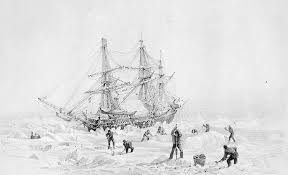
Indigenous peoples of the world have taught us colonizers that stories from our elders can be genuine. We can trust what our mom or dad or grandparents tell us. Take the recent discovery of the two ships from the Franklin expedition in 1813 as an example of the value of anecdotal evidence. Searches using various scientific methods were conducted on many occasions but it wasn’t until oral heritage descriptions from Inuit stories were analyzed that the search narrowed to the location of discovery. Now the area is a Parks Canada Historic sight.

https://www.pc.gc.ca/en/lhn-nhs/nu/epaveswrecks

Speaking or writing anecdotally is sort of an analogue version of history. We may not need to gather around the tribal campfire anymore but family gatherings always enable experiences to be shared in an informal way. At the family level or nationally this is heritage talk. Inevitably there are paper trails to be followed when one is researching antiquity. There are legal documents, court reports, death notices, registries of births. The pages will sit in some file, or listed in a computer data base, maybe even laminated and framed for posterity.  My eldest son is a historian. He does painstaking research through various archival sources but the final product he creates reads like one of my dad’s stories.

Tales of where we have come from or who we were can act as a guide for us to discover our own lost wrecks.

Re: Location

Location, location, location is a classic real estate slogan designed, I think, to make you feel lucky about the prospect of buying an over priced house that still need lots of remediation. I can’t complain since each time I have relocated in my life I have been fortunate to have initiated the move and I’ve found the resources to be satisfied with the result. I ache for those who are forced from their homes due to poverty, war or other threats. Globally we are seeing a rise in mass migrations. Some of our cities are having difficulty finding positive solutions for a homeless crisis. Choosing one’s own location, geographically or metaphorically is healthier for all concerned if you can have options available to you.

As a child I was fascinated with stories of wandering animals: Mammals that magically find their way to feeding grounds. Butterflies that spend months flying to seasonal homes. Birds that navigate huge distances to locate their nesting sites. The life cycles of eels and salmon over generations that necessitate unimaginable journeys to sometimes secret locations. Dolphins and other whales that use echo-location to maintain their position within their pods and their bearings on where they are headed.

My eldest son brought me news about a day trip that had him slightly flustered. Finding himself located at the end of a rural road, he admitted he wished he had a map: The paper foldable kind that was always in the glove compartment of a car. (I can hear someone asking, “What’s a glove compartment?”). Anyway, number one son was temporarily lost, without a GPS signal and no way of locating his position on this remote country road. He eventually got some bars showing on his phone, downloaded a map and figured out his way. As he told me his story I thought of learning how to use a compass as a Boy Scout. The leader advised us earnestly that with this device in our pocket we would never, ever, be lost.

Philosophically speaking, knowing one’s place in time and space brings confidence and comfort. That’s how we get the feeling of Home. As life ticks along, that original location where we were born, where we grew up, where we had our first experiences provide a mark on the map of our life. Many conversations start with, “So, where are you from?”, for good reason. Those we meet feel less lost when they hear the answer to that question. It helps to know where we are in relation to others we meet. Societal relationships depend on this orientation of its citizens as needfully as some animals need the stars to navigate home.

I feel discomfort when I can’t locate my needful things. As I age my memory helps me recall where I’ve been so I can make sense of my present circumstances. I can be less concerned with the future when I know where I am in the present. Life is a constant journey of finding yourself in relation to your surroundings and yes, sometimes a map helps.

Re: Fond

I was gazing out of a floor to ceiling window at a university campus recently and I felt a touch of fondness as I watched students going about their business. I think I was feeling sentimental about my own experience on a campus. As I tried to unravel this fond emotion, I recalled the crunch of maple leaves in autumn, brick walkways that directed me to my morning labs, looking for that red haired girl in lecture hall 320, the bell that sounded the hour from the tower at Convocation Centre. Maybe that red haired girl was an illusion; someone I was destined to meet much later in my life. Fondness might be inexorably mixed with ennui; that restless yearning that comes with pangs of wanting. “When will it be my turn?” is an expression that belongs to similar cries heard in countless college quads around the western world. On my campus it was usually a male voice crying out longingly for “Sylvia!” Those were heady days of freedom for me, the first time I ever felt the pull of the future and its possibilities. Those early journeys of independent action are among the fondest memories I have retained.

Being fond of someone might sound like puppy love; a crush. Yet a crush comes in a rush of emotion. When you think fondly of someone it requires some history to develop a context. I can think fondly of teachers who have left part of their soul with me. I recall a multitude of fond thoughts when it comes to the growth of my sons; how we played and worked together. “I remember fondly the time when…” can start interesting conversations about the joy of growing older together. Like most toddlers, my lads were fond of a special blanket. They each had their own; white manmade fibre mixed with some cotton or wool blend with a border of smooth satiny binding. To settle themselves to sleep they would take a smooth corner and fondle it between their chubby fingers, sometimes tracing it along the side of their cheek.

Some of my elders used to tease me if they found out I was fond of someone. “Do you fancy her then?” they would ask, as though the object of my affection was a mince tart I might crave for dessert. When I told my wife I was examining the word Fond for any meaning in my life she expressed surprise since she knows I’m not fond of food. I’m sure many ‘live to eat’ people could name dishes they have a fondness for or restaurants that keep drawing them back for the food and friendship they find there. Many have told me they are so fond of their pets that they have proclaimed them ‘Family’.

I can tear up easily when I see a young person performing their hearts out at a concert or play. A thread of music can do the same. My fondnesses are not concrete or absolute. They lie in those intangibles that border with thoughts of times gone past.