Re: Coat

My dad owned a heavy dark camel hair overcoat when I was a teenager. During those times of pride and prejudice, he cut an impressive figure. He once came to give me a message while I was in the school cafeteria. My friends murmured, as adolescents do, when he walked towards me looking very official. To this day, I regret feeling embarrassed by his presence; when I chose to exchange only the necessary few words of acknowledgement with a man deserving of the distinguished aura he created. 

Reality can’t be disguised with a metaphorical coat of paint. But we try don’t we, with the things we go into debt buying, with the ways we choose to adorn ourselves, with the people we fawn over while ignoring those who matter most. Charades. Facades. A bit of bunting might hide the pretence. What we wear is still considered an indicator of ascendence. The clothes still denote the wealth of the man/woman who wears them. We all strive for and feel we deserve our own coat of many colours.

There was a folky English tradition amongst my parent’s generation to acquire a family Coat of Arms. You would send your last name and any details you could remember of your ancestors to some company. Weeks later you would receive a fancy printing of a heraldic emblem befitting your royal station. We four Thompsons of Canada, newly immigrated from the mother country, were distinctly lower class. Any chance to raise our status, to coat us with a veneer of respectability, was a challenge to be accepted. My dad accomplished this by behaving in the ways of a kind British Gentleman. My mother sought to climb the social ladder in ways that made me doubt her sincerity and question her motivation. 

These two hosted many parties. When my sister and I were young we lived in a small two bedroom apartment where our folks found space to entertain hoards of scary adults in various states of revelry. The noise would keep us awake, so we would wander between the legs of dancers in the living room. We might venture onto the balcony to find people kissing or saluting the moon. We saw frowns, heard swears, and recognized tears from the serious ones talking dramatically in the kitchen. My sister had the ability to fall asleep curled between guests on the couch. I would venture wearily down the narrow hallway to find my parents’ bed, covered with a mound of coats. Predictably, in the absence of adequate closet space, coats were tossed here at the moment of greeting. Fur coats, trench coats, leather jackets, satiny shoulder wraps, knitted, woven, quilted and stitched items smelling of tobacco, perfume and sweat, all flung in a heap and mysteriously reclaimed at the end of a night’s celebrations. I would squirrel my way into this fragrant mass of fabric escaping the mayhem while finding comfort in the arms, collars, buttons, pockets and belts. I would wake in my bunk next morning wondering of the magic of adulthood.

Re: Crush

The emotion of love has many synonyms but crush is my favourite. I’ve been in love with the female gender for all my life. I sat in the grade two row of a one room school house in rural Ontario when I was so overcome with infatuation that I blew a loud kiss to a beautiful girl in the sixth row. The much older girl had helped me make awesome structures out of piles of fragrant leaves during recess. I was smitten by her giggles. The teacher caught my love gesture and made me come to the front of the class where I was made to kiss the length of the blackboard. I sat back in my place, lips all chalky and feeling the blush of shame.

Later, now a student in a suburban school, I chose to share brown bag lunches with a gorgeous brunette. She was in my grade but in the class across the hall. We both sat at the back of our room so when the doors were open we could wave to each other. She was my one and only valentine. When my mother expressed alarm at a Parent/Teacher meeting about my crush, she was told not to worry as it was only puppy love. I think she thought I was obsessed for a while but it was really, singularly, merely a friendship. We liked teaching each other card games. I cheered her on at hopscotch or while she dazzled me with double dutch skipping. When I stepped up to the plate in baseball I could hear her calls of encouragement. I went to her house on fireworks day but felt regret later for missing our family’s traditional balcony extravaganza. I remember the pang of ending our relationship, whatever it was. My heart wasn’t broken. I felt relief that summer’s freedom was within reach. A shrug seems cruel.

Interesting how the word Crush seems apt for the unexplainable emotions connected to the first blossoming of romantic feelings. When we are older we may get a crusher of a headache or feel the crushing weight of responsibilities. In our youth holding hands can be enough to send our thoughts to the moon and back, smashing all thoughts of school projects/tests or parents’ demands to clean our rooms. I can see why some cultures are afraid of the notion of adolescent crushes. Kids are still kids in many ways, yet the maturation process is an uneven thing.

I don’t recall any connection to my sexuality with my crushes. One gal broke up with me because I didn’t want to take things “to the next level”. Phewff, she was aggressive. I was a late bloomer that way and was likely naive to any girl who showed physical attraction towards me. When I look back through grade school my connections were about friendships, first and primarily. In adulthood too the intensity of my love for another is of the steady beating kind; not necessarily measured by explosive fireworks but like the consistent lap of waves upon a shore.

Re: Joy

My mom was Joy to her mother, for a period of time anyway. Perhaps that’s what joy is; a small glimpse of what might be, a flash of sunlight, something to squint into and smile over so we can continue to look for a more lasting happiness based on a mutually assured place in the sunshine of our thoughts. My mother Joy rarely shared the temperament her name suggests. Joyous she was not. She despised her own mother and barely got along with her own daughter. As a teenager I would ponder that name and wonder what the opposite might be, because surely that would be a better moniker for my mom’s contrarian spirit.

If joy is a notch above happiness then it stands to reason that it is hard to come by. A good mood does not come naturally to most people. I’d like to discover the country where it is common currency. To smile or not to smile; that should have been the Shakespearean question. For it is nobler to soldier-on than to reveal the general humdrum nature of one’s existence. There is a fellow named Gurdeep Pandher who posts regularly on social media encouraging the pursuit of Joy, Hope and Positivity. Along with this wonderful message he dances bhangra which, when joining in, somehow allows the oxygen to blend with the optimism in the bloodstream to metaphorically warm the chambers of even the Scroogiest heart.

I wake to feelings of joy each morning, even if I am kidding myself a little. The euphoria sputters and falls quickly to happy, then with a small breath in I am content, and before touching down on the floor with my cold feet I am convinced I am satisfied. If it is Christmas time I will hum ‘Joy to the World’ as I am shaving. My intention is to make a joyful noise unto the world, even if it sounds like I’m trying too hard. At other times of the year I might think thoughts of tulips, summer picnics, or an autumn romance just to keep embers of hope alive. I believe hope, joy, and faith all come as a combo from some spiritual warehouse but usually something goes wrong with my order and when I open the shipping container a part is missing.

Being in the season of darkness can leave us searching for the sun. At such times as these in a war torn, self-centred world it is hard to find solace or solidarity. When I think about my times of trouble I can recall mysterious moments of clarity. Like a lift in my being, a little leap grows from my heart and I suspect it might be joy. I can’t pin it down. The feeling flutters by. It doesn’t alight long enough for me to examine its structure, weight, colour or dimensions. Its transitory nature makes it difficult to classify yet I know the troubles that had been mine moments before were lightened by this different perspective. Joy to the world.

Re: Wish

When I was younger, personal agendas were important. I would call them dreams and most days I had a plan. I’m not for tilting at windmills. Objectives must to be met. My mother was a task master. She taught me discipline. In that kind of environment there wasn’t much room for wishing. That didn’t make me cynical or even unimaginative. If I wanted something, then I would resolutely put a plan in place to reach my goal.

Wishing starts the quest process towards achievement. I see the act of making a wish like some people might view praying. I don’t believe there is a god to answer prayers anymore than I count on others to make my dreams come true. Sometimes I’ve been the lucky recipient of a gift or advice that gets me closer to realizing a dream but generally the achievement has been mine. I like to believe in my own ability. It is important for me to consider possibilities, identify the probabilities then make a decision to act on the most likely scenario. A while back that strategy was called ‘getting to yes’, then it morphed into The Secret (a sort of mystical plan involving seeing your future). Now people are talking about the science behind using your mind to get to the heart of the matter. No matter what language you use the idea is the same: Wish fulfillment.

Everybody has wishes. It makes no difference who you are. And no request is too extreme. I love the Washington/Harline song When You Wish Upon a Star. Here is a beautiful version sung by Sara Bareilles that may help you towards a new understanding of how desires are met.

https://www.youtube.com/watch?v=QhwT2jn9qHQ

This song articulates such a beautiful philosophy. It speaks of the mystery of life as well as suggest how things might be resolved. Some might toss a coin into a fountain or find a wishing well. Some might climb a mountain, write a letter to Santa, pull on a turkey wishbone or lie down on warm grass and gaze at clouds. We must never fear a little wishful thinking.

My wife and I love potato chips for a snack. Whoever finds a chip that is folded onto itself has discovered a wish chip. This special morsel must be shared with a kiss while both lovers are making a wish. When we went on an extensive trip to New Zealand, my bride made a manifestation journal of pictures cut from magazines while I created an agenda/itinerary/map. The forethought we put into this trip of a lifetime opened doors to famous places and roads less travelled.

I’m not embarrassed to admit I’m planner. I’m very careful about what I wish for. I normally resist waiting to see what might happen. For me, what starts as a wish will progress through idea/research/consultation/blueprint/rethinking/commitment to execution. I’ve kissed many a wish goodbye. I’ve also revelled in the challenge of getting to that pot of gold at the end of a rainbow.

Re: Film

My parents got me hooked on film as entertainment. Over the years I learned about my folks based on their enthusiasm for a movie. My dad loved adventure stories and my mom was all about the musicals. Debates about actors/actresses were common in our household when I was growing up. Judgements were made on who was the most beautiful, who danced the best, and who really looked like they meant it when they said, ‘I Love You’ on the big screen.

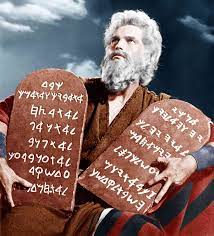
When my dad danced at parties he pretended to move like Fred Astaire. My mom proclaimed (many times) that Lauren Bacall was a bitch. I found it interesting that she mimicked Ms.Bacall’s screen persona around the house. During my formative years we lived in an apartment block right across a parking lot from a theatre. You could read what was playing on the neon display from our balcony. We were working poor but always had enough for the cheap tickets of that time. I remember the first Sunday that Ontario cinemas were allowed to open. Ironically on that particular Lord’s Day I watched Charlton Heston act like Moses in the epic film, ‘The Ten Commandments’.

A grand movie theatre is like a church. It is an artistic treat to sit in a vintage cinema. Some great drive-in theatres have thrilled me with their cultural ambience. While a setting can provide a sanctuary, I don’t think my joy in the genre is tied to a building or venue. I can get the same feeling of self satisfaction in front of my television. A regular feature on the TVO network was Saturday Night at the Movies with film host extraordinaire Elwy Yost. He would educate us with cool facts about the movie we were about to watch then tell us to turn the lights low and put our feet up. Once the credits were done, I was oblivious to all that was going on in the world. When any movie starts I get the same sense of calming anticipation.

Film, like all art forms, can attract snobs. My mother would never watch a remake of a film just on the principle that you can’t improve upon the original. I follow a cinematic expert on Twitter who refuses to pick a favourite actor/director etc. out of respect for the craft. I admit to favourites, yet I can find great things to say about any bit of celluloid that I watch. My wife and I have volunteered with film societies and festivals in numerous cities. One of the highlights of my life was learning how to prepare and run movies on the old reel to reel projectors only months before most cinemas converted to digital screening technology.

The sound and magic of flickering celluloid will always be part of the poetry of my life.  I’ve watched many shows several times and always find something new to relate to. When I first met my wife, I found it necessary that she learn to love me through my film preferences. In this case the way to my heart was via a message on the screen.

Re: Dream

Rare is the night that I don’t dream while I’m asleep. Lately, I’m absorbing the world’s troubles and processing them somehow while in bed. Problem is, come morning, the result of all this subconscious mind spin is not resolution but exhaustion.

Dreaming holds a fascination. In my twenties I picked up lots of books on dream interpretation. Anything by Sigmund Freud I leapt on. Horoscopes held an amusing fascination. Texts didn’t have to be scientific in their approach to questions of a neural nature. I had the classic youthful dreams: going to school in underwear, being chased, escaping a locked room, peeking into a closet, running up an endless inclined plane, flying amongst the clouds. A recurring nightmare through my grade ten year had me staring at a dot in the distance, it got bigger as it approached, gained texture and, just before I identified it as a massive Brillo pad dripping with sticky honey, I woke shouting and in a sweat. I disturbed the household often enough that my mom considered taking me for therapy. To this day if someone asks me how I think I might die, I answer reflexively, “With a blow to my head.”

More positively, I believe I am a dreamer by nature. I love the way the word Dream appears in the songs I’m most fond of humming: Imagine, Dream Weaver, Rainbow Connection, I Dreamed a Dream. In this regard, here’s Rita Wilson singing one of my favourites.

https://www.youtube.com/watch?v=5Cm7U9SCFPk

I love to project my thoughts of a better future while daydreaming. I’m looking forward to spending long stretches of time with my grandkids exploring clouds and watching dragonflies. Dream Boards were popular for a while. Cutouts arranged in a collage for the wall or a private journal are made with intention, while dreaming of better days ahead. Wishing is a close cousin to Dreaming; it’s a projection of all that stuff going on in your headspace. Hopefully the wish can be made manifest in order to keep hope alive.

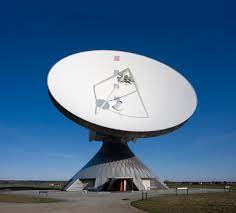
Our grey matter is a marvel. At times I feel may brain is like a massive parabolic antenna , picking up ideas, messages, multiple conscious musings from countless souls. I long to be tuned to the right channel. It could be a super power like Charles Xavier has as Professor X. I could tap into others’ thoughts not to interlope but to understand my own convoluted self just a little bit better.

During my first year of university I went on a date to see a student production of Shakespeare’s Hamlet. On the walk back to residence, the girl commented that I seemed like the main character to her.  I thought she was teasing, but I recognized that I had a brooding sort of personality. When we parted at her dormitory door, as if to make up for a potential slight, she kissed me on the cheek and called me a dreamboat. What a night! I strolled off to my room reviewing the words of the Danish Prince; “To sleep, perchance to dream!”

Re: Appropriate

Sometimes it is hard to find the appropriate word. I have to take into account the way language evolves over time. Add to that the changing societal norms of acceptable usage, then it takes courage to speak or write what might be on my mind. I believe that freedom of speech requires an appropriate filter if I wish to engage in meaningful conversation. Reading helps me stay on top of current language trends. Writers can suggest uses of words or phrases in ways that sometimes seriously startle me. A challenging author can get to the how of life rather than dwelling on the why.  That’s a grander exploration than the dead end annoyance of why someone did or said something controversial.

Cultural appropriation is in the news. Artists are currently frustrated by criticism when they explore features outside of their domain. I wonder how we can get to that place of cultural understanding if we do not pretend or act out roles that are unfamiliar to us. I think that it is part of the learning process to appropriate ways that may be foreign. Perhaps that can be a way to walk a while in the other’s shoes. If we hold too fast to notions of exclusivity we are in danger of discarding the concepts of openness and inclusivity.

I have often felt outside. Luckily, belonging to a dominant culture allows me more freedom to be an outsider than someone who is already on the fringe or part of a minority. I get that being marginalized would make you hold on to what you have with greater passion, especially when your culture is being appropriated. Historically, The Doctrine of Discovery was a document legitimizing theft. It was a rationale for displacement and slavery. No one has a justifiable right to have their cultures appropriated by another. The appropriate English name we have for that is genocide: The ultimate form of appropriation.

Jesse Wente is a respected thinker and film critic. He has published a memoir called Unreconciled. While reading this book, I felt as though he was in the room with me, challenging my perceptions of inclusivity, patriarchy and colonialism with the gentle persuasion of a man honestly examining his own role in the world. In spite of my white skin and ancestry I recognized the truth of his life experience when I could relate it to the truth of my own existence. I could find a commonality even though we are not of the same tribe. I believe we share and value the importance of story telling in our individual lives. I felt closest to his words when I allowed myself to respectfully, in thought, tread where he had tread.

My high school was full of extracurricular opportunities. The many different clubs I joined helped me to understand my identity. Sometimes I found the membership requirements to be inappropriate to my goals, so I quit. I could always try another club. Sometimes my application to join a group was rejected, then I felt crushed. Words can break bones.

Re: Robert

In the beginning my folks created Robert. They argued over the name: my mom liked William while my dad, lover of ancient epic tales of bravery in battle, wanted to call me Paris. Settling on Robert, they called me that until their separate inevitable deaths. I can hear my dad calling me with love in his voice, however when my mom called, there was generally more force to her enunciation, “Raw-Burt!”

Even though Robert is displayed on my birth certificate, throughout my school career I was called Bob. That name is written on many of my school report cards beside teacher comments. On some trophies Bob Thompson would be listed as the recipient. To my recollection my parents never made a point of correcting the engraving. They were both always proud, as parents must be, with whatever I could accomplish. My first wife and all her family called me Bob since the pattern seemed set by the time I graduated university.

I’ve often wondered if a person becomes the name they are given. Bob is a run of the mill sort of name and I think that’s what I am: pretty basic. Both my first and last names are quite common yet I’ve never felt insignificant. Some friends have given me nicknames like Tommygun, Artie and Berto; all having a certain flair about them that makes me feel momentarily proud. My auntie has always called me Rob, which makes me smile. Shakespeare spoke of a rose by any other name, suggesting that it is the spirit that matters more than any artificial appellation.

Some cultural traditions allow for formal naming ceremonies at various stages in life. My present wife was once given a tribal name and I’ve always envied her for that honour. It would be awesome, but a bureaucratic nightmare, if we could switch names when we felt moved by circumstance to state we had gone beyond our birth name. In my case, after a bout of depression brought on by a midlife crisis, I opted to announce a return to my original name. I told my work colleagues and friends that I preferred Robert over Bob. I wanted to take a bit of my past into my future, eliminating the tag of my middle years. Drawing that distinction still makes sense to me.

Artists sometimes go by other names. Whether to protect, disguise or otherwise play around with their identity makes no matter to me. What a nom de plume conveys is an adventurous spirit; one who is willing to admit they are individuals with many facets. William Porter blossomed as O’Henry, Samuel Clemens had to find Mark Twain, Engelbert triumphed over Arnold, Calvin needed Snoop Dog, Lady Gaga outgrew Stephani.

Being AKA (not the rapper) has its benefits, sort of like dressing up for halloween. Having someone supportively comment that you look or act differently can be refreshing. I chose my Twitter handle @wh0n0z with that in mind: I can be the wise one who knows or, alternatively, the one to exclaim with a wink, “Who Knows?”

Re: Snow

Most Canadians have a love/hate relationship with snow. Every car has a snow shovel, a snow scraper and some vehicles even have snow chains waiting in the trunk. I used to have a set of snow tires on rims which I put on the car every October in preparation for the first heavy snowfall. We all have our horror stories of finding our way through snow. We spin tales of our first childhood experience with snow, wishes for snow days or being snowed in so we don’t have to go to work or school. Freshly fallen snow can be a source of wonder and delight, especially if the snowfall is on Christmas Eve. Who can forget the joy in that excited shout, “It’s snowing!”

One December I headed out with my young family to spend Christmas holidays with relatives in Thunder Bay. It’s a long trip from home and the light dims early at that time of year. Half way through the journey the wind starting whipping the snowflakes into a frenzy called a white-out. Car headlights are useless as the beams reflect back at you. Dimensions are distorted; no up, down or sideways is discernible. On this drive I tried to lock my sight on to the vehicle in front, a transport truck with a small red rear light showing on its back left hand corner. Luckily an inner voice told me I was being stupid so we pulled into the next motel. Only one room was left and, I kid you not, sifted snow had piled its way into the closet.

I’ve never enjoyed driving a car on snowy roads. I survived 30 winters in Timmins Ontario, where snow can be expected from September to June. I dare not estimate the number of driveways I have shovelled during those years. Some snowdrifts completely covered my car. I built a carport and a garage in an effort to minimize the coverage yet I still had to clear a way to the road, which was often not plowed until midday, creating a crusty mound of snow at the end of the entryway.

Rolling up sticky snow to create snowmen never loses its allure. Everyone has memories of building snow forts, throwing snowballs, or sledding down hillsides. I satisfied my wish to leave the dark side of winter wonderlands behind by retiring in Victoria, British Columbia. The family gathered at the homestead on the final Christmas In Timmins and the young ones honoured us by sculpting two snow replicas of my wife and me in tropical accessories.

There are many words used to describe types of snow; sludge, scrump, slurry, floaters, are some I’ve heard. Many words come attached to curses. Being a poet, my favourite is ‘snowy-dews’; those jumbo sized flakes that meander from whisper-still skies to melt on contact with parka-clad humans. A panoramic view of these fragile crystal structures makes me want to softly sing with a vibrato Bing Crosby-esque voice.

https://www.youtube.com/watch?v=orJ9-bdNi_s

Re: Skirt

I’ve wanted a kilt, made in my family tartan for a while now. I won’t skirt the issue regarding why I haven’t bought one: I predict I will feel shy wearing it. There are some ways that I wish I were more daring. Wearing a plaid skirt would certainly be bold for me. I just don’t think I could pull it off yet I continue to fantasize. The thing is I don’t think I present as a manly man like Sean Connery or even Jamie, The Outlander dude. I’m not a man of fashion either; sweats, T-shirts, blue jeans suit me just fine. I prefer to blend in rather than stand out.

The kilt was banned in Scotland for a long time because it was seen by the dominating Brits as a sign of dissent. The word Skirt itself carries much baggage: Not kindly for females. Skirt was a derisive term for women of weak morals. Boys who cried got called Skirts. Canadian girls weren’t allowed to wear pants while at public school even into the early 1970s. Looking at the issue of gender identity, the role of the skirt as a definition of femininity is obvious: Most restrooms still use the skirted woman. I’m thinking spontaneously and perhaps outrageously that the skirt is likely a clothing item seen as an example of male oppression of women.

Part of me wants to raise my Jacobite sword in defence of this free type of covering for all people. By wearing a kilt, or an izaar, I could join other males in discovering the benefits of a breezeway. Or perhaps, in the smallest of ways, I can get a step closer to understanding a woman’s experience. For example, I wonder what it would feel like to stand over a subway grate like Marilyn Monroe once did. Wearing a kilted skirt, I would not be trying to make a statement, just find out how it feels to be so easily accessible and vulnerable.

Exceptions have been made to my normally drab wardrobe. There has been occasions where what I have worn has made me feel on the outskirts of reality. I have been called classy while wearing a crested blue blazer at juvenile team sport banquets. One full year in high school I wore only white pants with corduroy shirts (a different colour for each day of the week). I had a brief fling with the Sonny Crockett ’T-shirt and dinner jacket look’ in my fifties. I can rock a wool turtleneck while practising my seafaring brogue. Once, for a wedding on a paddle wheel boat, I purchased a dark blue, double breasted jacket to go with grey pants and a light grey mock turtleneck. A guest told me I looked familiar, sincerely asking if I had served on a ship out of Whitehorse. I was flattered and wished I could have continued the deception.

Perhaps I’ll buy a kilt for my granddaughter’s wedding. Dinna fash, I’ll ask her first. It’s probably two decades from now so I’ll have plenty of linear time to dither.