Re: Herd

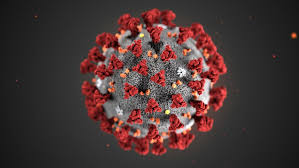
A pandemic is declared. The behaviour of humans is now a matter of life and death. The human herd is working hard to protect itself from the Coronovirus. Details change daily, sometimes hourly, in terms of government directives and casualty figures. “Have you heard the latest?” is the question posed by neighbours, family and friends even as they practise social distancing and spacial awareness lest the virus reach out its infectious properties. Since we are affected as a group in these situations, we necessarily respond as a group. We can help or hinder each other’s health by how we look after ourselves and our herd.

I have found it curious to be a witness as countries and their governments decide how best to take on the issues presented by this pandemic. At the outset of risk to their country, the United Kingdom chose to pursue a controversial policy endorsing the concept of Herd Immunity.
https://www.aljazeera.com/news/2020/03/herd-immunity-slow-coronavirus-pandemic-200320092928984.html. They soon reversed their position when infected numbers grew alarmingly. There is some logic to letting things work themselves out, but as a society where do we draw the line on numbers of dead people? Stranger still is how we tolerate lifestyle illness, suicide and traffic deaths more readily than succumbing en masse to viral infection.

Herding humans is an art form at Disney resorts around the world. Here, park goers are herded efficiently through endless lineups to get to their tickets, get them to their ride or help them get fed. I’ve always been anxious in a herd, part of it has to do with being an introvert. Amusement parks, arenas and packed airports are places that make me hyper alert. As an individualist, I’m not myself when others surrounding me have the potential to exhibit random behaviour, so my tendency is to resist the pull of the mob. Herd behaviour was seen recently as shoppers struggled to stock up on social isolation supplies. Survival is the imperative to the point of scoring the last rolls of toilet paper, canned SPAM or, more menacing still, ammunition. Herd mentality clicks in during crisis.

Once, as a young father I had to quickly gather my young sons at their grandparent’s trailer park location. There was a commotion over a car, seen racing through the park grounds. The driver was cornered near us by bat and crowbar carrying residents who smashed his windshield. Further violence seemed imminent. Fortunately the police arrived in the nick of time and took the cowering driver into custody as park citizens continued to taunt and shout their anger. My children saw a herd of humans at its worst.

There are other formal names given to animals that gather. I’d like another word than Herd to describe humans. We could Band like gorillas, Parade like elephants or even Convocate like eagles. Being Shrewd like apes might be helpful to emulate. In Canada we humans gather to make decisions like owls in a Parliament. My favourite collective noun is a Zeal of zebras.
I could join that fun sounding herd.

Re: Surgery

My first experiences with surgery came before I was seven years old. Back in my early years it was routine to have your tonsils out before you got too long in the tooth. The idea, as I remember being told, was to reduce the risk of illness in the throat. As a bonus the surgeon would often yank out the adenoids. Now, more than sixty years later, whenever I think of hospitals I recall the smell of ether.

On the best advice of the day, my parents chose to have me go under the knife for the tonsillectomy. Just a year later, near my birthday, I was exploring a barn and a large iron bar fell across the toes of my left foot, smashing several bones. I had a bit of emergency surgery done and a cast was placed on my leg up to my knee. It became this young adventurer’s point of pride the following week at his birthday party. Every guest signed their name to my plaster of Paris leg as a tribute to my survival.

Surgical procedures have no doubt changed in my lifetime. Rich folk are choosing costly cosmetic surgery in the hopes of drinking at the well of eternal youth. New advances in prosthetics and bionics are also enabling greater mobility after corrective surgeries. Whether the surgery is elective or needed as a result of illness or accident, recovery times have been reduced since my tonsil days when ice cream was prescribed after the first night in a hospital ward. For example, it amazes me how quickly women are sent home after delivery of their baby, even if complications would suggest caution. I recently had prostate surgery which went according to plan, but then I was discharged too early only to find myself back in emergency and recovering from that ordeal. Perhaps our medical system is becoming too intent on freeing up beds as a cost saving policy, even when further monitoring is warranted. Aftercare is surely as important as the original dramatic diagnosis of the need for surgery.

Reading about the gold rush days of North American I am amused to discover that surgery and dentistry were often practised by the same person as indicated by their shingle hanging near a saloon on the boardwalk of a pioneer town. In those days a surgeon might have been called a sawbones in direct relation to the nature of their work. The early rudimentary nature of this medical profession is visually apparent in this opening scene of Dances With Wolves.

Which leads me to segue to military surgical strikes: Where the intent is to precisely remove a foreign threat by using an assassin, a tactical team, a smart bomb or a drone. Like bodily surgeries the objective is to get rid of any threatening or unnecessary bits before they affect the smooth running of he organism. In the case of limited warfare, the organism at risk is deemed to be the free world. Send in James Bond! https://www.youtube.com/watch?v=9PM5I0jKxb8

Re: Pain

Recently I opted for some elective surgery. While in hospital, the most frequent question posed by the nurse was, “Are you experiencing pain?” This question was clarified with, “On a scale of one to ten.” Aside from coping with the real pain, this question caused stress pain. I couldn’t identify the pain level, since it varied from moment to moment. The consistency of the pain was also a factor: there was dull ache, sharp spasms, performance anxiety, all over ague, perpetual angst, stiff muscular knots and constant ringing in my ears. It was impossible to assist the nurse’s valid question because I clearly couldn’t un-sort my feelings.

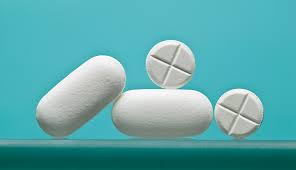
When it comes to pain, I’m a baby. I can take the sight of blood or a nasty bump but when I feel a low grade headache coming on I run to the medicine cabinet. I keep all the brands of pain relievers so that I can cover all the bases when pain strikes. I think of pain as discomfort, not the, ‘Oh God I’ve just been shot!’, sort of experience. Lucky me. I’ve never had an extreme level of pain. I’ve only been in one fistfight in my life. My sparring partner proclaimed to the grade six class one day that he was going to bring ‘A whole lotta pain’ my way. My classmates witnessed the choosing of the location for the fight later that day and some even showed up to see the result. It was over in a few minutes; blows were struck, noses bloodied, honour restored. I went home after feeling manly yet bruised. I was offered an ice pack and a hot cup of tea.

Recently I’ve been enjoying the drama of a British TV series, Call the Midwife.
https://www.youtube.com/watch?v=4tY0eUynAOY . The episodes have renewed my respectful belief that I could never give birth to a child. In reality, I’ve been a father to three sons, watching my wife handle the painful moments of childbirth. Now each time I saw a mother crying out to the television midwives I’ve moved into the room with them, almost becoming them, as though they hold a painful memory. Yet after the TV birth there is joy! How can this be? I’d picture myself immediately asking for knock-out drops.

We use the word Pain in our language frequently. Someone at the office is a ‘Pain in the Neck’ or worse, ‘A Pain in the Butt’. When we were bringing bad news we used to lead into the announcement by saying, “I’m pained to say this…”. Most country songs are about painful breakups or loss. This kind of emotional pain is surely at the heart of the OXY crisis.
https://www.pharmacytimes.com/contributor/marilyn-bulloch-pharmd-bcps/2018/08/how-oxycodone-has-contributed-to-the-opioid-epidemic

Even though I am British born I find it hard most times to offer a stiff upper lip to discomfort. I will take an easy fix, just as long as it comes over the counter and is medically tested. I hope I never know what real pain is.