Re: Loyalty

There are some values I not only don’t trust but actually shun. I’d go so far as to declare that loyalty is a moral principle that I reject. Loyalty does more harm than good, especially if it is a priority on your list of creeds to live by. The wrongness of this credo is evident to me in so many aspects of life. Yet in most people’s account book, Loyalty figures highly as worthy of respect. I put Love high on my value list so, please, let’s agree to disagree.

I’m binge-watching the television series Billions. In nearly every episode the notion of loyalty comes up. Shall I be faithful in my marriage, shall I honour my business partner, shall I be loyal to my clients whose money I am using to make myself more money? These are questions we see the cast pondering as they try to live fulfilling and exciting lives. To say their morals are non-existent is not being fair. The lesson the drama is teaching me is that being disloyal is the ultimate crime. Any consequence that comes from being disloyal is acceptable. Revenge is usually delivered on a cold plate, without a warm beverage. It’s a dog eat dog world when it comes to the power of money.

In my book of engaging in the social arrangement, allegiance might change from day to day. I figure that loyalty must not be blind, therefore it must be proven worthy by consistency, not history. It doesn’t matter to me that we ‘go way back’ if your current attitude or circumstance runs counter to my association. It’s not good for either of us to support a principle that undermines the common good. I can bend but not be tied in knots. Integrity, Health, Compassion, Courage, and Adaptability all trump Loyalty in my card game of values.

And speaking of Trump. This untrustworthy fellow is my Exhibit Number One in my assertion that loyalty is suspect in the court of human experience. Consider who the former president of the U.S.A expressed his fealty to! Not the American people, no siree! Despite being advised by some to avoid the likes of Putin, Assad, and Un, Trump courted these nasty individuals and fired those who opposed him for disloyalty. Trump is an example of what goes wrong in politics when loyalty is more important than honour.

If you define being loyal as having a commitment to another person then I have no disagreement. Once I have determined that a person is dependable I will have patience for most of their idiosyncrasies. However, I am not faithful to a fault because there is a limit in my loyalty bank and accounts are observed daily. To continue with the pet analogy; I guess I’m like a choosy cat rather than a devoted dog. A domesticated dog seems designed for unflinching devotion and we humans are all too often charmed by this misguided loyalty.

No wonder this four legged creature is referred to as Man’s Best Friend. He doesn’t know any better.

Re: Quest

Back in the day when I wrote for my local newspaper, The Timmins Daily Press, I would often make a request of my readers to take time to wonder. My column was filled with questions about life and all of its curiosities. It was my writerly responsibility, I pompously thought at the time, to encourage some mental adventuring amongst the Tim Horton’s coffee crowd.

In my youth I thought often of going on quests. In school I loved to learn of the seafarers who cast off the mooring lines of their home port to seek out riches in foreign lands. Education in the fifties and sixties was all about studying heroes who cruised the oceans looking for new found lands where resources were just ripe for the taking. I loved looking at reproductions of the maps used and routes charted by Prince Henry the Navigator, Magellan, Vasco de Gama, Drake and Cook. Textbooks of my time as a student contained scant information regarding the indigenous folk whose presence would be dismissed by these European explorers, as one might swat a bug while sipping Pina coladas at poolside.

We only learned about the upside to adventuring in history. Kings and Popes suggested that our Earth and Seas were a place to play, to conquer, to dominate. The world was ours for the taking and if anyone else was on the beach when we landed they’d better step aside unless they wanted to be part of the servant class within our colony. White English folk were good at this questing for things that already were part of another’s culture. But the swarthy Portuguese and Spanish had their say in their day. French and Dutch also sought the resources of distant lands without questioning whether the indigenous had an opinion. Early Norse folk were romanticized as Vikings in tales of discovery but their questing objective was also narrow; land was the prize! Those inhabitants with foreign coloured skin were merely chattel to be enslaved.

The fictional character Don Quixote as written by Miguel de Cervantes went on a quest; an impossible dream to right the wrongs of man. I feel his mission was more about searching for his inner compass than vanquishing evil but the idea may be the same. Watching a documentary on rock climber and media sensation Sasha DiGiulian made me wonder what motivates some folk to do risky things. Questers have always desired to be the first, the fastest or the most innovative. Creatives also can be defined as testing the boundaries of mental and physical forms.

I hope all my grandkids become adventurers. I want them to be brave and explore the limits of their world, perhaps expanding the realms of existence for all humankind. When I was a teacher I used to love it when one of my students discovered a fresh way of thinking or doing or being. Questing can be a wondrous pastime. Life is about finding a place for yourself, not a specific geographical location or a plot of land, but discovering your unique purpose.

Re: Trust

What do I trust, that the sun will come up, that tomorrow will come, that ‘the cheque will be in the mail’? Trust has been on my mind lately, as I listen to war news, trusting that the people we have entrusted to run our governments do the right thing by finding a road to peace.

I remember moralistic school lessons when I was a student. Values were not explicitly outlined when I became a teacher. I found ways to fold philosophical concepts into the classrooms of my primary grade children. Values are still preached in churches but carry a ‘must do’ condescending tone. I search for examples in society where values are exhibited and commented on, in a community context. Personally, I strive to behave in a consistent manner. I live far from my grandchildren. When I talk to them through digital means I trust that they will learn that I am lovable, kind and have a multitude of values they may wish to emulate. To be a trustworthy individual is a great asset to oneself and to the world. Earning a person’s trust is my primary goal when seeking friendship.

When I lose trust in someone or something it is a large step towards losing all hope. The United States of America puts great store in religion using, “In God We Trust” as a motto for their belief in government, its constitution, their almighty currency and their very way of life. I don’t accept that gods of any shape or form have input into human existence. Truth be told, I don’t trust easily. When I put faith in someone’s actions I have reached a level of trust which is not common to me. I reserve that for my wife alone whom I depend upon for my daily companionship and happiness. I put ultimate trust in myself; I am a naive soul in that way. A friend, who had gone through a rocky break-up and found a new relationship after depressed times, said of her recovery, “I’ve learned to trust again.” I believe the truth in that declaration is that trust must come before love.

There is a trend for companies to advertise themselves as trusted brands. I got a survey request recently that asked me to rate various products using human qualities like trustworthiness, friendliness, honesty and loyalty. A local financial institution sent fliers in the mail suggesting they could handle my money better because they were, after all, a Trust Company not a bank. This is further anthropomorphizing of a corporation! I don’t care for this manufactured consent approach in the marketplace. And a product is a product no matter how organic it might be!

Two songs about these thoughts come from children’s cartoon classics: The Jungle Book and Toy Story. The former is sung by the Svengali-like snake Kai, using trust as a tool for manipulation. The latter song is a happy tune describing the roots of friendship. Our personal, societal and international existence must depend on our mutual desire to trust one another.

Re: Own

The times in my life that have worked out for the better have been those occasions when I have owned the narrative. Times when I have made the best out of a poor situation. Times when I could have felt ‘done to’ but instead I decided that I could find a place for myself amidst the lives of others. It’s best not to feel victimized or even put upon. In the best or the worst of times, having some control allows us to use our creativity to make an adventure out of any circumstance. Taking ownership is the first step towards making a plan.

I resist the phrase, ‘You’ve made your bed now go lie in it’. Yet, owning the problem can enhance your responsibility; moving you into a place where opportunities await. Change becomes less shocking. You alone are best positioned to decide the best choices to make within the reality. Currently I am sharing the daily task of elder care. My wife’s mother is living with us so that her unique needs can be met. I rarely feel as though I want to jump ship but assessing my role in this present picture is a challenge. I could say to my bride, “She not my mother, you deal with it.” Or, I can accept my situation better the more I feel involved: I can read newspaper stories to this special 95 year old (almost blind) woman. I can engage her in a stimulating conversation. I can invite her to help me solve the crossword. I can walk her to the seaside, sit with her, and describe the scene my eyes can still see. I owe it to myself to own every moment I have in concert with the people in my world. In this scenario I am working towards the goal of recognizing the value of thinking, “Well she’s my mother too.”

Owning the present in an affirmative way has helped me accept change. As a teen my parents separated (I discovered I felt better when I spent more time independently with each of them). My first wife was raised in a church going family and wanted that lifestyle for our children (I found a new side of myself by joining the choir and learning biblical teaching). My second wife was into healthy food choices (I found the world of cuisine expanded my curiosity and gave me a heightened awareness of other countries and cultures). I adapted rather than acquiesced.

During one talk with my elder roomie, I asked her what she thought about the word Own. She blurted out, “Well I don’t own any furniture anymore.” An obvious statement coming as the consequence of downsizing and a cross country relocation to a small townhouse with her daughter and me. Digging out of the confusion of a life no longer being normal takes a lot of patience, until you find what is normal again. Owning up to the part you can play and being unafraid to design your own script can help with the success of any of life’s productions.

Re: Know

Once upon a time a friend came to visit. She was known to be a bit flakey in a good way; prone to creative spurts and mystical pronouncements. She had met my wife several years before and now she wanted to meet me. I think she wanted to affirm that my bride was headed in the right direction before she decided to tie the knot, so to speak. I remember feeling I was being mildly tested. On departing she gave presents of poems to her old friend and a stone to me. I looked at what she had printed on the rock: Know.

To know, is very central to my personality and behaviour. My wife’s friend provided that affirmation having barely experienced me. I seek knowledge, knowing I will never know all that I wish to know. I’m not after omniscience, merely a competent level of understanding. My quest can be funny, pathetic and infuriating at times. For example when I am trying to sort something out I will check for multiple confirmations that I have got the message. This applies to sales receipts as well as important contracts. I wish to know that everyone involved in a decision is on the same page.

We need assurances that we have been heard, felt, or seen. No one deserves to fall through the cracks. Seeking information is the beginning of all knowledge acquisition. I used to sing in a church choir. One of my favourite hymns began like this: ‘Ask and it shall be given you/Seek and ye shall find/ Knock and it shall be opened/Be opened unto you’. Knowledge is empowering, enabling, ennobling and encouraging. Having the know-how allows me the confidence to stride forth and accomplish things.

I go about all this as quietly and unobtrusively as possible so as not to freak my people out. Say I’ve been told that I am on a wait list for a doctor, which happened to me recently when my previous physician retired. I wasn’t willing to leave things to chance so I checked with an online registry in my province. When they could confirm I was on a list I next called the local clinic to see if I was on their duplicate list. Time passed so I set out to affirm that the wheels were still in motion: I wanted to confirm the confirmation. The squeaky wheel theory very much applies in my philosophy of life. However, I like to think that my approach is more dogged, than annoying. I try to appeal to people’s innate desire to be of help to their fellow humans. I never want to get ahead in the line: Just knowing I am IN the line is satisfaction enough.

Know-it-all TV host Johnny Carson used to admit that he did not know things. Likewise I’m fine with ignorance because it allows me to get excited when I’m late to discover that Marni Nixon sung big songs in movie musicals while others lip synced her gorgeous voice. Let’s call that a ‘getting to know you’ experience.

Re: Food

Food is not a big part of my life. There is no denying it’s a necessity, fuel for the body and all that, but eating as an activity isn’t high on my priority list. Most people think I’m strange for not going all exclamatory over the taste of something scrumptious. For my part, I think it is crazy that so many folk take photos of their food.

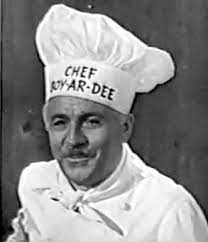
Some women I have known have been flummoxed that the way to my heart has not been through my stomach. I won’t refuse a meal that is prepared for me. I will always complement the chef. However, inside I will most likely feel that a self made meal would have been just as satisfying. And by satisfying I don’t mean gustatorily splendid, just pleasing enough to fill the need for energy to carry into the next activity. Leftovers are my favourite food. Leftovers make me smile because then when I eat them I’m serving a function; using stuff up. I hate waste, so even though I truly don’t relish the idea of eating, at least by eating leftovers (refrigerator ‘must gos’) I’m helping the planet in my small way. My perfect meal is prepared (what’s that?), eaten and dishes cleaned up in under thirty minutes. Call me Chef Boyardee!

On the Foodie spectrum, I’m obviously a One, while a Ten would be someone who is always looking up recipes, watching the food channel and/or discussing the next meal while eating one. My 94 year old mother-in-law wants to teach me the proper way to cook. There is a new edition of The French Chef that she asked me to order from the library. I think she fancies herself to aspire to the Julia Child level of cookery. She’s a sweetheart for telling me that recipes are meant to be followed line by line. My bride loves to experiment with food. I have told her that watching her cook is like being in an artist’s studio witnessing the creation of something magical.

Chefs are celebrities nowadays, perhaps they have always been notorious. In magazines and television, food experts are on display. I can’t imagine being on one of those competitive cooking shows where you get chopped, diced, or filleted for not producing the food du jour correctly, on time or in an artistic format. The final plating is crucial as it must use the china as one might paint on canvas. Get any aspect wrong by Top Chef standards and you are chopped for sure. Bon Appétit!

In my next lifetime I’d love to come back as a plant. I could be a mighty Douglas fir or a spongy mass of green moss. Ferns are nice. I could be a gentle fern, all green and leafy swaying with my kin, in a gully, communing with a babbling brook. That’s peaceful! No hunting for my dinner. I’d like to let chlorophyll do the job for me by taking the sun’s energy and turning it into an insta-meal. I’m a lazy eater I guess. Burp.

Re: Fix

I remember my dad used to fret so much when a television repairman had to be called to our house. In the first place he had to admit to himself that his skills with dials, tubes and antennae had been for nought. Secondly it would mean he might be shamed after the technician could fix the problem with a turn of a screw. Then of course came the bill, which would set my factory working father back half a day’s wage.

When my dishwasher went on the fritz recently I thought of my dad. I started into a brain spiral about repair vs replace. I called and got some opinions, which still left me in a quandary. On the one hand I had a perfectly good appliance that only needed a gasket (or so I thought). A competing idea had me considering the domino effect of falling/failing returns on my original investment. My DIY skills are limited, but like my wonderful dad, I have a certain amount of pride in looking after the things that I own so when they fail I take it personally.

Some things you just can’t fix on your own, especially problems of a non-material sort. Especially problems of the relationship sort! My bride and I have generally done a great job ironing out our differences. When problems between me, her or us crop up, we use different strategies to overcome the missing or damaged parts. I usually try to charge in and fix things but my wise woman often tells me, “I just want you to listen.”

Getting a fix on things is a way to focus attention on the important things. I want my mind to stick with the essentials during a problem solving exercise. It’s no coincidence when we use the phrase, ‘glued to the task’ to indicate just how deep our concentration can be when we are attending to the job at hand. I have an image of my dad trying to apply a fixative to a broken china cup handle. He had to hold the pieces until the epoxy set, all the while unknowingly sticking his tongue out of his mouth as if to tether his thoughts.

I can rarely control my imagination, so I have to rely on structure to anchor my wandering mind. When a problem is too overwhelming, I occasionally turn to the medicine cabinet for a prescription. I  recently rewatched the dramatic film Man With a Golden Arm starring Frank Sinatra.

https://www.tcm.com/video/198811/man-with-the-golden-arm-the-1956-i-need-a-fix/

I think of the many folk who are drawn to street drugs in our city. Illicit drug use is a problem with no easy fixes for millions through the world. The things that make our lives better sometimes make them worse. When a device, friend or situation lets us down we may feel temporarily defeated. Sometimes a technician of the mechanical, digital or psychological sort can help us fix the problem. It’s worth it to make the call.

Re: Umpire

I like the game of baseball for many reasons. Top of the list is because baseball tells a story and umpires are important players in that story. Collectively they are a third team on the field. Their decisions regarding the pace, adjudication and conclusion of any particular contest is a factor in the drama that unfolds through a standard nine innings. The position of Umpire is not exclusive to baseball but the title has a more judgemental ring to it than Referee. And the oft used short form Ump sounds perfect when describing my mixed feelings towards the game’s ultimate decision makers.

In some sports like Ice Hockey, violence is shruggingly accepted as part of the game, but physical aggression against another player is extremely rare in Baseball. I think that’s because of the gentlemanly code of conduct enforced by the team of umpires. They are quick to reproach players and coaches if they cross a line of contact or conduct. Anything considered bad behaviour, particularly disrespect for the ump, is not tolerated. Punishment is swift. Opposing team members are given minimal warning. It is not unusual for players, coaches or even the managers to be thrown out of the game. I like a game where the umpires’ involvement is frequent. The entertainment value is enhanced for me when a player and ump argue. It can get heated if a manager intercedes on his player’s behalf. Spittle can fly as combatants engage face to face, sometimes within inches of each other, yet there is no laying on of hands. Television viewers are left to read the lips of the throwers of obscenities. “You’re outta Here” can be the final ruling by the Ump who has had enough of the oral aggression. Such marvellous theatre! A courtroom without a gavel, just a conspicuous demonstrative flourish of an arm!

Strike calls at home plate and tag outs on base can be controversial so there is room for appeal through a replay analysis. This adds to the importance of umpiring I feel. It is revealing that the sport recognizes the humanity of the participants that way. It is also notable how umps have discretion as to the timing of the game when one of the players gets hurt during the interaction. Batters routinely question the home plate umpire to see if he is okay, if he gets in the way of a foul ball, even if he previously made a bad call on a pitch. Morals are on display. Kindness is found here.

I feel sports fans must never bad mouth an umpire. Go ahead and groan at a call but don’t throw your crackerjacks. Umps try their best. They know that adherence to the rules makes for a fairer game. They are dressed in black, like judges, for a reason; to make them stand out as the voice of reason in an otherwise emotional game. Respect must be shown, not only for their role but for the sanctity of the game itself. Baseball would change forever if rulings became fully automated: Bots and Baseball would simply not work!

Re: Job

Job is another word for purpose. A job can be a mission. It can be a task. It is a moment when you create something or serve a function. I have thought of my responsibilities to my family, especially when my boys were younger, as my primary concern. Philosophically and faithfully, I see my inner circle, blood relatives or not, as my first occupation.

Lucky is the person who can find a job that matches his/her personality. For example, an empathetic person would do well to search for a job where caring is the main requirement. I like the idea that a job can become a proper noun, a title even! In the olden days folk were actually named for what they did. Mr. Fletcher would be the bloke who made arrows, Mr. Cooper would be known because he was skilled at making barrels and casks. And of course every village had to have a Mr.Smith. What we consider our job is an integral part of who we are in the small community or the larger world.

A decade ago when people asked me what I did after retiring from a career in teaching I would think of myself as a Witness or a Volunteer. For a while now I’ve called myself a Writer. My wife has a full time caregiving position looking after her dependent mother. It’s a privilege and a challenge attempting to meet the needs of someone with disabilities. Our health care system might do a better job supporting these homecare efforts.

My late wife used to complain that the title of Homemaker wasn’t recognized in a financial way. At gatherings she’d be asked the classic cliché “And what do you do?”  To which she’d stand tall and say, “Looking after my family is my job.” The decision for one member of a partnership to work at making a home has incredible tangible benefits for those who can financially manage such a proposition. The roll you take on in a family dynamic can be very much like that of an employee in a progressive nurturing company and could be recognized financially through a form of guaranteed income supplement.

We live in a Gig Economy where workers have been encouraged/conned into believing they are independent contractors, letting employers off the hook for medical, insurance and other employment related responsibilities. In my father’s day these folks would be called jobbers, essentially someone who does piecework, taking on random assignments to make ends meet.  My dad often worked at multiple jobs throughout his lifetime, much like my eldest son does now. Both men discovered that hard work is no ticket to prosperity and getting a job that satisfies AND pays the bills is most often a matter of luck. The Silhouettes got lucky.

https://www.youtube.com/watch?v=tANdsZW_vY4

The biblical Job is written as having lived a cursed existence through no real fault of his own. Perhaps if God had arranged for him to have a better job, things would have worked out better.

Re: Yes

The YES/NO binary fascinates me. When I went to university computers were a becoming thing. Beginning science students at my college had to take a basic programming course. We used punch cards, stacks of them. We talked Fortran to a whirligig machine the size of a classroom. The best thing I got out of the course was learning Flow Chart methodology. I still use this principle to make personal decisions.

Life is not always a matter of a yes or no decision. A yes answer to a question can mean you agree, and when it comes to a contractual understanding I believe it shows strong character to commit to the outcome. On the other hand, saying yes can also be a process to finding out. I always told my young sons when they were out with others that if things went south and they started to feel uncomfortable, they could always call me for a pick up. Deciding yes doesn’t mean there is no turning back, yes doesn’t mean you are stuck. There is always something else you can do; it’s quite fine to change your mind.

When we are in autopilot we probably don’t think too much about our Yes/No response rate. Most of our lives we just flow along. I’ve said a resounding Yes to marriage twice in my life. Choosing teaching as a career was a fateful Yes. I’ve chosen affirmative responses to life changing questions when folks have shown confidence in me even when I have doubted my own ability. I once chose to question the YES of life in the midst of some dark days.

Back when I was coding those punch cards, the computer could only determine between one and zero. Like an On/Off switch the pathway to an answer flowed like an electrical current until a solution was found. As we move closer to AI robotics I wonder if we’ll be able to program something like a shrug into a SimBot. A simple yes or no is restrictive to creativity. A Maybe thrown in, once in a while, can stimulate imagination.

I love saying Yes. But it’s not always a practical answer. My wife says I’m a very emphatic person. I joke with her sometimes that life would be more fun if there was a limit to the negatives; Don’t, Not now, Not really, Never! M’Eh is the worst: That response combines a dismissive attitude with an apathetic outlook. Nothing is ever accomplished with a M’Eh. Unfortunately my reflex response, whenever we are out shopping, is No! I hate being a spoilsport. I can make firm and relatively quick decisions because I know myself well but my mind is not suited for a black or white rigid existence either.

My mother-in-law showed me her wedding pictures yesterday. She’s been saying her final goodbyes to her husband of 68 years. It took him nine years before he agreed to the union. I watched her smile like Mona Lisa as these memories played about in her head. Her lifetime started with a Yes.