Re: Loyalty

There are some values I not only don’t trust but actually shun. I’d go so far as to declare that loyalty is a moral principle that I reject. Loyalty does more harm than good, especially if it is a priority on your list of creeds to live by. The wrongness of this credo is evident to me in so many aspects of life. Yet in most people’s account book, Loyalty figures highly as worthy of respect. I put Love high on my value list so, please, let’s agree to disagree.

I’m binge-watching the television series Billions. In nearly every episode the notion of loyalty comes up. Shall I be faithful in my marriage, shall I honour my business partner, shall I be loyal to my clients whose money I am using to make myself more money? These are questions we see the cast pondering as they try to live fulfilling and exciting lives. To say their morals are non-existent is not being fair. The lesson the drama is teaching me is that being disloyal is the ultimate crime. Any consequence that comes from being disloyal is acceptable. Revenge is usually delivered on a cold plate, without a warm beverage. It’s a dog eat dog world when it comes to the power of money.

In my book of engaging in the social arrangement, allegiance might change from day to day. I figure that loyalty must not be blind, therefore it must be proven worthy by consistency, not history. It doesn’t matter to me that we ‘go way back’ if your current attitude or circumstance runs counter to my association. It’s not good for either of us to support a principle that undermines the common good. I can bend but not be tied in knots. Integrity, Health, Compassion, Courage, and Adaptability all trump Loyalty in my card game of values.

And speaking of Trump. This untrustworthy fellow is my Exhibit Number One in my assertion that loyalty is suspect in the court of human experience. Consider who the former president of the U.S.A expressed his fealty to! Not the American people, no siree! Despite being advised by some to avoid the likes of Putin, Assad, and Un, Trump courted these nasty individuals and fired those who opposed him for disloyalty. Trump is an example of what goes wrong in politics when loyalty is more important than honour.

If you define being loyal as having a commitment to another person then I have no disagreement. Once I have determined that a person is dependable I will have patience for most of their idiosyncrasies. However, I am not faithful to a fault because there is a limit in my loyalty bank and accounts are observed daily. To continue with the pet analogy; I guess I’m like a choosy cat rather than a devoted dog. A domesticated dog seems designed for unflinching devotion and we humans are all too often charmed by this misguided loyalty.

No wonder this four legged creature is referred to as Man’s Best Friend. He doesn’t know any better.

Re: Wallet

I’ve never lost my wallet, but I’ve thought I had lost it many times. I check for the presence of my wallet frequently, sometimes obsessively. When I’m on holiday it is always on my mind. I’ll pat my back pocket and check the drawers or shelf of the room I’m staying in. When I am secure in knowing its presence I’m calmer. On occasion, I may even kiss it for luck to ward off evil spirits.

My son lost his wallet while moving his belongings to a new apartment. In the busy-ness of loading and packing he put it gingerly on the car’s rooftop. The obvious happened when he got behind the wheel and merged with other traffic. The shock of picturing what he had done wrong must have been numbing. He went back through his trip, in a futile attempt to rescue his wallet from the road where it must have fallen but to no avail. His credit cards had to be cancelled but luckily he had only $40 in cash. A couple of week’s later he got a call from his local police department saying the wallet had been turned in! Much to his amazement the wallet’s contents were intact! When he shared this story with me, we both commented on how our faith in humanity had been enhanced by this simple act of unselfishness.

Some folk say the cell phone has become their most highly valued object to carry everywhere. When I told others of my son’s mishap they related by saying how they had lost their phones and had been bereft as to what to do when a record of their identity had gone AWOL. Indeed, when you consider what is loaded onto our devices they become a veritable code to who we are in this world. Comparatively, the wallet with its old timey paper access cards, wrinkled photos, bills, receipts, bus passes, loyalty IDs & embossed business cards becomes a relic you might see on display at a museum of not so modern culture.

I made my first wallet when I was nine from a craft kit I got for Christmas. It came with pre-cut leather and strands of gimp plastic lace. When constructed it looked a bit like a folding moccasin with a side gash for paper cash (I never had any of that), a snap pouch for coins and a cool slit for bus tickets. There was a single clear plastic window under which I put my library card and my swimming pool registration card. With this wallet, fully loaded, I could get access anywhere.

Throughout my life other wallets have not lived up to the level of self confidence given to me by that first homemade beauty. However I still choose each new wallet by giving it a smell test. The leather scent knocks me out. A wallet has always given me a sense of importance. It contains a bit of my past and present and some assurance that my future is secured. A cell phone seems cold in comparison.

Re: Trust

What do I trust, that the sun will come up, that tomorrow will come, that ‘the cheque will be in the mail’? Trust has been on my mind lately, as I listen to war news, trusting that the people we have entrusted to run our governments do the right thing by finding a road to peace.

I remember moralistic school lessons when I was a student. Values were not explicitly outlined when I became a teacher. I found ways to fold philosophical concepts into the classrooms of my primary grade children. Values are still preached in churches but carry a ‘must do’ condescending tone. I search for examples in society where values are exhibited and commented on, in a community context. Personally, I strive to behave in a consistent manner. I live far from my grandchildren. When I talk to them through digital means I trust that they will learn that I am lovable, kind and have a multitude of values they may wish to emulate. To be a trustworthy individual is a great asset to oneself and to the world. Earning a person’s trust is my primary goal when seeking friendship.

When I lose trust in someone or something it is a large step towards losing all hope. The United States of America puts great store in religion using, “In God We Trust” as a motto for their belief in government, its constitution, their almighty currency and their very way of life. I don’t accept that gods of any shape or form have input into human existence. Truth be told, I don’t trust easily. When I put faith in someone’s actions I have reached a level of trust which is not common to me. I reserve that for my wife alone whom I depend upon for my daily companionship and happiness. I put ultimate trust in myself; I am a naive soul in that way. A friend, who had gone through a rocky break-up and found a new relationship after depressed times, said of her recovery, “I’ve learned to trust again.” I believe the truth in that declaration is that trust must come before love.

There is a trend for companies to advertise themselves as trusted brands. I got a survey request recently that asked me to rate various products using human qualities like trustworthiness, friendliness, honesty and loyalty. A local financial institution sent fliers in the mail suggesting they could handle my money better because they were, after all, a Trust Company not a bank. This is further anthropomorphizing of a corporation! I don’t care for this manufactured consent approach in the marketplace. And a product is a product no matter how organic it might be!

Two songs about these thoughts come from children’s cartoon classics: The Jungle Book and Toy Story. The former is sung by the Svengali-like snake Kai, using trust as a tool for manipulation. The latter song is a happy tune describing the roots of friendship. Our personal, societal and international existence must depend on our mutual desire to trust one another.

Re: Grace

If I had the chance to father a daughter, I would ask that she be called Grace. The name has a quality of mercy about it, so surely the owner of such a name would grow to value kindness, compassion and charity towards her fellow humans. I’ve only known one person named Grace and she was rather aloof, so maybe names can’t set the tone for character, but I still like the idea.

I’ve known several people to whom the value of grace was their guiding principle. One fellow from my church years, who looked perpetually 90 years old, shared a pew with me during choir practise. He carried himself with assurance, not arrogance. He would always put others before himself. He helped create quality time amongst our fellowship, never once demanding it. He wore simple clothes that suggested he wished to blend into a crowd, yet we always knew he was in the room due to his warm laughter. His favourite hymn was ‘Amazing Grace’ which seemed appropriate. Check out this lovely version by Cellist Patrick Dexter.

https://www.youtube.com/watch?v=Iyk2XrKIMcA

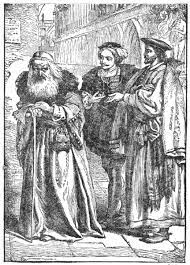
Shakespeare’s play, ‘The Merchant of Venice’ is one of my favourites from The Bard’s collection. While not without controversy, the characters do a wonderful job personifying several human values. After reading the play and performing a few lines in a classroom setting, my English teacher took our class to Stratford, Ontario to watch and learn. I remember being breathless throughout most of the scenes. We all felt somehow smarter after the performance, even a bit older. On the return trip, a small knot of us nerds gathered at the back of the bus to debate. We concluded that the opposite of Greed was not Charity, but Grace. (That’s why being greedy is so disgraceful) We didn’t do a High Five back then, but we knew we were cool.

Currently, in our bathroom there is a strip of wise sayings meant to start our day off on the right foot. One square offers a challenge: “Instead of Perfection, Seek Grace.” Sometimes it is easier to offer grace to another when we see they are in need of forgiveness or human comfort. To recognize in ourselves those same needs seems selfish. To attend to our own hurt, feels self serving. Etymologically, Grace comes from the latin word Gratis which suggests a gift freely given. Here is where we can begin: By recognizing that we are all members of a community, deserving of grace that is unreservedly given to all who assemble here.

A family tradition my wife and I followed when my three sons were growing up was saying grace at dinner. It wasn’t really a religious observance so much as an expression of gratitude. We would each offer a story of our day, highlighting who or what we were thankful for. Conversation often flowed gracefully to individual experiences. Our eldest described his frustration over a Lego model that didn’t turn out properly.“It looked different from the instruction picture,” he shrugged. “Just like people!” Amen.

Re: Moral

A society’s culture is rooted in morals. What we think is proper etiquette or acceptable behaviour is a guide for how we spend our time as citizens. Over a lifetime, some things that may have been considered immoral are found to be, by consensus, quite acceptable. Governments are elected on the basis of these perceived morals. When I vote I mark the ballot thinking, “This is the way I wish my culture to be.” That vote comes with trust that the politician will live up to the platform that was presented. I look for leaders who exhibit moral behaviour. I’m wary of crafty candidates who can sound like a moralist, spouting the short-comings of his/her opponent, then once in office backtrack on some of those do-rights.

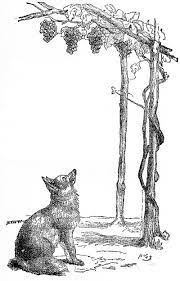
I grew up enjoying Aesop’s Fables. Usually these tales told of animals or humans learning or teaching lessons of life by their actions or misadventures. My memory of these stories is like a warming blanket. I hear patient voices describing the scenes and questioning me about the outcome. Sometimes I recall being asked if I could guess the moral of the story. The fable that has been most influential for me is what I call the ‘sour grapes’ story. It quickly comes to mind when I have a desire, like the fox, that cannot be fulfilled.

Speaking of stories: ‘Where the Crawdads Sing’ has a female protagonist who grows up in a marsh. She is a natural part of the marsh, as though the biome was her mother. In the story a death occurs. Murder is suspected. One of my moral principles is that murder is wrong, yet in nature we see examples of it all the time. This beautifully written novel compelled me to examine this particular aspect of morality. I found myself wondering about the difference between immorality and amorality. Does a soldier have to suspend his/her morality when they go to war? Is war itself an immoral act of desperation to protect one’s home or culture? Is a suicide bomber or kamikaze pilot justified if it’s for a moral cause?

Talking about or teaching morals is not exclusive to educators, elders or religious folk. Most of us shy away from sounding preachy when in public. Sometimes the Letters to the Editor section of magazines and newspapers reveal moralists who are primarily making themselves feel virtuous by calling out others for impropriety. Michelle Obama, referring to the slanderous nature of political rhetoric, famously said, “When they go low, we go high.”

A strange burst of behaviour was noted recently in some countries near the Red Sea. Adults there were choosing to drink beverages out of baby bottles, perhaps seeking comfort in unsettling Covid times.  Authorities throughout the region quickly used vague laws to stamp out what they referred to as public immorality and indecency. It was said that these practises “violate Bahraini customs and traditions.” Cultures are dependant, it would seem, on the principle that what is acceptable for one, must be considered moral for all.

Re: Principle

In grade school I remember being taught how to distinguish between the words principle and principal as a spelling lesson. Your school principal, presumably, was your ‘pal’. The other word was never clearly defined. Like so many things that one comes to learn, the use of the word Principle and its practical applications, depended on my gathering experience.

I remember being advised early on that to be ‘a man of principle’ was something to work towards. My mother would note when I was being ‘too wishy washy’ and suggest that I select a priority and ‘stick to it’. My father would provide examples of principled behaviour by focussing on completing a task before starting another. Coaches would intone that, ‘winning wasn’t everything’ and you must show good sportsmanship above all else. Teachers would insist on adherence to the principles of hard work, determination and following your dream.

My formal education regularly consisted of studying examples of individuals who never gave up no matter how hard the challenge. I was taught to show admiration for these achievers from history: The explorers who set forth to map our globe. The generals who vanquished the enemy. The politicians who created great nations. The scientists who unlocked the mysteries of our physical world. The artists who challenged our perceptions. The philosophers who provided the keys to help us understand ourselves.

It was only as I matured that I realized many of these men and women of principle had personal flaws. It was a jolt to my psyche to find out they were drinkers, womanizers, gamblers, racists, or just people with terrible party manners. Norman Bethune, as one example, has been revered as a man who followed his principles of justice, peace & unity for humanity. His personal life however was a shambles of sexual affairs, rude social scenes and arrogant social discourse. The authors of the biography ‘Phoenix’ suggest that Dr. Bethune’s ‘black sheep’ persona was politically manipulated on his death to create a ‘white knight’ iconography.

“It’s the Principle of the thing” is something I’ve often said or thought as I have waded into an argument. I’ve found that sticking exclusively to a principle can restrict my ability to listen effectively and yet I still feel the need to ‘stick to my guns’; which is a violently dramatic and threatening representation of what being rigid with principles might lead one to.

One of my favourite principled individuals of modern times is Noam Chomsky. He’s one of few people who dare to venture into the land of principles/morals/values these days. https://www.youtube.com/watch?v=C-OEEC5FpJ0

When I listen to the wisdom of his words I feel anchored by the truth. I saw this request from his wife Valeria on my Twitter feed and will pass it on: 
@johannhari101 -It’s Noam Chomsky’s 90th birthday soon (Dec 7). I’m helping his wife, Valeria, gather tributes to him for a birthday book. If Chomsky’s work has affected you, pls write a message addressed to him explaining how & send to chasingthescream@gmail.com

Re: Matter

The study of physics tells us that Matter is what makes the universe and all things in it, including us. The atomic particles that were first born of the Big Bang are part of our being.

We are made of matter yet how do we decide what matters to us? That comes from an examination of our values. What we care about and who we care for is fundamental to our existence. I have a need to understand what matters in the present context and then I set about prioritizing things accordingly.

What matters to you is totally up to you. It may relate to what you decide to eat, to wear, to read, to say, to own, to binge watch, or to march for. You can hand over this task to governments, to churches, to teachers or to neighbours but until you make your values matter to you personally you might find your self adrift in uncertainty. Determining what matters is what creates the uniqueness that is you.

My late wife took several courses on Philosophy and each time she came back from a lecture at the university where we met, she swore she was going to live the way she had just been taught. She had seen the light. She was raised in a church going family. Her religious convictions sometimes coincided and sometimes conflicted with her intellectual nature. We had some great discussions. From the content of her classes and these debates we drew closer to a philosophy of life that was consistent with our unity as a couple. We made plans using these discovered values to embark on the adventures of life.

Matter’s opposite is anti-matter. Does that fact suggest that, philosophically, everything matters and nothing matters concurrently? I’ve enjoyed examining the yin/yang nature of life. There are a lot of isms to ponder. Existentialism, we exist but why? Nihilism is too pessimistic for me. I have spent way too much time in my life trying to answer the why questions. I prefer now to seek out the how of living. That puts me leaning more towards a Zen way of thinking, if I am correct in that interpretation. I want to be more presently focussed so that I can understand what matters now.

The song Bohemian Rhapsody by poet Freddy Mercury, has meant different things to me since I first heard it. I often hum the ‘nothing really matters’ part to myself when I have no control over a situation. It helps me to detach from any outcome. Head banging aside, I find peace.

I wish to resist labels for myself and others. If you build your self concept by picking and choosing from the philosophical tree, so be it! That doesn’t make you wishy washy. More likely you will feel well rounded, not boxed in by a particular way. I don’t believe anyone has found THE WAY.

Being devoted to the creation that is you is not selfishness. You are showing respect for what matters.