Re: Sex

I never had a birds and the bees discussion with my father, perhaps consequently I was averse to having ‘the talk’ with my three sons. To even write about sex makes my typing fingers go all jittery. Thank goodness for auto correct while I try to navigate the politically incorrect. I may be timid about the topic of sex but I champion its inclusion in classrooms.

Currently North Americans are getting all hot and bothered about how sexuality, sexual orientation, sexual preference, and sexual identity can be taught in schools. Children’s rights are being trampled as we claw at each other over who is the responsible distributor of sex information. When it comes to sex curricula we all share the book, even though there is no single definitive volume on the subject. Parents, teachers, administrators, politicians are all probably a bit shy when it comes right down to how to approach sex.

We rarely open up about our sexual body parts. In the art world, some dare to showcase those things that are obvious whenever we step from the shower. The penis rarely gets talked about or even seen unless it’s associated with a crime scene. It is taboo in film to show a penis unless it’s a rubber one. I remember seeing an ad for a bunch of male performers who would play with their organs like a puppet (originated in Australia called Puppetry of the Penis, I never went, too embarrassed, but very curious in an innocent way). I’ve been to a performance of Vagina Monologues and remember being stunned by the bravery of the cast to talk about such intimate things. As a lover of language, I am amused by the variety of descriptions for our sex bits: A hot dog bun, a mussel, an acorn, a mushroom, a zucchini, a kiwi. Funny how we use items in the grocery store to help define what lies unexposed in our underwear. The pseudonyms for penis and vagina, even breasts, can fill a book or at least the length of a comic’s stand-up routine. Over sexualizing our body parts is part of the communication problem. An abundance of puritanical privacy and secrecy makes any issue of sexuality ripe for problematic intercourse or discourse.

Sex is an activity, an orientation, an identity or a bad word depending who is doing the talking

Much of what I thought I learned as a child about sexiness came from Playboy magazines that my friend and I would find in our apartment building’s basement storage lockers. We’d show each other pictures, giggling nervously while wondering if we’d get caught. When I taught students of that same age in sexual health classes, I was professional enough to engage them seriously. Many parents sat in on my tutorials, telling me how discussion continued with their children after going home. The recent British television drama Sex Education does an excellent job breaking down stereotypes and common misconceptions.

Conquering our bashfulness will be a first step toward talking to each other about who we are meant to be.
Re: Spy

When is a spy different from a whistle blower? Or an investigative journalist for that matter. When we think of spies we think of deviousness, subterfuge, plotting and secrets to be discovered. There’s irony here: A spy is asked to uncover things whilst doing undercover work. A spy has to keep a secret in order to unearth one. The side that has the spy network is happy when results are obtained, the other side shows disgust that their privacy has been invaded. Spying rarely produces the win-win scenario much sought after in modern international politics.

The Cold War, begun in 1947 and not really over until the dissolution of the U.S.S.R., was originally about maintaining a balance of power between potentially warring nations. In order to achieve that, everyone had to be on an equal footing so espionage was an accepted practise. Some spies were imprisoned, if caught. Some disappeared. Many, like Sir Anthony Blunt, despite being considered a traitor by his countrymen, was not prosecuted due to the sensitivity of his proximity to the British Royal Family. https://www.youtube.com/watch?v=HFl7NdzOOZg&list=PLkmRedTjok3Sfpkq9AhhCXHr675gI9RJd&index=52

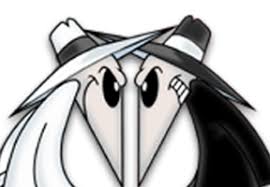
As a young fellow I loved reading the short graphic tales in MAD Magazine called Spy vs Spy. https://www.youtube.com/watch?v=onR7PD3Grc0. The cute characters, one white and one black, would basically chase after each other, laying traps, throwing cherry bombs while neither came out the clear winner. When I was older, my dad introduced me to Ian Fleming’s pulp fiction tales of James Bond. When the film franchise began I knew from the start I would be a life long fan. My mother relished being a sort of spy. She enjoyed ferreting out weaknesses in people and then holding the information, ‘over their heads’. She was once a personal assistant to a private investigator and went on stake-outs that my father frowned upon, until he was needed to pose as an ‘Englishman’; a role he played during a tense weekend in Hell’s Kitchen, a sketchy part of New York City.

We live in a time where security cameras are common. Privacy is hard to find, yet we expect transparency in government and business. Corporations might lose their new product’s edge if a design secret or release date becomes common knowledge. A brave few who work in industry, the military or in politics feel it is socially responsible to reveal insider information. Jeffrey Wigand may have singlehandedly changed the way North Americans thought of cigarettes. Journalists Woodward & Bernstein told Mark Felt’s Watergate story, which brought down a U.S. President. Daniel Ellsberg, Karen Silkwood, Juliann Assuage, Bradley(Chelsea)Manning, Edward Snowden are familiar names of people who have revealed truth to the public.

Whistleblowers, like spies, are frequently vilified yet they report they are acting according to their conscience. Even though the ‘top secrets’ exposed are shocking/dangerous/controversial, the informers feel they are acting in the public interest and fulfilling a personal directive that supersedes conventional authority. History may reveal the rightness of their tales, but at the very least we can be grateful for their courage.