Re: Clearance

Sometimes medical tests take a while to schedule in the province where I live so I felt like I had won the lottery recently, when I got my lab booking sooner than anticipated. It reminded me of the pleasure that can be felt when you approach some congestion on the roadway and an authoritative person is there to wave you through.

If you’ve had to wait for your plane to take off then you’ll know that getting clearance is a delight. In kindergarten we are all taught about lining up and waiting our turn. It comes easy for those with good manners to be patient yet when I get sped through a line I feel so very special. That day at the hospital diagnostic centre everything seemed so streamlined: I arrived on time, my credentials were acknowledged, my appointment was confirmed, I was ushered to the correct wing, my medical technician knew what she was doing, the machines were fully functional, all tests were performed without hiccup, and done. I was cleared to leave.

I’ve enjoyed the feeling of hiking through deep woods. After stepping over fallen trunks and thrashing through tangles of underbrush it is an awesome experience to reach a clearing. Your walking pace can become more even, your balance is more assured, your weight seems lighter, your way is unimpeded and your view is uncluttered. It must feel liberating like this when you have had to be in court, your case has been examined from both sides and the judgement is that you are cleared of all charges. Imagine the relief! You are truly out of the woods and can now go about your life.

When I was a kid, I could see my parents tighten up whenever we approached the border separating Canada from the United States. Guards peered from their tiny huts with serious looks. Questions were asked and answered. The moment our car was waved through the check point, everyone exhaled. I’m no different as an adult when approaching a port of entry. As I surrender my passport I tense, hoping my documentation will measure up. My bride and I have been on many adventures to other countries. In every case I have shown gratitude along with nervousness to those who are authorized to provide clearance.

The other day I saw a vehicle marked with red licence plates being led by a police escort. I wonder what it feels like to have that level of access to the roadway? Or to anything for that matter. I can’t imagine a diplomat or any high level decision maker being troubled if they needed something ASAP.  Fortune 500 folk send their people to get stuff and price is no obstacle. Heck, I don’t normally go shopping unless there is a clearance sale that removes my inhibitions. I need the enticement of ‘the lowest price of the season’ before I feel good to go.

Giving myself permission is the first gateway I must pass through before making my way in this world. It sure is nice to find helpful people at intersections.

Re: Tolerance

I learned much from my dad when it came to tolerance. He had to put up with a lot from my mother. I watched as a child at the way he navigated his hurt feelings over accusations and recriminations delivered at random moments by his wife. When I was older I couldn’t help but feel he should have stood up for himself more often. Ironically my mom’s intolerance for him led to a temporary separation.

Much of my understanding of tolerance comes from my parents’ examples. How one lives with tolerance is instructive. I’ve learned to recognize differences, inconsistencies, strengths and weaknesses in others. That awareness has helped me feel tolerance, but for a healthy relationship you need a step further: If you want a relationship to last you have to accept the other, flaws and all.

My father worked at a ball bearing manufacturing plant. He used to amaze me with his precision drawings and schematics of all the individual working parts. He had a position in the quality control department towards the end of his career. Long before computer technology, he used specific tools to make the measurements. He talked about perfecting the tolerances so that wear and dysfunction was kept to a minimum. Engineers often worry about stresses on material so they work hard to create designs that increase the tolerance against environmental hazards like weather. The mechanics of anything we build must meet rigid standards to keep risks of injury at a low level. For example, the last condo building I lived in boasted of being erected on top of springs to reduce potential earthquake damage.

Humans can react to life’s challenges on a tolerance spectrum. I have a low tolerance for small talk. My wife can’t tolerate silliness. We all have our pet peeves. Some things can grate on our nerves while other stuff sheds our psyche like water off of a duck’s back. I tried to list my top ten non-tolerances but only got to eight: anger, gambling, tattoos, war, waste, heat, pets and stasis.

We sometimes judge others by their patience or lack thereof. Recently I squirmed along with others in a medical clinic waiting room while an anxious patient pulled a Karen on the receptionist. “I can’t tolerate this medication!” She shouted until the doctor came out to calm her fears. Meanwhile we sat with our own thoughts on how we might have managed such a crisis differently.

Perhaps our tolerance for people or situations mellows with age. Elders have gained wisdom from multiple trials enabling them to better tolerate the shocks of life. Getting older gives us a sense of a continuum more akin to a lazy river rather than a cloverleaf intersection on an interstate highway. A feeling of urgency or desperation can be part of youth which can lead to intolerance and dismissiveness. On the other hand being aged can make us cranky and view the world as something no longer recognizable.

My grandkids will likely have to learn to tolerate a robot’s view of things. Oh my!

Re: When

I hate waiting in line. It takes patience to wait for anything. The child in me wants to ask, “When?” Hell for me is the same as stasis. I’m not an antsy person, most people think of me as calm. I can be calm, tranquil even. I’ve been known to bask in the serenity that comes from doing absolutely nothing.  When I have a choice, being still is an easy option, yet I do not like to feel becalmed, beached or otherwise adrift in the Sargasso Sea waiting for a satisfactory trade wind. Under constricting circumstances, the Then part of my life story seems to never come, so I’m stuck crying out, “When!”

There are six great journalistic questions: Who, what, when, where, why, and how. The third in the list was the question I most asked as a kid. Learning patience is hard for anyone, especially when you are four or 94. As a kid whining to my mother I would hear, “If you ask again we won’t be going!” I wouldn’t be getting, having, or knowing either, depending upon the context. When my elderly mother-in-law asks ‘When’ I stay quiet, figuring I’ll have a while before she asks again. She may even forget the whole thing as she listens to her radio. When my own children asked ‘When’ I would say, ‘In twenty minutes.’ This arbitrary amount of time never satisfied them since it could end up meaning sometime next week for all they knew. Sometimes I’m not very helpful.

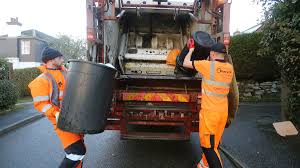
One of my grandkids loves watching for the garbage truck coming down the street. In his city, the sanitation drivers/workers are very predictable. I saw my little DNA carrier run to the window one morning for no apparent reason. Moments later I realized his little ears had picked up the characteristic screechy sound of the vehicle because there was the workman lifting the cans into the back hopper. My grandchild turned back to his living room play looking satisfied that his world was in order. He was learning to trust that sometimes the Whens of life fit into a schedule that can be planned for and predicted.

I don’t think we can blame technology on our lack of patience. Even as grown-ups we want our stuff now, not tomorrow. Putting in a call to get service for a broken appliance or delivery information can be problematic. We are usually given a window of time when an agent will arrive. Recently for me that ‘window’ was “Between 9am and 5pm on Tuesday” and I paced the day away.

Perhaps adults’ patience level has been eroded lately with all our systems, simply because we are frustrated by the slow approach of getting to that question of when. Confidence in necessary change is enhanced if the public can have a predictable timeline of action. As a citizen I don’t want to be told it will take a metaphorical twenty minutes if it really isn’t going to happen during this business/tourist/health/government cycle.

Then my trust goes in the garbage

Re: Guilt

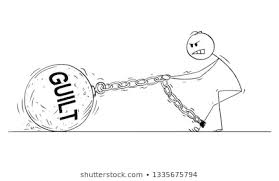
“I don’t do guilt.” John, a teacher colleague of mine, said long ago. I can still picture his face as we discussed heaven knows what. I remember wishing that I could be so cavalier. The way the word ‘guilt’ came out of his mouth made me want to shed the strong feelings of responsibility that weighed on me at the time. I wondered how someone could honour their responsibilities to others and not feel guilty when they inevitably let another down. While I envied John for his stance I also felt such a position could only be held by someone selfish. After all, guilt came easily and could not be ignored by a stalwart individual such as myself. I still wish that I might find an easy way to let myself off the hook.

Feeling guilty is not a disease but unless it’s resolved it can make you feel sick. I have had periods where I have been rendered guilt-ridden. At the other end of this spectrum we have a label for people who don’t express remorse: Sociopath. Perhaps these individuals never resolved early feelings of guilt and so chose to tuck them away in the recesses of their mind.

These days, others named John may use a different word or phrase to easily absolve themselves of remorse: They might stand straight and utter, “Guilty as charged.” They may choose to feign humour, “Ooops! My bad.” Some may intellectualize their dilemma with the words, “Mea Culpa.” Saying sorry is difficult. Courts provide an opportunity to get things off your chest. An admission of guilt is often a precursor to a more lenient sentence after a verdict is passed. Witness impact statements can move those involved in a criminal act to feel remorse. In a perfect world, offenders and those offended can find ways of reconciliation beyond guilty/not-guilty definitions in order to create justice that lingers.

I always thought going to a Catholic confessional was an easy way out of dealing with the reality of guilty feelings. A few Hail Marys strikes me as not getting to the heart of why bad thoughts remain after committing an offence. Guilt thrives in the absence of forgiveness yet telling ourselves that it’s all right can be a hard thing to do. When my children made a mistake they were encouraged to apologize with an explanation of why they were sorry. The resulting dialogue helped everyone feel better because the act itself was acknowledged, feelings shared and understood, forgiveness provided. An emotional drive-thru experience: A happy meal.

I feel guilt just like I feel regret. There are times I say things that are unwarranted or do things I don’t really feel comfortable doing. I can’t blithely state that guilt doesn’t affect me. I’ve known some people who have responded to guilty feelings by seeking revenge on the very person who made them feel remorse. Deep feelings can be frightening. When I hurt someone else I feel the hurt too. Stopping the cycle of hurt is not easy, like most things in life, it starts with patient understanding.