
My mom used to tease. My sister, father and I found her intentionally mean jokes discomforting. Consequently I learned that having a laugh at someone else’s expense was not comedy. John Cleese, of Monty Python fame, posted a message on Substack regarding the difference between affectionate teasing vs nasty teasing. I took exception to his exceptionalism because I’d seen the devastating results of my mom ‘taking the mickey’ out on innocent angels. It’s no surprise that her favourite comedians were Don Rickles, Joan Rivers, and Rodney Dangerfield. Mom was dead before Ricky Gervais made a name for himself through insults, but I’m sure she would have liked his style. Teasing, Insults, Swearing, and Sarcasm can be found in my Book of Humour under the chapter titled: Cheap Shots.
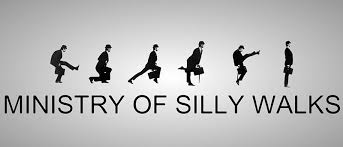
Humour is subjective. Art is required to be judged by the individual. It’s how we figure out that our mouth is not the only place where taste can be discerned. And, of course, it’s impossible for all to agree on what comedy means, anymore than we can be uniform in our response to the flavour of olives. My love of humour tends toward the silly and the slapstick. I don’t understand how my bride absolutely hates silly comedy yet she loves scatological humour. To me, the silliness found in Monty Python sketches is innocent and wise at the same moment. The Three Stooges enthralled me as a child with their antics of mayhem. Later, I laughed at the absurd body language of Jerry Lewis, Dick Van Dyke, Rowan Atkinson, and Jim Carrey.
My favourite actors are also comedians. Sometimes the line between pathos and buffoonery can seem gauze-like. Robin Williams mastered this dichotomy as did Jack Lemmon before him. Humour is perhaps the most provocative art form. The double entendre found in most witticisms sets up a conflict in the mind, making it difficult to decide the truth. Stand-up comedy is challenging in this way as it reminds me of the court jesters of centuries ago trying to please the royal master while playing to the impoverished masses. Editorial cartoonists like Michael deAdder perform a similar function of pillorying political figures to make an inconvenient truth apparent. In these cases we might join in mocking laughter; “The joke’s on you!”
Comedy has to catch you at the right moment. This year is the 50th anniversary of that comedic phenomenon Saturday Night Live. Lorne Michaels deserves credit for creating this iconic television show and nurturing hundreds of comics in the process. Dark, silly, political, sexual, racial, religious and physical humour are blended like a box of specialty chocolates. The spontaneous nature of the sketches, the improvisations, can land with a bang or a plop. Something coming off funny can depend on the mood of the audience as much as the skill of the performer.
What strikes your funny-bone may be arbitrary, yet comedy is necessary to our mental health. It’s no accident that situational comedies on television have been a staple of that medium. We need to laugh most when the situation seems most dire.
 Catch My Drift?